Retargeting is one of the most powerful tools in a digital marketer's toolkit. At its core, it’s a way to reconnect with people who have already visited your website but left without making a purchase or signing up. Think of it as a friendly digital tap on the shoulder—a second chance to remind an interested person why they checked you out in the first place.
What Is Retargeting and Why It Matters
Ever walked into a store, looked at a pair of shoes, but decided to think about it? A good salesperson might hand you their card on the way out. Retargeting is the digital version of that. It’s not about being pushy; it’s about continuing a conversation with someone who already knows you.
The magic behind it is a small snippet of code, usually called a tracking pixel, that you place on your website. When someone lands on your site, this pixel drops an anonymous cookie in their browser. Later, when they're browsing Facebook, reading a news site, or watching a YouTube video, your ads can show up, bringing your brand back to the top of their mind.
Turning Warm Leads Into Conversions
The real beauty of retargeting is that you aren't shouting into the void. You're talking to a warm audience—people who have already raised their hand and shown some level of interest. By staying visible, you keep your brand familiar and make it easier for them to come back when they're finally ready to buy.
The numbers don't lie. Globally, retargeted customers are about 70% more likely to complete a purchase than someone seeing your brand for the first time. It just works.
The core idea is simple: focus your advertising budget on people who are already familiar with you. It’s a conversation you’ve already started, and retargeting is just the follow-up.
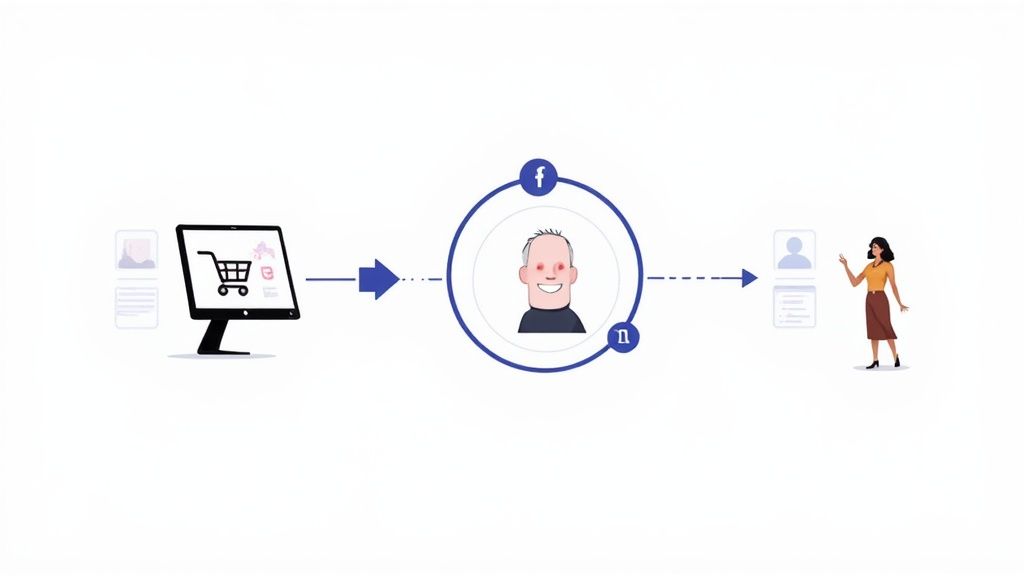
This infographic does a great job of showing how retargeting acts as a helpful reminder, not a pesky interruption.
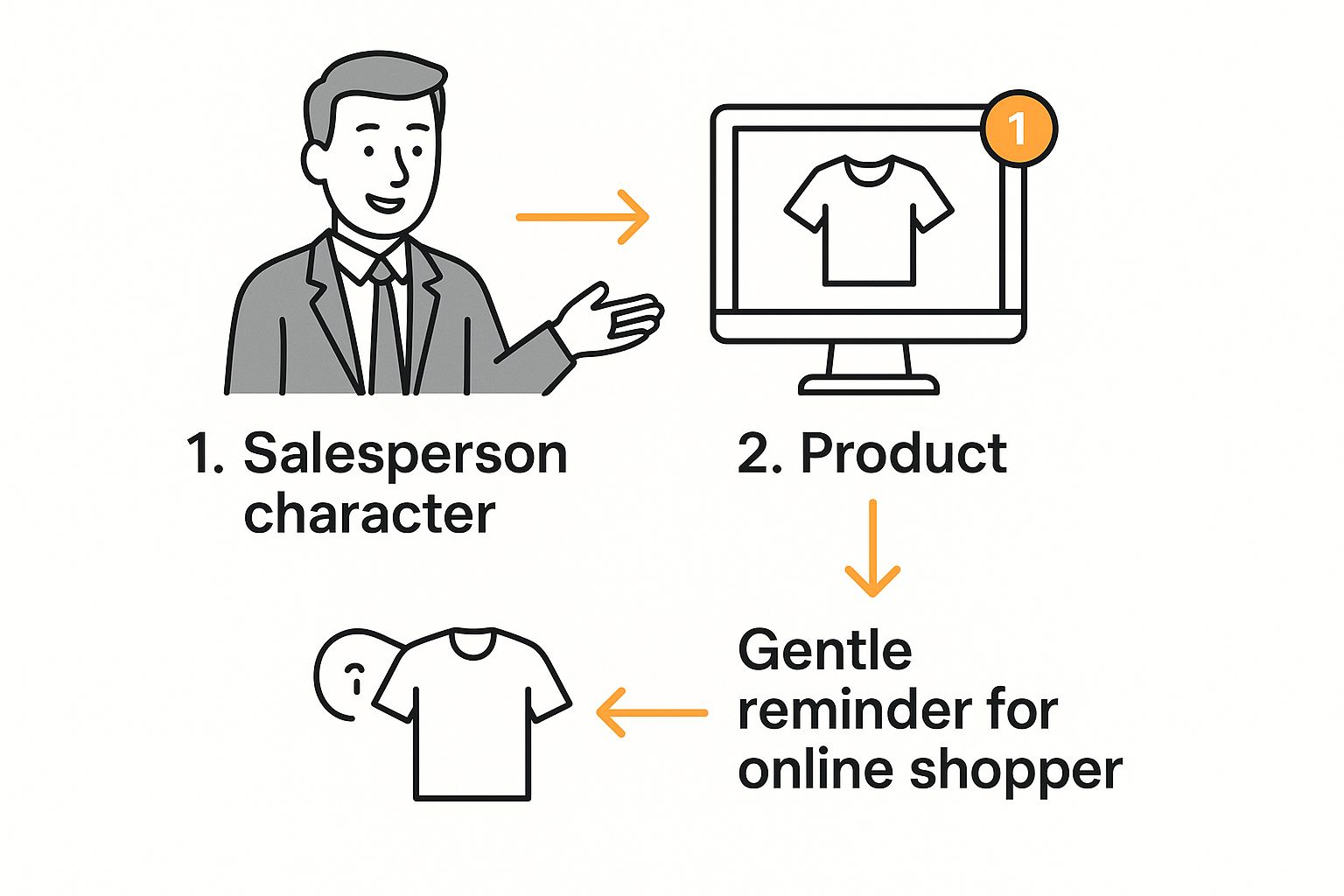
The key takeaway is that a well-timed prompt can guide a potential customer right back into your sales funnel. This strategy is a specific form of a broader marketing approach known as behavioral targeting, which uses past user actions to deliver more relevant ads. When you understand what people have done, you can create ads they actually want to see.
To break it down even further, here are the core components of retargeting in a nutshell.
Retargeting at a Glance Key Concepts
| Concept | Brief Explanation | Primary Goal |
|---|---|---|
| Tracking Pixel | A small piece of code on your site that "tags" visitors anonymously. | To identify and build an audience of previous site visitors. |
| Audience Segment | A group of visitors based on their on-site actions (e.g., viewed a product). | To deliver highly relevant and personalized ads. |
| Ad Campaign | The specific ads you run, targeted only at your custom audience segment. | To re-engage users and bring them back to your site. |
| Conversion | The desired action a user takes upon returning (e.g., purchase, sign-up). | To turn warm leads into paying customers or subscribers. |
Understanding these pieces helps you see how a simple website visit can be turned into a powerful opportunity to drive growth and build a loyal customer base.
How the Retargeting Process Actually Works
Ever look at a pair of shoes online, then see ads for those exact shoes following you around the internet? It’s not a coincidence or magic—it’s retargeting, and it’s a pretty straightforward process once you peek behind the curtain.
The whole system is powered by a small, clever piece of technology.

Step 1: Placing the Tracking Pixel
It all starts when a business adds a tiny snippet of code to their website. You might hear this called a tracking pixel or a tag. Big players like Google and Meta provide their own versions of this, like the Google Tag and Meta Pixel.
This little bit of code is completely invisible to you as a visitor. It doesn’t slow the site down or change how it looks. It just sits there, waiting to do its one simple job: spot new visitors. This is the bedrock of the entire retargeting system.
Step 2: Tagging Visitors with a Cookie
When you land on a website with a pixel, that code talks to your browser and drops an anonymous file called a cookie onto your device. Think of it like a digital ticket stub from a movie. It doesn’t have your name, email, or any personal info on it.
Instead, it just gives your browser a unique ID, essentially saying, "Hey, this browser was here." This is how ad platforms can find that browser again later without ever knowing who you are.
A common misconception is that retargeting tracks your personal identity. In reality, it tracks an anonymous browser. The system knows someone visited the pricing page, but it doesn't know it was you specifically.
This focus on anonymity is what allows the process to work. Once you're "tagged," you can go about your day, browsing other sites or closing your laptop.
Step 3: Building an Audience and Serving Ads
So, what happens after you leave the site without buying anything? That little cookie now tells ad platforms that your browser is part of a retargeting audience.
When you later visit other websites or scroll through social media apps that are part of that ad network—think news sites, blogs, or your Instagram feed—the network reads the cookie. It recognizes that your browser belongs to a specific retargeting list.
This recognition instantly triggers an ad auction. If the advertiser’s campaign is set up to target you, their ad pops up. The whole thing happens in the blink of an eye, serving you a perfectly timed reminder.
Here’s a quick play-by-play of that last part:
- The Tagged User Browses Elsewhere: They’re catching up on news or checking their social feeds.
- The Ad Network Recognizes the Cookie: The platform spots the anonymous cookie left from their visit to the original website.
- Your Ad is Displayed: The ad you designed—maybe even showing the exact product they viewed—appears, nudging them to come back and finish what they started.
It's this simple, automated loop that makes retargeting one of the most reliable ways to bring would-be customers back into the fold.
Choosing the Right Retargeting Strategy
Once you get the hang of what retargeting is, the real work begins: picking the right playbook. Every person who lands on your website is different, so a one-size-fits-all strategy just won't cut it. Your approach needs to change depending on your goals—whether you're trying to boost e-commerce sales, generate B2B leads, or just get your name out there.
The trick is to perfectly align your tactics with your audience's behavior and your own business objectives. Let's walk through the three main strategies you'll encounter and figure out which one makes the most sense for you.
H3: Pixel-Based Retargeting: The Foundation
This is the classic form of retargeting and probably the one you've experienced most. It all starts with a small piece of code, a tracking pixel, that you place on your website. This pixel anonymously "tags" visitors, which lets you follow up with ads long after they’ve clicked away.
Think of it as casting a wide net to re-engage anyone who’s shown even a hint of interest. Because it’s based on anonymous browsing behavior, pixel-based retargeting is a fantastic starting point for:
- Building brand awareness: It keeps your brand visible to people who are still in the early research stages.
- Driving traffic back to high-value pages: You can gently remind visitors who checked out a specific product or your pricing page to come back and take another look.
- Running general campaigns: It allows you to create a baseline of engagement with everyone who has visited your site in the past.
This method is really the cornerstone of most retargeting campaigns. It captures the broadest possible audience and is your first step in turning casual window shoppers into genuine leads.
H3: List-Based Retargeting: Pinpoint Precision
List-based retargeting is a much more direct and personal approach. Instead of relying on anonymous browser cookies, this strategy works with contact lists you already have—think email subscribers, CRM contacts, or your customer database. You simply upload your list to a platform like Meta or Google, which then matches those email addresses or phone numbers to user profiles and shows them your ads.
This strategy is like having a VIP list for your advertising. You're not just targeting people who visited a page; you're reaching specific individuals you already have a relationship with.
Because you're working with known contacts, the potential for personalization is huge. You can show existing customers an upsell offer, re-engage dormant subscribers with a special promotion, or nurture qualified leads who just aren't quite ready to pull the trigger. Of course, for this to be effective, you need a solid process for how to identify your target audience in the first place.
H3: Engagement-Based Retargeting: Tapping Into Social Buzz
This final strategy zeroes in on people who have interacted with your brand on social media but might have never actually made it to your website. Platforms like Meta (which includes Facebook and Instagram) and LinkedIn let you create custom audiences based on specific actions, such as users who have:
- Watched a certain percentage of your videos.
- Liked, commented on, or shared one of your posts.
- Visited your company page or profile.
This is a brilliant way to capture the attention of an audience that discovered you while scrolling through their feed. From there, you can serve them ads designed to guide them from that initial social interaction to a website visit or a lead form.
This type of engagement is only growing. For example, digital audio advertising is projected to exceed $12 billion in ad spend in 2025 and grow to nearly $15 billion by 2029. You can find more marketing insights like this in HubSpot's latest report.
Comparison of Retargeting Strategies
To help you decide which approach fits your needs, it’s helpful to see them side-by-side. Each strategy has its own strengths and is best suited for different stages of the customer journey.
| Strategy Type | How It Works | Best For |
|---|---|---|
| Pixel-Based | Uses a website tracking pixel to anonymously tag visitors and show them ads across the web. | Broad-reach campaigns, top-of-funnel brand awareness, and driving traffic back to your site. |
| List-Based | You upload a list of existing contacts (e.g., email subscribers) to an ad platform to target specific individuals. | Nurturing leads, upselling existing customers, and re-engaging dormant contacts with highly personalized offers. |
| Engagement-Based | Targets users who have interacted with your content on social media (e.g., liked a post, watched a video). | Capturing interest from social media users, converting followers into website visitors, and building a warmer audience. |
Ultimately, the most powerful campaigns often blend all three strategies. You can use pixel-based retargeting for broad awareness, list-based for your hottest leads, and engagement-based to turn social fans into customers.
Where to Run Your Retargeting Campaigns
Alright, you’ve got your strategy mapped out. Now for the million-dollar question: where do you actually run these ads? Picking the right platform is just as important as the ad itself, and your choice can be the difference between a home run and a strikeout.
While you've got plenty of options, two platforms stand out as the heavyweights for most businesses: Google Ads and Meta (the home of Facebook and Instagram). Think of them as two different hunting grounds. Google is all about capturing intent across the vast expanse of the web, while Meta is the master of social connection and deep user insights. Let’s break down where each one shines.
Reaching People Across the Web with Google Ads
Google gives you an absolutely massive playground for retargeting, and it’s not just about search results. The main tool here is the Google Display Network (GDN), which is a network of over two million websites, apps, and videos where your ads can pop up. This is how you stay top-of-mind, showing visual reminders to your past visitors while they’re reading the news, browsing a blog, or playing a game on their phone.
But that’s not all. Google also has a clever tool called Remarketing Lists for Search Ads (RLSAs). This is a game-changer. It lets you fine-tune your search campaigns specifically for people who have already been to your site. For instance, you could bid higher on your main keywords when a past visitor searches for them again, making absolutely sure you’re the first result they see when they’re ready to buy.
Google's power is in its incredible scale. It lets you connect with people through visual ads almost anywhere they go online and then re-engage them the second they return to the search bar with a specific need.
This one-two punch of broad display reach and laser-focused search targeting makes Google a must-have, especially if your sales process takes a little more time or you just want to keep your brand visible everywhere.
Engaging Your Audience on Meta Platforms
Meta brings a completely different, but equally powerful, approach to the table with Facebook and Instagram. Its secret weapon is the rich, detailed data it has on its users, which lets you create retargeting campaigns that feel incredibly personal. The magic behind this is the Meta Pixel, a piece of code that tracks what people do on your website with pinpoint accuracy.
This is where you can really let your creativity shine.
- You can run Dynamic Product Ads that automatically show people the exact products they looked at or left in their cart. For any e-commerce brand, this is non-negotiable.
- You can retarget people based on how they've interacted with you directly on social media, like someone who watched 75% of your latest video or sent your business a message.
The possibilities for crafting powerful social media advertising strategies are practically endless here.
Ultimately, the smartest move is often to use both. You could use Google's GDN to cast a wide net and keep your brand familiar, then turn to Meta to hit warm leads with hyper-relevant product ads. This creates a cohesive, multi-channel experience that meets your customers wherever they are.
Crafting Retargeting Ads That People Actually Welcome
Let’s be honest: nobody likes being followed around the internet by a creepy ad. A great retargeting campaign walks a fine line between being a helpful, gentle nudge and an annoying interruption. Getting it right comes down to a smart strategy built on relevance, timing, and genuine respect for your audience's experience.
It all starts with segmenting your audience properly. You wouldn't talk to someone who abandoned a full shopping cart the same way you'd talk to someone who just skimmed a single blog post, right? Grouping people based on what they actually did on your site is the key to creating a message that lands.
For instance, a visitor who spent time on your pricing page is way more committed than someone who bounced off the homepage. That first group is primed for an ad about a specific feature or a demo offer. The second group? They probably just need a simple, friendly brand reminder.
Control How Often People See Your Ads
One of the fastest ways to burn a bridge with a potential customer is to spam them with the same ad again and again. It’s called ad fatigue, and it’s a real campaign killer. The solution here is to use frequency capping.
This simple setting lets you limit how many times one person sees your ad in a given timeframe. Starting with a cap of three to five impressions per user per day is a solid baseline, but you’ll want to test this to figure out the sweet spot for your own audience.
You can even take this a step further with ad sequencing. This is a more advanced move where you tell a story over a series of ads shown in a specific order. Your first ad could highlight a common problem, the second could introduce your product as the solution, and the third might show a customer testimonial to seal the deal.
Design Ads That Connect
Your ad’s creative—the words, the images, and the call-to-action (CTA)—is where the magic happens. These elements have to match the user's last interaction with you perfectly.
- Get Specific: If someone was looking at a specific pair of blue running shoes, your ad should feature those exact shoes. Don’t just show them a generic ad for your shoe store.
- Provide Value: A little incentive can go a long way. Think about offering a small 10% discount or free shipping to encourage someone to finish their purchase, especially if they left items in their cart.
- Have a Clear CTA: Don't be vague. Tell people exactly what to do next. "Shop Now," "Learn More," or "Book a Demo" are all direct and effective. And make sure that click takes them to a high-converting landing page that makes sense.
For retargeting ads to truly resonate and be welcomed by potential customers, they must incorporate effective marketing personalization strategies. This turns a simple ad into a helpful, relevant suggestion that guides the user back to your brand.
When you nail the execution, these campaigns deliver. Pay-per-click (PPC) campaigns that incorporate retargeting can produce an ROI of around 200%, and their click-through rates are significantly higher than your typical display ads.
Answering Your Top Retargeting Questions
Even after you get the hang of the basics, a few tricky questions always seem to pop up with retargeting. As you start mapping out your own campaigns, you'll inevitably hit these common roadblocks and debates. Let's clear them up so you can move forward with confidence.
Here are the straightforward answers to the questions we hear most often.
What's the Real Difference Between Retargeting and Remarketing?
This is probably the most common mix-up in all of digital marketing, and frankly, the lines have blurred so much that even seasoned pros use the terms interchangeably.
Originally, there was a clearer distinction. Retargeting was all about using browser cookies to show display ads to anonymous people who had visited your site. Think of it as those ads that follow you around the internet after you look at a pair of shoes.
Remarketing, on the other hand, was a term Google used heavily and was mostly tied to re-engaging users through email. That classic "You left something in your cart!" email is a perfect example of remarketing in its original sense.
Today, most marketers have settled on a general consensus: retargeting typically means paid ads (on social media, display networks, etc.), while remarketing usually refers to email follow-ups. But don't be surprised when you see both terms used for the exact same ad campaign.
How Long Should a Retargeting Campaign Actually Run?
There’s no magic number here—it all comes down to your sales cycle. The key is to match your cookie window (the length of time someone stays in your audience after visiting your site) with the time it usually takes for a customer to pull the trigger.
Here are a few solid starting points based on what you're selling:
- For quick, impulse-driven purchases (like fashion or cosmetics): A shorter window of 7 to 14 days usually works best. You want to catch them while the initial excitement is still fresh.
- For bigger decisions (like B2B software or a new car): You'll need a much longer window, somewhere in the 30 to 90-day range. People need time to research, compare, and talk it over.
If you’re not sure where to begin, start with a 30-day window and keep a close eye on your results. If you see that all your conversions happen in the first 10 days, you can tighten up your window and save some money.
How Is Retargeting Going to Work in a Cookieless Future?
The end of third-party cookies in browsers like Google Chrome is definitely shaking things up. It’s a direct hit to the traditional, pixel-based retargeting that has followed us around the web for years. But retargeting isn't going away; it’s just getting a much-needed upgrade.
The entire industry is shifting toward solutions that respect user privacy and rely on different kinds of data.
Here’s what that evolution looks like:
- First-Party Data is King: The focus is now squarely on collecting data directly from your audience. Think email addresses from a newsletter sign-up or phone numbers from a purchase. List-based retargeting, which runs on this kind of consented data, is becoming the new gold standard.
- Server-Side Tagging: Instead of your browser doing all the tracking work, more companies are using server-side tagging. This means their own server sends information directly to platforms like Meta or Google, giving them more control and accuracy without relying on third-party cookies.
- New Privacy-Focused Tools: Ad platforms are rolling out new tech to adapt. A great example is Google's Privacy Sandbox, which groups people into large, anonymous audiences based on interests instead of tracking them individually. This allows you to still show relevant ads without creeping anyone out.
Ultimately, the future of retargeting will be built on trust, transparency, and building real relationships with customers—not just tracking their every move.
At ReachLabs.ai, we build marketing strategies that don't just work today but are ready for what's next. If you're looking to create a retargeting plan that actually drives growth, let's talk. You can learn more about how we do things at https://www.reachlabs.ai.