
The economics of B2B SaaS marketing have changed. The median company now spends $2 to acquire $1 of new ARR, and the weakest performers burn nearly $3 for every dollar of new revenue, according to T2D3's 2025 performance metrics analysis. That single number reframes the whole job.
Most growth problems don't start with channel selection. They start when teams chase volume before they've built a system that can turn attention into efficient revenue. If your acquisition cost is climbing, your answer usually isn't “more campaigns.” It's sharper positioning, better qualification, a cleaner handoff between marketing and sales, stronger activation inside the product, and tighter control over where budget compounds.
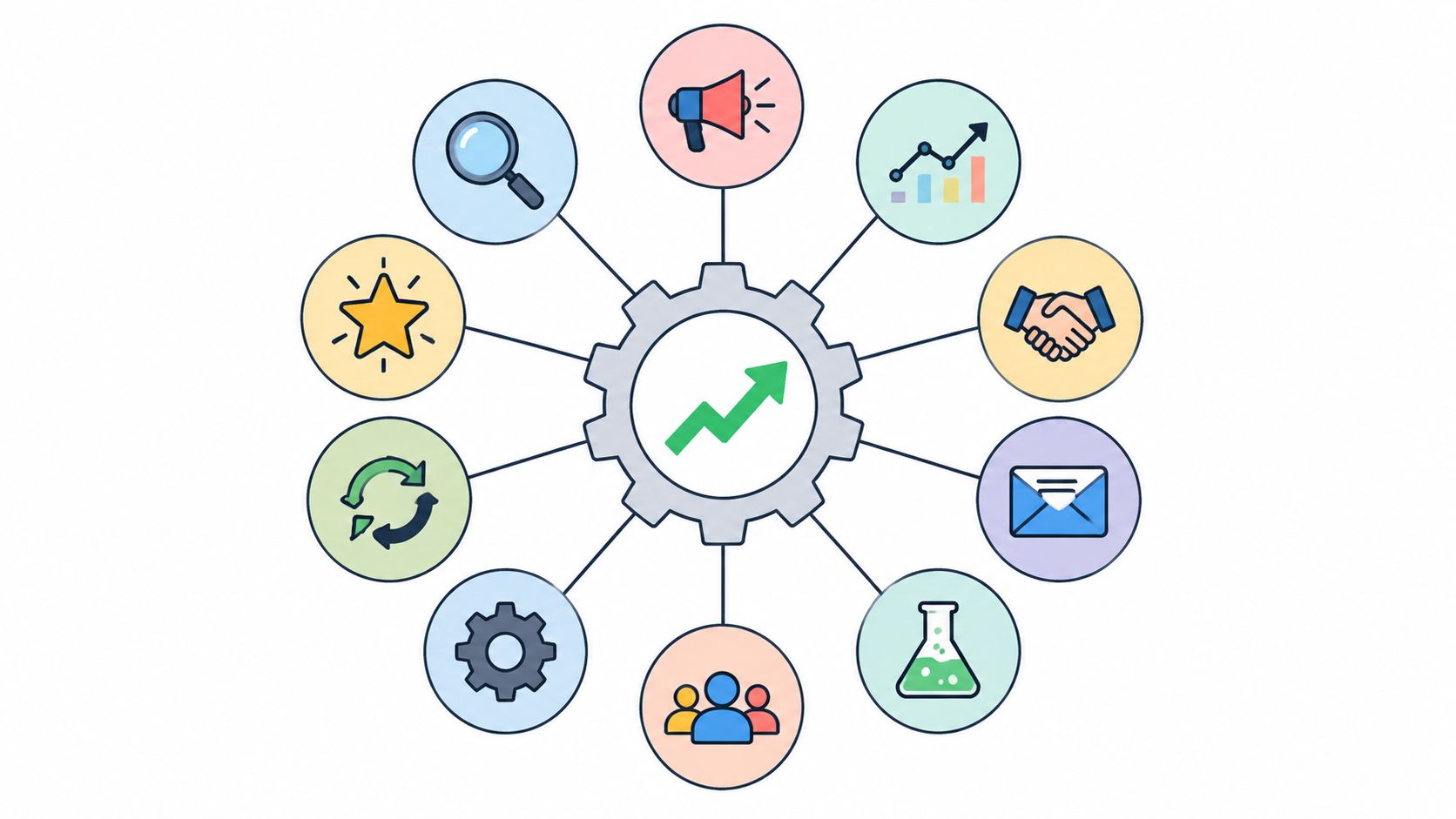
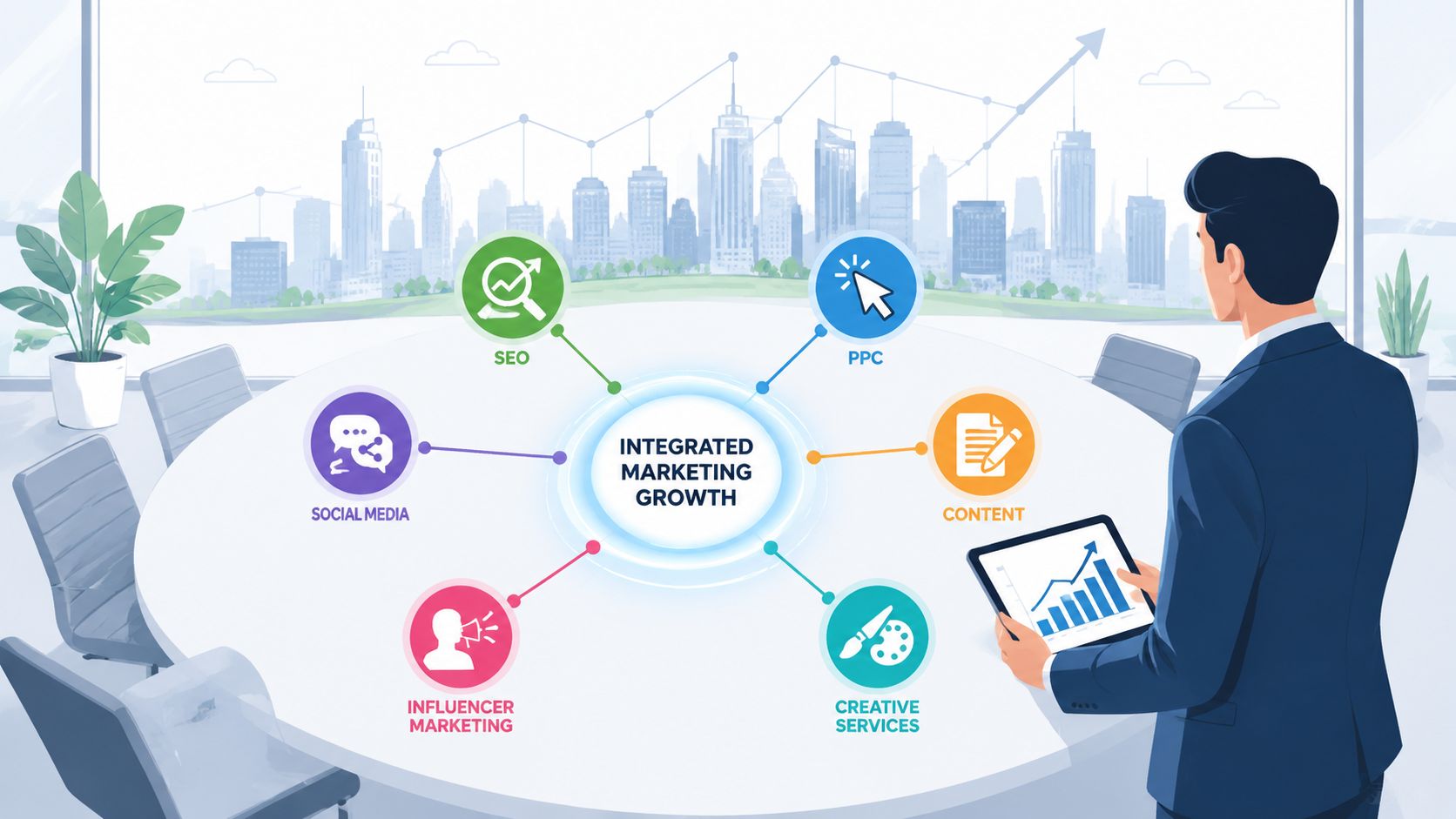
That's what modern B2B SaaS marketing is now. Not a bag of tactics. A set of levers that improve unit economics.
Building Your Strategic Foundation First
Founders often want to skip straight to Google Ads, LinkedIn campaigns, outbound sequences, webinars, and SEO content calendars. That's usually a mistake. Tactics amplify whatever's already true. If your positioning is fuzzy, your target account list is broad, and your messaging sounds like every other SaaS homepage, paid spend only helps you fail faster.
The strongest marketing teams start with three things that lock together. Positioning, ICP definition, and messaging. When those are clear, channel decisions get easier because you know who you're trying to reach, what problem matters enough to interrupt them with, and why your product is worth choosing over an incumbent, a spreadsheet, or a competing tool.

Positioning before promotion
Positioning answers a hard question. When a buyer compares you to other options, why should they care?
That answer can't be “we're easier, faster, smarter, and powered by AI.” Everyone says that. Good positioning names a buyer, a use case, a pain point, and a reason to believe. It narrows the field on purpose.
A useful test is whether your positioning excludes people. If everyone can nod along, nobody feels seen. A sales platform for vertical SaaS teams, a finance workflow tool for multi-entity companies, and a support platform for API-first products should not sound interchangeable.
Practical rule: If your homepage could belong to two close competitors with only a logo swap, your positioning isn't done.
Build an ICP that goes beyond firmographics
Many teams stop at company size, industry, and geography. That gives you a list, not an ideal customer profile.
A working ICP should include:
- Operational pain. What breaks often enough that the team will pay to fix it?
- Buying trigger. What event creates urgency, such as headcount growth, a tooling migration, or a compliance change?
- Internal champion. Who feels the pain first and will push the deal internally?
- Adoption fit. Can the team implement and use your product without heavy services?
- Commercial fit. Does the account have the budget, expected expansion path, and retention profile you need?
Customer calls, Gong recordings, support tickets, onboarding notes, and lost-deal reviews become more valuable than generic persona workshops. A practical framework for tightening this work is a brand strategy framework for market positioning and audience clarity.
Turn research into a messaging hierarchy
Once the ICP is clear, messaging becomes much easier to structure. I like to build it in layers:
Core promise
One clear outcome the buyer wants.Proof points
The product capabilities, workflow advantages, or implementation strengths that make the promise credible.Persona-specific framing
Finance cares about control and reporting. Operations cares about workflow. End users care about speed and ease.Objection handling
Replace vague reassurance with direct answers to common concerns like migration effort, data quality, integration depth, or team adoption.
A messaging hierarchy keeps paid ads, landing pages, sales decks, nurture emails, demo scripts, and product marketing aligned. Without it, every team writes its own version of the story and the market hears a muddled pitch.
Here's the trade-off. Narrow positioning can feel uncomfortable because it appears to reduce TAM. In practice, it usually improves win rates, sales efficiency, and content relevance. Broad positioning feels safer internally. Buyers rarely reward it.
The Inbound Engine Driving Demand
Inbound works best when you stop treating content, SEO, and demand generation as separate departments with separate goals. They're one engine. Content creates relevance. SEO captures intent. Demand generation distributes and recirculates that attention until buyers are ready to act.
That's why the best inbound programs behave more like magnets than megaphones. They don't shout louder. They become easier to find when buyers are actively trying to solve a problem.
A useful benchmark: Organic Search (SEO) delivers a 702% ROI for B2B SaaS companies with a break-even time of just 7 months, generating 44.6% of all B2B revenue as the largest single revenue source, according to The Starr Conspiracy's B2B marketing benchmarks.

Build content around buying questions
Weak content calendars are usually organized around keywords alone. Strong ones are built around decisions buyers need to make.
That means creating assets such as:
- Category education. Explain the problem space in plain English.
- Alternatives and comparisons. Help buyers evaluate options fairly.
- Use-case pages. Tie your product to specific workflows, not generic capability lists.
- Implementation content. Reduce fear around rollout, change management, and technical setup.
- Bottom-funnel assets. Pricing context, templates, ROI framing, procurement support, and security answers.
Good keyword research still matters. But the goal isn't traffic for its own sake. The goal is to map commercial intent to the specific questions your ICP asks before a demo.
For teams refining this motion, a practical B2B content marketing strategy guide helps connect content planning to pipeline rather than vanity metrics.
Treat distribution as part of the system
A strong article without distribution is an unfinished asset. Most B2B SaaS teams underinvest here.
Use a simple loop:
| Motion | What it does |
|---|---|
| Search capture | Pulls in active demand |
| Social distribution | Extends reach and repeat exposure |
| Email nurture | Brings buyers back when timing changes |
| Sales enablement | Helps reps use content inside live deals |
LinkedIn usually carries more weight in B2B than broad social channels because that's where operators, buyers, and category voices already spend attention. If your team needs help keeping executive or brand distribution consistent, tools that generate LinkedIn posts with AI can turn long-form content into usable social drafts without forcing the team to write from scratch every day.
Later in the journey, video can deepen trust when the prospect already cares enough to invest time. This walkthrough is a good example of how to think about SaaS funnel design in a practical way:
Content should do one of three jobs. Create demand, capture demand, or accelerate a deal that already exists. If it does none of those, it's probably filler.
What inbound does better than paid
Inbound is slower to start, but it compounds. A strong comparison page, integration page, or educational guide can influence dozens of deals over time. Paid channels stop when budget stops.
The trade-off is patience and consistency. Inbound rewards teams that can publish with discipline, maintain technical SEO hygiene, and update assets as the category changes. If you need pipeline this quarter, inbound alone won't save you. If you want lower acquisition costs over time, you probably can't afford to ignore it.
Precision Targeting with Paid Ads and ABM
Inbound is broad, cumulative, and intent-driven. Paid acquisition and account-based marketing solve a different problem. They help you move faster against a narrower set of opportunities.
That distinction matters. Teams get into trouble when they expect paid ads to act like inbound, or when they launch ABM without a clear account strategy and call it “personalization” because a company name appears on a landing page.
When paid beats inbound
Paid channels make sense when you know four things clearly:
- Who you want. A defined ICP, not a vague audience.
- What action matters. Demo, trial, booked meeting, or pipeline influence.
- What sales motion follows. Self-serve follow-up and enterprise follow-up are very different.
- What economics you can tolerate. If the deal size is small and retention is shaky, paid gets expensive fast.
Within B2B SaaS, LinkedIn Advertising's ROI of 113% now exceeds Google Ads at 78%, indicating a meaningful shift in paid channel efficiency for professional audiences, as noted earlier in the benchmarks section. That doesn't mean LinkedIn replaces search. It means channel choice should reflect buying context. Search captures explicit intent. LinkedIn shapes awareness and puts a message in front of the right job title before they search.
A practical reference for campaign structure and audience planning is this guide to LinkedIn lead generation strategies for B2B teams.
ABM works when the list is real
ABM isn't “run ads to a few target logos.” It's a coordinated go-to-market motion for accounts that justify the extra effort.
The simplest way to operationalize it is a tiered model:
| Account tier | Recommended motion |
|---|---|
| Highest-priority accounts | Custom research, tailored messaging, sales and marketing coordination |
| Mid-priority accounts | Industry-specific campaigns, curated content, retargeting |
| Broad-fit accounts | Standard paid and nurture programs |
The mistake I see most often is overbuilding. Teams create elaborate one-to-one programs before they've proven the account list, buying committee map, or value proposition. Start lean. Pick a small set of accounts sales wants. Build industry-specific pages, customized outreach support, and retargeting around known pain points. Expand only after you see engagement quality improve.
Operator's view: ABM fails when marketing owns the campaigns and sales owns the accounts. It works when both teams own the revenue target.
Paid and ABM are complements, not substitutes
Use paid when you need reach and speed. Use ABM when the account value justifies tighter orchestration. Use both when you already know the names of the companies you need to win and still need multiple touches to get inside them.
What doesn't work is using paid media to paper over weak positioning. Precise targeting can put the wrong message in front of exactly the right person. That's still wasted spend.
Turning Your Product into a Growth Engine
When acquisition costs rise, one of the smartest responses is to make the product carry more of the go-to-market load. That's the core appeal of product-led growth. Instead of relying on a rep to explain value in every deal, you let users experience value directly.
That shift isn't cosmetic. It changes the economics of B2B SaaS marketing because the product becomes part of acquisition, qualification, conversion, and expansion.
The broader market is already moving in this direction. The aggressive adoption of product-led strategies is a key market driver, where developing self-serve revenue capabilities has emerged as the single most powerful lever for performance, allowing companies to reduce reliance on heavy sales interventions, according to Revenue Memo's SaaS marketing statistics analysis.

PLG is not a shortcut
Some founders hear “PLG” and assume it means removing sales. That's rarely the right interpretation in B2B.
For simpler products and smaller deal sizes, self-serve can carry much more of the journey. For more complex products, PLG often improves qualification rather than replacing sales. It helps buyers get hands-on, reveals usage intent, and gives reps better context for the conversation.
A practical way to evaluate PLG fit:
- Low-friction setup. Can a user get to value without a services team?
- Clear first outcome. Is there an obvious action that proves the product works?
- Natural expansion path. Can usage grow across seats, workflows, or teams?
- Shareability. Does the product create reasons for coworkers to join?
If those conditions are weak, forcing a freemium motion can create cost without conversion.
Find the aha moment and remove friction before it
The biggest mistake in PLG is optimizing signups instead of activation. A trial with weak onboarding isn't growth. It's a leaky bucket with better top-of-funnel numbers.
Map the journey in plain terms:
- User signs up
- User completes the minimum setup
- User experiences a meaningful output
- User repeats the behavior
- User invites others or upgrades
Your onboarding should remove everything that delays step three. That may mean templates, seeded sample data, interactive tours, role-based setup paths, in-app prompts, or triggered lifecycle emails tied to product behavior.
Don't ask new users to admire your feature depth. Help them complete one important job fast.
PLG and sales-led can coexist
The strongest hybrid SaaS motions usually let the product qualify interest and let sales handle complexity. A trial can surface engaged accounts. Product usage can reveal which features matter. Sales can then step in when procurement, security review, admin controls, or rollout planning become blockers.
That hybrid model is often healthier than ideological purity. Pure sales-led motions can become expensive. Pure PLG can stall when the buyer needs stakeholder alignment. A blended system lets marketing reduce friction while sales focuses where human guidance provides value.
Driving Revenue with Lifecycle Marketing
Most B2B SaaS teams still over-allocate attention to acquisition because new logos are visible, celebrated, and easy to report. But the economics of recurring revenue say something different. If customers don't activate, adopt, renew, and expand, acquisition efficiency degrades no matter how clever the top-of-funnel program looks.
Lifecycle marketing protects the value of every customer you already paid to acquire. It also improves pipeline quality because better nurturing and onboarding create a tighter connection between pre-sale promises and post-sale reality.
The funnel usually breaks in the middle
The handoff between marketing and sales remains one of the weakest points in the funnel. The MQL-to-SQL conversion stage averages only 13% across the industry, making it the biggest bottleneck for revenue optimization according to Oliver Munro's SaaS marketing statistics roundup.
That stat should change how you prioritize work. If you're pouring budget into lead generation while qualification logic, nurture sequencing, and routing rules are sloppy, you're feeding a constrained system.
A better approach is to treat lifecycle as a series of controlled transitions:
| Stage | Marketing's job |
|---|---|
| Lead to MQL | Clarify intent and fit |
| MQL to SQL | Educate, score, route, and remove ambiguity |
| Closed won to onboarded | Reinforce promised value and reduce early drop-off |
| Active to expansion | Surface new use cases and role-based value |
| Healthy customer to advocate | Create referral, review, and case study moments |
Nurture by behavior, not by calendar
A lot of nurture programs still look like this. Download a guide, then receive the same six-email sequence as everyone else.
That's lazy lifecycle design. Effective B2B SaaS marketing reacts to buyer behavior. Someone who visited pricing, product comparisons, and integration docs needs different follow-up than someone who read a top-of-funnel blog post. A new admin who completed setup needs different education than an end user who hasn't activated a key feature.
Use triggers such as:
- Page intent. Pricing, security, or migration visits
- Product events. Workspace created, invite sent, feature used
- Sales engagement. Demo attended, proposal viewed, deal stalled
- Customer milestones. Onboarding completed, adoption dip, renewal window
These are the moments where email, in-app messaging, customer marketing, and sales enablement should work together instead of operating as separate functions.
Expansion starts earlier than most teams think
Expansion isn't only a customer success motion. Marketing influences it through onboarding assets, feature education, release communication, role-based use-case content, and advocacy programs.
The cleanest expansion opportunities usually come from one of three signals:
- A team wants broader adoption across departments
- An admin needs controls, governance, or reporting
- A power user has found a second workflow inside the same product
If marketing can package those use cases clearly, sales and customer success don't have to invent the narrative every time. That shortens the path from product usage to expansion revenue.
Mastering Your B2B SaaS Marketing Metrics
The median B2B SaaS company now spends about $2 to acquire $1 of new ARR, as noted earlier. That single fact explains why weak metric discipline has become expensive. If marketing cannot show how spend improves payback, retention, and expansion, growth starts to look healthy in the dashboard and unhealthy in the P&L.
A useful dashboard answers a finance question before it answers a traffic question. Is marketing improving unit economics, or is it just buying volume?

Start with unit economics
Early-stage teams often track too much and still miss the point. A tighter executive view usually works better. I'd start with five measures that connect marketing activity to business quality, not just lead flow.
- Customer acquisition cost. What it costs to win a customer by segment or channel.
- Cost to acquire ARR. Whether acquisition spend is in line with recurring revenue created.
- LTV:CAC ratio. Whether customer value can support current acquisition costs.
- Conversion by stage. Where interest turns into pipeline, and where it breaks.
- Retention and expansion indicators. Whether acquired customers stay long enough and grow enough to justify the initial spend.
The target is not lower CAC at any cost. A team can cut CAC by going upmarket more slowly, narrowing paid reach too aggressively, or filtering out accounts that would have converted with a longer sales cycle. The better question is whether the business is acquiring customers at a cost the model can sustain.
A healthy benchmark still applies here. Maintaining an LTV:CAC ratio of at least 3:1, with 4:1+ considered strong, remains a practical standard for SaaS companies that want room to reinvest.
Read metrics as a system
Single metrics create false confidence. CAC can rise for good reasons, such as moving into a larger segment with better retention and expansion. Conversion can improve for bad reasons, such as tighter lead filters that shrink future pipeline.
Use patterns, not isolated points:
| Pattern | What it usually means |
|---|---|
| CAC rising, conversion flat | Targeting is broadening or message relevance is slipping |
| Lead volume up, SQL quality down | Channel efficiency is being judged too early in the funnel |
| Trials up, paid conversion weak | Product activation is limiting monetization |
| Pipeline healthy, retention weak | The GTM promise is outrunning the product experience |
| LTV:CAC strong, growth slow | Current channels may be underfunded, or the team is overprotecting efficiency |
Different GTM motions distort different metrics. PLG can make top-of-funnel numbers look efficient while hiding weak activation or poor expansion. A sales-led motion can make CAC look high while producing larger accounts with better net revenue retention. The dashboard has to reflect those trade-offs, or teams will optimize for the wrong motion.
Focus on the levers that change the ratio
When CAC rises, the answer is rarely “spend less” in a vacuum. The better approach is to identify which levers can improve the LTV:CAC ratio fastest and with the least downside.
Tighten ICP selection
Better fit reduces wasted spend and usually improves close rate, onboarding success, and retention together.Improve message-to-market fit
Clearer positioning often increases conversion without increasing budget. It also helps sales qualify faster.Shift mix toward channels that compound
Organic search, category education, and partner influence can lower blended acquisition costs over time. They take longer to build and usually need patience from leadership.Repair funnel friction
Routing delays, weak qualification, poor demo follow-up, and low activation rates can destroy economics faster than expensive media.Increase post-sale value
Better retention and expansion let the business support a higher CAC. That is why acquisition strategy and lifecycle strategy should be reviewed together.
Each lever has a trade-off. Paid acquisition gives speed, but efficiency can degrade fast when audience saturation sets in. Content and SEO can improve blended CAC, but they need time and consistent execution. PLG can reduce sales cost on entry, but only if activation and upgrade design are strong enough to produce revenue without heavy human support.
Keep attribution in its place
Attribution helps with budget allocation. It does not replace judgment.
B2B SaaS buyers rarely convert through one clean path. They may see paid search, read analyst content, join a webinar, visit pricing, talk to a rep, test the product, and come back through branded search. A last-touch report will miss that buying pattern. A first-touch model will miss it too.
I prefer two views side by side. One is a performance view for channel efficiency, pipeline contribution, and payback. The other is a journey view for recurring touchpoints in qualified deals and retained accounts. That combination gives leaders a better basis for deciding where to cut, where to invest, and which programs are lowering CAC versus merely claiming credit for demand that would have happened anyway.
Structuring Your Marketing Team and Budget
A weak team structure creates hidden inefficiency. Work gets duplicated, nobody owns transitions between stages, and channel specialists optimize locally instead of for revenue. That's a common reason B2B SaaS marketing feels busy but inconsistent.
The right structure depends on your growth stage, sales motion, and product complexity. But in most SaaS companies, one principle holds up well. Organize around business outcomes, not just channel silos.
Two team models that usually work
The first model is funnel-based ownership. It's useful when you need tight coordination across acquisition, conversion, and expansion.
| Team structure | Best fit | Main risk |
|---|---|---|
| Funnel-based | One core product, one GTM motion, strong need for stage accountability | Teams can become short-term focused |
| Product or segment-based | Multiple products, distinct buyer groups, varied messaging needs | Effort gets fragmented across pods |
In a funnel-based setup, you typically see ownership split across acquisition, lifecycle, product marketing, and operations. That helps when the biggest issue is handoff friction or uneven execution through the customer journey.
In a product or segment model, each pod owns messaging and programs for a specific market slice. That works better when selling motions differ sharply by customer type.
Build the team in the order the business needs
Early on, one strong generalist can cover a lot of ground if they can write, manage campaigns, and think strategically. But the first specialist hires matter.
A practical hiring sequence often looks like this:
- Product marketing early. Someone has to own positioning, launches, sales enablement, and market clarity.
- Content and demand next. Once the message is clear, you need a repeatable way to create and distribute it.
- Marketing operations soon after. Once systems get messy, performance degrades unnoticed.
- Lifecycle support as the base grows. Recurring revenue businesses need someone focused beyond acquisition.
This order changes if your motion is heavily product-led or heavily enterprise-driven, but the logic doesn't. Hire to fix the constraint that most affects unit economics.
The best marketing org charts make ownership obvious at every stage where revenue can leak.
Budget by growth objective, not by habit
A lot of teams inherit budget patterns from the previous year. That's comfortable and often wrong.
If you're early and still proving market fit, overspending on paid demand can hide basic problems in messaging or retention. If you're scaling with a validated offer, underfunding content, SEO, or lifecycle can lock you into expensive acquisition. If you're selling upmarket, refusing to invest in product marketing and ABM support leaves sales carrying too much strategic load.
Budget conversations get cleaner when each spend category answers one question:
- Does this create durable demand?
- Does this improve conversion efficiency?
- Does this increase retention or expansion?
- Does this help us learn faster?
When a line item can't answer any of those, it's probably discretionary.
The best B2B SaaS marketing leaders don't defend budget with activity. They defend it with economics. They can explain why a content program lowers dependence on rented attention, why better onboarding protects acquisition spend, why tighter ICP discipline reduces waste, and why some channels deserve patience while others need immediate accountability.
ReachLabs.ai helps brands turn that kind of strategy into execution. If your team needs support with positioning, content systems, LinkedIn outreach, digital campaigns, or creative built to improve marketing efficiency, ReachLabs.ai is worth a look.