Lead generation marketing is the process of attracting interested prospects, capturing their details, and moving them through a measurable funnel toward sales. Organizations generate an average of 1,877 leads per month, yet one 2026 benchmark puts average lead-to-customer conversion at only 0.94%, so capturing the lead is easy compared with qualifying it. The benchmark data shows why a large contact database can still produce disappointing revenue.
So what is lead generation marketing if lead quality keeps falling? The useful answer isn't “more form fills.” Lead generation is a system for finding people or accounts with a plausible need, giving them a reason to engage, identifying their fit and intent, and helping sales act at the right moment. In 2026, buyers often arrive informed by search, peer discussion, and AI-assisted research, which makes the quality of every interaction more important than the raw number of contacts.
A Clear Definition and Why It Matters
Lead generation marketing attracts qualified interest and captures enough information to continue a commercial conversation. The exchange might involve an email address for a useful template, a request for a product demonstration, a calculator result, a webinar registration, or a conversation with a representative. The defining feature is not the form itself. It's the prospect's combination of fit, interest, and observable intent.
A visitor who downloads a document using a personal email may be a subscriber, but that person isn't automatically a sales lead. A stronger lead matches the company's target market and has taken an action connected to a real problem. Marketing teams therefore need a path that moves from attention to identification, then from identification to qualification.

The difference between activity and pipeline
Lead generation usually receives its own budget because it connects marketing activity to pipeline more directly than broad brand work. That doesn't make brand marketing less valuable. It means the teams use different questions. Brand asks whether the market remembers and trusts you. Lead generation asks whether the right prospects are entering a process that can produce revenue.
Cost makes this distinction practical. The current B2B benchmark places average cost per lead around $198 to $213, with some channels as low as $31 and others considerably higher, depending on source and year. The cited benchmark overview also shows that channel efficiency varies sharply, so a cheap lead isn't necessarily a profitable lead.
A useful mental model is:
- Attract the right audience with relevant content, search visibility, partnerships, or outreach.
- Capture a signal that lets you continue the relationship.
- Nurture the prospect with information matched to the buying stage.
- Qualify fit, urgency, authority, and likely business value.
- Convert the sales-ready opportunity into revenue.
The rest of the operating model follows this sequence. Channels create opportunities, the funnel gives those opportunities meaning, and measurement reveals whether the program creates customers rather than merely contacts.
Lead Generation vs Demand Generation and Adjacent Disciplines
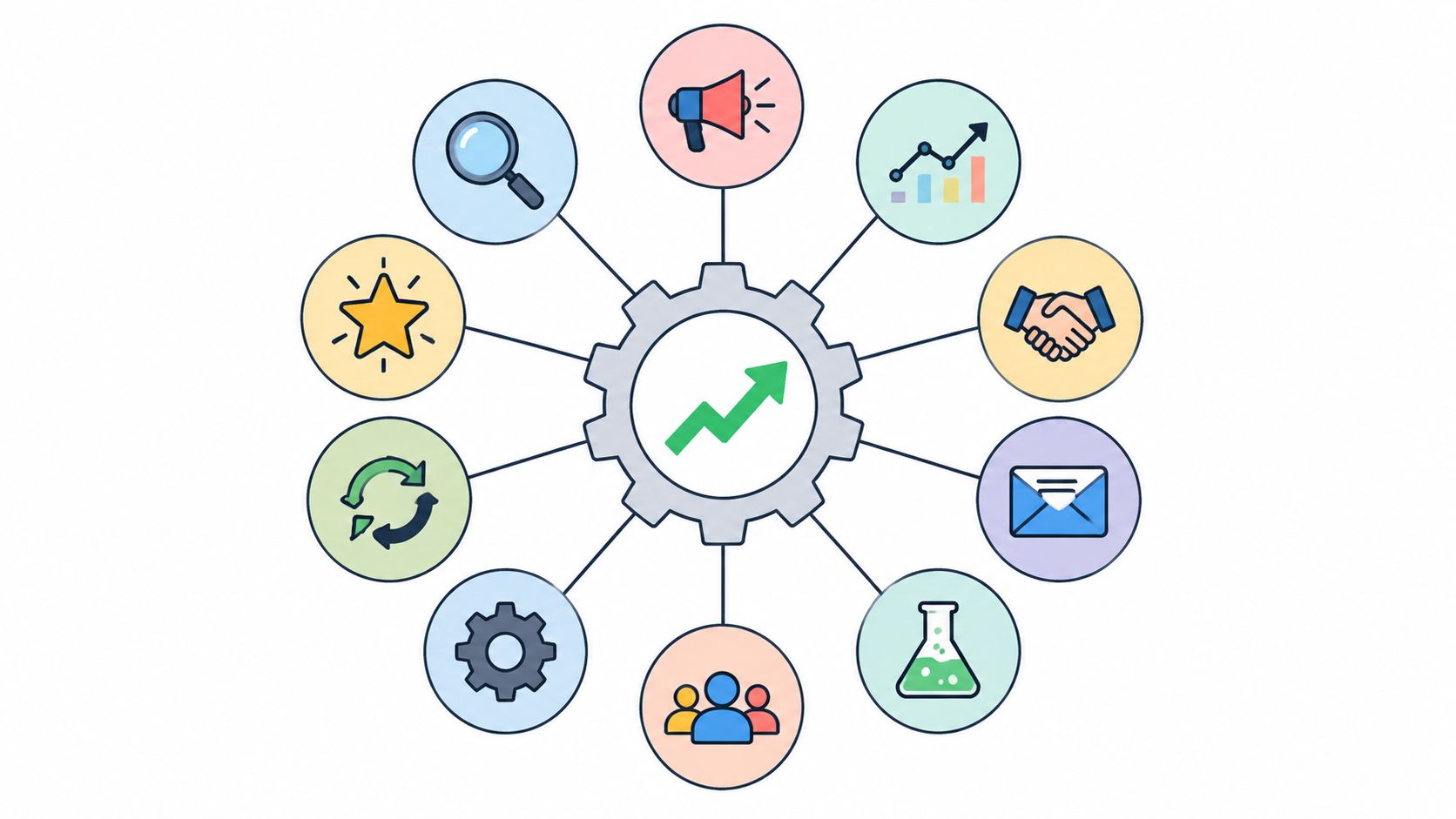
Lead generation belongs to a wider growth system, but each discipline has a different job. Demand generation builds awareness, category understanding, and interest across a market. Lead generation gives interested people a practical way to identify themselves. Brand marketing develops memory, trust, and preference over time. Outbound sales uses research and direct contact to start or advance conversations with specific people or accounts.
The distinction becomes clearer when each team's question is stated plainly:
- Demand generation: Do target accounts understand the problem and recognize our category?
- Lead generation: Which interested prospects have raised their hands or shown useful intent?
- Brand marketing: Will buyers remember and trust us when the problem becomes urgent?
- Outbound sales: Can a representative create a relevant conversation with a specific person or account?
The same person can encounter all four motions during one buying process. A useful article may create demand, a webinar registration may create a known lead, a trusted brand may make the company easier to choose, and an outbound message may start a sales conversation. The touchpoints overlap, while the objectives and evidence remain different.
Reporting breaks down when teams compress these jobs into one scorecard. A demand campaign may influence future pipeline without producing immediate form fills. Brand activity may improve direct traffic without a clean last-touch conversion. A lead-generation campaign can produce many MQLs while sales rejects the contacts. Outbound sales may book meetings from accounts marketing never captured.
| Discipline | Primary Goal | Core KPI | Typical Channels |
|---|---|---|---|
| Lead generation | Capture and qualify known prospects | MQLs, CPL, stage conversion | Landing pages, forms, webinars, gated assets |
| Demand generation | Build market interest and account reach | Pipeline influence, account engagement | Content, events, paid media, communities |
| Brand marketing | Build recall, trust, and preference | Brand awareness and recall measures | Creative campaigns, PR, social, sponsorships |
| Outbound sales | Create direct sales conversations | Meetings booked, opportunity value | Email, calling, social selling, account research |
The table is a planning aid, not a set of sealed departments. A webinar can support demand generation while capturing leads. A sales email can strengthen account awareness while creating a meeting. Teams need shared definitions, clear ownership, and a handoff agreement so quality and timing receive as much attention as volume.
Readers seeking a fuller comparison can use this guide to demand generation marketing as a reference. Investment across brand, demand, and lead capture should reflect the sales cycle, audience, and economics. Judging every campaign by CPL makes brand and demand work look wasteful. Judging everything by reach allows weak lead quality to remain hidden until revenue misses.
The Funnel and Buyer Journey in Practice
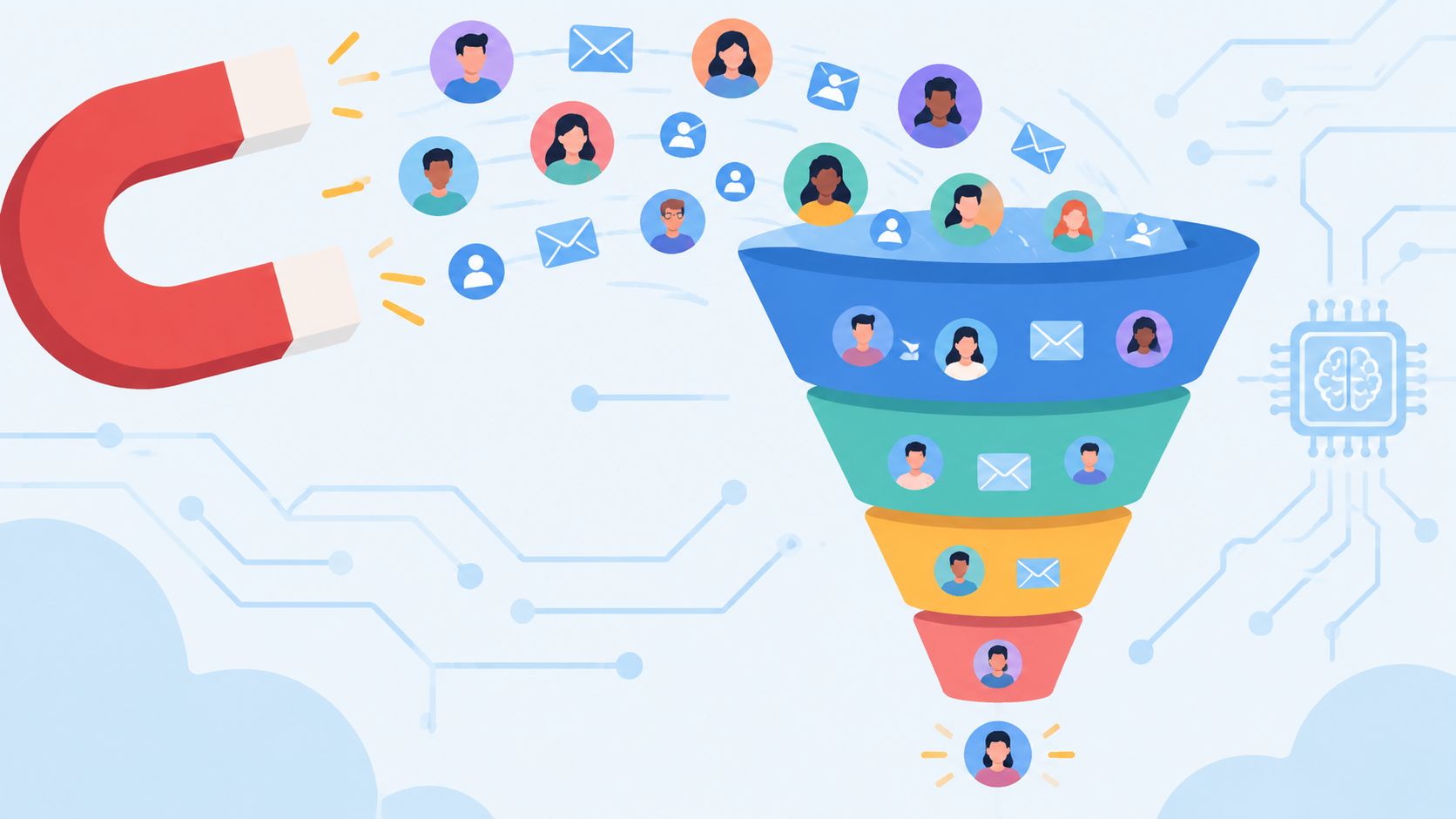
A funnel is useful because it gives marketing and sales a shared way to interpret buyer evidence. It does not describe a perfectly straight path. It records what a contact has done, what remains uncertain, and which team owns the next action. Lead generation therefore becomes a quality-and-timing problem, not a contest to collect the largest contact list.
From subscriber to customer
At the top, someone may read an SEO article, use a tool, or download a document. That person is a subscriber or early-stage lead. Marketing can continue the relationship, while sales waits for stronger evidence of fit and intent.
The middle stage is an MQL, created when agreed scoring rules are met. Those rules can combine company fit, role, engagement, product interest, and a high-intent action. A score should express a commercial hypothesis, not just total clicks. A person who visits repeatedly but lacks account fit may need a different path from a well-matched buyer who has taken one meaningful action.
At the bottom, an SQL is a lead sales has accepted for direct qualification. The discovery call tests the problem, timing, decision process, and suitability. Only then should the organization treat the contact as a qualified opportunity. The final stage is a customer, when the business has purchased.

Stage labels become useful when teams inspect where and why progression slows. A large pool of subscribers with few qualified conversations may indicate weak intent signals, poor fit, or an offer that attracts researchers rather than buyers. A sharp decline after marketing qualification may point to scoring rules that reward activity without confirming a sales problem. These B2B funnel benchmarks provide context for that diagnosis, but traffic source, offer, audience, buying cycle, and form friction still shape the result.
Handoff quality beats speed alone
A rapid handoff helps only when sales receives enough context to act. The representative should see the converting offer, account fit, recent high-intent actions, and any stated problem. Without that information, sales must reconstruct the buyer's journey, and a nominally qualified lead can stall before a useful conversation begins.
The handoff should also include a feedback loop. Sales can mark whether the lead lacked fit, timing, authority, or a real problem. Marketing can then adjust scoring and routing instead of increasing volume to compensate for a quality gap. Clear ownership makes timing meaningful because the right person receives the lead with a reason to act.
Watch the video below for a visual explanation of how funnel stages connect:
Teams comparing software can use funnel builder picks from Impact Marketer to frame feature questions. The tool matters less than definitions, routing rules, context at handoff, and the feedback that improves progression over time.
Channels and Tactics That Drive Real Leads
Which channel brings a lead closer to a buying decision? The answer depends on the buyer's question, the funnel stage, and the evidence of intent. Strong programs assign each tactic a job, then connect them so awareness, education, capture, and qualification work as one system.
Ungated content and SEO reach people who are still learning. Articles, comparison pages, tools, and calculators can earn attention without a form. Intent varies widely, so the strongest pages answer a specific commercial question and point to a relevant next step.
Gated assets exchange access for contact information. Templates, implementation kits, research summaries, and checklists can reveal identity and topic interest. The trade-off is friction. Asking for too much information lowers completion, while a weak offer can attract contacts with little buying intent.
Paid search and social provide speed and targeting. Search tends to capture an expressed problem. Social can create demand or reach a defined professional audience. Paid channels scale faster than organic content, but results depend on audience precision, offer relevance, landing-page quality, and what happens after conversion.
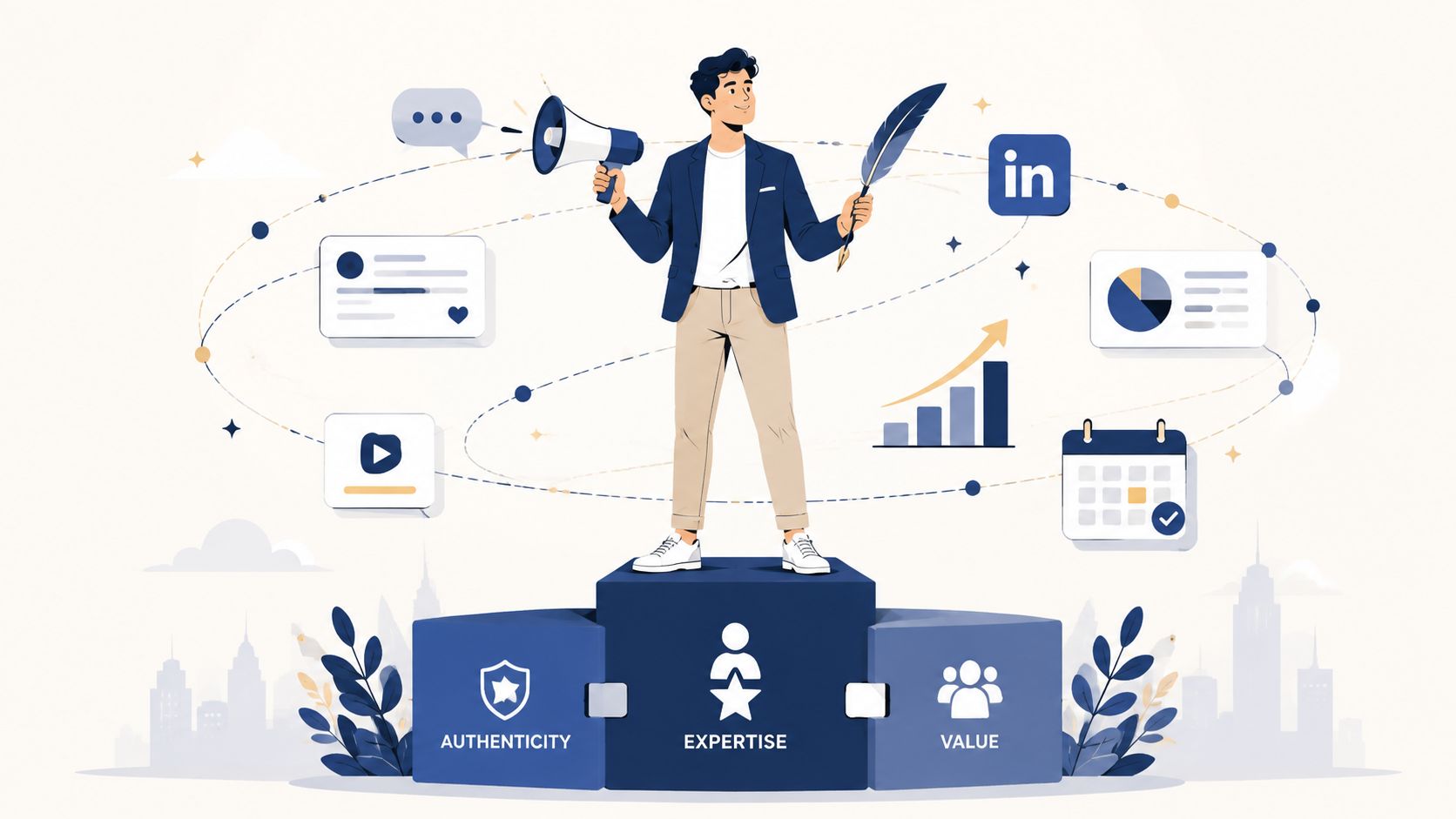
LinkedIn outreach combines organic credibility, direct messages, and tools such as Sales Navigator. It works best when representatives use account signals and personalized context. Generic automation can increase activity while reducing reply quality, so human review still matters. LinkedIn is especially prominent in B2B, with 89% of B2B marketers using it for lead generation and LinkedIn driving 80% of B2B social leads, according to the 2026 channel benchmark data.
Email nurture responds to behavior over time. A useful sequence changes with the prospect's topic, role, and next action. Someone who downloads an introductory guide should not receive the same product message as someone who requests pricing information.
Partners and influencers transfer trust and reach a relevant audience. Measurement requires dedicated landing pages, campaign identifiers, and qualification questions. Those controls keep partner-sourced contacts from being lost in an untraceable referral category.
Channel fit matters more than a universal ranking:
| Channel | Cost Pattern | Lead Intent | Scalability | Best Funnel Stage |
|---|---|---|---|---|
| SEO and ungated content | Depends on production and distribution | Low to medium | Builds over time | TOFU and MOFU |
| Gated assets | Depends on offer and traffic source | Medium | Moderate | MOFU |
| Paid search | Depends on keyword and competition | Medium to high | Fast, budget-dependent | MOFU and BOFU |
| Depends on audience and outreach model | Medium to high when signal-led | Moderate | MOFU and BOFU | |
| Email nurture | Depends on database quality and tooling | Increases through engagement | High after setup | MOFU |
| Partners and influencers | Depends on agreement and audience fit | Medium to high | Depends on partner access | TOFU and MOFU |
Cost comparisons become less useful when channels define a lead differently. A form completion, a qualified account, and a sales conversation are separate outcomes. Compare channels by the quality and timing of the opportunities they create, not by captured contacts alone. As noted earlier, the same source can perform differently when the offer, audience, buying cycle, or form friction changes.
If outbound capacity is the constraint, a team can review specialist options such as Hire SDRs while deciding which prospecting work should remain internal. The choice should depend on data quality, sales expertise, compliance needs, and who owns qualification after the first response. A channel earns more investment when it produces clear buying signals and gives sales enough context to act.
Metrics That Tell You Whether It Is Working
Which number should determine whether a lead-generation program is working? Cost per lead, stage conversion, MQL-to-SQL progression, and customer lifetime value answer different parts of the same question. Read together, they show whether a channel attracts attention, creates sales-ready demand, and produces customers at an acceptable cost.
Start with the funnel economics
CPL measures the cost of a captured contact. Stage conversion shows how many contacts advance. MQL-to-SQL progression tests whether marketing's definition of quality matches sales' experience. Customer lifetime value, or LTV, shows what those customers are worth over time.
A low CPL can hide poor economics. Suppose Channel A spends $1,000 to produce 100 leads, but only one becomes a customer worth $200. Its CPL is $10, while the acquisition cost for that customer is $1,000. Channel B spends the same amount to produce 10 leads, one of which becomes a customer worth $4,000. Its CPL is $100, yet the resulting relationship between acquisition cost and value is healthier. These figures are an illustrative calculation, not a benchmark.
Practical rule: Do not approve a channel because its CPL looks attractive. Trace the lead through qualification, sales acceptance, revenue, and retention first.
The published B2B lead-generation statistics overview can provide diagnostic context for funnel performance, but its ranges are not promises. Use them to ask why a channel falls outside an expected pattern, then investigate audience fit, offer relevance, response speed, and form friction.
Set a break-even CPL for your own economics. Start with the LTV you expect from a customer, subtract the margin or payback buffer your business requires, then work backward through customer conversion, sales acceptance, and lead qualification rates. The result is the highest CPL the channel can support. If observed CPL stays above that limit after reasonable testing, reduce spend or remove the channel.
Use attribution without pretending it is perfect
First-touch attribution identifies what introduced the account. Last-touch attribution highlights the interaction closest to conversion. Multi-touch attribution distributes credit across several interactions. Each model answers a different management question, so a dashboard can display all three instead of treating one as universally correct.
To calculate an LTV:CAC ratio, divide customer lifetime value by customer acquisition cost. If a channel produces customers with an LTV of $4,000 and a fully loaded acquisition cost of $1,000, the ratio is 4:1. Include media, tools, creative, agency support, and sales effort when those costs materially support acquisition.
Raw form fills, registered users, and clicks matter only when they correlate with pipeline. Ask which source produced customers, at what cost, and with what retention or expansion potential. That is the quality-and-timing test behind efficient lead generation.
How AI and Buyer Behavior Are Rewriting the Playbook
AI changes lead generation in two places: before capture, when buyers research without contacting vendors, and after capture, when teams interpret signals and decide what deserves attention. HubSpot's 2026 marketing data reports that nearly 70% of marketers say leads arrive later in the buying process after more AI-assisted research, while 37% say leads are more informed because of AI. HubSpot's marketing statistics provide the source for those figures.
That shift compresses the traditional awareness stage. A prospect may already understand the category, compare alternatives, and form an initial shortlist before completing a form. Your landing page therefore needs to answer a specific unresolved question, not repeat basic education the buyer has already received elsewhere.
What changes operationally
AI-assisted systems can help teams enrich records, summarize account activity, identify buying signals, draft outreach, and route leads. Agentic SDR workflows can coordinate list building, personalization, follow-up, and meeting scheduling. Humans still need to validate fit, handle nuance, protect brand standards, and conduct the qualification conversation.
Intent data can include signals such as relevant site behavior, account research, role changes, or business events. Those signals become useful only when the scoring model connects them to an ideal customer profile and a defined next action. A visit alone shouldn't trigger an aggressive sales sequence if the account, role, or problem doesn't fit.
The operational requirement is speed with judgment. A system that sends an irrelevant message immediately is less useful than a human who responds later with strong context. Teams evaluating the practical use of these workflows can review AI lead generation guidance from ReachLabs.ai and compare it with their existing CRM, enrichment, automation, and consent processes.
AI also changes team skills. Marketers need stronger data hygiene, prompt and workflow design, experimentation discipline, and revenue analysis. Sales representatives need to interpret buying signals rather than rely on generic scripts. Tooling can increase capacity, but it won't repair weak positioning or unclear qualification rules.
Campaign Examples and What Made Them Convert
The campaign patterns below are illustrative scenarios, not verified case studies or reported performance results. They show how to diagnose a campaign without treating every conversion problem as a traffic problem.
A B2B software team might discover that a gated ebook attracts broad interest but gives sales little usable context. The original hypothesis was that a detailed asset would generate volume. The failure point was weak intent. Replacing it with an interactive calculator creates a stronger exchange because the user reveals a business situation while receiving a relevant output. The team should then measure qualified progression, not celebrate downloads alone.
A direct-to-consumer brand could face a retargeting audience that has seen product ads but stopped engaging. The original tactic relied on repeated promotional creative. The fix might combine creator demonstrations with customer-style content, then use retargeting messages matched to the product concern shown by the visitor. The lesson is that creative relevance can matter more than increasing frequency.
A B2B agency may send LinkedIn outreach to a broad job-title list and receive weak replies. Adding account-level signals and intent context can narrow the audience and improve the reason for contact without increasing ad spend. The team should judge the change by accepted conversations and opportunity quality, not message volume.
| Industry | Original Tactic | What Failed | The Fix | Result |
|---|---|---|---|---|
| B2B software | Gated ebook | Broad interest, weak buying context | Calculator-based offer | Evaluate qualified progression |
| DTC brand | Repeated retargeting ads | Creative fatigue and low relevance | Influencer-led content matched to intent | Evaluate re-engagement and purchases |
| B2B agency | Broad LinkedIn outreach | Low-context replies | Signal-based targeting and intent data | Evaluate qualified demos and opportunities |
The common pattern is diagnostic: identify where the funnel loses quality, change the offer or targeting at that gate, and measure downstream movement. Readers looking for additional patterns can review these lead-generation campaign examples, while keeping the same discipline around verified results and local context.
Best Practices and a 30-60-90 Day Plan
Start with a baseline before adding tools or channels. Audit CPL, stage conversion, MQL-to-SQL progression, source attribution, and the reasons sales rejects leads. Write the qualification rules in plain language so marketing and sales can apply the same standard.
Days 1 to 30
- Audit quality: Trace recent leads from source to sales disposition.
- Find friction: Review forms, offers, routing, and follow-up timing.
- Set definitions: Document subscriber, MQL, SQL, opportunity, and customer.
Days 31 to 60
- Add intent: Test one high-intent channel that matches your buyer's behavior.
- Score consistently: Combine fit, engagement, and meaningful buying signals.
- Assist qualification: Pilot enrichment or an agentic workflow with human review.
Days 61 to 90
- Clean attribution: Compare first-touch, last-touch, and multi-touch views.
- Retire waste: Reduce investment in sources that create activity without pipeline.
- Scale winners: Expand campaigns that produce qualified opportunities at sustainable economics.
The plan works when every action connects to a measurable funnel movement. Don't ask whether you generated more leads. Ask whether the right prospects moved closer to a sales conversation and whether the resulting customers justify the acquisition cost.
ReachLabs.ai can help businesses design digital campaigns around lead generation, including audience targeting, qualification, LinkedIn outreach, and pipeline-focused reporting. Visit ReachLabs.ai to discuss a lead-generation system built around lead quality, buyer timing, and measurable conversion.