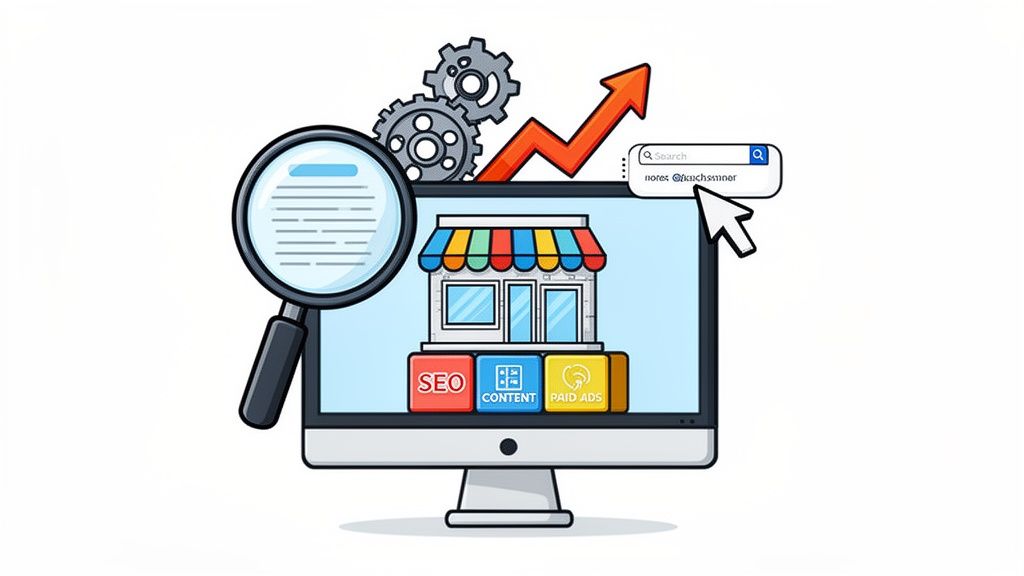
In today's market, simply having a website is like having a shop with no sign on a street with no name. Internet marketing and SEO services are what put your business on the map, create clear pathways for customers, and invite them inside.
It’s a mix of smart strategy—using search engine optimization, compelling content, and targeted paid advertising—to attract the right people, keep them engaged, and ultimately, turn them into loyal customers. A passive "if you build it, they will come" approach just doesn't work anymore.
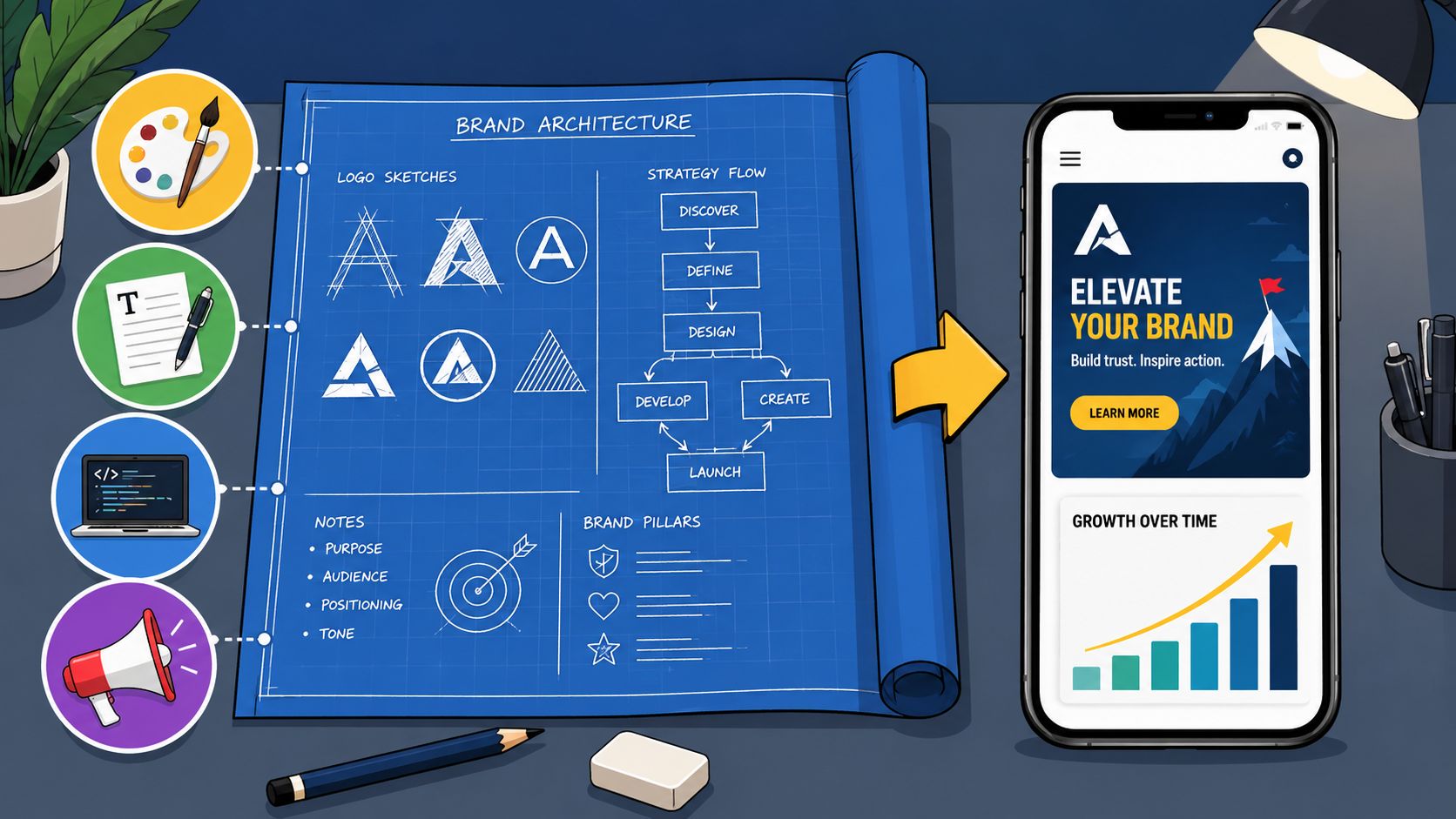
Your Blueprint for Digital Success in 2026
Think of the internet as the world’s busiest marketplace. To stand out, you need more than a simple online brochure. You need a complete plan—a blueprint—that guides every digital move you make. That’s exactly what internet marketing and SEO services deliver.
These services act as both the architect and the welcome crew for your online presence. They make sure you’re not just visible but that you’re the obvious choice for your ideal customer. This isn't just about existing online; it's about actively building an environment where every piece of your marketing works together to fuel real business growth.
The numbers back this up. The global digital marketing industry was valued at an incredible USD 456.7 billion in 2025 and is expected to surge past USD 1,200.3 billion by 2034. Investing in a strategic online presence isn't an expense; it's a direct investment in your company's future.
What Goes Into a Modern Digital Strategy?
At its core, a strong internet marketing plan is built on a few essential channels that work in concert. Understanding each one helps you see how they fit together to create a powerful engine for your business.
A simple way to look at the main components is by breaking them down into their primary roles. The table below gives a quick overview of the core channels and what they're designed to accomplish.
| Marketing Channel | Primary Goal | Example Tactic |
|---|---|---|
| Search Engine Optimization (SEO) | Build long-term visibility & trust | Optimizing website pages to rank for key search terms |
| Content Marketing | Educate audiences & build authority | Publishing a helpful blog post that solves a customer problem |
| Paid Advertising (PPC) | Generate immediate, targeted traffic | Running a Google Ad campaign for a specific product or service |
| Social Media Marketing | Build community & brand loyalty | Engaging with followers and sharing behind-the-scenes content |
| Email Marketing | Nurture leads & drive repeat business | Sending a weekly newsletter with exclusive offers |
Each of these channels represents a different way to connect with your audience, but their real power is unleashed when they are used together as part of a cohesive strategy.
The Three Pillars of Online Growth
While there are many channels, most successful strategies are anchored by three foundational pillars. Each one plays a unique, yet connected, role in building your brand and driving sales.
Search Engine Optimization (SEO): This is your foundation. It's the technical and creative work of making your website easy for search engines like Google to find, understand, and rank highly when people search for what you offer. Good SEO makes you discoverable.
Content Marketing: This is the value you bring to the table. By creating genuinely helpful blog posts, videos, case studies, and guides, you answer your audience’s questions and solve their problems. This builds trust and positions you as the go-to expert in your field.
Paid Advertising (PPC): This is your accelerator. Pay-per-click ads on search and social media platforms give you instant visibility. They let you jump to the front of the line, reach very specific audiences quickly, and test new ideas in real-time.
The magic happens when you stop treating these as separate tasks. A truly effective strategy weaves them together. Great content is pointless if no one can find it (that's where SEO comes in), and paid ads can give that same great content an immediate boost to the perfect audience. It creates a powerful, self-sustaining cycle of growth.
To build a dominant digital presence by 2026, incorporating the best AI powered marketing tools into your workflow is no longer optional—it's essential for staying ahead. These services aren't just another item on a marketing budget; they are the engine of modern business.
Unpacking the Key Internet Marketing and SEO Services
Alright, let's pull back the curtain and get specific about what internet marketing and SEO services actually involve. Think of these services less as abstract concepts and more like a team of specialists working on your business. Each has a distinct job, but they all share one goal: winning the race for your customers' attention.
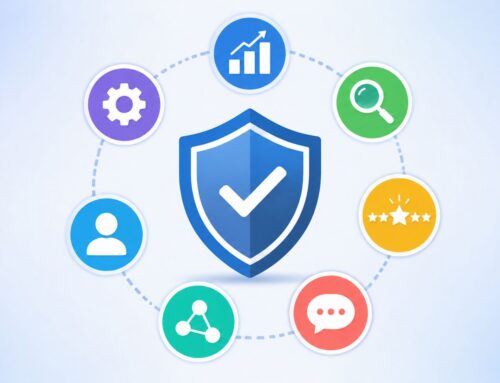
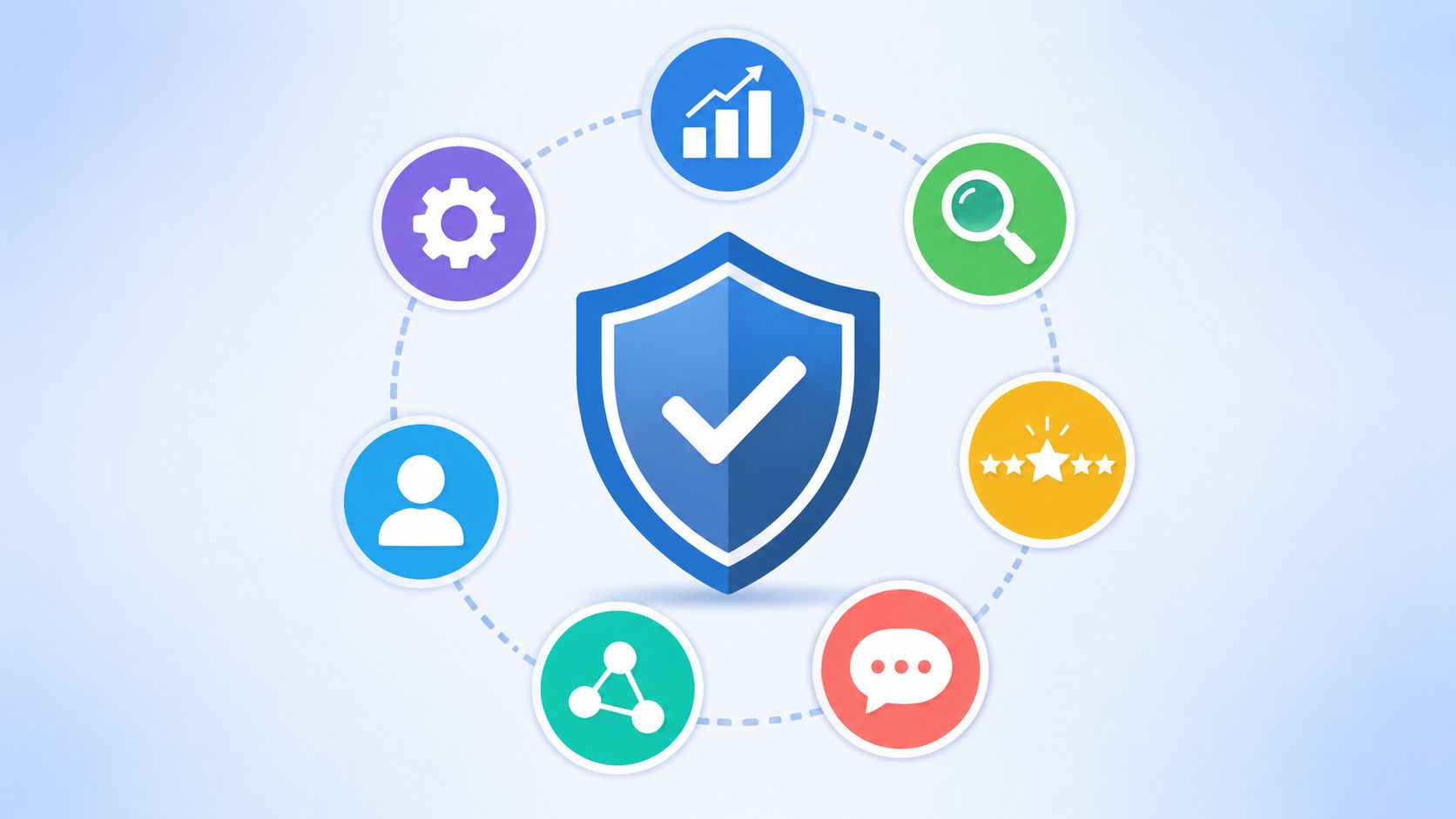
This diagram really brings the idea home. It shows how core activities like SEO, content, and ads are interconnected spokes on a wheel, all driving your business forward.

As you can see, nothing works in a vacuum. True growth comes from a cohesive strategy where every piece supports the others.
Search Engine Optimization: The Foundation
At its heart, Search Engine Optimization (SEO) is the process of making your website more appealing to search engines like Google. This isn't about gaming the system. It's about organizing your digital storefront so it's incredibly easy for search algorithms to find, understand, and—most importantly—trust what you have to offer.
SEO is typically broken down into three main jobs:
On-Page SEO: This is everything you do to optimize the content on your website pages. Think of it like merchandising a physical shop. You'd put popular products (keywords) in prominent spots, use clear signage (titles and headers), and organize everything logically so customers and search engines can find what they need, fast.
Off-Page SEO: This is all about building your reputation and authority across the wider web. The main currency here is backlinks—links from other respected websites pointing to yours. Every quality backlink acts as a vote of confidence, telling search engines that your site is a credible source of information.
Technical SEO: This is the crucial work done behind the scenes to ensure your site is built on a solid technical foundation. It covers essentials like site speed, mobile-friendliness, and having a clean sitemap so search engine crawlers can index all your pages efficiently. A strong technical base is simply non-negotiable. To see just how deep this goes, you can get a good sense of the process by exploring what a comprehensive SEO audit service covers.
Content Marketing: The Value You Provide
If SEO is the foundation and structure of your shop, content is the valuable inventory you fill it with. Content marketing is the practice of creating and sharing genuinely helpful and relevant information to attract and keep a specific audience. It's a proven model—over 80% of marketers report that their content efforts are successful.
This isn't about a hard sales pitch. It’s about becoming a go-to resource by answering your customers' questions and solving their problems. This usually takes the form of:
- Helpful blog posts
- In-depth guides and tutorials
- Insightful case studies
- Engaging videos or podcasts
By consistently giving away value without asking for anything in return, you build incredible trust. You establish your brand as an expert. Then, when your audience is finally ready to buy, you're the first one they think of.
Paid Search: The Accelerator
SEO and content are fantastic long-term plays, but sometimes you just need to get in front of people right now. That’s where Paid Search, often called Pay-Per-Click (PPC) advertising, shines. With PPC, you pay for your ads to appear at the very top of search results for keywords you choose.
Think of it as renting a pop-up shop in the busiest part of town. You get instant access to people who are actively looking for what you sell at this very moment. This makes PPC an incredibly powerful tool for generating immediate leads and sales while your long-term organic strategies are still building momentum.
How SEO Services Drive Measurable Business Results
Getting to the top of Google is a fantastic achievement, but let's be honest—what does that actually do for your business? The real magic of professional internet marketing and seo services is how they connect those rankings to revenue, turning clicks into customers and traffic into real profit.
It all comes down to one powerful concept: searcher intent.
Think about it. When you see a social media ad, it's an interruption. But organic search traffic is completely different. These are people who are actively looking for a solution right now. They have a problem, and they're typing their exact need into Google. When your website shows up, you aren't just another ad; you're the answer they were searching for.
This kind of traffic is incredibly valuable because it’s pre-qualified and highly motivated. They land on your site with a clear goal, which is why organic search traffic almost always converts at a higher rate than visitors from other channels.
From Ranking to Revenue: The Path to Profit
Achieving a high ranking is just the first step. The real work is turning that visibility into a reliable stream of leads and sales. A smart SEO strategy doesn't stop at page one; it builds an entire system designed for conversion.
Here’s a look at how that journey unfolds:
Attract High-Intent Traffic: It all starts with targeting keywords that people use when they’re ready to buy. For a plumber, ranking for "emergency plumber near me" is infinitely more valuable for generating immediate business than ranking for "how plumbing works."
Deliver an Exceptional User Experience: Once someone clicks, your website has to deliver. It must be fast, mobile-friendly, and easy to navigate. If it isn't, they'll hit the back button in seconds, signaling to Google that your site isn’t a good result.
Provide Clear Calls-to-Action (CTAs): Don't make visitors guess what to do next. Your page needs to guide them with clear, unmissable prompts. Whether it’s “Request a Quote,” “Buy Now,” or “Schedule a Consultation,” a strong CTA is what turns a visitor into a lead.
Track and Measure Everything: This is where you connect your efforts to actual business results. Professionals use analytics to see exactly which keywords and pages are driving sales. This data allows them to double down on what’s working and fix what isn’t.
To stay ahead of the competition, you need to use the right measurement tools. Sophisticated AI Rank Tracker Tools are becoming non-negotiable for monitoring performance and making precise, data-backed strategy adjustments.
SEO as a Business Asset, Not a Rental Expense
One of the most powerful things about SEO is the long-term return on your investment (ROI). It's helpful to think of paid ads (PPC) like renting an apartment. The second you stop paying rent, you're out. Your traffic disappears overnight.
SEO, on the other hand, is like building a house. It takes time and effort upfront, but every piece of content you create and every backlink you earn becomes a permanent part of your website's foundation. You're building a valuable business asset that continues generating traffic and leads long after the initial work is paid for.
This compounding effect is what makes a well-executed SEO strategy so profitable over time. While PPC can give you a quick boost, SEO builds sustainable, long-term growth that actually becomes more cost-effective as your authority builds.
This is exactly why SEO continues to be the bedrock of a solid internet marketing plan. Projections show that organic search will power a massive 40.65% of all global website traffic by 2026, with paid channels trailing far behind. This statistic alone shows why smart agencies prioritize SEO to deliver a real, measurable lift in brand visibility. You can dig deeper into these trends and what they mean for your business by checking out the full report on ForgeApollo.com.
Ultimately, professional internet marketing and seo services do more than just get you seen online. They bridge the gap between your digital presence and your bottom line, ensuring every ranking improvement and content update is tied directly to the only metric that truly matters: profitable growth.
Integrating Marketing Channels for Maximum Impact

The best internet marketing and SEO services don't operate in silos. Think of your marketing strategy like an orchestra. Each channel—SEO, content, social media, paid ads—is an instrument. They can all make noise on their own, but the real magic happens when a conductor gets them all playing in harmony.
This unified approach is where you get real results. What good is a brilliant blog post if no one can find it in Google? A viral social media campaign is a wasted opportunity if it sends people to a clunky, slow-loading website. True success comes from making every channel support and boost the others.
When everything works together, you create a powerful marketing engine where the whole is much greater than the sum of its parts. Each click, share, and comment builds on the last, generating a kind of momentum that isolated efforts could never match.
The Core Synergy: SEO and Content Marketing
If there's one partnership that forms the foundation of all digital marketing, it's the one between SEO and content. They are completely intertwined; one simply can't function effectively without the other. Content gives your SEO a purpose, and SEO gives your content an audience.
Put simply: content is the valuable information that solves your audience's problems, while SEO is what gets that information in front of them when they need it most.
This relationship is a two-way street:
- Content Fuels SEO: Every quality article or guide you create is another asset for Google to index. This gives you more chances to show up in search results and capture traffic.
- SEO Guides Content: Keyword research, a cornerstone of SEO, tells you exactly what questions your audience is asking. This data becomes a roadmap for your content team, ensuring you’re creating things people are actually searching for.
- Great Content Earns Backlinks: When you produce something truly useful or insightful, other websites will naturally link back to it. These backlinks are a huge signal of trust to search engines, boosting your authority and rankings across the board.
Amplifying Reach with Social Media and Affiliates
While SEO and content are the heart of the operation, other channels act as powerful amplifiers. When used smartly, social media and affiliate marketing can take your core strategy and spread it far and wide.
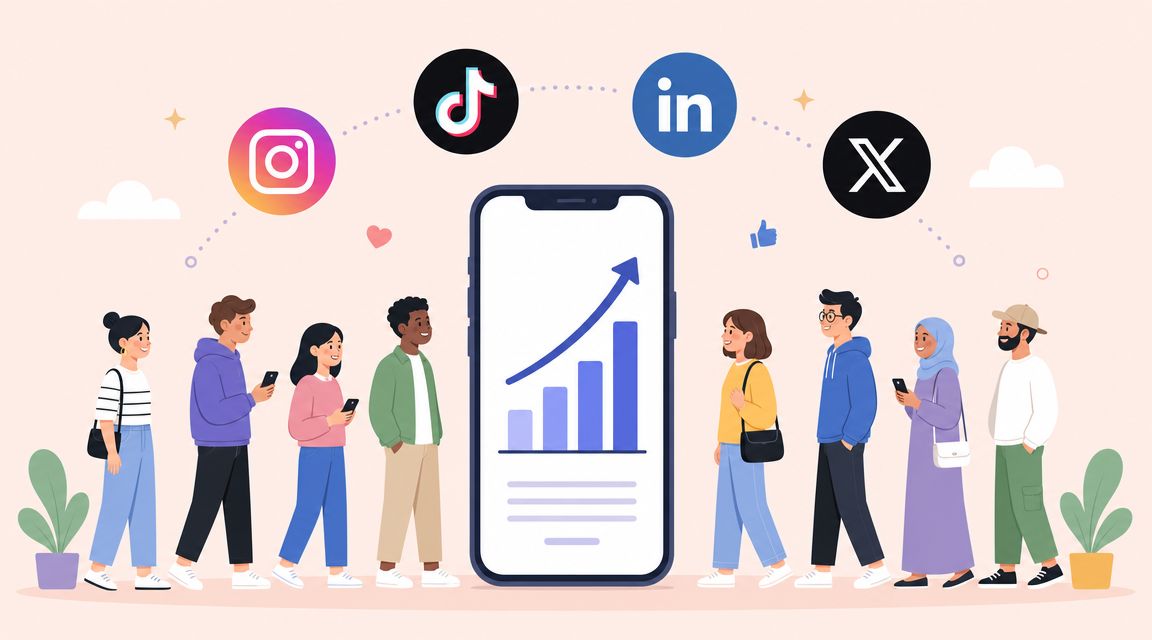
For instance, activity on social media sends subtle but important signals to search engines. When your content gets a lot of shares, likes, and comments on platforms like LinkedIn or X, it signals that real people find it valuable. This "social proof" can indirectly contribute to better search rankings over time.
An integrated strategy means you're not just publishing a blog post and hoping for the best. You're actively promoting that SEO-optimized content on your social channels to drive instant traffic and encourage the shares that support your long-term SEO goals.
A well-run affiliate program can also turn your content into a direct source of revenue. By partnering with relevant influencers and publishers, you give them the tools (your great content) to promote your products and services. This channel is growing fast; affiliate marketing spend is expected to jump past $15 billion globally by 2026, up from $8.2 billion in 2022.
This trend explains why 75% of marketers see websites, blogs, and SEO as their most important channels—they are the core assets that make these high-ROI partnerships possible. You can dig into more data on these trends and see how they apply to your business by checking out the latest digital marketing statistics on SafariDigital.com.au.
Choosing the Right Internet Marketing Agency for Your Goals
Hiring an agency to run your internet marketing and SEO services is a huge decision. Think of it like bringing on a co-pilot for your business—the right one helps you navigate a direct route to your destination, but the wrong one can send you spiraling off course. This isn’t just about outsourcing tasks; it’s about finding an extension of your team.
You’re looking for a partner, not just another vendor. A true partner digs in to understand your company, what makes your customers tick, and what you’re really trying to achieve. They don’t just check boxes; they bring strategic thinking to the table and are genuinely invested in your growth.
Key Questions to Vet Potential Agencies
Before you even think about signing a contract, you need to do some serious digging. The answers you get to a few pointed questions will tell you everything you need to know about an agency's competence, transparency, and overall fit. If their answers are vague or they dodge the question, that's a massive red flag.
Here are the essential questions you should be asking:
- How do you define and measure success for a client like us? A great answer moves past vanity metrics like "more traffic." They should immediately start talking about what actually matters to your bottom line: leads, conversion rates, and cost per acquisition.
- What does your communication and reporting process look like? You’re looking for specifics. A clear, consistent reporting schedule and a dedicated point of contact are non-negotiable. You should never be left in the dark, wondering what you're paying for.
- Can you show me case studies or examples from our industry? While your business is unique, seeing their success with similar companies proves they understand your market’s challenges and have a playbook that works.
- What will you need from my team for this partnership to be successful? This is a brilliant question because it shows you see this as a two-way street. It also sets clear expectations for collaboration right from the get-go.
Taking the time to do this due diligence is absolutely critical. For an even more detailed checklist of what to look for, our guide on how to choose a digital marketing agency breaks it all down.
Understanding Agency Pricing and Engagement Models
The cost of internet marketing and SEO services is all over the map, so getting a handle on the different pricing models is key to finding a solution that fits your budget and goals. Most agencies structure their engagements in one of a few common ways.
Here’s a quick comparison to help you figure out what makes the most sense for you.
Agency Engagement Models Compared
| Model | Best For | Typical Cost Structure | Key Consideration |
|---|---|---|---|
| Monthly Retainer | Ongoing, long-term strategies like SEO and content marketing where momentum is key. | A fixed monthly fee, often from $2,500 – $10,000+, for an agreed scope of work. | Provides consistent, dedicated effort and is perfect for building sustainable growth over time. |
| Project-Based | One-off tasks with a clear beginning and end, like a website redesign or a technical SEO audit. | A one-time flat fee quoted for a specific deliverable or outcome. | Great for defined needs, but doesn't work well for the continuous effort that marketing requires. |
| Hourly Rate | Small, specific tasks, quick consultations, or troubleshooting. | A set price per hour for the time of the agency's team members. | It’s flexible, but it can be incredibly difficult to budget for and often lacks strategic direction. |
Ultimately, the model you choose should align with the kind of work you need done. For foundational, long-term growth, a retainer is almost always the right fit.
Red Flags vs. What a Good Proposal Looks Like
Finally, you have to know how to spot the warning signs. The single biggest red flag is any agency that guarantees #1 rankings on Google. SEO is far too dynamic for anyone to make that promise. Those kinds of guarantees are almost always a smokescreen for risky "black-hat" tactics that can get your website penalized, or worse, removed from search results entirely.
A transparent, trustworthy agency focuses on a sound process and predictable growth, not on pipe dreams. They’ll be upfront that real SEO takes time and consistent effort—results are earned, not bought overnight.
A solid proposal is your roadmap. It should be a crystal-clear document that details the specific scope of work, defines every deliverable, lays out a timeline for the first 90 days, and presents transparent pricing with no hidden fees. It should feel less like a sales pitch and more like a concrete plan for achieving your goals together.
Setting Realistic Timelines and Measuring Success

Let's get one thing straight: real growth doesn't happen overnight. Professional internet marketing and SEO services are an investment in a long-term business asset, not a quick fix. Think of it like planting an orchard. You can't put a seed in the ground today and expect to pick fruit tomorrow. It takes consistent care and patience.
SEO, especially, is a marathon. While you can expect to see some encouraging movement in the first 1-3 months, these are just the early sprouts. This is the crucial setup phase where your team is busy with audits, fixing technical glitches, and rolling out foundational content.
The real, needle-moving growth typically shows up between 6-12 months. This is when you should start seeing significant jumps in your search rankings, a steady climb in organic traffic, and a real increase in leads or sales. The compounding effect of all that early work truly starts to kick in.
Leading vs. Lagging Indicators
To know if you're on the right path, you need to understand the difference between two types of metrics. It’s like the difference between seeing dark clouds on the horizon and actually feeling the first raindrops.
Leading Indicators: These are the early signs that your strategy is taking hold. They aren't the final business results, but they show positive momentum. Think of things like improving keyword rankings, a stronger website authority score, and more organic traffic sessions.
Lagging Indicators: These are the ultimate business results you’re aiming for. They lag behind the initial work but confirm that the strategy is delivering tangible value. This is where you find metrics like lead volume, conversion rate, and—the one that matters most—revenue.
You have to track leading indicators to stay confident in the process. Watching your rankings climb for important keywords proves the strategy is working, even before the revenue from that traffic shows up. It tells you the rain is definitely coming.
Key Performance Indicators to Measure Success
To truly get a handle on the impact of your campaigns, you need to focus on the right Key Performance Indicators (KPIs). These are the numbers that connect your marketing efforts directly to your business goals, giving you a clear picture of your return on investment. If you're new to this, getting familiar with how to measure marketing effectiveness is a great starting point.
Here are the essential KPIs you should be watching like a hawk:
- Organic Traffic: The total number of people finding your site through unpaid search results. A consistent upward trend here is the clearest sign that your SEO is working.
- Keyword Rankings: Where your website appears in search results for your target keywords. Tracking this shows your visibility is improving for the searches that matter.
- Conversion Rate: The percentage of visitors who take a specific action, like filling out a form or buying a product. This KPI tells you if you're attracting the right kind of traffic.
- Cost Per Lead (CPL): Your total marketing spend divided by the number of new leads you generated. This metric is all about the efficiency of your investment.
By setting realistic expectations and keeping a close eye on both leading and lagging indicators, you can confidently measure the impact of your internet marketing and SEO services and see your investment pay off with sustainable growth.
Frequently Asked Questions About SEO Services
Diving into internet marketing and SEO services for the first time? It's natural to have questions. Getting clear on the fundamentals is the best way to make a smart decision for your business, so let's walk through a few of the most common ones we hear.
How Much Should I Budget for These Services?
This is always the first question, and the honest answer is: it depends. Your budget is tied directly to your industry, how tough your competition is, and what you’re trying to achieve. A local plumber might see great results with a few thousand dollars a month, whereas a national e-commerce brand will need to invest more to make a dent.
The right way to think about this is as an investment in a powerful business asset, not just a marketing expense. A good agency will dig into your specific situation and recommend a budget that actually aligns with your growth goals. As a general benchmark, retainers often fall in the $2,500 to over $10,000 per month range.
What Is the Difference Between SEO and SEM?
This one trips a lot of people up, but the concept is straightforward. Think of Search Engine Marketing (SEM) as the overall playbook for getting traffic from search engines like Google.
Under that umbrella, you have two main tactics:
- Search Engine Optimization (SEO): This is all about earning your spot in the search results organically. It’s the unpaid, long-term work of building authority and ranking for relevant keywords.
- Pay-Per-Click (PPC): This is where you pay for ads to get immediate visibility, usually right at the top of the search results page.
A truly effective strategy almost always blends the two. SEO builds a sustainable foundation for free, compounding traffic over time, while PPC is fantastic for getting quick wins and running highly targeted campaigns.
Can I Do SEO Myself Instead of Hiring an Agency?
Of course. If you have more time on your hands than budget, learning the basics of SEO is a great way to get started and manage some foundational tasks for your website.
However, modern SEO is a full-time job. It’s a complex and fast-moving field. When you hire a specialized agency, you’re not just getting a service; you're getting immediate access to a team of experts, their expensive toolkit of professional software, and years of experience across different industries.
This partnership lets you stay focused on running your business while seasoned experts handle the complicated work of scaling your online presence. While a DIY approach can get you off the ground, an agency will almost always deliver bigger, faster, and more reliable results. They have proven systems to handle algorithm updates and competitive pressure that can easily sideline a solo effort.
It's like the difference between building a garden shed yourself and hiring a crew to build a house—both involve construction, but the scale, speed, and quality of the final product are worlds apart.
Ready to stop guessing and start growing? The expert team at ReachLabs.ai builds data-driven internet marketing and SEO strategies that deliver real business results. Let's create your blueprint for success together. Learn how we can elevate your brand today.