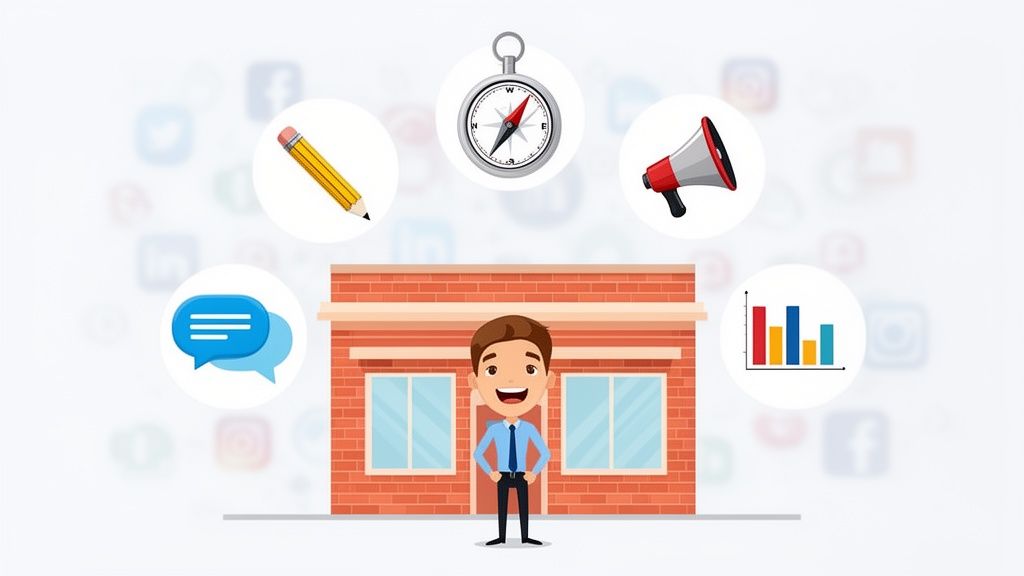
As a small business owner, you're likely wearing a dozen different hats. When it comes to social media, it can feel like one more thing on an already overflowing plate. Professional social media marketing services are designed to take that weight off your shoulders. They handle everything from planning what to post to running ads and talking with your customers online, all with the goal of helping your business grow.
Why Social Media Services Are a Growth Engine for Small Business
Let’s be honest: your customers are on social media. It’s where they find new coffee shops, check out local contractors, and see what their friends are buying. Trying to navigate this world on your own can feel like you're just shouting into the void, tossed around by algorithm changes and fleeting trends with no real strategy.
This is where bringing in a professional can make all the difference. Think of these services as your dedicated marketing department, but without the full-time overhead. They bring the expertise and a clear plan, turning your social media from a guessing game into a reliable tool for finding new customers.
The Power of Professional Management
The sheer scale of social media is staggering. Projections show that 316.07 million Americans will be on social platforms by 2026—that's a massive audience waiting to discover businesses like yours. The key is reaching the right people within that crowd.
This isn't just about being active; it's about being effective. On average, businesses see a return of $5.20 for every $1 spent on professional social media management. It's numbers like these that explain why 96% of small business owners now count on social media for their marketing. If you're curious about the trends driving this, you can dig into some powerful 2026 social media marketing statistics to see the bigger picture.
So, what are you actually paying for? These services are typically built on a few core pillars that support your business's growth.
A good way to understand how these services work together is to see what each one is designed to achieve.
Core Social Media Marketing Services at a Glance
| Service Pillar | Primary Goal for Your Business | Typical Activities |
|---|---|---|
| Strategy & Planning | To create a clear roadmap for success. | Defining target audiences, competitor analysis, choosing platforms, setting measurable goals (KPIs). |
| Content Creation | To tell your brand's story and capture attention. | Writing post copy, designing graphics, shooting and editing videos, creating Reels or TikToks. |
| Paid Social Advertising | To get your message in front of ideal customers, quickly. | Running targeted ad campaigns on Facebook, Instagram, LinkedIn, etc., to drive leads or sales. |
| Community Management | To build a loyal and engaged following. | Responding to comments and DMs, monitoring brand mentions, fostering positive conversations. |
| Analytics & Reporting | To measure what's working and prove ROI. | Tracking key metrics (reach, engagement, clicks), creating monthly reports, and refining strategy. |
Each pillar plays a distinct role, but they work best when they're all working together seamlessly.
The real value here isn't just getting posts on a calendar. It's about turning your social media presence from a time-consuming chore into a predictable, revenue-generating part of your business.
By partnering with an agency or a freelancer, you get access to specialized skills you likely don't have in-house. This frees you up to do what you do best—run your business—while the experts focus on building your brand online, turning followers into loyal customers, and delivering results you can actually see on your bottom line.
What Do Social Media Marketing Services Actually Include?
When you hear “social media marketing services,” it can feel like a vague, all-encompassing term. What are you really paying for? Let's pull back the curtain and look at the core services, so you know exactly where your money is going and what you should get in return.
I like to think of it like building a house. You wouldn't just start stacking bricks and hope for the best. You need a detailed blueprint, quality materials for construction, a way to invite people over for a housewarming, and a plan for upkeep. The exact same logic applies to building your brand's home online.
Social Media Strategy: The Architectural Blueprint
Before a single post is published, any agency worth its salt starts with strategy. This is the architectural blueprint for your entire social media presence. Without it, you're essentially just posting into the void and hoping something sticks—an expensive and frustrating way to do business. A strong strategy makes sure every single action has a purpose.
A thorough strategy session nails down the essentials:
- Your Target Audience: Who are you actually trying to talk to? What keeps them up at night, what are their hobbies, and where do they hang out online?
- Your Core Goals: What's the point of all this? Are you trying to build brand awareness, get more leads for your sales team, or drive direct purchases from your website?
- Platform Selection: Where does your audience actually spend their time? It’s far better to be a big deal on one or two key platforms than to have a weak, scattered presence on five.
- Competitor Analysis: What are your competitors doing right? More importantly, where are the gaps in their strategy that you can take advantage of?
The tangible result here is a clear, documented plan. It should outline your goals, ideal customer profiles, key messages, and the specific metrics (KPIs) you’ll use to track what’s working and what isn’t.
Content Creation and Curation: The Building Materials
If strategy is the blueprint, then content is the collection of lumber, drywall, and paint you use to construct the house. These are the posts, videos, stories, and graphics that actually bring your brand to life. With top-notch content, you give people a reason to follow you—in fact, research shows the number one reason people follow brands is to discover new products and services.
This service is a lot more than just snapping a few pictures on a phone. A professional team handles the entire process, from brainstorming creative ideas all the way through to scheduling the final posts.
An agency’s real job is to create content that’s engineered to stop the scroll. It has to grab someone's attention in a fraction of a second, offer them something of value, and tie back directly to the goals you established in your blueprint.
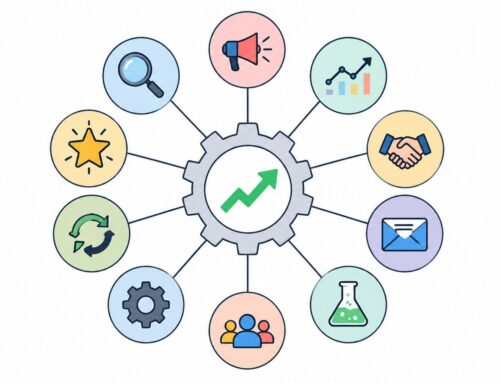
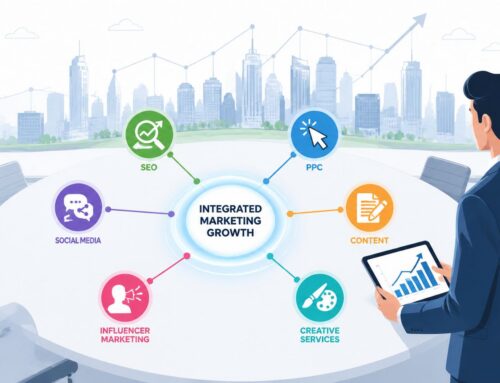
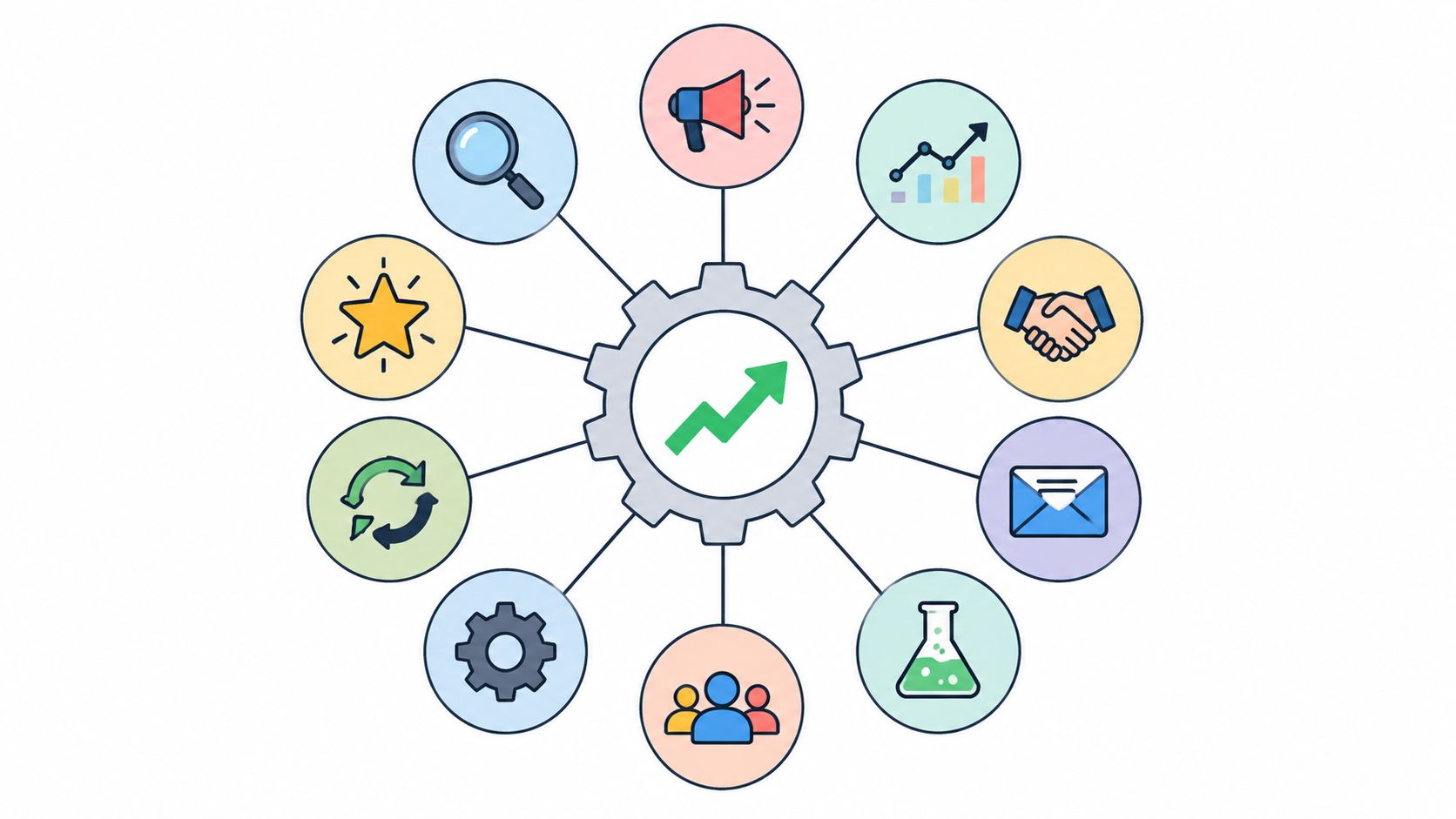
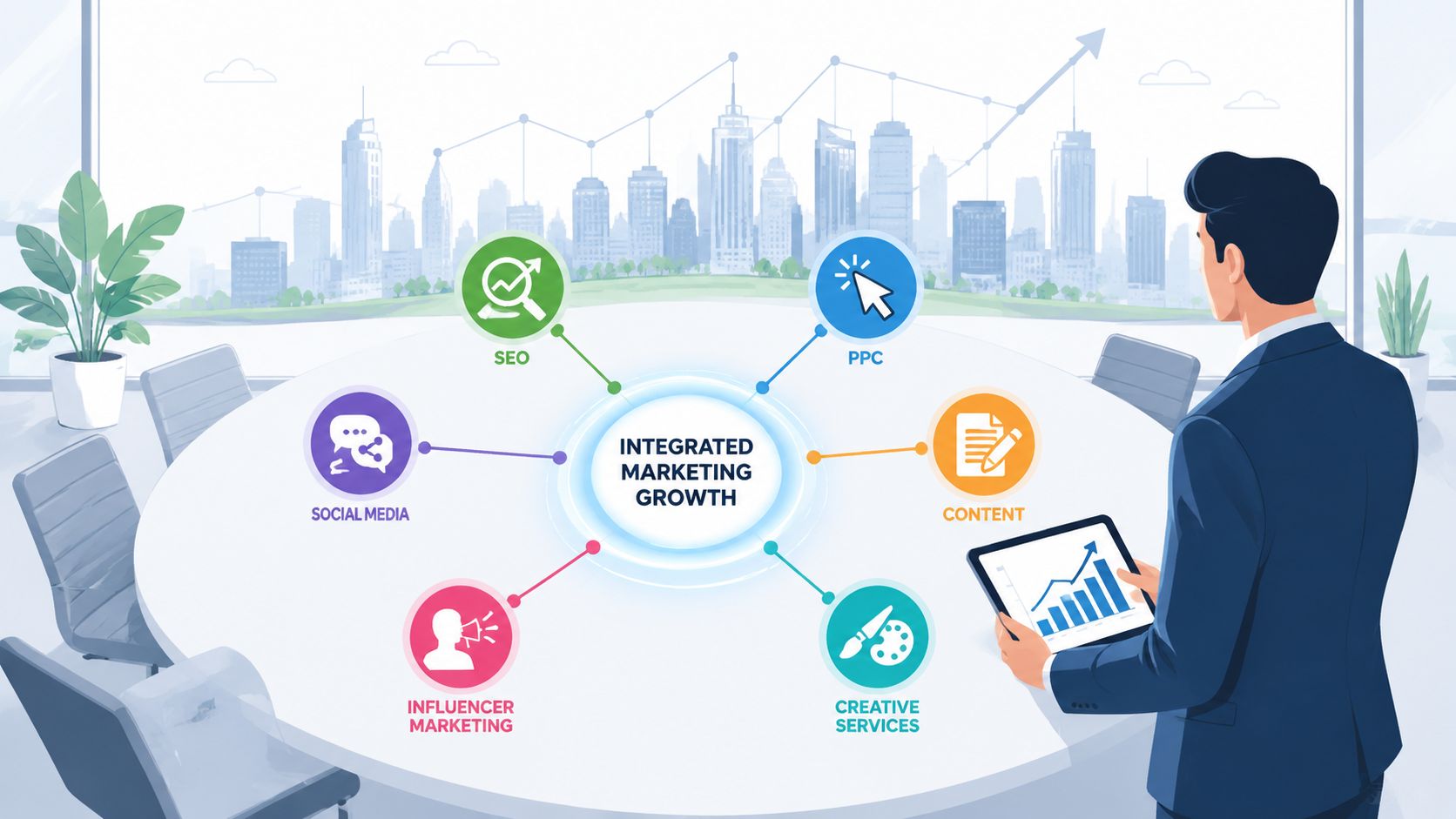
This diagram helps visualize how these services fit together.

As you can see, a solid strategy is the foundation that supports both your organic content and your paid ads, making sure everything works in harmony.
Paid Social Advertising: The High-Speed Delivery Service
Think of paid social media as a super-powered delivery service for your message. While your organic content builds a community and brand reputation over time, paid ads give you immediate, laser-targeted reach. For a small business, this is often the fastest path to generating new leads and seeing a direct return on your marketing dollars.
These small business social media marketing services cover everything from the initial campaign setup and audience targeting to writing the ad copy, designing the visuals, and constantly monitoring performance. A good agency will be testing different headlines, images, and audiences all the time to push your cost-per-click down and your conversions up. You should expect detailed performance reports that show exactly how your ad budget was spent and the results it produced.
Why Your Social Media Strategy Needs to Be Video-First
If you think of social media content as a competition for attention, video is winning. Handily. It’s leaving static images and simple text posts far behind. For a small business, shifting to a video-first strategy isn't just about following a trend—it's about completely changing the way you connect with your audience and, ultimately, drive sales.
A picture might be worth a thousand words, but a well-made video tells an entire story in seconds.

And the numbers back this up. Short-form video has exploded, now making up a staggering 43% of all content people watch on social media. This massive shift in how people consume content is why 73% of marketers are building their strategies around video. More importantly, 71% say that short videos deliver the best return on investment (ROI).
This isn't an accident. It's a combination of human psychology and smart algorithms. Our brains are simply wired to notice movement, which makes video instantly more captivating than a still photo. Social media platforms know this, and their algorithms are built to push video content—especially formats like Instagram Reels, TikToks, and YouTube Shorts—to a much larger audience.
Bringing Your Brand to Life with Video
So, what does this mean for your small business? It’s a huge opportunity. A video-first approach doesn't require a Hollywood budget; in fact, authentic, behind-the-scenes content often outperforms slick, corporate-style productions. It's all about showing the real people behind your brand.
Here are a few simple video ideas any small business can put into action right away:
- Behind-the-Scenes (BTS) Glimpses: Show your team packing an order, getting ready for an event, or just having a genuine moment in the office. This kind of content builds trust and makes your brand relatable.
- Quick "How-To" Demos: Does your product solve a common problem? Create a 30-second video that shows exactly how it works. You're giving your audience immediate value.
- Customer Testimonials: A short clip of a happy customer talking about their experience is far more persuasive than a written review. It’s powerful, authentic social proof.
- "Meet the Team" Introductions: Put a face to the name! Quick, fun intro videos for your employees help build a real community around your brand.
The real goal of video is to stop the scroll and create a moment of genuine connection. It can transform your brand from a faceless logo into a group of real people your customers can know, like, and trust.
To truly tap into video’s potential, you have to understand how it fits into your broader marketing plan. For a deeper dive, learning more about video marketing social media mastery can provide some excellent, detailed insights.
At the end of the day, video is a core part of modern small business social media marketing services. It’s not just another item on your to-do list; it's the pillar that can hold up and amplify everything else you do. If you're ready to make your content work harder for you, take a look at our guide on video marketing best practices for more practical tips.
Of all the questions a small business owner has, "How much will this cost?" is usually right at the top of the list. When it comes to small business social media marketing services, there’s no single price tag. Instead, you'll find a few different pricing models, each built for different needs and budgets.
Getting a handle on these structures is the first step toward finding a partner you can trust and a plan you can actually afford. Let's walk through the common ways agencies charge so you can feel confident when you start seeing proposals land in your inbox.
The Monthly Retainer Model
By far, the most common setup you'll encounter is the monthly retainer. Think of it like a subscription for your social media. You pay a set fee every month, and in return, the agency handles an agreed-upon list of services. This consistency is a huge win for everyone involved.
For your business, a retainer means:
- No Budget Surprises: You know exactly what you’ll be spending on marketing each month. This makes financial planning a whole lot easier.
- A True Partnership: This model isn't just transactional. It encourages your agency to become a real extension of your team, constantly learning about your brand and getting better at telling your story over time.
- Always-On Activity: Your social media presence never goes dark. A retainer ensures your channels are consistently active, engaging your community and nurturing potential customers without missing a beat.
This model is really the best fit if you're focused on long-term growth. The agency isn't just checking off a to-do list; they're invested in your success, digging into the data month after month to see what's working and what can be improved. For a deeper dive into the factors that influence these costs, this guide to digital marketing agency pricing is a great resource.
Project-Based and Hourly Pricing
Of course, not every business is ready to jump into a long-term commitment. That’s where project-based and hourly fees come in, offering a lot more flexibility.
Project-based pricing is exactly what it sounds like: a one-time fee for a single, clearly defined project. This is perfect when you have a specific goal you need to hit.
A few examples of project-based work could be:
- Building out your social media profiles on a few platforms from the ground up.
- Running a focused ad campaign for a holiday sale or a new product launch.
- Creating a comprehensive social media strategy guide that your own team can follow.
The biggest plus here is clarity. You know the exact cost and exactly what you’ll get before any work begins, which is great for managing one-off expenses.
Hourly rates, on the other hand, offer the most flexibility. You’re simply paying for the agency’s time. This can be a smart move for small, unpredictable tasks or if you just need an expert to consult with from time to time. The downside? It can be tough to budget for, since the final bill can change from month to month.
Sample Social Media Marketing Service Packages
To give you a better feel for what your money buys, let's look at a few sample packages. Keep in mind that prices can vary a lot based on the agency's experience and your specific needs, but this should give you a solid starting point.
Here’s a table outlining some common service tiers.
| Package Tier | Example Price Range (Monthly) | Key Inclusions | Best For |
|---|---|---|---|
| Starter Growth | $1,000 – $2,500 | Management for 2 platforms, 10-12 posts per month, basic community replies, and a monthly report. | Businesses just getting started on social media that need to build a consistent, professional presence. |
| Business Pro | $2,500 – $5,000 | Management for 2-3 platforms, 15-20 posts (with short-form video), basic ad management, and proactive community engagement. | Established businesses that want to actively grow their audience and start generating leads from social. |
| Lead Generation | $5,000+ | Management for 3+ platforms, a full content calendar with video, advanced ad campaigns, and in-depth analytics with strategy calls. | Companies that are laser-focused on driving a high volume of leads and a measurable return on their investment. |
These packages give you a good idea of how services scale with price. As you move up the tiers, the focus shifts from simply being present on social media to actively using it as a tool for business growth.
Heads Up: These price ranges almost never include your ad spend. Ad spend is the budget you give directly to platforms like Meta or LinkedIn to show your ads to people. Think of it as a separate, direct cost, not part of the agency's fee.
How to Choose the Right Social Media Marketing Partner
Picking an agency to handle your small business social media marketing services is a huge decision. This isn't just about hiring someone to post for you; it's about finding a true partner who gets your business and is committed to helping you grow. You need to look past the slick sales pitches and find a team that genuinely knows their stuff.
Think of it like choosing a co-pilot for your business. You want someone with a proven flight record, who knows how to navigate the inevitable turbulence, and who is 100% focused on getting you to your destination.

Check Their Track Record
First things first: dig into their past work. An agency’s portfolio is their resume, and you need to be a skeptical hiring manager. Don’t get distracted by logos of huge companies; look for real, tangible results for businesses like yours.
Zero in on case studies that actually relate to your industry and your specific goals. If you run a local coffee shop, a case study about a national software company is pretty much useless. You need to see proof they can drive foot traffic and build a local following, not just generate B2B leads.
As you look through their portfolio, ask yourself:
- Are they showing off actual business results (like sales or qualified leads), or are they just bragging about vanity metrics like likes and followers?
- Does their content feel authentic and creative, or is it generic and cookie-cutter?
- Do they have a history of getting results for businesses with a similar budget and team size to yours?
This simple step will help you weed out the agencies that aren't a good match right from the start.
Meet the People Behind the Curtain
An agency is nothing more than the people who work there. You absolutely need to know who will actually be managing your account day-to-day. Will you get a dedicated, experienced manager, or will your business be handed off to a rotating cast of junior employees?
On your first calls, get specific about the team structure. A good partner will be completely transparent about who’s in charge of strategy, who’s creating the content, and who’s running the ads. This creates accountability and lets you build a real working relationship with the people who are directly responsible for your success.
Choosing an agency isn't just about vetting their past wins; it's about seeing how they handle challenges. The best partners are honest about what went wrong and what they learned from it.
Ask the Hard Questions
A discovery call is your chance to interview them—not the other way around. It's time to push past the sales pitch and see how they really operate. Come prepared with a list of "killer questions" designed to reveal their process and priorities. If you need more ideas, our guide on how to choose a digital marketing agency has plenty of other great questions.
Here are a few you should definitely ask:
- "How do you measure success beyond likes and followers?" This question instantly shows whether they're focused on metrics that matter to your bottom line. A great answer will involve leads, conversion rates, and cost per acquisition.
- "Can you tell me about a campaign that failed to hit its goals and what you did about it?" This is a fantastic test of their honesty and problem-solving skills. Any agency claiming a 100% success rate is lying. You want a team that learns from data and isn't afraid to pivot, not one that sweeps mistakes under the rug.
- "What do the first 90 days look like if we work together?" Their response reveals their entire onboarding and strategic process. A solid answer will outline audits, strategy workshops, and clear milestones—not just a vague promise to "start posting."
Asking these direct questions will give you the confidence to vet potential partners and find a true ally for your business's growth.
Getting Your New Social Media Partnership Started Right
You've done the hard work of vetting proposals and have officially picked your new social media partner. Congratulations! Now, the focus shifts to getting them up and running.
A smooth, organized onboarding is the secret to a great start. Think of it like this: the more you prep your kitchen for a chef, the faster they can start cooking. Having all your brand's "ingredients" ready means your new agency can get to work creating results, not chasing down files.
Your Onboarding Checklist
To get things moving quickly, your new agency will need a few key things from you. A good partner will walk you through this, but coming to the table prepared makes a world of difference.
Here's a simple rundown of what you should have ready to hand over:
- Brand Assets: This means everything visual. High-resolution logos, your specific brand color codes (often called hex codes), font files, and any style guides you already have.
- Account Access: They'll need administrative access to your social media accounts. You may also need to grant access to your website's backend or platforms like Google Analytics so they can properly track results.
- Audience Insights: Share everything you know about your customers. Who are they, really? What do they value? Any past surveys, customer feedback, or even just detailed anecdotes are invaluable.
- Goal Alignment: Have a frank conversation about what success looks like in the first 90 days. Is the main goal more website traffic? A certain number of leads? Or simply boosting your brand's visibility? Get specific.
This initial information dump is what a modern small business social media strategy is built on. Your agency will use these core elements to craft a plan that actually feels like your business.
Managing Expectations: A Realistic Timeline
Here’s where many business-agency relationships hit a snag: mismatched expectations on timing. Social media is an incredible engine for growth, but it isn't an overnight fix. It’s much more like planting a garden than flipping a switch—it requires patience and consistent effort before you see a real harvest.
Meaningful growth takes time. While you might see some early wins in engagement in the first few weeks, the true ROI—like a steady stream of leads and sales—realistically takes 3-6 months to build.
This gives your agency the necessary time to test what content resonates, dial in ad targeting, and build an authentic community that trusts your brand. Don't get discouraged if you don't see a massive sales spike in the first month.
Ultimately, bringing in small business social media marketing services is an investment in the long-term health of your company. It’s about building a sustainable presence that doesn’t just find customers, but keeps them. By choosing a partner who values data and working with them closely, you're not just outsourcing a task—you're gaining an ally who is truly committed to helping you grow.
Frequently Asked Questions
When you're thinking about hiring help for social media, a lot of questions pop up. It's totally normal. Here are some straightforward answers to the questions I hear most often from small business owners.
How Much Should a Small Business Budget for Social Media?
Let's talk numbers. For a professional team to handle your social media, you should plan for a monthly retainer somewhere in the $1,000 to $2,500 range. This is a realistic starting point.
That investment typically gets you a solid foundation: a clear strategy, content creation for two key platforms, and basic reporting to see what's working.
Keep in mind, that fee is for the service itself—it doesn't include your ad budget. You'll want to set aside a separate amount to pay directly to platforms like Meta or LinkedIn. A good starting ad spend is at least $500-$1,000 per month. Anything less, and you'll struggle to get enough data to see real results from your paid campaigns.
How Long Until I See a Return on Investment?
This is the big one, and the honest answer is: it takes time. Social media is about building relationships, not just flipping a switch for instant sales.
You'll likely see some early positive signs—more followers, likes, and comments—within the first 30-60 days. But the results that actually impact your bottom line, like leads and sales, take a bit longer to develop.
A good rule of thumb is to give it 3-6 months before you try to measure your true ROI. This gives your agency the runway they need to test different approaches, gather meaningful data, and build a community that genuinely trusts you.
Expecting a flood of new customers in the first month just isn't realistic. Real growth is the result of consistent, patient effort.
Can I Just Hire a Cheaper Freelancer Instead of an Agency?
You absolutely can. For businesses on a very tight budget, hiring a freelancer can be a smart move. They often have less overhead, making them a great choice for specific tasks like writing post copy or creating graphics.
But an agency brings a few things to the table that a single freelancer usually can't:
- A Full Toolbox of Skills: With an agency, you're not just hiring one person. You get a strategist, a copywriter, a designer, and an ad specialist all working together for a single retainer.
- Wider Experience: Agencies see what’s working across many different industries. That breadth of experience means they have a much bigger playbook of strategies to pull from.
- Room to Grow: As your business takes off, an agency can easily scale with you. You won't have to go through the headache of finding and vetting new freelancers to handle the increased workload.
Ultimately, there's no single "right" answer. If you just need a task done, a freelancer is great. If you need a comprehensive strategy to drive growth, an agency is probably a better fit. The key is to find a partner whose skills and structure match what you're trying to achieve.
Ready to stop guessing and start growing? The team of specialists at ReachLabs.ai builds data-driven social media strategies that deliver real business results. Book a discovery call with us today and find out how we can become an extension of your team.