
In the world of marketing, a well-executed influencer campaign can look like pure magic, catapulting a brand from obscurity to a household name seemingly overnight. But behind every viral sensation is a meticulously crafted blueprint, a strategic combination of creator selection, authentic storytelling, and precise execution. This isn't about luck; it's about engineering success.
This article dissects the architecture behind some of the best influencer marketing campaigns to date. We're moving beyond surface-level summaries to provide a deep, strategic analysis of what truly made these initiatives work. For each case study, from Daniel Wellington’s micro-influencer army to Gymshark’s tight-knit creator collective, we will break down the replicable tactics and actionable insights that drove their monumental success.
You will learn not just what these brands did, but why their strategies were so effective. We will explore everything from their initial objectives and influencer selection criteria to their creative execution and performance metrics. This analysis will equip you with a practical playbook to inform your own campaign development. Understanding the core mechanics of virality is key. To fully grasp the dynamics of widespread reach, delve into what makes a video go viral and how to do it. By examining these proven blueprints, you can move from admiring successful campaigns to building them yourself, armed with strategies that deliver tangible results and lasting brand impact.
1. Daniel Wellington – Micro-Influencer Strategy with Affordable Luxury
Daniel Wellington (DW) executed one of the most foundational and best influencer marketing campaigns by pioneering the large-scale use of micro-influencers. The brand built an empire not with A-list celebrities, but by gifting their minimalist watches to hundreds of niche Instagram creators. This strategy effectively democratized luxury, making their products feel both aspirational and accessible through authentic, everyday endorsements.
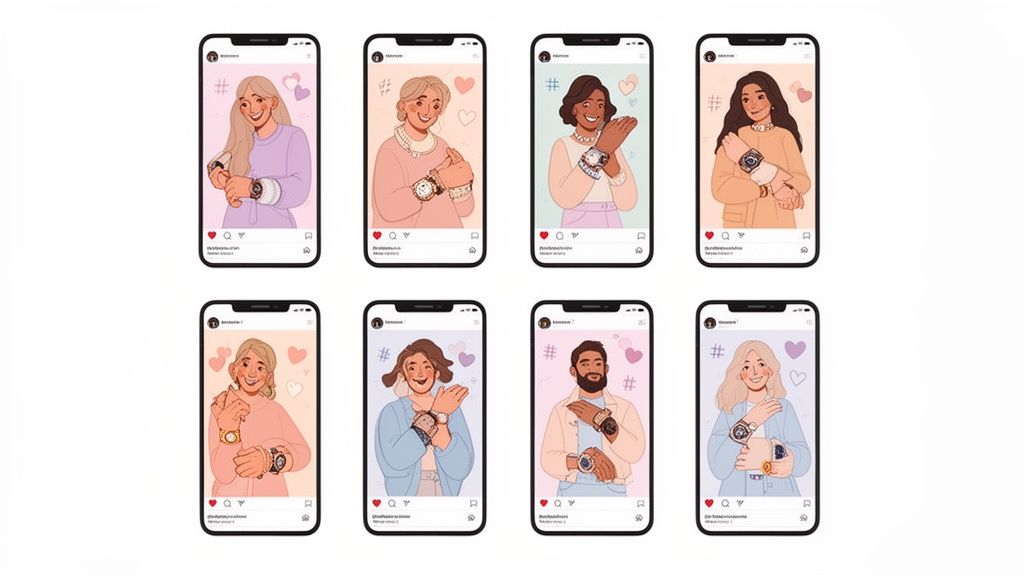
DW's model was simple: provide a free watch and a unique discount code to influencers with 10K-100K followers. This created a torrent of user-generated content (UGC) that felt genuine, flooding social feeds with stylish, relatable images of the watches in various lifestyle settings. The high volume of posts created a powerful "social proof" effect, making the watches seem ubiquitous and highly desirable.
Strategic Breakdown
The campaign's genius was its scalability and cost-effectiveness. Instead of one multi-million dollar contract, DW invested in thousands of smaller, product-based collaborations. This minimized risk while maximizing reach within highly engaged, niche communities.
Key Insight: DW proved that collective authenticity can be more powerful than a single celebrity endorsement. They built brand perception from the ground up by empowering trusted voices within smaller communities.
Replicable Tactics & Actionable Takeaways
Marketers can adapt DW's strategy by focusing on scalable authenticity. This approach is ideal for direct-to-consumer (DTC) brands aiming for rapid awareness and sales growth without a massive initial marketing budget.
- Identify Aligned Micro-Influencers: Use tools to find creators whose audience demographics and brand values match yours with at least 80% alignment.
- Arm Influencers with Tools: Provide clear, simple guidelines but allow for creative freedom. Equip each partner with a unique promo code or affiliate link to track conversion performance directly.
- Foster Long-Term Partnerships: Move beyond one-off posts. Nurture relationships with your top-performing micro-influencers to create a loyal network of brand advocates.
- Amplify User-Generated Content: Encourage the use of a branded hashtag (like #DanielWellington) and repurpose the best UGC across your own social channels, ads, and website to build social proof.
2. Glossier – Community-Driven User-Generated Content Campaign
Glossier flipped the traditional marketing model by transforming its customers into its most powerful influencers. Instead of relying on top-tier paid partnerships, the beauty brand built a cult following by fostering a genuine community and encouraging everyday users to share their experiences. This grassroots strategy, centered around the #GlossierGirl movement, generated an immense wave of authentic user-generated content (UGC).
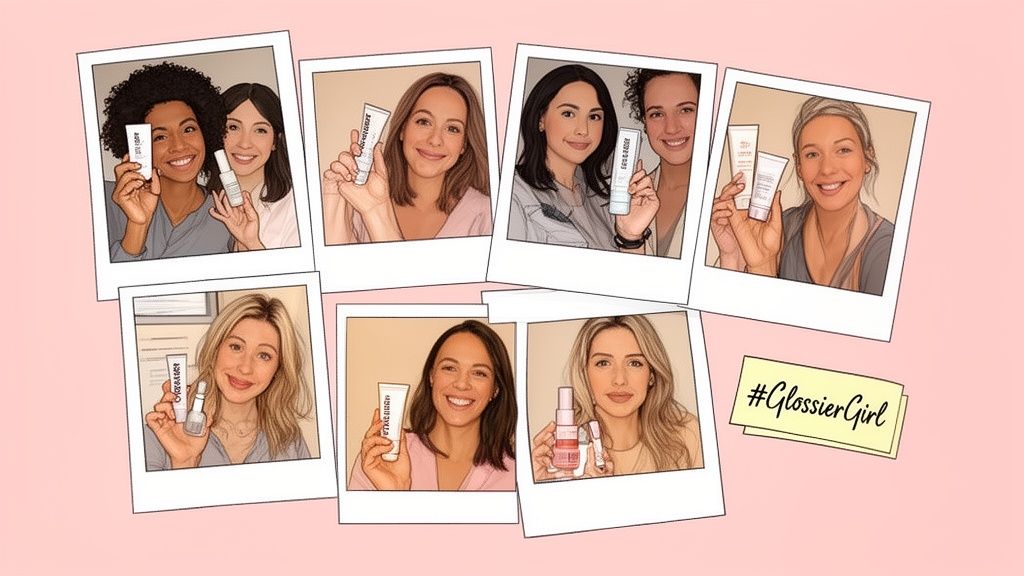
The brand masterfully blurred the lines between consumer and creator, making every customer feel like a part of an exclusive, yet inclusive, club. By featuring real customer photos, reviews, and tutorials across their official channels, they created a feedback loop of validation and engagement. Glossier's success is deeply rooted in this community-driven approach; to truly understand this strategy, it's beneficial to explore what is UGC marketing and how it drives authentic growth.
Strategic Breakdown
Glossier’s genius lies in its community-first philosophy, building a brand that listens to and elevates its audience. They didn’t just sell products; they sold an identity and a sense of belonging. This approach made their marketing efforts feel less like advertising and more like a conversation among friends, resulting in high-trust endorsements that money can't buy.
Key Insight: Glossier demonstrated that a brand's most authentic and influential voices are often its own customers. By prioritizing community engagement over transactional influencer relationships, they built an unbreakable bond of loyalty and trust.
Replicable Tactics & Actionable Takeaways
Marketers can emulate Glossier's success by focusing on building a vibrant community and empowering them to create. This strategy is perfect for brands that want to cultivate long-term loyalty and generate a continuous stream of credible social proof, as seen in many other powerful user-generated content examples.
- Build a Community Hub: Create spaces (like social media groups or forums) where customers can connect with each other and the brand, fostering a sense of shared identity.
- Encourage Participation with Branded Hashtags: Develop intuitive and inclusive hashtags (like #GlossierGirl) that encourage users to share their own content naturally.
- Feature Customer Content Prominently: Regularly showcase the best UGC across your website, social media, and even in ad campaigns to show your community they are seen and valued.
- Develop Products Based on Feedback: Actively listen to community conversations and use their insights, suggestions, and pain points to guide your product development process, closing the loop between brand and consumer.
3. Airbnb's #BelongAnywhere Campaign – Multi-Channel Creator Partnerships
Airbnb mastered emotional storytelling with its #BelongAnywhere campaign, moving beyond transactional stays to focus on authentic human connection and community. The brand partnered with travel influencers, photographers, and storytellers across a wide array of platforms to showcase genuine host and guest experiences. This multi-format strategy created a rich content ecosystem that emphasized belonging over booking.
The campaign leveraged YouTube vlogs of creators exploring unique properties, intimate Instagram Stories detailing real host-guest interactions, and long-form blog posts about immersive cultural experiences. By highlighting the people behind the properties, Airbnb transformed its listings from simple accommodations into gateways for authentic travel, a key reason it stands as one of the best influencer marketing campaigns for building brand identity.
Strategic Breakdown
The core of this strategy was its focus on diverse, story-driven content that resonated with different audience segments on their preferred platforms. Instead of a uniform message, Airbnb empowered creators to interpret "belonging" in their own unique styles, from cinematic travel vlogs to heartfelt podcast interviews with hosts. This created a layered, multi-channel narrative that felt both cohesive and deeply personal.
Key Insight: Airbnb demonstrated that emotional resonance drives brand loyalty. By shifting the focus from the "what" (a place to stay) to the "why" (the feeling of belonging), they built a powerful brand narrative that transcended the travel industry.
Replicable Tactics & Actionable Takeaways
Marketers can adopt Airbnb's multi-channel approach by building campaigns around a core emotional theme rather than a product feature. This is especially effective for brands in the service, travel, and hospitality sectors aiming to build a strong community. Building a comprehensive influencer marketing strategy is the first step.
- Prioritize Value Alignment: Partner with creators whose storytelling and personal brand values genuinely align with your campaign's core message, ensuring authenticity.
- Develop Flexible Creative Briefs: Provide a central theme (like "belonging") but grant creators the freedom to interpret it, leading to more genuine and diverse content.
- Create a Multi-Format Content Plan: Engage creators to produce a mix of content types from a single partnership, such as a YouTube video, several Instagram posts, and a blog article, to maximize reach and engagement across different channels.
- Showcase the "Human" Element: Shift the spotlight from just the consumer experience to include the people behind the brand, such as employees, partners, or hosts, to build deeper trust and connection.
4. Gymshark's Creator Collective – Niche Community Building Within Fitness
Gymshark redefined influencer marketing in the fitness industry by building a deep, loyal community rather than just executing transactional campaigns. They created a structured creator collective, identifying and partnering with emerging fitness influencers long before they reached celebrity status. This approach involved providing financial support, mentorship, and platform amplification, fostering unparalleled brand loyalty and authentic advocacy.
The brand's strategy focused on growing with their creators. By sponsoring athletes and content creators early in their journeys, Gymshark became an integral part of their success story. This created a powerful ecosystem where the brand and its ambassadors were genuinely intertwined, leading to co-branded content, exclusive product lines, and massive community events that felt more like a family reunion than a marketing activation.
Strategic Breakdown
Gymshark’s success stems from treating influencers as long-term business partners, not just temporary billboards. They invested in the personal brands of their creators, providing value far beyond free products or one-off payments. This created a formidable competitive advantage, as their creators promoted Gymshark out of genuine loyalty, not just contractual obligation.
Key Insight: Building a true community of brand ambassadors who grow with you creates a level of authenticity and long-term value that paid campaigns cannot replicate. Gymshark invested in people, not just posts.
Replicable Tactics & Actionable Takeaways
This community-centric model is one of the best influencer marketing campaigns for brands in passion-driven niches like fitness, beauty, or gaming. It prioritizes relationships and shared growth over short-term metrics.
- Invest in Emerging Creators: Identify passionate, high-potential creators in your niche before they become big. Focus on their audience engagement and brand alignment over pure follower count.
- Provide Value Beyond Money: Offer mentorship, access to industry experts, platform amplification, or production support. Help them grow their own brand, and they will help you grow yours.
- Foster a Community Identity: Organize exclusive events, group chats, or collaborative projects that make your creators feel like part of an elite team. This builds camaraderie and strengthens brand ties.
- Co-Create and Share Success: Develop limited-edition products or content series in collaboration with your top creators. Implement tiered partnership structures with clear growth paths and potential revenue-sharing agreements to incentivize performance.
5. Sephora's Beauty Influencer Affiliate Program – Performance-Based Model
Sephora transformed influencer marketing from a brand awareness play into a direct revenue driver with its sophisticated, performance-based affiliate program. Instead of paying flat fees for posts, Sephora incentivized its "Sephora Squad" and other beauty influencers with commissions on sales they generated. This model aligns the goals of the brand and the creator, fostering more authentic endorsements driven by genuine product belief.
The program equips influencers with unique affiliate links and promo codes (e.g., INFLUENCER15), allowing for precise tracking of every click and conversion. This data-driven approach ensures Sephora only pays for measurable results, making it one of the most ROI-focused and best influencer marketing campaigns in the e-commerce space. The model empowers creators to become true business partners, earning based on their ability to persuade and convert their audience.
Strategic Breakdown
Sephora's campaign brilliance lies in its direct link between influencer activity and sales revenue. By shifting from a fixed-cost model to a variable, performance-based one, the brand de-risked its investment and created a highly scalable system. This incentivizes creators to produce content that not only looks good but actively sells, ensuring promotional efforts directly impact the bottom line.
Key Insight: Tying influencer compensation directly to sales performance ensures authenticity and accountability. Creators are motivated to promote products they genuinely believe will resonate with their followers, leading to higher-quality endorsements and a stronger ROI.
Replicable Tactics & Actionable Takeaways
This performance-based model is ideal for e-commerce and direct-to-consumer brands looking to build a scalable and ROI-positive influencer program. It turns creators into a powerful, commission-based sales force.
- Implement a Tiered Commission Structure: Reward top performers with higher commission rates, exclusive bonuses, or early access to new products to incentivize long-term loyalty and consistent results.
- Provide Transparent Tracking Tools: Equip influencers with a user-friendly dashboard to monitor their clicks, conversions, and earnings in real-time. This transparency builds trust and empowers them to optimize their strategy.
- Use the Right Technology: Leverage one of the top influencer marketing platforms to manage affiliate links, track sales, and automate payments, which is crucial for scaling the program effectively.
- Combine Affiliate Links with Unique Discount Codes: Offering a tangible benefit to the audience (like a discount) increases the likelihood of conversion and makes tracking straightforward across different social channels.
6. Kylie Cosmetics' Mega-Influencer Strategy – Celebrity Founder Advantage
Kylie Cosmetics harnessed the immense personal brand of its founder, Kylie Jenner, to create one of the most explosive and best influencer marketing campaigns in modern e-commerce. The brand's core strategy involved leveraging Jenner's massive social media following as the primary marketing channel, blurring the lines between founder, influencer, and media outlet. This approach combined the authenticity of a founder-led narrative with the unparalleled reach of a mega-influencer.
The brand launched and scaled almost entirely on social media, using Jenner’s personal accounts to announce products, share behind-the-scenes content, and create a sense of urgency. Product drops were treated like major events, often selling out in minutes due to the FOMO (fear of missing out) cultivated through her posts. The strategy was amplified by strategic partnerships with other beauty influencers and makeup artists who provided third-party validation and tutorials, expanding the brand's reach beyond Jenner's immediate fanbase.
Strategic Breakdown
Kylie Cosmetics' genius lies in its fusion of personal celebrity with a direct-to-consumer business model. Jenner wasn't just a face for the brand; she was the brand, making every post an authentic endorsement. This model created a direct, highly engaged communication line with millions of potential customers without traditional advertising costs.
Key Insight: A founder with a massive, engaged following is the ultimate influencer. Their personal endorsement provides unmatched authenticity and can single-handedly drive demand, turning product launches into cultural events.
Replicable Tactics & Actionable Takeaways
Brands with a prominent founder or CEO can adapt this model to build a powerful, authentic marketing engine. This approach is especially effective for personality-driven brands in beauty, fashion, and lifestyle.
- Leverage the Founder's Voice: Place the founder at the forefront of your marketing. Use their social media to share the brand story, product development journey, and personal usage, creating a genuine connection.
- Create Scarcity-Driven Events: Use limited-edition drops and timed launches announced exclusively through the founder's channels to generate hype and immediate sales velocity.
- Partner with Complementary Influencers: Collaborate with creators who reinforce the brand’s message. For Kylie Cosmetics, this meant working with makeup artists who could demonstrate the product's quality and versatility.
- Maintain Consistent Engagement: A founder-led strategy requires constant, authentic interaction. Respond to comments, go live, and use features like Instagram Stories to keep the audience invested in the brand’s narrative.
7. Red Bull's Athlete & Extreme Sport Influencer Strategy – Lifestyle Integration
Red Bull mastered lifestyle marketing by embedding its brand into the fabric of extreme sports and adventure culture. Instead of paying for simple product placements, Red Bull sponsors athletes, creates events, and produces high-octane content, making the brand an integral part of the subcultures it supports. This long-term strategy transformed an energy drink into a global media powerhouse synonymous with pushing human limits.

The brand's approach focuses on authentic partnerships with athletes, adventurers, and musicians who genuinely embody the "Red Bull gives you wings" ethos. From sponsoring the Red Bull Cliff Diving World Series to producing feature-length documentaries with its sponsored athletes, the company acts as a creator and enabler, not just a sponsor. This deep integration has generated over 9 billion annual media impressions, solidifying its place as one of the best influencer marketing campaigns of all time.
Strategic Breakdown
Red Bull’s success lies in its commitment to building communities and owning the narrative. By creating its own content platforms and events, the brand controls the context in which its product is seen, ensuring it is always associated with peak performance, creativity, and adrenaline. This shifts the focus from the product itself to the lifestyle it enables.
Key Insight: True brand integration is more powerful than transactional advertising. Red Bull invests in the passions of its audience and influencers, becoming an authentic patron of the culture rather than an outside advertiser.
Replicable Tactics & Actionable Takeaways
This strategy is ideal for brands aiming to build a powerful identity and deep customer loyalty by becoming synonymous with a specific lifestyle or value system. It requires long-term vision and a commitment to adding real value to a community.
- Become a Creator, Not Just a Sponsor: Instead of just paying influencers for posts, collaborate with them to create unique, high-value content like documentaries, event series, or tutorials that your brand owns and distributes.
- Invest in Aligned Lifestyles: Identify a niche culture where your brand’s values naturally fit. Sponsor events, support emerging talent, and contribute meaningfully to that community's growth.
- Build an Ecosystem of Talent: Develop long-term, multi-year relationships with a diverse roster of influencers who are genuine leaders in their fields. This fosters deeper integration and more authentic endorsements.
- Focus on Shared Values: Center your campaigns around shared values like courage, creativity, or perseverance, rather than product features. Let the influencer's actions and achievements implicitly endorse the brand.
8. Fashion Nova's Instagram Influencer Takeover – Fashion SMB Model
Fashion Nova built a fast-fashion empire by creating a symbiotic, high-velocity partnership model with thousands of Instagram influencers. Instead of traditional advertising, the brand flooded social media feeds by gifting clothing to a massive network of creators, turning them into a powerful, always-on marketing engine. This strategy made the brand ubiquitous among its target audience, associating it directly with the aspirational yet attainable lifestyles of popular influencers.
The brand's success was rooted in its sheer volume and speed. By partnering with over 3,000 influencers, from micro-creators to mega-stars like Cardi B, Fashion Nova generated an incredible amount of user-generated content daily. This constant stream of posts featuring new styles created immense social proof and a sense of urgency, driving followers directly to their e-commerce site to purchase the looks they just saw on their favorite creators.
Strategic Breakdown
Fashion Nova's strategy treated influencers not just as advertisers but as a distributed, real-time focus group and sales force. They used influencer content and audience feedback to rapidly design, produce, and market new items, creating a data-driven feedback loop that traditional retailers couldn't match. This approach is a masterclass in how to use influencer marketing for direct response and product development.
Key Insight: Fashion Nova proved that a high-volume, product-centric influencer strategy can function as a complete business model, driving everything from brand awareness and customer acquisition to product design.
Replicable Tactics & Actionable Takeaways
This model is particularly effective for e-commerce and fast-fashion brands that can quickly turn trends into products. It requires a systematic approach to influencer management and a commitment to nurturing a large community of partners.
- Build a Scalable Onboarding System: Create a streamlined process for identifying, vetting, and onboarding a large number of influencers. Use dedicated software or a team to manage outreach, contracts, and product seeding efficiently.
- Create an Ambassador Program: Formalize your partnerships with a tiered ambassador program. Offer clear benefits like free products, commissions on sales, and exposure on your brand's channels to incentivize consistent posting.
- Align Product with Influencer Aesthetics: Don't force products on creators. Allow influencers to select items that genuinely fit their personal style, which results in more authentic and effective content.
- Use Influencers for Product Feedback: Actively monitor comments and engagement on influencer posts to gather real-time feedback on styles, fits, and colors. Use this data to inform future product development and inventory decisions.
9. Dove's Real Beauty Campaign – Values-Driven Influencer Advocacy
Dove shifted the paradigm of brand-influencer relationships by prioritizing shared values over simple product promotion. The long-running Real Beauty campaign is one of the best influencer marketing campaigns because it aligned the brand with a powerful social mission: challenging narrow beauty standards and promoting self-esteem. Instead of just paying creators, Dove partners with advocates, activists, and everyday people who genuinely champion this cause.
This approach transformed influencers into true brand ambassadors. Partnerships with body-positive creators and activists generated authentic, documentary-style content and sparked meaningful cultural conversations. Campaigns like "Real Beauty Sketches" went viral by connecting with audiences on an emotional level, earning massive media coverage and cementing Dove's reputation as a purpose-driven leader. The focus was on the message, with the product playing a supporting role.
Strategic Breakdown
Dove’s strategy was to build brand equity by becoming a central voice in a significant cultural movement. By investing in authentic advocacy and creating content that educates and inspires, they fostered deep, long-term loyalty that transcends transactional relationships. Success was measured not just in sales, but in brand sentiment, share of voice, and cultural impact.
Key Insight: Aligning with a core human value and partnering with genuine advocates generates a level of trust and emotional connection that paid endorsements cannot replicate. It turns marketing into a mission.
Replicable Tactics & Actionable Takeaways
This values-first model is powerful for brands looking to build a lasting legacy and connect with consumers on a deeper level. It requires genuine commitment and a willingness to prioritize mission over immediate product-centric messaging.
- Define Your Core Values: Identify a mission that is authentic to your brand and genuinely resonates with your target audience. Your commitment must be demonstrated consistently across all business actions.
- Partner with True Advocates: Seek out creators, experts, and community leaders who are already passionate about your chosen cause, regardless of their follower count.
- Create Mission-Driven Content: Develop campaigns that educate, inspire, or facilitate conversations around your brand’s values, rather than just showcasing products.
- Measure Brand Health Metrics: Track success through metrics like brand sentiment, earned media value, and audience engagement around your core message, not just direct conversions.
10. TikTok Creator Fund & Amazon's Influencer Program – Platform-Native Monetization
The rise of platform-native monetization models represents a fundamental shift in the creator economy, making it one of the most impactful developments in influencer marketing. Platforms like TikTok, Amazon, and YouTube now offer built-in tools that allow creators to earn directly, such as the TikTok Creator Fund and the Amazon Influencer Program. This creates a new dynamic where brands can partner with creators who are already incentivized to produce high-performing content, streamlining collaborations and enabling performance-based partnerships at an unprecedented scale.
This evolution moves beyond traditional one-off sponsored posts. Brands can now tap into a vast ecosystem of emerging creators who treat content creation as a business. For example, an e-commerce brand can partner with an influencer who features their products in an Amazon storefront, earning a commission on sales. This aligns the goals of both the brand and the creator, as both benefit directly from content that drives conversions. It’s a democratized system that lowers the barrier to entry for smaller brands and empowers creators with multiple, sustainable revenue streams.
Strategic Breakdown
The core strategy here is leveraging platforms' self-sustaining ecosystems. Brands are no longer just paying for reach; they are tapping into a creator’s established, algorithm-friendly business model. This reduces friction in negotiation and payment while ensuring content is optimized for the platform it lives on, making these some of the best influencer marketing campaigns for efficiency and ROI.
Key Insight: Partnering with creators within their native monetization systems aligns brand goals with the creator's financial incentives, turning partnerships into powerful, performance-driven sales channels.
Replicable Tactics & Actionable Takeaways
This approach is ideal for e-commerce and DTC brands looking to build scalable, performance-based influencer programs. It allows for testing with a high volume of creators without significant upfront investment.
- Prioritize Platform-Savvy Creators: Identify influencers who are actively and successfully using tools like Amazon Storefronts, YouTube Shopping, or TikTok's commerce features.
- Leverage Creator Storefronts: Instead of just a sponsored post, work with influencers to get your products featured in their curated storefronts or product collections for long-term visibility.
- Build Affiliate-First Programs: Create a robust affiliate program that integrates seamlessly with these platforms, providing creators with unique links and commission structures that reward sales.
- Co-Create Algorithm-Friendly Content: Work with creators to develop content that fits naturally into their existing format and is optimized to perform well within the platform's algorithm, such as "Top 10 Amazon Finds" videos or TikTok "Get Ready With Me" posts.
Top 10 Influencer Marketing Campaigns Comparison
| Campaign | Implementation Complexity 🔄 | Resource Requirements ⚡ | Expected Outcomes 📊 | Ideal Use Cases 💡 | Key Advantages ⭐ |
|---|---|---|---|---|---|
| Daniel Wellington — Micro‑Influencer Strategy | Medium 🔄 — many relationships to manage | Low–Medium ⚡ — product seeding, community mgmt | High organic reach; strong ROI (50M+ impressions; 400–800% ROI) 📊 | Affordable-luxury, lifestyle brands seeking wide awareness | Cost-effective authenticity; scalable across markets ⭐ |
| Glossier — Community‑Driven UGC | Medium–High 🔄 — long-term community building | Low–Medium ⚡ — time‑intensive social engagement | High credibility & viral UGC; strong retention 📊 | DTC beauty/consumer brands building loyalty & product feedback | Extremely cost‑efficient; authentic peer recommendations ⭐ |
| Airbnb — #BelongAnywhere Multi‑Channel | High 🔄 — multi-format coordination | High ⚡ — production, cross‑platform spend | Deep storytelling; measurable revenue uplift (26% YoY) 📊 | Travel, experiential brands needing narrative depth | Broad audience reach; evergreen long‑form content ⭐ |
| Gymshark — Creator Collective | High 🔄 — ecosystem & mentorship structure | Medium–High ⚡ — investments, events, product co‑creation | Long‑term creator loyalty; sustained brand advocacy 📊 | Niche verticals (fitness/wellness) nurturing creators | Sustainable competitive advantage; co‑creation opportunities ⭐ |
| Sephora — Affiliate/Performance Model | Medium 🔄 — tracking & attribution systems | Variable ⚡ — commissions tied to conversions | Direct revenue correlation; scalable ROI (300–500%) 📊 | E‑commerce brands prioritizing measurable sales | Pay‑for‑performance; transparent measurement ⭐ |
| Kylie Cosmetics — Mega‑Influencer / Founder | Medium 🔄 — founder engagement + partner coord. | Medium ⚡ — leverages founder audience, campaign spend | Rapid viral launches; high sales velocity & valuation 📊 | Celebrity‑led brands and high‑impact product drops | Massive built‑in reach; FOMO and launch momentum ⭐ |
| Red Bull — Athlete & Lifestyle Integration | High 🔄 — events, owned media, long partnerships | High ⚡ — sponsorships, production, events | Massive impressions (9B+); lifestyle brand equity 📊 | Sports, beverage, lifestyle brands investing in experiences | Aspirational positioning; owned content reduces platform risk ⭐ |
| Fashion Nova — Instagram Influencer Takeover | Medium 🔄 — large network coordination | Medium ⚡ — product supply and outreach | Fast growth; high ROI from platform-native activations 📊 | Fast‑fashion SMBs focused on Instagram audiences | Scalable influencer program; product-market feedback loop ⭐ |
| Dove — Values‑Driven Influencer Advocacy | Medium 🔄 — mission alignment and long commitments | Medium ⚡ — programs, research, awareness content | High brand trust & earned media; positive sentiment 📊 | Purpose-driven brands seeking cultural impact | Deep emotional connection; differentiated positioning ⭐ |
| TikTok Creator Fund & Amazon Influencer | Low–Medium 🔄 — platform tools simplify workflows | Low–Medium ⚡ — platform fees, creator outreach | Scalable creator access; lower costs (30–50% savings) 📊 | SMBs leveraging platform monetization and commerce | Seamless platform integration; transparent creator metrics ⭐ |
Turning Inspiration into Action: Your Next Steps in Influencer Marketing
We've journeyed through a diverse landscape of the best influencer marketing campaigns, from the micro-influencer dominance of Daniel Wellington to the celebrity-founder powerhouse of Kylie Cosmetics. Each case study reveals a unique blueprint for success, yet they all share a common foundation: a deep understanding of audience, authentic creator partnerships, and clear, strategic objectives. The campaigns we analyzed are not just flashes in the pan; they are masterclasses in building brand equity, fostering community, and driving measurable results.
The key lesson is that there is no one-size-fits-all formula. The explosive growth of Fashion Nova relied on high-velocity, ubiquitous micro-influencers, a strategy that would feel out of place for Dove's values-driven #RealBeauty movement. Similarly, Red Bull's long-term integration with extreme sports athletes cultivates a lifestyle identity that a product-focused brand like Glossier achieves through community-sourced user-generated content.
Core Principles Distilled from Top Campaigns
As you move from inspiration to implementation, it's crucial to distill the overarching principles that unite these successful examples. These are the strategic pillars that transcend industry and platform, forming the bedrock of any impactful influencer initiative.
- Authenticity Over Everything: The most resonant campaigns feel genuine. This comes from giving creators like those in Gymshark's Collective the freedom to integrate products into their native content, rather than forcing them to read from a rigid script.
- Community is the Goal, Sales are the Result: Glossier didn't set out to just sell makeup; they built a community of beauty enthusiasts who became their most powerful advocates. When you build a tribe, the commercial success follows.
- The Right Scale for the Right Goal: Mega-influencers offer massive reach, but micro-influencers often deliver higher engagement and trust. Daniel Wellington proved that a distributed network of smaller creators can create a powerful, unified brand message that feels organic and widespread.
- Value Alignment Creates Advocacy: Dove's success wasn't just about finding influencers; it was about finding advocates who genuinely believed in the brand's mission. When a creator’s personal values align with your brand's, the partnership transforms from a transaction into a true endorsement.
Your Actionable Roadmap for Success
Studying the best influencer marketing campaigns is only the first step. The real value lies in translating these insights into a tangible strategy for your own brand. Where do you begin?
- Define Your "Why" with Precision: Before you even think about an influencer, define your core objective. Is it brand awareness, lead generation, direct sales, or community building? Airbnb's goal was to embed their brand in the aspirational travel narrative, which dictated their choice of high-production-value creators. Your goal will define your entire approach.
- Map Your Influencer Ecosystem: Who are the trusted voices in your niche? Don't just look at follower counts. Analyze engagement rates, audience demographics, and the authenticity of their community interactions. A tool for this analysis is invaluable. Start small with a handful of creators who perfectly match your brand's ethos.
- Co-Create, Don't Dictate: Treat your influencers as creative partners, not as ad platforms. Provide them with a clear brief on the campaign goals and messaging pillars, but give them the creative liberty to produce content that feels natural to their audience. The magic happens when their voice and your message merge seamlessly.
- Measure What Matters: Track metrics that align with your initial goal. If you aimed for awareness, look at reach and impressions. If you wanted sales, track conversion rates through unique affiliate links or discount codes, as seen with Sephora's program. Use this data to refine and optimize your future campaigns.
Ultimately, the most powerful takeaway is that influencer marketing has evolved far beyond simple product placements. It is a sophisticated discipline that blends data analytics with human connection, community building with commercial objectives. By embracing the strategic depth, authenticity, and creativity demonstrated by the campaigns in this list, you can move beyond simply renting an audience and start building a lasting, loyal community around your brand.
Finding the right creators, managing relationships, and tracking performance across multiple campaigns can be a complex and time-consuming process. To scale the strategies learned from the best influencer marketing campaigns, you need a powerful platform to streamline your workflow. ReachLabs.ai provides an end-to-end solution for influencer discovery, campaign management, and performance analytics, allowing you to execute world-class strategies with precision and efficiency. Explore ReachLabs.ai to turn your inspiration into measurable action.