Any solid influencer marketing strategy starts long before you ever send a DM. It begins with a blueprint—a clear plan that defines what success looks like and who you need to reach to achieve it. This is the foundational work that separates campaigns that deliver real results from those that just burn through your budget.
Building Your Foundation for Success
It’s tempting to jump right into finding influencers, but the most successful campaigns are built on a bedrock of clear goals and a deep understanding of the audience. Skipping this part is a rookie mistake. It's like trying to build a house without a foundation; it’s bound to crumble.
When you start with your goals, you stop chasing meaningless vanity metrics. Likes and follower counts look nice, but they don’t pay the bills. Success is different for everyone. A B2B software company might be aiming for qualified demo sign-ups, while a DTC clothing brand is probably focused squarely on driving sales with unique discount codes.
Define Your Campaign Objectives
Vague goals get you vague results. "Increase brand awareness" is not a goal; it's a wish. A real goal sounds more like, "Increase brand mentions on Instagram by 25% among women aged 22-35 in the next three months." Now that’s something you can actually measure.
Here are a few common, concrete goals you might set for an influencer campaign:
- Boost Brand Awareness: This is all about getting your name out there. Think reach, impressions, and brand mentions. A new energy drink, for example, might shoot for generating 1 million impressions on TikTok in its first month.
- Drive Website Traffic: Your goal here is to get an influencer's followers to click through to a specific landing page, blog post, or product page. You’ll be watching your referral traffic in Google Analytics like a hawk.
- Generate Leads: This is about collecting contact info from potential customers. You'll often see this with gated content, like an ebook download or a webinar signup that an influencer promotes.
- Increase Sales and Conversions: The most direct measure of ROI. This is where affiliate links, trackable promo codes, and dedicated campaign landing pages are your best friends.
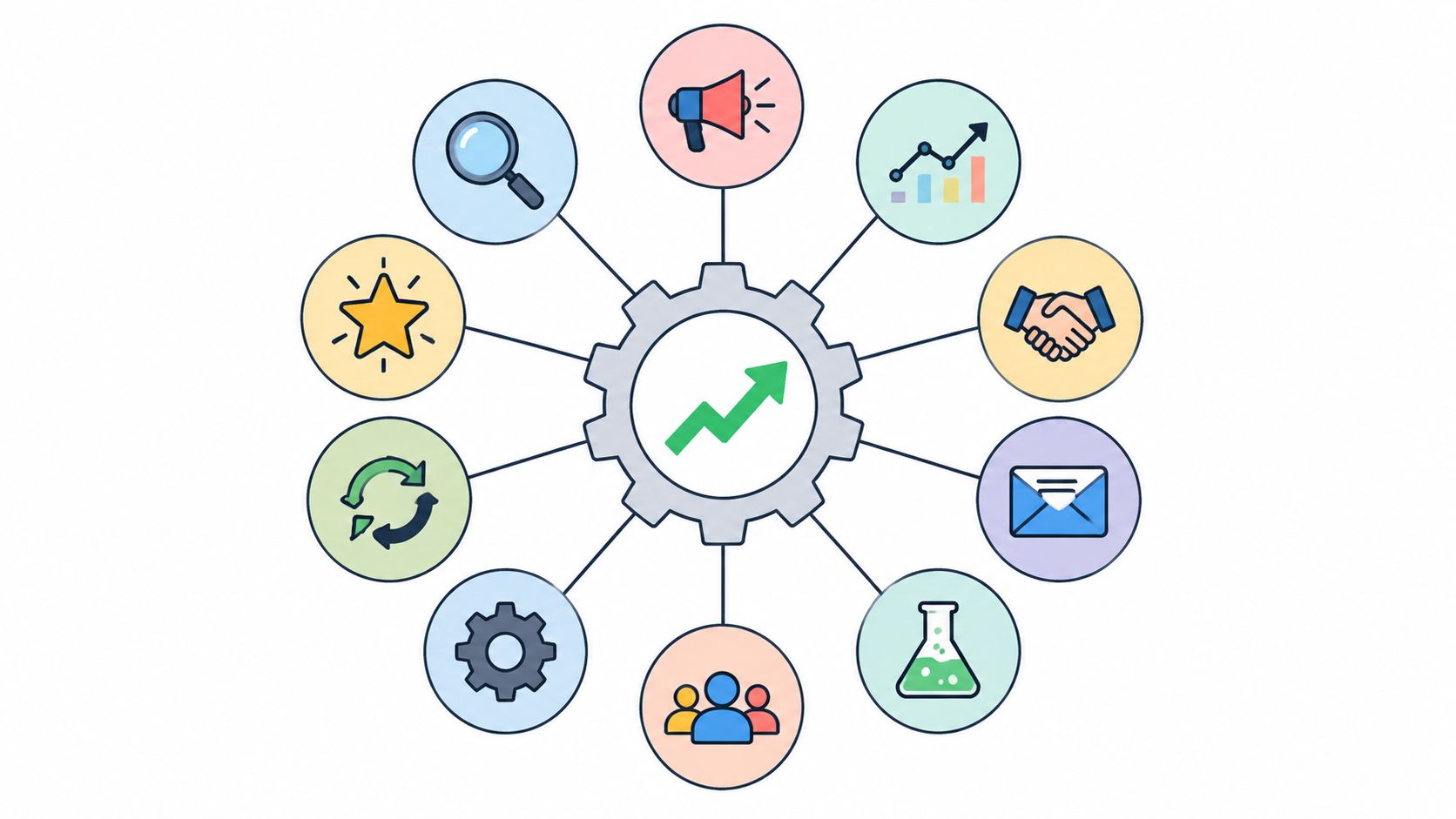
This flow is a great way to visualize how your goals and audience understanding are the essential first steps that dictate the rest of your strategy.
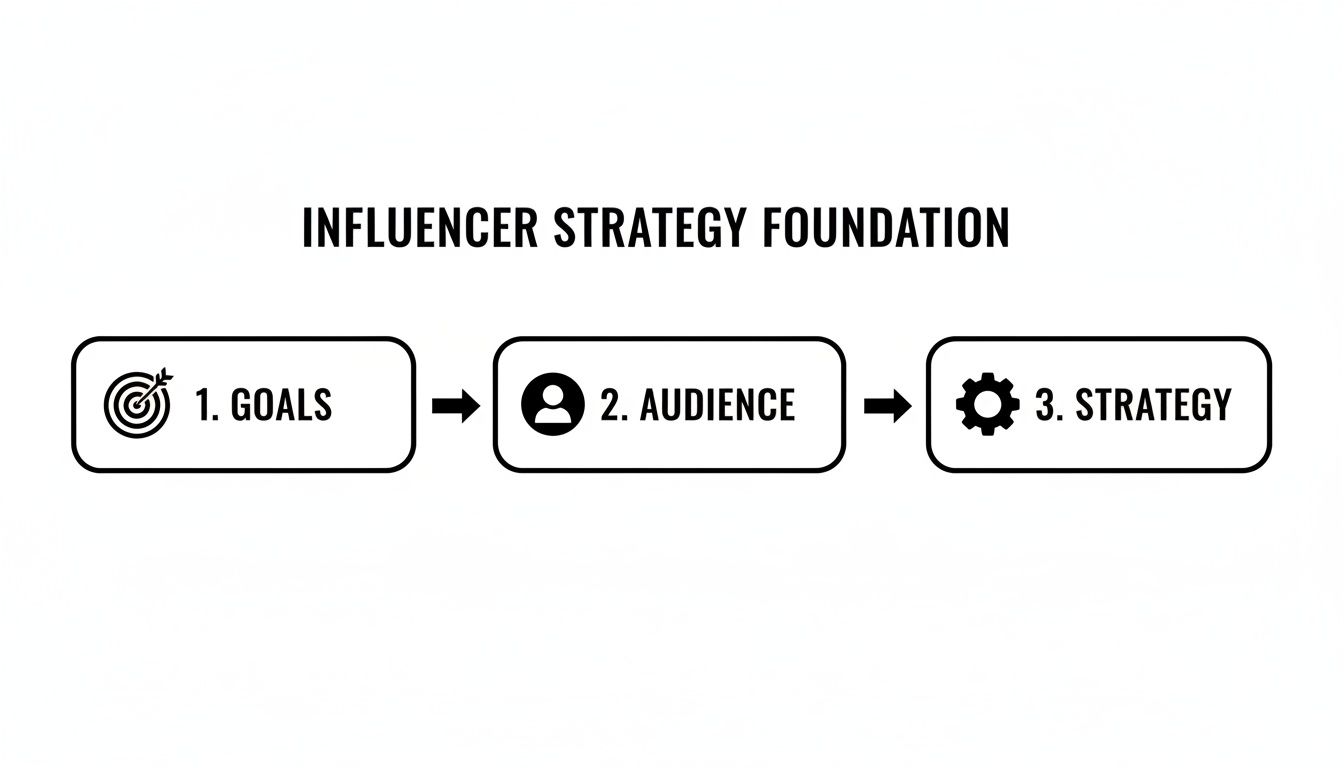
Without a clear target (your goals) and a map of who you're trying to reach (your audience), your campaign has no direction.
Get Specific About Your Target Audience
Once you know what you want, you have to figure out who you're talking to. A detailed audience persona is your most powerful tool here, and it needs to go way beyond basic demographics like age and location.
You need to dig into their psychographics:
- What are their real-world problems and what motivates them?
- What kind of content do they actually find interesting and share-worthy?
- Where do they spend their time online? Are they scrolling TikTok or browsing LinkedIn?
- Who do they already listen to for advice and recommendations?
A sharp, well-defined audience profile is about more than just finding the right influencers. It dictates the entire creative direction of your campaign. You can't create content that resonates if you don't truly know who you're talking to.
To make sure your influencer work fits with everything else you’re doing, it needs to be part of a larger social media plan. A good social media strategy template can help you line everything up. This ensures all your marketing efforts, including influencer collaborations, are pulling in the same direction. When you have this foundation, you’re in a great position to understand the full https://www.reachlabs.ai/benefits-of-influencer-marketing/ and find the perfect partners to bring your vision to life.
Finding Influencers Who Genuinely Fit Your Brand
Choosing the right partners is where your influencer marketing strategy lives or dies. Seriously. A mismatched influencer can make your brand feel awkward and inauthentic, doing more harm than good. The whole point is to find creators whose personal brand and audience align so perfectly with yours that the partnership feels like a natural recommendation from a friend, not a clunky ad.
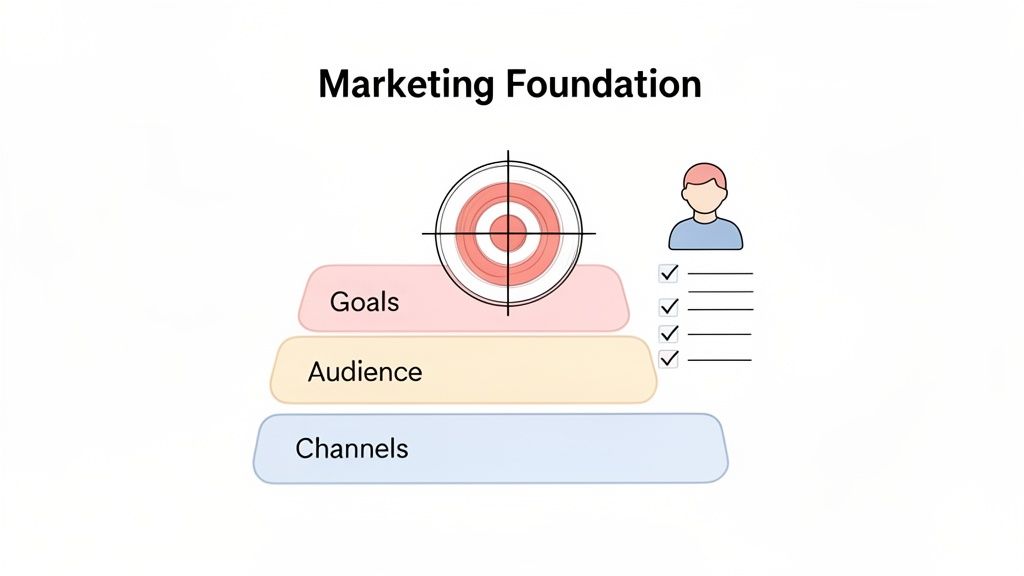
That seamless alignment is the secret sauce behind campaigns that actually connect with people. It means you have to look past the vanity metrics and dig into a creator’s content, their values, and the community they’ve built.
Understanding Different Influencer Tiers
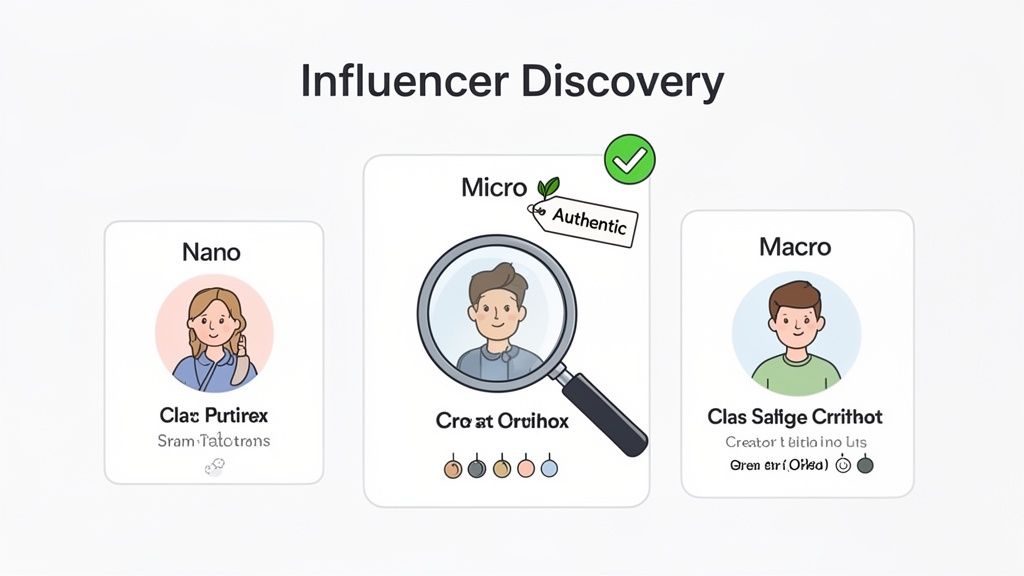
Not all influencers are the same, and thinking they are is a rookie mistake. They’re usually grouped by follower count, and each tier brings something different to the table. Knowing these differences is key to spending your budget wisely and matching your goals to the right type of creator.
-
Nano-Influencers (1K-10K Followers): These are the specialists, often deep in a very specific niche. They have sky-high engagement rates because they have a direct, personal relationship with their small but loyal community. They’re perfect for brands looking to build real trust on a smaller budget.
-
Micro-Influencers (10K-100K Followers): Many marketers consider this the sweet spot. Micro-influencers have built up real credibility and a bigger reach than nanos, but they still maintain a strong connection with their audience. They hit a great balance of reach, relevance, and cost. We dive deeper into this in our guide on how to find micro-influencers.
-
Macro-Influencers (100K-1M Followers): Think established content creators—professional YouTubers, bloggers, or Instagram personalities. They deliver significant reach and are fantastic for broad awareness campaigns. The trade-off? Their fees are much higher, and engagement rates can sometimes dip compared to smaller creators.
-
Mega-Influencers (1M+ Followers): These are the celebrities of the social media world. Working with a mega-influencer guarantees massive exposure, but it comes with a price tag to match. This tier is really for big brands with deep pockets aiming for maximum visibility.
Here’s a pro tip: The best choice isn't always the biggest name. A campaign with ten carefully chosen nano-influencers can often crush the results of a single macro-influencer collaboration, especially if your goal is deep engagement and sales within a niche audience.
The Art of Influencer Discovery
Finding the right partners is part detective work, part data science. The best way to start is to think like your ideal customer. Jump on Instagram and TikTok and manually search relevant hashtags. See who’s creating awesome content in your space, and don't forget to peek at who your competitors are working with.
This hands-on approach gives you a real feel for the culture and conversation. Once you have a sense of the landscape, you can bring in specialized influencer marketing platforms to add a layer of data. These tools can show you a creator's audience demographics, engagement metrics, and past brand deals, helping you confirm their audience is actually your target audience.
The growth here is staggering. We're talking about a global industry that has exploded to a $32.55 billion market size, up from just $1.4 billion in 2014. With 73.2% of brands now working with at least 10 influencers per campaign, many are smartly turning to nano-influencers for their potential to create viral moments without breaking the bank. You can get more insights from the full influencer marketing benchmark report.
Vetting Potential Partners Like a Pro
Once you’ve got a shortlist of potential creators, it’s time to vet them. This is where you separate the authentic, brand-building partners from the ones who could tarnish your reputation. A pretty feed is just the start; you have to dig deeper.
Run every candidate through this checklist:
-
Audience Authenticity: Are their followers legit? Look for red flags like a huge follower count but suspiciously low likes and comments. An engagement rate below 1% is often a bad sign. You can also use tools to analyze their follower quality for bots.
-
Brand Alignment: Does their content’s style and tone actually fit your brand’s voice? Scroll through their last 20-30 posts. If you’re a sustainable wellness brand, partnering with someone who mainly does fast-fashion hauls is going to feel completely off.
-
Community Interaction: How do they talk to their audience? Check the comments. Do they answer questions and build a positive space, or is it a ghost town of spam and generic replies? Real interaction is what you're looking for.
-
Past Partnerships: Who have they worked with before? If they just promoted a direct competitor, your message might get lost. Also, be wary of creators who seem to promote a different brand every other day—it can make their endorsements feel cheap and untrustworthy.
This vetting process is non-negotiable. It ensures your partnerships are built on a solid foundation of authenticity, which leads to content that resonates and actually drives results.
Designing Your Campaign and Crafting Your Outreach
Alright, you’ve done the legwork and have a solid list of potential influencers. Now for the fun part: moving from strategy to action. This is where you actually design the collaboration and figure out how you’re going to work together.
The real art here is striking the right balance. You need to give enough direction to hit your goals, but also enough creative freedom for the influencer’s content to feel authentic. Get this wrong, and the whole thing can feel forced.
How you structure the campaign itself dictates how an influencer will introduce your brand to their community. There’s no single "best" way to do it; the right fit depends entirely on your goals, your budget, and the creator’s unique style.
Choosing the Right Campaign Structure
Different campaign models are built for different outcomes. Launching a new product requires a big splash, while a long-term brand awareness play needs a slow, steady burn.
Here are a few of the most common structures I've seen work well:
- Product Seeding: This is as simple as it sounds—you send free products to creators with absolutely no strings attached. It's a low-cost way to get your product into the right hands, generate some organic buzz, and see who genuinely connects with it. It’s perfect for early-stage awareness.
- Sponsored Content: This is the classic model. You pay an influencer a flat fee for a specific deliverable, like one Instagram Reel and three Stories. It gives you predictable content and is great for targeted promotions where you need guaranteed exposure.
- Affiliate or Commission-Based: In this performance-focused setup, creators earn a cut of the sales they drive through a unique tracking link or discount code. This directly ties their pay to the results they produce, making it an excellent choice if your primary goal is driving sales.
- Long-Term Ambassadorships: Think of this as putting a ring on it. You form an ongoing partnership for several months, or even years. Brand ambassadors build a much deeper, more authentic connection with your product, creating a consistent narrative that fosters serious trust with their audience over time.
A pro tip? The best strategies often mix and match these models. You could start with a broad product seeding campaign to test the waters, then offer a paid, long-term ambassadorship to the creators who drove the most engagement and truly loved what you sent them.
Crafting a Compelling Creative Brief
Your creative brief is the campaign’s North Star. It's the document you'll give influencers to guide them, but it’s a delicate dance. A great brief empowers them with the right info; a bad one reads like a list of demands and kills all creativity.
Your brief needs to be clear, concise, and honestly, a little inspiring. It should always include:
- Campaign Goals: Be direct. What’s the point of this whole thing? Are we trying to get sign-ups for a new service? Or are we trying to sell out of a new product line?
- Key Messaging Points: Give them 2-3 core messages you need them to hit. The trick is to not script them. Give them the "what" and let them figure out the "how" in their own voice.
- Content Deliverables: No ambiguity here. Be specific about what you’re paying for. Is it one 60-second TikTok video and two static Instagram posts? Spell it out.
- Mandatory Elements: This is the non-negotiable stuff. List any required hashtags (like #ad or #sponsored), handles they need to tag (@yourbrand), and any specific links they have to use.
- Creative Do’s and Don’ts: Offer guardrails, not a cage. Think gentle guidance, like, "Do show how you use the product in your daily routine," or "Don’t use any filters that change the product’s true color."
Remember, the goal is to provide a framework for success, not a creative straitjacket.
Personalizing Your Outreach for Maximum Impact
Now, it’s time to actually get in touch. The absolute biggest mistake I see brands make is sending a generic, copy-and-paste message to a list of 50 influencers. Creators, especially the good ones, can spot a lazy template from a mile away and will hit delete without a second thought.
Your outreach has to show you’ve actually paid attention. A personalized message that works usually follows a pretty simple formula.
Start by mentioning something specific about their work that you genuinely liked. Something like, "Hey Sarah, I loved your recent video on sustainable morning routines—that lighting tip was a game-changer."
That one sentence proves you’re not a robot. From there, briefly introduce your brand and, most importantly, explain why you think a partnership would be a natural fit for their audience. Clearly state what’s in it for them—is it a paid project, a cool experience, or just free stuff they’ll genuinely love?
Wrap it up with a simple, low-pressure call to action. Something like, "Would you be open to hearing a bit more about it?" This thoughtful approach makes it a conversation, not a transaction, and dramatically boosts your chances of getting a reply.
Money, Contracts, and Keeping It All Professional
Alright, let's get into the nitty-gritty: the money and the legal stuff. Getting your budget and contracts right is what separates a professional, smooth-running campaign from a chaotic mess. Think of them as the guardrails for your entire strategy—they prevent misunderstandings, protect your brand, and make sure everyone knows what to expect.
A common rookie mistake is thinking your budget is just the influencer's fee. That’s just the starting point. A real-world budget has to account for all the moving parts, from the cost of shipping products to the fees for that discovery tool you love, plus a little extra to put some ad spend behind the best-performing content.
How to Build a Budget That Actually Works
When you’re mapping out your spending, you need to think about the whole picture. The industry’s confidence is a good sign—a whopping 80% of brands are either keeping their influencer budgets steady or boosting them. In fact, 47% are bumping their spend by 11% or more, which shows they’re seeing real returns. These brands aren't just dabbling; they're investing strategically. It’s also telling that 26% of agencies now sink over 40% of their total budgets into influencers. You can dig into more of these influencer marketing budget trends here.
So, what should be on your budget spreadsheet? Start with these line items:
- Creator Fees: This is the direct payment for their hard work and creativity.
- Product Costs: The retail value of whatever you're sending them. Don't forget this!
- Shipping & Logistics: The actual cost to get the product into their hands. This can add up.
- Content Boosting: A dedicated pot of money to run the best content as paid ads.
- Platform Subscriptions: Those monthly or annual fees for your influencer marketing software.
- Contingency Fund: I always recommend setting aside 10-15%. You'll thank me later when an unexpected opportunity pops up.
Finding the Right Way to Pay: Compensation Models
How you decide to pay an influencer can completely change their motivation and the campaign's results. There’s no single “best” way; it really depends on your goals, the type of influencer you're working with, and the scope of the campaign.
To help you figure it out, here’s a breakdown of the most common compensation structures I've used over the years.
Comparing Influencer Compensation Models
This table breaks down the most common compensation models, outlining the pros, cons, and best use cases for each to help you select the right approach for your campaign.
| Model | Description | Best For | Pros | Cons |
|---|---|---|---|---|
| Flat Fee | A fixed, one-time payment for a specific set of deliverables. | Brand awareness campaigns where you absolutely need guaranteed content. | Predictable costs, easy to budget. | No incentive for the creator to drive sales. |
| Gifting/Product Seeding | Sending free products in exchange for potential coverage (no cash). | Getting your product out there, building relationships with nano-influencers. | Low cost, great for initial buzz. | No guarantee of coverage or quality. |
| Commission (Affiliate) | The creator earns a percentage of every sale made through their unique link/code. | Campaigns laser-focused on conversions and direct sales. | Low risk (you only pay for results), highly trackable ROI. | Less appealing to top-tier influencers, unpredictable content volume. |
| Hybrid Model | A mix of a lower flat fee plus a performance-based commission. | Campaigns that need both awareness and conversions. | Provides creator security while incentivizing performance. | Can be more complex to track and manage. |
Personally, I’m a big fan of the hybrid model. It often hits the sweet spot. The creator gets some guaranteed income for their time and effort, but they’re also motivated to create content that actually connects with their audience and drives sales. It's a true win-win.
Why You Absolutely Need a Solid Contract
I’ll say this as clearly as I can: never, ever work with an influencer without a signed contract. I don’t care if it’s your best friend’s cousin. This document is your shield. It’s not about being distrustful; it’s about being professional and clear. It doesn't need to be a 50-page legal novel, but it does need to cover all the bases.
Your contract is more than just a legal formality; it's a tool for alignment. It ensures both parties have the exact same understanding of the deliverables, timeline, and expectations before any work begins, preventing costly disputes down the line.
At a minimum, your agreement needs to spell out these key points:
- Scope of Work: Get specific. How many posts? What format? (e.g., one 60-second Instagram Reel, three consecutive Stories with a link sticker).
- Content Usage Rights: This is huge. Define exactly how and where you can use their content. On your website? In paid ads? On a billboard in Times Square? And for how long?
- FTC Disclosure Requirements: Make it mandatory. Explicitly state that they must use clear disclosures like
#ador#sponsoredto stay on the right side of the law. - Exclusivity Clause: Do you need them to avoid working with your direct competitors for a while? If so, define that period clearly (e.g., for 30 days after the campaign ends).
- Payment Terms: Lay out the exact compensation, how they’ll be paid, and when (e.g., 50% upfront to kick things off, 50% on completion).
- Deadlines and Approval Process: Create a clear timeline. When is the draft content due? How long do you have to review it? When does the final version go live?
Choosing the Right Platforms for Your Audience
Your influencer marketing strategy lives or dies by the platforms you choose. You can find the most amazing creator on the planet, but if they're making killer content on a platform your audience never even opens, you’ve just thrown your money away. The whole point is to show up where your customers are already scrolling, watching, and double-tapping.
So, you have to put yourself in your customer’s shoes. Where do they really spend their time online? What kind of content makes them stop their scroll? A B2B software company trying to reach tech executives will have a wildly different playbook than a D2C makeup brand chasing Gen Z. The platform you pick sets the stage for everything that follows, from the content format to the entire vibe of your campaign.
Matching Platform Strengths to Your Goals
Every social media platform has its own distinct culture, content style, and user base. Picking the right one isn't about jumping on the biggest bandwagon; it's about making the smartest choice for your brand and what you’re trying to achieve.
Let's break down the major players and what they're best for:
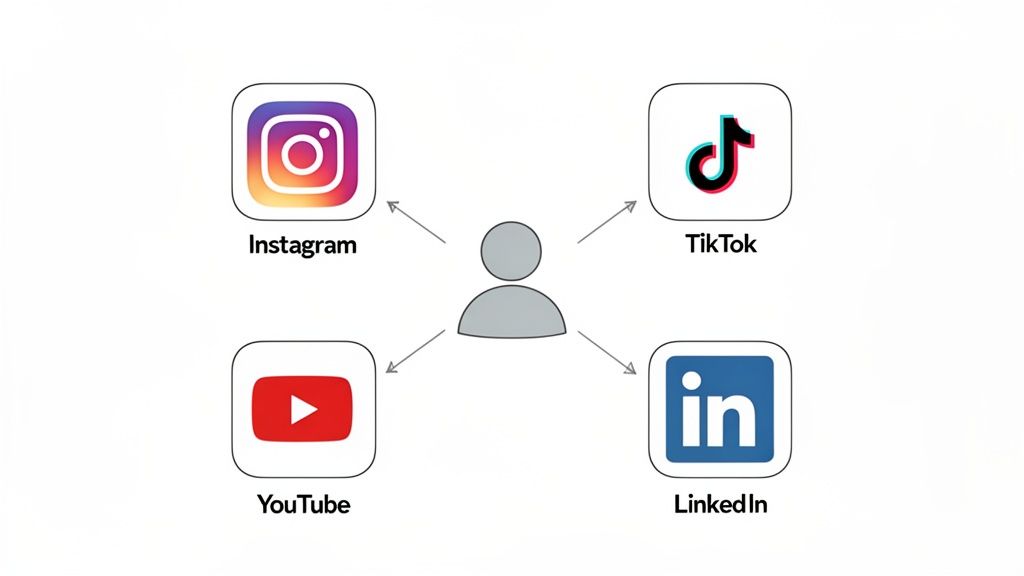
- Instagram: This is the visual heavyweight. It’s a no-brainer for brands in fashion, beauty, food, and travel—anywhere aesthetics are king. With a mix of Reels, Stories, and classic Carousels, you have a ton of creative options to make your products look incredible.
- TikTok: The epicenter of viral trends and bite-sized video. If your audience skews younger and you want to ride the wave of cultural moments with fun, creative content, this is your sandbox. Authenticity and a good sense of humor are your currency here.
- YouTube: The undisputed king of long-form, deep-dive content. This is the perfect spot for detailed product reviews, how-to guides, and educational videos that build serious trust and authority. If you have a complex product that needs a good explanation, this is it.
- LinkedIn: The go-to network for B2B professionals. If your targets are industry leaders and decision-makers, nothing beats LinkedIn. Thought leadership articles and expert commentary from respected voices in your field can move the needle in a big way.
Choosing a platform isn't just a tactical checkbox; it’s a core strategic decision. It dictates your creative boundaries, the audience you'll connect with, and the kind of relationship you can build. Think of it as the stage where your brand's story will unfold.
Where Your Audience Actually Hangs Out
You absolutely have to know the demographics of each platform. It's non-negotiable. For example, while everyone talks about TikTok’s massive Gen Z audience, Instagram is still a powerhouse across multiple generations.
In fact, when you dig into the data, Instagram remains the undisputed leader with a massive 2.11 billion monthly active users. A huge 68% of marketing specialists see it as essential, especially for connecting with the 25-34-year-old crowd, which makes up a solid 44.7% of its user base. It's also a fantastic place for nano-influencers to shine, often delivering surprisingly high engagement. You can find more insights like this in the state of influencer marketing on HypeAuditor.
Why does this data matter so much? Because it grounds your strategy in reality. If your ideal customer is a 30-year-old professional, the numbers confirm Instagram is a very safe bet. But if you’re trying to capture the attention of a 19-year-old college student, you should probably be focusing your energy on TikTok first.
Ultimately, your platform choice has to be a direct reflection of where your specific audience is most active and open to hearing from you. When you align your brand, your goals, and your audience with the right platform, you’re creating the perfect conditions for your influencer campaign to really take off.
Measuring Performance and Optimizing Your Strategy
Let's be clear: an influencer marketing strategy isn't something you just "set and forget." Launching a campaign without a plan to track its performance is like driving blind. You might be moving, but you have no idea if you're actually getting closer to your destination. To prove your efforts are paying off and to make smarter decisions down the road, you absolutely have to measure what matters.
It all starts by tying your metrics directly back to the goals you set at the very beginning. If your main objective was to boost brand awareness, then obsessing over sales figures doesn't make sense. On the flip side, if sales were the goal, a mountain of impressions means very little if no one actually bought anything. Real optimization happens when you’re tracking the right key performance indicators (KPIs).
Connecting Your Metrics to Your Goals
I find it helps to build a simple dashboard that mirrors your initial objectives. This gives you a quick, at-a-glance view of what’s hitting the mark and what’s falling flat, so you can react without digging through spreadsheets.
Here’s how you can break it down:
-
For Brand Awareness: You're playing the visibility game. Keep an eye on metrics like reach (the number of unique people who saw the content), impressions (how many times the content was viewed in total), and brand mentions.
-
For Engagement: This is your gut check on whether the content actually connected with people. You'll want to track likes, comments, shares, and saves. A high engagement rate is a strong signal that the influencer’s audience genuinely cared about the message, not just scrolled past it.
-
For Conversions: This is where the rubber meets the road. We're talking about direct actions. Key metrics here are the click-through rate (CTR) from custom links, referral traffic to your website, and, of course, sales tracked with unique promo codes or affiliate links.
The best data doesn't just tell you what happened; it tells you why. A sudden spike in website traffic from one influencer but not another? That's a huge insight that should shape who you work with next.
Turning Data Into Actionable Insights
Once you have the data, the real work begins. It’s time to use these numbers to refine and sharpen your approach for the next campaign.
For example, maybe you noticed that Instagram Reels from your micro-influencers drove way more engagement than the polished, static posts from a macro-influencer. Now you have a concrete, data-backed reason to shift your budget and creative strategy toward short-form video with smaller creators.
This constant cycle of measuring, learning, and optimizing is what turns a good influencer strategy into a great one. It transforms your campaigns from a series of one-off gambles into a predictable, scalable engine for growth.
If you really want to get into the weeds on this, we put together a complete guide on how to calculate influencer marketing ROI that offers more detailed frameworks. By constantly refining your approach based on real results, you ensure every dollar you spend is working harder than the last.
Common Influencer Strategy Questions Answered
Diving into influencer marketing often brings up more questions than answers, especially when you're just starting out. Let's walk through some of the most frequent questions I hear from brands trying to get their footing or scale up their programs.
How Much Should I Budget for My First Influencer Campaign?
There's no one-size-fits-all answer here, but I always advise starting smart, not necessarily big. For a first campaign, focusing on micro-influencers (those with 10k-100k followers) is a fantastic strategy. They tend to have highly engaged audiences and offer a great bang for your buck.
A solid test campaign budget usually falls somewhere between $1,500 and $5,000. This gives you enough runway to work with a handful of creators, cover product costs, and handle any minor administrative fees. The real goal isn't to hit a home run on day one; it's to gather data, see what resonates, and then confidently invest more in what works.
How Do I Ensure Influencers Follow FTC Disclosure Rules?
You have to be crystal clear and proactive about this—it’s non-negotiable. The best way to protect your brand is to build FTC compliance directly into your influencer contract. Include a clause that explicitly requires them to use clear disclosures like #ad or #sponsored in a place that's impossible to miss.
Remember, your brand is also liable for any non-compliance. Always review content before it goes live to confirm the disclosures are correct and easily visible. This simple step protects everyone involved.
To make it even easier, I recommend giving influencers a simple one-page guide on disclosure rules. Setting clear expectations from the start prevents awkward conversations later and builds a foundation of trust.
What Is the Difference Between Influencer Marketing and Brand Ambassadors?
This is a great question that boils down to the length and depth of the relationship. Think of it this way:
-
Influencer Marketing is typically campaign-based. You partner with a creator for a specific, short-term goal, like a new product launch or a holiday promotion. It’s a tactical, project-based collaboration.
-
Brand Ambassadors are all about the long game. These are true fans of your brand who enter an ongoing partnership, consistently creating content over months or even years. It's a deeper, more integrated relationship.
If you're curious about how this compares to other performance-based models, this breakdown of Affiliate Marketing vs Influencer Marketing is a great resource.
At ReachLabs.ai, we specialize in building data-driven influencer strategies that deliver real results. Let our team of experts help you navigate every step, from finding the perfect partners to measuring your ROI. Learn how we can elevate your brand today.