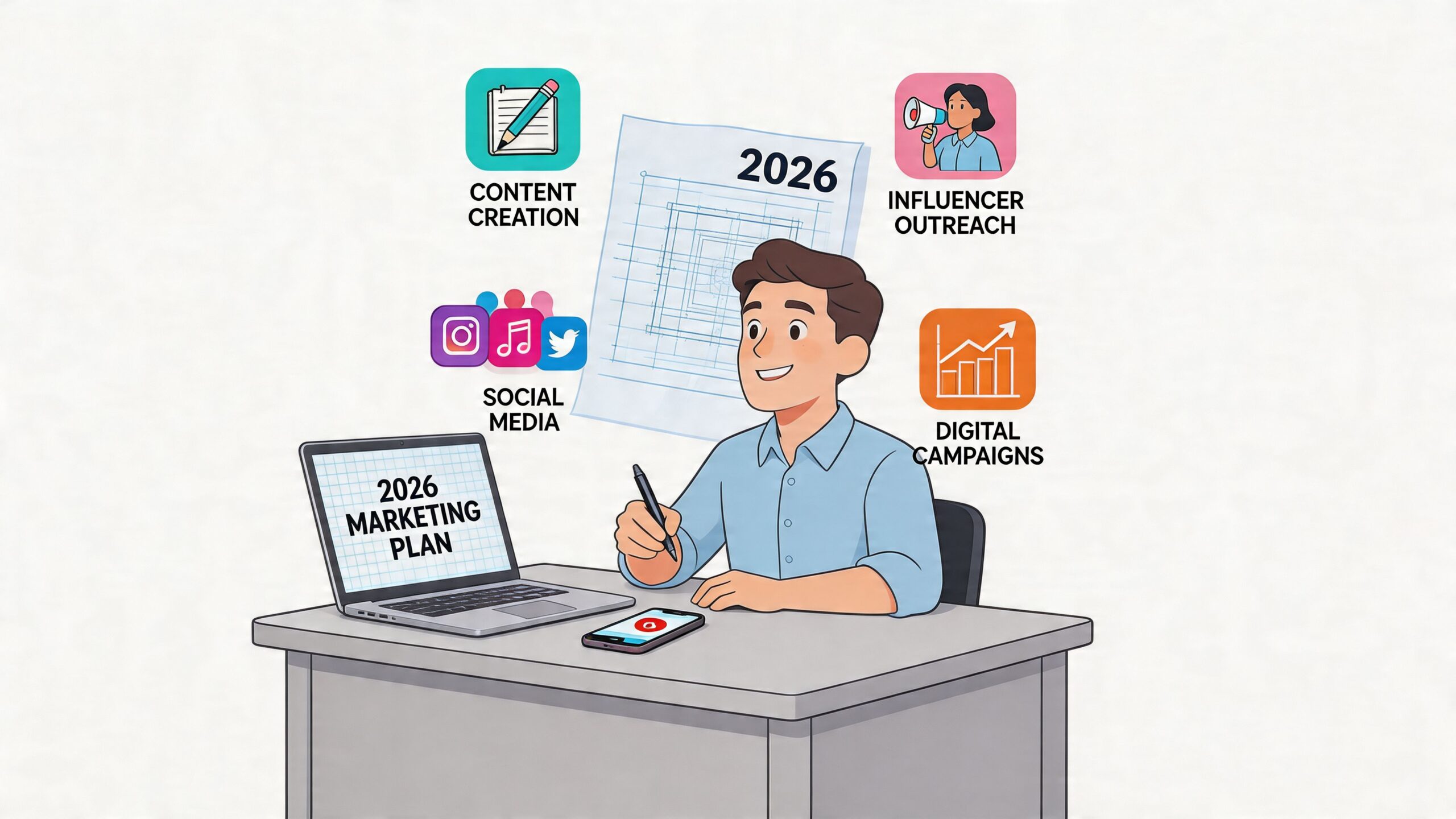
Your business is good. Customers who find you usually buy. The problem is that too many of the right people never find you in the first place.
That’s where most small business owners get stuck. One person says you need SEO. Another says paid ads. Someone else pushes email automation, LinkedIn outreach, short-form video, influencer campaigns, or a new AI tool that supposedly fixes everything. You end up with a few disconnected tactics, a monthly software bill, and no clear answer to the only question that matters: is this building the business?
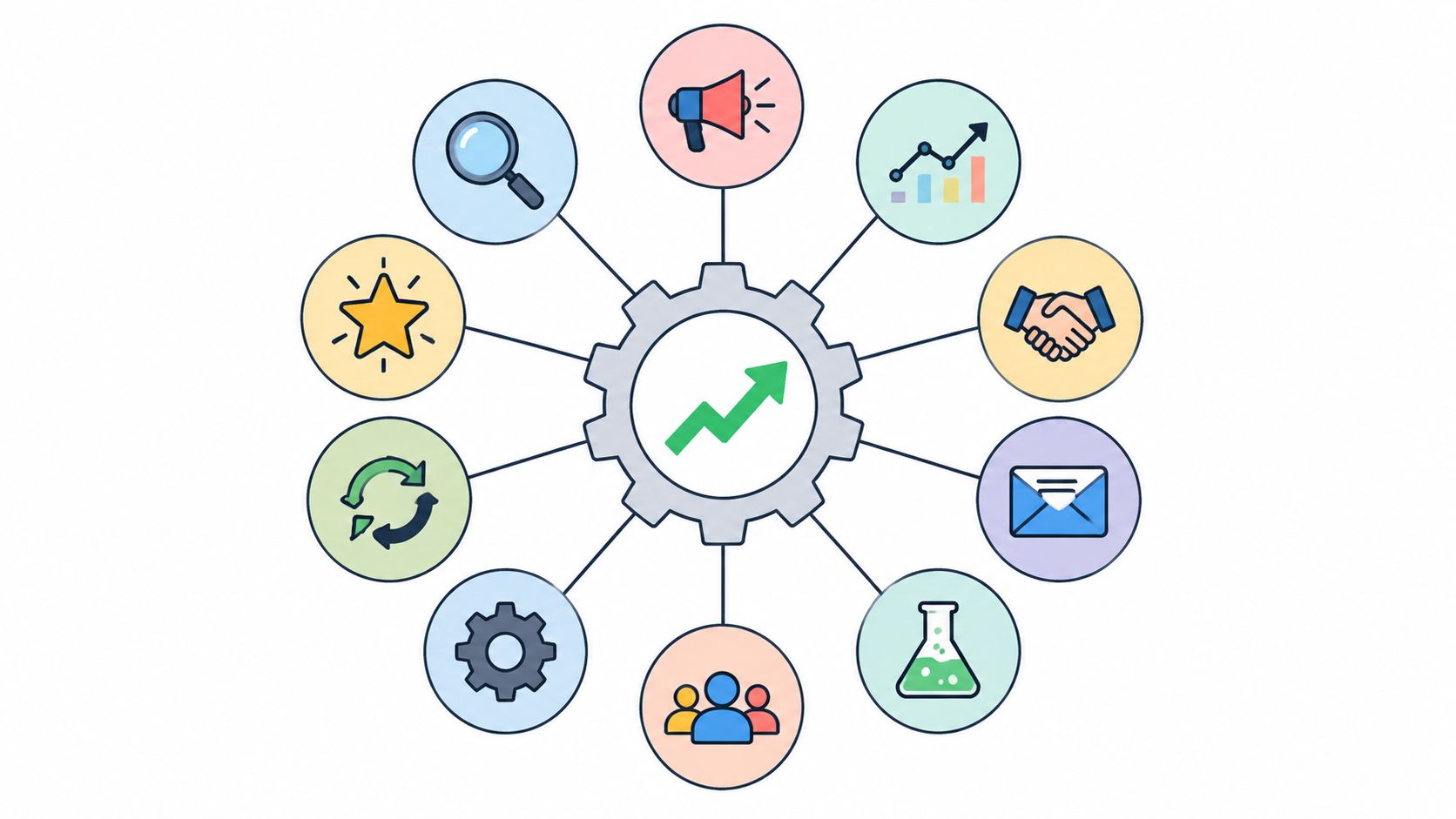
Small business marketing solutions only work when they fit together. A website, ad account, CRM, content calendar, and reporting dashboard are not a strategy on their own. They’re parts. If the parts don’t connect, the engine sputters.
That matters because small business marketing is no longer a side activity for a few ambitious companies. It’s standard operating behavior. As of 2025, small businesses represent 99.9% of all U.S. businesses, 96% are actively advertising, and the sector is projected to spend around $640 billion on advertising, according to these small business statistics. The practical takeaway is simple. Marketing is not optional overhead anymore. It’s part of how a business stays visible, competitive, and buyable.
A smarter approach starts with selection, not accumulation. You don’t need every channel. You need the right combination for your sales cycle, margins, audience, and internal capacity.
Moving Beyond Marketing Overwhelm
Most owners don’t have a marketing problem. They have a decision problem.
They’re trying to choose between tools and channels before they’ve decided what the system needs to do. A local service business needs booked calls. A B2B firm may need qualified conversations and trust before a sale happens. An ecommerce brand may need product discovery, conversion, and repeat purchase. Those are different machines. They shouldn’t run on the same setup.
What a marketing solution actually is
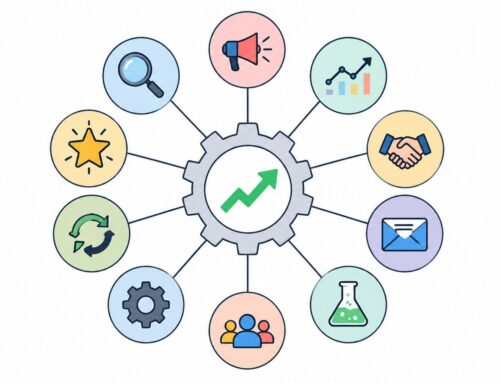
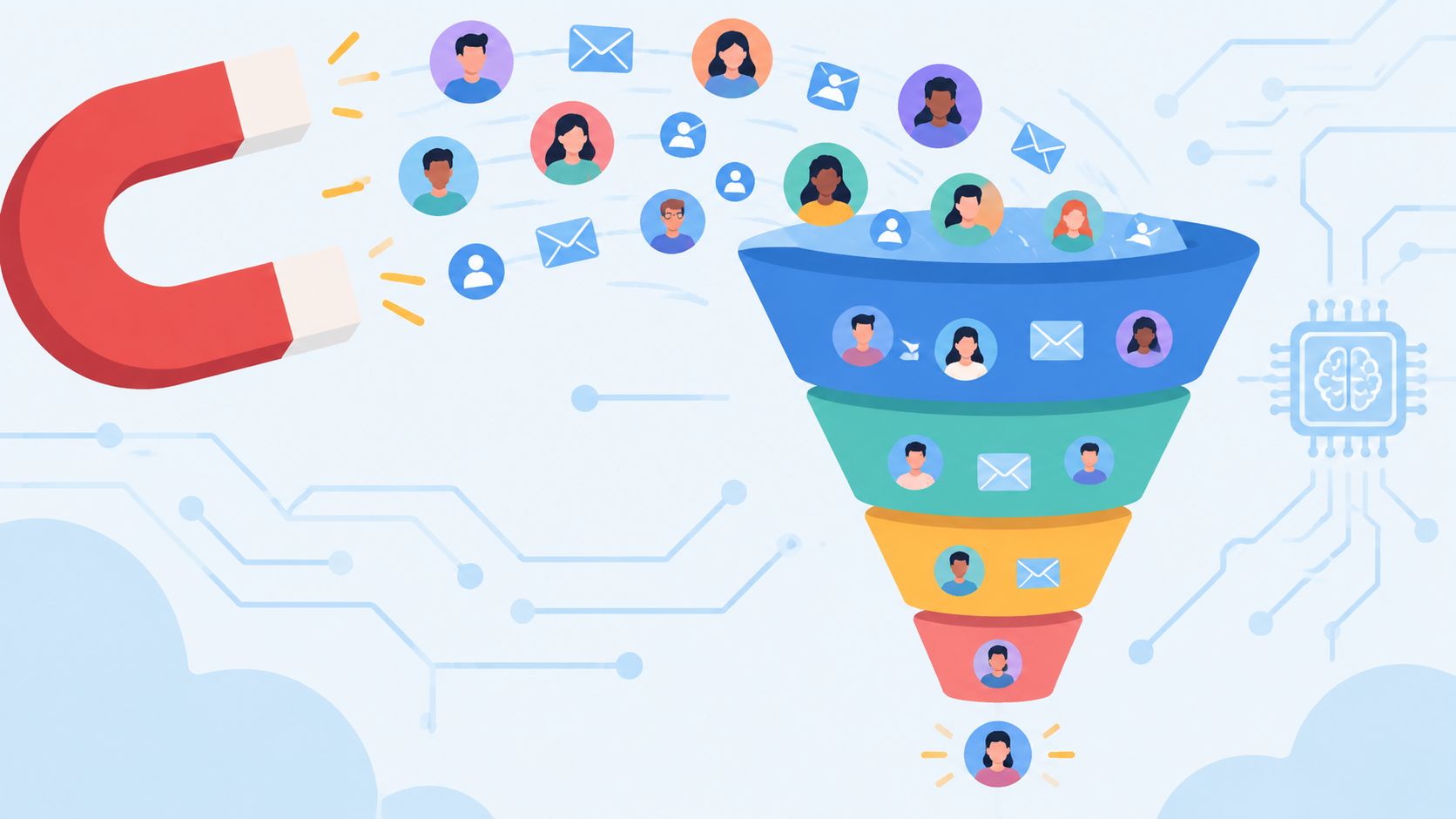
A useful marketing solution is a cohesive growth engine. It connects four things:
- Audience attention: where buyers first notice you
- Message clarity: why they should care
- Conversion path: how they take the next step
- Measurement: how you know what’s paying off
When owners skip that framework, they buy random activity. They boost posts, start a blog no one reads, run ads to a weak landing page, or hire a freelancer for one narrow task without fixing the rest of the funnel.
Practical rule: If a tactic doesn’t clearly support how your business gets customers, it’s probably noise.
The best marketing systems are often boring on the surface. Clear offer. Strong landing page. One or two channels executed consistently. Follow-up that happens on time. Reporting that shows what creates revenue, not just clicks. That’s not glamorous, but it works.
Why disconnected tactics waste budget
A lot of marketing underperforms for a simple reason. Businesses buy channels before they define constraints.
If your team can’t create video every week, don’t build a strategy that depends on constant video. If you close deals after a long sales conversation, don’t judge every campaign by same-day purchases. If your average customer value is modest, don’t use an expensive acquisition model that only works with high-ticket offers.
This is the shift that helps. Stop asking, “What should we try next?” Start asking, “What kind of growth system fits this business model?”
That question leads to better decisions on SEO, social, creative, outreach, analytics, and staffing. It also keeps you from mistaking motion for momentum.
First Build Your Blueprint Not Your House
The fastest way to waste a marketing budget is to start shopping for channels before you know what you’re building.
A contractor wouldn’t buy windows, tile, and framing lumber before the plans are done. Marketing works the same way. If the blueprint is weak, every later decision gets harder. You’ll choose the wrong channel, hire the wrong help, and judge results against the wrong goal.

Start with one primary business objective
Pick the main outcome your marketing needs to produce over the next stretch of time. Not five outcomes. One.
For most small businesses, that objective falls into one of these buckets:
- Lead generation for service businesses, consultants, agencies, contractors, and B2B firms
- Direct sales for ecommerce and product-led businesses
- Awareness and trust for businesses with a longer consideration cycle
- Retention and repeat purchase when the customer list already exists but follow-up is weak
You can care about all four eventually. But if you try to optimize for everything at once, you’ll spread the budget thin and produce bland messaging.
Define a real customer, not a vague target market
A useful customer persona isn’t a poster on a conference room wall. It’s a working document that answers practical questions:
- What problem are they trying to solve right now
- What event pushes them to start looking
- What objections slow them down
- What kind of proof do they need before they trust you
- Where do they research options
This is also where keyword strategy starts. If people search before they buy, you need language that reflects buyer intent, not internal company jargon. A tool for effective SEO keyword research can help map the phrases people use when they’re close to action.
A good persona changes creative decisions fast. The offer gets sharper. The landing page sounds more human. The ads stop trying to talk to everyone.
Audit your resources before you commit
Many small businesses choose channels based on aspiration instead of capacity. That’s backwards.
Ask three blunt questions:
- Who will create the work
- Who will approve it
- Who will follow up on leads once they come in
If the answer is “probably me, when I have time,” your plan needs to be lighter and more focused.
A simple way to organize this is to build a one-page framework around audience, offer, channels, content, and measurement. If you want a reference point for the pieces that should exist before launch, this guide to a component of a marketing plan is a useful checklist.
Here’s the point many owners miss. The right strategy is not the most ambitious one. It’s the one your team can sustain.
A short explainer on strategic planning can help if you need to reset the basics:
Your blueprint should tell you what to ignore just as clearly as it tells you what to do.
That’s how small business marketing solutions become useful. They stop being a pile of software and start becoming a system built for your business, your customer, and your operating reality.
Comparing the Core Marketing Channels
Once the blueprint is clear, channel decisions get easier. Not easy, but easier.
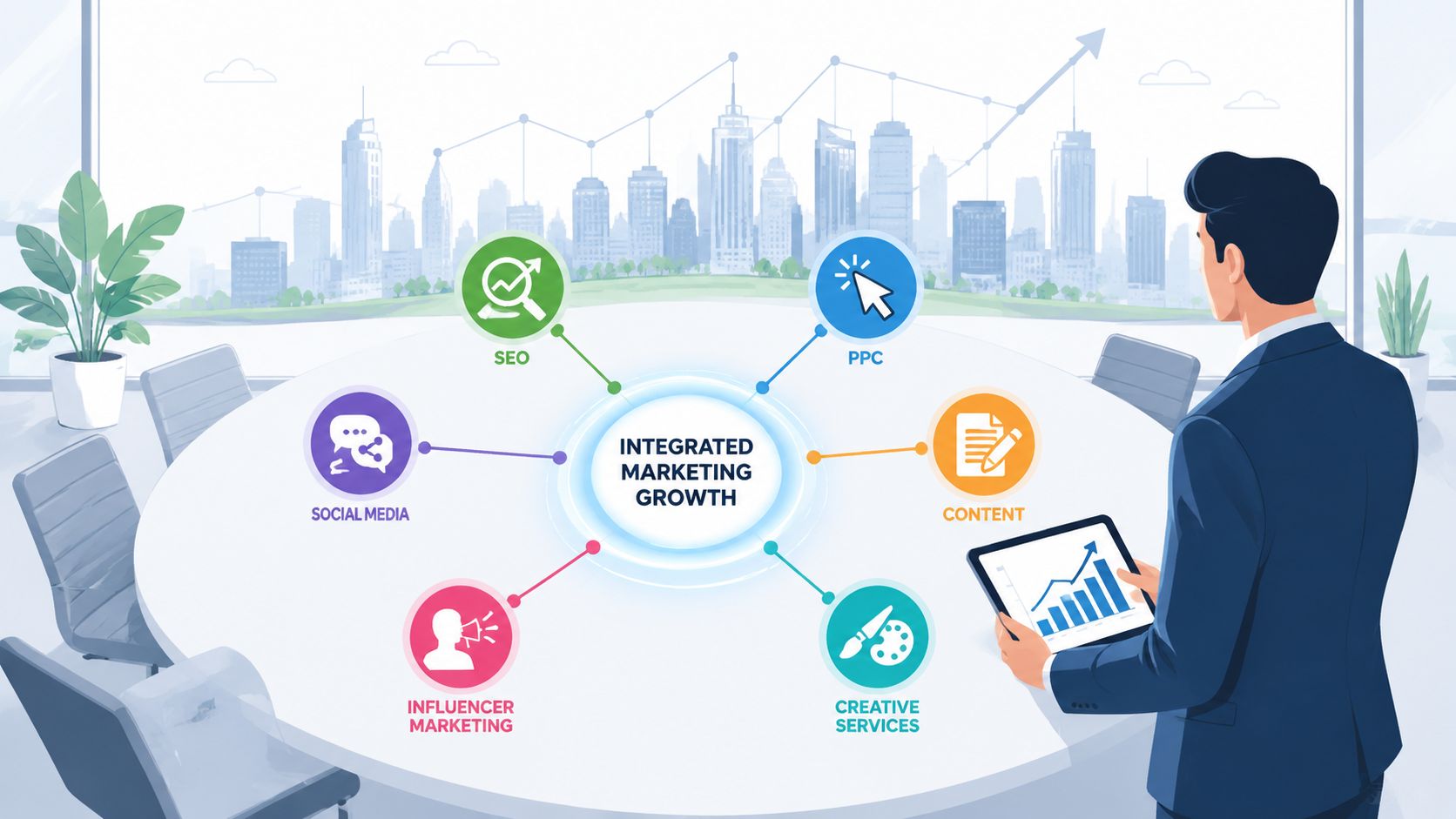
Each channel does a different job. SEO captures existing demand. PPC rents immediate attention. Content builds trust over time. Social creates discovery and repetition. Influencer campaigns borrow credibility from someone the audience already pays attention to. None of these channels are universally right. Each has a cost profile, timeline, and management burden.
Marketing Channel Comparison for Small Businesses
| Channel | Primary Goal | Typical Cost | Time to Results | Best For |
|---|---|---|---|---|
| SEO | Organic visibility and inbound leads | Lower media spend, higher time and expertise | Slower | Businesses that want compounding discovery |
| PPC | Immediate traffic and lead generation | Higher ongoing spend | Faster | Urgent demand capture and testing offers |
| Content marketing | Trust, education, and nurturing | Moderate, depends on production | Slower to medium | Longer sales cycles and expertise-driven sales |
| Social media marketing | Discovery, engagement, and direct response | Flexible, from lean to aggressive | Fast to medium | Brands that benefit from frequent audience contact |
| Influencer marketing | Credibility and niche reach | Flexible, based on creator fit | Medium | Products and local brands needing authentic exposure |
SEO and PPC solve different timing problems
Owners often compare SEO and paid search as if one must replace the other. In practice, they solve different timing problems.
SEO is the better long-term asset. It improves your visibility when buyers search for solutions, comparisons, local providers, or specific problems. But it requires technical health, keyword alignment, and content that deserves to rank.
PPC is faster. If you need leads now, paid search and paid social can create demand flow quickly. The trade-off is obvious. Once you stop paying, the traffic stops too. That makes PPC useful for offer testing, seasonal pushes, and filling short-term pipeline gaps, but risky when it becomes the only source of new business.
If your website converts poorly, paid ads won’t save you. They’ll just help you lose money faster.
For many businesses, the sensible move is a mix. Use paid campaigns for speed while SEO and content build long-term discoverability.
Content marketing earns trust before the sales call
Content is often misunderstood because people measure it too early or expect it to close the sale by itself.
Good content works like pre-sales education. It answers questions, handles objections, and frames your expertise before a prospect ever speaks with you. That matters most when buyers need confidence before committing. Think legal services, consulting, healthcare-adjacent services, software, financial services, or higher-consideration home services.
Not every business needs a giant content machine. A small library of strong pieces can do more than a flood of generic posts. Focus on pages and assets tied to actual sales friction:
- Service pages that explain outcomes clearly
- Comparison content for buyers evaluating options
- FAQ content that addresses objections
- Case-style proof without inflated claims
- Email follow-up assets that help leads take the next step
Social media is now a core channel, not an add-on
A lot of small businesses still treat social as an optional extra run by whoever has a spare hour. That’s outdated.
According to Intuit’s 2025 small business advertising trends report, three-quarters of small businesses use social media advertising and report it as effective. Among the businesses increasing ad budgets in 2025, 48% put additional spend into social media, and 83% of consumers use Instagram to discover new products and services, as shown in this small business advertising trends report.
That doesn’t mean every platform deserves your time. It means social is often where demand gets shaped before a buyer searches your name or visits your site.
For B2C, visual proof and product discovery matter. For local businesses, social can reinforce trust and keep you top of mind. For B2B, LinkedIn often supports authority, distribution, and relationship building better than direct conversion.
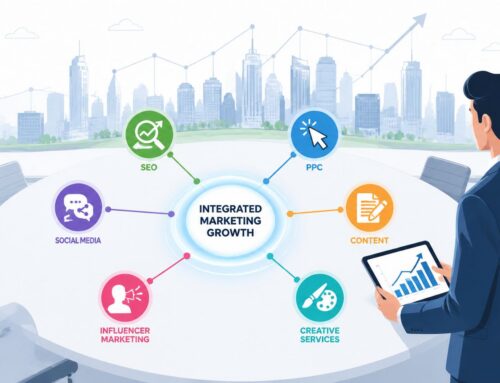
If you’re trying to coordinate search, social, email, and outreach without turning them into separate silos, this explanation of multi-channel marketing is worth reviewing.
Influencer marketing works best when it gets smaller
Many owners hear “influencer” and assume it means expensive creator deals or celebrity-style sponsorships. For small businesses, that’s usually the wrong model.
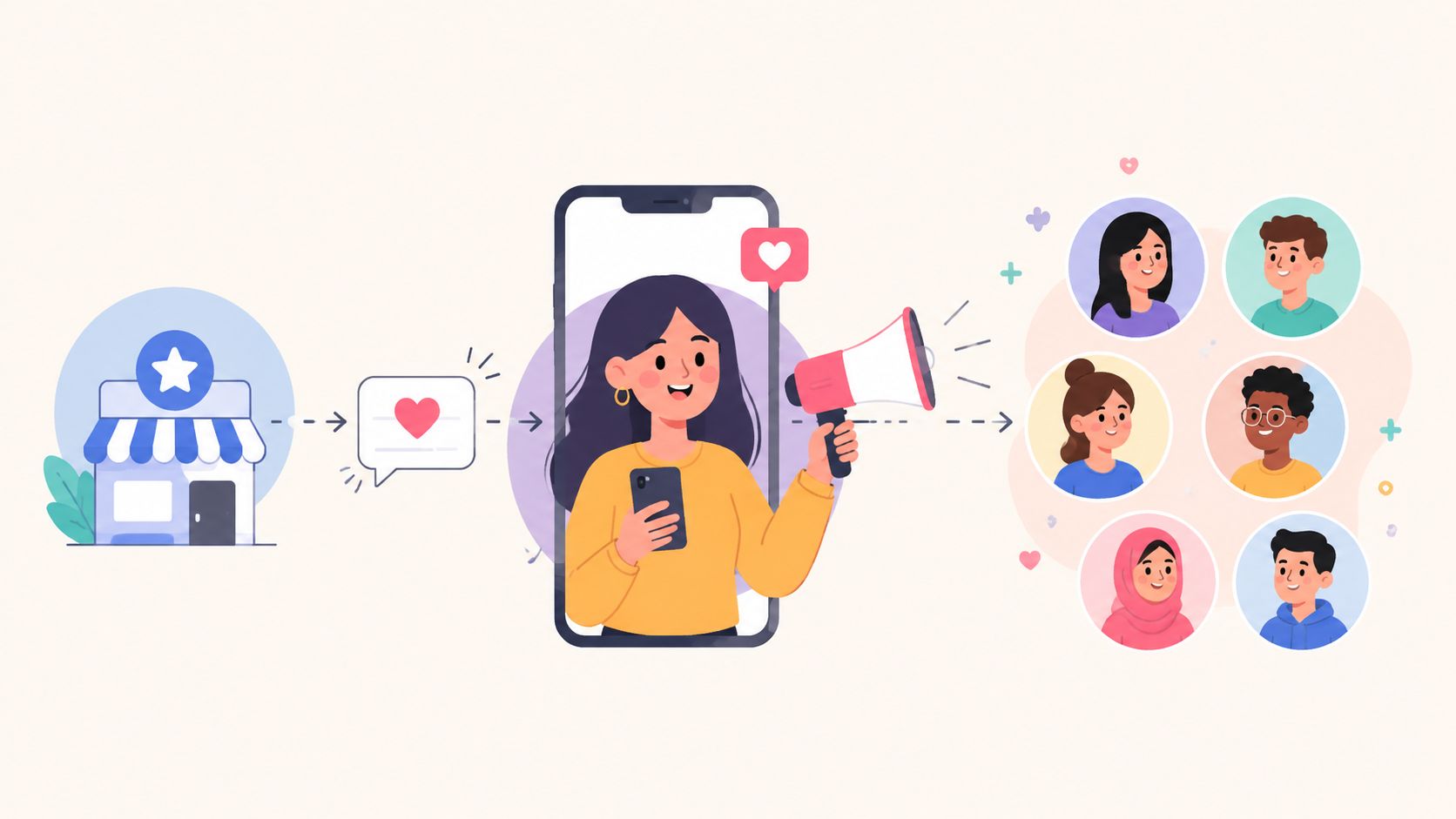
Micro-influencer campaigns are often more practical because they feel closer to word of mouth. The audience is narrower, but the relationship tends to be stronger. That’s especially useful when you sell to a niche community, a local market, or a category where trust matters more than broad reach.
The right creator partnership can generate social proof, user-style content, and conversion support all at once. The wrong one gives you a vanity post that looks good in a screenshot and does nothing in the pipeline.
The trade-off is management. Influencer programs require fit, clear briefs, tracking, usage rights, and follow-up. They are not a shortcut around strategy. They’re a credibility layer inside strategy.
Exploring Specialized Service Solutions
Channels tell you where to show up. Services determine how the work gets done.
That distinction matters because many businesses don’t fail from lack of ideas. They fail in execution. The offer is unclear, the brand looks inconsistent, the outbound message is weak, or the sales material can’t support the conversation once attention arrives.

Creative services fix the trust gap
Creative work is not decoration. It’s signal.
When a prospect lands on your site, sees your ad, opens your deck, or visits your LinkedIn page, they make quick judgments about credibility. Weak design, generic copy, or inconsistent visuals create friction before the offer even has a chance.
Specialized creative services become worth paying for when:
- Your brand looks inconsistent across website, ads, social, and sales material
- You need sharper messaging for a new offer or repositioning
- Video or visual content would help buyers understand the product faster
- Your current assets don’t match your price point
A small business doesn’t need a giant brand overhaul to benefit. Sometimes the highest-return creative work is practical: better landing pages, clearer ad creative, stronger sales collateral, cleaner product visuals.
Managed outreach helps when your sale needs conversation
Some businesses don’t need more passive traffic. They need qualified conversations with the right people.
That’s where managed LinkedIn outreach and targeted outbound support can help, especially for B2B, professional services, recruiting-adjacent firms, and founder-led offers. Outreach works best when the market is identifiable and the value proposition is specific. It works poorly when the message is vague or the target list is sloppy.
A good outreach program handles list building, positioning, message sequencing, and handoff to sales. A poor one sends generic connection requests that damage the brand.
One example of a provider in this broader category is ReachLabs.ai, which offers services that include digital campaigns, creative support, influencer initiatives, investor pitch decks, personal branding, and managed LinkedIn outreach. That kind of setup can make sense when a business needs execution across several moving parts rather than one isolated task.
The best outsourced service is not the one with the longest menu. It’s the one that solves the next real bottleneck in your growth system.
Strategic assets support the close
Some marketing assets don’t drive first-touch awareness. They help the business close, raise, or expand.
Investor pitch decks are a good example. They aren’t just design projects. They’re strategic communication tools. The same is true for founder bios, capability decks, partner one-pagers, and sales presentations. When these assets are weak, every meeting starts with avoidable confusion.
Micro-influencer support also fits in this specialized category when the business needs authentic market access without oversized media spend. According to Databox, micro-influencer campaigns have shown 60% higher engagement rates than macro-influencers, yet only 15% of SMBs use them, which highlights an underused option for budget-conscious brands seeking authentic audience connection, as noted in this review of underutilized marketing channels for SMBs.
The practical filter is simple. Don’t buy a service because it sounds advanced. Buy it because it removes a specific blockage in awareness, trust, conversion, or follow-through.
Choosing Your Team In-House vs Agency
At some point, every growing business has to answer the staffing question. Should you build internally, outsource to specialists, or combine both?
There isn’t a universal answer. The right choice depends on complexity, pace, budget flexibility, and how much coordination your marketing system needs.

When in-house makes more sense
An internal hire works well when your company needs someone embedded in the day-to-day rhythm of the business. They can sit close to sales, product, service delivery, and leadership. That proximity often improves speed on approvals and brand familiarity.
In-house usually makes sense when:
- Marketing needs constant internal context, such as product changes, events, or frequent customer communication
- You need direct availability for daily execution
- Your strategy is relatively narrow, such as one main channel and one core offer
- You already have leadership clarity and need someone to execute consistently
The downside is coverage. One person rarely does strategy, paid media, SEO, design, copy, analytics, email, and reporting at a high level. Many small businesses hire a generalist and then expect a full department’s output.
When an agency is the smarter decision
Agencies tend to work better when the business needs multiple skills at once or wants to move faster without building a whole internal bench.
That can include paid media plus landing pages, SEO plus content, outreach plus creative, or strategy plus reporting. Instead of hiring one marketer and then patching gaps with freelancers, an agency can provide coordinated specialists from the start.
This route is often stronger when:
| Situation | Better Fit |
|---|---|
| One channel, daily internal coordination, limited scope | In-house |
| Multiple channels, technical needs, and creative support | Agency |
| Strong internal marketing leader who needs extra production capacity | Hybrid |
| Early-stage business still validating offers and channels | Often agency or fractional support |
The trade-off is that agencies need clear communication and accountability. If they don’t understand your offer, sales cycle, and constraints, they can produce polished work that still misses the mark.
Hire for the system you need, not the org chart you think a real company is supposed to have.
A practical decision filter
Use three questions.
First, is your problem strategic or executional? If you don’t know what channels to prioritize, you need strategy before staffing. Second, does the work require several specialties at once? If yes, outsourcing often beats trying to cram every function into one hire. Third, how much management time can leadership give? Internal teams still need direction, feedback, and process.
A hybrid model is often the most sensible. Keep brand knowledge and fast approvals close to home. Outsource the specialist work that’s hard to hire, train, and manage across several disciplines.
Setting Your Budget and Measuring Real Success
A budget only becomes useful when it’s tied to outcomes and tracked with discipline.
Too many small businesses choose a monthly number based on comfort, not math. Then they judge performance by weak signals like impressions, random website traffic, or whether the owner “feels busier.” That’s not measurement. That’s guesswork with extra steps.

Start with simple budget logic
If you’re setting a budget from scratch, don’t overcomplicate it. Build around business reality:
- Revenue goal: what growth are you trying to support
- Offer economics: how much margin exists after delivery
- Sales cycle: how long it takes for a lead to turn into revenue
- Channel mix: whether you need speed, compounding growth, or both
A healthy budget isn’t just media spend. It also includes creative, landing pages, tracking, tools, and the people doing the work. Owners often underbudget the support layers and then conclude the channel failed.
Track metrics that connect to actual business value
You don’t need a wall of dashboards. You need a small set of metrics that tell the truth.
Focus on these first:
- Customer acquisition cost: what you spend to gain a new customer
- Lead-to-close rate: how efficiently leads turn into business
- Lifetime value: what a customer is worth over time
- Return on investment: whether the revenue generated justifies the cost
- Qualified lead volume: how many opportunities meet your real buying criteria
A campaign can look strong at the click level and still fail commercially. That’s why marketing and sales data need to connect.
Why attribution changes budget decisions
One of the biggest reporting mistakes in small business marketing is over-crediting the last thing a buyer clicked.
A prospect might discover your business through social content, return through search, join your email list, and then convert after a direct visit. If you only credit the final click, you’ll misread what created the demand in the first place.
According to Cometly, last-click attribution can overvalue direct channels by up to 60%, and implementing multi-touch attribution can improve ROI by 25% to 35% by valuing each touchpoint more accurately, as explained in this marketing data solutions analysis.
If you’re sorting through tools that help tie ad activity back to revenue, this overview of ad tracking software for small businesses is a useful starting point.
You don’t need enterprise reporting complexity on day one. But you do need enough visibility to stop cutting channels that assist conversions and stop funding channels that only look good in isolation.
For a practical framework on tying metrics back to decisions, this guide on how to measure marketing effectiveness can help turn reporting into action.
Good measurement doesn’t just prove performance. It tells you what to do next.
That’s the standard. Not prettier reports. Better decisions.
Your Actionable Roadmap to Marketing Growth
Small business marketing solutions work when they’re sequenced properly. Most frustration comes from doing the right activities in the wrong order.
A simple rollout plan
Month 1 should be about clarity. Audit your current assets, define the main business objective, tighten the offer, and choose the few channels that fit your model. Fix obvious gaps in website messaging, lead capture, and follow-up before you buy more traffic.
Months 2 and 3 are for launch and controlled testing. Start with a core channel mix you can manage. That might mean SEO and content for long-term demand, social for discovery, or outreach for B2B conversations. Keep the test narrow enough that you can tell what’s working.
Month 4 and beyond is where discipline matters. Measure qualified leads, pipeline impact, and conversion patterns. Keep what supports revenue. Cut what creates activity without movement. Improve the parts that assist conversion even if they aren’t the last click.
What steady growth usually looks like
The businesses that improve fastest aren’t the ones chasing every tactic. They commit to a system, learn from the data, and make sharper decisions every month.
That can mean better landing pages, tighter audience targeting, stronger creative, smarter attribution, or a cleaner handoff between marketing and sales. Usually, growth comes from stacking several practical improvements, not discovering one magic trick.
If you want more ideas to pressure-test your next moves, these 10 proven small business growth strategies can help you think beyond channel selection and into operational follow-through.
The useful mindset is this. Don’t try to “do marketing.” Build a repeatable engine that fits your business. Once that engine is in place, marketing stops feeling like a gamble and starts acting more like an operating system.
Frequently Asked Questions
What’s the best first marketing channel for a small business
The best first channel is the one that matches how customers already buy. If people search with clear intent, start with SEO or paid search. If buyers need repeated exposure and visual proof, social may be the better first move. If your sale requires direct conversation, outreach and email can beat broad awareness tactics.
How long should I test a marketing channel before judging it
Judge it based on the buying cycle and the channel’s role. Paid campaigns can produce signals quickly, while SEO and content need more time because they build momentum gradually. The mistake is expecting every channel to behave like direct response ads.
Should I invest in SEO if I have a small budget
Often, yes, especially if your buyers use search during research. For small businesses, fixing technical issues found in site audits with tools like Semrush can lead to 30% to 50% increases in organic traffic within 3 to 6 months, and optimizing for rich snippets can improve click-through rates by 20% to 30%, according to this small business marketing tools guide. SEO tends to work best when paired with clear service pages and content tied to actual buyer questions.
Is social media worth it for businesses that don’t sell online
Usually, yes. Social doesn’t only drive direct ecommerce sales. It also builds familiarity, shows proof of work, and keeps your brand visible while prospects compare options. For local businesses and service firms, that repeated exposure can make the difference when a buyer is finally ready to choose.
What’s the biggest mistake small businesses make with marketing solutions
They buy disconnected tactics. A business runs ads without fixing the landing page, posts content without a clear offer, or hires for execution before deciding on strategy. The result is busy work that’s hard to measure and harder to scale.
If you want help turning scattered marketing activity into a coordinated system, ReachLabs.ai offers services across digital strategy, creative, influencer campaigns, outreach, and business communications so your marketing can support one clear growth plan instead of a dozen disconnected tasks.