You’re probably dealing with some version of this right now.
Your SEO freelancer says traffic is the priority. Your paid ads consultant wants more budget. Your designer is waiting on copy. Your social media manager is posting regularly but can’t tell you whether those posts are helping sales. Meanwhile, your CRM is full of leads that no one has clearly defined, and your leadership team keeps asking the same hard question: what is all this marketing doing for the business?
That situation doesn’t usually happen because people are lazy or unskilled. It happens because each person is working on a piece of the machine, but no one owns the blueprint for the whole machine.
That’s where a digital marketing strategy agency comes in. Not as another vendor to manage, but as the partner who connects the moving parts into one system. The true value isn’t just better ads, cleaner branding, or improved SEO rankings. It’s alignment. One strategy. One set of business goals. One way to measure whether marketing is turning attention into revenue.
The Problem with Patchwork Marketing
A lot of companies build their marketing the same way people patch a leaky roof. They fix the most obvious problem first.
Leads are down, so they hire a PPC specialist. Their website looks dated, so they bring in a designer. Content is inconsistent, so they add a freelance writer. A founder wants more visibility, so someone suggests LinkedIn posts or a podcast tour. Each decision feels reasonable on its own.
Then the cracks show.
The ad campaigns send people to a landing page that doesn’t match the messaging. The blog content targets one audience while the sales team pitches another. The CRM tracks form fills, but not which channels brought qualified buyers. The investor pitch deck tells a growth story that doesn’t match the brand story on the website. Everyone is busy, but progress feels blurry.
Where the confusion starts
Most patchwork marketing fails for one reason. Execution gets hired before strategy gets defined.
That creates three common problems:
- Mixed messaging: Your brand sounds different in ads, on social, in email, and on sales calls.
- Budget waste: Teams spend money on channels that aren’t connected to a larger conversion path.
- Murky accountability: Each specialist can point to activity, but few can connect that activity to revenue.
A business rarely has a traffic problem alone. It often has a connection problem between audience, message, offer, and follow-up.
Business owners often assume they need more output. More posts. More campaigns. More agencies. More tools like HubSpot, Google Analytics, Semrush, Meta Ads Manager, or Mailchimp. Those tools matter, but they don’t create alignment by themselves.
A coordinated strategy does.
When marketing feels disjointed, the issue usually isn’t that your team lacks effort. It’s that no one is acting as the central planner. Without that role, each function becomes its own island, and islands don’t produce consistent growth.
What a Digital Marketing Strategy Agency Truly Is
A digital marketing strategy agency is the architect of your growth system.
Think about building a house. You can hire a plumber, an electrician, a framer, and a roofer. Those specialists are important. But if no architect creates the plan, those contractors can do good work that still doesn’t fit together. Pipes end up where wiring should go. Rooms feel disconnected. The final product works poorly, even if each trade did its job well.
Marketing works the same way.
A strategist doesn’t replace specialists. A strategist makes sure specialists are solving the right problem, in the right order, with the right shared objective.

The architect role in plain language
A strategy agency looks across your business and asks questions contractors usually don’t:
- What does growth mean here?
- Which audience matters most right now?
- Where does demand come from today?
- Where does it break down between awareness, lead capture, qualification, and sale?
- Which channels deserve investment first?
- What should be measured weekly, monthly, and quarterly?
That’s different from asking, “Do you want SEO?” or “Should we run paid social?”
The strongest agencies don’t begin with a service menu. They begin with business context.
A sales and marketing outsourcing playbook can be useful here because it frames outsourcing as an operating decision, not just a staffing shortcut. That’s the right mindset. You’re not buying disconnected labor. You’re deciding who should own strategic coordination and execution.
Why this matters more now
The agency market itself is shifting toward deeper strategic work. Promethean Research reported that the share of agencies offering digital strategy services declined from 68% in 2024 to 60% in 2025 in a maturing market, a sign that firms are being pushed toward sharper positioning and more substantive strategic value instead of listing strategy as a basic service (Promethean Research digital agency industry report).
That’s an important signal for buyers.
When more agencies compete on execution, strategy becomes the separator. Not every shop that says “full service” can build a coherent system. Some are still collections of departments under one logo.
How this differs from freelancers and in-house generalists
Freelancers are often strong at a single craft. A paid media buyer may know Google Ads thoroughly. A copywriter may write excellent landing pages. But they usually don’t own cross-channel coordination unless you assign someone to manage it.
In-house generalists have the opposite challenge. They understand the business well, but they’re often spread too thin. One person can’t be your analyst, strategist, ad operator, SEO lead, designer, and content director all at once.
A digital marketing strategy agency fills that gap by bringing specialist depth under shared leadership. If you want a grounded overview of what that model typically includes, this guide on what a digital marketing agency does is a practical reference.
Practical rule: If an agency starts by selling channels before understanding your revenue model, you’re probably talking to a contractor, not an architect.
The Integrated Toolkit Core Agency Services
A strategy only matters if it can turn into coordinated action.
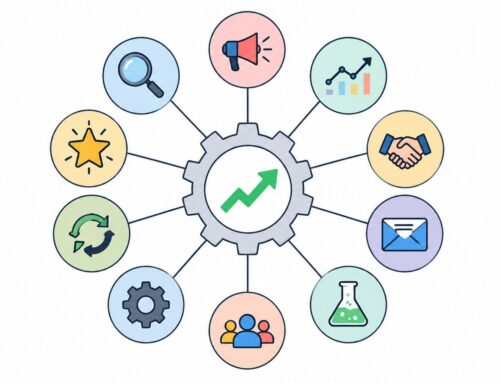
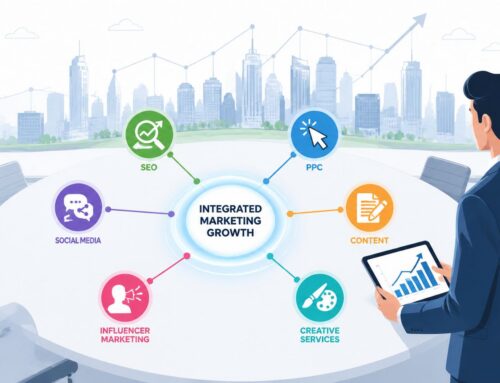
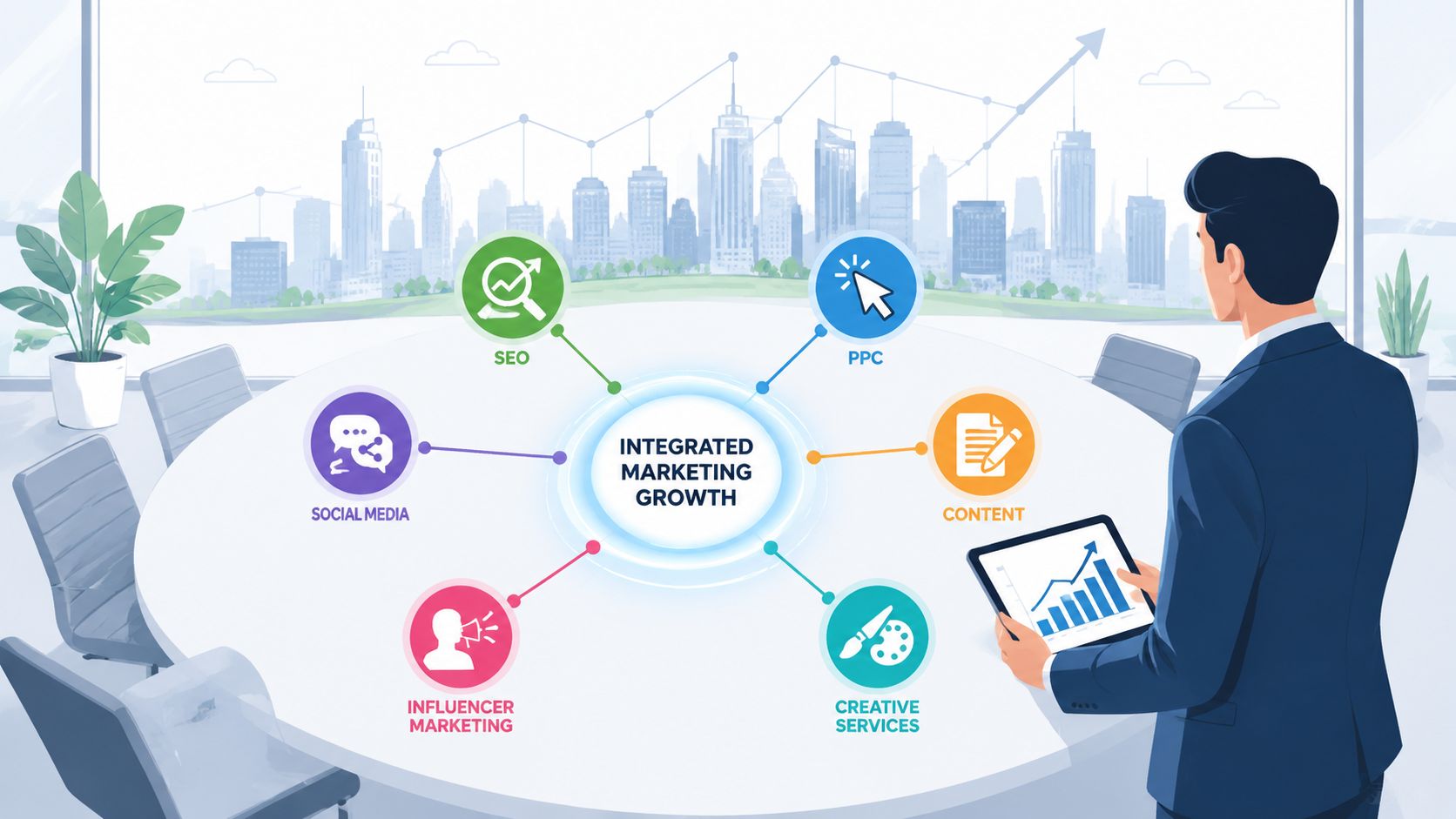
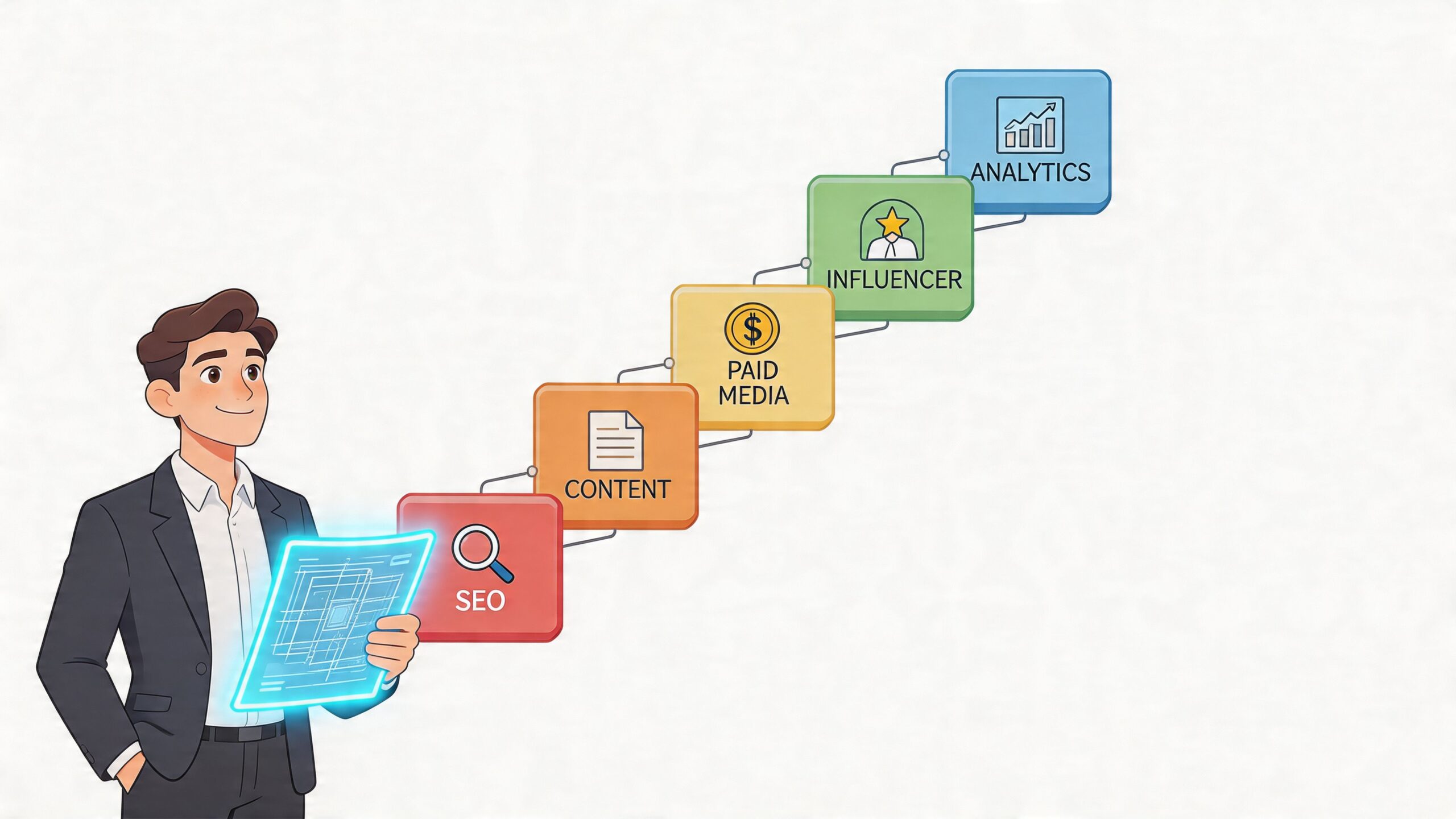
The easiest way to understand a full-service agency is to stop thinking in separate services and start thinking in systems. Creative supports content. Content supports SEO. SEO insights improve paid search targeting. Paid media tests messaging quickly. Analytics tells you which story, offer, and audience are moving buyers forward.
That integrated model matters because the market is large and getting more competitive. Global digital advertising spending is projected to reach $700 billion by 2025 and $786.2 billion by 2026, which raises the cost of scattered decisions and increases the value of agencies that can manage paid media, SEO, and content as one coordinated engine (digital marketing spending projections).

Strategy and positioning
This is the control layer.
Before an agency launches campaigns, it should define the fundamentals: target audience, offer hierarchy, category position, core messaging, funnel priorities, and conversion paths. For an SMB, that might mean deciding whether the company should compete on speed, specialization, local trust, or premium expertise. For a B2B firm, it might mean clarifying whether marketing should target buyers, users, or both.
Without this layer, channels drift.
A company says it wants leads. The agency should ask what kind of lead, from which segment, with what sales value, and through what handoff process. That’s strategy. Everything else depends on it.
Creative and content production
Creative is the fuel. Content is how that fuel gets distributed and reused.
A single campaign can produce:
- Landing page copy: for paid traffic and direct response
- Video edits: for paid social, organic social, and sales follow-up
- Static design assets: for ads, carousels, blog illustrations, and email
- Thought leadership content: for founders, executives, or sales reps
- Sales enablement materials: such as one-pagers, decks, and nurture collateral
This is why siloed hiring gets expensive. If design, copy, and video sit in separate corners, the campaign loses consistency. You end up rewriting the same message five times.
Good agencies build modular content. One clear message can become a blog post, a LinkedIn post series, ad creative, a webinar landing page, and an email sequence.
SEO as demand capture
SEO isn’t just blogging. It’s structured demand capture.
When people search with intent, SEO helps your business show up in the moment that question becomes active. But strategic SEO doesn’t start with “let’s publish more.” It starts with intent mapping. Which searches reflect curiosity, comparison, urgency, or buying readiness? Which pages should educate, and which should convert?
The work often includes technical audits, on-page optimization, content clusters, internal linking, metadata, and reporting through tools like Google Search Console, Ahrefs, Semrush, Screaming Frog, and Looker Studio. If your team is evaluating platforms, a practical roundup of best SEO software for agencies can help you understand how agencies build their search workflow.
SEO also strengthens other channels. Organic search data reveals language customers already use. That language can sharpen ad copy, landing pages, webinar titles, and email subject lines.
Paid media as testing and acceleration
Paid media gets misunderstood as a shortcut. It’s better viewed as a testing engine.
Ads on Google, Meta, LinkedIn, YouTube, or other platforms can reveal which offer, message, and audience combination gets attention fastest. A strong agency uses paid campaigns to gather learning, not just spend budget. Which hooks draw clicks? Which pages convert? Which audience segment becomes sales qualified?
That data should feed the rest of the system.
If your paid media team learns that one buyer segment responds strongly to compliance messaging, your content team should build articles and assets around that angle. Your sales team should hear it too. Paid media shouldn’t live in a sealed container.
Here’s a quick primer if you want to see a channel-level explanation before bringing it back to strategy:
Social, influencer, and authority building
Not every channel is built for direct conversion. Some create familiarity, trust, and proof.
That matters for brands with longer sales cycles, founder-led visibility goals, or products that need repeated exposure before buyers act. Social content keeps your point of view visible. Influencer partnerships can lend relevance and borrowed trust. Community participation, podcast appearances, and executive content can move a brand from unknown to credible.
Many businesses often become confused. They judge every channel by last-click sales. That’s too narrow.
A thought leadership post on LinkedIn might not produce immediate revenue. But it can warm up a prospect before a sales conversation, improve ad response because the brand looks familiar, or support fundraising because the leadership team appears more established.
Business support services that affect marketing more than people expect
A real strategic partner sometimes works beyond classic campaign channels.
For some companies, growth depends on sales materials, founder messaging, or investor communication as much as ad performance. A pitch deck, a founder narrative, or managed LinkedIn outreach can all affect how the market perceives the business.
That broader scope is often where integrated agencies become more useful than siloed vendors. A firm like ReachLabs.ai offers work across digital strategy, creative, influencer programs, LinkedIn outreach, and investor pitch decks, which reflects how modern growth work often touches both demand generation and business storytelling.
The agency’s job isn’t to do everything. It’s to connect the work that matters so each asset, channel, and message strengthens the next one.
The Path to ROI An Agency's Strategic Process
Most clients don’t struggle to understand marketing services. They struggle to understand the process behind them.
That’s fair. “We do SEO, paid media, content, and reporting” doesn’t tell you how decisions get made or how revenue gets tied back to the work. A solid agency follows a repeatable process. Not rigid, but disciplined.

Discovery and audit
At this stage, the agency learns how the business operates.
It should review your current channels, analytics setup, CRM structure, offer mix, sales process, customer segments, and existing assets. The point isn’t to produce a flashy audit deck. The point is to find friction. Maybe you’re generating interest but losing it on weak landing pages. Maybe sales follow-up is slow. Maybe content attracts low-intent traffic.
A good discovery phase also surfaces internal realities. Who approves campaigns? How quickly can offers change? Is your team equipped to handle more leads if volume grows?
Strategy development
Once the facts are clear, the agency builds the roadmap.
That roadmap should define goals, target audiences, messaging priorities, chosen channels, key campaign themes, measurement points, and expected operating rhythm. It should also identify what not to do yet. Restraint is part of strategy.
If you’re comparing agency models, this overview of agency digital strategy gives a useful reference point for what a more integrated roadmap can include.
Implementation and execution
Teams often assume the “real work” starts at this point. In reality, good execution depends on the first two phases being strong.
Execution can include campaign launches, ad account setup, landing page builds, SEO updates, content production, CRM workflows, email nurture sequences, and creative deployment. The details vary, but the principle stays the same. Every action should tie back to the roadmap, not random requests.
Monitoring and optimization
Campaigns shouldn’t run untouched.
An agency should watch channel performance, lead quality, sales feedback, and conversion bottlenecks. In one account, that might mean pausing underperforming ad sets. In another, it might mean revising a landing page headline because traffic is arriving but not converting. Optimization is less about chasing vanity metrics and more about removing friction from the buyer journey.
If reporting only tells you what happened, but not what changed because of it, the agency is measuring activity rather than managing performance.
Reporting and ROI analysis
Many agencies become hard to trust. Reports look polished, but clients still can’t answer simple questions.
Which channels are producing qualified pipeline? Which campaigns create inquiries that sales wants? Which content helps move a lead from interest to conversation?
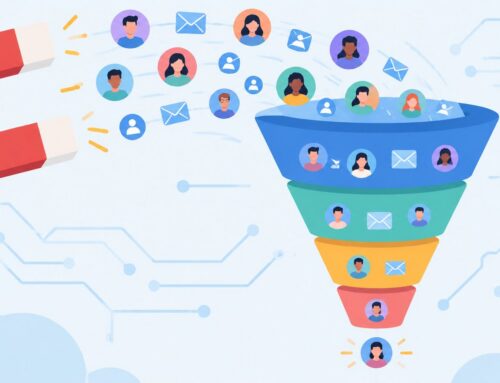
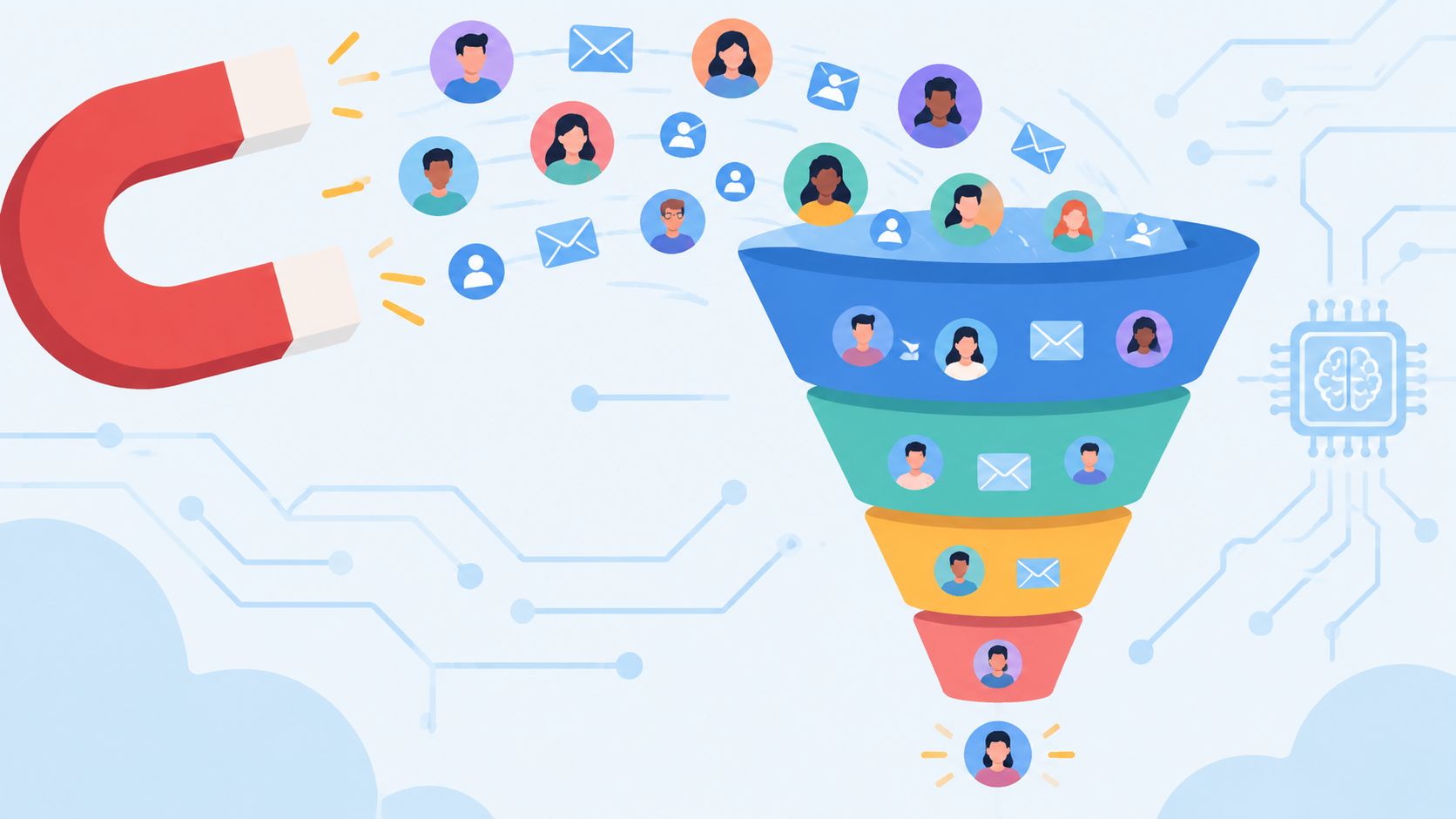
Top-performing agencies use funnel mathematics to map the path from Lead → MQL → SQL → Sale, then connect channel performance to those stages. They integrate data from CRM systems, social platforms, and SEO tools to track KPIs such as conversion rates and ROI, so revenue attribution becomes more credible and less speculative (funnel mathematics and attribution modeling).
A good report should help you make a decision. Increase investment. Fix a handoff. Change the message. Narrow the audience. Stop wasting spend.
That’s how strategy turns into ROI. Not through a magical tactic, but through a process that keeps learning and acting on what the business needs.
From Strategy to Reality Case Study Examples
Theory gets easier to trust when you can see how it plays out.
These examples are anonymized on purpose. The point isn’t to showcase brand names. It’s to show how integrated work solves business problems that isolated services usually can’t.
Example one B2B firm with attention but no sales traction
A mid-market B2B company had decent website traffic, regular LinkedIn posting, and occasional webinar signups. Leadership still felt frustrated because pipeline quality was uneven. Marketing thought the issue was volume. Sales thought the issue was fit.
The fix wasn’t “more marketing.” It was tighter coordination.
The agency reworked the company’s messaging for a narrower buyer group, rebuilt the landing pages around that use case, aligned LinkedIn outreach with the same language, and updated the sales deck so first meetings matched what prospects had already seen. Content topics were chosen to support objections heard in calls, not generic awareness.
The result was a cleaner handoff between marketing and sales. Fewer random inquiries. Better conversations.
Example two Consumer brand with creative output but weak system design
A consumer brand produced plenty of content. Videos, reels, influencer posts, product photography. The assets looked strong, but the business couldn’t tell which pieces supported revenue and which were created to fill the calendar.
An integrated approach changed the role of creative.
The agency organized content by funnel stage. Some assets were built for discovery, some for product education, and some for conversion. Paid social campaigns tested messaging angles. The website featured stronger product proof. Email follow-up echoed the same claims people first saw in ads and creator content.
That created a system. Creative was no longer just aesthetic output. It became structured persuasion.
Example three Founder-led company preparing for growth conversations
A founder-led business wanted to raise visibility with customers and potential partners at the same time. The old approach split those efforts apart. Marketing focused on campaigns. Leadership messaging lived in a separate deck. Business development used yet another story.
The agency consolidated the narrative.
The company’s website messaging, executive LinkedIn content, investor-facing materials, and outbound conversations were built around the same core story. That didn’t make every asset identical. It made them coherent. Prospects, partners, and stakeholders all heard a recognizable version of the same business case.
If you want to compare that style of applied strategy with a real-world example, this case study offers a useful lens on how agencies can manage difficult market conditions by connecting multiple growth efforts.
The most valuable agency work often looks simple from the outside. That’s usually because someone finally connected the moving parts.
Finding Your Fit How to Vet and Hire the Right Agency
Choosing an agency is less like buying software and more like hiring a leadership partner.
You’re not just selecting capabilities. You’re selecting judgment. The right agency can help you focus, challenge weak assumptions, and keep execution tied to business goals. The wrong one can keep you busy for months while your reporting gets prettier and your pipeline stays messy.
Price matters, but fit and data discipline matter more.
Start with the questions that reveal thinking
A polished proposal doesn’t tell you how an agency operates under pressure. Questions do.
You want to know whether they can think across channels, whether they understand your sales reality, and whether they use data carefully. A study of martech agencies found that data quality factors such as uniqueness, validity, and accuracy were the most important considerations in their own decision-making, which is why clients should ask directly how an agency sources, validates, and uses data in strategy and reporting (data quality in agency decision-making).
That’s more revealing than asking what dashboards they use.
Agency Vetting Checklist
| Category | Question to Ask | What to Listen For |
|---|---|---|
| Strategy | How do you decide which channels to prioritize first? | A clear explanation tied to business goals, audience behavior, and conversion paths |
| Messaging | How do you learn our market and refine our positioning? | Evidence of interviews, audits, sales input, and message testing |
| Measurement | How do you define success beyond traffic or impressions? | Discussion of qualified leads, pipeline contribution, revenue stages, and attribution |
| Data practices | How do you validate the data you use in planning and reporting? | Specific mention of source quality, CRM hygiene, analytics checks, and tracking integrity |
| Sales alignment | How do you work with internal sales teams or founders? | A process for feedback loops, qualification criteria, and handoff clarity |
| Execution | Who actually does the work after the contract is signed? | Named specialists, operating structure, review process, and communication cadence |
| Reporting | What changes between reports? | An emphasis on decisions, optimizations, and next actions rather than static dashboards |
| Experience | Have you handled businesses with a similar sales cycle or complexity? | Relevant pattern recognition, not forced claims of industry sameness |
| Scope | What do you believe should stay in-house? | Healthy boundaries and strategic restraint |
| Partnership | How do you handle disagreement on channel choices or priorities? | Confidence, reasoning, and a collaborative decision process |
Red flags that are easy to miss
Some agency warning signs are subtle.
- They lead with tactics: If the conversation starts with ads, SEO packages, or posting frequency before they understand your business, they’re likely selling output.
- They report only platform metrics: Clicks and reach matter, but they don’t answer leadership questions on their own.
- They can’t explain tradeoffs: A strategic partner should be able to say why channel A comes before channel B.
- They promise certainty too early: Real strategists have opinions, but they still need discovery to confirm assumptions.
- They avoid talking about internal friction: Sales follow-up, approval delays, CRM gaps, and messy handoffs are part of growth work.
Ask an agency what they’d need access to in the first month. Their answer tells you whether they plan to diagnose the business or just launch deliverables.
How pricing models affect behavior
Pricing changes incentives, so it’s worth understanding the common structures.
Retainer model
This is the most common for ongoing strategic work.
It usually fits companies that need continuous planning, execution, optimization, and reporting across multiple channels. The upside is consistency and access to a team over time. The risk is complacency if scope isn’t managed well.
Project-based model
This works when the need is clearly defined. A website relaunch, brand messaging engagement, campaign buildout, or investor deck development.
It can be efficient for discrete deliverables, but it often breaks once the business needs iteration, channel coordination, or long-term optimization. Projects solve components. Growth usually needs ongoing oversight.
Performance-based model
This sounds attractive because it appears low risk. In reality, it can create messy incentives.
If an agency is compensated only on narrow performance outcomes, it may focus on the easiest-to-measure activity rather than the highest-value strategic work. It can also produce conflict when results depend on factors outside the agency’s control, such as sales response time, pricing, product fit, or fulfillment capacity.
What to prioritize if you’re an SMB or lean team
Lean teams need agencies that act like proactive partners, not order-takers.
That means looking for a team that can challenge your assumptions, connect channels, and help you avoid wasting budget on isolated activity. If you’re in that selection phase, this guide on how to choose a digital marketing agency is a useful companion for structuring your evaluation.
Choose the agency that helps you think better, not just produce more.
Conclusion Building Your Future with a Strategic Partner
Patchwork marketing can keep a business moving, but it rarely keeps a business aligned.
A freelancer can improve a page. A media buyer can launch campaigns. A designer can sharpen visuals. Those contributions matter. But sustainable growth usually comes from something larger. A unified strategy that connects audience insight, messaging, creative, channels, sales handoff, and measurement.
That’s why the right digital marketing strategy agency behaves less like a vendor and more like a planning and execution partner. It doesn’t wait for instructions on isolated tasks. It looks at the full system, identifies friction, and helps your team make smarter decisions over time.
That matters even more for growing businesses with limited room for wasted spend. Many agencies underserve SMBs by acting like order-takers instead of strategic partners, while the better fit is an agency that offers data-driven optimization and holistic channel integration to help budgets work harder (how agencies underserve SMBs).
If your current setup feels fragmented, that’s not a sign that marketing can’t work. It’s a sign that your business may need an architect, not another contractor.
If you want a partner that connects strategy, creative, lead generation, and business storytelling into one system, explore ReachLabs.ai. It’s a practical next step for teams that are ready to move beyond disconnected tactics and build a marketing engine with clearer direction.