Building a new website is an exciting venture, but its success hinges on one critical factor: visibility. Without a solid SEO foundation, even the most beautifully designed site can get lost in the vast digital landscape, undiscovered by its intended audience. A haphazard approach to search engine optimization during the launch phase often leads to months of corrective work, lost traffic, and missed revenue opportunities. Getting it right from the beginning isn't just a best practice; it's a strategic imperative for long-term growth.
This guide provides a comprehensive, actionable new site seo checklist designed to ensure your website is discovered by the right people from the moment it goes live. We will move beyond generic advice and dive into the specific, technical, and strategic steps that marketing experts use to launch sites that rank effectively. From pre-launch technical audits and keyword strategy to post-launch content promotion and performance monitoring, consider this your definitive roadmap to achieving sustainable organic growth. For a comprehensive guide to ensuring your site is optimized from day one, consult this detailed SEO checklist for new websites which offers another excellent perspective on launch success.
Our goal is to equip you with a step-by-step framework covering everything you need for a powerful launch. You will learn how to structure your site for crawlers, create content that resonates with users and search engines, implement crucial on-page elements, and set up the analytics needed to measure your success. Let’s build a site that search engines and users will love.
1. Conduct Comprehensive Keyword Research & Strategy
Before a single page goes live, the most critical task in any new site SEO checklist is building a solid keyword strategy. This foundational process involves identifying the specific search terms your target audience uses to find solutions, products, or services like yours. It’s not just about traffic; it’s about attracting the right traffic that converts. A fundamental step in any new site's SEO journey is understanding how to choose keywords for SEO by analyzing search volume, competition, and, most importantly, user intent.
For example, a digital marketing agency like ReachLabs.ai wouldn't just target "digital marketing." They would dig deeper to find high-intent phrases their ideal clients use, such as 'lead generation agency for B2B tech' or 'brand building for startups.' This precision ensures their content directly addresses specific customer needs, leading to higher-quality leads.
How to Implement Your Keyword Strategy
A well-defined strategy guides your entire content creation and site architecture.
- Analyze User Intent: Classify keywords into three main categories: informational ("how to create a brand strategy"), navigational ("ReachLabs.ai services"), and transactional/commercial ("hire a lead generation agency").
- Create a Keyword Map: Assign a primary keyword and several secondary keywords to each important page on your new site. This prevents "keyword cannibalization," where multiple pages compete for the same term.
- Utilize Powerful Tools: Leverage platforms like Ahrefs, SEMrush, or Google Keyword Planner to gather data on search volume, keyword difficulty, and related terms.
- Prioritize Commercial Keywords: For your core service or product pages, focus on keywords that signal a strong intent to purchase or inquire.
Key Insight: Your keyword strategy is not a "set it and forget it" task. It's a living document that should be revisited and refined quarterly as you gather performance data and as market trends evolve. This ongoing analysis is crucial for long-term success. Discover more about how to find the best keywords for your business.
2. Optimize Site Architecture & URL Structure
A logical and intuitive site architecture is the blueprint for your website, guiding both users and search engines through your content. This crucial step in any new site SEO checklist involves organizing your pages hierarchically, creating a clear path from broad categories to specific topics. A well-designed structure helps search engine crawlers understand the relationships between your pages, distributing link equity effectively and improving indexation.
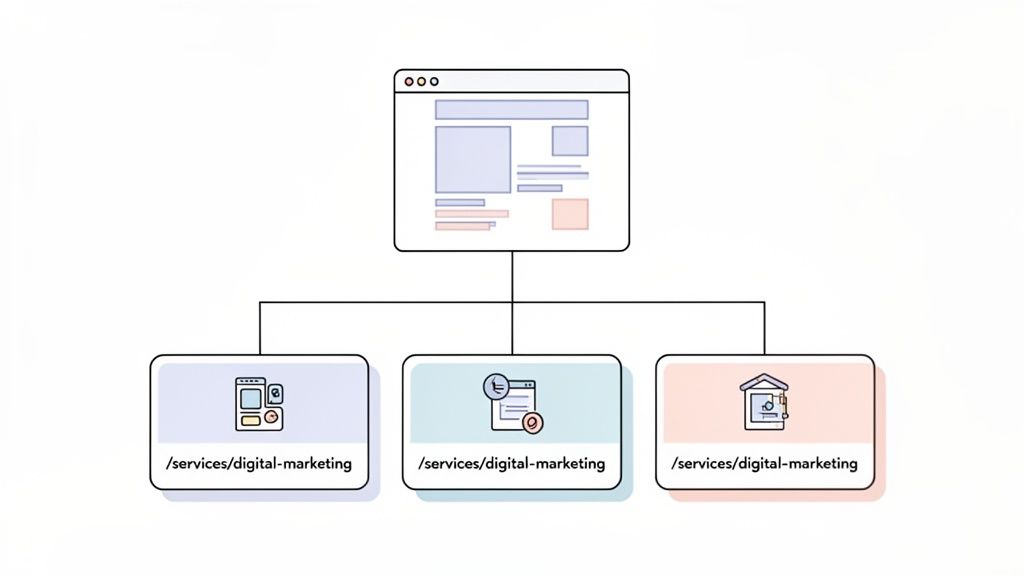
For instance, an agency like ReachLabs.ai would organize its offerings under a main "services" folder. Individual pages would then follow a clear path, such as /services/digital-marketing or /services/influencer-marketing. This not only makes the site easy for potential clients to navigate but also signals the topical relevance of each section to search engines, boosting authority for those specific services.
How to Implement Your Site Architecture
An effective structure enhances user experience and makes your site more crawlable.
- Create a Logical Hierarchy: Start with broad categories (e.g., Services, Blog, About) and drill down into subcategories. Aim for a "flat" architecture where important pages are no more than three clicks from the homepage.
- Design Clean, Descriptive URLs: Your URL should clearly describe the page's content. Use lowercase letters and hyphens to separate words for maximum readability.
- Establish Internal Linking: Use descriptive anchor text to link between related pages on your site. This helps distribute PageRank and guides users to relevant content.
- Build a Sitemap: Generate an XML sitemap that lists all important URLs on your site. Submit this file to Google Search Console to help search engines discover and index your content more efficiently.
Key Insight: Your URL structure should be permanent. Changing URLs later can result in broken links and lost SEO value, requiring extensive 301 redirects. Plan your site hierarchy and URL conventions carefully before launch to create a stable foundation for future growth.
3. Create High-Quality, Keyword-Optimized Content
With your keyword strategy in place, the next step in your new site SEO checklist is to create the actual content that will attract and engage your target audience. High-quality content is the engine of any successful SEO campaign. It's about developing comprehensive, valuable information that directly addresses your audience's pain points while naturally incorporating your target keywords. It’s the substance that proves your expertise and earns rankings.
For a B2B service provider like ReachLabs.ai, this means going beyond simple service descriptions. They would create detailed guides on complex topics like 'influencer marketing ROI strategies' or 'how to build a personal brand on LinkedIn.' This type of content doesn't just attract search traffic; it builds authority and trust with potential clients, demonstrating expertise before the first sales call is even made.
How to Implement Your Content Strategy
Effective content creation balances SEO optimization with genuine value for the reader.
- Target One Primary Keyword: Each piece of content should have a clear focus. Target one primary keyword and support it with 5-8 closely related secondary keywords or long-tail variations.
- Develop Content Clusters: Organize your content around core "pillar" topics. Create a long-form pillar page covering a broad subject and link out to more specific "cluster" articles that delve into subtopics.
- Aim for Comprehensive Depth: For competitive topics, aim for long-form content (often 2,000+ words) that covers the subject more thoroughly than any competitor.
- Optimize On-Page Elements: Ensure your primary keyword is used naturally in your title tag, meta description, H1 heading, and the first 100 words. Use tools like Surfer SEO to guide optimization.
Key Insight: Content is not a one-time creation. Your highest-performing articles should be treated as living assets. Schedule quarterly reviews to update statistics, add new information, refresh examples, and improve internal linking. This keeps the content fresh for both users and search engines.
4. Implement Technical SEO Fundamentals
Before your great content can even be considered for ranking, you must ensure search engines can efficiently find, crawl, and understand it. This is where technical SEO comes in, forming the structural backbone of your website. Addressing the technical backend is a non-negotiable part of any new site SEO checklist, covering everything from site speed and security to how your site communicates with search engine bots.
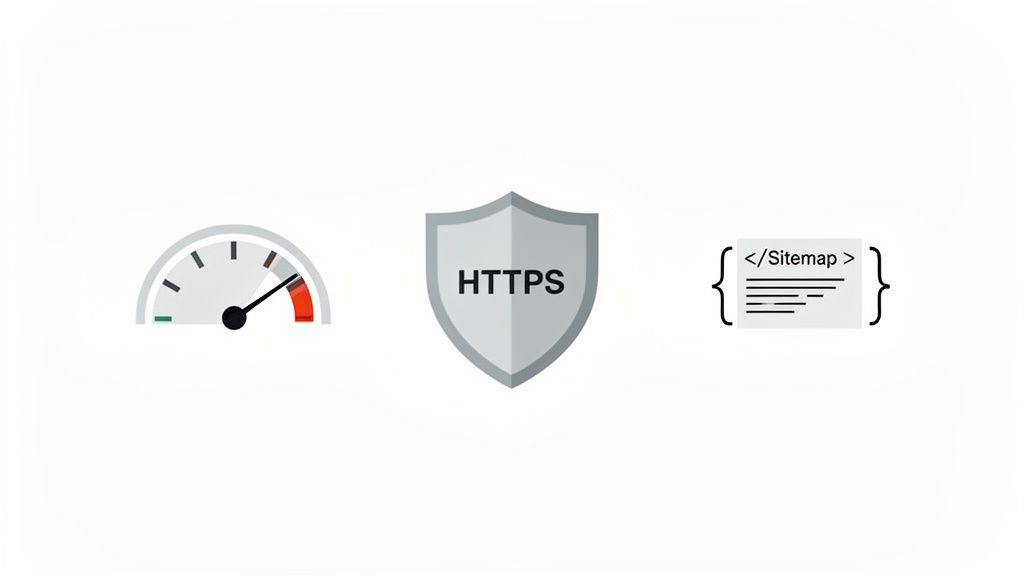
For instance, Google’s emphasis on Core Web Vitals means a slow, clunky site will struggle to rank, regardless of content quality. A company like ReachLabs.ai ensures its service pages use schema markup, helping Google understand the content's context and display rich results. This technical foundation is what allows your on-page and off-page SEO efforts to achieve their maximum potential.
How to Implement Technical SEO Fundamentals
A technically sound website provides a seamless experience for both users and search engine crawlers.
- Prioritize Site Speed: Use Google PageSpeed Insights to test your Core Web Vitals. Optimize images by compressing them, enable browser caching, and use lazy loading for media to improve load times.
- Secure Your Site: Install an SSL certificate to enable HTTPS. This is a confirmed, albeit minor, ranking factor and is crucial for building user trust.
- Guide Search Engines: Create and submit an XML sitemap to Google Search Console to help Google discover all your important pages. Configure your
robots.txtfile to block crawlers from accessing non-public areas of your site. - Use Structured Data (Schema): Implement schema markup for content like products, reviews, or FAQs. This can help you earn rich snippets in search results, improving click-through rates.
Key Insight: Technical SEO isn't a one-time setup; it requires ongoing monitoring. Regularly check Google Search Console for crawl errors, mobile usability issues, and security warnings. A consistent technical audit ensures your site remains healthy and competitive. Uncover more essential checks in this comprehensive website audit checklist.
5. Build a Robust Internal Linking Strategy
An often-overlooked but powerful part of any new site SEO checklist is establishing a deliberate internal linking structure. This strategy involves strategically connecting pages on your own website to one another. Doing so helps search engines understand the relationships between your content, establishes a clear information hierarchy, and distributes link equity (or "page authority") throughout your site, which can boost the ranking potential of important pages.
For instance, a marketing agency like ReachLabs.ai would ensure their blog posts about "B2B lead generation tactics" contain contextual links back to their primary "Lead Generation Services" page. This action not only guides interested readers toward a relevant service but also signals to Google that the service page is an authoritative resource on that topic.
How to Implement Your Internal Linking Strategy
A thoughtful internal linking plan improves both user experience and search engine crawlability from day one.
- Prioritize High-Authority Pages: Link from your most authoritative pages, like your homepage or major service pages, to newer or less-visible pages that you want to rank.
- Use Descriptive Anchor Text: Instead of using generic phrases like "click here," use anchor text that includes relevant keywords, such as "learn about our brand strategy services." This provides context to both users and search engines.
- Maintain Link Relevance: Ensure every internal link adds value for the reader. The linked page should provide additional, relevant information that logically follows the context of the original page.
- Audit for Broken Links: From the start, get into the habit of periodically checking for broken internal links. These create a poor user experience and waste link equity.
Key Insight: Internal linking isn't just about quantity; it's about quality and context. A few well-placed, relevant links are far more effective than dozens of random ones. Your goal is to create a logical pathway for users and search crawlers to navigate your site's most important content.
6. Optimize On-Page Elements (Titles, Meta Descriptions, Headers)
Once your keyword strategy is set, the next item on any new site SEO checklist is to optimize crucial on-page HTML elements. These components, including title tags, meta descriptions, and header tags (H1, H2, H3), are what search engines use to understand your page's content and what users see in search results. Optimizing them is essential for improving both rankings and click-through rates (CTR).
For example, a title tag like "Digital Marketing Services | Lead Generation & Brand Building | ReachLabs.ai" is far more effective than a generic "Home." It immediately tells both Google and potential clients what the page is about, incorporating primary and secondary keywords while communicating the brand's core value. This level of detail directly influences whether a user clicks on your result or a competitor's.
How to Implement On-Page Element Optimization
Properly structured on-page elements create a clear and compelling signal for search engines and users.
- Craft Compelling Title Tags: Your title tag is the most important on-page SEO factor. Keep it between 50-60 characters, place your primary keyword near the beginning, and use "power words" (e.g., Ultimate, Proven, Guide) to entice clicks.
- Write Click-Worthy Meta Descriptions: While not a direct ranking factor, meta descriptions heavily influence CTR. Write them as a concise, 150-160 character summary of the page's value, including a call-to-action like "Learn more" or "Discover how."
- Structure Content with Header Tags: Use a single, unique H1 tag for each page that includes the primary keyword. Use H2s and H3s to break down content into logical, easy-to-read sections, incorporating secondary keywords naturally.
- Optimize Image Alt Text: Write descriptive alt text for all images. This not only helps search engines understand the image content but also improves website accessibility for users with screen readers.
Key Insight: Think of your title tag and meta description as your digital billboard in the search results. They are your first, and often only, chance to convince a user to visit your site. A/B testing different title formats (e.g., list vs. question vs. how-to) can reveal what resonates most with your audience and significantly boost your organic traffic.
7. Develop a Backlink & Link Building Strategy
While on-page and technical SEO build the foundation, off-page factors like backlinks signal authority and trust to search engines. A crucial part of any new site SEO checklist is creating a proactive link-building strategy. This process involves earning links from high-quality, relevant websites to your own, which search engines view as votes of confidence, directly boosting your new site's domain authority and search rankings over time.
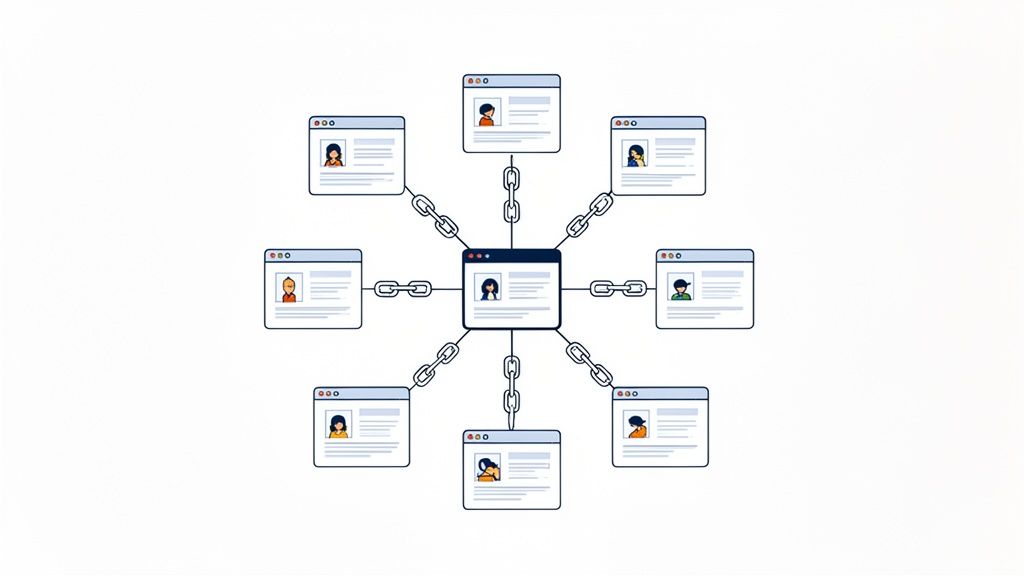
For example, a marketing agency like ReachLabs.ai wouldn't just wait for links to appear. They would actively create "linkable assets" such as original research reports or comprehensive industry guides. They would then promote these assets to marketing blogs and news outlets, earning authoritative backlinks that establish their expertise and drive referral traffic from a highly relevant audience.
How to Implement Your Link Building Strategy
A strategic approach to link building prioritizes quality and relevance over sheer quantity.
- Create Linkable Assets: Develop valuable content that others will want to reference. This includes original research, free tools, in-depth guides, or unique infographics.
- Identify and Vet Link Prospects: Build a target list of 50-100 relevant blogs, industry publications, and complementary businesses. Use tools like Ahrefs or Moz to evaluate their domain authority and relevance.
- Conduct Personalized Outreach: Avoid generic templates. Craft personalized emails that explain why your content is valuable to their audience and suggest a specific page where a link would fit naturally.
- Guest Post on Authoritative Sites: Offer to write high-quality articles for reputable websites in your niche. This allows you to place a contextual link back to your site in the author bio or content.
Key Insight: Building relationships is the core of modern link building. Connect with journalists, bloggers, and industry influencers long before you ask for a link. Genuine engagement makes your outreach far more effective and sustainable. For more focused advice, explore how to approach link building for e-commerce sites.
8. Set Up Comprehensive Analytics & Tracking
Launching a new site without analytics is like driving blind. A crucial part of any new site SEO checklist is establishing a robust tracking framework from day one. This involves implementing tools like Google Analytics 4 and Google Search Console to measure performance, understand user behavior, and make data-driven decisions. Without this foundation, you have no way to quantify the impact of your SEO efforts or prove return on investment.
For an agency like ReachLabs.ai, tracking isn't just a technical task; it's the core of client reporting and strategy refinement. By monitoring organic leads, conversion rates per service, and user engagement, they can directly demonstrate how SEO contributes to business growth. Similarly, a platform like HubSpot uses sophisticated tracking to connect every piece of organic traffic to the revenue it generates, proving the value of content marketing.
How to Implement Analytics & Tracking
Proper setup ensures you capture accurate data to guide your post-launch optimizations.
- Connect Key Platforms: Install Google Analytics 4 (GA4) sitewide and verify your site with Google Search Console. Connect these two accounts to share data seamlessly.
- Define and Track Conversions: Set up goal tracking for critical user actions. This could include contact form submissions, demo requests, newsletter sign-ups, or e-commerce purchases.
- Monitor Search Console Data: Regularly check Google Search Console for performance reports (clicks, impressions, CTR), index coverage errors, and manual actions. This is your direct line of communication with Google.
- Utilize Rank Tracking Tools: Use platforms like Ahrefs or SEMrush to monitor your keyword rankings for your primary and secondary targets. This provides a clear view of your visibility gains over time.
Key Insight: Raw data is just noise. The real value comes from interpreting it. Set up custom dashboards in GA4 tailored to different stakeholders (e.g., a C-suite dashboard showing organic revenue vs. a content team dashboard showing top-performing pages) to make insights accessible and actionable.
9. Ensure Mobile Optimization & Responsive Design
In today's digital landscape, mobile optimization is not an option; it's a requirement. This critical step in your new site SEO checklist involves ensuring your website provides an excellent user experience across all devices, from desktops to tablets and smartphones. Since Google shifted to mobile-first indexing, it predominantly uses the mobile version of your content for indexing and ranking, making mobile performance a direct factor in your site's visibility. A non-responsive or poorly optimized mobile site will severely hinder your search performance from day one.
For example, a high-growth company like HubSpot understands that its audience engages with content on the go. Their blog and landing pages are perfectly optimized for mobile, with touch-friendly buttons, easily readable text, and simple forms. This focus on the mobile experience not only pleases users but also aligns perfectly with Google's indexing priorities, contributing to their dominant search presence.
How to Implement Mobile-First Design
A mobile-first approach ensures that functionality and user experience are prioritized for the smallest screens first, then scaled up.
- Implement a Responsive Framework: Use a web design that fluidly adjusts its layout, images, and content to fit any screen size. This is the most common and recommended approach.
- Prioritize Mobile Page Speed: Mobile users expect fast loading times. Compress images, leverage browser caching, and minify CSS and JavaScript files to reduce load times on mobile networks.
- Design for Touch: Ensure all interactive elements like buttons, links, and form fields are large enough (at least 48×48 pixels) and have enough space around them to be easily tapped without errors.
- Use Google’s Mobile-Friendly Test: Before and after launch, run your key pages through Google's free Mobile-Friendly Test to identify and fix any usability issues, such as text that is too small or content that is wider than the screen.
Key Insight: Mobile optimization is fundamentally about user experience. A site that is difficult to navigate on a phone will have a high bounce rate, which signals to Google that your page isn't a good answer to a user's query. Focusing on a seamless mobile experience is a direct investment in your site's long-term SEO health.
10. Create a Local SEO Strategy (if applicable)
For businesses serving a specific geographic area or operating from physical locations, local SEO isn't just an option; it's a vital component of any new site SEO checklist. This strategy focuses on optimizing your online presence to attract customers searching for products or services "near me" or within a particular city. It ensures you appear in location-specific search results, particularly the Google Local Pack, driving high-intent traffic directly to your door or phone line.
For example, a boutique agency like ReachLabs.ai, while serving clients globally, could leverage local SEO principles to dominate a specific tech hub like Austin. They might create landing pages targeting searches like "B2B marketing agency Austin" and build case studies highlighting successful collaborations with local startups. This approach establishes them as a local authority, even within a digital-first business model.
How to Implement Your Local SEO Strategy
A successful local strategy turns your new website into a magnet for nearby customers.
- Claim & Optimize Google Business Profile: This is your most powerful local SEO tool. Complete every section with accurate business hours, services, photos, and a compelling description.
- Ensure NAP Consistency: Your business Name, Address, and Phone number (NAP) must be identical across your website, Google Business Profile, and all online directories. Inconsistencies erode trust with search engines.
- Build Local Citations: Get your business listed in relevant local and industry-specific directories like Yelp, the local Chamber of Commerce, and industry association sites.
- Develop Location-Specific Pages: If you serve multiple areas, create unique landing pages for each one. Include the city or neighborhood in the URL, title tag, and content, and embed a local map.
- Encourage and Respond to Reviews: Actively solicit reviews from happy customers. Respond professionally to all feedback, both positive and negative, to show you are engaged.
Key Insight: Local SEO is fundamentally about proving your relevance and prominence within a specific geographic area. Consistency in your business information (NAP) across the web is the bedrock of this trust-building process. Every consistent citation reinforces your connection to that location, boosting your visibility in local search results.
New Site SEO: 10-Point Comparison
| Item | 🔄 Implementation Complexity | ⚡ Resource & Time | 📊 Expected Outcomes (⭐) | Ideal Use Cases | 💡 Key Advantages / Tips |
|---|---|---|---|---|---|
| Conduct Comprehensive Keyword Research & Strategy | 🔄 Medium — analytical work with ongoing updates | ⚡ Moderate — subscription tools + analyst; ~2–3 weeks initial | ⭐⭐ High — clearer content direction, prioritized opportunities | New sites, content planning, service targeting | Use SEMrush/Ahrefs; focus on commercial intent; monitor monthly |
| Optimize Site Architecture & URL Structure | 🔄 Medium–High — planning + possible dev/redirects | ⚡ Moderate — developer time; ~3–4 weeks | ⭐⭐ High — better crawlability and UX, improved indexation | Sites with many services/products or restructuring | Keep URLs descriptive, implement sitemap & 301 plans |
| Create High-Quality, Keyword-Optimized Content | 🔄 Medium — creative + SEO workflow, ongoing | ⚡ High — writer/research time; ongoing (1–2 articles/wk) | ⭐⭐⭐ Very High — authority, sustained organic traffic and leads | Lead gen, thought leadership, competitive topics | Build pillar/cluster content; update top posts quarterly |
| Implement Technical SEO Fundamentals | 🔄 High — technical fixes and developer support | ⚡ Moderate–High — tooling + dev; 2–3 weeks initial, maintenance | ⭐⭐ High — improved performance, security, indexing | Sites with speed/security/indexing problems | Monitor Core Web Vitals; use Search Console and schema |
| Build a Robust Internal Linking Strategy | 🔄 Low–Medium — editorial planning and execution | ⚡ Low–Moderate — content updates; 2–3 weeks initial | ⭐⭐ Moderate–High — distributes authority, improves crawlability | Content-rich sites, boosting new or target pages | Link from high-authority pages; use descriptive anchors |
| Optimize On-Page Elements (Titles, Meta, Headers) | 🔄 Low — editorial adjustments, lightweight testing | ⚡ Low — quick edits; 1–2 weeks for existing pages | ⭐ Moderate — better CTR and clearer relevancy signals | Quick wins across existing content and service pages | Put primary keyword early in titles; test meta formats |
| Develop a Backlink & Link Building Strategy | 🔄 High — outreach, relationship-building, PR | ⚡ High — outreach tools, content assets; 3–6+ months | ⭐⭐⭐ Very High — increases domain authority and referrals | Competitive keyword targets, authority building | Create linkable assets; personalize outreach; monitor quality |
| Set Up Comprehensive Analytics & Tracking | 🔄 Medium — technical setup + configuration | ⚡ Low–Moderate — 1–2 weeks setup; ongoing monitoring | ⭐⭐ High — measurable ROI, data-driven optimizations | Any campaign needing attribution and performance insights | Set goals/UTMs, build dashboards, review monthly |
| Ensure Mobile Optimization & Responsive Design | 🔄 Medium–High — design + testing across devices | ⚡ Moderate–High — dev and QA; 2–4 weeks depending on site | ⭐⭐ High — mobile rankings and conversion improvements | Mobile-heavy traffic sites, e-commerce, lead capture | Test on real devices; prioritize mobile speed and touch targets |
| Create a Local SEO Strategy (if applicable) | 🔄 Low–Medium — profile & citation work | ⚡ Low–Moderate — GBP setup, citations; 2–3 weeks + ongoing | ⭐⭐ Moderate–High — stronger local visibility and conversions | Businesses with physical locations or local market focus | Claim GBP, ensure NAP consistency, encourage reviews |
Turning Your Checklist Into a Winning Strategy
You now have a comprehensive, actionable roadmap. This new site SEO checklist is more than just a series of technical tasks to complete before launch; it’s the architectural blueprint for your website’s long-term digital visibility and success. Moving from a pre-launch plan to a post-launch powerhouse requires shifting your mindset from "setup" to "strategy."
The initial steps, from meticulous keyword research and logical site architecture to technical fundamentals like XML sitemaps and mobile optimization, are the non-negotiable foundations. They ensure search engines can find, crawl, and understand your content from day one. Skipping these stages is like building a house on sand; it may look good initially, but it lacks the structural integrity to withstand the competitive pressures of the digital landscape.
However, the real momentum is built after you flip the switch and go live. The journey to the top of the search engine results pages (SERPs) is a marathon, not a sprint. This is where your ongoing commitment to the principles outlined in this guide will truly differentiate your brand.
From Launch Plan to Growth Engine
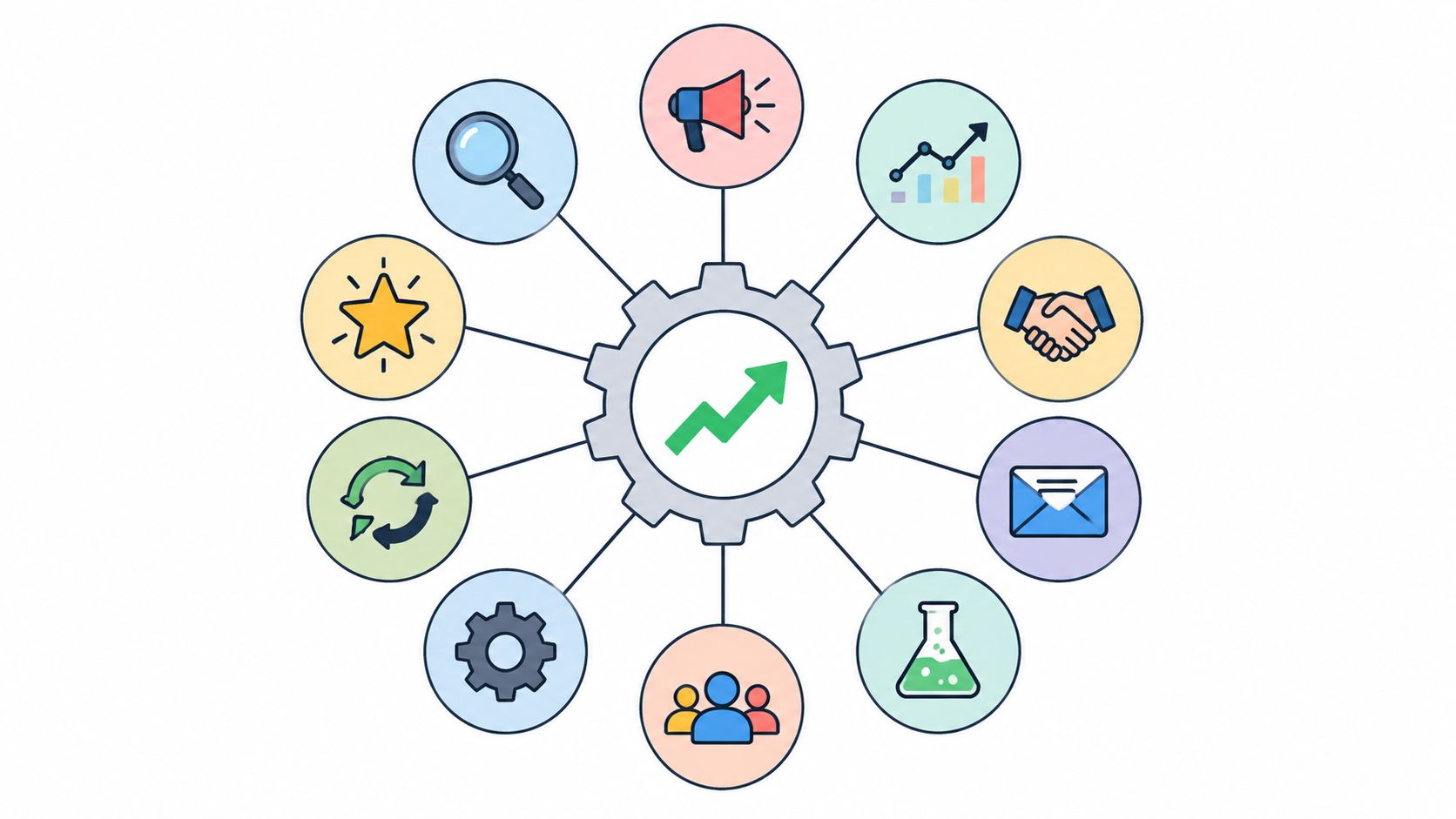
The most successful websites treat SEO not as a one-time project but as an iterative, dynamic process. The checklist items you've reviewed are interconnected and build upon one another, creating a powerful flywheel effect over time.
- Content as a Conversation: Your initial high-quality, keyword-optimized content is the opening statement. Ongoing content creation, based on performance data and evolving keyword trends, is how you keep the conversation going with both your audience and search engines.
- Analytics as Your Compass: Setting up comprehensive tracking isn't just for reporting vanity metrics. Your analytics are your feedback loop. They tell you which pages are performing, what content resonates, and where users are dropping off. Use this data to refine your on-page elements, adjust your internal linking, and double down on what works.
- Authority as an Asset: Your backlink strategy is about building digital trust. Each high-quality link is a vote of confidence that boosts your site's authority. This is a slow, steady process that requires consistent effort, but its long-term impact on your rankings is immense.
Think of this new site SEO checklist as your launchpad. The initial setup provides the powerful thrust needed to get off the ground. But to reach your destination and stay in orbit, you need to continuously monitor your trajectory, make course corrections, and fuel your engine with fresh content, valuable backlinks, and data-driven insights.
Your Path Forward: Consistency and Adaptation
Mastering these concepts transforms your website from a static digital brochure into a lead-generating, brand-building machine. By internalizing this checklist, you are equipping yourself with the knowledge to make informed decisions, whether you're optimizing a blog post, planning a new site section, or evaluating your marketing performance.
The digital world is never static. Google’s algorithms evolve, competitor strategies change, and user behavior shifts. Your commitment to regularly revisiting this checklist, auditing your site, and adapting your strategy is what will ultimately lead to sustained growth and a commanding presence in your market. You have the plan; now it's time to execute, measure, and conquer.
Feeling overwhelmed by the ongoing demands of a winning SEO strategy? The experts at ReachLabs.ai specialize in turning complex checklists into tangible results. Let us handle the technical details, data analysis, and strategic execution so you can focus on growing your business. Explore how our data-driven approach can accelerate your new site's journey to the top at ReachLabs.ai.