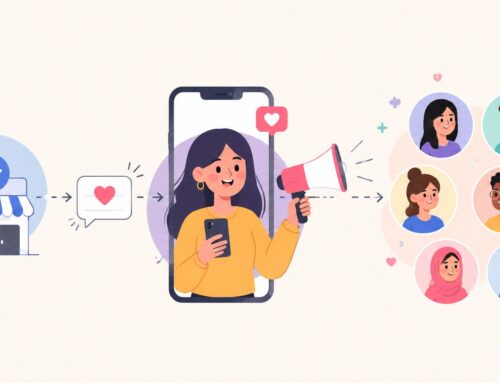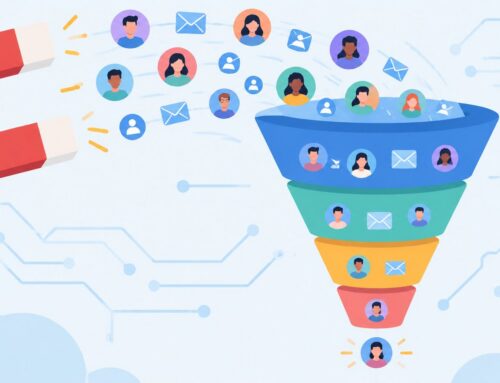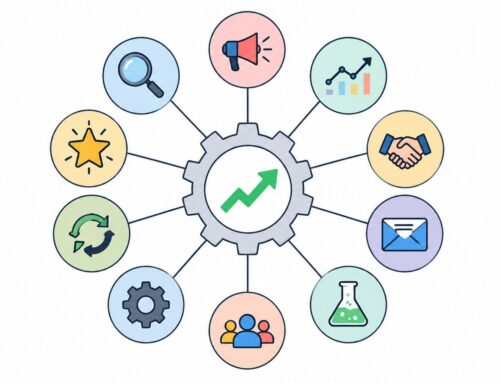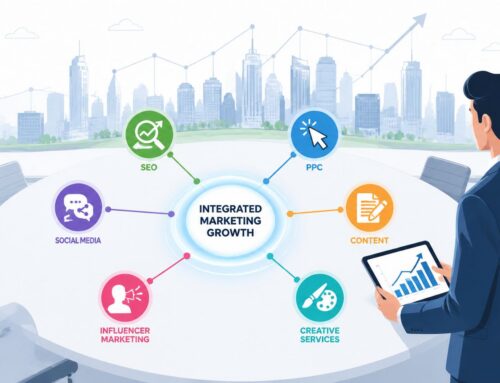
Multi-channel marketing is a strategy where a company uses several different, independent platforms to reach customers. Imagine putting your brand's message on different billboards scattered across town. Each sign works on its own, but together, they make sure almost everyone sees your message, no matter which street they take. The whole point is to offer choices and meet customers wherever they happen to be.
What Are Multi-Channel Marketing Campaigns
Think about how a great story can unfold across a book, a movie, and even a podcast. Each format brings something new to the table, but they all serve the same central plot. That’s multi-channel marketing in a nutshell. It isn't just about being everywhere; it’s about smartly playing to each platform's strengths to deliver a brand message that feels consistent and engaging.
This strategy puts customers in the driver's seat by letting them choose how they want to interact with you. Someone might find your product on Instagram, hop over to your blog to read reviews, and finally click a link in an email to buy it. Each channel acts as a separate path to the customer, built around their convenience and personal preference.

The Core Idea: Choice Over Integration
What really defines multi-channel marketing is that the channels run in parallel but aren't necessarily interconnected. An email campaign can operate completely separately from a social media promotion. While the branding and overall message stay the same, a customer's experience on one channel doesn't directly shape their journey on another.
This is where it differs from its more complex cousin, omnichannel marketing.
An omnichannel approach weaves every channel together into one seamless customer experience. Data from one channel is shared across all the others in real-time, creating a single, unified conversation. Multi-channel is about giving the customer options; omnichannel is about unifying those options.
To see what a fully integrated system looks like in action, these examples are incredibly helpful: https://www.reachlabs.ai/omnichannel-marketing-examples/. Getting a handle on this difference is key to picking the right strategy for your business.
Why This Strategy Matters Now
People just don't follow a straight line to making a purchase anymore. They jump between their phones, laptops, and tablets all day long, and your brand needs to be there when they do. This approach has proven its worth, too. Data shows that companies using three or more marketing channels have a 287% higher purchase rate than those sticking to just one.
To get a better sense of what works, it's worth exploring how to build a modern multi-channel marketing strategy that genuinely resonates with people. That massive jump in engagement shows just how powerful it is to reinforce your message across different touchpoints. It builds trust, boosts brand recall, and ultimately gets customers to act.
Building Your Multi Channel Marketing Framework
A winning multi channel marketing campaign isn't just a random collection of platforms thrown at the wall to see what sticks. It starts with a solid blueprint. Think of it like building a house—you wouldn't just start nailing boards together without a plan, right? This framework ensures every move you make is intentional, measurable, and tied directly to your business goals.
The first step is getting specific. Vague ambitions like "more engagement" won't cut it. You need to define what success actually looks like. Is it boosting qualified leads by 25% this quarter? Maybe it's driving more sales for a specific product through your social commerce channels.
Clear, measurable objectives are the bedrock of your entire campaign. They become your North Star, guiding every decision you make, from which channels to use to how you spend your budget.
Mapping the Customer Journey
Before you even think about choosing your channels, you have to know where your audience is. Mapping the customer journey is all about visualizing every single touchpoint a person has with your brand, from the moment they realize they have a problem to the day they become a loyal advocate.
To build this map, you need to ask some hard questions:
- Awareness: Where do people first stumble upon the problems your product solves? Are they searching on Google, doomscrolling on TikTok, or reading industry blogs?
- Consideration: Once they're looking for solutions, where do they turn? Do they trust YouTube reviews, ask for advice on LinkedIn, or read your email newsletter for tips?
- Decision: What finally convinces them to pull the trigger? Is it a powerful case study on your website, a last-minute offer in an email, or a retargeting ad that follows them around Facebook?
This exercise isn't just busy work; it reveals the exact paths your customers take. It turns your strategy from a guessing game into a data-backed plan.
Selecting the Right Channel Mix
With a clear journey map in hand, you can finally pick your channels based on real audience behavior, not just industry buzz. The goal is simple: put your money and effort where they'll have the biggest impact. For most businesses, that means focusing on the channels where your ideal customers spend the most time.
This chart gives you a sense of how an audience's time might be split across different digital channels, which in turn should guide where you put your resources.
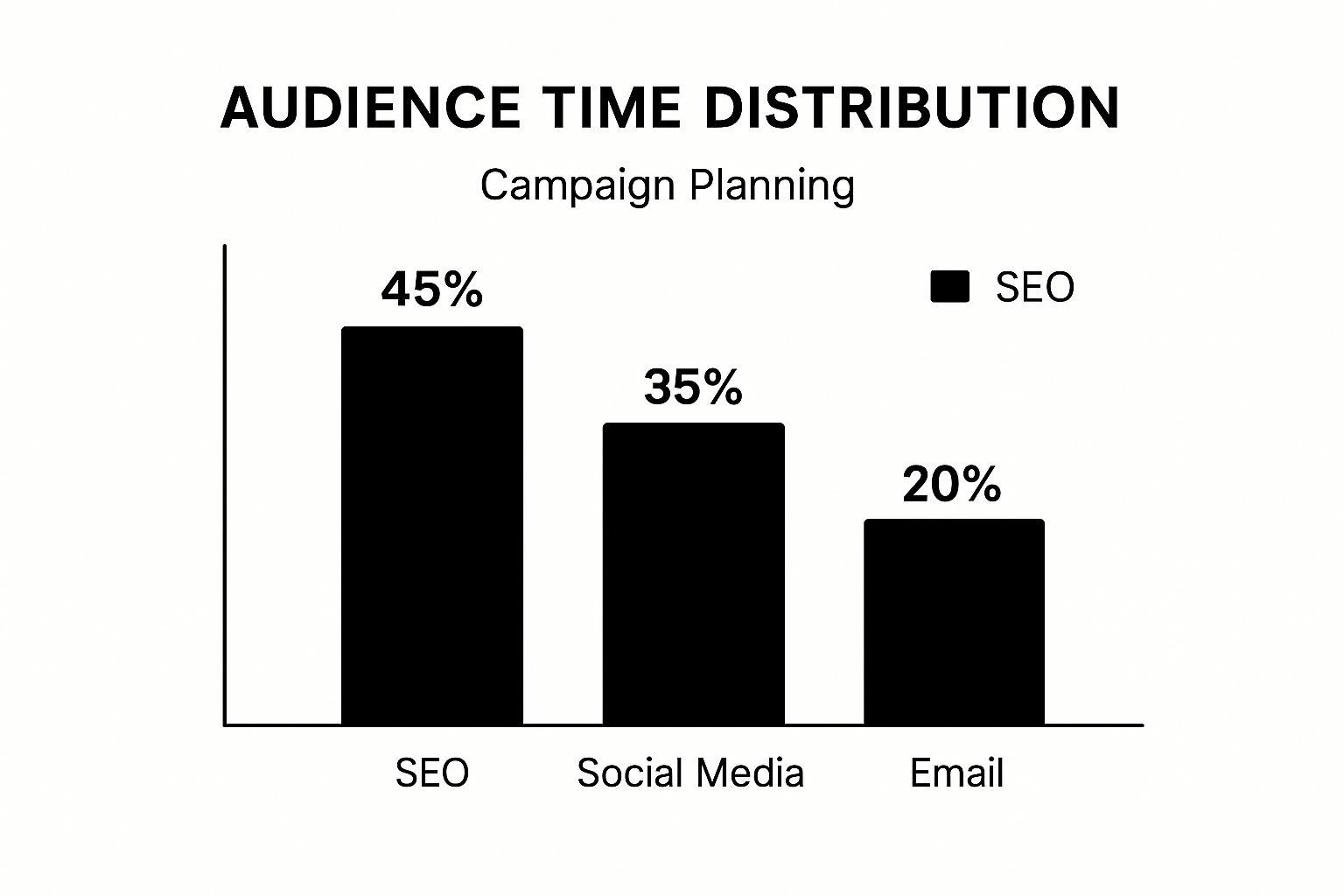
You can see that for this audience, SEO and social media capture a whopping 80% of their attention. It's pretty obvious where you'd want to focus.
One of the biggest mistakes I see is businesses spreading themselves too thin. It's far better to dominate on two or three high-impact channels than to have a weak, forgettable presence on ten.
Focus on the platforms that actually line up with your goals and where your audience is ready to listen. A B2B tech company will likely get more mileage out of LinkedIn and SEO. A DTC fashion brand, on the other hand, should probably pour its heart into Instagram, TikTok, and email. Every part of your strategy needs a purpose. To get this right, you need to understand all the essential components to a marketing plan.
Creating a Unified Messaging Strategy
Finally, your framework needs a cohesive messaging strategy to tie it all together. While you should absolutely tailor your delivery for each platform—nobody wants to read a formal white paper on Instagram—your core brand identity and value proposition must stay consistent.
This consistency is what builds trust and makes your brand recognizable. Customers should get that same familiar feeling whether they see your ad on YouTube or read your latest blog post. You can achieve this by creating a central messaging guide that spells out your:
- Brand Voice and Tone: What's your brand's personality? Are you witty? Authoritative? Playful?
- Core Value Proposition: What's the one big promise you make to every customer?
- Key Talking Points: What are the non-negotiable features and benefits you always want to highlight?
When you establish this clear narrative, your multi channel efforts will feel less like a series of disconnected ads and more like one single, compelling conversation with your audience.
Defining Strategic Roles for Your Core Channels
A winning multi-channel marketing campaign isn't about being everywhere at once. Think of it like a well-coached sports team: every player has a position, a specific job to do. When you assign a strategic purpose to each channel, you stop broadcasting noise and start guiding customers on a thoughtful journey.
This mindset prevents you from just duplicating efforts across platforms. You wouldn't ask your email expert to suddenly master TikTok, just like you wouldn't expect your PPC specialist to write in-depth blog posts. When each channel has a clear "why," your entire marketing engine runs smoother and gets better results.
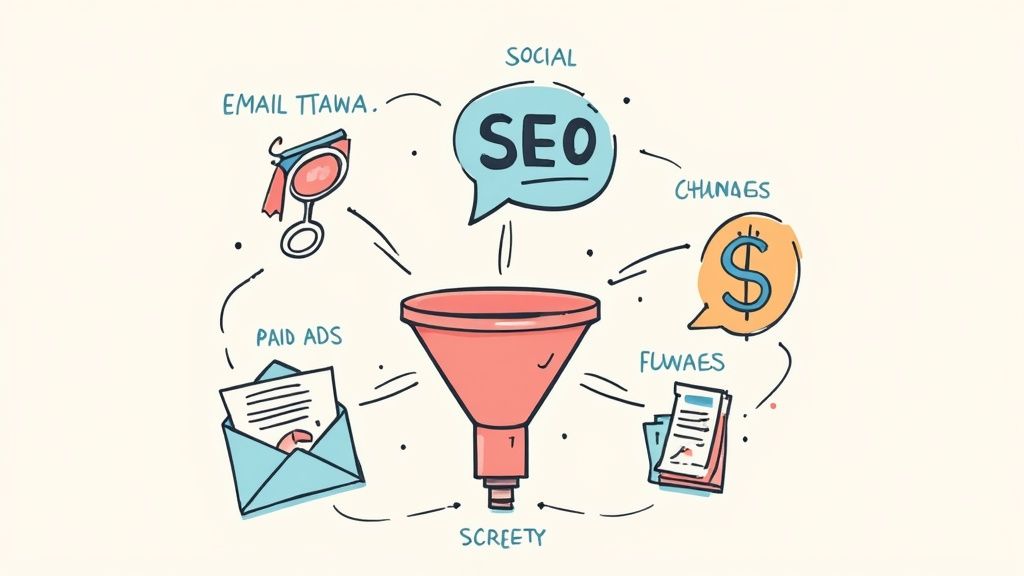
To make this happen, you need to map out what each channel is uniquely good at. The table below breaks down some of the most common channels, their primary strengths, and where they fit best into the customer's journey.
Strategic Roles of Key Marketing Channels
| Channel | Primary Role | Ideal Customer Journey Stage | Key Metrics |
|---|---|---|---|
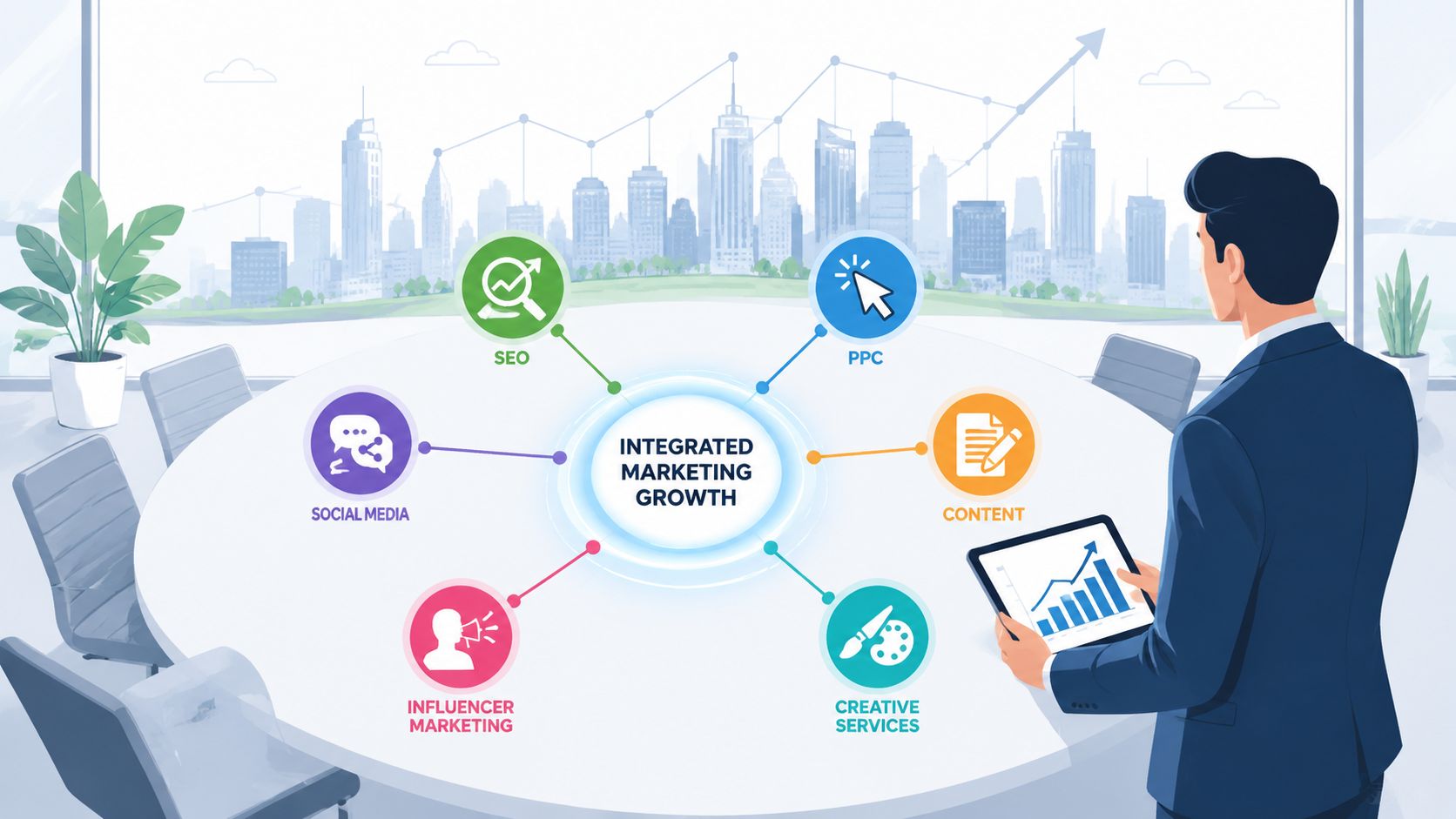
| SEO & Content Marketing | Build authority, attract organic traffic, answer questions | Awareness, Consideration | Organic Traffic, Keyword Rankings, Time on Page |
| Social Media | Build community, showcase personality, spark conversation | Awareness, Engagement | Reach, Engagement Rate, Follower Growth |
| Email Marketing | Nurture leads, drive repeat business, build loyalty | Consideration, Conversion, Loyalty | Open Rate, Click-Through Rate (CTR), Conversion Rate |
| Paid Advertising (PPC) | Drive immediate traffic, target specific audiences, accelerate campaigns | All Stages (especially Awareness & Conversion) | Cost Per Click (CPC), Return on Ad Spend (ROAS), Conversion Rate |
This is just a starting point, of course. The key is to think critically about how these channels can work together, rather than in isolation, to create a cohesive experience for your audience.
SEO and Content Marketing: The Foundation
Think of SEO and content as the bedrock of your digital presence. This isn't just about getting clicks; it's about building long-term trust and authority. Your blog posts, guides, and case studies are where you answer your audience's biggest questions and prove you're the expert they can rely on.
This content becomes your 24/7 salesperson, attracting organic traffic from people actively searching for solutions. It’s definitely a slow burn, but the compounding returns are incredibly powerful and sustainable.
Social Media: The Community Builder
If content is your foundation, social media is the front porch. It’s where you engage with your community, let your brand’s personality shine, and start real conversations. This channel is fantastic for top-of-funnel awareness, introducing new people to your brand in a casual, visual way.
Of course, not all social platforms are the same:
- LinkedIn: Your go-to for B2B. Share industry insights, establish thought leadership, and connect with other professionals.
- Instagram & TikTok: Perfect for B2C brands that can tell visual stories, work with influencers, and tap into current trends.
- Facebook: A versatile workhorse for building dedicated customer groups, running highly targeted ads, and sharing all kinds of content.
The real magic of social media happens when you treat it like a two-way conversation. It's less about promotion and more about listening, gathering feedback, and building genuine relationships.
Email Marketing: The Nurturing Engine
Email is your direct line to the people who have already raised their hand and shown interest. Once you have their permission to be in their inbox, email becomes your most powerful tool for guiding them from "just looking" to "ready to buy."
While other channels are great for shouting your message to a crowd, email is for whispering it to an individual.
It’s personal, it’s targeted, and it’s incredibly effective. You can segment your audience to deliver personalized offers, re-engage shoppers who abandoned their carts, or send exclusive content that makes your subscribers feel like insiders. This is how you turn casual followers into loyal advocates.
Paid Advertising: The Accelerator
Finally, think of paid advertising (PPC) as the accelerator for your entire strategy. While organic channels build momentum steadily over time, paid ads deliver immediate, targeted reach right when you need it. They're perfect for launching a new campaign, promoting a limited-time offer, or reaching a very niche demographic.
Platforms like Google or Facebook let you put your message directly in front of your ideal customer, creating a predictable flow of traffic and leads. By putting budget behind your best-performing content or promotions, you create a powerful feedback loop that speeds up growth across every single one of your channels.
How to Weave Your Channels into a Seamless Experience
So you’ve mapped out your channels and defined their roles. That's a great start, but the real magic happens when you start weaving them together.
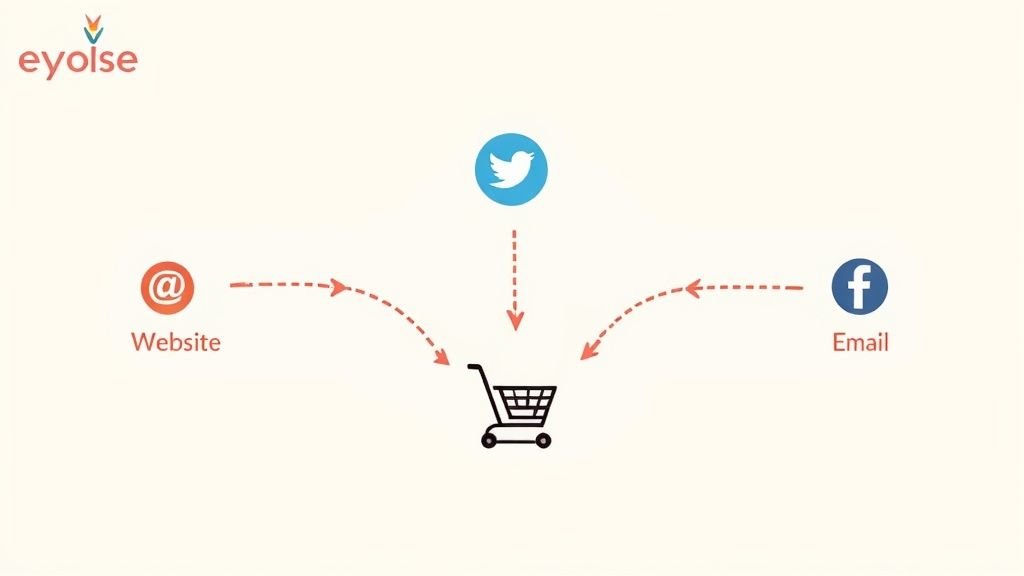
Think of it like a band. Your channels can all play their instruments well on their own, but they only make incredible music when they’re in sync. The goal is to make the customer's journey feel so fluid and natural that they don’t even notice they're moving between your website, social media, and email.
This is all about creating one continuous conversation that flows from one touchpoint to the next. It’s the difference between blasting someone with disconnected ads and telling a unified brand story that guides them forward. When you get this right, you don't just improve the customer experience—you make every dollar you spend work harder.
Syncing Your Message Across Platforms
The most crucial first step is making sure your core message is consistent everywhere. It sounds simple, but it's where so many campaigns fall apart.
If a customer clicks a social media ad promoting a 20% discount, they need to land on a page that immediately and obviously reflects that same offer. Any mismatch creates friction, and friction kills conversions. It erodes trust in a split second.
This consistency goes beyond just promotions, too. Your brand’s voice, visual style, and core values should feel familiar whether someone is reading your blog, watching a YouTube video, or opening an email. A unified message is the connective tissue holding your entire strategy together.
Using Data to Bridge the Gaps Between Channels
Great integration is always powered by data. When you share insights between your platforms, you can create experiences that feel incredibly relevant and timely. This means breaking down the walls that often separate marketing teams and letting information flow freely.
Here are a few practical ways to put this into action:
- Retargeting Abandoned Carts: Someone adds an item to their cart on your website but gets distracted. Use that data to serve them a friendly reminder ad on social media or send a follow-up email. Simple, but effective.
- Informing Content with Customer Feedback: Your customer service chats and social media comments are a goldmine. Are people constantly asking the same question? Turn that into your next blog post, FAQ page, or tutorial video.
- Segmenting Email Lists with Web Behavior: Track which pages or products a user visits on your site. With that knowledge, you can add them to a specific email list and send them content and offers that are directly tied to what they've already shown interest in.
Integration is about making each channel smarter by listening to the signals from all the others. When your channels talk to each other, you can have a much more intelligent conversation with your customers.
To take this concept even further, you can explore the principles of a comprehensive Omnichannel Marketing Strategy. This approach focuses on creating a completely unified journey, no matter how a customer chooses to interact with you.
A Real-World Integration Example
Let's see how this all comes together. Imagine a retail fashion brand launching a new spring collection.
- In-Store Event (Physical Channel): The brand hosts an exclusive launch party at its flagship store. At the event, they have a branded photo booth and encourage attendees to share their pictures on Instagram with a specific hashtag for a chance to win a gift card.
- Social Media Engagement (Digital Channel): That hashtag explodes with user-generated content, creating a wave of social proof and awareness that reaches far beyond the people at the party. The brand then re-shares the best posts on its own profile.
- Targeted Ads (Paid Channel): Now the magic happens. The brand runs targeted ads on Instagram and Facebook, specifically aimed at people who engaged with the hashtag or live near the event attendees. These ads drive traffic directly to the new collection's online lookbook.
- Email Nurturing (Owned Channel): Website visitors who browse the lookbook but don’t buy are prompted to sign up for the newsletter to get an exclusive 15% off their first purchase. Signing up triggers an automated email sequence that showcases different pieces from the new collection over the next few days.
See how that works? Each channel builds on the last, creating a smooth and compelling journey that moves customers from a physical interaction to social engagement and, finally, to an online sale. That’s integrated marketing in action.
Measuring the True Success of Your Campaigns
Launching a multi-channel marketing campaign without a solid measurement plan is like sailing without a compass. You’re definitely moving, but you have no idea if you’re actually heading toward your destination. To figure out what's really working, you have to dig deeper than the surface-level numbers and connect your efforts to real results.
It all starts with looking past the vanity metrics. Sure, likes, shares, and impressions can be encouraging, but they don't pay the bills. The real goal is to focus on Key Performance Indicators (KPIs) that tie directly to your bottom line.
Key Metrics That Truly Matter
To get an honest picture of your campaign’s health, you need to track metrics that connect your marketing spend to tangible business outcomes. These are the numbers that tell a story about your efficiency, profitability, and long-term customer value.
- Customer Acquisition Cost (CAC): This is your all-in cost to land a single new customer, factoring in all your marketing and sales expenses. A low CAC is a sign of highly efficient, cost-effective campaigns.
- Customer Lifetime Value (CLV): This metric forecasts the total revenue you can expect from a customer over the entire course of your relationship. A high CLV tells you that you're not just attracting customers, but attracting and keeping the right ones.
- Return on Ad Spend (ROAS): For any paid channel, ROAS is your gut check. It measures the gross revenue you generate for every single dollar you spend on ads, giving you a direct look at profitability.
Here’s the golden rule: when your CLV is significantly higher than your CAC, you've built a healthy, sustainable business model. That balance is the ultimate proof that your multi-channel marketing is hitting the mark.
Demystifying Attribution Modeling
So, a customer sees your brand on social media, gets an email a week later, and then reads your blog before finally making a purchase. Who gets the credit? This is the core puzzle that attribution modeling sets out to solve. It’s a framework for assigning value to all the different touchpoints along a customer's journey.
Think of it like a game-winning goal in soccer. The striker gets the glory for the shot, but what about the midfielders who set up the play with a series of perfect passes? Attribution helps you see the entire field, not just the final kick.
There are a few common models, and each tells a slightly different story:
- First-Touch Attribution: This model gives 100% of the credit to the very first channel a customer ever engaged with. It’s perfect for understanding which channels are best at sparking initial awareness.
- Last-Touch Attribution: The complete opposite, this gives all the credit to the final interaction before the sale. While simple to track, it can completely miss the crucial steps that led the customer to that final decision.
- Multi-Touch Attribution: This is a much more holistic approach. It spreads the credit across multiple touchpoints, acknowledging that most conversions are the result of a series of interactions, not just one magic moment.
If you want to go deeper on this essential topic, you can learn more about the nuances of cross-channel attribution and how to put it into practice.
Making Data-Driven Budget Decisions
At the end of the day, measurement is all about making smarter decisions. Your data should be the backbone of your strategy, guiding you on where to invest your next dollar. Techniques like marketing mix modeling (MMM) help brands see exactly how different channels contribute to the big picture.
For example, you might discover that spending $30,000 on Google Ads brings in $100,000 in sales (a 3.3x return), while a $20,000 spend on Facebook Ads generates $60,000 (a 3x return). You can find more insights on how data shapes multichannel marketing on coupler.io.
By understanding which channels deliver the highest return, you can confidently reallocate your budget. This isn't about slashing budgets, but about doubling down on what’s proven to work.
This constant loop of measuring, analyzing, and optimizing is what separates a good campaign from a great one. It shifts your marketing from being a simple expense to becoming a predictable engine for growth, ensuring every dollar is put to its best possible use.
Common Multi-Channel Mistakes to Avoid
Even the most brilliant strategy can hit a wall if you fall into a few common, and totally avoidable, traps. Pulling off a great multi-channel marketing campaign isn’t just about the things you do right; it’s also about sidestepping the things that can go wrong. By steering clear of these frequent missteps, you can keep your efforts on track and see the results you’re actually aiming for.
At the heart of most failed campaigns is a simple lack of cohesion. When your channels are acting like islands, the customer’s journey becomes choppy and confusing. That kind of disjointed experience doesn't just hurt your campaign—it erodes brand trust.
Inconsistent Brand Messaging
One of the fastest ways to kill a campaign is to show up with a split personality. Just imagine: your blog posts are buttoned-up and corporate, but your social media feed is all casual slang and emojis. That kind of disconnect is jarring. It makes your brand feel inauthentic and unreliable, leaving customers wondering who you really are.
This usually happens when different teams are running different channels without a shared playbook. The fix? Create a unified brand style guide. This isn't just about logos and colors; it's a rulebook that defines your:
- Tone of Voice: Are you the expert guide, the witty best friend, or the formal authority?
- Visual Identity: Lock down the approved logos, color palettes, and the feel of your imagery.
- Core Messaging: What are the non-negotiable value propositions that need to shine through everywhere?
This document becomes the North Star for everyone creating content, making sure your brand tells one consistent story, no matter where customers find you.
Spreading Resources Too Thin
I get it. It’s tempting to jump on every shiny new platform that comes along. But this "spray and pray" approach is a classic recipe for mediocrity. When you stretch your budget and your team across too many channels, you don’t make a splash anywhere. You just create a bunch of weak, forgettable ripples.
Focus is your superpower. It’s far more effective to dominate on two or three channels where your audience is highly engaged than to be a faint whisper on ten.
Let data, not hype, guide your decisions. Dig into your analytics to see where your target audience actually hangs out and which channels have delivered the goods for you in the past. Concentrating your efforts there allows you to create much higher-quality content and, ultimately, get a much better return on your investment. This kind of strategic focus is what separates efficient and effective multi channel marketing campaigns from the ones that just make a lot of noise.
Frequently Asked Questions
Jumping into multi-channel marketing can bring up a lot of questions. We get it. Below, we've tackled some of the most common ones we hear from business owners and marketers, so you can move forward with confidence.
How Should I Allocate My Budget Across Channels?
There’s no one-size-fits-all answer here, and anyone who tells you otherwise is selling something. The smartest way to start is by looking at your existing customer journey map and your performance data. Figure out which channels are doing the heavy lifting at each stage—from grabbing initial attention to closing the deal.
A good rule of thumb for your first pass is to put a bigger chunk of your budget into your 2-3 top-performing channels. These are the places your audience already hangs out and where you've seen the best return on investment historically. From there, it's all about tuning. Watch your attribution data like a hawk. Is your blog's SEO bringing in fantastic organic leads? Maybe that's where you double down on your content creation budget.
Think of your budget as a living thing, not a stone tablet. Let real performance data be your guide, and don't hesitate to shift money from a channel that’s sputtering to one that’s firing on all cylinders.
What Is the Difference Between Multi-Channel and Omni-Channel?
This is a big one, and the distinction is critical. Think of multi-channel marketing as setting up multiple, separate doorways into your business. You have a social media door, an email door, and a website door. A customer can choose whichever one they like, but the doorways don't necessarily connect to each other. The main goal is simply to be available on different platforms.
Omni-channel marketing takes it a step further. It's not just about having multiple doors; it's about making the experience of walking through them feel like one continuous journey. The channels are all connected and share information. For instance, a customer adds an item to their cart on your mobile app, gets distracted, and an hour later receives a gentle reminder email on their laptop to complete the purchase. Multi-channel is about choice; omni-channel is about a unified experience.
What Are the Best Channels for a Small Business?
If you're a small business, your most precious resources are time and money. The biggest mistake you can make is spreading yourself too thin trying to be everywhere at once. Focus is your superpower.
Start by asking a couple of simple questions:
- Where is my audience already spending their time? If you sell B2B services, LinkedIn is probably a safe bet. If you have a highly visual product, Instagram or Pinterest are likely your sweet spots.
- What am I actually good at? If you love to write, a blog powered by great SEO and a solid email newsletter are your best friends. If you're a natural on camera, don't ignore YouTube or TikTok.
For most small businesses, a killer combination to start with is SEO-driven content marketing (to build a solid, long-term asset) paired with one or two social media channels for building a community and having real conversations.
At ReachLabs.ai, we go beyond theory. We specialize in building and running data-driven marketing strategies that deliver tangible results and align with your specific business goals. Discover how our team can elevate your brand's voice and drive growth today.