You're probably sitting on a half-built pipeline right now. A few cold emails went out, maybe a LinkedIn connection sprint, maybe a landing page with a lonely form at the bottom, and the result is the same. The inbox is quiet, sales wants more names, and you're being pushed to “just do more marketing.”
That instinct is wrong. Lead generation for startups usually fails because teams pick channels before they define the buyer, the pain, and the timing. If you want a playbook that produces pipeline instead of activity, start with the foundation, then choose the channel.
Why Most Startup Lead Gen Fails Before It Starts
The most common early-stage mistake is jumping straight to channels before the ICP is clear. Founders copy a cold email template, buy a list, post on LinkedIn, and hope volume covers for weak targeting. It doesn't.
Before any tactic works, three things have to be true. First, you know exactly who buys. Second, you know the pain in their words. Third, you know why they'd care now instead of later. If one of those is fuzzy, outbound will feel random, inbound will feel slow, and paid will just burn cash.
A clean way to pressure-test your setup is to ask whether your target buyer can be described in one sentence, whether that sentence maps to recent wins, and whether your message sounds like a real problem or a brochure. If you can't answer those without hand-waving, you're not ready to scale channel volume.
For a broader pipeline view, the complete sales funnel playbook is useful context, because lead generation only matters when it connects cleanly to opportunity creation and close.
Practical rule: if you can't explain why a specific buyer should reply this week, you don't have a lead-gen problem. You have a positioning problem.
Defining the ICP and the Offer That Earns Attention
Write your ICP on one page. Keep it brutally concrete: firmographics, role, trigger event, pain in their words, and what makes them a bad fit. If you can't fit the answer on one page, you don't know the market well enough yet.
A good ICP sounds like a working draft, not a brand slogan. Weak: “We help companies grow.” Strong: “We help Series A SaaS founders who sell into HR teams book more qualified demos from outbound when their website traffic is still too small to rely on inbound.” The second version gives you a buyer, a stage, a channel fit, and a business constraint.
Then validate it against five recent closed-won deals. Look for repetition, not anecdotes. If the same title, trigger, and pain show up again and again, you've got a usable segment. If every win looks different, your ICP is still a guess.
The offer should be just as sharp. Don't sell “solutions.” Sell a specific outcome or diagnostic that matches the buyer's urgency. A clean offer earns attention because it reduces uncertainty and makes the next step obvious.
Use this worksheet before you write a single campaign
- Firmographics: industry, company size, stage, geography.
- Role: the person who feels the pain and the person who signs.
- Trigger event: funding, hiring, expansion, churn, stalled pipeline, a new product launch.
- Pain in their words: copy the phrases from calls, emails, and deal notes.
- Offer: one promise, one audience, one next step.
If you want a tighter persona-building process, the internal guide on buyer persona creation is the right reference point. Use it to sharpen the segment, then force the offer to match that segment, not the other way around.
Choosing Your First Channel Stack
Most startup guides pretend inbound, outbound, paid, and partnerships are equal choices. They aren't. They're stages in a stack, and if you pick the wrong layer first, you end up doing too much work for too little signal.

The right first move depends on what you already know. If you know the buyer and pain cold, outbound can start on day one because you already have enough message clarity to test response. If you're still validating the message, start with inbound content and learn what the market reacts to before paying to amplify it.
Pick based on company reality, not channel fashion
| Startup situation | First channel | What to add next |
|---|---|---|
| Clear ICP, clear pain, short sales cycle | Outbound | Add content once replies stabilize |
| Clear buyer, weak messaging, early proof | Inbound content | Add outbound after message tests |
| Strong offer, enough budget, urgent category | Paid | Add landing pages and nurture immediately |
| Established relationships in the market | Partnerships | Add outbound to convert partner-adjacent accounts |
The decision rule is simple. Start with the channel that gives you the fastest truth about message fit. Don't start with the channel that looks most impressive on a pitch deck.
Quality beats channel count. A narrow list with sharp relevance will outperform a big list with lazy targeting almost every time.
For early-stage founders, the sequence usually matters more than the platform. Outbound teaches whether the problem is urgent. Inbound teaches whether the market keeps searching for the problem. Paid should only come after the offer converts organically. Partnerships are strongest when there's already a believable overlap in audience and trust.
Running Cold Email and LinkedIn Outreach That Actually Replies
Outbound lives or dies on list quality. Build a verified list first, because the best copy in the world won't rescue a bad database. The startup playbooks that work all point in the same direction, define the ICP, verify the contacts, then send targeted multi-channel outreach with persistent follow-up, not one-off blasts. The operational trap is still the same, volume without relevance.
Your cold email should be short enough to read in one glance. Use a clear subject, one line of context, one line of value, and one specific ask. Skip the autobiography, skip generic praise, and skip attachments in the first email. Those choices waste attention and make the message feel like mass mail.
A reply-worthy sequence has one job
- Open with context. Show that you know why this person is a fit.
- State the problem. Use a pain point they'd recognize.
- Offer one next step. Ask for a reply, not a marriage.
The cadence matters more than most founders want to admit. Startup outbound guidance points to follow-up through the fifth or sixth touchpoint, because single-shot campaigns underperform. Benchmarks for startup outbound are roughly 15-25% open rates, 1-5% reply rates, and 0.2-2% conversion rates, with stronger campaigns and precise ICPs sometimes reaching 3-8% positive reply rates. Use those as directional guardrails from the startup lead-generation workflow benchmark published by Prospeo.
LinkedIn should feel like a conversation, not a second inbox blast. Tighten the profile headline so it speaks to the buyer's problem, send connection requests with context, and comment like a human before you pitch. If the message would embarrass you in a coffee shop, don't send it.
If you want operational help with LinkedIn execution, managed LinkedIn outreach services are one option among many, but only after your ICP and message are already working. Tools amplify a bad sequence just as efficiently as a good one.
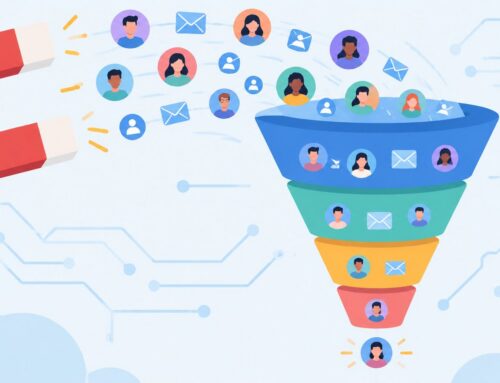
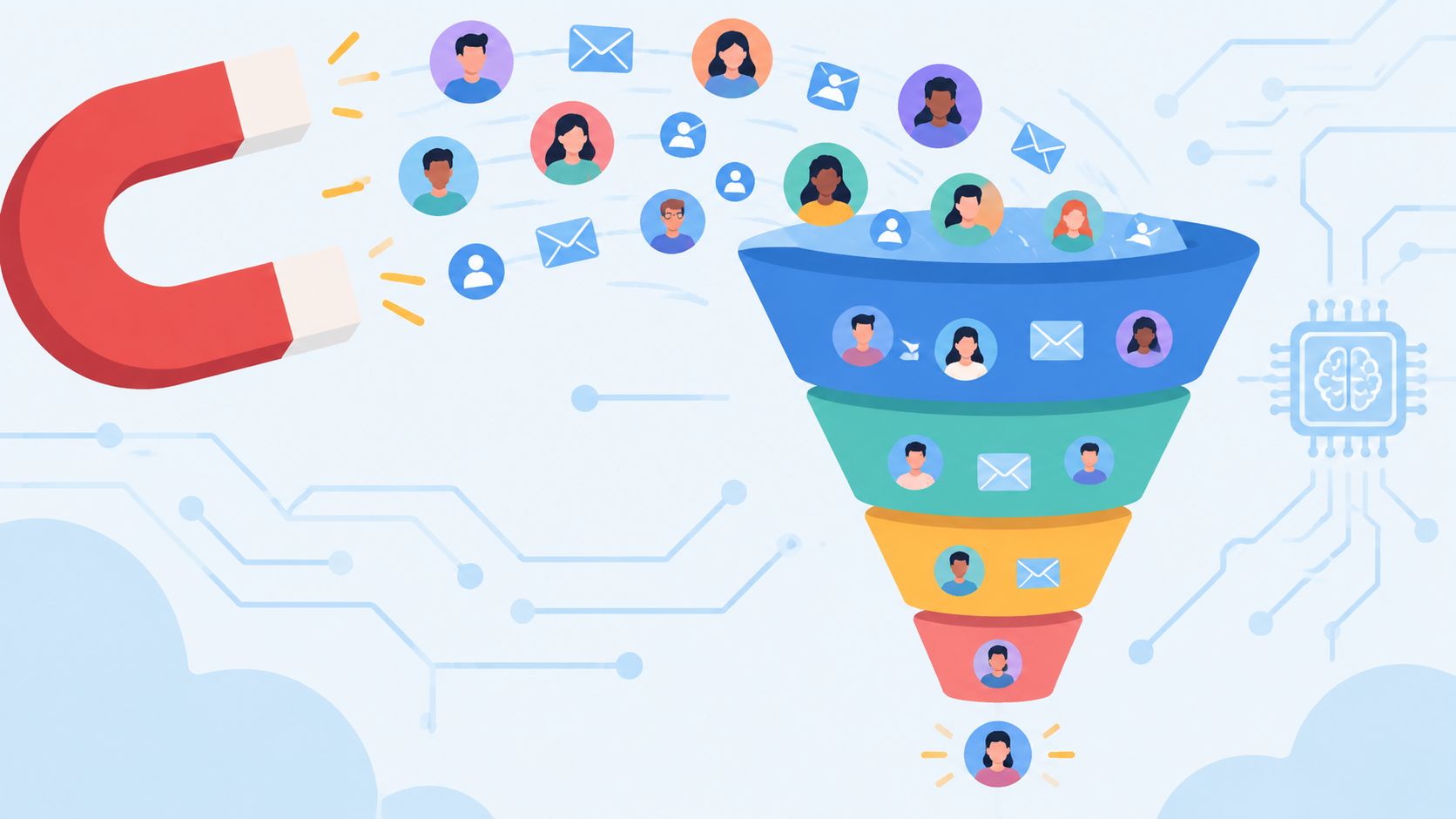
Building Lead Magnets, Landing Pages, and a Funnel Worth Scaling
A homepage form is not a funnel. It's a hope. If you want inbound to work, create one purpose-built offer for one buyer at one stage of the journey, then give it a dedicated landing page with one clear CTA.
The offer should solve a real buying problem, not just hand out generic “value.” Whitepapers, templates, and calculators can work because they feel useful at the point of need. A gated asset that helps the buyer do a job or make a decision is much stronger than a vague newsletter signup.
Build the path from visitor to sales-ready lead
- One offer, one page: don't stack unrelated CTAs or force choices.
- Mobile-first layout: the page should load cleanly and read clearly on a phone.
- Single CTA: the page should make one action obvious.
- Behavior-based follow-up: route engaged leads into nurture before sales touches them.
Industry guidance says gated assets can convert at 20-30%, and dedicated landing pages with a single CTA can average around 23% conversion according to the lead-generation guide from Improvado. Those numbers aren't a promise, but they are enough to tell you whether the funnel is healthy or broken.
Once the form is filled, the follow-up matters. Use automation to deliver the asset, start nurture, and hand off qualified activity to sales. If you're running email-based campaigns, the Mail Merge for Gmail email campaigns guide is a practical reference for keeping follow-up structured without turning the process into a manual mess.
Don't optimize the homepage first. Optimize the first page that asks for contact information.
If your page gets traffic but the lead flow is weak, fix friction before you buy more traffic. Usually the problem is too many fields, too many actions, or an offer that's too broad to feel worth the email address.
Budgeting and Running Growth Experiments Without Burning Cash
A startup budget should buy learning first and scale second. If you spread money across every channel at once, you won't learn what's working, and you'll call the noise “brand awareness.” That's a convenient lie with a short runway.
Use a simple budget split by stage, then keep the experiment small enough that failure is cheap. Tools and data should cover list building, CRM, and tracking. Content should pay for the first useful asset or a few focused posts. Paid should stay restrained until the offer converts. Partnerships should be testable without committing a big retainer.
Starter Monthly Lead Gen Budget by Stage
| Stage | Tools & Data | Content | Paid Ads | Partnerships |
|---|---|---|---|---|
| Pre-seed | Light stack, basic CRM, list verification | Founder-led posts, one lead magnet | Minimal tests only | Informal outreach |
| Seed | Better data, automation, reporting | Regular assets and nurture | Small controlled tests | A few active partner plays |
| Series A | Stronger tooling, attribution, segmentation | Consistent production | Channel-specific spend | Structured co-marketing |
Run every growth experiment the same way. Start with a hypothesis. Define the smallest viable test. Pick one success metric. Write the decision rule before launch. If the test fails, stop fast. If it works, repeat with better targeting. If it works only in theory, that isn't a win.
The best budget discipline is refusing to scale a channel that hasn't produced sales-qualified leads. Traffic and opens are not enough. You want proof that the channel can move real prospects toward opportunity.
Use this readiness checklist before spending harder
- Clear segment: the ICP is specific enough to target.
- Working message: prospects respond for the right reason.
- Repeatable execution: the campaign can be run twice without reinventing it.
- Visible handoff: sales knows which leads deserve attention.
- Tracked outcome: you can tie spend to lead quality, not just clicks.
ReachLabs.ai also offers digital marketing, creative execution, and managed outreach support, which can fit into this kind of test-and-learn setup when a team needs execution bandwidth rather than another strategy memo.
KPIs, Reporting Templates, and Your First 30 Days
Early-stage lead gen doesn't need a giant dashboard. It needs a few numbers that force honest decisions. Track qualified lead volume, SQL conversion rate, CAC by channel, and lead-to-opportunity rate. Anything else is decoration until those are moving.
For benchmark context, the 2025 to 2026 lead-generation benchmark cited by Exploding Topics notes 1,877 leads per month on average, $198.44 mean cost per lead, and a median visitor-to-lead conversion rate of 1.8% across industries. Those figures are useful not because you should chase them blindly, but because they explain why startups need either high traffic or a tightly optimized funnel to scale efficiently, as reported in the benchmark study at Exploding Topics.
A simple weekly reporting template
- Channel: outbound, content, paid, partner.
- Lead volume: how many came in.
- Quality signal: SQLs, not just raw leads.
- Conversion note: what improved or broke.
- Next action: what changes before next week.
The first 30 days should be sequenced, not improvised. Week one, lock the ICP and offer. Week two, build the outbound foundation or publish the first lead magnet. Week three, run the first growth experiment. Week four, review the numbers and cut anything that's noisy, slow, or clearly misaligned.
For a clean reporting structure, the marketing report template from ReachLabs.ai is a useful internal reference. Keep the report short enough that the team will read it.
If you want a metric guide specific to SaaS, the lead generation metrics for SaaS resource is worth using alongside your own dashboard. It's easier to stay disciplined when the metrics are tied to a real operating rhythm.
Lead generation for startups gets simpler when you stop treating every channel as equally urgent. Start with the buyer, build the offer, choose the first channel based on stage, and only spend harder when the funnel proves it can convert. If you want help turning that into a working pipeline, visit ReachLabs.ai and see how their team supports lead generation, outreach, and content execution for growth-focused startups.