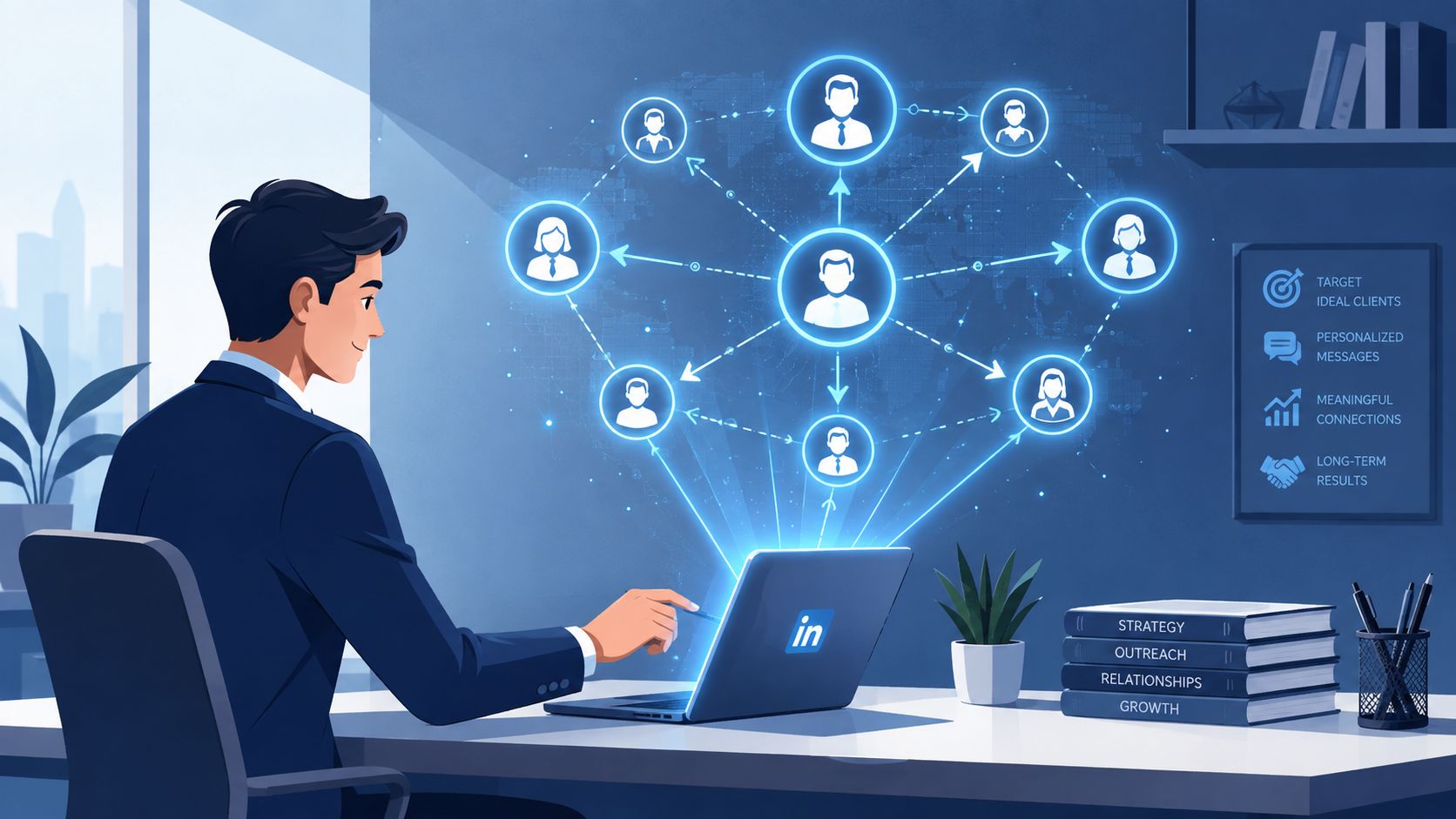
You're already spending too much time on LinkedIn prospecting that never seems to turn into real conversations. Connection requests go out, follow-ups get half-hearted replies, and the pipeline still feels unpredictable. That's exactly where LinkedIn outreach services become useful, if you buy the right kind of service and measure it like a revenue channel instead of a social task.
What Are LinkedIn Outreach Services Really?
Organizations often start here because manual prospecting burns hours and still produces uneven results. One rep sends careful messages, another sends generic notes, and nobody can tell which effort moves deals forward. A proper service fixes that by turning outreach into a system with defined targeting, sequencing, tracking, and follow-up discipline.
At the simplest level, LinkedIn outreach services are organized ways to find prospects, contact them, and move them toward a conversation. That can mean software, a managed lead-gen package, or a hybrid setup where humans oversee the process. The difference matters because a tool only gives you mechanics, while a service should give you process, accountability, and reporting.
Practical rule: if a vendor can't explain how a reply becomes a meeting and then an opportunity, they're selling activity, not outcomes.
The biggest mistake is treating LinkedIn like a volume game. LinkedIn's own guidance stresses personalization, genuine value, and sequencing, not generic blasting, and that's the standard you should hold vendors to. For a useful baseline on how professionals think about organic presence and outreach together, I'd also look at practical LinkedIn strategies as a complement to outreach, not a substitute for it. If your profile still looks weak, fix that first with how to optimize your LinkedIn profile, because a bad profile kills trust before your first message lands.
The right service should make your team less chaotic, not more active. If it doesn't improve targeting, message relevance, and handoff discipline, it's just automation with a nicer sales deck.
The Core Components of a High-Performing Service
A serious outreach program looks more like a house build than a messaging app. Strategy is the blueprint, list quality is the foundation, and the rest of the system only works if those two are sound. If either one is weak, everything built on top of it wobbles.

Strategy and targeting
Many vendors quickly expose strategic weaknesses. They should define the ideal customer profile, the offer, the trigger events, and the exclusions. If they can't say who should not be contacted, they don't have a strategy, they have a list.
List building and enrichment
Bad lists create bad outcomes. A good service sources clean contacts, verifies roles, and enriches records enough to support relevant messaging. The point isn't just filling a queue, it's making each contact legible enough for a real sales conversation.
Messaging and sequencing
A sequence should feel like a planned conversation, not a copy-paste campaign. You want a connection request, a careful follow-up, and a reason to keep talking. The strongest vendors write for relevance, not cleverness, and they know when to stop.
Execution, testing, and CRM flow
Execution is where many programs break. Modern stacks combine LinkedIn DMs, email sequences, A/B testing, intent signals, and CRM integrations with tools like HubSpot, Salesforce, and Clay, which improves attribution and gives you tighter feedback loops for adjusting targeting and copy (Salesforge on LinkedIn outreach services). That's also why effective LinkedIn tactics for sales teams matter, because tactics only help when they're wired into a process that tracks what happens after the first reply.
The vendor should be able to answer one simple question: where does the lead go after it replies? If the answer is “we usually hand it to your team,” you don't have a process yet.
Expected Business Benefits and Realistic ROI
The obvious benefit is more conversations with the right people. An even greater benefit is that your sales team stops wasting time on manual prospecting and starts spending that time on qualified conversations, follow-up, and closing. That's a much better use of internal bandwidth than asking every rep to improvise their own outreach rhythm.
The second-order gains matter just as much. Replies tell you which industries care, which messages fall flat, and which objections show up repeatedly. Even a “no” can be useful if the service tracks patterns and feeds them back into targeting and positioning.
Treat this spend like you'd treat a fractional specialist, not a generic software subscription. You're paying for judgment, process, and iteration, not just message delivery. If a provider frames the service only as “more leads,” they're underselling the strategic value and hiding the operational discipline you need.
The best services don't just send messages. They shorten the time between a market signal and a sales decision.
That matters internally because a LinkedIn program can support brand visibility among a very narrow audience while also creating a controlled flow of prospect feedback. It's not a replacement for the rest of your demand engine, but it can be a reliable layer when you need targeted outreach with clear ownership. That's also why teams that already know how to track content marketing impact often adapt faster, they understand that visibility only matters when it's tied to downstream action.
If you need a rough business case, focus on time saved, conversations created, and the quality of those conversations. Ignore vanity activity unless it clearly supports one of those outcomes.
Measuring Success with the Right KPIs
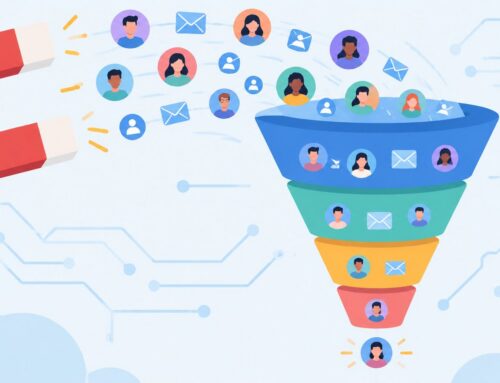
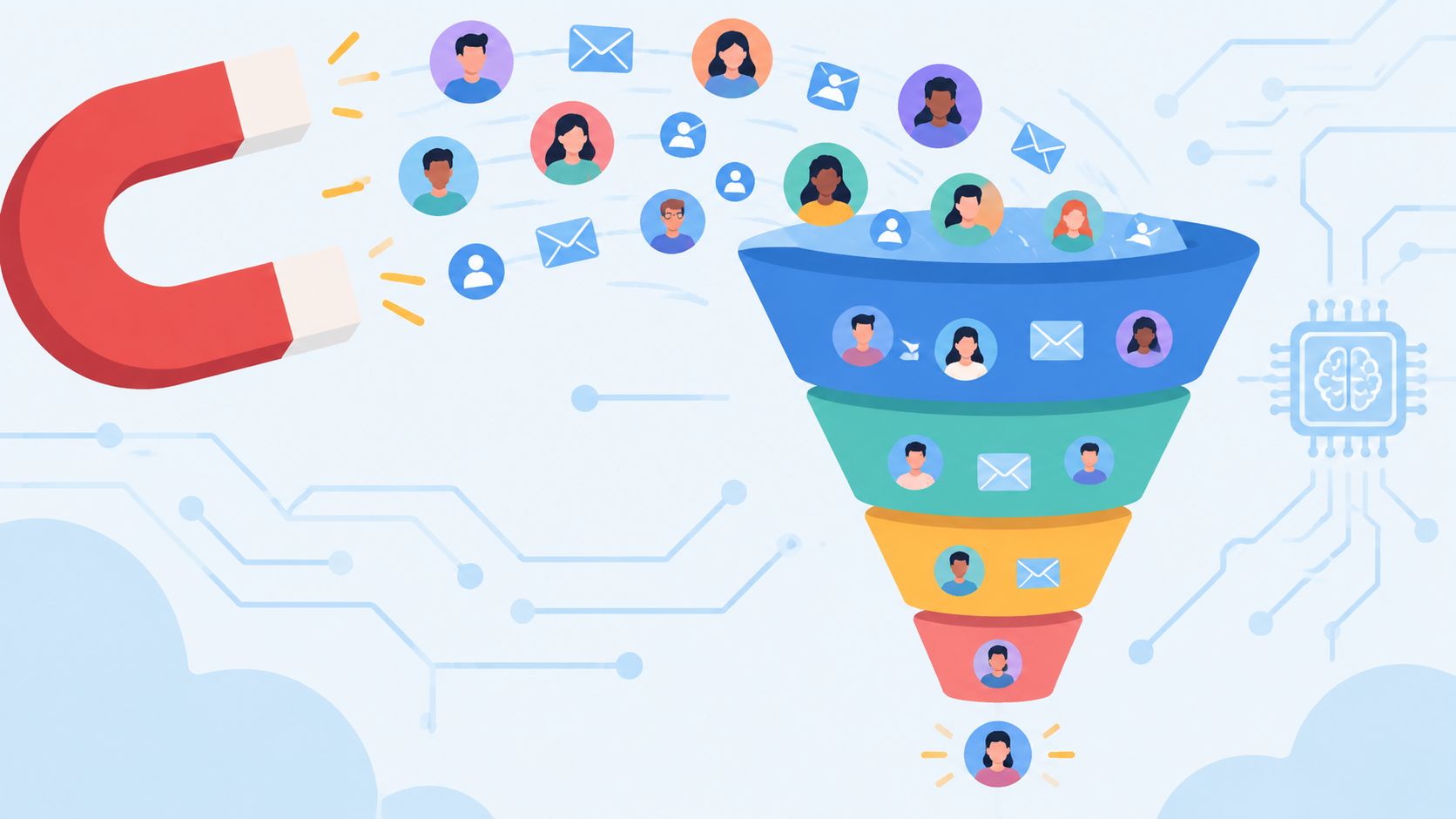
The worst metric to obsess over is raw connection volume. It looks productive and tells you almost nothing. A good LinkedIn outreach service should be judged like a funnel, because each stage tells you something different about the quality of the list, the message, and the offer.

The cleanest benchmark framework starts with acceptance and reply behavior. A large 2026 dataset covering 13.2 million LinkedIn outreach actions found an average 28.5% connection acceptance rate, a 3.0% reply rate to connection notes, and a 10.4% reply rate to post-connection messages (Expandi benchmark data). That split matters because acceptance and reply are not the same thing, and you should never evaluate a campaign as if they are.
A separate 2026 benchmark covering 15 million+ contacts reported an overall LinkedIn outreach reply rate of 7.2%, with a range from 4.2% to 10.5% by industry. It also found HR and Talent professionals replied at 10.9%, while C-level executives replied at 7.0%, and geography mattered too, with the Netherlands at 10.5%, the UK at 6.1%, Canada at 7.1%, Australia at 6.4%, and the US at 6.0% (Belkins research). In plain English, your audience segment and market can change performance a lot, so one global average won't tell you whether your campaign is healthy.
What to measure
- Connection acceptance rate: If this is weak, the targeting or profile trust is off.
- Reply rate: If this lags behind acceptance, the message is the problem.
- Meeting booked rate: If replies come in but meetings don't, the offer or CTA is too blunt.
- Lead-to-opportunity conversion: If meetings don't convert, the targeting is wrong or the handoff is broken.
That funnel view is exactly what marketing performance metrics examples should teach your team to care about, because the metric only matters if it predicts pipeline movement. The same logic applies here. If your provider can't connect outreach KPIs to revenue, it's not a reporting problem, it's a strategy problem.
How to Choose the Right LinkedIn Outreach Partner
There are only three models worth discussing. Software-only, done-for-you, and hybrid. The right choice depends on how much control you need, how much internal capacity you have, and whether you want process ownership or just execution.

- Software-only. You manage everything. That works if your team already has a strong playbook and someone owns the workload.
- Done-for-you agency. They handle the work, but you're depending on their process quality and transparency.
- Hybrid model. You keep strategic oversight while the provider handles the repetitive operational load. That's usually the smartest option when you want scale without giving up visibility.
The hybrid model is where the structure usually makes the most sense. LinkedIn outreach services are typically built as software, done-for-you lead packages, or hybrid models, and the hybrid approach preserves sequence logic and personalization while reducing the burden on your team (Artisan on outreach services). That's the model most likely to behave like a repeatable pipeline instead of a black box.
Use this checklist when you vet a partner:
- Strategy first: Ask how they define ICPs and exclusions.
- List quality: Ask how they source, verify, and enrich contacts.
- Messaging process: Ask who writes, who reviews, and how often copy changes.
- Reporting: Ask which metrics they report and how they tie those metrics to pipeline.
- Account safety: Ask what QA steps they use before sending.
- Transparency: Ask how often you'll see campaign decisions, not just outcomes.
If a partner gets defensive about process questions, walk away. You're buying judgment and execution, so they should be able to explain both without hiding behind jargon.
One practical move is to compare providers against your internal capacity, not against each other's sales pages. If you can't maintain the system in-house, software alone is a trap. If you want full control but no operational drag, hybrid is usually the cleanest fit. This guide to choosing a marketing agency is useful here because the same vetting logic applies, ask how they think, not just what they ship.
Outreach Templates and The ReachLabs.ai Approach
A strong connection request is short, specific, and easy to ignore if it's not relevant. That's a good thing. If you can't earn interest in one sentence, a longer message won't save you.
Use this structure:
- Connection request: “Hi [Name], I noticed your work on [specific topic]. I work with teams that care about [relevant outcome], and I'd like to connect.”
- Follow-up 1: “Thanks for connecting. I'm reaching out because [specific issue] tends to show up for teams at your stage. If it's useful, I can share what we're seeing.”
- Follow-up 2: “If this is a priority, I'm happy to send a short note with examples of how similar teams approach it. If not, no problem.”
The psychology here is straightforward. You're lowering friction, not forcing a meeting. You're also giving the prospect a reason to reply without making them feel cornered.
Keep the ask small. Large asks kill reply rates because they ask for trust before you've earned any.
A managed model like ReachLabs.ai works by combining strategy, list building, message drafting, and reporting so the client doesn't have to stitch those pieces together alone. That matters because the service only becomes useful when each step informs the next. If the message is adjusted based on audience response, and the list is refined based on engagement, the campaign starts behaving like a live system instead of a static blast.
That's the core value of a hybrid partner. You get a team that can run the sequence, review the output, and adapt the approach without making your internal staff own every mechanical detail.
Finding Your Strategic Outreach Partner
Buy a partner, not a software login. If the provider can't talk clearly about ICP fit, message quality, reporting, and what happens after the first reply, they're not ready for your business. The right partner should sound like an extension of sales and marketing, not a vendor pushing activity.
Use three filters. First, they should show strategic depth, not just platform familiarity. Second, they should be transparent enough that you understand what's being done and why. Third, they should report on pipeline movement, not just acceptance counts and reply volume.
The best services are boring in the right way. They build a repeatable process, keep the messaging relevant, and tell you the truth when the list or offer is weak. That's the standard.
If you're evaluating options now, use this guide as a scorecard and compare every provider against the same metrics. Then talk to ReachLabs.ai if you want a managed LinkedIn outreach partner that can handle strategy, execution, and reporting as one workflow.