
Scaling a small business isn't just about getting bigger—it's about getting smarter. The goal is to grow your revenue at a much faster clip than your costs. This means shifting from a traditional growth mindset, where expenses often rise in lockstep with sales, to a true scaling mindset, where efficiency and profitability lead the charge.
Build Your Foundation for Sustainable Growth
Trying to scale a business without a solid foundation is a recipe for disaster. It’s like building a house on a shaky patch of ground. Before you even think about hitting the gas, you need to be absolutely certain your core business is sound.
This means validating your product, defining what makes you special, and carving out your spot in the market. Too many founders get this backward. They pour cash into marketing, hoping to create demand, when they should be confirming that demand exists first. Real, sustainable growth starts with a deep, almost obsessive, understanding of your customer and the problem you solve for them better than anyone else.
Validate Your Product-Market Fit
Product-market fit is that magic moment when you've built something a specific group of people can't live without. It feels less like you're pushing a product and more like the market is pulling it from you. So, how do you know if you're there?
- Get Real Feedback (Not from Your Mom): You have to talk to your ideal customers. Don't just ask if they like your idea. Ask them about their current struggles. Questions like, "What are you using right now to deal with this?" or "What does a perfect solution look like to you?" will give you unfiltered, actionable insights. You’ll quickly learn if you’re a vitamin or a painkiller.
- Watch What They Do, Not Just What They Say: Are customers sticking around? High churn is the biggest red flag for a weak product-market fit. You're looking for people who use your product or service regularly without you having to constantly nudge them. That's the signal you've built something valuable.
Define Your Unique Value Proposition
Once you know people want what you have, you need to get crystal clear on why they should choose you over everyone else. This is your Unique Value Proposition (UVP). It’s a short, powerful statement that explains the benefit you deliver, how you solve your customer's problem, and what makes you different.
A strong UVP isn't just a clever tagline. It’s the very core of your promise to your customers. It must answer the question, "Why should I buy from you?" with absolute clarity.
Nailing this down is a critical first step in learning how to scale a small business because it becomes the North Star for all your marketing and sales messaging. A great UVP like "The easiest way to get your taxes done right" is simple, specific, and all about the customer. We dive deep into crafting these statements in our guide on how to write a marketing plan.
This entire foundational process can be boiled down into three core stages.
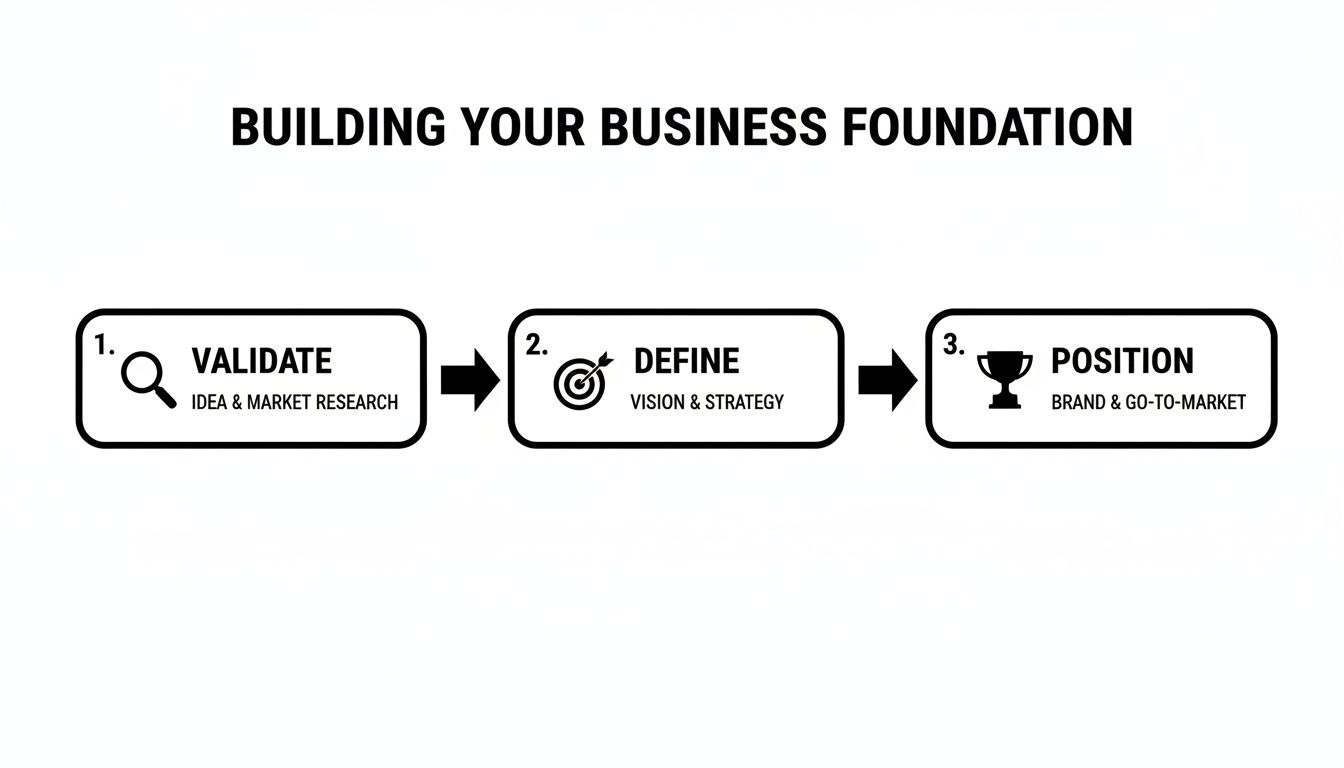
This flow—from Validation to Definition to Positioning—is the logical path from a good idea to a scalable business.
Position Your Brand in the Market
Positioning is the final piece of the foundation. It's about owning a specific piece of real estate in your customer's mind. This goes beyond your UVP to include your pricing, your brand’s personality, and the entire customer experience you deliver.
Of course, a great strategy needs a solid financial plan to back it up. As you map this out, it's essential to consider the right financial strategies for scaling your business to make sure your ambitions are actually achievable. By getting these fundamentals right, you build a launchpad for growth. When you finally hit the accelerator, you'll be scaling a business model that's already proven to work.
Scaling Readiness Checklist
Before you make any big moves, it's worth taking a moment for an honest self-assessment. Use this checklist to gut-check if your business is truly ready for the pressures of scaling.
| Area of Focus | Key Question to Ask | Indicator of Readiness |
|---|---|---|
| Product-Market Fit | Are customers referring others without being asked? | Yes, you have a steady stream of organic, word-of-mouth growth. |
| Value Proposition | Can your team explain what you do in one sentence? | Yes, everyone from sales to support can articulate your UVP clearly. |
| Customer Feedback | Do you have a consistent system for collecting and acting on it? | Yes, feedback directly influences your product roadmap and decisions. |
| Financials | Is your business consistently profitable? | Yes, you have positive cash flow and predictable revenue streams. |
| Operations | Are your core processes documented and repeatable? | Yes, a new hire could follow a playbook to handle key tasks. |
If you can confidently answer "yes" to most of these, you’re in a strong position to start thinking about the next level of growth.
Build Your Go-To-Market and Digital Marketing Engine

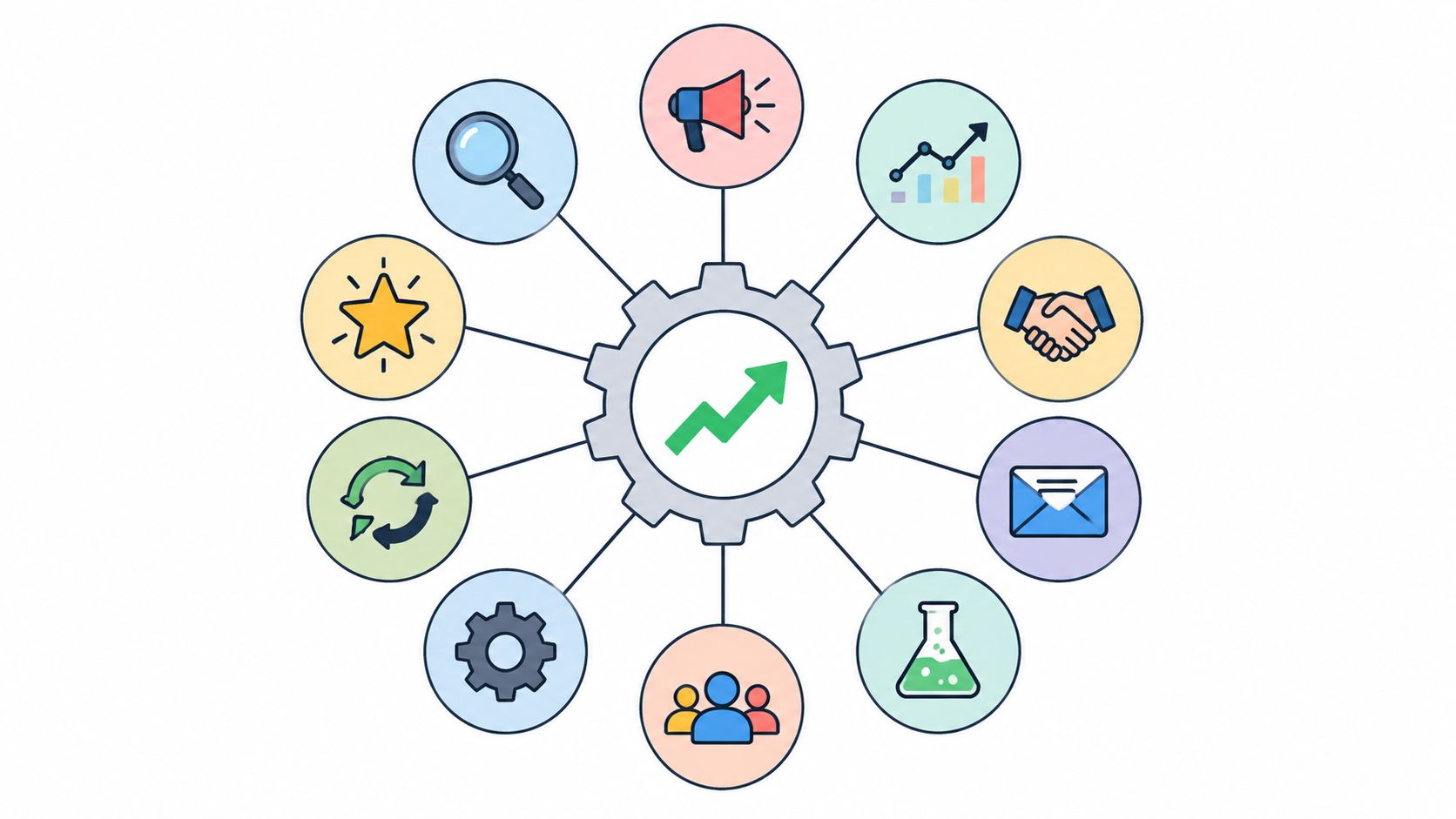
Alright, with a solid product and a clear understanding of your market, it’s time to build the engine that actually drives growth. A go-to-market (GTM) strategy is your bridge from having a great product to getting it into the hands of customers who desperately need it. Think of it less like a marketing plan and more like a detailed blueprint for how you'll reach, engage, and win over your target audience, again and again.
The whole point is to create a repeatable system for customer acquisition. In the beginning, you likely relied on hustle and personal connections. But to really figure out how to scale a small business, you have to evolve beyond that. You need a data-driven approach that works even when you’re not the one personally making every sale.
Crafting a Modern Lead Generation Machine
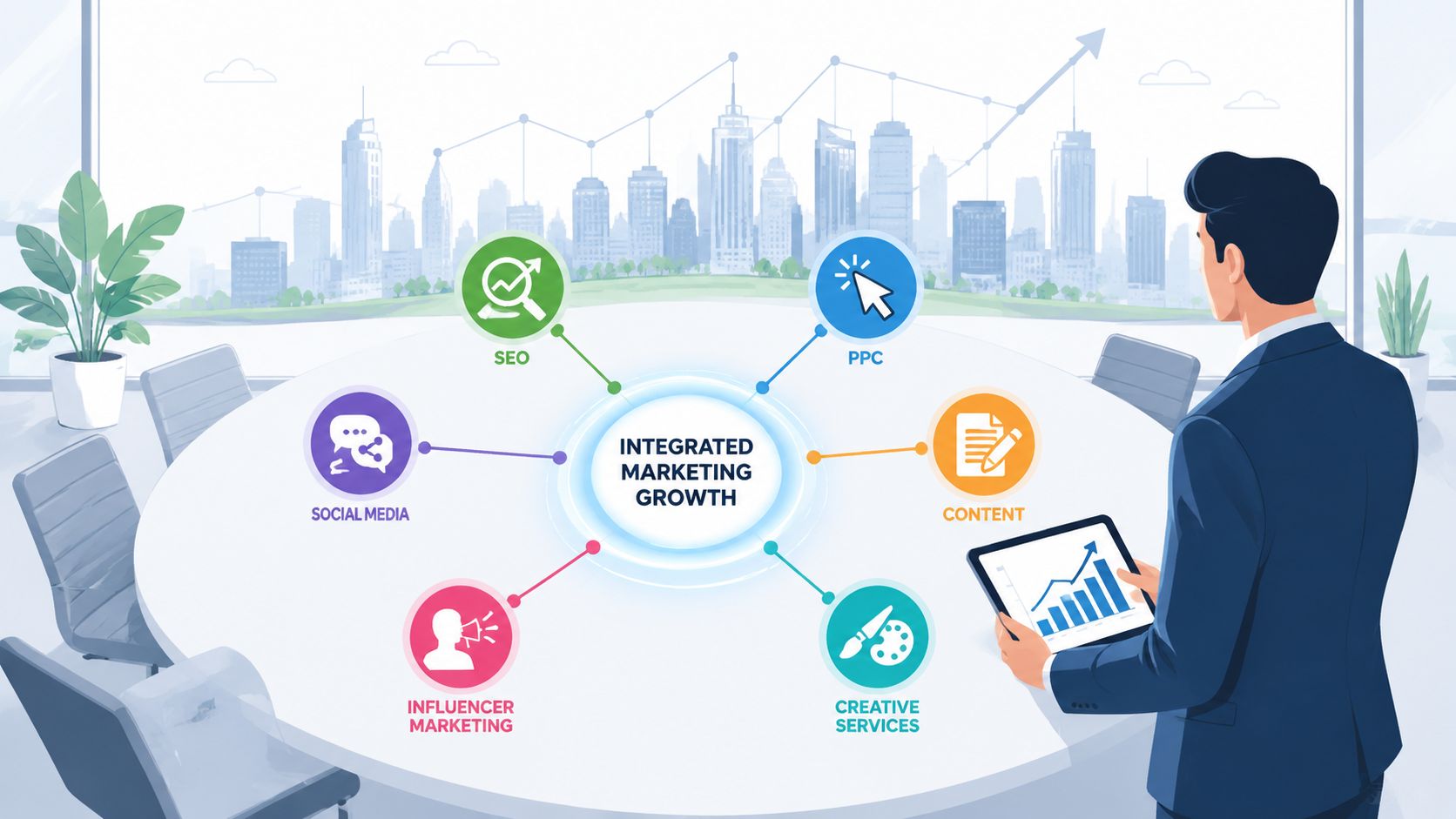
Let's be clear: the old "spray and pray" days of marketing are long gone. The most effective strategies today are all about providing real value and earning trust. The goal isn't just to find leads; it's to create an integrated system where different channels work in harmony to attract and nurture the right kind of customers.
A powerful lead gen engine usually pulls together a few key pieces:
- Valuable Content Marketing: This is your magnet. Write blog posts, create whitepapers, or host webinars that solve a real problem for your ideal customer. This positions you as a go-to expert and pulls in qualified leads through search and social channels.
- Smart SEO: You need to show up where your customers are looking. By optimizing your website for the specific keywords your audience uses, you create a steady stream of traffic from people who are already in the market for a solution.
- Hyper-Targeted Ads: Platforms like LinkedIn or Google Ads let you get your message in front of incredibly specific groups—think certain job titles, industries, or company sizes. This kind of precision means you're not wasting money talking to the wrong people.
The big shift here is moving from interrupting people to attracting them. When you build a system that consistently delivers value, you create a pipeline of prospects that’s both sustainable and much more cost-effective.
This is the key to scaling. Instead of chasing down leads one by one, you're building a machine that brings them to you. For a deeper dive, this complete digital marketing strategy for small business breaks down these principles with more detail.
Using Influencer Marketing for Authentic Reach
When you hear "influencer," don't just think of celebrities on Instagram. For most small businesses, the real opportunity is with micro-influencers and respected industry experts. These are people who have built a genuine, trusting relationship with a niche audience—exactly the audience you want to reach.
Imagine you sell project management software. Instead of blowing your budget on a big-name celebrity, you could partner with a well-known project management consultant who has an engaged audience of 10,000 certified PMPs. An endorsement from them isn't just an ad; it's a trusted expert recommendation.
Authenticity is everything. The partnership has to make sense and offer real value to the influencer's followers. Get this right, and you can drive not just awareness but high-quality leads and sales. In fact, studies show businesses can earn an average of $5.78 for every $1 spent on influencer marketing, proving it can be an incredibly efficient part of your growth strategy.
Integrating Your Digital Presence
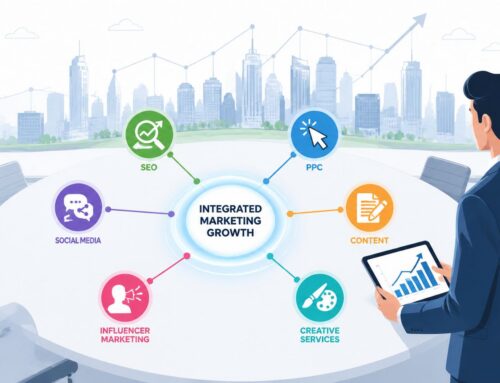
None of this works in a silo. Your GTM strategy should be a web of interconnected activities, not a list of separate tasks. Your blog posts should feed your social media channels. Your paid ads should point to landing pages that convert. Your influencer partners should be echoing your core message.
Here’s how it might look for a potential customer:
- They discover one of your in-depth blog posts through a Google search.
- Impressed, they download a related checklist by signing up for your newsletter.
- A week later, they see a LinkedIn ad from you showcasing a relevant case study.
- Finally, an industry expert they follow mentions your tool in a post about productivity.
Each touchpoint builds on the last, gently guiding the prospect along their buying journey. This integrated system creates momentum and makes your brand feel omnipresent to the right people. This is the kind of well-oiled machine that separates businesses that just grow from those that truly scale.
Build an Operations Engine That Can Handle the Growth
Rapid growth is a fantastic problem to have, but it will absolutely shatter any weak links in your operations. All those manual workarounds and scrappy processes that got you off the ground? They quickly become your biggest liabilities.
The real goal here is to build a business that can handle 3x your current volume without everything catching fire.
This is the moment you shift from doing the work to designing the systems that do the work. The secret to scaling isn't just working harder; it's about making your internal processes ruthlessly efficient through optimization and automation. This frees up your most valuable asset—your team’s time—to focus on what truly matters, like talking to customers and dreaming up your next big move.
First, Map Out Your Core Processes
You can't automate what you don't understand. Before you even think about tools, you need a crystal-clear picture of how your business actually runs day-to-day. Get a whiteboard (or a big sheet of paper) and start mapping your key workflows from start to finish. Don't get bogged down in perfection; just aim for clarity.
- The Customer Journey: How does a stranger become a happy, paying customer? Map every single touchpoint, from their first click on your ad all the way through onboarding and support.
- Order Fulfillment: Walk through the entire process from the moment an order is placed to when it lands on a customer's doorstep. Document every handoff, including inventory checks and shipping.
- Money Management: How do you get paid? Map out how invoices are created, payments are processed, and expenses are tracked. A messy financial workflow is a poison pill for a scaling company.
Once it's all laid out, the bottlenecks will practically scream at you. Where do things get stuck? Which steps are eating up the most manual hours? These are your prime targets for automation. This entire exercise is also a fantastic way to start figuring out how to reduce operational costs and get more out of every dollar.
Choosing the Right Tools to Automate the Work
With your process maps in hand, you can now hunt for the right technology to take over the grunt work. The modern tech stack for small businesses is incredibly powerful and, thankfully, surprisingly affordable. You don't need a massive enterprise budget to get your hands on some seriously capable tools.
Think about software that can handle specific, mind-numbing tasks. A good Customer Relationship Management (CRM) platform, for instance, can automate follow-up emails, keep a perfect record of customer interactions, and manage your sales pipeline. In the same way, accounting software can automate invoicing and financial reporting, saving you from spreadsheet hell every month.
The golden rule of new tech? Don't adopt it just because it's shiny. The best tool is one that solves a specific, painful bottleneck you've already identified in your workflow. It needs to play nice with your other systems to avoid creating more problems than it solves.
This approach ensures that every dollar you spend on software is a direct investment in efficiency and your ability to scale. The data backs this up. Today, 51% of U.S. business is conducted online, and the companies using multiple digital platforms are the ones seeing faster revenue growth. While 65.3% of small businesses turn a profit, only a tiny fraction—just 9%—ever cross the $1 million annual revenue mark. Guess what the high-achievers have in common? They lean heavily on technology.
Put Your Marketing on Autopilot
Marketing is one of the easiest and most impactful areas to automate. Instead of having someone manually send every email or post every update, you can build systems that nurture leads and engage customers 24/7.
Smart marketing automation isn't about being robotic. It’s about delivering the right message, to the right person, at the right time—every time. It’s how you create personalized experiences at a scale that would be impossible for any human team to manage. For a deep dive, our guide on marketing automation workflows has some great, practical examples to get you started.
Here are a few high-impact automations you can set up right now:
- The Welcome Wagon: When someone signs up for your newsletter, an automated email sequence can onboard them, share your best content, and introduce your brand story.
- Abandoned Cart Rescues: If you run an e-commerce store, automatically reminding customers who left items in their cart is one of the fastest ways to recover lost sales. It's like finding free money.
- Lead Nurturing Funnels: Create workflows that drip out targeted content to leads based on their behavior (like which pages they visited on your site). This gently guides them toward a sale without any manual nagging from your team.
By building systems and embracing automation, you're not just making things more efficient. You're building a resilient business engine that’s ready for whatever growth throws at it. This is how you create the capacity for sustainable, profitable scale.
Hire Top Talent and Design Your Organization for Growth

Let’s be honest: scaling is a team sport. You can have the slickest systems and a marketing engine that runs on rocket fuel, but none of it matters without the right people at the controls. The scrappy, do-it-all team that got you from zero to one often isn't the same team that will take you from one to ten.
As your company gets bigger, hiring mistakes get exponentially more expensive. A bad hire in a five-person company is a headache. In a fifty-person company? It can poison the well and grind entire departments to a halt. This is the moment you have to shift from reactive hiring—plugging a hole in a sinking boat—to strategic team building. You're not just hiring for the problems you have today; you're hiring for the company you plan to be in 18 months.
Write Job Descriptions That Actually Attract A-Players
Your job description is your first, and arguably most important, filter. If you post a generic, bulleted list of daily tasks, you're going to attract generic, task-oriented applicants. If you want to find real talent, you need to sell the mission.
Treat it like a piece of marketing copy. Don't just list responsibilities; paint a picture of the impact this person will have. Instead of "Manage social media accounts," try something like, "Own our social media strategy and double our audience engagement, making us the go-to voice in our industry." This kind of language attracts people who are driven by outcomes, not just a paycheck.
Also, be ruthlessly clear about what success looks like in the first 30, 60, and 90 days. This not only speaks directly to high-performers who love a clear challenge but also makes your interview process way more effective.
The Generalist vs. Specialist Dilemma
In the garage and basement days, you lived and died by the generalist—the person who could handle marketing in the morning and jump on customer support calls in the afternoon. But as you scale, that model starts to break down. To build solid, repeatable processes that can handle volume, you need specialists. You need people with deep expertise.
This is a make-or-break transition when you're figuring out how to scale a small business. Your first specialist hires should be aimed directly at your biggest bottlenecks or most promising growth levers.
- Is your lead pipeline overflowing but your close rate is terrible? You don't need another marketing generalist; you need a stone-cold sales closer.
- Are your books starting to look like a Jackson Pollock painting? It's time for a dedicated finance pro, not just a part-time bookkeeper.
Bringing in specialists doesn’t just solve a problem; it elevates the whole company. They introduce proven playbooks, build proper systems, and free you up to focus on strategy instead of being dragged into the weeds of execution.
Design an Organization for Clarity, Not Control
A flat org chart feels great when you can fit everyone around a single pizza. But as you grow, it quickly turns into chaos. Without clear lines of ownership, communication shatters, decisions get stuck in limbo, and accountability goes out the window. You don't need to build a stuffy corporate hierarchy, but you absolutely need a clear, simple organizational design.
An effective organizational structure isn't about control; it's about clarity. Everyone should know exactly what they own, who they report to, and how their work moves the needle on the company's big goals. This clarity is the lubricant for efficient growth.
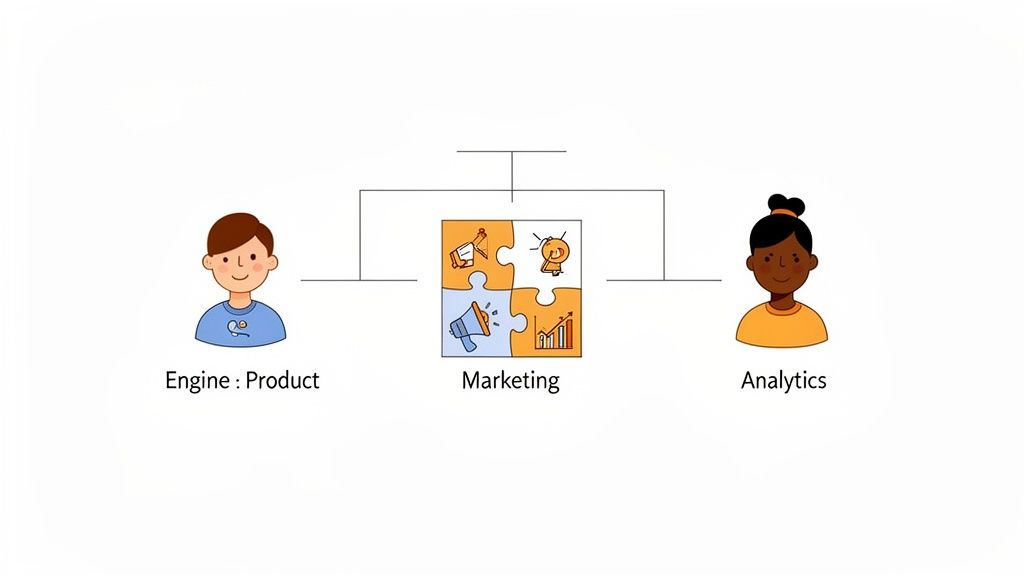
Start simple. Define your key functions—Marketing, Sales, Product, Operations—and put one person in charge of each. This single move can eliminate tons of confusion and empower your leaders to actually lead, which speeds up the whole business.
While you're busy structuring your team, don't forget the world outside your walls. The economic climate is heating up. Recent data shows small business owner confidence hitting a record high, with the U.S. Chamber of Commerce and MetLife Index reaching 72.0 in Q3. A whopping 78% of small businesses are actively planning for growth, which means the competition for top talent in fields like IT and analytics is fierce. You can find more insights on these small business trends on USChamber.com. This makes building an attractive, well-oiled organization more critical than ever.
Secure the Right Funding to Fuel Your Expansion
Growth costs money. It's a simple truth. Expanding your team, pouring cash into new tech, and seriously ramping up marketing all require capital. The journey of scaling your business often hits a critical juncture right here: finding the right financial fuel at exactly the right time.
But with so many options out there, from venture capital to a straightforward bank loan, making the wrong choice can be just as damaging as having no funding at all.
The real key is to match the funding type to your specific stage of growth and, just as importantly, your long-term vision. Not every business is built for VC funding, and bootstrapping isn't always the most strategic move. Getting a handle on the landscape is the first step toward making a smart financial decision that actually empowers your growth, rather than derailing it.
Determine Exactly How Much Capital You Need
Before you even think about building a pitch deck, you need a number. And "a lot" doesn't count. I’ve seen so many founders get this wrong; ask for too little, and you'll be right back in fundraising mode in six months. Ask for too much, and you can scare off investors or give away more of your company than you need to.
So, how do you find the right number? Build a detailed financial model. Seriously, get into the weeds and project your expenses and revenue for the next 18-24 months.
Be specific. How many new hires will you actually make? What will your new marketing budget look like? What software or equipment do you absolutely need to buy? This process forces you to think critically about every single dollar and shows potential investors you've done your homework.
Know Your Funding Options
Once you've got a realistic figure, it's time to figure out where to get it. Each path comes with its own set of rules, benefits, and baggage.
- Bootstrapping: This is the purest form of funding—you're just reinvesting profits back into the business. You keep 100% control and it forces incredible discipline, but be prepared for a slower, more deliberate growth curve.
- Small Business Loans: A traditional route where you get a lump sum of cash that you pay back with interest. You keep all your equity, but you'll need a solid credit history and should be prepared to put up collateral.
- Angel Investors: These are wealthy individuals who invest their own money in early-stage companies, usually in exchange for equity. The best ones bring more than just cash; they offer invaluable mentorship and open doors with their industry connections.
- Venture Capital (VC): VCs are firms that invest other people's money into startups with massive growth potential. They write bigger checks than angels, but they expect an enormous return on their investment and will almost certainly take a board seat.
The right choice depends entirely on your business model and how fast you need to grow. A local service business could scale beautifully with a small business loan, while a tech startup aiming for total market dominance will likely need the rocket fuel that VCs provide.
Craft a Compelling Investor Pitch
Whether you're talking to a local angel investor or a big-shot VC firm, your pitch is everything. You're telling a story that has to be both inspiring and totally believable. Remember, these people hear hundreds of pitches. Yours has to cut through the noise.
Investors aren't just putting money into an idea; they're investing in you and your team's ability to pull it off. Your pitch deck needs to nail the problem you're solving, why your solution is unique, the true size of the market, and why your team is the only one that can win.
It's a competitive world out there. New business formations have skyrocketed to a record 478,800 per month, a staggering 435% increase from the averages back in 2004. And with data showing that 46% of businesses seeking financing plan to expand, you're not the only one asking. You can dive deeper into these small business statistics at Kaplan Collection Agency.
Ultimately, getting funding is about selling a vision that’s backed by cold, hard data. Show them a clear path to a return on their investment, and you'll be well on your way to getting the cash you need to truly scale.
Common Questions About Scaling a Small Business
Growing a small business is an exhilarating ride, but it's also packed with tough calls and moments of uncertainty. It's totally normal to have a long list of questions when you start moving from a scrappy, do-it-all-yourself operation to a company built for serious growth.
Let's dig into some of the biggest questions that come up when it's time to level up.
What Are the First Signs My Business Is Ready to Scale?
Figuring out the exact right moment to hit the gas is more of an art than a science, but there are some tell-tale signs you’re on the right track. The clearest signal is when you're not just profitable, but consistently and predictably profitable. If the money coming in is reliable, you have a solid foundation to build on.
Another huge indicator? Customer demand is starting to outrun your ability to keep up. Are you turning down work or finding it tough to fulfill orders? That’s a fantastic problem to have. It means the market is literally pulling your product or service out of your hands, which is the perfect fuel for scaling. High customer retention and a steady stream of word-of-mouth referrals are also powerful proof that you’ve truly nailed product-market fit.
From an operational standpoint, you’re ready when your core processes don’t live entirely in your head. If your business can function without you or another key person running everything, you're in a good spot. The real test: can you take a week off without everything catching fire?
How Do I Scale Without Sacrificing Quality?
This is the big one. It's the fear that keeps founders up at night, especially those who built their reputation on quality and a personal touch. The secret to scaling quality isn't about working harder; it's about systems, training, and culture. You have to find a way to clone the magic.
First, document everything. Create Standard Operating Procedures (SOPs) for every critical task, from how you handle a support ticket to how you package an order. This isn't about becoming a rigid, soulless corporation. It’s about creating a playbook for excellence so every new team member starts from the same high bar.
Next, get serious about training. Don't just show new hires what to do—explain why you do it that way. When your team understands the thinking behind your standards, they can make smart decisions and uphold quality without needing constant oversight.
Scaling quality isn't about doing more yourself; it's about empowering your team to maintain the standards you've set. A culture of ownership, where every employee feels responsible for the customer experience, is your greatest defense against a drop in quality.
Finally, let technology do the heavy lifting. Automate the repetitive tasks where mistakes are most likely to happen. This frees up your people to focus on the high-touch, human parts of the business that customers will remember.
What Are the Most Common Mistakes to Avoid When Scaling?
Knowing the pitfalls is just as important as knowing the path forward. Countless promising companies have fumbled during a growth spurt by falling into a few common traps.
The most dangerous mistake is premature scaling. This often looks like hiring a bunch of people before you have the revenue to support them or jumping into a new market without proof that anyone there actually wants what you're selling. It’s an easy trap to fall into when you're feeling optimistic, but it can drain your cash reserves with terrifying speed.
Another classic blunder is losing focus. Chasing every new, shiny opportunity can distract you from your core business and, more importantly, your existing customers. These are the people who got you this far, and keeping them happy is way cheaper than constantly trying to find new ones.
Lastly, don't miscalculate your cash needs. Scaling is expensive. From new salaries to new software, the costs add up fast. Running out of money halfway through an expansion is a nightmare you can avoid with careful financial planning.
Should I Hire Specialists or Generalists When Scaling?
This question really gets to the core of how your team needs to change as you grow. In the early days, generalists are absolute gold. They’re the versatile players who can wear multiple hats and thrive in the controlled chaos of a startup.
But as you scale, the game changes. You'll hit a point where certain tasks—like building a sophisticated marketing funnel or managing complex financials—require deep expertise. A generalist can get you started, but a specialist will build a system that can handle real volume and complexity.
The smart move is to evolve your hiring strategy over time. Once you have a proven product-market fit and your growth is more predictable, it's time to bring in your first specialists. Look at your biggest bottlenecks or your most promising growth channels. For instance, if you're drowning in leads but can't close them, your first specialist hire should probably be a salesperson, not another marketer.
Ready to build a marketing engine that can truly handle scale? The team of specialists at ReachLabs.ai can help you craft and execute a data-driven strategy that delivers real results. Explore our services.