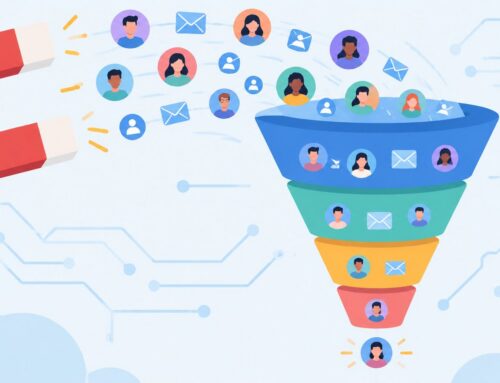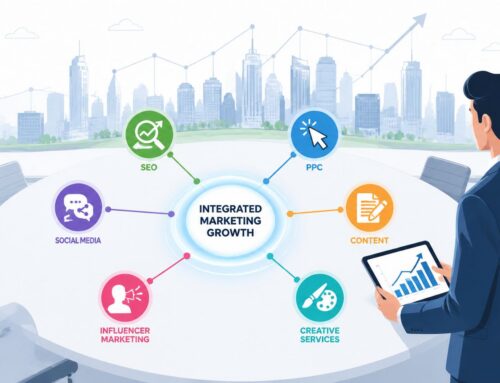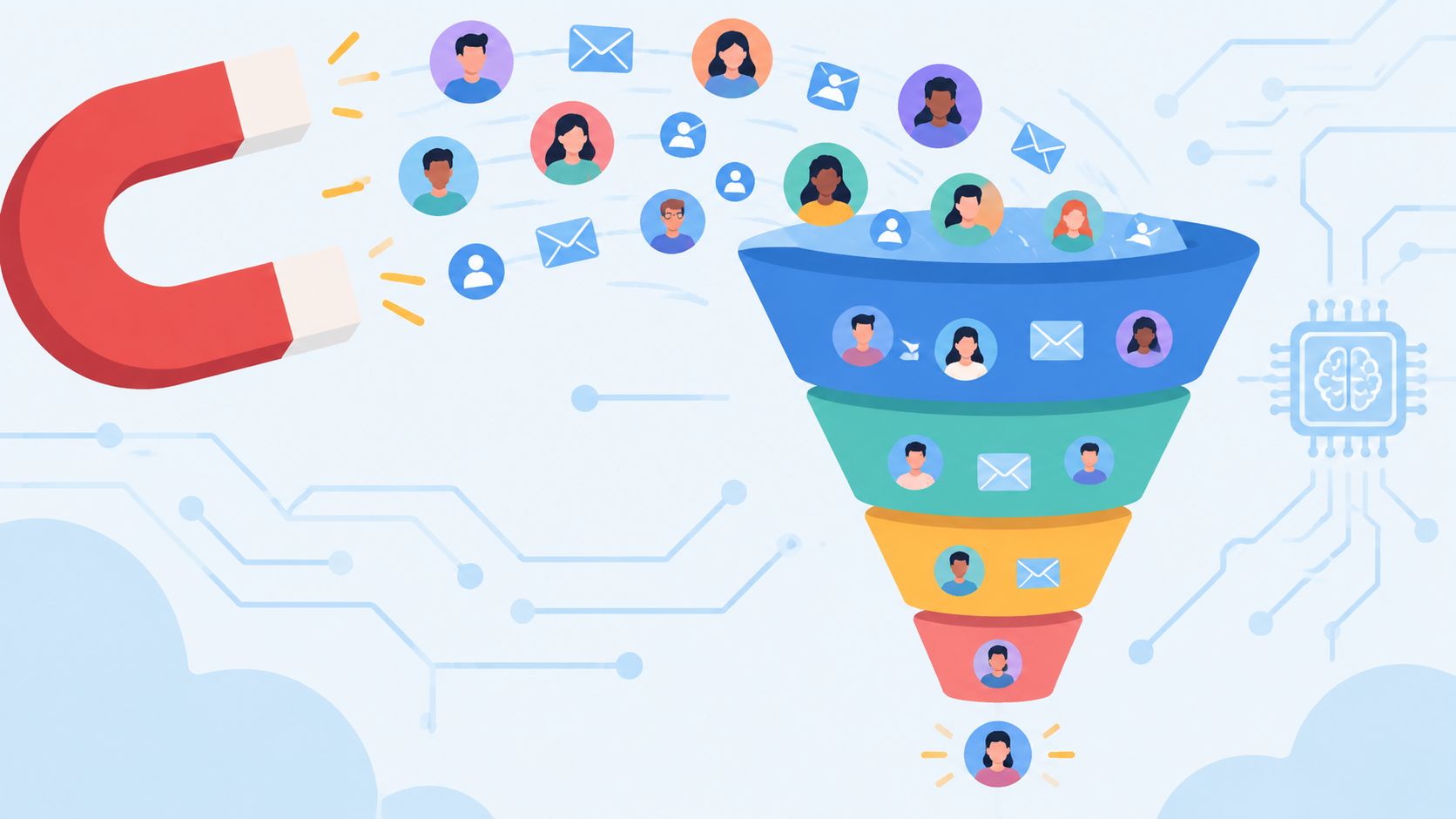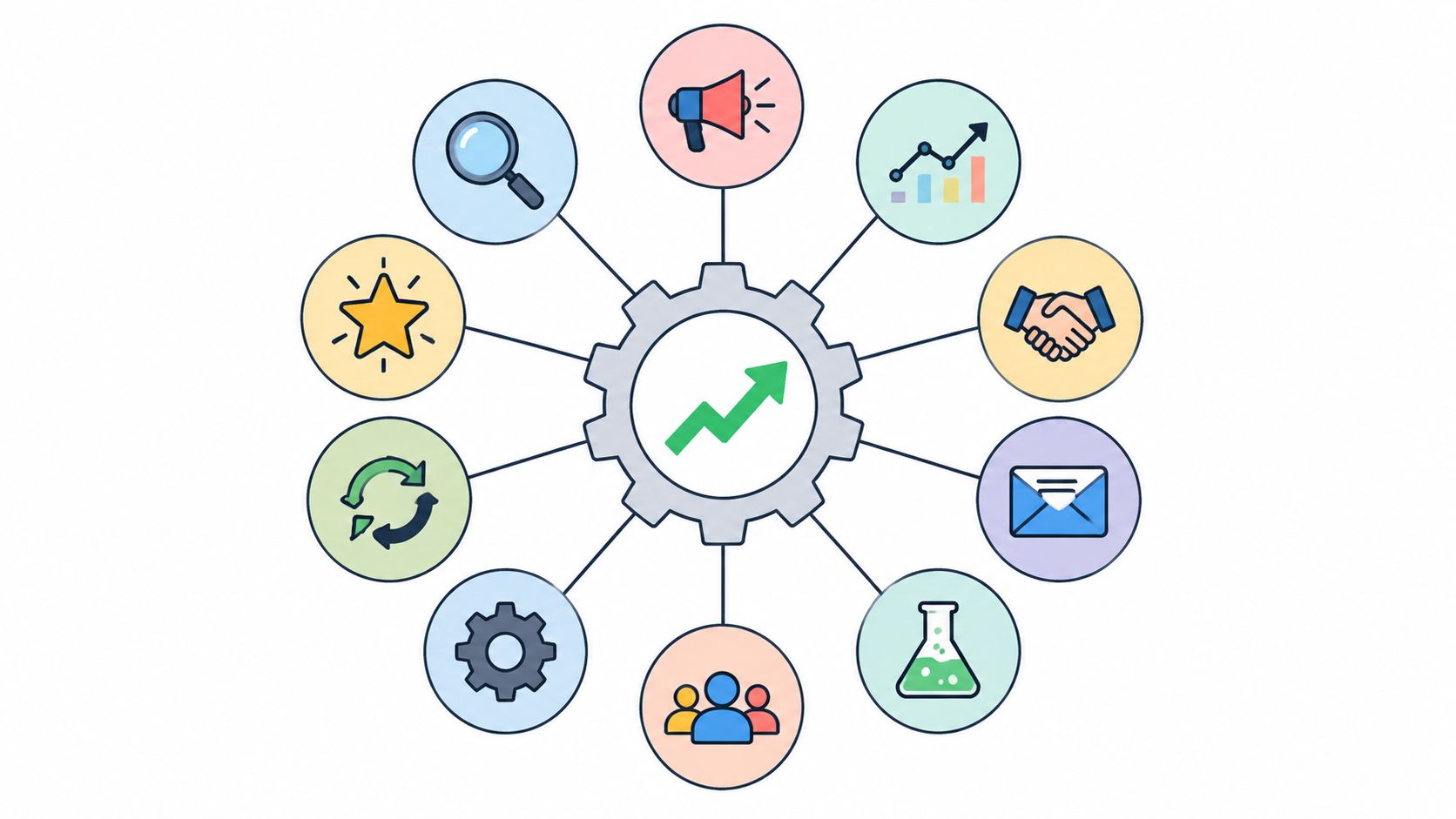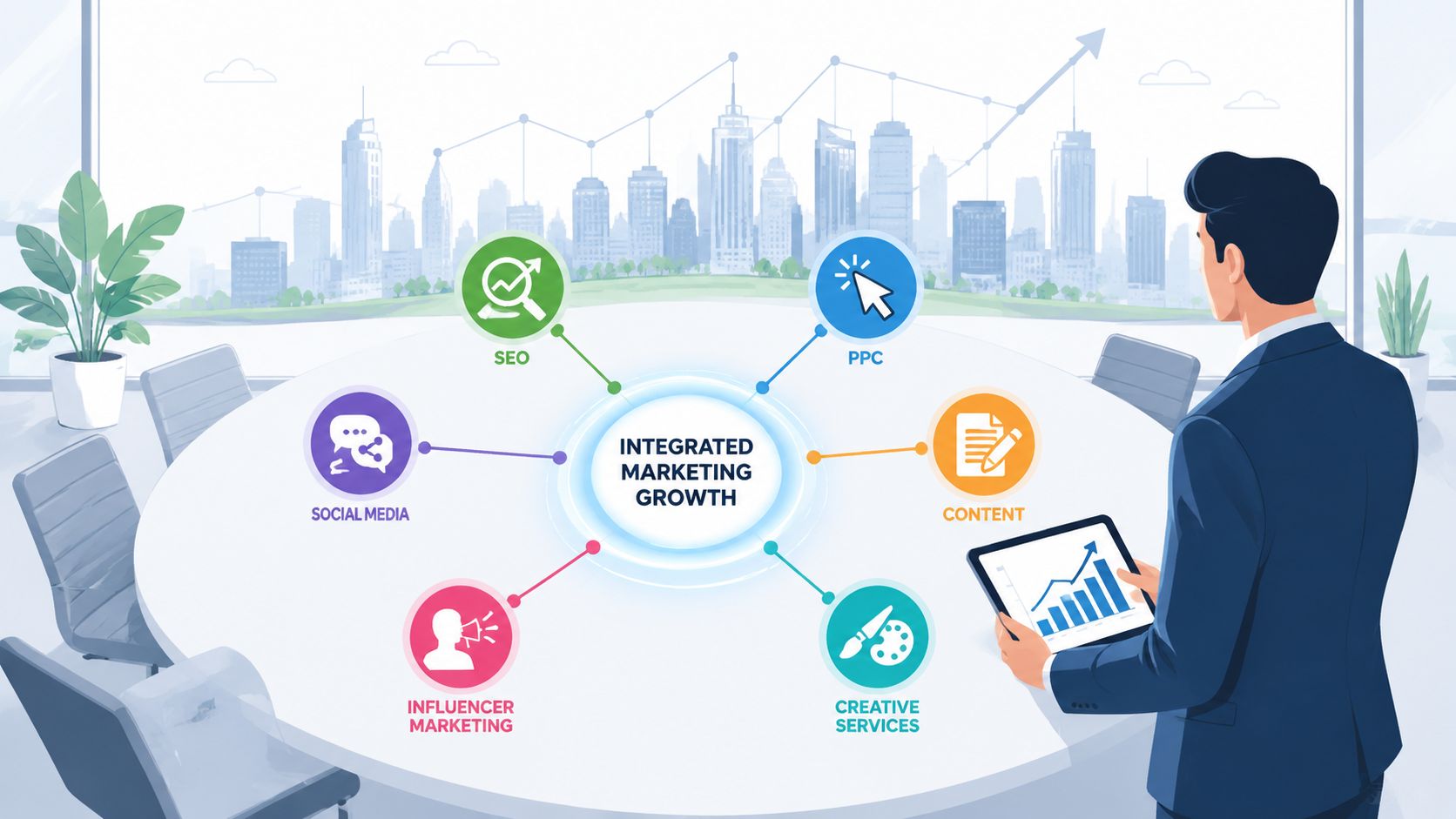
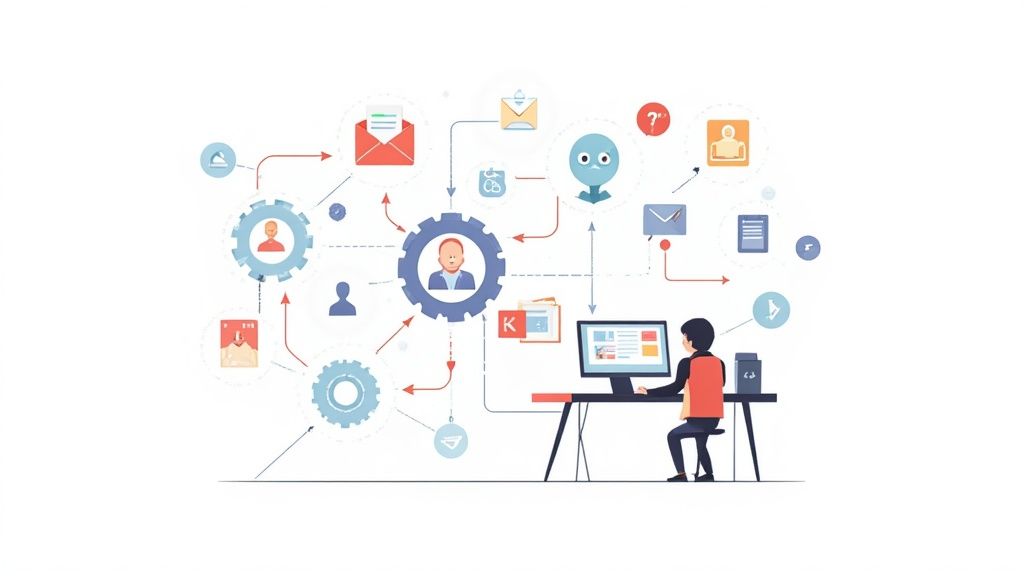
Picture this: your marketing efforts have a built-in GPS, automatically guiding every customer along their perfect path, all without you having to steer. That’s the magic of a marketing automation workflow. It’s more than just a piece of software; it's a series of automated actions that react to your customers' behavior, putting the perfect message in front of them at precisely the right time.
What Are Marketing Automation Workflows
Think of a marketing automation workflow as a set of digital dominoes. One action triggers the next in a perfectly logical sequence. Someone subscribes to your newsletter? A welcome email is sent instantly. They browse your pricing page multiple times? The workflow can tag them as a hot lead and notify your sales team.
This "if this, then that" logic is what allows you to create deeply personal experiences for your audience, but on a massive scale. It’s your safety net, ensuring no lead ever gets left behind.
The Shift Towards Automated Engagement
It’s no surprise that automation has taken the marketing world by storm. A staggering 76% of marketers now use automation tools, a rate that far outpaces their colleagues in sales and finance. This isn't just a trend; it's a fundamental shift in how businesses connect with people.
While email marketing is the most common use case (at 63%), marketers are also automating social media and content management. These tools are quickly becoming the standard for modern, efficient marketing.
If you're looking to get a better handle on the strategic impact these systems can have, it's worth reading up on unleashing the potential of marketing automation.
From Manual Effort to Smart Systems
At its heart, a workflow automates the customer journey. Instead of a person having to remember to send every follow-up, nurture email, or special offer, the system handles it all based on triggers you've set up. This simple change from manual to automated has a huge impact.
Here’s why it’s so critical for today's marketing:
- Consistency: Every single person gets the same high-quality, on-brand experience. No one slips through the cracks.
- Personalization: Workflows let you segment your audience based on what they actually do, so you can send messages that are incredibly relevant and genuinely helpful.
- Efficiency: It frees your team from the repetitive, time-consuming tasks that drain creativity, letting them focus on big-picture strategy.
The real power of marketing automation workflows lies in their ability to deliver a one-to-one conversational experience to thousands of people simultaneously, making personalized marketing not just possible, but practical.
The Building Blocks of Every Workflow
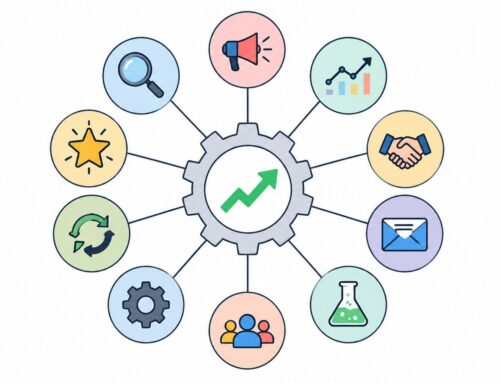
Every marketing automation workflow, no matter how complex it looks, is really built from just three simple parts. Once you get a handle on this basic framework, you can start building some seriously sophisticated customer journeys. Think of it like cooking: you have ingredients (triggers), cooking steps (actions), and decision points (conditions). Mix them together, and you can create anything from a simple snack to a gourmet meal.
These pieces work in harmony to take tedious, manual follow-ups off your plate and turn them into a smooth, automated system that gets results.
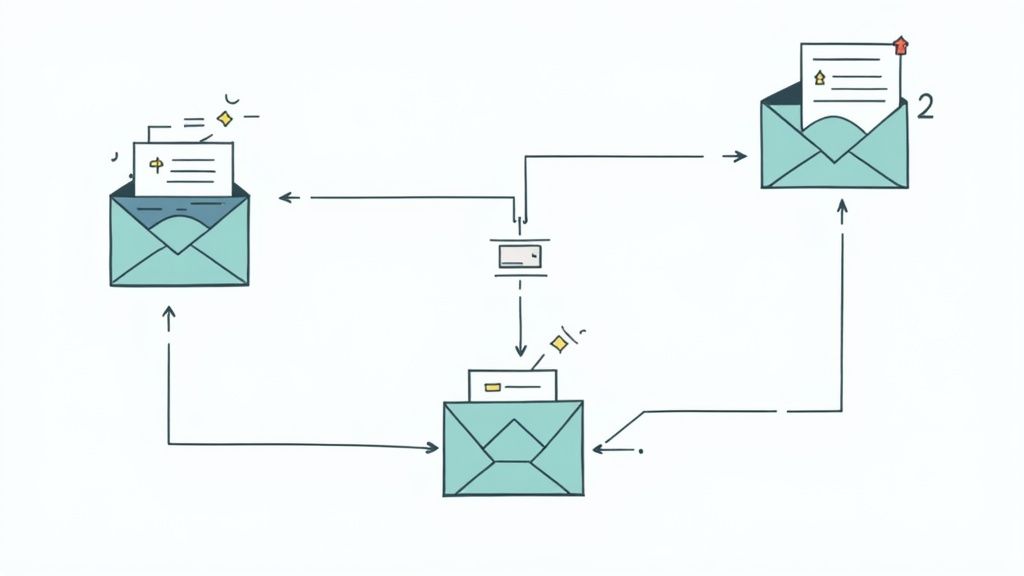
This visual shows how automation components fit together like gears in a well-oiled machine, freeing up countless hours for your team.
To really nail this down, let's break down each component.
The Trigger: The Starting Gun
First up is the trigger. This is the event that kicks everything off—the "if this happens" part of the equation. Without a trigger, your workflow is just a plan on paper; it will never actually run.
- Example 1: Someone signs up for your newsletter. That sign-up action is the trigger that starts your welcome email sequence.
- Example 2: A customer leaves items in their shopping cart and clicks away. That specific behavior triggers an abandoned cart reminder.
The Action: The Work Gets Done
Next, we have actions. These are the "then do that" steps. Once a trigger fires, the actions are the tasks the system actually performs. This is where the automation does the heavy lifting for you, from sending messages to updating contact records.
A single workflow isn't limited to one action. You can chain several together to create a multi-step journey, like sending a welcome email (action 1), waiting two days (action 2), and then sending a follow-up with helpful resources (action 3).
The Condition: The Smart Decision-Maker
Finally, we have conditions. These are the forks in the road that make your workflows intelligent and responsive. Conditions check if certain criteria are met, allowing you to guide people down different paths based on who they are or what they've done.
Conditions are what separate a blunt, one-size-fits-all sequence from a smart, personalized conversation. They ensure the right person gets the right message at exactly the right moment.
For example, a condition can check, "Did this person open my first email?" If the answer is yes, they might get a follow-up email about a specific product. If no, they might get the same email again but with a catchier subject line.
Conditions are also crucial for things like lead scoring, where the workflow's next move depends on how engaged a prospect is. To see how that works in practice, check out our deep dive into what is lead scoring.
To make this crystal clear, here’s a simple table that lays out how these three components work together.
Core Workflow Components Explained
| Component | Function (What it does) | Example |
|---|---|---|
| Trigger | The initial event that starts the workflow. | A user downloads an e-book from your landing page. |
| Action | The task performed by the automation software. | Send an email with a link to the e-book. |
| Condition | A checkpoint that creates different paths. | Did the user click the link in the email? |
With these three building blocks—Triggers, Actions, and Conditions—you have everything you need to start automating your marketing in a smarter, more effective way.
Why Workflows Are Your Growth Engine
Let's get one thing straight: setting up marketing automation workflows isn't just about saving a few hours a week. It's about completely re-engineering your business for growth that can actually scale.
Think of it like this: your manual marketing efforts are like a hand-crank. You can get things moving, sure, but there's a hard limit to how fast and how long you can go. Automation is the engine that replaces that crank, removing the ceiling on what you can achieve.
This shift means you can give thousands of people a deeply personal experience, all at the same time. A workflow can send a perfectly timed welcome series to a new lead, nudge a quiet customer with a special offer they'll love, or walk a new buyer through their first steps with your product—all without you lifting a finger. That kind of consistent, relevant communication is how you build real trust and turn casual browsers into loyal fans.
Driving Real, Measurable Results
This isn't just a nice idea; the impact shows up in the numbers. When you create systems for your marketing, you build predictable paths that lead directly to conversions. You stop relying on random acts of marketing and instead build a reliable machine that guides people from "who are you?" to "take my money."
The business case for automation is crystal clear. Companies that automate their email workflows generate twice as many leads and see 58% more conversions than businesses still stuck sending manual blasts. The benefits don't stop there. Across the board, workflow automation boosts the number of leads by 80%, conversions by 75%, and—get this—qualified leads by a massive 451%, especially for marketing and sales teams. You can dig into more of the data behind these workflow automation statistics in recent studies.
By automating the customer journey, you move from being a reactive marketer to a proactive one. You’re no longer just responding; you’re anticipating needs and guiding outcomes, which is the cornerstone of sustainable growth.
More Than Efficiency—It's a Revenue Multiplier
At the end of the day, workflows are what unlock more revenue and a higher customer lifetime value. They make sure no lead falls through the cracks and that every single customer interaction has a clear purpose.
This focused approach aligns your marketing directly with sales goals, transforming your marketing department from a line item on a budget sheet into a powerful revenue-driving force.
Here’s exactly how they fuel that growth:
- Better Lead Quality: Workflows can automatically sort, score, and qualify leads, meaning your sales team spends their valuable time talking to people who are actually ready to buy.
- Higher Conversion Rates: Sending the right message at the right time—based on what a person actually does—is the fastest way to guide them toward making a purchase.
- Stronger Customer Retention: Automated onboarding sequences, check-in emails, and helpful tips create a fantastic customer experience. Happy customers stick around longer and buy more.
Five Essential Workflows You Can Build Today
The image above from HubSpot gives you a peek behind the curtain at a visual workflow editor. This is where the magic happens. Marketers can drag and drop triggers, actions, and conditions to map out an entire customer journey without needing to write a single line of code.
Knowing the theory is great, but the real fun—and the real results—begin when you start building. Here are five foundational automations that have proven their worth time and time again. Think of these as reliable blueprints you can set up today and then tweak to perfectly match your business.
1 The Warm Welcome Series
You only get one chance to make a first impression. A welcome series is your handshake, your "nice to meet you," triggered the moment someone new joins your list.
- Goal: To kickstart the relationship by introducing your brand, setting expectations, and delivering immediate value.
- Trigger: A user signs up for your newsletter.
- Actions: Send a welcome email right away to confirm their subscription. Follow that up with 2-3 more emails over the next week sharing your best content, your brand story, or maybe a small introductory offer.
2 Strategic Lead Nurturing
When someone downloads an e-book or a case study, they’re not just a random visitor anymore—they're raising their hand to show interest. A lead nurturing workflow is how you respond to that signal, gently guiding them from "just curious" to "ready to buy."
This sequence is all about education. It shows them how your product or service is the answer to the very problems they were just reading about. To really dive deep into crafting these essential sequences, check out our complete guide to lead nurturing automation.
3 The Abandoned Cart Reminder
For any e-commerce store, the abandoned cart is a goldmine of lost revenue just waiting to be recovered. It’s staggering how many people add items to their cart and then get distracted. A well-timed reminder is often all it takes to bring them back. Honestly, this is one of the highest-ROI automations you can build.
Key Insight: The three-email abandoned cart sequence is a classic for a reason. The first email is a gentle nudge. The second creates a little urgency. The third often seals the deal with a small discount.
4 The Re-Engagement Campaign
It’s a fact of life: some subscribers will go quiet over time. A re-engagement campaign, sometimes called a "win-back" workflow, is your way of finding these dormant contacts and giving them a reason to listen again.
- Goal: To wake up inactive subscribers or, failing that, to clean your list so you're only talking to people who want to be there.
- Trigger: A contact hasn’t opened or clicked an email in 90 days.
- Actions: Send an email with a subject line that’s hard to ignore, like "Is this goodbye?" or "We've missed you." You can offer an exclusive deal, show them what they’ve been missing, or just ask if they want to stay on the list.
Running this workflow is great for your deliverability and keeps your engagement metrics healthy.
5 The Customer Onboarding Workflow
The sale isn't the finish line; it’s the starting line. A solid onboarding workflow is crucial for making sure new customers get value from your product right away. This is how you reduce churn, increase customer lifetime value, and build a base of loyal advocates.
To give you a clearer picture, let's break down how these common workflows compare side-by-side.
Comparison of Essential Automation Workflows
| Workflow Type | Primary Goal | Common Trigger |
|---|---|---|
| Welcome Series | Build initial trust and engagement | New subscriber signs up |
| Lead Nurturing | Educate and qualify interested leads | Downloads a content offer (e.g., e-book) |
| Abandoned Cart | Recover potentially lost sales | Adds item to cart but doesn't purchase |
| Re-Engagement | Reactivate dormant contacts | No email opens or clicks for 90+ days |
| Customer Onboarding | Maximize product value and reduce churn | Completes a purchase or signs up for service |
Each of these workflows serves a unique purpose at a different stage of the customer journey, from the first hello to fostering long-term loyalty. They are the building blocks of a marketing machine that works for you 24/7.
Fine-Tuning Your Workflows for Maximum Impact
Getting your first few marketing automation workflows up and running is a huge step, but the work doesn't stop there. The real magic happens in the fine-tuning. A workflow that’s crushing it today might lose its edge in a few months as your audience’s needs change or your business expands.
Think of your automations less like a "set it and forget it" machine and more like a high-performance engine that needs regular maintenance. This commitment to ongoing optimization is what separates the pros from the rest. It’s how you keep your messaging sharp, deliver an amazing customer experience, and ensure your efforts are actually paying off. This is why 70% of marketing leaders are planning to increase their spend on automation—they see the value in getting it right. For more on this, check out these automation technology trends.
Give Each Workflow One Job
Every single workflow needs one, and only one, primary goal. Is its purpose to turn a trial user into a paying customer? Nudge a cold subscriber back to life? Guide a new client through a seamless onboarding process?
When you try to make one workflow do everything, you end up with muddled messaging and no real way to know what’s effective.
Assigning a single, clear, and measurable goal to each workflow simplifies everything. It helps you design cleaner logic, write copy that hits the mark, and accurately measure how well you're doing against that one specific objective.
Get Serious About Segmentation and Personalization
There's no excuse for generic messages anymore. You have the data—use it! Segment your audience into focused groups based on things like their purchase history, website activity, or even where they live. Someone who just bought a pair of hiking boots needs a very different follow-up than the person who bought running shoes.
This is what makes your audience feel seen and understood, not just like another name on a list. These small, thoughtful adjustments based on who you're talking to can create a massive lift in your results. For a deeper dive into these kinds of strategies, take a look at our guide to marketing automation best practices.
A/B Test Your Way to Success
Stop guessing what works and start testing. For optimizing your workflows, A/B testing is your most powerful tool. You'd be surprised how much of an impact a tiny change can make, but the key is to test just one thing at a time so you know exactly what caused the shift.
Here are a few easy things you can start testing right away:
- Subject Lines: Does a direct statement work better than a question?
- Send Times: Do people open more emails in the morning or in the evening?
- Calls to Action: What happens if you change the button text from "Learn More" to "Get Started"?
- Content: Does a short, punchy email outperform a longer, more detailed one?
Over time, all these small, data-backed tweaks add up. They're what transform your good workflows into powerful, predictable engines for growth.
Taking It to the Next Level: Advanced Automation Strategies
Okay, you’ve mastered the basics and have some solid workflows running. Now, let’s talk about how to really pull ahead of the competition. Advanced automation is where your marketing machine starts to think for itself—predicting what customers need and adapting on the fly. You're moving beyond simple, linear sequences into a truly intelligent system.
These are the kinds of sophisticated strategies that set top-tier marketers apart. If you're ready to really dig in and find that competitive edge, checking out these 10 Potent Marketing Automation Strategies is a fantastic next move.
Dynamic Lead Scoring: Let the Best Leads Rise to the Top
Forget sifting through leads manually. Dynamic lead scoring automates the entire qualification process. The idea is simple: you assign points to contacts based on their actions. Did they visit the pricing page? That’s 10 points. Downloaded a whitepaper? Add 15. Opened three emails this week? Give them 5 more. The system then keeps a running tally, adjusting their score in real time.
Once a lead's score hits a certain number—your "sales-ready" threshold—the system can instantly ping a sales rep or drop that contact into a more aggressive nurturing sequence. This means your sales team only spends time on the hottest, most engaged leads, which is a game-changer for efficiency and conversion rates.
Dynamic lead scoring transforms your sales pipeline from a guessing game into a data-driven process. It pinpoints sales-ready leads with incredible accuracy, making sure no good opportunity slips through the cracks.
Dynamic Content: Speak to an Audience of One
Picture this: you send a single email campaign, but it shows different images, offers, and calls-to-action to thousands of people, all based on what you know about them. That’s the magic of dynamic content. This technique uses the data you've collected—like a contact’s industry, location, or past purchases—to swap out specific parts of your marketing messages.
We're talking way beyond just using a first name here. You could show a local case study to someone in a specific city or feature different product recommendations based on what they've been browsing on your site.
Here’s what that looks like in the real world:
- For E-commerce: An email could feature heavy winter coats for subscribers in Boston while showing swimsuits to those in Miami.
- For B2B: A newsletter could showcase articles directly relevant to a user's industry, making the content feel like it was written just for them.
Multi-Channel Journeys: Meet Customers Where They Are
The most powerful marketing automation workflows don't live in the inbox alone. A truly advanced multi-channel strategy weaves together different touchpoints into one seamless customer journey.
Think about a cart abandonment scenario. A customer might get an email first. If they don’t open it, the workflow could trigger an SMS reminder a few hours later. Still no action? The next day, a retargeting ad could pop up on their social media feed. This creates a consistent and helpful presence across all the platforms your customers actually use, guiding them back to you without being pushy.
Got Questions About Automation Workflows? We've Got Answers.
It's one thing to understand the theory behind marketing automation, but putting it into practice always brings up a few questions. That's perfectly normal. Let's tackle some of the most common ones so you can move forward with confidence.
How Do I Pick the Right Automation Software?
This is a big one. The "best" tool really depends on your specific situation—your company size, your budget, and how tech-savvy your team is.
The best way to start is by making a simple "must-have" list. What can't you live without? Is it a powerful email editor? Seamless CRM integration? Sophisticated lead scoring? Once you have that list, you can start evaluating popular platforms and see who checks the most boxes.
My Best Advice: Almost every reputable platform offers a free trial. Don't just sign up and poke around—actually try to build a simple workflow. This hands-on test is the fastest way to find out if the interface feels intuitive to you before you commit any money.
Will This Make My Marketing Feel Robotic?
It's a valid concern, and the honest answer is: it can, but only if you let it. Automation fails when it's treated like a blunt instrument for blasting out generic messages.
The secret to making it feel human is personalization. You have to use the data you're collecting. Segment your audience and use dynamic content to swap out images, offers, and text based on what you know about a person's interests or past behavior. A great workflow doesn't feel like an automated blast; it feels like a helpful, one-on-one conversation that knows what you need next.
How Often Should I Check on My Workflows?
Think of your core workflows—the evergreen ones like your welcome series or nurture sequences—like your car. They need a regular tune-up. A quick review once a quarter is a great habit to get into. You'll want to look at the essential metrics: open rates, click-throughs, and conversions. Are they still performing as expected?
Dig a little deeper to find any weak spots. Is there a specific email where a lot of people drop off? That’s a perfect candidate for an A/B test. Of course, for shorter, time-sensitive campaigns, you'll want to check in more often. Staying on top of this prevents your automations from getting stale and ensures they keep delivering results.
Ready to build a marketing engine that drives predictable growth? The experts at ReachLabs.ai specialize in creating data-driven strategies that turn automation into your most powerful asset. Learn how we can elevate your brand today.