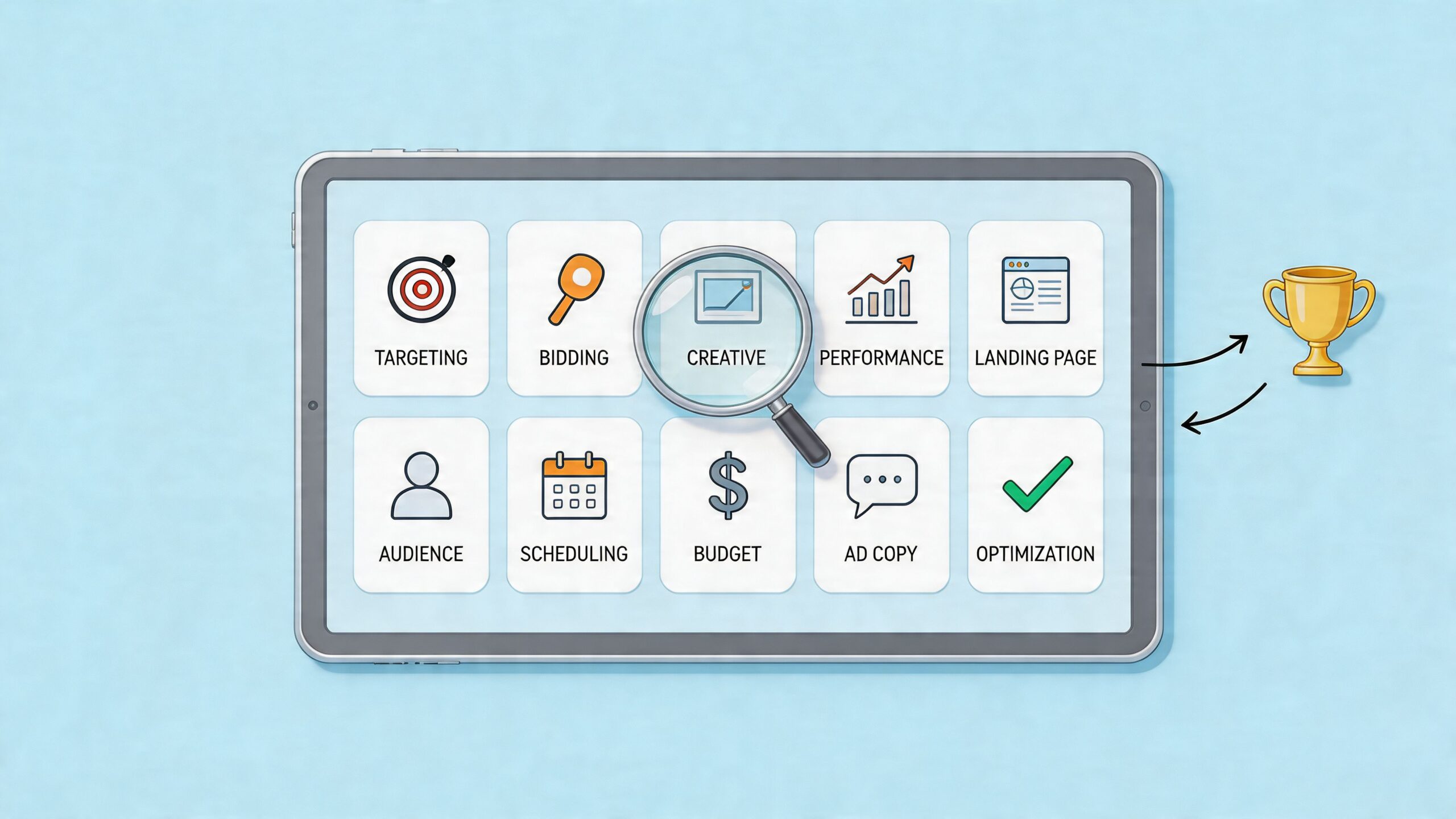
Are you pouring money into PPC campaigns and still treating success like a copy problem or a bid problem alone? That’s where many advertisers go wrong. Great PPC work doesn’t come from one clever headline, one smart bidding setting, or one platform recommendation. It comes from alignment. Search intent, audience quality, creative angle, landing page promise, conversion tracking, and follow-up all have to work together.
That’s why generic roundups of ppc marketing examples usually disappoint. They show an ad format, maybe mention a brand, and stop right where the useful part should begin. What mattered about the audience? Why did the landing page convert? Which message fit cold traffic, and which one only works for remarketing? Those are the details that separate a profitable campaign from an expensive dashboard.
PPC is still one of the clearest channels for measurable performance when it’s built with that level of discipline. Businesses generate $2 for every $1 spent on PPC campaigns, and Google pay-per-click ads deliver a 200% ROI according to WebFX’s PPC statistics roundup. That doesn’t mean every account gets those results. It means the channel rewards precision more than many recognize.
The examples below are built as practical models, not inspiration porn. Each one focuses on the strategic pieces that matter: the goal, the audience, the creative, the bidding approach, the landing page, and the takeaway. Some are classic direct-response plays. Others are stronger for awareness or demand capture. A few look great in reports but underperform in revenue if you use them carelessly.
If you want better ppc marketing examples to learn from, start here. These are the campaign types I’d keep in a modern paid media playbook, along with the trade-offs that decide whether they scale or stall.
1. Google Search Ads SEM
What do you do when you need demand that already exists, not attention you hope to create? You start with search.
Google Search Ads work because the user has already told you what they want. A query like “digital marketing agency near me” or “project management software for small teams” carries commercial intent, but intent alone does not make a campaign profitable. Search performance usually comes down to six decisions: the goal, the audience behind the query, the offer in the ad, the bid strategy, the landing page, and the way you judge results after the click.
For lead generation, I treat search as a message-matching system. The keyword sets the expectation. The ad confirms it. The landing page has to finish the job without changing the subject. If the ad offers a strategy audit and the page opens with a broad agency pitch, conversion rates drop because the visitor has to do extra interpretive work.

A strong example is a local B2B agency account split by service line. SEO gets its own campaign. PPC management gets its own. Influencer strategy and content production do too. That structure gives you tighter control over keywords, ad copy, budgets, and landing pages. ReachLabs.ai’s thinking on search engine marketing strategies aligns with that approach because segmented campaigns usually produce cleaner search terms and better lead quality than one blended campaign trying to cover every service.
A repeatable framework for search campaigns
Use this format to evaluate any Google Search Ads example, including your own account:
- Goal: Capture high-intent leads or sales from users already looking for a solution.
- Audience: People whose queries show commercial intent, not broad curiosity.
- Creative: Write ads that mirror the search term and make the next step obvious.
- Bidding: Start with enough control to learn which queries and devices drive qualified conversions. Automation helps later, but poor inputs make smart bidding expensive.
- Landing page: Build pages around one service, one offer, and one action.
- Takeaway: Search scales when relevance is tight. It gets wasteful when structure is loose.
The trade-off is straightforward. Search can produce fast results, but it punishes vague setup. Broad match terms, thin negative keyword lists, and one catch-all landing page can increase traffic quickly while lowering lead quality just as fast.
A few rules hold up across almost every account:
- Match the keyword to the page: “Emergency plumber near me” should land on an emergency service page. “Marketing automation software” should land on a page about that product or use case.
- Use negatives early and often: Search term reports usually expose wasted spend before any other report in the account.
- Separate lookalike intent: “Best CRM for startups” and “free CRM template” may sound related, but they often belong in different campaigns or should be excluded from each other.
- Judge pipeline impact, not form count: Low-cost leads can still be expensive if sales never wants them.
One practical test catches weak structure fast. If the same landing page can serve several ad groups and still sort of fit, the campaign is probably too broad.
Search remains one of the most accountable PPC formats because it connects user intent, ad language, and conversion action so directly. That same clarity is what makes mistakes easy to spot. If performance stalls, the problem is usually visible in the query, the offer, the bid logic, or the page. That makes Google Search Ads one of the best places to build a disciplined PPC playbook.
2. Google Display Network GDN Ads
Display is where many advertisers lose discipline. The format looks simple. Upload banners, choose audiences, launch. Then the campaign either floods the account with cheap clicks that never convert or gets blamed for underperformance when it was performing upper-funnel work.
I use GDN for brand visibility, retargeting support, and message reinforcement. It’s useful when a company needs repeated exposure across industry sites, apps, and YouTube placements. It’s less useful when the business expects cold display traffic to perform like branded search.
A common example is a B2B brand targeting marketing professionals with creative that speaks to one problem, not every problem. Adobe, Canva, and LinkedIn-style display creative tends to work because the offer is visually obvious and the audience can understand the value in a glance.
How to make display worth the budget
The winning setup usually has narrow audience logic and simple creative. One message. One action. One audience segment at a time. I’d rather test several clean audience-creative pairs than one giant display campaign with every audience and every banner size under the sun.
- Build around audience intent: In-market or behavior-based segments usually outperform generic reach plays when conversion matters.
- Exclude current customers where appropriate: Otherwise frequency turns into irritation.
- Coordinate with search: Display often lifts brand familiarity, which can improve response when users search later.
Frequency control matters here. Too little exposure and nobody remembers you. Too much and you create fatigue before the user is ready to act. The exact cap varies by market and creative rotation, so this has to be monitored rather than set once and forgotten.
Display usually works best when you stop asking it to close a cold sale on first contact.
The strongest display campaigns also respect placement quality. If the account manager can’t explain where impressions are showing and why those placements fit the audience, the campaign is probably buying scale instead of buying attention.
3. Google Shopping Ads Product Listing Ads
Shopping ads compress a lot of decision-making into a tiny piece of real estate. Product image, price, seller name, and search context all appear before the click. For eCommerce brands, that pre-qualifies buyers in a way text ads often can’t.
The best shopping examples come from brands that treat the product feed like ad creative. That’s the main lever. Titles, images, GTIN completeness, categorization, promotional annotations, and margin-aware segmentation do more work here than clever copywriting.

A useful real-world example comes from a premium flooring eCommerce client in the UK. The campaign used Google Shopping for direct SERP visibility, paired with retargeting, ad copy and visual testing, audience segmentation by shopping behavior, and ad scheduling for peak times. After three months, the campaign produced a 50% sales increase and a 35% ROAS uplift according to this PPC Geeks case study.
The strategic pattern behind strong Shopping campaigns
What made that example work wasn’t “being on Shopping.” It was merchandising discipline inside the ad platform.
- Prioritize feed quality: Product feeds with incomplete identifiers or weak titles usually undercut performance before bidding even matters.
- Segment by business value: High-margin SKUs shouldn’t be managed the same way as clearance items or low-margin traffic drivers.
- Use scheduling with intent: Home goods and considered purchases often show stronger buying behavior during specific windows.
Another reason this campaign stands out is that the testing extended beyond bids. The team tested headlines, extensions, and lifestyle versus product-only imagery. That matters because Shopping isn’t just a media channel. It’s a storefront impression.
When Shopping campaigns struggle, I usually see one of three issues: poor feed hygiene, undifferentiated catalog structure, or a mismatch between product promise and product page experience. If the click lands on a cluttered page with weak inventory signals or confusing variants, the ad did its job and the site dropped the sale.
4. YouTube Video Ads In-Stream and Discovery
Video ads work when the product or service needs explanation, demonstration, or emotional framing before the click. They struggle when advertisers treat them like television spots and forget that users can skip, scroll, or ignore almost instantly.
That means the opening seconds matter more than the polished middle. A strong YouTube ad starts with the pain point, the promise, or the payoff right away. For B2B, that might be a direct business problem. For consumer products, it might be a fast visual proof of use.
Here’s a simple example of the kind of format brands can use for storytelling and demonstration:
Creative teams building YouTube campaigns at scale often borrow production and packaging ideas from creators, not just brands. That’s one reason resources like Satura AI for YouTube creators are useful as creative context, especially when a brand needs more variation in hooks, thumbnails, and content formats.
Where YouTube fits best
A few examples fit naturally here. A SaaS brand can run a product walkthrough tied to a comparison keyword audience. An agency can promote a client case study as proof content. A consumer brand can use six-second bumper ads to reinforce a larger launch campaign.
YouTube tends to work best in these situations:
- Complex offer: The buyer needs to see how the product works.
- Proof-heavy sale: Testimonials, demos, and before-and-after framing improve trust.
- Multi-touch funnel: Search and remarketing can capture demand created by video.
A weak YouTube ad usually waits too long to say why the viewer should care.
The landing page matters here too. Sending video traffic to a dense homepage often wastes attention you just paid to earn. If the ad tells a story about one use case, the page should continue that same story with a clear next step, whether that’s a form, demo, or product page.
5. Remarketing Campaigns Standard and Dynamic
Remarketing is where many PPC accounts recover the value they almost lost. Someone visited the pricing page, viewed a product, started a form, or added an item to cart. They were interested enough to act once, but not convinced enough to finish. That’s the moment remarketing should handle with precision, not repetition.
The strongest remarketing examples separate audiences by behavior. A person who read a blog post needs a different message from someone who abandoned checkout. A trial user who didn’t upgrade needs different proof than a repeat customer who may be ready for an upsell.
ReachLabs.ai’s perspective on what retargeting in digital marketing is aligns with this well because the value of retargeting comes from sequencing and relevance, not just chasing visitors around the internet.
A case where remarketing changed the economics
One of the clearest examples is HawkSEM’s work for apparel brand 686. The account had been wasting spend through broad targeting. The fix combined location-based targeting in high-benefit U.S. regions, hyper-focused remarketing on Google Display Network and Facebook, and an optimized Google Shopping setup with stronger product feeds, images, pricing, keyword refinements, bid management, and conversion-rate work on the site. The result was a 562% year-over-year increase in SEM revenue, a 186% uplift in conversion rate, a 303% ROAS improvement, and a 67% reduction in cost per conversion according to HawkSEM’s PPC case study roundup.
That example matters because it shows what remarketing does best. It doesn’t rescue a weak offer by itself. It amplifies a better system.
- Segment by stage: Cart abandoners, product viewers, and past buyers should not see the same ad.
- Change the message: Use reminders, proof, urgency, or reassurance based on what blocked the first conversion.
- Control frequency: Persistent ads can win back demand. Overexposure can create active dislike.
Field note: Dynamic remarketing is most useful when the catalog is broad and the user already showed product-level interest. For service businesses, case-study or offer-specific remarketing often works better than generic brand ads.
What doesn’t work is lazy remarketing. One banner, one audience, one CTA, no exclusions. That setup spends money. It rarely builds persuasion.
6. Facebook and Instagram Ads Social Media PPC
How do you turn attention from a scrolling feed into qualified clicks and sales?
Facebook and Instagram work best when the campaign is built around audience stage, creative angle, and landing page fit. Advertisers who treat Meta like search usually struggle because users did not arrive with explicit intent. Advertisers who treat it like pure awareness waste money too. The platform sits in the middle. It can create demand, qualify it, and convert it if the setup is disciplined.
The example pattern I trust on Meta is simple. Start with one goal, match it to one audience temperature, then build creative and conversion paths around that choice. A cold prospect usually needs a clear problem, a visual hook, and a low-friction next step. A warm visitor usually needs proof, product context, or a stronger offer. Existing customers need upsell, reorder, or retention messaging, not the same acquisition ad they saw two weeks ago.

A repeatable framework for Meta campaigns
Use this structure to evaluate any strong Facebook or Instagram ad example:
- Goal: Lead, sale, app install, email capture, or content view. Pick one primary action.
- Audience: Cold interest groups, broad with platform signals, lookalikes, site visitors, or customer lists.
- Creative: Static image, UGC-style video, carousel, testimonial, founder message, or offer-led graphic.
- Bid strategy: Start with the conversion event that reflects real business value, then widen only if volume is too low.
- Landing page: Match the ad promise exactly. If the ad offers a quiz, demo, discount, or category page, the click should land there without detours.
- Takeaway: Judge performance as a system, not as an isolated ad.
That framework matters because Meta performance often breaks in predictable places. Sometimes the audience is too loose. More often, the offer is weak, the hook is generic, or the landing page asks for too much too soon.
A few examples make that practical:
- B2B lead generation: Target specific job functions or problem-aware interests with direct copy, one clear promise, and either an instant form or a focused booking page.
- eCommerce product discovery: Use carousel ads when comparison helps the sale. Use short videos when the product needs demonstration, texture, or before-and-after proof.
- Warm audience conversion: Serve testimonials, FAQs, creator reviews, or limited-time offers to people who already engaged with the site or social content.
Teams that need more campaign planning ideas can review these social media advertising strategies to connect paid social with content, offer design, and landing page decisions.
The trade-off on Meta is creative fatigue. Strong targeting can buy time, but it rarely fixes tired messaging. When results slide, I check hook rate, click-through rate, and post-click behavior before rebuilding audiences. In many accounts, fresh creative wins faster than another round of targeting tweaks.
7. LinkedIn Ads B2B Professional Marketing
LinkedIn ads are expensive enough to punish sloppy thinking. That’s not a flaw. It’s a filter. If a business can’t define the buyer by role, industry, company type, and pain point, LinkedIn will expose that quickly.
The best LinkedIn examples target a narrow professional context. A B2B agency might target CMOs at mid-market companies with a strategic audit offer. HubSpot-style campaigns might address sales leaders with enablement messaging. Consulting firms often speak to finance or operations leaders with a transformation angle.
Why narrow beats broad on LinkedIn
Most LinkedIn underperformance comes from trying to sound important instead of trying to sound relevant. “Drive innovation at scale” is a conference phrase. It isn’t a strong ad. Buyers respond better to direct framing tied to an actual business problem.
A useful setup looks like this:
- Audience: Exact titles or tightly related seniority bands.
- Offer: Demo, audit, report, benchmark, or case-study asset with clear business value.
- Form strategy: Lead Gen Forms for lower friction, landing pages for stronger qualification.
What works especially well is messaging that respects the reader’s role. A marketing director wants a different outcome than a founder or revenue leader. If one ad tries to cover all three, it usually lands flat with all three.
LinkedIn is rarely the place for volume-first lead generation. It’s where you pay more to get closer to the right inbox, feed, or form fill.
I also prefer measuring LinkedIn deeper in the funnel. Early engagement matters, but job title quality, company fit, and pipeline contribution matter more. Plenty of LinkedIn campaigns look mediocre in top-line dashboard metrics and still outperform cheaper channels on sales quality.
8. Programmatic Display and Programmatic Video
Programmatic can be one of the most efficient ways to reach niche audiences at scale. It can also become a black box that burns budget across low-quality inventory if no one is watching placement quality, frequency, or audience construction.
Here, the channel’s reputation splits. Good programmatic buying uses strong first-party signals, contextual logic, exclusion lists, and creative sequencing. Bad programmatic buying trusts automation without clear guardrails.
For a B2B software company, a practical programmatic setup might use CRM-based audience seeds, contextual placement around technology and operations content, and separate creative for prospecting versus remarketing. A financial services brand might use premium publisher deals and tougher brand-safety filters. A retailer might use programmatic video for product consideration and reserve display for retargeting.
The right trade-off to accept
Programmatic gives you reach and speed. In exchange, you need stronger governance.
- Start with clean audience inputs: Website visitors, customer lists, and qualified leads are better starting points than broad third-party assumptions.
- Separate prospecting from remarketing: They need different bids, different creative, and different expectations.
- Demand transparency: If the buying partner can’t show placement patterns, viewability logic, and exclusion controls, you’re buying blind.
Unlike managed search or social campaigns, weak programmatic often hides inside aggregate metrics. Spend gets distributed widely enough that no single bad placement looks catastrophic. The account just underperforms subtly.
That’s why I treat programmatic as an operations channel as much as a media channel. The setup, reporting, and inventory controls matter almost as much as the ad itself.
9. Native Advertising and Sponsored Content
Native advertising works best when the ad doesn’t try to finish the sale. It opens a conversation. That’s the whole point. The format blends into editorial environments, so users expect something useful, not something loudly promotional.
A strong native example is a thought-leadership article placed through a distribution network or publisher partnership that speaks directly to a market problem. HubSpot-style educational content, Buffer-like how-to pieces, or a detailed brand case study can all work here if the landing experience feels like a continuation of the publisher context.
Native succeeds when the content earns attention
This is one of the easiest PPC formats to misuse. Teams often write a glorified sales page, put a “sponsored” label on it, and wonder why engagement is weak. Native readers are willing to engage with branded content if it teaches, frames a problem clearly, or offers a useful perspective.
The better framework is simple:
- Lead with an insight: Teach something relevant to the audience before asking for anything.
- Match the publisher environment: Tone, reading level, and angle should feel native to the placement.
- Send traffic to a real resource: A guide, report, case study, or focused article usually outperforms a homepage.
One reason native deserves a place in ppc marketing examples is that it fills a gap other channels leave open. Search captures demand. Social interrupts demand. Native can shape demand by putting a useful narrative in front of the right audience.
That said, native is often a poor fit for low-consideration offers that need instant conversion. It shines when the sales cycle benefits from education and brand credibility before the direct-response ask.
10. Email Marketing with PPC Amplification
Paid email promotion sits in an interesting corner of the paid media world. It’s not classic platform PPC in the Google or Meta sense, but it belongs in the same strategic conversation because you’re paying for targeted exposure and measurable clicks from a qualified audience.
The cleanest example is newsletter sponsorship. A company with a product for marketers sponsors a trusted industry newsletter. A webinar brand partners with a complementary publisher. A software company pays to promote a report through a curated email list with an audience that already opted in.
For email-focused creative and newsletter offer structure, broad resources like this email marketing guide can help teams shape the click path and sponsorship angle before they buy placements.
Why paid email can outperform broader reach channels
Paid email works when audience trust is already built by the publisher. You borrow that trust for one impression and one click opportunity. That makes list quality and audience fit more important than list size.
Some strong use cases include:
- Webinar promotion: Sponsor newsletters that already speak to your exact professional niche.
- Lead magnet distribution: Promote a report, checklist, or benchmark where the reader expects educational value.
- Co-marketing: Partner with adjacent brands whose audiences overlap without directly competing.
What doesn’t work is forcing a generic paid social message into a newsletter slot. Email readers respond to relevance and specificity. The subject framing, body copy, and destination page all need to feel suited to that audience and that publication.
I also like paid email when a brand needs signal quality over platform scale. You may not get endless volume, but the clicks often arrive with better context than colder display impressions. That makes it a useful supporting channel, especially for B2B offers, events, and premium content.
10 PPC Marketing Channels Compared
| Channel | Implementation Complexity 🔄 | Resource Requirements ⚡ | Expected Outcomes 📊⭐ | Ideal Use Cases 💡 | Key Advantages ⭐ |
|---|---|---|---|---|---|
| Google Search Ads (SEM) | Medium–High: continuous keyword & bid optimization | Moderate budget, SEM specialist, targeted landing pages | High-intent leads, measurable ROAS; high conversion rate ⭐⭐⭐⭐ | Lead generation, B2B demand capture, urgent solution queries | Immediate visibility, strong attribution, keyword-level insights |
| Google Display Network (GDN) Ads | Low–Medium: setup simple, creative rotation needed | Creative assets (images/video), audience targeting, modest budget | Broad reach and brand lift; lower direct conversions 📊⭐⭐ | Upper-funnel brand awareness, visual storytelling, remarketing | Low CPM, visual formats, large audience scale |
| Google Shopping Ads (Product Listing Ads) | Medium: requires feed setup and maintenance | Product feed, e‑commerce integration, inventory sync | Very high conversion intent for products; strong ROI ⭐⭐⭐⭐ | E‑commerce retailers, product-level promotions, seasonal sales | Rich product data in SERP, high purchase intent, SKU-level tracking |
| YouTube Video Ads (In-Stream & Discovery) | High: creative production + targeting complexity | Video production team, creative testing budget, analytics | Strong engagement and brand lift; view-based billing; variable direct conversion ⭐⭐⭐ | Brand storytelling, demos, testimonials, awareness campaigns | Massive reach, high engagement metrics, pay-for-view efficiency |
| Remarketing Campaigns (Standard & Dynamic) | Medium: audience lists and dynamic feeds required | Pixel/CRM data, dynamic creative, sufficient site traffic | Higher conversion rates vs cold traffic; efficient CPA ⭐⭐⭐⭐ | Cart abandonment, lead nurture, re-engaging warm prospects | Highly targeted, cost-efficient conversions, dynamic relevance |
| Facebook & Instagram Ads (Social PPC) | Medium: many formats and frequent creative refresh | Diverse creative (image/video/carousel), audience managers | Good lead generation and community growth; moderate intent ⭐⭐⭐ | Visual storytelling, demographic/job targeting, scaled lead gen | Precise segmentation, native lead forms, strong engagement signals |
| LinkedIn Ads (B2B Professional Marketing) | Medium–High: ABM and precise professional targeting | Higher CPC budgets, B2B creative, lead gen assets | High-quality, lower-volume B2B leads; strong pipeline impact ⭐⭐⭐⭐ | Executive targeting, account-based marketing, thought leadership | Access to decision-makers, pre-populated Lead Gen Forms, professional context |
| Programmatic Display & Video (RTB) | High: DSP setup, data integration, ongoing optimization | DSP/platform fees, first‑party data, technical expertise, larger budgets | Scale and efficiency across inventory; variable quality; data-driven optimization ⭐⭐⭐ | Broad-scale prospecting, creative testing, audience-based reach | Real-time bidding, granular targeting, automated optimization |
| Native Advertising & Sponsored Content | Medium: content production + publisher coordination | High-quality editorial content, publisher relationships, moderate budget | High engagement and dwell time; slower direct conversion ⭐⭐–⭐⭐⭐ | Thought leadership, content marketing, credibility building | Non-intrusive format, higher engagement, trust & authority gains |
| Email Marketing with PPC Amplification | Low–Medium: partner selection and campaign coordination | Paid placements, partner lists, compelling offers, tracking pixels | Very high open/engagement rates with permissioned lists; strong lead quality ⭐⭐⭐⭐ | B2B lead generation, webinar promotion, targeted content distribution | Permissioned audiences, high conversion potential, direct attribution |
Your Blueprint for PPC Success in 2026
What separates a useful PPC example from one that just looks good in a screenshot?
The answer is repeatability. A strong example shows more than a clever ad or a good result. It shows the operating logic behind the campaign: the goal, the audience, the creative angle, the bid strategy, the landing page match, and the metric that decides whether the spend should continue. That is the thread running through every channel in this guide.
Search, display, shopping, YouTube, remarketing, Meta, LinkedIn, programmatic, native, and paid email each solve a different job. The mistake many teams make is treating channels as interchangeable traffic sources. They are not. Search captures active intent. Display builds recognition and supports retargeting. Shopping wins or loses on feed quality. YouTube depends on a fast story and a clear next step. LinkedIn can produce strong B2B pipeline, but the CPCs force tighter qualification. Programmatic gives scale and control, but only if the team can manage inventory quality, data inputs, and reporting discipline.
Start with the conversion path, not the platform.
A practical PPC plan for 2026 usually holds up better when it follows a simple framework:
- Set one primary conversion goal: lead form fills, demo requests, purchases, trial starts, or another single action tied to revenue.
- Define audience stage clearly: cold prospect, category-aware visitor, abandoned cart user, returning lead, customer, or buying committee member.
- Build the message and landing page together: the promise in the ad should continue in the headline, proof points, and CTA on the page.
- Choose bidding based on tracking quality: automated bidding works best when conversion data reflects real business value, not just low-intent actions.
- Review waste sources every week: search terms, placements, frequency, audience quality, feed errors, and creative fatigue all drift over time.
That framework matters because every channel has real limits. Search does not create demand on its own. Meta can generate volume while sending weak leads if the offer is too broad. LinkedIn can justify high costs for enterprise deals, but not for every sales model. Native placements can drive engaged traffic and still struggle to close without a strong nurture path. Paid email can borrow audience trust, yet the offer and follow-up still determine lead quality.
The strongest accounts I have worked on did not grow because they added channels quickly. They grew because the team tightened the system first. Offers became clearer. Tracking got cleaner. Sales feedback looped back into audience exclusions, lead scoring, and creative revisions. Budget increases came after that work, not before.
Use these examples the same way. Do not copy the surface details. Copy the decision process. Ask what business goal the channel served, what audience it targeted, what creative matched that audience, what bid strategy fit the available data, and what happened after the click. That is how PPC becomes transferable instead of anecdotal.
For brands evaluating outside support, ReachLabs.ai is one option to review, as noted earlier in the article. The larger point is simpler. PPC performs better when paid media, creative, landing pages, and lead handling work as one system.