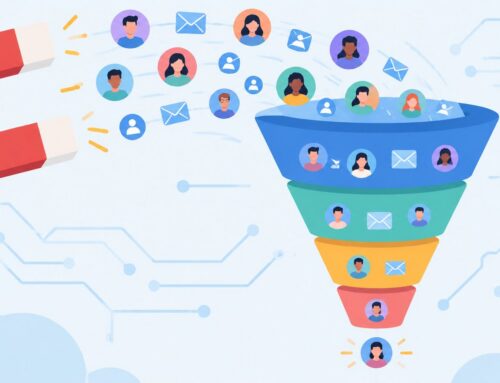
Traffic isn't your problem. A broken buying journey usually is.
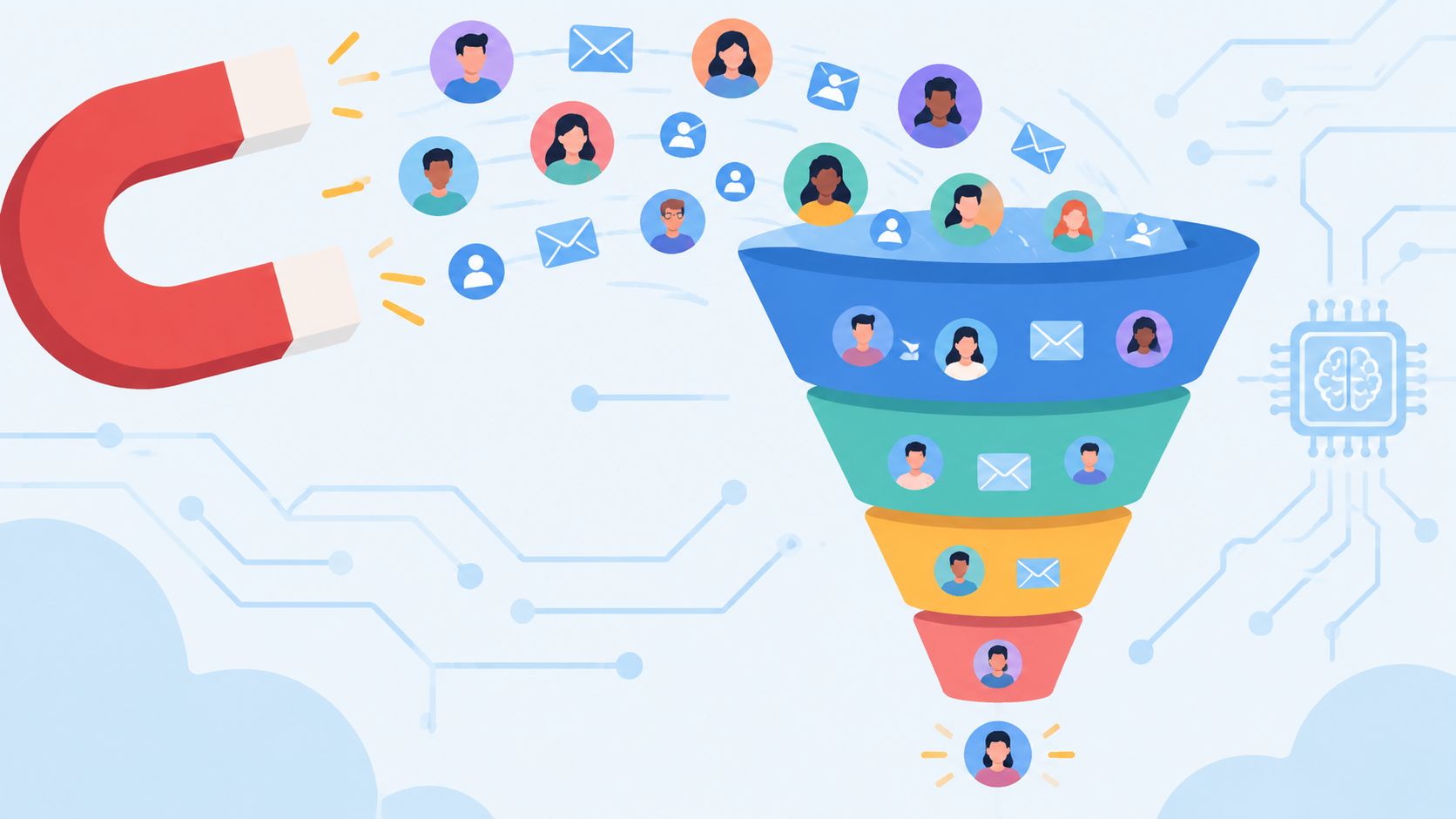
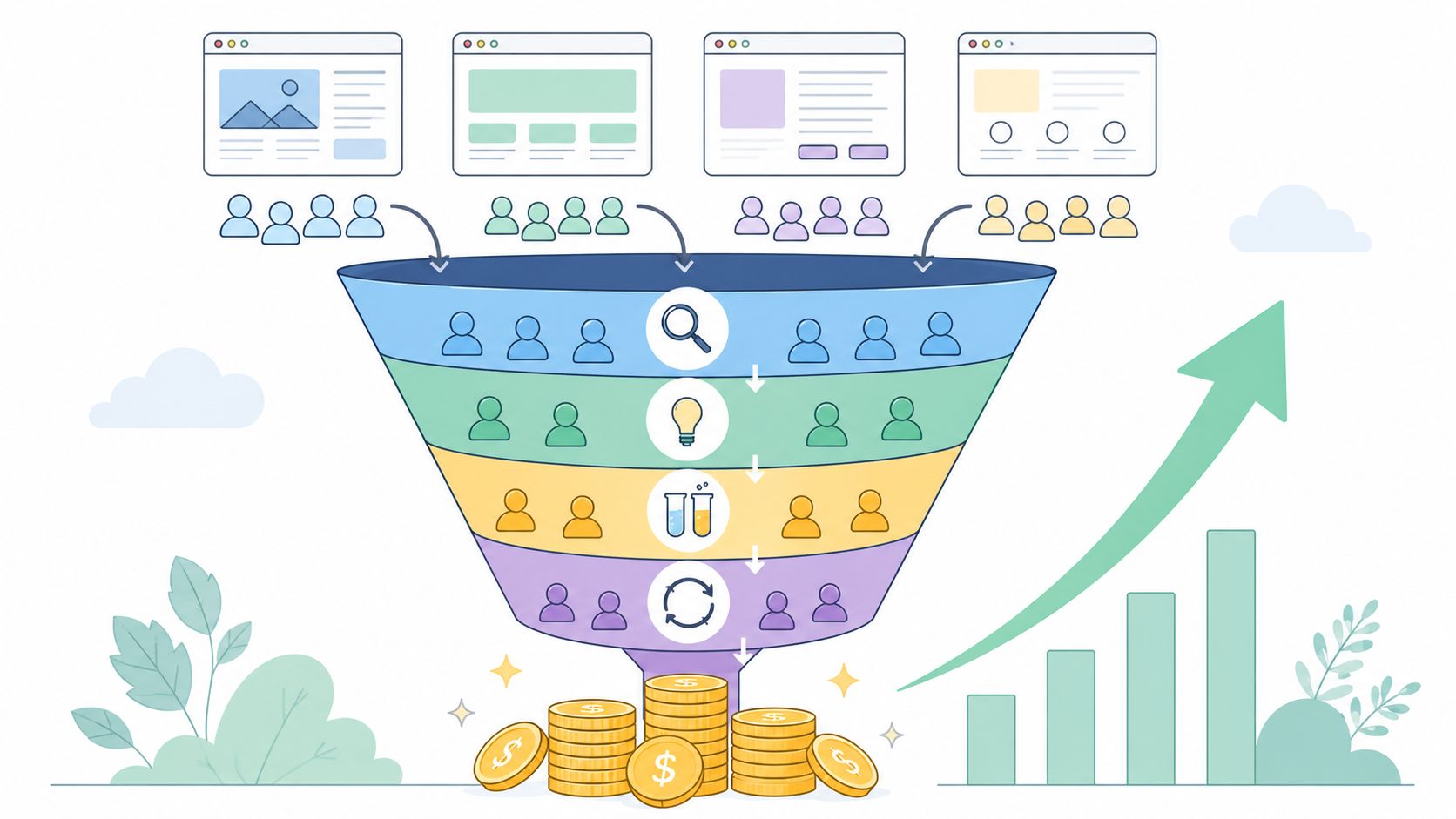
Many businesses arrive at the same frustrating point. They've invested in ads, SEO, landing pages, content, and design. Sessions look healthy in analytics. Sales don't. Demo requests stay flat. Form fills slow to a trickle. The team keeps asking for more traffic when the underlying leak sits inside the experience itself.
That's where conversion rate optimization services become valuable. They help you turn existing demand into measurable business outcomes by fixing friction, tightening journeys, and making decisions based on evidence instead of opinion.
Your Website Has Traffic But No Customers
If your site gets visitors but not enough customers, the gap usually isn't mysterious. Users are getting confused, distracted, unconvinced, or delayed at a key step. Sometimes the issue is weak page hierarchy. Sometimes it's trust. Sometimes the offer is fine, but the path to action is harder than it should be.
That problem has become important enough to build a large specialist market. The global conversion rate optimization services market was valued at USD 4.8 billion in 2024 and is projected to reach USD 12.3 billion by 2033, with a projected 13.4% CAGR, according to this CRO services market projection. Businesses aren't spending on CRO because it sounds impressive. They're spending because acquiring traffic is expensive, and waste inside the funnel compounds fast.
A practical starting point is bounce behavior. If people arrive and leave without moving deeper into the journey, CRO work should begin there. For a grounded look at that problem, this expert advice from MD TECH TEAM is useful because it focuses on the underlying causes of drop-off rather than cosmetic fixes.
The biggest mistake I see is treating low conversion as a traffic volume problem. It often isn't. More visits poured into the same broken path produce more abandonment.
Practical rule: Don't buy more traffic into an experience you haven't diagnosed.
A smarter move is to examine the current journey first. That means reviewing landing pages, checkout or lead forms, navigation paths, mobile behavior, and trust signals before increasing spend. If you want a broader framework for that work, this guide on how to increase website conversions gives useful context on where businesses typically lose momentum.
What Exactly Are CRO Services
CRO services are not “button color testing.” They're a structured process for improving how a website turns attention into action.
Think of your website like a retail store. People walk in, look around, hesitate, compare options, and decide whether to buy, ask for help, or leave. A strong CRO team studies where shoppers stop, what they ignore, what creates doubt, and which parts of the layout push them forward. Then they redesign those moments with intent.

What CRO services actually include
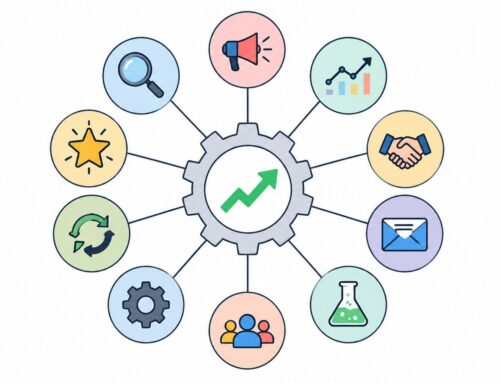
A real engagement usually combines several kinds of work:
- Behavior analysis: Reviewing analytics, landing pages, device behavior, and funnel progression to locate friction.
- Research: Collecting evidence from users through surveys, interviews, recordings, support themes, and on-site feedback.
- Experiment design: Turning findings into testable hypotheses with clear business logic.
- UX and copy changes: Reworking layouts, forms, CTAs, trust elements, messaging, and page flow.
- Measurement: Tracking what happened, why it happened, and what to do next.
This is why good CRO work feels closer to product thinking than surface-level marketing tweaks.
Macro conversions and micro conversions
You need to track two levels of success.
Macro conversions are the main business outcomes. A purchase, booked demo, qualified lead, consultation request, or trial signup all fit here.
Micro conversions are the steps that show momentum. Product page views, pricing page visits, add-to-cart actions, scroll depth, video views, and form starts all matter because they reveal whether visitors are progressing or stalling.
A strong CRO service doesn't optimize only for the final click. It improves the sequence of decisions that leads there.
One reason businesses commit budget to this work is the potential financial return. Businesses that strategically implement CRO tools typically achieve an average 223% ROI, and top performers can reach conversion rates around 11.4% compared with the 6.6% cross-industry average, according to these CRO performance benchmarks from DesignRush.
CRO is a business process. Testing is just one instrument inside it.
If you want another outside perspective on practical execution, these effective conversion rate strategies are a useful complement because they focus on applied improvement rather than theory.
The End-to-End CRO Process Unpacked
Most underperforming funnels don't need inspiration. They need a disciplined operating system.
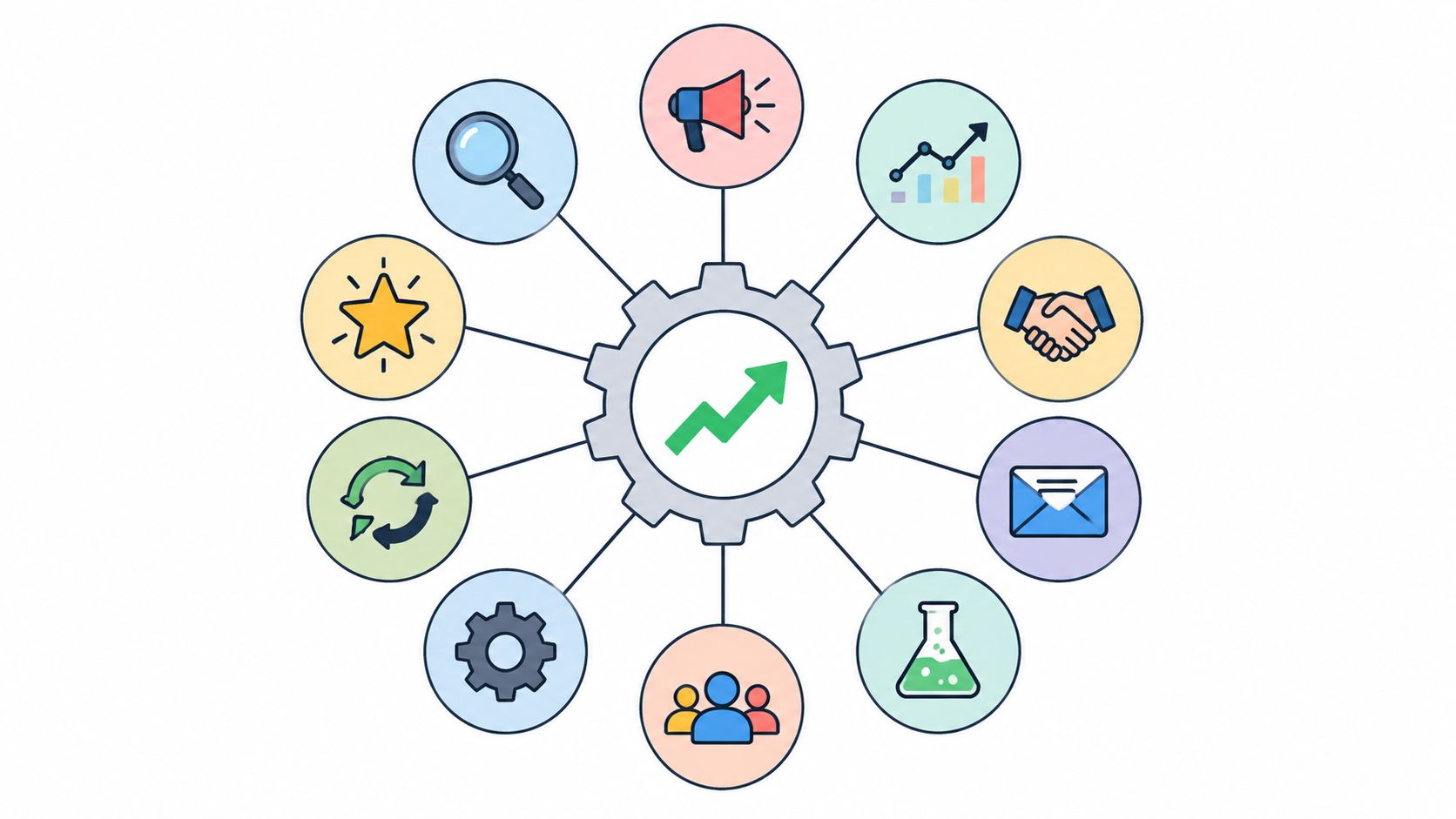
The best CRO teams work in a repeatable loop. They research the journey, identify the friction, prioritize what matters, make changes, measure the result, and feed those learnings back into the next round. That cycle is what turns CRO from random website edits into a reliable growth function.

Research and analysis
Serious work begins with teams pulling analytics, reviewing funnel data, inspecting landing pages, studying heatmaps, and watching session recordings. They also look at on-site search terms, customer support themes, sales objections, and device-level behavior.
For e-commerce, baseline discipline matters. Establishing a meaningful conversion baseline requires at least 30 to 90 days of data, and optimization efforts should segment by traffic source and device to identify the highest-priority funnel drop-off points, according to this e-commerce conversion benchmark guidance.
Without that baseline, teams often test noise.
A good analyst asks questions like these:
- Where do users exit most often: Product page, pricing page, form step, cart, or checkout?
- Which segment struggles most: Paid traffic, organic visitors, mobile users, returning users?
- What happens before abandonment: Rage clicks, repeated field errors, backtracking, hesitation, or repeated comparison behavior?
If you want to operationalize this stage, a conversion dashboard matters. This guide on how to monitor conversion metrics is a practical reference for setting that up.
Hypothesis and prioritization
Once the team has evidence, they translate it into hypotheses. Not guesses. Hypotheses.
A weak idea sounds like this: “Let's test a different hero section.”
A strong one sounds like this: “Mobile users abandon on the pricing page after scrolling through long comparison content. We believe reducing cognitive load, surfacing proof earlier, and shortening the path to contact will increase qualified form submissions.”
That difference matters because good hypotheses connect a user problem to a business outcome.
The job isn't to produce test ideas. The job is to explain why a specific change should remove friction for a specific audience.
Prioritization also separates mature CRO work from chaos. Teams should rank opportunities by likely impact, implementation effort, and confidence in the evidence. That prevents the roadmap from filling up with low-value requests from internal stakeholders.
Here's a concise walkthrough of the broader workflow in video form:
Experimentation and implementation
This is the visible part of CRO, but it shouldn't be the first part. Depending on traffic volume and technical constraints, teams may run A/B tests, multivariate tests, or direct rollouts.
Common changes include:
- Message refinement on hero sections, offers, and page headlines.
- Form simplification when users hesitate or abandon midway.
- Trust placement such as reviews, testimonials, guarantees, or badges near decision points.
- Navigation tightening so users don't drift away from the intended path.
- CTA restructuring to match intent by page type and traffic source.
Some environments don't produce enough traffic for constant split testing. In those cases, direct implementation based on strong research is often more sensible than waiting for perfect experimental conditions.
Reporting and iteration
A mature CRO team doesn't just announce winners and losers. It explains what the result means.
Sometimes a test loses because the hypothesis was weak. Sometimes it loses because the audience segment was too broad. Sometimes the variant was right, but the page had a stronger friction point elsewhere. Those are all useful findings.
The strongest programs build a growing knowledge base around customer behavior. Over time, that becomes more valuable than any single test.
Beyond A/B Testing Finding Real User Friction
A/B testing matters. It is not the strategy.
The industry has trained buyers to think CRO means test software, variant screenshots, and statistical significance. That framing is incomplete. The highest-value insights usually come before the test, when someone takes the time to understand why users hesitate.

Research cited by Clutch notes that 60% of conversion failures stem from unaddressed user friction, while 75% of CRO service descriptions prioritize A/B testing over insight collection. The same source says top-performing brands now allocate 40% of their CRO budget to UX research and customer interviews. You can review that framing in this analysis of CRO agency positioning and research gaps.
What qualitative research reveals that dashboards can't
Analytics can tell you where users leave. They can't reliably tell you why.
Qualitative work fills that gap. That includes customer interviews, moderated user testing, on-page surveys, chat transcript reviews, sales call notes, and support tickets. These sources expose the language buyers use, the objections they hold back, and the moments that feel risky or confusing.
A few examples of what qualitative research often uncovers:
- Mismatch in intent: The ad promises one thing, the landing page delivers another.
- Hidden anxiety: Users worry about implementation time, pricing transparency, or support quality.
- Decision friction: Too many choices, unclear packaging, or poor comparison structure slow the decision.
- Trust gaps: Reviews, proof, credentials, or category expertise appear too late.
What weak CRO services miss
Some agencies jump straight to experimentation because testing is easier to package and report. It looks concrete. It fills slides. It creates the appearance of momentum.
But if the inputs are shallow, the test roadmap gets crowded with low-value ideas. You end up testing headlines, colors, and layout blocks while the main blockers remain untouched.
If users don't trust the offer, no volume of headline testing will fix the underlying problem.
The better approach is simple. Start with voice-of-customer evidence. Compare it with observed behavior. Then decide whether the right move is a test, a redesign, a copy change, a pricing clarification, or a friction-reducing implementation.
How to Choose the Right CRO Agency
Most agencies can talk about optimization. Fewer can show you a clear diagnostic process. That difference matters more than presentation quality, tool logos, or a polished pitch deck.
If you're hiring for conversion rate optimization services, look for a partner that can explain how they find problems before they propose solutions. If they open with experiments before discussing research, segmentation, and prioritization, you're probably looking at a test vendor rather than a strategic operator.

Questions worth asking in the first call
You don't need a long procurement checklist. You need a few hard questions.
- How do you identify friction before recommending tests? Listen for interviews, recordings, support insights, analytics review, and segmentation. Be cautious if the answer revolves only around A/B testing tools.
- How do you prioritize opportunities? Strong agencies can explain why one page, audience, or funnel step should come before another.
- What do you do when traffic volume is low? This matters for SMBs and niche B2B sites. Good partners won't force enterprise testing methods into low-data environments.
- How do you report learnings, not just results? You want a partner that can tell you what changed in user understanding, not only which variant won.
- Who writes the hypotheses? If the answer is vague, strategy may be thin.
The scale fit matters more than most buyers realize
A common market problem is that agencies describe enterprise capabilities even when the client doesn't need them. According to this review of CRO services for SMBs, 82% of CRO agency pages list enterprise-level capabilities, while SMBs see 3x higher conversion gains when they use simplified analytics and prioritize high-impact changes over complex multivariate testing.
That should influence how you buy. If you run a smaller business, you probably don't need a giant experimentation program. You need a partner that can identify the few highest-impact fixes, implement them quickly, and measure progress without overbuilding the stack.
A useful screening resource is this guide on how to choose a marketing agency. It helps frame the difference between a strategic partner and a task executor.
Signs you're talking to the right kind of partner
The strongest CRO agencies usually sound less flashy and more specific. They ask better questions. They challenge assumptions. They don't promise universal best practices because they know context decides what works.
Look for these indicators:
| What to look for | Why it matters |
|---|---|
| A documented research process | It shows they can diagnose before they prescribe |
| Clear prioritization logic | It prevents random testing and stakeholder-driven chaos |
| Comfort with qualitative inputs | It improves hypothesis quality |
| Flexibility by business size | It keeps the program realistic |
| Collaboration with design, dev, and paid media teams | It makes implementation faster and more coherent |
One factual option in the market is ReachLabs.ai, which offers digital advertising and analytics capabilities that can support conversion-focused campaigns. Whether that fit is right depends on your funnel complexity, internal resources, and how much strategic CRO support you need beyond traffic generation.
Understanding CRO Pricing and Deliverables
CRO pricing often looks confusing because agencies package very different scopes under the same label. One proposal may cover research, design, development, analytics, and experimentation. Another may mostly cover recommendations and reporting. If you compare only by price, you'll miss the fundamental difference.
The right question is not “What does CRO cost?” It's “What work is included, how is it prioritized, and what assets will my team retain?”
Common pricing models
Some businesses need an ongoing optimization function. Others need a one-time audit and roadmap. The pricing model should match the business problem.
| Pricing Model | Best For | Pros | Cons |
|---|---|---|---|
| Monthly retainer | Businesses with ongoing traffic, active campaigns, and regular testing opportunities | Continuous research, iteration, and accountability | Can feel expensive if scope is vague or implementation moves slowly |
| Fixed-price project | Teams that need an audit, funnel review, or a defined set of improvements | Clear scope, predictable spend, easier procurement | Can end before deeper learnings emerge |
| Performance-based agreement | Businesses comfortable tying compensation to outcomes | Aligns incentives around measurable improvement | Can create disputes around attribution, tracking, and external factors |
What you should expect to receive
A serious CRO engagement should produce work products, not just opinions in a slide deck.
Deliverables often include:
- Conversion audit: A structured review of landing pages, forms, product pages, or funnel stages.
- Research findings: Themes from interviews, surveys, recordings, support logs, and behavioral analysis.
- Prioritized roadmap: A ranked list of opportunities with rationale, expected impact, and implementation notes.
- Hypothesis backlog: Specific statements connecting user friction to proposed changes and business outcomes.
- Testing or implementation briefs: Clear instructions for design and development teams.
- Reporting dashboard: A shared view of performance indicators tied to your business goals.
Cheap CRO usually means one of two things. Little research, or little implementation.
How to evaluate value
A lower-cost proposal can still be the right choice if the provider is focused, honest about scope, and aligned with your constraints. A more expensive proposal can be justified if it includes deep research, experimentation support, UX work, and development execution.
What doesn't work is paying for “optimization” when nobody owns the journey end to end. If research sits with one team, testing with another, design with another, and implementation gets delayed, the program slows down and learnings fade.
Your CRO Action Plan and Next Steps
If you're not ready to hire an agency yet, you can still make useful progress.
Start with a baseline. Pull your primary conversion path into one view. Look at landing pages, form completion, cart or checkout progression, and device behavior. Then review where users hesitate or exit. Don't try to optimize the whole site at once.
A practical first pass looks like this:
- Define one primary conversion goal: Purchase, demo request, qualified lead, or trial signup.
- Map the path to that goal: Identify the pages and steps users must complete.
- Review user behavior: Use analytics, heatmaps, and session recordings to spot hesitation patterns.
- Talk to customers: Ask recent buyers why they converted and ask non-converters what held them back.
- Fix one major friction point first: Don't start with cosmetic edits. Start where the decision gets harder than it should be.
If you already have traffic, the upside is usually sitting closer than you think. It's often in the offer framing, the proof, the form, the mobile experience, or the clarity of the next step.
The companies that improve conversion consistently don't rely on magic. They build a habit of observing users, removing friction, and learning faster than their competitors.
If you want help turning traffic into qualified leads and sales, ReachLabs.ai can support that process with data-driven marketing, analytics, and conversion-focused campaign strategy. The right CRO program starts with diagnosis, not guesswork.