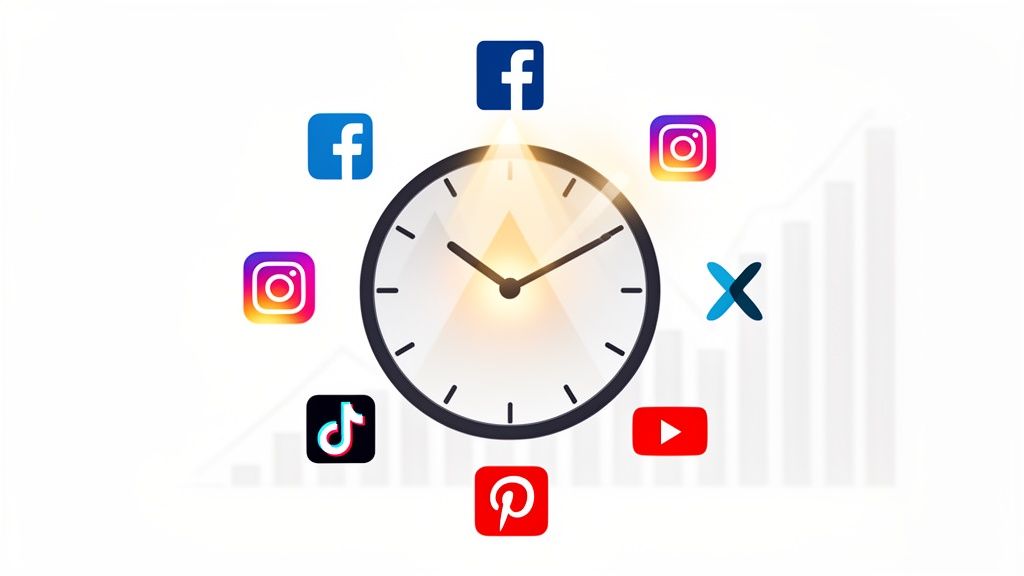
Crafting a high-performing social media strategy involves more than just creating compelling content; it requires delivering that content at the precise moment your audience is most likely to engage. Posting at an optimal time can dramatically increase your reach, boost engagement rates, and drive more meaningful actions, whether that's a click, a share, or a sale. Publishing content when your followers are offline is like shouting into an empty room. The initial visibility and engagement a post receives are critical signals to social media algorithms, influencing its long-term reach and performance.
Understanding the best time to post on social media isn't a one-size-fits-all solution. It's a nuanced process that depends heavily on the specific platform, your target audience's daily habits, and your industry's unique rhythms. For instance, a B2B audience on LinkedIn has vastly different online patterns than a B2C audience browsing TikTok for entertainment after work. This guide cuts through the guesswork by providing a comprehensive, platform-by-platform breakdown of peak posting times, backed by data and industry research.
We will explore the optimal windows for major networks like Instagram, Facebook, LinkedIn, X (formerly Twitter), and TikTok, as well as for specific content formats like Instagram Reels. More importantly, we will equip you with the strategic knowledge to move beyond these general recommendations. You'll learn how to analyze your own analytics, understand audience behavior across different time zones, and implement A/B testing methodologies to pinpoint the exact times that deliver maximum impact for your unique brand. This isn't just a list of times; it's a blueprint for unlocking algorithmic favor and achieving sustainable social media growth.
1. LinkedIn: Tuesday-Thursday 8 AM – 10 AM
LinkedIn operates on the rhythm of the professional workweek, making it one of the most predictable platforms for determining the best time to post on social media. The peak engagement window occurs mid-week, specifically between Tuesday and Thursday from 8 AM to 10 AM. This timeframe captures professionals as they start their day, check industry updates, and catch up on their network's activities before diving into their primary tasks.
Unlike platforms driven by leisure time, LinkedIn's audience is most active and receptive during standard business hours. Posting within this morning window positions your content directly in front of B2B decision-makers, corporate leaders, and job seekers when they are in a career-focused mindset. This timing is ideal for sharing thought leadership, company news, and industry analysis, as users are actively seeking valuable professional insights.
Why This Time Works
The logic behind this prime time is simple: it aligns with established professional habits. Monday mornings are often consumed by planning and internal meetings, while Fridays typically see a wind-down in activity as professionals prepare for the weekend. The Tuesday-Thursday morning slot avoids these distractions, offering a consistent period of high visibility and engagement.
- B2B SaaS companies often report their highest lead generation from content published during this window.
- Professional services firms (consulting, law, finance) can dominate their niche by consistently providing valuable insights at the start of the workday.
- Thought leaders and executives often see up to three times higher engagement on posts shared on a Tuesday or Wednesday morning compared to other times.
Actionable Tips for Implementation
To maximize your impact, a strategic approach is essential. Don't just post and hope for the best; use precision to capture this valuable audience.
- Schedule Ahead: Post 15-30 minutes before the 8 AM peak. This gives the LinkedIn algorithm time to index and begin distributing your content just as user activity surges.
- Target Time Zones: For a broad US audience, schedule your posts based on Eastern Time (ET). This allows you to catch the East Coast at the start of their day and remain relevant as other US time zones come online.
- Content Alignment: Your content must match the context. Focus on professional development topics, industry trends, or data-driven insights. Pair your posts with a clear call-to-action (CTA), such as asking a question to spark discussion or directing users to a resource.
- Leverage Native Tools: Use LinkedIn's native scheduling tool to ensure precise and reliable timing for your content pipeline. Companies like ReachLabs.ai build entire outreach and personal branding campaigns around this core principle of timing, demonstrating its effectiveness in a managed strategy.
2. Instagram: Wednesday-Friday 11 AM – 1 PM and 7 PM – 9 PM
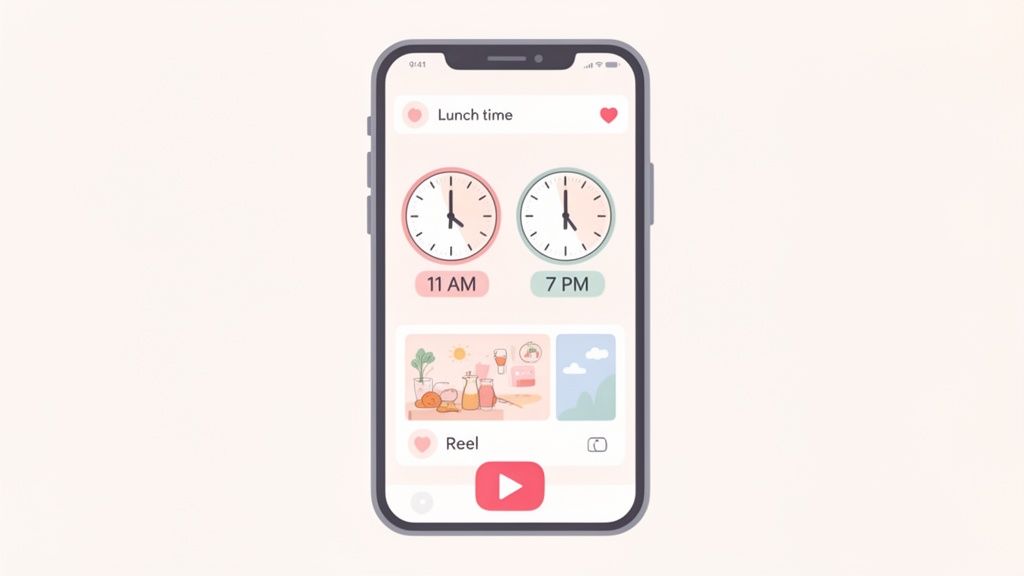
Instagram's dynamic and visually-driven environment creates bimodal engagement peaks, making it a nuanced platform when determining the best time to post on social media. The optimal windows are mid-week to the end of the week, specifically from Wednesday to Friday between 11 AM and 1 PM, and again in the evening from 7 PM to 9 PM. These time slots capture users during distinct moments of their day: the midday lunch break scroll and the evening wind-down.
Unlike professionally-focused platforms, Instagram's prime times are tied to user downtime. The 11 AM to 1 PM window catches professionals and students taking a break, looking for quick, visually appealing content. The 7 PM to 9 PM slot captures a broader audience as they relax at home, seeking entertainment, inspiration, and connection before ending their day. This makes the platform ideal for brands that can align their content with these two different user mindsets.
Why This Time Works
This dual-peak strategy works by targeting both active break times and passive leisure hours. Posting during the midday slot allows e-commerce and B2C brands to capitalize on "lunchtime shopping" behavior. The evening window is perfect for more immersive content like Reels and long-form video, as users have more time to engage. For deeper insights into maximizing your Instagram reach, consider exploring the 10 Proven Best Times to Post on Instagram for 2026.
- Fashion and lifestyle brands often see up to 40% higher engagement on posts published around 11 AM on Wednesdays.
- Travel and hospitality content performs exceptionally well in the 7 PM to 9 PM slot, as users are dreaming and planning for weekend activities.
- E-commerce brands frequently report higher click-through rates and conversions from posts shared during the lunchtime hours.
Actionable Tips for Implementation
Maximizing your impact requires tailoring your content and timing to fit these specific windows. A one-size-fits-all approach won't capture the full potential of Instagram's diverse audience.
- Align Content to Time: Schedule different content types for each peak. Use visually-striking carousels or single-image posts for the midday slot and engaging Reels or video content for the evening.
- Use Instagram Insights: Your own audience data is invaluable. Check your Instagram Insights to see when your followers are most active and adjust your schedule to match their specific peak times.
- Schedule Stories: Align your Instagram Stories with both peak windows to maintain a consistent presence. Use interactive elements like polls and quizzes to boost engagement during these high-traffic periods.
- Test Friday Posts: Experiment with posting on Friday evenings to capture users as they finalize weekend plans. This can be a highly effective slot for restaurants, events, and entertainment brands. Companies like ReachLabs.ai integrate this precise timing into their creative services to ensure brand-building content achieves maximum visibility.
3. TikTok: Tuesday-Thursday 6 AM – 10 AM and 7 PM – 11 PM
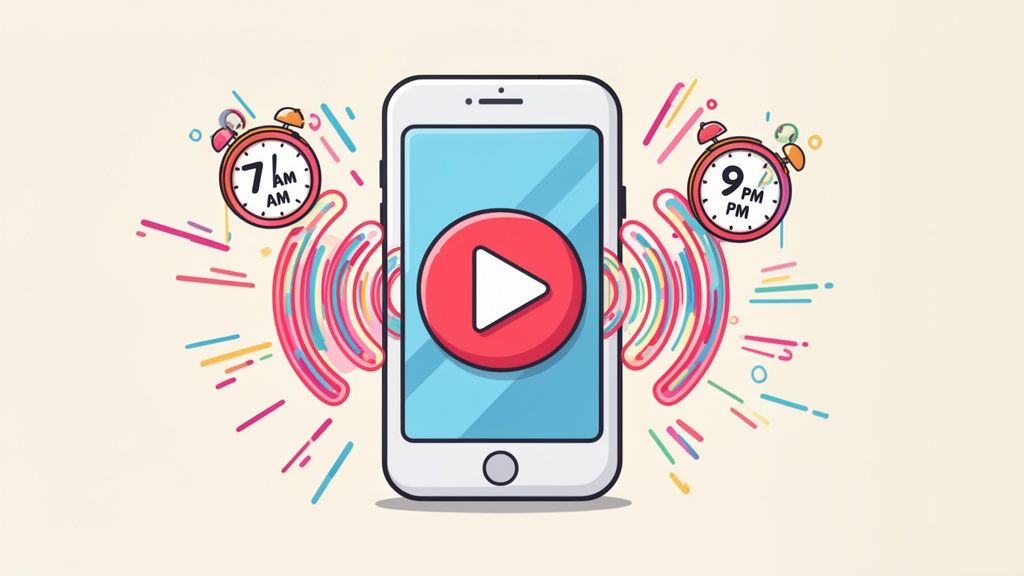
TikTok's audience, dominated by Gen Z and younger millennials, operates on a unique rhythm distinct from professional networks. Understanding the best time to post on social media for this platform means targeting two key windows: the morning pre-work or pre-school scroll and the evening wind-down. Peak engagement occurs Tuesday through Thursday from 6 AM to 10 AM and again from 7 PM to 11 PM.
These time slots capture users during their daily routines, either as they commute and get ready or when they are relaxing and seeking entertainment. The platform's algorithm heavily favors fresh, timely content, and posting during these high-traffic periods gives your videos a crucial initial boost in viewership. This early momentum can trigger wider distribution on the "For You" page, making timing essential for viral potential.
Why This Time Works
The dual-window strategy aligns directly with the lifestyle of TikTok's core user base. The morning slot catches them before their daily obligations begin, while the evening slot is prime entertainment time, free from the distractions of work or school. Unlike other platforms, off-hours are on-hours for TikTok, making this schedule a powerful tool for brands aiming to connect through authentic, trend-driven content.
- Gen Z-focused brands often achieve up to five times greater reach by posting in the 6 AM to 8 AM window, catching users before their day starts.
- Entertainment and lifestyle content consistently peaks around 8 PM, seeing as much as 60% higher average views compared to midday posts.
- Top influencers with over a million followers strategically dominate these time slots to maximize their initial audience reception and fuel algorithmic growth.
Actionable Tips for Implementation
To succeed on TikTok, you need to combine great content with precise timing. A scattergun approach will fail; instead, focus on building algorithmic momentum through consistency.
- Build Algorithmic Momentum: Post consistently at the same times each day. This helps "train" the algorithm to expect your content, potentially leading to more reliable initial distribution to your followers.
- Leverage Trending Sounds: Capitalize on trending audio quickly. Aim to use a trending sound within two hours of its emergence to ride the initial wave of visibility.
- Analyze Your Analytics: Go to your profile > Creator Tools > Analytics > Followers tab. Here, you'll find a breakdown of your specific audience's most active hours. Adjust your schedule to align with your unique follower data.
- Engage Immediately: The first hour after posting is critical. Respond to comments, like relevant replies, and engage with duets or stitches to signal to the algorithm that your content is creating community interaction.
4. Facebook: Thursday 1 PM – 3 PM and 8 PM – 10 PM
Facebook’s vast and diverse user base creates unique engagement patterns, making Thursday a key day for determining the best time to post on social media. The platform sees two major activity peaks: a mid-afternoon window from 1 PM to 3 PM and an evening surge from 8 PM to 10 PM. This dual-peak timing captures users during their workday breaks and their leisure time at home, maximizing potential reach across different demographics.
Unlike professionally-focused platforms, Facebook engagement is driven by community interaction and personal downtime. The Thursday timeframe is particularly effective as users are highly active, planning weekend activities, and more receptive to content. Posting during these windows allows brands to connect with a broad audience when they are most likely to like, comment, and share, significantly boosting organic visibility just before the weekend.
Why This Time Works
This strategy capitalizes on established user behaviors that precede the weekend. The mid-afternoon slot catches people seeking a mental break, while the evening window aligns with prime-time relaxation. Thursday acts as a "launchpad" for weekend content, as the Facebook algorithm tends to give higher priority to posts that gain initial traction on this day, carrying that momentum into Friday and Saturday.
- Community-focused brands often see up to 45% higher engagement when posting interactive content, like polls or questions, on Thursday afternoons.
- News organizations and media outlets achieve peak content distribution and click-through rates by publishing major stories during the 8 PM to 10 PM evening hours.
- Local businesses can maximize reach for weekend promotions or events by posting on Thursday and Friday, capturing users as they make plans.
Actionable Tips for Implementation
A precise and content-aware approach is crucial for capturing Facebook's dual engagement peaks. Align your strategy with user intent during these specific times.
- Schedule for Algorithm Advantage: Use Facebook’s native "Scheduled Posts" feature to set your content to go live 10-15 minutes before the 1 PM and 8 PM peaks. This gives the algorithm time to process and begin distributing your post as user activity climbs.
- Target Time Zones: For a national audience, schedule based on the Central Time (CT) or Eastern Time (ET) zones. This allows your content to hit the most populous regions during their peak afternoon and evening hours.
- Content Alignment: Tailor your content to the time slot. Use the 1 PM to 3 PM window for lighter, more engaging posts like questions or behind-the-scenes photos. Reserve the 8 PM to 10 PM slot for more in-depth content like videos, blog post links, or community stories. Exploring different social media content categories can help you match the right post type to the right time.
- Prioritize Video: Video content published on a Thursday evening can receive up to 10 times higher engagement than static images. Create short, compelling videos to capture attention during this high-activity window.
5. Twitter/X: Monday-Friday 8 AM – 10 AM and 5 PM – 7 PM
Twitter/X thrives on the immediacy of news cycles and real-time conversation, making it a platform where timing is critical. Finding the best time to post on social media here means aligning with both professional routines and public news consumption habits. The optimal windows are weekdays from 8 AM to 10 AM, catching users during their morning commute and as they start their workday, and again from 5 PM to 7 PM, when they are checking evening headlines and unwinding.
The platform's fast-paced, chronological feed means content visibility is fleeting. Posting during these peak hours ensures your message appears when the highest volume of users are actively scrolling, commenting, and retweeting. This dual-window strategy captures both the B2B audience seeking industry news in the morning and the B2C audience engaging with trending topics in the evening.
Why This Time Works
This strategy is effective because it targets two distinct user mindsets on a single platform. The morning window taps into professional habits, while the evening slot aligns with leisure and news consumption. The real-time nature of X means that being present during these high-traffic periods directly correlates with initial engagement, which the algorithm favors for broader distribution.
- Tech companies often report up to three times higher engagement when posting product updates or industry commentary around 8 AM PST.
- News organizations and media outlets achieve their peak reach and traffic referrals by sharing breaking stories and summaries during the 5 PM to 7 PM evening news cycle.
- Industry leaders and executives can effectively drive conversations by sharing insights during professional hours when their peers are most active.
Actionable Tips for Implementation
To capitalize on X's rapid-fire environment, your timing and engagement strategy must be precise and consistent. Simply posting during these windows is not enough; you must be prepared to interact.
- Post Frequently: Aim for 2-3 posts within each peak window to maximize your visibility. Unlike other platforms, higher frequency is often rewarded on X.
- Engage Immediately: The first 30 minutes after posting are critical. Actively respond to comments and questions to fuel the conversation and signal to the algorithm that your content is engaging.
- Monitor Trends: Before posting, check the "Trending" tab. Aligning your content with a relevant, trending topic can dramatically increase its reach beyond your immediate followers.
- Create Threaded Content: Use threads (a series of connected posts) to tell a more detailed story. This extends the visibility window of your content as each reply brings the entire thread back into view. Effective use of threads is also key to demonstrating a strong return on investment for your social media efforts.
6. YouTube: Friday 4 PM – 6 PM and Sunday 5 PM – 7 PM
YouTube operates on a different clock than work-centric platforms, aligning with leisure and entertainment schedules. As the premier destination for long-form video, its peak engagement windows occur when audiences have dedicated time to watch, making it a key platform to optimize when considering the best time to post on social media. The most effective upload times are late afternoons and evenings on weekends, particularly Friday from 4 PM to 6 PM and Sunday from 5 PM to 7 PM.
Unlike the quick-scroll nature of other feeds, YouTube viewing is an intentional activity. Posting just before these weekend relaxation periods ensures your video is indexed and ready to be served to viewers as they settle in. This timing is ideal for maximizing initial velocity-watch time, likes, and comments-which signals to the YouTube algorithm that your content is valuable and should be promoted more widely.
Why This Time Works
The logic behind these weekend slots is tied directly to user behavior and content consumption habits. Friday afternoons capture viewers transitioning from work or school into their weekend, actively seeking entertainment. Sunday evenings are a prime time for viewers relaxing before the week begins, often looking for tutorials, educational content, or weekly vlogs. These periods offer a captive audience ready to invest time in your videos.
- Educational channels often report up to 50% higher watch time on videos published between Friday and Sunday.
- Entertainment creators (gaming, comedy, vlogs) frequently achieve peak subscriber growth by aligning new uploads with these weekend viewing parties.
- Tutorial and DIY content performs exceptionally well on Sunday uploads as viewers plan projects for the upcoming week.
Actionable Tips for Implementation
To capitalize on these peak viewing windows, a consistent and strategic approach is crucial. Your goal is to make your content an anticipated part of your audience's weekend routine.
- Schedule for Discovery: Upload and schedule your video to go public about two hours before your target time (e.g., publish at 2 PM for a 4 PM peak). This gives YouTube’s servers time to process the video in all resolutions and its algorithm time to start indexing it.
- Leverage YouTube Premieres: Schedule your video as a "Premiere" to build anticipation. This feature creates a shareable watch page and a live chat for you and your viewers to interact in real-time as the video debuts, boosting initial engagement signals.
- Announce Your Schedule: Use the Community tab and other social media channels to let your audience know when to expect new videos. A predictable schedule (e.g., "New videos every Friday at 5 PM ET!") builds a loyal, returning audience.
- Analyze Your Own Data: While these times are strong general guidelines, your specific audience may have unique habits. To dive deeper into specific timing strategies for this platform, consider consulting this guide on When Is the Best Time to Upload YouTube Videos for More Views. Use your channel's YouTube Analytics to pinpoint the exact days and hours your subscribers are most active.
7. Pinterest: Tuesday-Thursday 2 PM – 4 PM
Pinterest functions as a visual discovery engine where users actively plan future purchases and projects, making it a unique platform for determining the best time to post on social media. Peak engagement occurs mid-week, from Tuesday to Thursday between 2 PM and 4 PM. This window captures users, a predominantly female audience, during their afternoon downtime as they search for inspiration for everything from home decor and recipes to fashion and DIY projects.
Unlike platforms driven by immediate social updates, Pinterest content has an exceptionally long lifespan, often driving traffic for six months or more. Posting during this mid-afternoon slot ensures your pins enter the ecosystem when planners are most active, increasing the likelihood of saves and shares that fuel long-term visibility. This timing is perfect for brands in lifestyle, e-commerce, and creative niches targeting intentional consumers.
Why This Time Works
This prime time aligns directly with user behavior patterns centered on planning and inspiration-gathering. The mid-afternoon slot often represents a break in the day, where users shift from work-related tasks to personal interests. Mid-week timing is effective because users are actively building out plans for upcoming weekends or future events, from meal prep to home renovations.
- Home décor brands often report up to 300% higher referral traffic from their blogs when pinning consistently during this afternoon window.
- Wedding and event planners achieve their highest return on investment by sharing inspirational content mid-week when clients are deep in the planning phase.
- DIY creators see sustained, long-term traffic from tutorials pinned during these hours, as the content gets saved to boards and rediscovered for months.
Actionable Tips for Implementation
A successful Pinterest strategy relies on consistency and optimization. Use this prime window to seed your content for long-term discovery and engagement.
- Schedule Consistently: The Pinterest algorithm rewards frequent activity. Aim to schedule 15-30 pins daily, mixing new content with repins, to maintain a steady presence. This consistency is more important than on any other platform.
- Optimize for Search: Treat every pin description like an SEO opportunity. Use relevant, long-tail keywords that your target audience would use to find inspiration. This ensures your content is discoverable long after its initial posting.
- Create Pin Variations: For each piece of content like a blog post or product, create 3-5 different pin images with varied text overlays and visuals. This allows you to test what resonates and extend the content’s reach without appearing repetitive.
- Link to High-Value Content: Every pin should link back to a specific, relevant page on your website, such as a blog post, product page, or landing page. This is the primary mechanism for converting Pinterest engagement into website traffic and leads.
8. LinkedIn Stories: Weekdays 8 AM – 12 PM (Professional Audience Focus)
While the main LinkedIn feed follows a mid-week rhythm, LinkedIn Stories offer a different engagement pattern, making them a key consideration when finding the best time to post on social media. The prime window for Stories is broader, covering weekdays from 8 AM to 12 PM. This timeframe captures professionals during their initial daily check-ins, coffee breaks, and pre-meeting moments when they are more likely to consume quick, ephemeral content.
LinkedIn Stories serve a unique purpose: to showcase authentic, behind-the-scenes professional moments that feel more human and less polished than a traditional feed post. Posting during this morning window allows your content to reach an audience in a professional mindset but open to more casual, personal connections. This format is perfect for sharing team culture, quick tips, or live event snippets that build brand personality.
Why This Time Works
The logic behind this extended morning window is tied to the temporary and informal nature of Stories. Professionals browse them intermittently throughout their morning, unlike the focused attention they dedicate to feed articles. This period captures high engagement before their calendars fill with meetings and deep work, making it the most effective time for visibility.
- Executives sharing behind-the-scenes moments often see significantly higher engagement on Stories compared to their more formal feed posts.
- HR-focused companies successfully use Stories during this time to document company culture, attracting talent who are passively browsing career-related content.
- Recruiters leverage Stories for day-in-the-life content and quick job highlights, effectively attracting candidates looking for an authentic view of a potential employer.
Actionable Tips for Implementation
To capitalize on the transient nature of Stories, a consistent and strategic approach is vital. Use these tips to integrate Stories into your LinkedIn content strategy effectively.
- Complement Your Feed: Use Stories to support your main feed content. For example, if you post a thought leadership article on Tuesday morning, use Stories to share key takeaways or a short video of the author discussing the topic.
- Maintain Daily Consistency: Post 2-3 Stories daily throughout the 8 AM to 12 PM window to stay top-of-mind. This frequency keeps your brand visible at the top of your connections' feeds.
- Leverage Interactive Features: Utilize LinkedIn’s native polls, quizzes, and question stickers to drive direct engagement. Asking your audience for their opinion on an industry trend is a simple way to start a conversation.
- Showcase Authentic Culture: Your Stories don’t need to be highly produced. Share authentic team moments, office happenings, or quick video updates to build a stronger, more relatable brand presence.
9. Instagram Reels: Wednesday-Friday 10 AM – 12 PM and 6 PM – 8 PM
Instagram Reels operate on a separate, algorithmically supercharged track, making the best time to post on social media for this format distinct from regular feed posts. Peak visibility occurs during two key windows: mid-morning (10 AM – 12 PM) and early evening (6 PM – 8 PM) from Wednesday to Friday. These timeframes capture users during their work breaks and post-work relaxation, when they are most likely to scroll through short-form video content.
Because the algorithm aggressively pushes Reels to non-followers via the Explore page and Reels tab, timing is critical for maximizing discoverability. Unlike static posts that primarily serve your existing audience, a well-timed Reel can achieve exponential reach. Posting within these windows ensures your content enters the discovery ecosystem just as user engagement surges, increasing its chances of going viral.
Why This Time Works
The logic behind these prime times aligns with modern content consumption habits. The mid-morning window catches users looking for a mental break, while the evening slot targets the "second screen" audience unwinding after their day. The Wednesday-Friday period capitalizes on the highest overall platform engagement, giving the algorithm more active users to serve your content to.
- Small accounts have reported achieving 500K+ impressions on a single trend-riding Reel by posting just before the evening peak.
- Entertainment-focused creators often see over 80% of their total weekly engagement originate from Reels published on a Thursday or Friday evening.
- Consumer brands that leverage trending audio in Reels posted on a Wednesday morning have achieved up to 10x the reach compared to their non-trending video content.
Actionable Tips for Implementation
To harness the full power of the Reels algorithm, your timing and content strategy must work in tandem. A precise approach can turn a good Reel into a viral sensation.
- Capitalize on Trending Audio: Incorporate trending audio within 48 hours of its emergence. The algorithm prioritizes content using popular sounds, and timely adoption gives you a significant advantage.
- Hook Viewers Instantly: Your first 1-2 seconds are crucial. Use a compelling visual or a bold text overlay to stop the scroll. Data shows that Reels with clear, on-screen text see up to 25% higher engagement.
- Schedule for Peak Discovery: Post your Reel 15-20 minutes before the 10 AM or 6 PM window. This allows the platform to index your video so it's ready for distribution as user activity begins to climb.
- Repurpose Winners: Don't let a successful Reel be a one-hit wonder. Repurpose your top-performing content to other short-form video platforms like TikTok and YouTube Shorts to maximize its value.
10. Email Marketing Newsletters: Tuesday-Thursday 9 AM – 11 AM
While not a conventional social media platform, strategic email marketing is a powerful amplifier for your social efforts, making its timing a critical factor in finding the overall best time to post on social media. The highest open and click-through rates are consistently seen mid-week, particularly from Tuesday to Thursday between 9 AM and 11 AM. This window captures professionals as they settle into their workday and dedicate time to clearing their inbox before tackling major projects.
Integrating email newsletters into your social media schedule creates a powerful synergy. It allows you to move followers from a rented space (social platforms) to an owned channel (your email list), enabling direct communication and nurturing leads. Posting on social media drives discovery, while a well-timed email drives conversion. This coordination ensures your message reaches your audience across multiple touchpoints when they are most engaged.
Why This Time Works
The effectiveness of this mid-morning, mid-week slot is rooted in professional routine. Professionals often use the first hour of their day for planning, but the 9 AM to 11 AM block is a prime time for communication and information consumption. Sending your newsletter then places it at the top of the inbox, increasing the likelihood it gets opened and read rather than being buried under an avalanche of later messages.
- B2B companies often report open rates of 40-50% for newsletters sent between 9 AM and 10 AM on a Tuesday.
- Newsletter subject lines referencing day-of-the-week content (e.g., "Your Tuesday Tech Briefing") can see up to a 30% higher click-through rate.
- Marketing automation platforms consistently show that Tuesday has the highest overall email engagement, closely followed by Thursday and Wednesday.
Actionable Tips for Implementation
To harness the full potential of this timing, your deployment must be precise and aligned with your social strategy.
- Segment by Time Zone: Don't send a single email blast. Segment your lists by subscriber time zones and schedule sends to land in their inbox between 9 AM and 11 AM local time.
- Coordinate with Social Posts: Announce your newsletter on social media an hour before it sends to build anticipation. Post again after it sends, encouraging followers who missed it to subscribe for the next one.
- Create Urgency: Use this prime-time slot to your advantage. Send limited-time offers or event announcements on a Tuesday morning to create a sense of urgency that encourages immediate action.
- A/B Test Time-Specific Language: Experiment with subject lines like "Your Wednesday Morning Edge" versus more generic titles to see what resonates with your audience.
- Trigger Remarketing: Use email open data to create custom audiences for social media remarketing. Companies like ReachLabs.ai use this tactic to build integrated campaigns that retarget the most engaged email subscribers with hyper-relevant ads on platforms like LinkedIn and Facebook.
Best Times to Post: 10-Channel Comparison
| Platform & Timing | Implementation Complexity 🔄 | Resource Requirements ⚡ | Expected Outcomes ⭐📊 | Ideal Use Cases 💡 | Key Advantages |
|---|---|---|---|---|---|
| LinkedIn: Tue–Thu 8 AM–10 AM | Medium — scheduled thought leadership cadence | Medium — polished copy, professional assets | High B2B engagement ⭐⭐⭐, strong lead gen 📊 | B2B sales outreach, investor visibility, executive branding | Targets decision-makers, higher conversion rates, algorithm favors early-week |
| Instagram: Wed–Fri 11 AM–1 PM & 7 PM–9 PM | Medium — dual-peak posting strategy | High — visual content, Stories/Reels production | Strong consumer engagement ⭐⭐, brand visibility 📊 | Lifestyle, e‑commerce, brand campaigns | Captures lunch & evening users, visual storytelling excels, high Reels/Stories performance |
| TikTok: Tue–Thu 6 AM–10 AM & 7 PM–11 PM | High — frequent, trend-driven cadence | Medium–High — rapid video production & trend monitoring | Viral reach potential ⭐⭐⭐, rapid distribution 📊 | Gen Z targeting, viral campaigns, influencer marketing | Algorithm rewards consistency and trends, high organic reach potential |
| Facebook: Thu 1 PM–3 PM & 8 PM–10 PM | Low–Medium — scheduled community posts | Medium — community management, mixed media | Broad demographic reach ⭐⭐, good community engagement 📊 | Local businesses, news, community-building | Thursday algorithm advantage, effective for longer-form and diverse audiences |
| Twitter/X: Mon–Fri 8 AM–10 AM & 5 PM–7 PM | High — real-time monitoring and frequent posting | Medium — social listening, quick content | Fast visibility ⭐⭐, high conversation impact 📊 | News, thought leadership, real-time commentary | Real-time amplification, ideal for trending conversations and quick engagement |
| YouTube: Fri 4 PM–6 PM & Sun 5 PM–7 PM | High — scheduled long-form production | High — video production, editing, thumbnails | Strong watch time & subscriber growth ⭐⭐⭐, monetization potential 📊 | Educational content, storytelling, tutorials | Longer viewing sessions, higher subscriber conversion, algorithm rewards consistency |
| Pinterest: Tue–Thu 2 PM–4 PM | Medium — consistent pinning schedule | Medium — design variations, SEO-optimized descriptions | Long-term referral traffic ⭐⭐, high CTR over time 📊 | Home, DIY, fashion, evergreen content | Very long content lifespan, high-intent audience, strong blog referral traffic |
| LinkedIn Stories: Weekdays 8 AM–12 PM | Medium — frequent ephemeral posting | Low–Medium — quick authentic content | High initial view rates ⭐, short-lived engagement 📊 | Personal branding, behind-the-scenes, recruiting | More authentic tone, lower competition than feed, humanizes brands |
| Instagram Reels: Wed–Fri 10 AM–12 PM & 6 PM–8 PM | High — trend-aware rapid execution | Medium — short-form video production | Exceptional organic reach ⭐⭐⭐, high discoverability 📊 | Trend campaigns, influencer content, brand awareness | Algorithmic priority, reaches non-followers, strong trend amplification |
| Email Newsletters: Tue–Thu 9 AM–11 AM | Medium — segmentation & timing strategy | Medium — copy, automation, list management | High ROI & measurable conversions ⭐⭐⭐, predictable traffic 📊 | Lead nurturing, campaign conversion, owned-audience activation | Direct relationship outside algorithms, excellent attribution and conversion tracking |
From Data to Action: Building Your Perfect Posting Schedule
Navigating the landscape of social media can feel like trying to hit a moving target. We've journeyed through the platform-specific peak times, from the professional hum of LinkedIn during mid-morning weekdays to the late-night scroll sessions on TikTok. While these generalized recommendations provide a fantastic starting point, the ultimate goal isn't to just copy a schedule; it's to build a dynamic posting strategy that evolves with your unique audience. The true power lies in transforming this industry data into a personalized, high-performance content calendar.
The core lesson is this: finding the best time to post on social media is not a one-time task but an ongoing process of listening, testing, and adapting. The data-backed suggestions for Instagram, Facebook, X, and others are your baseline, your control group in a series of experiments designed to uncover what makes your specific community tick.
Your Path from Insight to Impact
Remember that every piece of content you publish is a data point. Each like, comment, share, and click is a vote from your audience, telling you what they want to see and when they want to see it. Your mission is to collect these votes and translate them into a smarter strategy.
Here are the most critical takeaways to implement immediately:
- Start with the General, End with the Specific: Use the platform-specific times we've outlined (e.g., mid-day for Instagram, early mornings for X) as your initial schedule. Post consistently during these windows for a few weeks to establish a performance baseline. This is your foundation.
- Segment Your Audience by Time Zone: If your audience is global or spread across multiple time zones, generic advice is insufficient. Use your platform's native analytics to identify where the majority of your followers are located and create a primary schedule around their peak hours. Consider a secondary schedule for other significant audience pockets.
- Embrace A/B Testing: Never assume your first guess is the best one. The most successful social media managers are relentless testers. Pit different times against each other with similar content. For example, post a similar-style Reel on Instagram at 11 AM on Wednesday and another at 7 PM. After several tests, the data will reveal a clear winner for your account.
- Listen to Your Analytics: Your social media analytics dashboards are your single source of truth. Make it a weekly habit to dive into your Instagram Insights, Facebook Business Suite, or TikTok Analytics. Look for patterns in the "Most Active Times" charts and cross-reference them with the performance of your top posts. This is where you'll find the custom-tailored best time to post on social media for your brand.
Key Insight: Your "best time to post" is a unique intersection of platform-wide user behavior, your specific industry's norms, and, most importantly, your followers' distinct daily habits. The first two points get you in the game; the third is how you win.
Ultimately, mastering your posting schedule is about respecting your audience's time and attention. It’s about meeting them where they are, delivering value when they are most receptive, and creating a predictable rhythm that builds loyalty and anticipation. This strategic timing transforms your content from a passive update into an anticipated event, dramatically increasing its reach, engagement, and overall impact on your business goals.
Tired of manually tracking analytics and A/B testing your post times across every platform? ReachLabs.ai uses predictive AI to analyze your unique audience data and automatically identify your brand's optimal posting times. Stop guessing and start maximizing your reach by visiting ReachLabs.ai to see how our intelligent scheduling can build your perfect content calendar for you.