In a competitive market, intuition is no longer enough. The most successful brands don't just guess what their customers want, they know. This is the power of data-driven marketing: transforming abstract customer insights into concrete actions that deliver measurable results. By harnessing the wealth of information available, from website clicks to purchase history, businesses can move from broadcasting generic messages to creating hyper-relevant experiences that resonate deeply. This shift not only improves marketing ROI but also builds stronger, more loyal customer relationships.
To avoid a marketing strategy that's flying blind, building a modern data-driven marketing strategy is paramount to guide decisions with genuine customer insights. When you replace assumptions with analytics, you gain a significant competitive advantage. This approach allows you to understand customer behavior, personalize interactions, and allocate your budget with precision, ensuring every marketing dollar works harder for you.
Ready to discover the specific advantages that can revolutionize your approach? This guide breaks down the 10 most impactful benefits of data driven marketing, providing a clear roadmap to turn your raw data into your most valuable asset. Each benefit is detailed with actionable steps, real-world examples, and insights on how to leverage them for maximum impact.
1. Improved Customer Understanding and Segmentation
One of the most significant benefits of data-driven marketing is moving beyond assumptions to gain a crystal-clear picture of your audience. Instead of marketing to a generic "customer," you can use behavioral, demographic, and psychographic data to build detailed, accurate customer profiles and segments. This deeper understanding reveals distinct audience groups with unique needs, preferences, and motivations.

This process transforms marketing from a guessing game into a precise science. Companies like Netflix leverage viewing data to segment users and power its world-class recommendation engine, while Spotify uses listening habits to create hyper-personalized playlists like "Discover Weekly." These efforts result in higher engagement, loyalty, and customer lifetime value.
How to Implement This
- Analyze High-Value Customers: Start by examining the shared characteristics of your most profitable customers.
- Combine Data Sources: Integrate data from your CRM, web analytics, and social media to build comprehensive profiles. Learn how to develop detailed buyer personas to get started.
- Keep Segments Dynamic: Customer behavior changes. Regularly review and update your segments to ensure they remain relevant.
- Test Your Segments: Before launching a major campaign, use A/B testing on a small scale to validate your segment-based assumptions.
ReachLabs.ai in Action: Our platform automates the analysis of your existing customer data, identifying key firmographic and technographic traits to build Ideal Customer Profiles (ICPs). This allows you to instantly find and target net-new accounts that mirror your best customers, ensuring your marketing efforts are focused on the highest-potential segments from day one.
2. Enhanced ROI and Marketing Efficiency
Data-driven marketing transforms budget allocation from an art into a science, enabling you to measure, optimize, and maximize your return on investment. By tracking key metrics like cost per acquisition (CPA), conversion rates, and customer lifetime value (CLV), businesses can confidently shift resources toward high-performing channels and tactics while eliminating wasteful spending. This focus on performance directly enhances profitability and marketing efficiency.
This analytical approach ensures every dollar is accountable. For instance, e-commerce leader Zappos uses data to continuously optimize its channel spend, focusing on platforms that deliver the most valuable customers. Similarly, Adobe reports that its customers see a 40% improvement in marketing efficiency by leveraging data to guide their strategies. These examples highlight one of the core benefits of data-driven marketing: making your budget work harder.
How to Implement This
- Establish Clear KPIs: Define your key performance indicators before launching any campaign to ensure you can measure success accurately.
- Use Attribution Modeling: Implement attribution models to understand the true contribution of each touchpoint in the customer journey. Learn more about how cross-channel attribution works to get started.
- Create Real-Time Dashboards: Use reporting dashboards to monitor campaign performance in real-time, allowing for quick adjustments.
- Conduct Regular Audits: Periodically review all marketing initiatives to identify and cut low-performing activities, reallocating those funds to proven winners.
ReachLabs.ai in Action: Our platform provides clear, actionable insights into campaign performance, tracking engagement and conversion metrics across your target accounts. By connecting marketing activities directly to pipeline and revenue, we give you the visibility needed to optimize your spend and demonstrate a clear, positive ROI on every initiative.
3. Personalization at Scale
A core benefit of data-driven marketing is the ability to move beyond generic campaigns and deliver highly individualized experiences to thousands, or even millions, of customers simultaneously. By using customer data, AI, and automation, you can tailor content, product recommendations, and offers to each person’s specific behaviors and preferences. This creates a powerful sense of one-to-one communication that was previously impossible to achieve at scale.

This hyper-personalization drives significant business results. For instance, Amazon famously generates an estimated 35% of its revenue from its recommendation engine, which is powered by user browsing and purchase data. Similarly, Starbucks leverages its rewards program data to send personalized offers through its app, boosting engagement and repeat purchases. When done right, personalization enhances the customer experience and directly impacts revenue.
How to Implement This
- Start with Email: Begin by personalizing email subject lines, content, and send times before tackling more complex site-wide personalization.
- Use Progressive Profiling: Gradually collect customer information over time through smart forms rather than asking for everything at once.
- Leverage First-Party Data: Prioritize data you collect directly from your audience (website behavior, purchase history) as it is the most accurate and reliable.
- Automate Where Possible: Use marketing automation to trigger personalized messages based on specific user actions. Explore how to build effective marketing automation workflows to streamline this process.
ReachLabs.ai in Action: Our platform analyzes behavioral signals and intent data to help you personalize outreach at every stage of the funnel. By understanding what a prospect is actively researching, you can tailor your messaging and content to their immediate needs, dramatically increasing engagement rates and accelerating the sales cycle.
4. Predictive Analytics and Forecasting
One of the most powerful benefits of data driven marketing is the ability to move from reacting to the past to proactively shaping the future. By leveraging historical data, statistical algorithms, and machine learning, predictive analytics allows marketers to forecast future trends, customer behaviors, and campaign outcomes with a high degree of accuracy. This transforms strategy from reactive adjustments to proactive, forward-looking decisions.

This foresight enables businesses to anticipate customer needs, identify potential churn risks before they happen, and allocate resources more effectively. For instance, an airline's loyalty program might predict which members are likely to defect to a competitor and proactively intervene with a personalized offer. Similarly, a SaaS company can analyze user behavior during a free trial to predict the probability of conversion, allowing sales teams to focus on the most promising leads.
How to Implement This
- Ensure Data Quality: Predictive models are only as good as the data they are trained on. Start by cleaning and organizing your historical data for consistency.
- Start with Clear Goals: Focus on a specific, high-impact business question, such as "which customers are most likely to churn?" or "what is our projected Q4 revenue?"
- Test and Retrain Models: Begin with simpler models to establish a baseline. Regularly retrain your models with fresh data to maintain their accuracy as market conditions change.
- Combine with Human Judgment: Use predictive insights to inform your strategy, not replace it. The best results come from combining powerful analytics with experienced human intuition.
ReachLabs.ai in Action: Our platform uses predictive analytics to score and prioritize leads based on their likelihood to convert. By analyzing thousands of data points that correlate with successful deals, ReachLabs.ai identifies high-intent accounts and decision-makers in real-time. This empowers your sales and marketing teams to stop guessing and focus their efforts on opportunities that are statistically proven to close.
5. Better Content Strategy and Creation
Data-driven marketing transforms content creation from a subjective art into a strategic science. Instead of relying on intuition, you can analyze performance data to pinpoint which topics, formats, and channels truly engage your audience. This allows you to craft a content strategy based on proven success, ensuring every asset you produce has the best possible chance of resonating and driving business goals.
This evidence-based approach removes guesswork and maximizes the ROI of your content efforts. For example, HubSpot analyzes millions of blog posts to identify trends in top-performing content, while BuzzFeed’s entire viral content model is built on A/B testing headlines and tracking real-time engagement data. This focus on performance is a key benefit of data driven marketing, leading directly to higher traffic, engagement, and conversions.
How to Implement This
- Track Performance Metrics: Monitor key metrics like views, engagement rates, time on page, and conversion rates for every piece of content.
- Analyze High-Intent Topics: Use tools like Google Analytics and SEMrush to identify which blog posts or pages are driving the most qualified leads.
- Map Content to the Buyer Journey: Create and tag content for specific stages (awareness, consideration, decision) and measure its effectiveness at moving prospects forward.
- Conduct Regular Content Audits: Periodically review your existing content library to identify gaps, update outdated information, and repurpose high-performing assets.
ReachLabs.ai in Action: Our platform analyzes the digital footprint of your Ideal Customer Profile (ICP), revealing the content topics and formats they actively engage with across the web. This intelligence allows you to build a content calendar that directly addresses the pain points and interests of your highest-value prospects, ensuring your messaging always hits the mark.
6. Optimized Customer Journey and Touchpoint Experience
One of the most powerful benefits of data-driven marketing is the ability to map, analyze, and enhance the entire customer journey. By tracking interactions across all touchpoints, from the first ad view to post-purchase support, you can identify friction points, drop-off moments, and key opportunities for improvement. This holistic view transforms the customer experience from a series of disconnected events into a seamless, intuitive path.
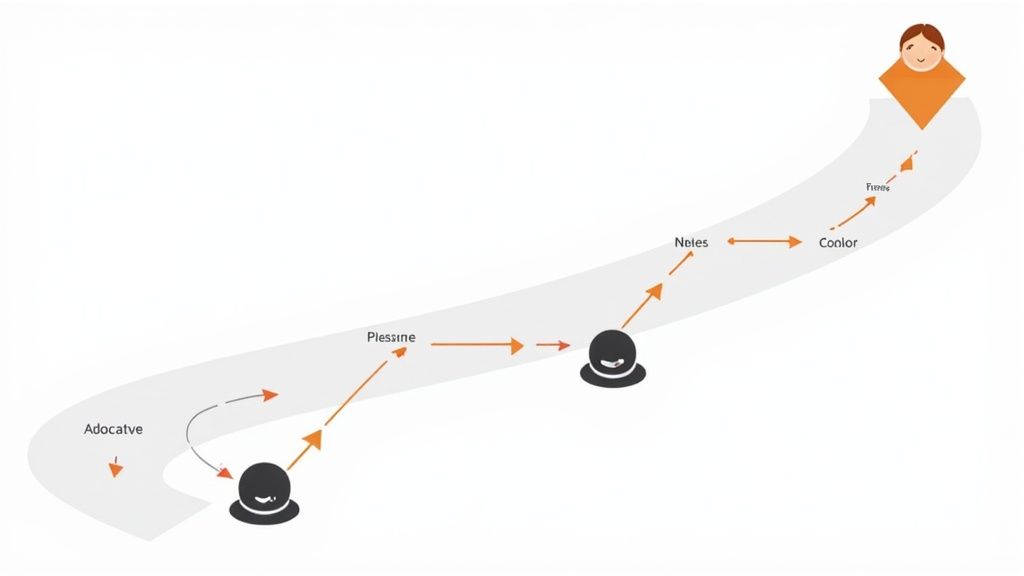
This data-led approach allows businesses to guide customers smoothly from awareness to advocacy. For instance, Airbnb used data to optimize its checkout process, reducing abandonment by over 25%. Similarly, e-commerce platforms empower retailers to analyze user behavior within the purchase funnel, making targeted adjustments that significantly lift conversion rates and build long-term loyalty.
How to Implement This
- Map the Actual Journey: Use real analytics and customer data to map the journey, not just an assumed path.
- Identify High-Impact Friction Points: Focus your efforts on fixing the bottlenecks causing the most significant drop-offs.
- Test and Measure Incrementally: Implement changes one at a time and use A/B testing to measure their impact on user progression.
- Understand the "Why": Use behavioral data like heatmaps and session recordings to understand why users drop off, not just that they do.
- Ensure Consistency: Maintain consistent messaging, branding, and user experience across every single touchpoint.
ReachLabs.ai in Action: Our platform provides deep insights into how target accounts engage with your marketing assets across different channels. By analyzing this journey data, you can identify which touchpoints are most effective at moving prospects through the funnel and optimize your outreach sequences to create a smoother, more persuasive path to conversion.
7. Competitive Intelligence and Market Positioning
Data-driven marketing extends beyond your own audience to provide a powerful lens into your competitive landscape. By systematically tracking competitor messaging, pricing, digital footprint, and content strategies, you can move from reactive defense to proactive offense. This market intelligence is crucial for identifying gaps, anticipating market shifts, and strategically positioning your brand for maximum impact.
This approach allows you to benchmark your performance and understand what resonates within your industry. For instance, SaaS companies like Gong analyze competitor sales call strategies to refine their own pitches, while competitive intelligence platforms like Semrush allow businesses to track rivals' search rankings and ad spend. These insights are essential for carving out a unique and defensible market position, highlighting one of the key benefits of data-driven marketing.
How to Implement This
- Monitor Key Signals: Track multiple competitor signals, including pricing changes, new feature announcements, content themes, and even key hires.
- Create Intelligence Dashboards: Consolidate data from various sources into a centralized dashboard for ongoing monitoring and quick analysis.
- Identify Market Gaps: Use competitive data to spot underserved customer needs or "white space" opportunities that your brand can uniquely fill.
- Focus on Differentiation: Instead of just copying competitors, use insights to learn from their successes and failures to sharpen your own unique value proposition.
ReachLabs.ai in Action: Our platform helps you understand the competitive landscape by analyzing the technographic and firmographic data of accounts targeted by your rivals. By seeing which market segments your competitors are winning, you can identify their strategic focus and discover untapped opportunities to target, ensuring your positioning is both distinct and effective.
8. Improved Lead Quality and Sales Alignment
One of the most impactful benefits of data-driven marketing is bridging the gap between marketing and sales. By using data to score and qualify leads based on behavioral signals, engagement levels, and firmographic fit, you ensure the sales team spends their time on prospects who are genuinely interested and ready to convert. This dramatically improves efficiency and fosters a more collaborative relationship between the two departments.
This shift from quantity to quality is a game-changer for revenue operations. Companies like Salesforce have used sophisticated lead scoring to improve conversion rates, while marketing automation platforms enable businesses to nurture leads until they display clear buying intent. The result is a shorter sales cycle, higher close rates, and more predictable revenue growth, all driven by a shared, data-informed understanding of what a "good lead" truly is.
How to Implement This
- Define a Qualified Lead Together: Collaborate with your sales team to create a universal definition of a marketing-qualified lead (MQL) and a sales-qualified lead (SQL) based on firmographics and engagement.
- Score on Behavior and Fit: Implement a lead scoring model that awards points for both demographic/firmographic fit (e.g., company size, industry) and behavioral signals (e.g., pricing page visits, webinar attendance).
- Regularly Review and Adjust: Analyze win/loss data with sales to continuously refine your scoring criteria. What characteristics do your closed-won deals share?
- Automate Lead Routing: Set up rules to instantly route high-scoring leads to the appropriate sales representative, ensuring timely follow-up when interest is highest.
ReachLabs.ai in Action: Our platform enhances your lead qualification process by enriching lead data with critical firmographic and technographic insights. By comparing incoming leads against your data-validated Ideal Customer Profile (ICP), we help you automatically score and prioritize prospects that have the highest likelihood of becoming valuable customers, ensuring your sales team always focuses on the most promising opportunities.
9. Real-Time Decision Making and Agility
One of the most transformative benefits of data-driven marketing is the ability to shift from reactive to proactive decision-making. Instead of waiting for weekly or monthly reports, real-time dashboards and analytics provide immediate visibility into campaign performance, market shifts, and customer behavior. This empowers marketers to make rapid, informed adjustments, capitalizing on emerging opportunities and mitigating potential issues before they escalate.
This agility turns marketing into a dynamic, responsive function. For example, a retailer can adjust online ad spend and promotional offers in real-time based on live inventory levels and web traffic, maximizing sales during a flash promotion. Similarly, ride-sharing services like Uber use real-time demand data to implement surge pricing and deploy drivers to high-traffic areas, optimizing supply and demand instantly. To understand how these capabilities translate into tangible advantages, explore these 10 Powerful Real-Time Analytics Use Cases.
How to Implement This
- Establish Key Metrics: Start by creating a dashboard that tracks your most critical performance indicators (KPIs) before building out more comprehensive reports.
- Set Actionable Alerts: Configure threshold-based alerts that notify your team of significant changes, but avoid setting them so low that they create constant noise.
- Create Decision Protocols: Define clear procedures for who is authorized to act on real-time insights and what steps they should take.
- Balance Tactics and Strategy: Use real-time data for immediate tactical optimizations, but rely on longer-term data trends to guide your overarching strategy.
ReachLabs.ai in Action: Our platform provides real-time feedback on campaign performance and engagement. As you launch outreach sequences, you can monitor open rates, click-through rates, and replies as they happen, allowing your team to quickly identify the most effective messaging and pivot your strategy for maximum impact without delay.
10. Compliance, Privacy, and Risk Management
In an era of increasing data privacy regulations like GDPR and CCPA, one of the most critical benefits of data-driven marketing is its ability to fortify compliance and manage risk. Rather than being a liability, a well-governed data strategy turns privacy into a competitive advantage. It ensures marketing activities are not only effective but also ethical and legally sound, building a foundation of trust with your audience.
This approach shifts the focus from simply collecting data to responsibly managing it. Companies like Apple have built a powerful brand identity around a privacy-first stance, demonstrating that respecting user data can be a core differentiator. By implementing transparent consent management and prioritizing first-party data, businesses can reduce legal exposure and mitigate the reputational damage that comes from privacy missteps.
How to Implement This
- Establish Strong Consent Management: Use clear, unambiguous language to obtain and manage user consent for data collection and use.
- Prioritize First-Party Data: Focus on collecting data directly from your audience through your website, app, and CRM. This gives you more control and transparency.
- Practice Data Minimization: Only collect the data you absolutely need to achieve a specific, legitimate marketing purpose.
- Conduct Regular Audits: Periodically review your data practices, policies, and technology stack to ensure ongoing compliance with evolving regulations.
ReachLabs.ai in Action: Our platform is built with compliance at its core. We source B2B contact data from publicly available sources and validate it against strict quality and privacy standards. This ensures that when you build your Ideal Customer Profiles and find net-new accounts, you are operating on a foundation of compliant, ethically sourced data, minimizing risk from the very start of your GTM motion.
Data-Driven Marketing: 10-Benefit Comparison
| Feature | 🔄 Implementation Complexity | ⚡ Resource Requirements | 📊 Expected Outcomes | 💡 Ideal Use Cases | ⭐ Key Advantages |
|---|---|---|---|---|---|
| Improved Customer Understanding and Segmentation | Medium — integration of CRM & analytics, segmentation logic | High — clean data, analytics tools, ongoing maintenance | More relevant targeting, lower wasted spend, higher personalization | Targeted campaigns, loyalty programs, product recommendations | ⭐⭐⭐⭐ Precise targeting; reduced spend; improved customer satisfaction |
| Enhanced ROI and Marketing Efficiency | Medium‑High — attribution and cross-channel tracking required | High — analytics platforms, tagging, measurement framework | Clear KPI-driven optimization, lower CPA, higher ROI | Budget allocation, campaign optimization, multi-channel marketing | ⭐⭐⭐⭐⭐ Measurable ROI; faster decisions; eliminates waste |
| Personalization at Scale | High — real‑time systems, content orchestration, AI integration | Very High — CDP, ML models, automation, content variants | Higher engagement and conversions (typical 10–20% lift), increased LTV | E‑commerce, subscription services, app-based offers | ⭐⭐⭐⭐⭐ Increased conversion & loyalty; competitive differentiation |
| Predictive Analytics and Forecasting | High — model building, validation, retraining | High — historical data, ML tools, data science expertise | Better demand forecasts, churn reduction, prioritized leads | Churn prevention, demand planning, propensity/lead scoring | ⭐⭐⭐⭐ Proactive decisions; improved planning; higher forecast accuracy |
| Better Content Strategy and Creation | Medium — tagging, analytics, SEO setup | Medium — SEO/content tools, analytics, editorial resources | Higher engagement, improved SEO, better content ROI | Content marketing, thought leadership, SEO growth strategies | ⭐⭐⭐⭐ Data‑backed topics; fewer low-performing investments |
| Optimized Customer Journey and Touchpoint Experience | High — cross‑system mapping, attribution across devices | High — journey analytics, cross‑device tracking, integration work | Reduced drop‑offs, higher conversion rates, smoother UX | Complex funnels, multi‑touch B2B/B2C purchase flows | ⭐⭐⭐⭐ Identifies friction; improves conversions; cross‑team alignment |
| Competitive Intelligence and Market Positioning | Medium — monitoring setup and comparative analysis | Medium — CI tools, analyst time, dashboards | Faster response to competitors, informed positioning, identified white space | Market entry, pricing strategy, messaging refinement | ⭐⭐⭐ Competitive insights; reduces strategic missteps; opportunity spotting |
| Improved Lead Quality and Sales Alignment | Medium — scoring models, CRM + marketing integration | Medium — CRM, MAP, lead data, sales collaboration | Higher close rates, shorter sales cycles, better sales productivity | B2B SaaS, enterprise sales, account‑based marketing | ⭐⭐⭐⭐ Higher conversion efficiency; better sales/marketing alignment |
| Real-Time Decision Making and Agility | High — streaming data, real‑time dashboards, alerting | High — BI tools, data pipelines, monitoring, training | Rapid campaign pivots, reduced wasted spend, timely opportunities | Time‑sensitive offers, dynamic pricing, crisis response | ⭐⭐⭐⭐ Rapid responsiveness; reduces losses from failing campaigns |
| Compliance, Privacy, and Risk Management | High — governance, consent flows, audit trails | High — CDP, consent platforms, legal/compliance resources | Lower legal/reputational risk, stronger customer trust, sustainable data use | Regulated industries, global operations, privacy‑sensitive brands | ⭐⭐⭐⭐ Risk reduction; builds trust; supports compliant personalization |
Unleash Your Growth with a Data-Driven Partner
The journey through the core benefits of data-driven marketing paints a clear picture: modern marketing is no longer a game of guesswork. It is a strategic discipline powered by insights, precision, and a deep understanding of customer behavior. From segmenting audiences with surgical accuracy to crafting hyper-personalized experiences that resonate, the advantages are undeniable. We’ve explored how data empowers you to optimize every dollar spent, predict future trends, and build a more resilient, agile marketing engine.
Moving beyond theory into practice is where the real transformation happens. The insights discussed in this article, from enhanced ROI and improved lead quality to real-time decision-making, are not just isolated perks. They are interconnected pillars supporting a cohesive growth strategy. When you align your content creation with data-backed insights, optimize the customer journey based on real user behavior, and maintain a competitive edge through market intelligence, you create a powerful, self-reinforcing cycle of improvement.
From Information to Impact: Your Next Steps
The critical takeaway is that data itself is not the final destination; it's the vehicle. Its true value is unlocked when interpreted and activated by a skilled team. To truly harness the benefits of data-driven marketing, your organization must commit to cultivating a culture of curiosity and continuous learning.
Here are your actionable next steps:
- Audit Your Data Stack: Begin by evaluating your current data collection tools and processes. Identify gaps and opportunities to gather more meaningful information across key customer touchpoints.
- Prioritize a Key Objective: Instead of trying to implement everything at once, choose one high-impact area to focus on first. Whether it’s improving personalization or optimizing ad spend, a targeted approach will deliver measurable wins and build momentum.
- Empower Your Team: Invest in training and resources to enhance your team's data literacy. Ensure everyone, from content creators to brand strategists, understands how to leverage data to inform their decisions and contribute to broader business goals.
Ultimately, embracing data-driven marketing is an investment in sustainable, intelligent growth. It allows you to move with confidence in a crowded marketplace, building stronger customer relationships and achieving a level of efficiency that was once unimaginable. The path forward requires a blend of the right technology, the right strategy, and most importantly, the right talent to connect the dots.
Ready to transform your data from a static resource into your most powerful growth engine? The experts at ReachLabs.ai specialize in turning complex data into actionable digital strategies that deliver results. Let us help you unlock the full potential of your marketing efforts by visiting ReachLabs.ai to schedule a consultation today.