
A powerful marketing plan is more than just a document; it's the strategic blueprint that separates thriving brands from those that merely exist. In a marketplace where digital noise is constant, a well-defined plan acts as your compass, guiding every decision, channel selection, and dollar spent toward tangible results. But what are the critical parts of a marketing plan that truly move the needle?
Too often, businesses either create vague, unactionable documents or get lost in tactical weeds without a clear strategic vision. This guide breaks down the 12 indispensable components, transforming them from abstract concepts into a concrete, actionable framework. The ultimate goal of any well-structured marketing plan is to effectively grow your online business by creating a systematic, repeatable engine for customer acquisition and retention.
We will deconstruct each essential element, from foundational market research and defining your target audience to crafting a compelling messaging strategy and setting measurable objectives. This isn't a theoretical exercise; it's a practical roadmap.
You will learn how to build a cohesive strategy that not only reaches your audience but resonates with them, drives measurable growth, and delivers a clear return on investment. We'll explore each part with specific examples, actionable insights, and clear guidance, showing you how to build a comprehensive plan that aligns your team and accelerates your company's growth. Let's build your roadmap to success, one essential component at a time.
1. Executive Summary
The Executive Summary is the cornerstone of your marketing plan, acting as a high-level, condensed overview of the entire document. Although it appears first, it should be written last. Its purpose is to give stakeholders, from the C-suite to potential investors, a quick and compelling snapshot of your strategy without requiring them to read every detail. This is the first, and sometimes only, section leadership will read, making it a critical component among the essential parts of a marketing plan.
Think of it as a strategic trailer for your marketing movie. It summarizes the core problem you're solving, the main objectives, key strategies, and the expected financial outcomes.
Why It's a Critical First Step
A strong Executive Summary immediately aligns decision-makers. It articulates the business case, highlighting the market opportunity and the anticipated return on investment (ROI). For instance, a summary might state that a $50,000 investment in a targeted content strategy is projected to generate a 300% ROI within 12 months by capturing a new market segment.
Pro-Tip: Lead with your most powerful data point. Instead of starting with "This plan outlines our strategy," begin with "Our market research reveals an untapped $5 million opportunity that our new digital strategy is poised to capture."
Actionable Implementation Tips
- Structure for Scannability: Use bullet points and bold text to highlight key metrics, target audiences, and primary goals.
- Focus on Outcomes: Clearly state what success looks like. Include specific KPIs, such as "Increase lead generation by 40%" or "Achieve a 15% market share."
- Integrate Agency Value: When working with an agency like ReachLabs.ai, the summary should articulate their specific role. For example: "ReachLabs.ai will execute our demand generation strategy, leveraging their proprietary AI to drive a 25% increase in qualified leads."
2. Market Analysis & Research
Market Analysis & Research is the foundational intelligence-gathering phase of your marketing plan. It involves a deep dive into your industry, competitors, and potential customers to identify opportunities and threats. This section moves beyond guesswork, using data to inform every subsequent decision, from product positioning to channel selection. It answers the crucial questions: What is the state of our market, who are our competitors, and what do our customers truly need? This data-driven approach is a non-negotiable part of a marketing plan.
This research validates your business assumptions and uncovers the "why" behind consumer behavior. For example, analysis might reveal that while your top competitor dominates search, they are failing to engage a younger demographic on TikTok, presenting a clear market gap for your brand to exploit.
Why It's a Critical First Step
A thorough market analysis prevents costly mistakes. It ensures you aren't creating a product nobody wants or entering a market that’s already oversaturated. By understanding the competitive landscape using frameworks like Porter's Five Forces, you can carve out a unique position. This data-driven foundation allows for more precise targeting, messaging, and strategic allocation of resources, maximizing your potential for success.
Pro-Tip: Don't just analyze competitors' strengths. Actively look for their weaknesses and customer complaints. Tools like SEMrush or social listening platforms can reveal what their audience is unhappy about, giving you a blueprint for how to win them over.
Actionable Implementation Tips
- Combine Research Types: Use secondary research (Gartner reports, eMarketer studies) for broad industry trends and primary research (customer surveys, interviews) to understand your specific audience's pain points.
- Segment Your Audience: Develop detailed buyer personas based on demographics, psychographics, and behavior. This ensures your marketing messages are highly relevant and resonant.
- Integrate Agency Value: A specialized agency can accelerate this process. For instance, ReachLabs.ai can conduct a comprehensive competitive analysis to benchmark your digital footprint against rivals, identifying specific content and channel gaps to inform our joint strategy.
3. Target Audience & Personas
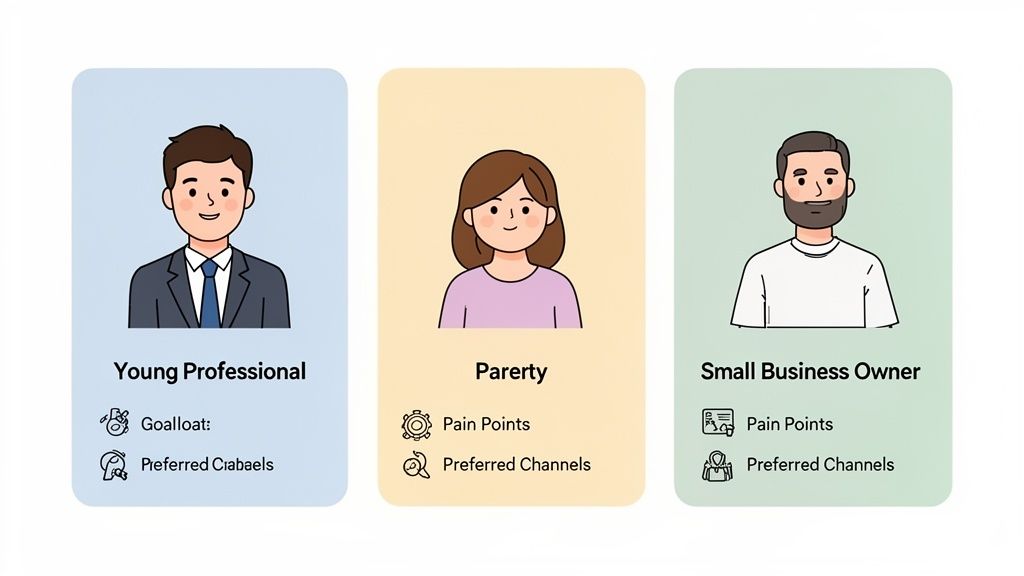
Defining your Target Audience and creating detailed Buyer Personas are fundamental steps in crafting a successful marketing plan. This section moves beyond broad demographics to build semi-fictional, archetypal representations of your ideal customers. It details who they are, their motivations, challenges, and where they spend their time, making it one of the most crucial parts of a marketing plan for ensuring your message resonates.
Think of personas as your strategic compass. They guide everything from product development and content creation to your choice of marketing channels, ensuring your efforts are hyper-focused on the people most likely to convert.
Why It's a Critical Next Step
Without a clear audience definition, your marketing is essentially a shot in the dark. Personas transform abstract data into relatable stories, enabling your team to create empathetic and effective campaigns. For example, Buffer’s detailed personas for social media managers allow them to create content that directly addresses specific pain points, like workflow inefficiencies. This precision is key to building genuine connections and driving engagement.
Pro-Tip: Don't rely on assumptions. Use real customer interviews, surveys, and analytics data to build your personas. The most powerful insights come directly from the source.
Actionable Implementation Tips
- Limit Your Focus: Start by creating 3-5 primary personas to keep your strategy focused and avoid diluting your messaging.
- Humanize Your Data: Give each persona a name, a photo, and a backstory. This makes them more memorable and relatable for your entire organization. For a deeper dive into this process, explore our guide on how to identify your target audience on reachlabs.ai.
- Integrate Agency Expertise: When partnering with an agency, share your personas immediately. At ReachLabs.ai, we use client personas to tailor AI-driven ad campaigns, ensuring our messaging on platforms like LinkedIn and Facebook speaks directly to each segment’s unique needs and motivations.
4. Brand Positioning & Messaging Strategy
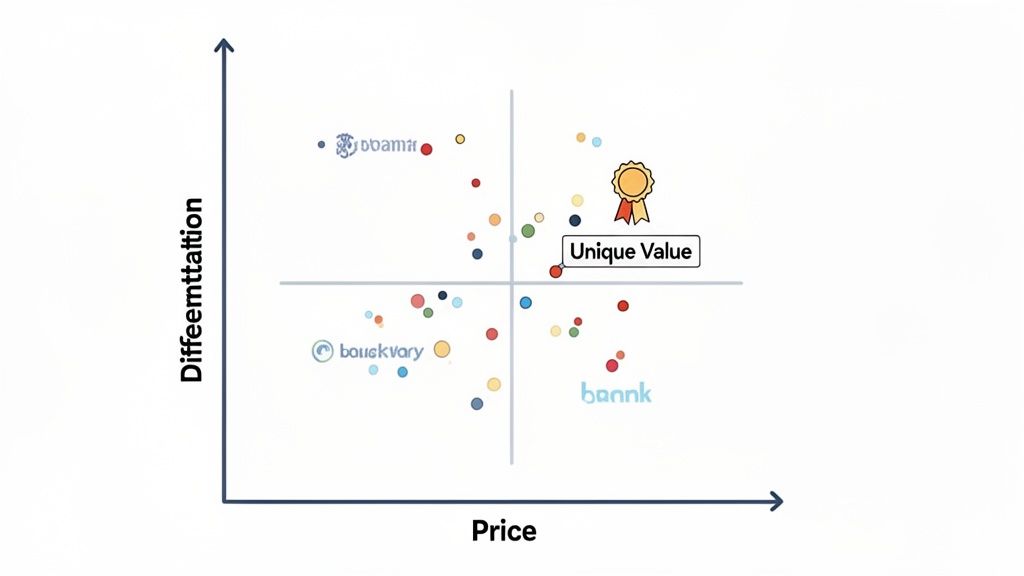
Your Brand Positioning and Messaging Strategy is the narrative soul of your marketing plan. It defines how you want your target audience to perceive your brand relative to competitors, articulating your unique place in the market. This section crystallizes your unique value proposition, key differentiators, and the specific language, tone, and emotional connection you’ll use to communicate. It's a critical component among the parts of a marketing plan because it ensures every ad, email, and social post speaks with a consistent, compelling voice.
This strategy moves beyond what you sell to what you stand for. For example, Airbnb’s “Belong Anywhere” messaging isn't just about accommodation; it's about fostering a sense of community and connection.
Why It's a Critical Next Step
Effective positioning carves out a distinct space in a crowded market, preventing you from becoming a commodity. It answers the customer's question: "Why should I choose you over anyone else?" A clear messaging strategy then translates this positioning into tangible copy that resonates, builds trust, and drives action. For instance, Slack positioned itself as “where work happens,” focusing on team productivity rather than just being another chat app.
Pro-Tip: Your positioning should be a single, clear idea that is both authentic to your brand's strengths and uniquely valuable to your target customer. If you can't state it in one simple sentence, it's too complicated.
Actionable Implementation Tips
- Map Your Market: Use a perceptual map to visualize your position against competitors based on key attributes like price and quality. Identify an unoccupied space to own.
- Develop Messaging Pillars: Create 3-5 core themes that support your positioning. For a SaaS company, these might be "Unmatched Simplicity," "Ironclad Security," and "Seamless Integration."
- Integrate Agency Value: A specialized agency can amplify your message. For example: "We will partner with ReachLabs.ai to translate our 'Effortless Efficiency' positioning into a high-impact creative campaign that elevates our brand authority."
5. Marketing Objectives & Key Results (OKRs)
Objectives and Key Results (OKRs) translate your high-level business goals into specific, measurable marketing targets. This framework, popularized by companies like Intel and Google, ensures your marketing activities are directly tied to tangible outcomes. It moves beyond vague goals like "increase brand awareness" to create a clear roadmap for what success looks like and how it will be measured, making it one of the most crucial parts of a marketing plan.
Think of Objectives as your destination and Key Results as the signposts that confirm you're on the right path. For example, a startup's objective might be to establish a strong market presence, with key results like "achieve 10,000 monthly website visitors" and "secure 50 media mentions."
Why It's a Critical Step
A well-defined set of OKRs provides unparalleled clarity and focus. It aligns your entire team around a shared set of priorities, eliminating wasted effort on activities that don't contribute to core business goals. This framework is essential for tracking progress and making data-driven decisions. For instance, HubSpot uses quarterly OKRs to drive its inbound lead generation engine, ensuring every piece of content directly supports specific lead targets.
Pro-Tip: Balance your Key Results between leading indicators (activities you control, like "publish 12 blog posts") and lagging indicators (the outcomes, like "generate 500 new leads from content").
Actionable Implementation Tips
- Maintain Focus: Limit yourself to 3-5 high-impact Objectives per quarter to avoid spreading resources too thin.
- Ladder Up: Ensure every marketing OKR directly supports a larger company objective, creating a clear line of sight from daily tasks to strategic goals.
- Integrate Agency Value: When defining OKRs, specify the agency’s contribution. For example: "ReachLabs.ai will be responsible for achieving a 20% increase in MQLs (Key Result) by optimizing top-of-funnel ad campaigns to support our 'Dominate the Mid-Market Segment' Objective."
6. Marketing Strategies & Tactics
This is where your marketing plan transitions from high-level planning to on-the-ground execution. Your Marketing Strategies and Tactics section details the specific actions and channels you will use to achieve your objectives. Strategy is your overarching approach, like using inbound marketing to attract customers, while tactics are the individual actions, like publishing three blog posts per week or running a targeted LinkedIn ad campaign. This is a vital component among the parts of a marketing plan because it outlines the "how."
For example, a strategy might be to establish brand authority in the SaaS space. The tactics would then include hosting webinars with industry experts, publishing data-driven white papers, and securing guest posts on influential tech blogs.
Why It's a Critical Next Step
Clearly defined strategies and tactics prevent wasted resources and ensure all activities are aligned with your goals. Without this section, your marketing efforts can become disjointed and reactive. For instance, Dollar Shave Club’s strategy was to disrupt the market with humor and simplicity; their primary tactic was a viral YouTube video that perfectly executed this vision, launching them into the mainstream.
Pro-Tip: Structure your tactics across Owned, Earned, and Paid media. This framework ensures you have a balanced, integrated approach that builds brand assets (owned), generates organic reach (earned), and accelerates growth (paid).
Actionable Implementation Tips
- Prioritize ruthlessly: Focus on 2-3 primary channels where your target audience is most active instead of trying to be everywhere.
- Create integrated campaigns: Ensure your messaging and creative are consistent whether a customer sees your ad on Instagram, reads your blog, or receives an email.
- Document and scale: When working with an agency like ReachLabs.ai, they can document which tactics drive the highest ROI and build scalable systems to replicate that success. For example: "ReachLabs.ai will execute our A/B testing framework for paid social tactics, scaling winning ad creatives to maximize lead conversion."
7. Content Marketing Plan
A Content Marketing Plan is your strategic blueprint for creating and distributing valuable, relevant, and consistent content to attract and retain a clearly defined audience. It's not just about creating blog posts or videos; it’s a core business function that builds trust, demonstrates expertise, and ultimately drives profitable customer action. This plan is one of the most vital parts of a marketing plan because it fuels nearly all other marketing channels, from SEO and social media to email campaigns.
Think of it as the engine for your inbound strategy. Instead of pitching your products, you are providing truly relevant and useful content to your prospects and customers to help them solve their issues. For example, HubSpot’s massive resource library attracts millions of visitors by offering solutions, not just selling software.
Why It's a Critical Growth Driver
A well-executed content plan establishes authority and builds an audience that trusts your brand. It directly impacts lead generation, improves SEO visibility, and nurtures prospects through the buyer's journey. By consistently delivering value, you create a powerful alternative to less efficient outbound methods, generating compounding returns over time as your content assets gain authority.
Pro-Tip: Focus on creating "pillar content" or comprehensive guides on core topics. From a single pillar page, you can repurpose content into dozens of smaller assets like blog posts, social media updates, videos, and infographics to maximize reach and efficiency.
Actionable Implementation Tips
- Build a Content Calendar: Plan your topics, formats, and distribution channels 3-6 months in advance to ensure consistency and alignment with campaigns.
- Repurpose Strategically: Don't let great content die. A single whitepaper can be transformed into a webinar, a series of blog posts, social media graphics, and an email nurture sequence. For a deeper dive, learn how to develop a content strategy that scales.
- Optimize for Conversion: Every piece of content should have a goal. Ensure headlines, meta descriptions, and calls-to-action (CTAs) are meticulously crafted to guide the user to the next step.
- Integrate Agency Expertise: An agency like ReachLabs.ai can accelerate your content engine by conducting keyword research, producing high-quality assets, and managing a distribution system to ensure your content reaches the right audience.
8. Social Media Strategy
Your Social Media Strategy outlines how your brand will leverage social platforms to connect with audiences, build a community, and drive business goals. This section goes beyond simply posting content; it defines which channels to prioritize, the specific content pillars to focus on, posting cadence, and engagement protocols. It is a critical component among the parts of a marketing plan for building brand personality and fostering direct customer relationships.
This plan details your approach to creating a consistent and authentic brand presence where your target audience is most active. For example, a B2B SaaS company might prioritize LinkedIn for thought leadership, while a direct-to-consumer fashion brand like Glossier would focus on Instagram's visual, community-driven features.
Why It's a Critical Engagement Driver
A well-defined social media strategy transforms platforms from simple broadcast channels into powerful tools for two-way communication and community building. It allows you to gather real-time feedback, manage your brand's reputation, and humanize your business. For instance, Wendy's humorous and responsive Twitter presence has generated massive organic reach and brand affinity, turning its social media into a significant marketing asset.
Pro-Tip: Adopt the "70-20-10" content rule. Dedicate 70% of your content to providing value (educational, entertaining), 20% to sharing curated content from others, and only 10% to direct promotion. This builds trust and keeps your audience engaged.
Actionable Implementation Tips
- Platform Prioritization: Focus on the 2-3 platforms where your target audience is most concentrated rather than trying to be everywhere at once.
- Establish a Clear Voice: Define your brand's personality, tone, and visual identity, and ensure it remains consistent across all chosen channels.
- Leverage Listening Tools: Use tools like Sprout Social or Hootsuite to monitor conversations, track brand mentions, and gain insights into audience sentiment and competitor activity.
- Integrate Agency Expertise: When partnering with an agency like ReachLabs.ai, they can manage community engagement and run targeted social ad campaigns. For example: "ReachLabs.ai will execute our paid social campaigns on Meta, aiming to increase website traffic from social by 35%."
9. Influencer Marketing & Partnership Strategy
An Influencer Marketing & Partnership Strategy details how your brand will collaborate with creators and other organizations to build credibility and reach new audiences. This component moves beyond traditional advertising by leveraging the trust and authenticity established figures have with their followers. It’s a plan to co-create value, whether with a micro-influencer in a niche market or a strategic brand partner in an adjacent industry. This strategy is a vital part of a modern marketing plan, as it taps into word-of-mouth at scale.
This section outlines everything from identifying the right partners to defining the terms of collaboration. It specifies influencer tiers (nano, micro, macro), selection criteria, and the structure of the partnership, such as sponsored content, affiliate programs, or co-branded campaigns.
Why It's a Critical First Step
This strategy builds instant social proof and credibility. When an influential voice endorses your product, it bypasses consumer skepticism and creates an authentic connection. For instance, Daniel Wellington’s early success was built almost entirely on a micro-influencer strategy that gifted watches to creators, generating massive user-generated content and brand visibility. This approach can yield a higher ROI than traditional ads by reaching hyper-engaged communities.
Pro-Tip: Focus on long-term relationships over one-off campaigns. Ambassador programs create more genuine advocacy and provide a steady stream of authentic content, turning influencers into true brand partners.
Actionable Implementation Tips
- Define Clear Selection Criteria: Vet potential partners based on audience demographics, engagement rates, and brand value alignment. Use tools like HypeAuditor to verify audience authenticity.
- Give Creative Freedom: Provide a clear brief with goals and non-negotiables, but allow influencers the creative space to speak to their audience authentically. To effectively integrate external voices into your plan, consider these modern influencer marketing strategies.
- Integrate Agency Value: An agency can manage the entire influencer lifecycle. For example: "ReachLabs.ai will identify, vet, and manage 50 micro-influencer partnerships in Q3, using their platform to track performance via unique promo codes and affiliate links, aiming for a 20% lift in conversions."
10. Paid Advertising & Budget Allocation
Paid Advertising & Budget Allocation is the blueprint for investing in paid media to amplify your reach and drive immediate results. This section details how you will deploy capital across platforms like Google Ads, social media, and display networks to accelerate visibility and generate qualified leads. It moves beyond simple ad spend, specifying which channels to prioritize, how the budget is distributed, and what performance targets must be hit. For any comprehensive strategy, this is one of the most critical parts of a marketing plan for achieving scalable growth.
Think of this as the fuel for your marketing engine. While organic efforts build long-term momentum, a well-defined paid strategy like Dollar Shave Club’s viral YouTube ads provides the initial thrust needed to capture market attention and drive conversions at scale.
Why It's a Critical Growth Lever
A strategic approach to paid media provides control, predictability, and speed. Unlike organic channels, you can turn the dial up or down on traffic and leads almost instantly. It allows for precise audience targeting, A/B testing of messages, and direct measurement of return on investment. For example, a B2B SaaS company can target specific job titles on LinkedIn, ensuring their budget is spent only on reaching high-value decision-makers.
Pro-Tip: Don't just set a budget; create a portfolio. Allocate 70% to proven, high-performing channels, 20% to testing new platforms or audiences, and 10% to high-risk, high-reward experimental campaigns.
Actionable Implementation Tips
- Define ROAS Targets First: Before launching a single ad, establish your target Return on Ad Spend (ROAS). This benchmark will guide all bidding and optimization decisions.
- Test and Segment Creatives: Launch campaigns with 3-5 creative variations per ad set to quickly identify top performers. Use audience segmentation to deliver hyper-relevant messaging.
- Leverage Agency Expertise: An agency can manage the complexities of multi-channel campaigns. Specify their role clearly, such as: "ReachLabs.ai will manage our Google Ads and Meta campaigns, focusing on optimizing for a 4:1 ROAS and reducing Cost Per Acquisition by 15%."
11. Email Marketing & Nurture Strategy
Your Email Marketing & Nurture Strategy is the roadmap for building and maintaining direct relationships with your audience. It moves beyond one-off blasts to create automated, personalized journeys that guide prospects from initial awareness to loyal customers. This section details how you will capture, segment, and communicate with your email list to deliver value and drive conversions, making it one of the most high-ROI parts of a marketing plan.
Think of it as your digital conversation engine. A well-defined strategy ensures every email serves a purpose, whether it’s onboarding a new user like Slack does with its product adoption emails, or nurturing a lead through the funnel with educational content, a method perfected by HubSpot.
Why It's a Critical Engagement Tool
A robust email strategy gives you a direct, owned channel to your audience, free from the volatility of social media algorithms. It allows for deep personalization, enabling you to deliver the right message to the right person at the right time. For example, a welcome series can achieve open rates over 80%, immediately engaging new subscribers when their interest is highest.
Pro-Tip: Apply the 80/20 rule to your email content. Dedicate 80% of your emails to providing value, such as tips, resources, or insights, and only 20% to direct promotion. This builds trust and keeps your unsubscribe rates low.
Actionable Implementation Tips
- Segment for Relevance: Create segmented lists based on behavior (e.g., pages visited, content downloaded), demographics, and lifecycle stage to deliver hyper-relevant content.
- Automate Key Journeys: Build automated workflows for critical touchpoints, including a 3-5 email welcome series, a re-engagement campaign for inactive subscribers, and abandoned cart reminders.
- Integrate Agency Expertise: When an agency like ReachLabs.ai manages your lead generation, ensure their campaigns feed directly into your nurture sequences. For example: "Leads generated by ReachLabs.ai's campaigns will be automatically entered into our 'MQL Nurture Workflow' to receive targeted case studies and demos."
12. Analytics, Measurement & Reporting
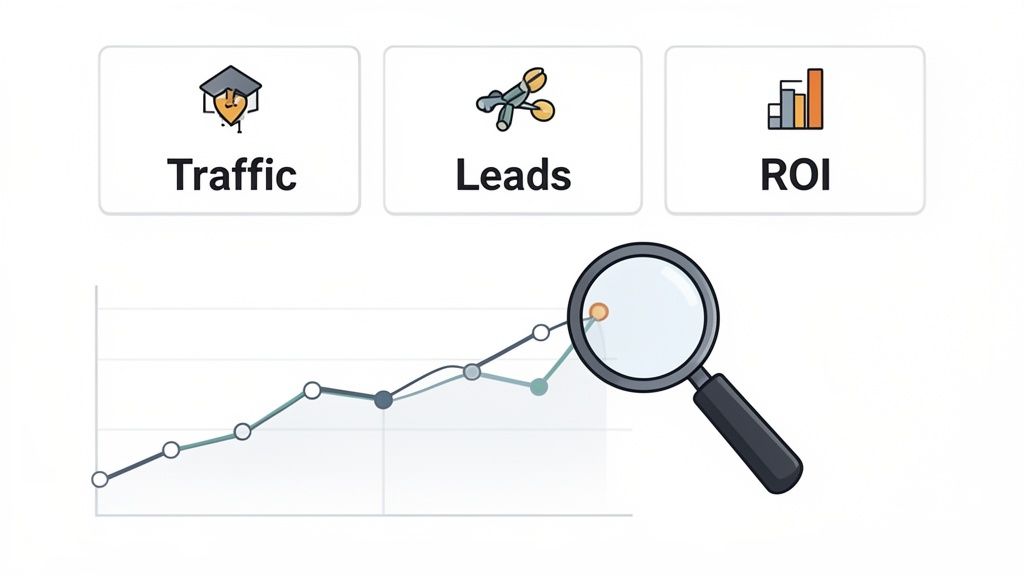
Analytics, Measurement, and Reporting is the framework that turns your marketing activities into measurable business outcomes. This section outlines how you will track performance, analyze data, and communicate results to stakeholders, ensuring every marketing dollar is accounted for. It defines your Key Performance Indicators (KPIs), establishes reporting cadences, and dictates how you will optimize campaigns based on data-driven insights. This is a critical component among the essential parts of a marketing plan because it provides the proof of marketing's value.
Without a robust measurement system, you're essentially marketing in the dark. This part of your plan connects your strategic actions to tangible results, demonstrating impact and justifying future investment.
Why It's a Critical Concluding Step
A strong analytics framework closes the loop on your entire strategy, turning data into actionable intelligence. It answers the fundamental question: "Did our marketing plan work?" By defining what success looks like upfront with clear KPIs, you eliminate ambiguity and focus the team on metrics that matter, such as Customer Acquisition Cost (CAC) or conversion rates. It also helps you understand the nuances of how different channels contribute to your goals. For a deeper understanding of this, explore different models of marketing attribution.
Pro-Tip: Establish baseline metrics before launching any campaign. Knowing your starting point for metrics like website traffic, lead volume, and conversion rate is the only way to accurately measure the impact of your new initiatives.
Actionable Implementation Tips
- Define KPI Ownership: Assign a specific person or team to be responsible for tracking each KPI. This ensures accountability for both monitoring the data and acting on the insights.
- Automate Dashboards: Create a centralized, automated dashboard (using tools like Google Data Studio or HubSpot) that pulls data from all your platforms. This provides a single source of truth for real-time performance.
- Establish a Reporting Cadence: Set up a consistent schedule for reviewing performance, such as a monthly review meeting. Each report should include not just data, but also clear next-step recommendations.
- Integrate Agency Value: A key agency deliverable is transparent reporting. For example: "ReachLabs.ai will provide a bi-weekly performance dashboard and a monthly strategic review, detailing campaign ROI and outlining data-backed optimizations for the upcoming cycle."
12-Part Marketing Plan Comparison
| Component | Implementation Complexity 🔄 | Resource Requirements ⚡ | Expected Outcomes 📊 | Effectiveness ⭐ | Ideal Use Cases & Tips 💡 |
|---|---|---|---|---|---|
| Executive Summary | Low 🔄 | Low (senior time) ⚡ | Quick stakeholder alignment and decision-making 📊 | High ⭐⭐ | Pitching or executive review — write last, include metrics and scannable bullets 💡 |
| Market Analysis & Research | High 🔄🔄🔄 | High (tools, data, analysts) ⚡⚡⚡ | Identify opportunities, reduce risk, inform strategy 📊 | Very High ⭐⭐⭐ | New market entry or strategy foundation — combine primary & secondary research; update quarterly 💡 |
| Target Audience & Personas | Medium 🔄🔄 | Medium (interviews, analytics) ⚡⚡ | More relevant messaging and higher conversion rates 📊 | High ⭐⭐⭐ | Use 3–5 data-driven personas; validate with customer data and update regularly 💡 |
| Brand Positioning & Messaging Strategy | Medium–High 🔄🔄🔄 | Medium (creative + research) ⚡⚡ | Clear differentiation and consistent brand voice 📊 | High ⭐⭐⭐ | Develop 3–5 messaging pillars; test with target audiences before rollout 💡 |
| Marketing Objectives & Key Results (OKRs) | Medium 🔄🔄 | Medium (analytics, coordination) ⚡⚡ | Measurable focus, alignment, and performance benchmarks 📊 | High ⭐⭐⭐ | Set 3–5 objectives per quarter; review monthly and align to business goals 💡 |
| Marketing Strategies & Tactics | High 🔄🔄🔄 | High (multidisciplinary teams) ⚡⚡⚡ | Actionable campaign roadmap and execution plans 📊 | High ⭐⭐⭐ | Prioritize 2–3 channels, test tactics in small segments before scaling 💡 |
| Content Marketing Plan | Medium 🔄🔄 | Medium–High (production, SEO) ⚡⚡ | Organic traffic, authority, and lead generation over time 📊 | High (long-term) ⭐⭐⭐ | Build pillar content + repurposing strategy; plan 3–6 months ahead 💡 |
| Social Media Strategy | Medium 🔄🔄 | Medium (community mgmt, creative) ⚡⚡ | Engagement, brand presence, rapid audience feedback 📊 | Medium–High ⭐⭐ | Focus on 2–3 platforms, maintain daily engagement, use native features and social listening 💡 |
| Influencer Marketing & Partnership Strategy | Medium 🔄🔄 | Medium (talent, contracts, budget) ⚡⚡ | Authentic reach, social proof, user-generated content 📊 | High (if aligned) ⭐⭐⭐ | Start with micro-influencers, verify audiences, favor long-term relationships and performance tracking 💡 |
| Paid Advertising & Budget Allocation | Medium 🔄🔄 | High (ad spend + specialists) ⚡⚡⚡ | Immediate traffic, fast testing, scalable lead gen 📊 | High (fast) ⭐⭐⭐ | Test with small budgets, define ROAS targets, rotate creatives and monitor daily 💡 |
| Email Marketing & Nurture Strategy | Low–Medium 🔄🔄 | Low–Medium (automation tools) ⚡⚡ | High ROI, retention, and conversion through nurture flows 📊 | Very High ⭐⭐⭐ | Segment lists, implement welcome series, personalize content and optimize for mobile 💡 |
| Analytics, Measurement & Reporting | High 🔄🔄🔄 | High (analytics tools, integration, analysts) ⚡⚡⚡ | Clear ROI attribution, optimization insights, data-driven decisions 📊 | Essential ⭐⭐⭐ | Establish baselines, automate dashboards, use consistent UTMs and monthly review cadence 💡 |
Bringing It All Together: Your Integrated Path Forward
We've journeyed through the 12 essential parts of a marketing plan, from the high-level Executive Summary to the granular details of Analytics and Reporting. It's easy to view these as a simple checklist, a series of boxes to tick before launching a campaign. However, the true power of a comprehensive marketing plan lies not in its individual components, but in their seamless integration.
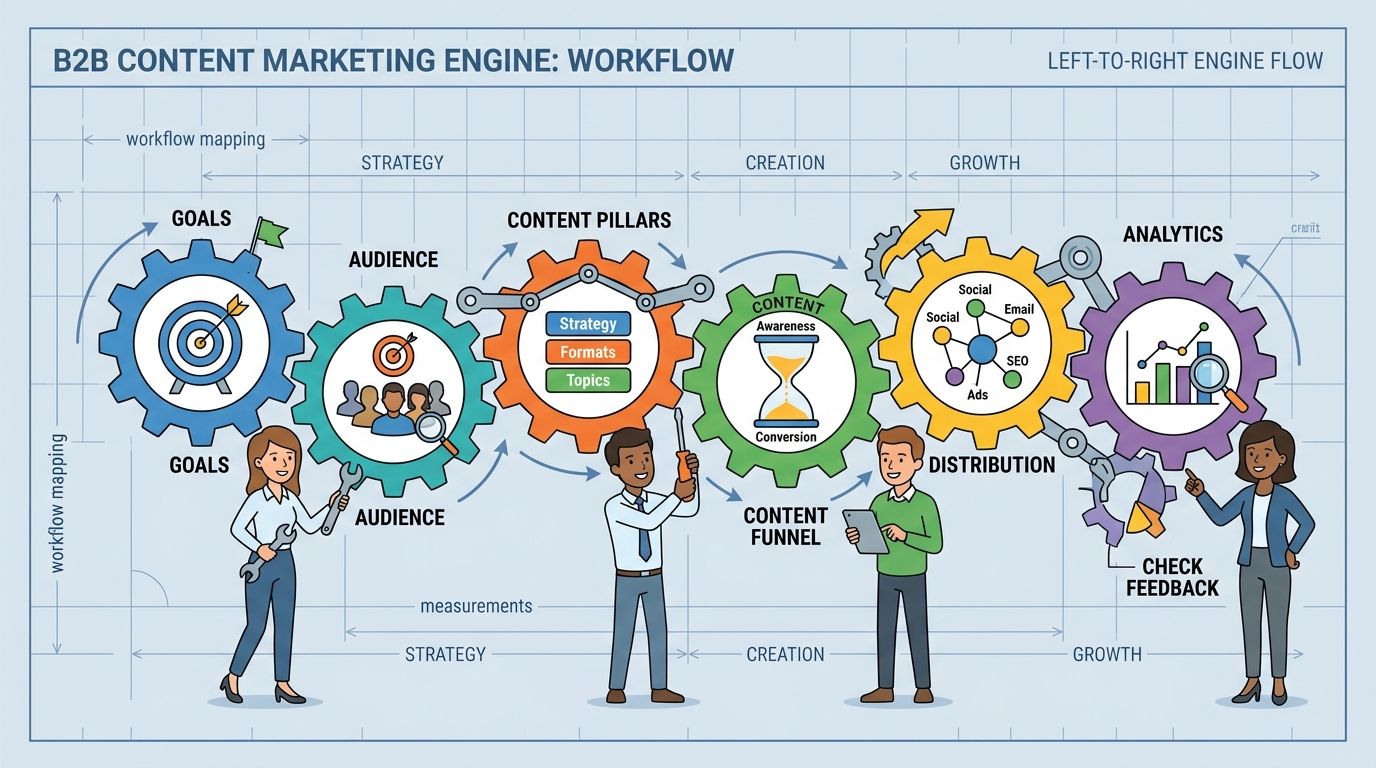
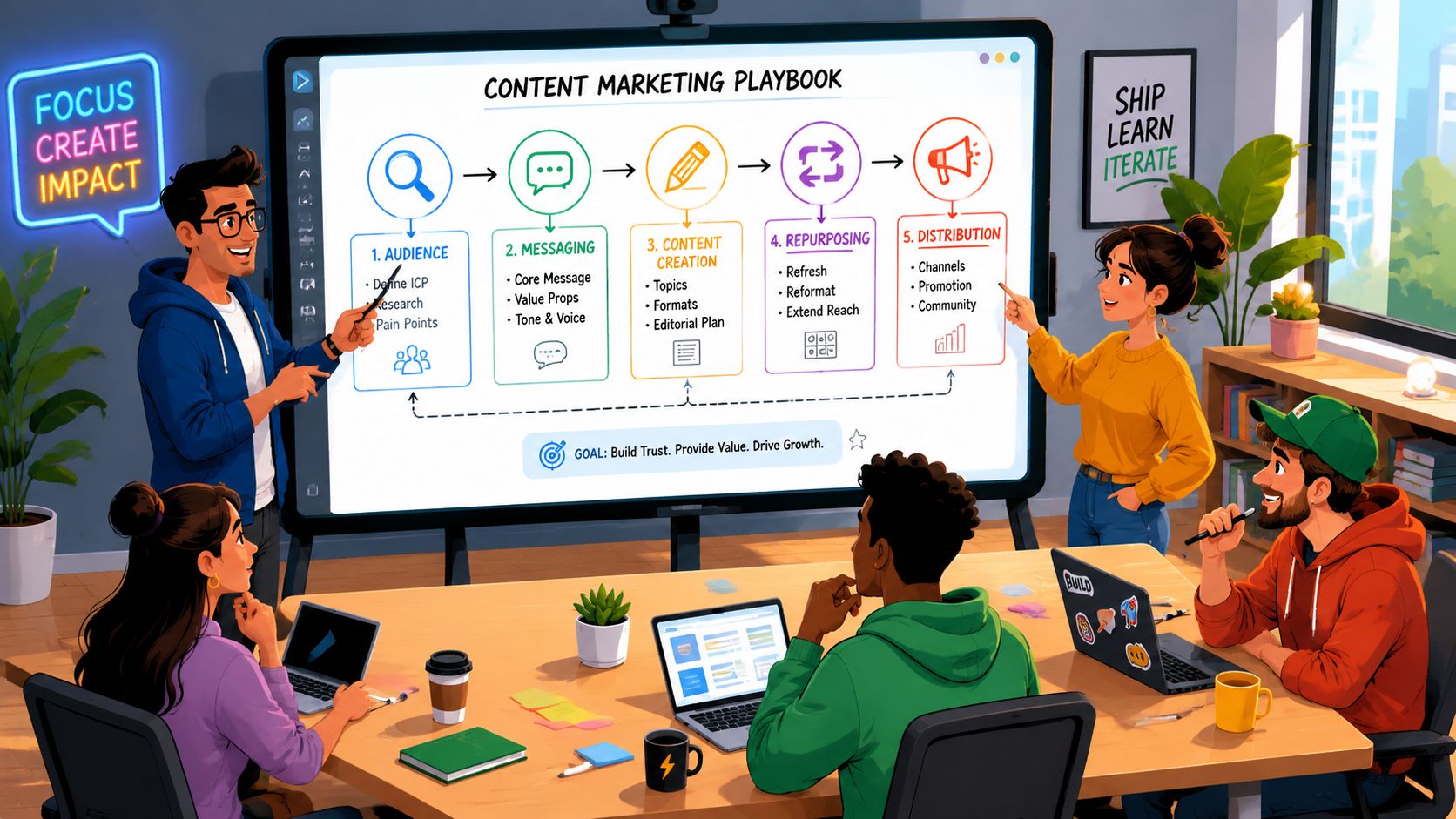
This document is more than a roadmap; it's the central nervous system of your brand's growth. Each section is a vital organ that communicates with and supports the others, creating a living, breathing strategy that can adapt and thrive. Your market research validates your target personas. Those personas dictate your brand messaging. That messaging informs your content strategy, which is then deployed across specific channels and measured with analytics. This is a continuous, dynamic loop, not a linear, one-time task.
From Blueprint to Business Impact
The difference between a plan that sits on a server and one that drives revenue is activation and adaptation. The most meticulously crafted strategy is useless without committed execution and the flexibility to pivot. Markets are fluid, consumer behavior evolves, and new technologies constantly emerge. Your marketing plan must be a resilient, agile document designed for this reality.
Consider these core takeaways as you move forward:
- Integration Over Isolation: Your social media strategy should not exist in a vacuum, separate from your email nurturing campaigns. Each part of your marketing plan must inform and amplify the others. The messaging in your paid ads should align perfectly with the value propositions highlighted in your content marketing.
- Data as Your Compass: Your initial market research is just the starting point. The real magic happens when you use ongoing analytics and reporting to refine every other component. Let performance data guide your budget allocation, content creation, and strategic adjustments.
- Strategy Before Tactics: It's tempting to jump straight to choosing social media channels or designing an ad. However, without a solid foundation built on your brand positioning, target audience, and clear objectives, your tactics will be disjointed and ineffective. The foundational parts of a marketing plan we discussed are non-negotiable prerequisites for success.
Your Actionable Next Steps
Building and managing such an interconnected system requires focus and expertise. As you leave this guide, don't let the scope of the task lead to inaction. Instead, focus on tangible, immediate steps.
Start by auditing your current marketing efforts against the 12 components outlined. Where are the gaps? Is your target persona a vague concept or a detailed, data-backed profile? Are your objectives clearly defined with measurable key results? Identifying these weak points is the first step toward building a more robust and effective strategy.
Key Insight: A successful marketing plan is not about being perfect from day one. It's about creating a strong, integrated framework and then committing to a cycle of consistent execution, measurement, and iterative improvement.
Ultimately, mastering these concepts transforms marketing from a cost center into a predictable engine for growth. It empowers you to make smarter decisions, allocate resources more effectively, and build a brand that resonates deeply with its audience. This isn't just about creating a document; it's about building a sustainable competitive advantage in a crowded marketplace.
Ready to transform your marketing blueprint into a high-performance growth engine? The team at ReachLabs.ai specializes in integrating every part of your marketing plan, from foundational strategy to multi-channel execution and analytics. Visit ReachLabs.ai to discover how our experts can help you build and manage a cohesive strategy that delivers measurable results.