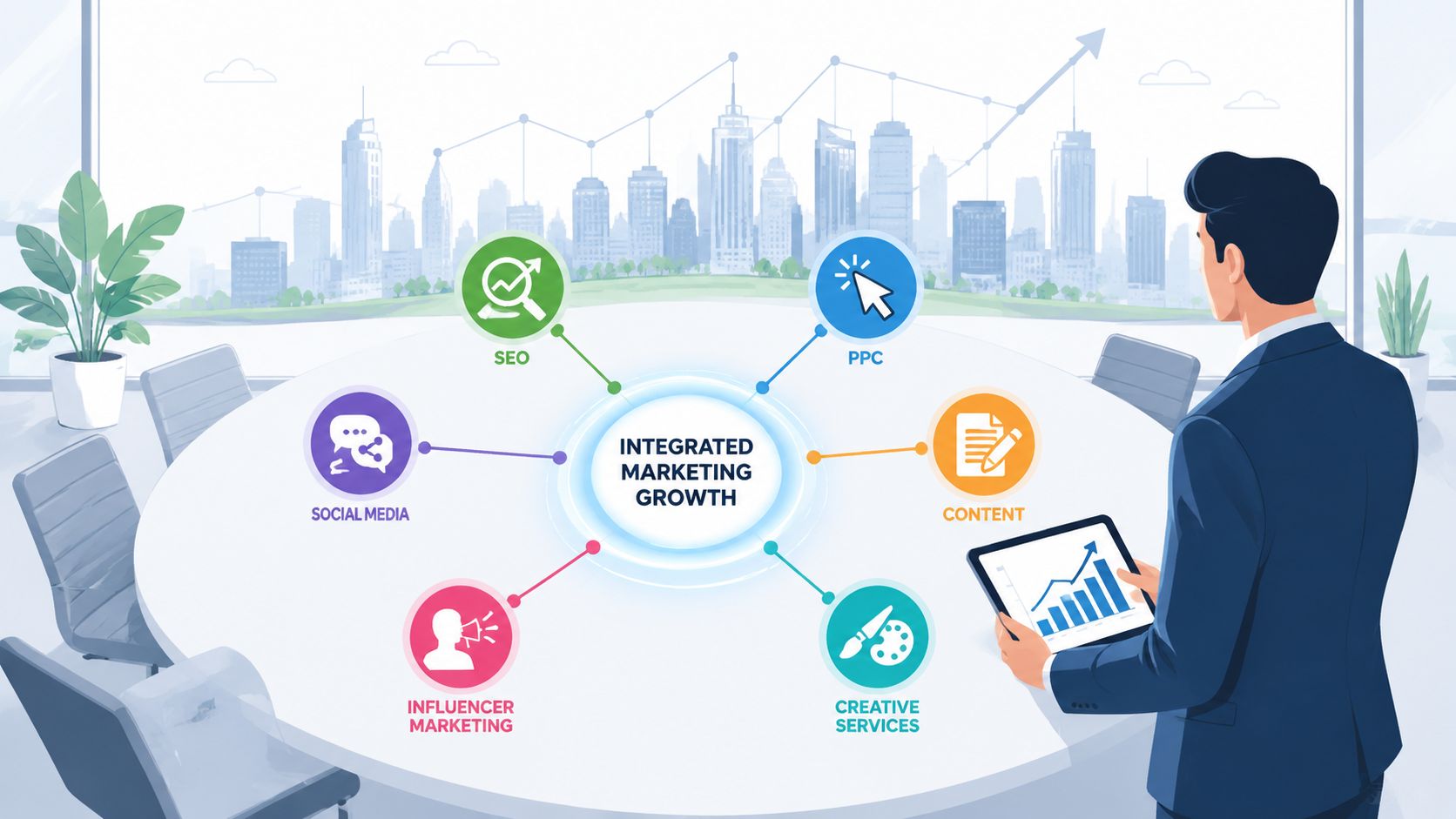

Running a small business is a masterclass in multitasking, but marketing often feels like its own unconquerable beast. You're passionate about your product or service, yet translating that passion into a steady stream of customers can be frustratingly difficult. You are not alone. Many entrepreneurs find themselves facing the same set of stubborn small business marketing problems that can stifle growth, from navigating shoestring budgets to keeping up with the overwhelming pace of digital trends.
This guide isn't about generic advice; it's a strategic roadmap designed to provide clarity and direction. We will dissect the 10 most critical marketing challenges that small businesses consistently face, offering a clear diagnosis for each one. More importantly, we provide a tactical playbook filled with actionable steps, practical templates, and expert insights to help you turn these obstacles into genuine opportunities. To better understand the landscape of obstacles faced by entrepreneurs, delve into these common small business marketing challenges for a foundational perspective.
The purpose of this article is to equip you with the tools to solve these issues systematically. Instead of feeling overwhelmed, you'll learn to pinpoint the root cause of a problem, whether it's poor lead quality or an inconsistent brand message, and apply a specific, effective fix. We will cover everything from improving your website's performance and mastering SEO to building a content strategy that actually generates results. Let’s transform your marketing from a source of constant stress into your most powerful engine for sustainable growth. The solutions are more accessible than you think.
1. Limited Marketing Budget
One of the most persistent small business marketing problems is navigating a limited budget. Unlike large corporations with vast financial reserves, small businesses must make every dollar count, forcing difficult trade-offs between essential marketing activities. This financial constraint often leads to underfunded campaigns, inconsistent channel presence, and the inability to experiment with new strategies, ultimately hindering growth. The core challenge is maximizing impact with minimal spend.

This forces a shift from "spending more" to "spending smarter." Instead of trying to compete on every channel, the goal is to identify and dominate the few that offer the highest return on investment (ROI). This strategic focus is not a weakness but a competitive advantage, allowing for deeper engagement with a core audience.
Diagnostic Questions
- Do you know the exact ROI for each of your marketing channels?
- Are you spreading your budget thinly across many platforms or concentrating it on 2-3 high-performers?
- What percentage of your marketing efforts leverages free or low-cost tools and strategies?
- Is your customer acquisition cost (CAC) sustainable for your business model?
Actionable Fixes & Tactics
- Focus on High-ROI Channels: Conduct a simple audit. If 80% of your leads come from organic social media and email, allocate the majority of your time and a small budget there instead of on costly paid ads that aren't converting.
- Leverage "Free" Marketing: Fully optimize your Google Business Profile with posts, photos, and service updates. Engage consistently on the social media platforms where your customers are most active.
- Embrace Community & Partnerships: A local bakery can partner with a nearby coffee shop for a joint promotion. This co-marketing approach splits costs and cross-promotes to relevant, local audiences.
- Prioritize Word-of-Mouth: Implement a simple referral program. Offer a discount or small gift to existing customers who bring in new business. This is a powerful, low-cost acquisition strategy.
Pro Tip: Your budget isn't just money; it's also your time. Allocate your hours just as strategically as your dollars, focusing on tasks that directly generate leads and sales.
Effectively managing a tight budget is crucial for sustainable growth. By prioritizing ruthlessly and focusing on efficiency, small businesses can achieve remarkable results. For a deeper dive into financial efficiency, you can explore strategies to reduce your customer acquisition cost.
2. Lack of Marketing Expertise and Knowledge
Another significant one of the most common small business marketing problems is the owner's knowledge gap. Most entrepreneurs are experts in their craft, whether it's baking, accounting, or construction, but not necessarily in digital marketing. This lack of formal training can lead to ineffective strategies, wasted resources on the wrong channels, and an inability to interpret crucial performance data, which ultimately stalls business growth. The challenge is bridging this expertise gap without a formal marketing degree.
This forces business owners to become resourceful learners or strategic outsourcers. Instead of trying to master every marketing discipline, the goal is to gain fundamental knowledge in key areas while knowing when to seek expert help. This approach transforms a potential weakness into an opportunity for efficient, targeted growth driven by either new skills or strategic partnerships.
Diagnostic Questions
- Can you confidently explain your marketing strategy and why you chose specific channels?
- Do you feel overwhelmed when looking at your website or social media analytics?
- Are you consistently trying new tactics without a clear understanding of why they might work?
- Have you dedicated specific time in your calendar for marketing education and skill-building?
Actionable Fixes & Tactics
- Invest in Free Education: Leverage high-quality, free resources like HubSpot Academy or Google's Digital Garage. A small business owner can complete a foundational course on email marketing or SEO in just a few hours to immediately improve their efforts.
- Join Business & Networking Groups: Participate in local business groups or online communities. These forums are invaluable for asking questions, sharing experiences, and learning what works for other entrepreneurs in similar situations.
- Read Industry-Specific Blogs: Identify 2-3 marketing blogs that focus on your industry (e.g., "marketing for restaurants"). Their case studies and tactical advice will be far more relevant than generic marketing tips.
- Consider Fractional Expertise: Hire a fractional marketing consultant for a few hours a month. They can provide high-level strategic guidance, set up campaigns correctly, and teach you how to manage them, offering expert support without the cost of a full-time hire.
Pro Tip: Focus on "just-in-time" learning. Instead of trying to learn everything at once, focus on mastering the single marketing skill that will have the biggest impact on your business right now.
Gaining marketing knowledge is a continuous process, not a one-time task. By committing to learning and knowing when to ask for help, small business owners can develop effective, growth-driving strategies. For those considering external help, you can explore the benefits of outsourcing marketing for your small business.
3. Difficulty Identifying and Reaching Target Audience
Another of the most critical small business marketing problems is attempting to be everything to everyone. Many businesses fail to clearly define their ideal customer, leading to generic messaging that resonates with no one. When you don't know exactly who you're talking to, your marketing efforts become scattered, inefficient, and expensive, resulting in low engagement and poor conversion rates.

The core challenge is moving from a broad, undefined market to a specific, well-understood niche. Without a clear target, you waste resources on platforms where your audience isn't active and craft messages that don't address their specific pain points. Precise targeting ensures your message, offer, and channel are perfectly aligned for maximum impact.
Diagnostic Questions
- Can you describe your ideal customer in a detailed paragraph, including their goals, challenges, and demographics?
- Do you know which social media platforms, forums, or publications your target audience uses most?
- Are you creating content that directly solves a specific problem for a specific group of people?
- Have you ever surveyed your best existing customers to understand their motivations and how they found you?
Actionable Fixes & Tactics
- Create Detailed Buyer Personas: Go beyond basic demographics. Build a profile for "Marketing Mary" or "Startup Steve" that includes their job title, daily frustrations, professional goals, and where they look for information. Use this to guide all marketing decisions.
- Analyze Your Current Customer Base: Use your CRM or sales data to identify common traits among your most profitable and loyal customers. What industry are they in? What is their company size? This data provides a blueprint for finding more people like them.
- Leverage Social Media Analytics: Tools like Facebook Audience Insights or LinkedIn website demographics can reveal detailed information about the people who already engage with your brand. Use this data to refine your targeting.
- Research Competitor Audiences: Analyze who is following and engaging with your direct competitors. This can provide valuable clues about audience segments you may be overlooking. A B2B SaaS company might find a competitor has strong engagement with project managers, a previously untapped persona.
Pro Tip: Your target audience is not static. Continuously gather feedback, monitor analytics, and survey customers to refine your personas as your market and business evolve.
Defining and reaching your target audience is the foundation of all effective marketing. It transforms your efforts from shouting into a crowd to having a meaningful conversation with someone who wants to listen. To master this, consider how you can build a strong brand identity that speaks directly to your ideal customer.
4. Inconsistent or Ineffective Brand Messaging
One of the most insidious small business marketing problems is an inconsistent or ineffective brand message. When your website says one thing, your social media posts say another, and your in-store experience feels completely different, you create confusion. This lack of cohesion dilutes your brand identity, making it difficult for customers to understand who you are, what you stand for, and why they should choose you over a competitor. The core challenge is creating a unified story that resonates across every single customer touchpoint.
This forces a business to move from ad-hoc communication to deliberate, strategic messaging. Instead of just creating content, the goal is to build a consistent brand world that customers recognize and trust. This strategic alignment ensures every piece of marketing material, from an email signature to a billboard, reinforces the same core values and value proposition.
Diagnostic Questions
- Can you state your unique value proposition in a single, clear sentence?
- Do all your marketing channels (website, social media, ads) use the same visual style, tone of voice, and core messaging?
- Have you documented brand guidelines that your entire team can access and follow?
- If a new customer saw your Facebook page and your website on different days, would they know they belong to the same company?
Actionable Fixes & Tactics
- Create a Simple Brand Style Guide: Document your official logos, color palette (HEX codes), fonts, and tone of voice (e.g., "friendly and professional," "witty and informal"). This one-page document is your brand's bible.
- Define Your Core Message Pillars: Identify 3-5 key themes or messages that are central to your brand. For a sustainable coffee shop, these might be "Ethical Sourcing," "Community Hub," and "Artisanal Quality." Every piece of content should connect back to one of these pillars.
- Conduct a "Consistency Audit": Review all of your marketing assets side-by-side. Check for consistency in your logo usage, color schemes, and messaging. Update any outdated or off-brand materials immediately.
- Tell Your Brand Story: Weave your origin story and mission into your "About Us" page, social media bios, and even product descriptions. A personal story helps create an emotional connection that generic messaging cannot.
Pro Tip: Your brand messaging isn't just for customers; it's for your team. Ensure every employee, from sales to customer service, understands and can articulate your brand's core value proposition consistently.
A strong, unified brand message acts as a powerful amplifier for all your marketing efforts. By establishing and enforcing consistency, you build brand equity and create a memorable identity that stands out in a crowded market.
5. Poor Website and Digital Presence
In today's digital-first world, your website is often the first point of contact with a potential customer. A common yet critical one of the small business marketing problems is having an outdated, slow, or poorly designed website. This weak digital presence acts as a leaky bucket; no matter how much traffic you drive through other marketing efforts, a bad website will fail to convert visitors, damage brand credibility, and create a frustrating user experience.

Your website is your 24/7 salesperson and digital storefront. If it's not optimized for mobile, difficult to navigate, or lacks clear calls-to-action, it actively works against your growth. Correcting this isn't just a design update; it's a fundamental business upgrade that impacts lead generation, sales, and customer trust.
Diagnostic Questions
- When was the last time you updated your website's design or content?
- Does your website load in under 3 seconds on both desktop and mobile devices?
- Is it immediately clear to a first-time visitor what you do and who you serve?
- Do you have clear conversion points, like "Contact Us," "Buy Now," or "Schedule a Demo," on every key page?
Actionable Fixes & Tactics
- Prioritize Mobile-First Design: Test your website on multiple smartphones and tablets. Ensure that text is readable, buttons are easily clickable, and navigation is simple without needing to pinch or zoom.
- Optimize for Speed: Compress images before uploading them, leverage browser caching, and minimize the use of bulky plugins. Use Google's PageSpeed Insights for a free performance report and specific recommendations.
- Add Trust Signals: Prominently display customer testimonials, case studies, industry certifications, or positive reviews. A local professional firm can add client logos and credentials to its homepage to build instant credibility.
- Implement Clear Calls-to-Action (CTAs): Every page should guide the user toward a next step. Use action-oriented language like "Get Your Free Quote" or "Download the Guide" on brightly colored, easy-to-find buttons.
Pro Tip: Your website's navigation should be intuitive enough for a first-time visitor to find what they need in three clicks or less. If it's a maze, your bounce rate will soar.
Treating your website as a core business asset rather than a static brochure is essential. Continuous improvement based on user data and feedback transforms it from a liability into your most powerful marketing engine.
6. Ineffective Social Media Strategy
Another one of the most common small business marketing problems is having an ineffective or nonexistent social media strategy. Many businesses simply post inconsistently, use the wrong platforms for their audience, or fail to engage authentically. This "spray and pray" approach turns social media into a significant time drain that yields minimal follower growth, low engagement, and no measurable business impact. The core challenge is shifting from random activity to a strategic plan that builds community and drives results.
Treating social media as a chore rather than a vital communication channel leads to wasted effort. A successful strategy requires understanding where your customers spend their time and creating content that serves their needs, not just your own promotional calendar. The goal is to transform your social channels from digital billboards into vibrant communities.
Diagnostic Questions
- Can you identify the 1-2 social media platforms where your target audience is most active and engaged?
- Do you have a content calendar that plans posts at least one week in advance?
- Are you posting valuable, non-promotional content (educational, entertaining, inspiring) at least 50% of the time?
- Do you respond to comments and direct messages within 24 hours to foster community?
Actionable Fixes & Tactics
- Pick Your Platforms Wisely: Don't try to be everywhere. If you're a B2B service, focus your energy on creating thought leadership content for LinkedIn. A local restaurant will likely find more success building a visual community on Instagram or TikTok.
- Create a Simple Content Calendar: Plan your content in batches. A simple calendar can map out themes for the week: a "Meet the Team" post on Monday, a "How-To" video on Wednesday, and a "Customer Feature" on Friday. This eliminates daily guesswork.
- Prioritize Engagement Over Broadcasting: Set aside 15-30 minutes daily just to engage. Respond to every comment, answer questions in direct messages, and interact with posts from complementary businesses or local influencers.
- Use Platform-Native Features: Boost visibility by using features the platforms prioritize. Create short, engaging Instagram Reels, host a Q&A session with Facebook Live, or run a poll on LinkedIn. This signals to the algorithm that you are an active user.
Pro Tip: Follow the 80/20 rule for social content. 80% of your posts should provide value (entertain, educate, inspire) to your audience, while only 20% should be directly promotional. This builds trust and keeps your followers engaged.
An effective social media presence is built on consistency and authentic connection, not a massive budget. By focusing your efforts and providing genuine value, you can turn your social channels into powerful assets for business growth. To get a head start, you can explore some ready-to-use social media templates.
7. Difficulty with SEO and Organic Search Visibility
One of the most impactful small business marketing problems is failing to appear in search engine results when potential customers are looking for solutions. Without strong Search Engine Optimization (SEO), your business remains invisible to a vast audience actively seeking your products or services. This lack of organic search visibility means competitors who rank higher on Google capture the traffic, leads, and sales that should have been yours, directly stunting business growth.
The core issue is often a mix of technical complexity, a lack of consistent effort, and not understanding how customers search. SEO is not a one-time fix but an ongoing process of creating valuable content, optimizing your website, and building authority. Overlooking it is like having a store with no sign on the door; people who are specifically looking for you will struggle to find you.
Diagnostic Questions
- When you search for your main products or services, does your business appear on the first page of Google?
- Do you know which keywords your ideal customers use to find businesses like yours?
- Have you optimized your website's title tags, meta descriptions, and headers for your target keywords?
- Is your Google Business Profile fully claimed, verified, and optimized with current information?
Actionable Fixes & Tactics
- Master Local SEO: Start by fully optimizing your Google Business Profile. Add your services, photos, hours, and encourage customer reviews. This is the fastest way for local businesses, like a plumber, to rank for "emergency plumbing near me."
- Focus on On-Page SEO Basics: For every important page on your site, ensure the title tag and meta description include your primary keyword. Use tools like Ahrefs' Free Keyword Generator to find terms with high customer intent.
- Create Helpful "Pillar" Content: Write one comprehensive, high-quality blog post or guide that answers a major customer question in detail. A financial advisor could create a "Beginner's Guide to Investing" to attract and educate new clients.
- Build an Internal Linking Structure: When you publish a new blog post, find opportunities to link to it from older, relevant pages on your site. This helps search engines understand the page's context and importance.
Pro Tip: Don't obsess over complex technical SEO at the start. Focus on creating genuinely useful content that answers the specific questions your customers are typing into Google. Quality and relevance are the foundation of all good SEO.
By systematically addressing SEO, you build a sustainable source of high-intent traffic that pays dividends long after the initial work is done. For a deeper look at optimizing your online presence, see how to create a content strategy that drives organic traffic.
8. Limited Email Marketing Implementation
Another one of the most common small business marketing problems is failing to build and leverage an email list. Many businesses focus entirely on acquiring new customers through social media or ads, overlooking the immense value of direct, owned communication. Without a solid email strategy, they miss out on a cost-effective channel for nurturing leads, retaining customers, and driving repeat sales, leaving money on the table. The core challenge is shifting from a transactional mindset to a relationship-building one.
This forces a business to recognize that an email list is a valuable asset, not just a contact database. Instead of constantly paying to reach an audience on third-party platforms, email marketing provides a direct line to interested prospects and loyal customers. The goal is to deliver consistent value to their inbox, building trust that translates directly into long-term revenue and customer loyalty.
Diagnostic Questions
- Do you have a clear strategy for consistently adding new, qualified subscribers to your email list?
- Are you sending emails on a regular schedule, or only when you have a promotion?
- Do you segment your list to send more relevant content to different audience groups?
- What is your average email open rate and click-through rate, and how do you track them?
Actionable Fixes & Tactics
- Create an Irresistible Lead Magnet: Offer something of value in exchange for an email address. This could be a checklist, a free guide, a discount code, or a webinar recording. This ensures you attract subscribers who are genuinely interested in what you offer.
- Implement an Automated Welcome Series: Don't just send a confirmation email. Create a 3-5 email sequence that introduces your brand, provides value, and sets expectations for new subscribers. This is your best opportunity to make a strong first impression.
- Follow the 80/20 Rule: Send valuable, educational, or entertaining content 80% of the time, and promotional content only 20% of the time. A service business could send monthly tips, while an e-commerce store could share style guides.
- Segment Your Audience: Group your subscribers based on their behavior or interests. For example, segment by purchase history (new vs. repeat customers) or by what lead magnet they downloaded. This allows for hyper-targeted, relevant messaging that boosts engagement.
Pro Tip: Your email list is one of the only marketing channels you truly own. Algorithms on social media can change, but your direct line to your audience via email remains constant and under your control.
An effective email marketing program transforms one-time buyers into repeat customers and passive followers into brand advocates. By focusing on building and nurturing this asset, small businesses can create a reliable and profitable marketing engine.
9. Inability to Measure Marketing ROI and Analytics
One of the most elusive yet critical small business marketing problems is the inability to measure performance accurately. Many owners invest time and money into campaigns with no clear way to determine what's working and what's not. This lack of data-driven insight means decisions are based on gut feelings, leading to wasted budgets, missed opportunities, and an inability to scale successful strategies. Without solid metrics, marketing remains a cost center instead of a predictable growth engine.
This challenge stems from not having the right tools or a clear process for tracking results. The goal isn't to become a data scientist overnight but to establish a simple system that connects marketing actions to business outcomes, like leads and sales. To overcome the challenge of proving your marketing efforts pay off, understanding how to measure effectiveness is crucial. For an in-depth guide on this, explore these principles on Mastering Advertising Effectiveness Measurement.
Diagnostic Questions
- Can you confidently say which marketing channel brings you the most valuable customers?
- Do you have clear key performance indicators (KPIs) for each campaign before it launches?
- Are you using tools like Google Analytics to track website traffic and user behavior?
- How often do you review your marketing data to make adjustments to your strategy?
Actionable Fixes & Tactics
- Set Up Foundational Analytics: Install Google Analytics 4 on your website. It's free, powerful, and provides essential insights into where your visitors come from and what they do on your site. Set up conversion goals for key actions like form submissions or purchases.
- Use UTM Parameters for Campaigns: Add UTM tags to the links you use in social media posts, emails, and ads. This allows you to precisely track which specific campaign or post is driving traffic and conversions in your analytics.
- Define Clear KPIs: Before launching any initiative, define what success looks like. Is it 50 new email subscribers? 10 qualified leads? 5 product sales? Having a clear target makes measurement straightforward.
- Create a Simple Dashboard: You don't need complex software. A simple spreadsheet tracking your monthly spend, leads generated, and cost per lead for each channel can provide immense clarity and guide better budget allocation.
Pro Tip: Start small. Track just one or two critical metrics, like "Cost Per Lead" and "Website Conversion Rate." Mastering these will provide more value than being overwhelmed by dozens of vanity metrics.
Without measurement, you're flying blind. By implementing basic tracking, you can start making informed decisions that directly improve your bottom line. To get started with the core formulas, you can learn how to calculate your marketing ROI.
10. Lack of Content Marketing Strategy
Another of the most common small business marketing problems is operating without a coherent content marketing strategy. Many businesses create content sporadically, posting on social media when they remember or writing a blog post when they have time. This reactive approach leads to disjointed, ineffective efforts that fail to build authority, educate customers, or drive organic traffic. Without a strategy, content creation is just noise, not a tool for growth.
The fix is to move from random acts of content to a planned, purposeful system. A content strategy acts as a roadmap, ensuring every video, blog post, and social update serves a specific business goal. It's about creating valuable, relevant content that attracts and retains a clearly defined audience, ultimately nurturing them into profitable customers.
Diagnostic Questions
- Do you have a documented content plan for the next 4-8 weeks?
- Can you identify 3-5 core topics that your content consistently addresses?
- Does every piece of content you publish have a clear purpose and a call-to-action (CTA)?
- Are you creating content for different stages of the buyer's journey (awareness, consideration, decision)?
Actionable Fixes & Tactics
- Identify Core Content Pillars: Choose 3-5 core topics your audience deeply cares about that are related to your expertise. A home services company could focus on DIY tips, seasonal maintenance, and cost-saving projects.
- Create a Simple Content Calendar: Plan your content at least one month in advance. A basic spreadsheet listing the topic, format (blog, video), target keyword, and publishing date is all you need to start.
- Repurpose, Don't Just Create: Turn one comprehensive blog post into a series of social media tips, a short explainer video, and an infographic. This maximizes your effort and reaches different audience segments.
- Optimize for Search: For each piece of content, identify a primary keyword your ideal customer would search for. Include it naturally in your title, headings, and body text to improve organic visibility.
Pro Tip: Your content strategy shouldn't be rigid. Regularly review your analytics to see what topics and formats resonate most with your audience, then double down on what works.
A well-defined content strategy transforms marketing from a cost center into an asset that generates long-term value. To learn more about building a robust content plan, consider exploring how to develop a B2B content strategy.
10-Point Comparison of Small Business Marketing Problems
| Item | 🔄 Implementation Complexity | ⚡ Resource Requirements | 📊 Expected Outcomes | Ideal Use Cases | 💡 Key Tips |
|---|---|---|---|---|---|
| Limited Marketing Budget | Medium 🔄 — requires strict prioritization and trade-offs | Low ⚡ — small ad spend, high time/effort | Moderate 📊 — targeted impact, limited scale | Local shops, early-stage startups | 💡 Focus 2–3 channels; run ROI-first tests; co-marketing |
| Lack of Marketing Expertise and Knowledge | Medium-High 🔄 — learning curve or hiring needed | Medium ⚡ — training, consultant time or fractional hires | Variable 📊 — improves with training; initial inefficiencies | Small owners without marketing staff | 💡 Use free courses; hire fractional consultant; join peer groups |
| Difficulty Identifying and Reaching Target Audience | High 🔄 — research and testing required | Medium ⚡ — analytics tools, surveys, testing budget | High 📊 — better targeting improves conversion significantly | Niche retailers, B2B sellers, new offerings | 💡 Build buyer personas; test segments; use analytics |
| Inconsistent or Ineffective Brand Messaging | Medium 🔄 — needs alignment and documentation | Low-Medium ⚡ — time to create guidelines and train staff | High 📊 — clearer messaging boosts recognition & loyalty | Retail boutiques, service brands, startups rebranding | 💡 Create brand guidelines; audit channels; train team |
| Poor Website and Digital Presence | Medium-High 🔄 — design, technical fixes, ongoing upkeep | Medium-High ⚡ — development, hosting, maintenance | High 📊 — direct lift in conversions and credibility | E‑commerce, service providers, local businesses | 💡 Prioritize mobile, speed, CTAs; add trust signals |
| Ineffective Social Media Strategy | Medium 🔄 — content planning and engagement habits | Low-Medium ⚡ — time, content creation tools | Moderate 📊 — organic growth possible; variable ROI | Restaurants, retail, B2B thought leadership on LinkedIn | 💡 Choose 1–2 platforms; use a content calendar; engage daily |
| Difficulty with SEO and Organic Search Visibility | High 🔄 — strategy, content, and technical work | Medium-High ⚡ — content production, SEO tools, link building | High (long-term) 📊 — sustainable traffic and high intent leads | Local services, content-driven businesses, e‑commerce | 💡 Keyword research, on-page SEO, local GMB optimization |
| Limited Email Marketing Implementation | Low-Medium 🔄 — setup and segmentation needed | Low ⚡ — email platform costs and content time | High 📊 — strong ROI and retention when done well | E‑commerce, service renewals, SaaS lead nurture | 💡 Build lead magnets; automate welcome & cart flows; segment |
| Inability to Measure Marketing ROI and Analytics | Medium-High 🔄 — tracking, attribution, and reporting setup | Low-Medium ⚡ — analytics tools (many free) and time | High 📊 — enables better allocation and optimization | Any business scaling ad spend or channels | 💡 Define KPIs; implement GA4 & UTM tags; build simple dashboards |
| Lack of Content Marketing Strategy | High 🔄 — planning, production, and distribution required | Medium-High ⚡ — content creation (writing/video) and tools | High (long-term) 📊 — authority, organic leads, compounding value | Consultants, B2B, niche consumer brands | 💡 Pick 3–5 core topics; create a content calendar; repurpose content |
From Problems to Progress: Your Next Steps in Marketing
Navigating the landscape of modern marketing can feel like an uphill battle, especially when you're facing the common yet significant small business marketing problems we've detailed in this guide. From the foundational challenge of a limited budget to the strategic complexities of content creation and ROI measurement, these hurdles are not unique to your business. They are shared challenges that, when addressed methodically, can transform from obstacles into powerful catalysts for growth. The key takeaway is that marketing success isn't about having a flawless, enterprise-level operation from day one. It's about making strategic, incremental improvements that build momentum over time.
You've now seen how each issue, whether it's poor SEO visibility or an inconsistent brand message, is interconnected. A weak digital presence (Problem #5) often stems from a lack of a cohesive content strategy (Problem #10) and an inability to understand your target audience (Problem #3). Similarly, failing to measure ROI (Problem #9) makes it impossible to justify your marketing budget (Problem #1) or refine your social media efforts (Problem #6). This interconnectedness means that solving one problem often creates a positive ripple effect across your entire marketing ecosystem.
Synthesizing the Solutions: Your Action Plan
The path forward requires a shift in mindset from being overwhelmed by the multitude of problems to being empowered by targeted solutions. Don't try to fix everything at once. This is the fastest route to burnout and ineffective, shallow efforts. Instead, adopt a focused, phased approach.
Your Immediate Next Steps:
- Conduct a Marketing Audit: Use the diagnostic questions provided for each of the ten problems to perform a self-assessment. Where are the most critical gaps? Is your primary issue lead generation, brand awareness, or customer retention? Be honest and data-driven in your evaluation. This audit will reveal your top one or two priorities.
- Focus on Foundational Fixes: Prioritize the problems that have the most significant downstream impact. For many small businesses, this means starting with identifying the target audience and clarifying brand messaging. Getting these two elements right provides the essential foundation upon which all other marketing activities, from content creation to social media, are built.
- Implement One Tactical Fix per Priority: Choose one specific, manageable tactic from our recommendations for each of your high-priority problems. If your website is underperforming, your first step might be as simple as optimizing page titles and meta descriptions for your top five pages. If your budget is tight, it could be repurposing a single blog post into a short video, an infographic, and several social media posts.
Key Insight: Progress trumps perfection. Consistent, focused action on the most critical small business marketing problems will yield far greater results than attempting a scattered, all-at-once overhaul. Small, strategic wins compound into significant long-term growth.
The Power of a Strategic Partnership
As a business owner, your time and energy are your most valuable assets. While the DIY approach is commendable and often necessary at the start, there comes a point where the complexity and time commitment of marketing demand specialized expertise. Trying to become a master of SEO, content strategy, social media management, and data analytics simultaneously is not a sustainable path to success. This is where a strategic partner can be a game-changer.
Delegating your marketing to a team of specialists doesn't mean losing control; it means gaining leverage. It allows you to focus on your core business operations, product development, and customer service, confident that your marketing engine is being run by experts dedicated to driving measurable results. A great partner will not just execute tasks; they will provide the strategic oversight to ensure all your marketing efforts work in concert to achieve your business goals, effectively solving the very problems we've discussed. Your journey from marketing frustration to marketing fluency begins with the decision to take clear, deliberate action.
Are you ready to stop wrestling with these persistent marketing challenges and start seeing real, measurable growth? The team at ReachLabs.ai specializes in transforming small business marketing problems into powerful growth opportunities through data-driven strategy and expert execution. Schedule your free consultation with ReachLabs.ai today and let us build the marketing engine your business deserves.