If you're running a hotel right now, you probably feel the same tension most operators do. Occupancy matters, but profit matters more. OTAs can keep rooms moving, yet every reservation that arrives with a heavy commission takes a bite out of margin and leaves you with less control over the guest relationship.
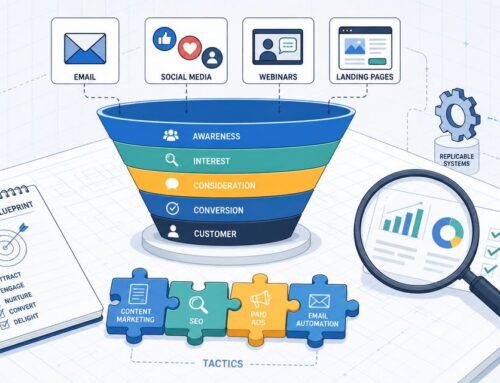
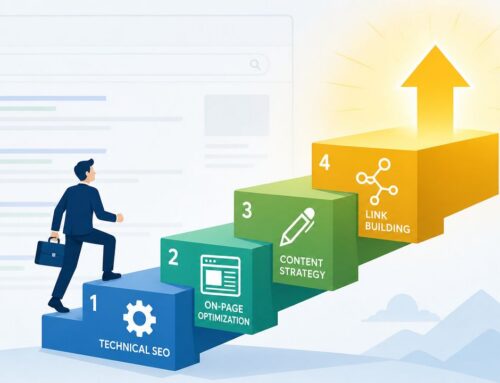
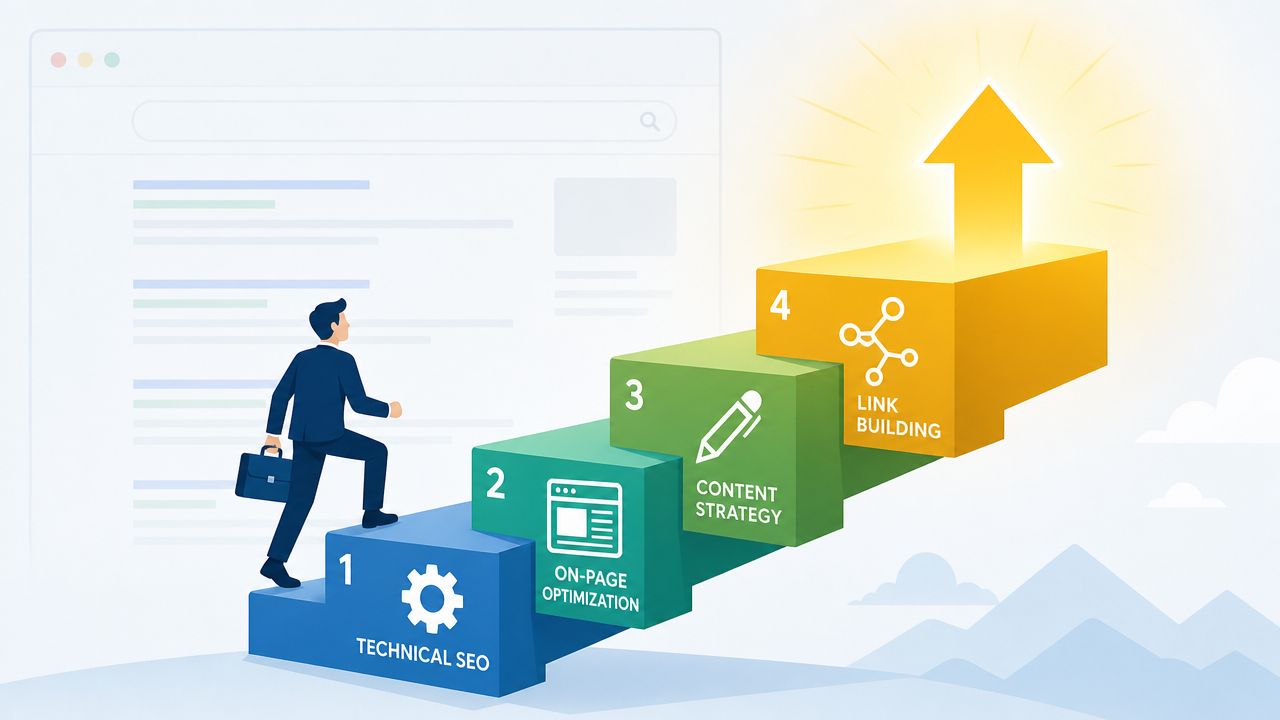
That's why online marketing for hotels can't be treated like a pile of disconnected tactics anymore. It has to work as a system. Fix the website and booking engine first. Bring in qualified traffic second. Build repeat demand and stronger reputation third. That order matters because buying more clicks before fixing conversion problems just makes the losses happen faster.
The Shift from OTA Reliance to Direct Revenue
A common hotel scenario looks like this. Occupancy is acceptable, RevPAR looks steady, and the property is still disappointed at month end because too much of the business arrived through high-commission channels. The rooms were sold, but the profit was diluted and the guest relationship started on someone else's platform.
That is the shift. The goal is not to replace OTAs entirely. The goal is to stop treating them as the default source of demand when they should be one tool inside a controlled distribution strategy.
What OTA dependence really costs
Commission is the visible expense. The harder cost to recover is control.
An OTA booking limits how much influence your hotel has during the comparison stage, where rate display, ranking, reviews, and competitor placement shape the decision before the guest ever reaches your site. It also weakens first-party data capture, which makes remarketing, upsell campaigns, and repeat-stay programs less effective than they should be.
That trade-off can still be worth it in the right situations. OTAs help fill low-demand periods, expand reach in markets where your brand is weak, and support properties without strong direct acquisition yet. Problems start when the hotel accepts that mix passively instead of setting targets by season, segment, and need period.
A practical benchmark for management teams is simple. Use OTAs to fill gaps. Use direct bookings to protect margin, collect guest data, and create repeat demand.
What changes in a direct revenue program
Hotels that improve direct revenue usually make one operational change before they make a channel change. They stop sending more traffic into a weak booking path.
That is why the order matters. First, fix the parts of the direct channel that suppress conversion. Then buy and capture demand with clear intent. After that, focus on retention so each acquired guest becomes cheaper to bring back. If the website is slow, the mobile journey is clumsy, or the booking engine creates friction, every media dollar works harder for less return.
For teams preparing that first step, a practical starting point is a hotel website SEO and site readiness checklist that surfaces technical and conversion issues before paid traffic scales.
This guide is built around execution sequence, not a stack of disconnected tactics. That matters because the wrong order is expensive. A hotel can increase traffic next month. Recovering wasted spend from poor conversion usually takes much longer.
Building Your Digital Foundation
A common hotel marketing mistake happens before any campaign launches. The team approves Google Ads, metasearch, and paid social, then sends that traffic to a site that makes booking harder than an OTA. The result is predictable. Higher acquisition costs, weak conversion, and a direct channel that looks worse than it really is.
The fix is operational, not cosmetic. Before buying more traffic, get the website and booking engine to a standard where they can convert existing demand. This section is about that first stage of the framework. Fix the leaky bucket before trying to fill it.
Define the guest before you design the funnel
Hotels lose conversion when every page tries to speak to every traveler. A better approach is to build around your highest-margin, highest-repeat, or easiest-to-convert segments.
Start with booking behavior. A city hotel may need separate paths for one-night corporate stays, weekend couples, event attendees, and local residents booking a short break. A resort may need different paths for families, spa-led stays, and short-lead getaway traffic. Those guests do not arrive with the same questions, and they should not land on the same generic message.
Work through three practical decisions:
- What triggers the booking? Convenience, location, room type, included breakfast, parking, flexibility, event access, wellness, or family fit.
- What creates hesitation? Cancellation policy, hidden fees, room size, pet rules, parking availability, check-in timing, or whether the pool is open year-round.
- What page should capture the visit? A wedding block page, spa offer page, pet-friendly stay page, or airport-stopover page usually converts better than the homepage for that traffic.
Many redesigns go wrong when the site looks better, but the funnel gets broader and less specific. If the guest has to sort out whether your hotel fits their stay type, conversion drops.
For teams rebuilding this foundation, a structured new site SEO checklist for hotel website readiness helps catch technical gaps, content gaps, and launch issues before paid media starts.

Fix the leaky bucket first
A direct booking channel does not fail only because traffic is low. It often fails because the path to book is slow, unclear, or frustrating on mobile.
I usually review five areas first.
- Mobile usability: Guests research and book on phones at every stage of the journey. If room details, offers, or booking buttons are hard to use on a small screen, intent disappears fast.
- Booking engine clarity: Dates, rate rules, room differences, taxes, and total price need to be obvious. Guests should not have to click back and forth to understand what they are buying.
- Trust signals: Contact details, cancellation terms, payment security, and recent imagery reduce uncertainty at the exact point where OTAs often feel safer.
- Content hierarchy: Room facts, amenities, parking, breakfast, pet policy, and location proof should appear in the order guests need them, not buried in brand copy.
- Technical hygiene: HTTPS, clean page structure, working links, accurate metadata, and a properly maintained Google Business Profile support both conversion and visibility.
Hotels sometimes treat these as website housekeeping. They are revenue controls. A slow page raises bounce rate. A confusing room comparison page sends the guest back to Google. A weak booking engine pushes the customer toward an OTA listing that answers the question faster.
Minimum standards for the direct channel
Before increasing spend, I want to see these basics in place:
| Foundation area | What good looks like | Why it matters |
|---|---|---|
| Website speed | Fast page loads on mobile and desktop | Slow pages lose high-intent visitors before they view rooms |
| Navigation | Clear paths by stay type, offer, and traveler need | Guests reach the right content faster and with fewer exits |
| Booking engine | Secure, simple, integrated checkout flow | Fewer drop-offs between room selection and payment |
| Visual content | Current photos, room detail, amenity proof | Reduces uncertainty and rate resistance |
| Local presence | Accurate Google Business Profile and map information | Supports branded search, local discovery, and trust |
If a guest has to guess what the room includes, whether parking is available, or what happens if plans change, your direct channel is doing extra work to lose the booking.
Don't confuse design quality with booking readiness
Some of the weakest-converting hotel sites I audit are visually impressive. Strong photography, polished typography, full-screen video, and expensive branding do not fix poor commercial usability.
The trade-off is real. Brand teams often want mood and immersion. Revenue teams need clarity and speed. Good hotel websites do both, but if one side has to win, booking clarity should win first.
That means visible rates and offers, obvious room differentiation, clear calls to book, and mobile pages that answer practical questions quickly. A hotel website is not just a brand asset. It is a sales channel, and it should be judged by how efficiently it turns qualified visits into profitable direct bookings.
Attracting High-Intent Travelers to Your Website
Once the direct channel is solid, traffic acquisition starts to make sense. Many teams then spread themselves too thin. They post everywhere, bid broadly, and chase trend platforms without first locking down the channels that capture real travel intent.
I prioritize three visibility layers. Search visibility for active demand. Local visibility for map and near-me behavior. Social visibility for inspiration and retargeting.
Start with search demand, not content volume
Hotel SEO works best when it mirrors how people shop. Travelers rarely search for abstract brand language. They search for combinations of place, need, and feature. Think along the lines of city, neighborhood, airport proximity, beach access, pool, pet-friendly, family suite, parking, or event venue.
The useful move here is to build pages around booking questions instead of generic destination copy. A page for “hotel near downtown conference center” has more commercial value than another vague local guide. So does a page answering practical concerns around parking, early check-in, pet policy, or room configurations.
That matters even more as discovery changes. A recurring blind spot in hotel marketing is visibility in AI-assisted search and review-driven comparison. Hotels may get more incremental value from structured content, review management, and FAQ-style pages than from generic brand storytelling, as discussed in RateGain's analysis of digital marketing in hotel success.
Own your Google Business Profile
For many hotels, the Google Business Profile is one of the most valuable assets in the stack. It sits close to decision intent because it appears when travelers are comparing location, reviews, photos, and booking options.
A neglected profile creates doubt fast. An optimized one helps pre-sell the stay before the guest even reaches your site.
Focus on these areas:
- Accuracy first: Hours, address, phone, website, and amenities must be current.
- Photo quality: Use recent images that reflect rooms, common areas, dining, exterior, and standout amenities.
- Questions and answers: Add and maintain useful Q&A content so common objections are answered early.
- Review signals: Fresh, professional responses reinforce trust before the click.
Treat social as a discovery and validation layer
Hotels often ask whether Instagram or TikTok should drive bookings directly. Sometimes they do. More often, they support the decision earlier or assist it later.
That distinction matters. Social content is strongest when it helps a traveler imagine the stay. It shows atmosphere, pace, service style, design details, local moments, and social proof. It also gives you creative assets for retargeting and branded search lift.
Social usually earns attention before it earns reservations. Judge it accordingly.
A practical content mix looks like this:
- Experience-led posts: Morning coffee views, pool scenes, rooftop evenings, room walkthroughs.
- Decision-support content: Parking answers, neighborhood access, check-in flow, dining details.
- Guest proof: UGC, testimonials, tagged content, and story highlights.
- Offer support: Paid retargeting that reconnects with site visitors who didn't book.
What to prioritize first
If resources are tight, the order should be disciplined.
- Fix technical SEO and on-page clarity for core commercial pages.
- Fully optimize the Google Business Profile and keep it updated.
- Publish FAQ and structured booking-support content that answers real objections.
- Use social to reinforce brand trust and retarget interest, not as a substitute for search visibility.
Hotels get in trouble when they jump straight to trend content while their local presence is incomplete and their organic pages don't answer booking questions. High-intent demand already exists. The first job is to become easier to find and easier to trust.
Converting Website Visitors into Direct Bookings
A traveler clicks through from Google, checks your rates, hesitates at the booking form, then opens an OTA tab. If the OTA feels faster, clearer, or safer, you lose the booking and pay for the privilege later through commission pressure.
That is why I treat conversion work as the first revenue multiplier after the foundation is in place. More traffic does not fix a weak booking path. It just sends more people into it.
Remove friction before adding media
Direct bookings grow when the website and booking engine remove doubt at the exact moment a guest is ready to commit. The basics are not glamorous, but they decide revenue. Fast load times, rate parity or a clear direct advantage, visible cancellation terms, mobile-first booking flows, and a short path from room selection to payment all matter because they reduce abandonment.
As noted earlier, healthy hotel booking funnels tend to share the same traits. The direct path needs to feel easier and more transparent than the OTA path.

What actually gets the booking
Hotels rarely need clever conversion tricks. They need fewer reasons for a guest to pause.
Prioritize these fixes first:
- Show direct-booking value early: Flexible cancellation, breakfast, parking, welcome amenities, or a small room-category benefit can justify booking direct.
- Protect rate confidence: If an OTA appears cheaper, many guests will leave to compare, even if they were ready to book.
- Shorten the form: Ask only for information needed to confirm the stay.
- Place policies before payment: Guests should not have to hunt for cancellation rules, fees, or deposit terms.
- Match the page to the intent: Package traffic should land on the package, not your homepage.
For campaign traffic, a purpose-built high-converting landing page usually outperforms a generic property page because it keeps the offer, proof, and call to action aligned.
One practical rule: every extra click between rate check and confirmation needs to justify itself.
Use metasearch to protect margin
Metasearch sits close to the decision point, which makes it one of the few paid channels that can defend direct revenue instead of just generating awareness. Travelers often use Google Hotel Ads and similar tools to compare the same room across multiple sellers. If your direct offer is absent or uncompetitive there, OTAs take the final comparison.
I usually recommend treating metasearch as a margin defense channel first. Once parity issues are fixed and the booking engine converts well, it can become a growth channel. In the wrong order, it just exposes pricing problems faster and forces you to spend more to recover bookings you should have won anyway.
Paid social should support closing, not carry it
Paid social works best after someone already knows the property, visited the site, or fits a narrow offer audience. It is useful for remarketing, package promotion, weddings, staycations, and seasonal campaigns. It is less reliable as the main closing channel for standard transient demand.
If your team is assessing that option, this 2026 guide to hotel Facebook advertising covers campaign structure and targeting approaches worth testing. Send that traffic to a focused offer page with one next step. Broad homepage traffic from paid social usually wastes budget.
Use OTAs with discipline
OTAs still play a role in the mix. They expand reach, especially for independent hotels and properties in competitive markets. The trade-off is cost and weaker control over the guest relationship.
Use OTAs to capture discovery. Use your own site to win high-intent shoppers. Then use the stay itself, post-booking communication, and post-stay offers to shift that guest toward direct next time. That sequence matters. First fix the booking path. Then pay to fill it. Then build repeat demand that lowers acquisition cost over time.
Nurturing Guest Loyalty and Managing Reputation
The booking isn't the finish line. It's the midpoint. The most profitable hotel marketing systems don't just acquire demand. They turn one reservation into repeat stays, stronger reviews, and lower future acquisition costs.
A major industry trend is the blending of service and marketing through automation and personalization. Industry statistics cited for 2025 show that 96% of hoteliers are investing in contactless technology and 77% of guests prefer automated messaging or chatbots for quick communication, according to Escoffier's hospitality trends summary. That matters because guest communication now affects both experience and revenue.

Build simple automation first
Most hotels don't need a complicated CRM program on day one. They need a reliable sequence that matches the guest journey.
A practical retention workflow usually includes:
- Pre-arrival email: Confirm the stay, reduce uncertainty, and present upgrades or add-ons.
- In-stay or arrival message: Reinforce service access, amenities, and helpful local guidance.
- Post-stay review request: Ask for feedback while the experience is still fresh.
- Reactivation email: Invite the guest back with a relevant future offer or seasonal reason to return.
The key is relevance. A family who booked a school-break stay shouldn't get the same follow-up as a weekday business traveler. Even basic segmentation by stay type, room type, or trip purpose improves usefulness.
Reviews are part of the funnel
Reputation management is often treated like customer service cleanup. That misses its marketing value. Reviews influence future buyers before they ever see your booking engine.
Strong response habits do two things. They reassure unhappy guests that someone is listening, and they show future guests how the hotel communicates under pressure. If a complaint about noise, housekeeping, or check-in friction appears repeatedly, that's no longer just a PR issue. It's an operations issue affecting revenue.
If review response volume is getting difficult to manage, a structured service such as review management services can help centralize response workflows and monitoring alongside the rest of your digital presence.
Respond to reviews for the next guest reading them, not just for the guest who wrote them.
After that, use the themes operationally. If guests keep praising your staff, location, breakfast, or spa, reflect that language in website copy and email messaging. If they keep flagging weak Wi-Fi or unclear parking, fix the issue and then update the website so expectations are clearer.
A useful refresher on guest communication and hospitality messaging is below.
Loyalty doesn't have to mean a points program
Independent hotels often assume loyalty requires a formal rewards platform. It doesn't. Loyalty can be built through recognition, remembered preferences, direct-booking perks, smoother rebooking, and consistent post-stay communication.
The goal is simple. Make the second booking easier than the first.
Your 12-Month Roadmap Budget and KPIs
Most hotel marketing plans fail because they overload the calendar and underdefine the measurement model. Teams launch channels without clear attribution, or they review performance in silos. Hotel digital marketing works better when it is segmented and measured by channel, with Google Analytics 4 integrated with the booking system and dashboards tracking website traffic, booking rates, and marketing ROI, as recommended in Prostay's hotel digital marketing guide.
Sample monthly online marketing budget for a boutique hotel
Use this as a planning model, not a rule. Budget should follow property goals, seasonality, and channel maturity.
| Marketing Channel | Budget Allocation (%) | Primary Goal |
|---|---|---|
| SEO and content | 20% | Improve organic visibility and answer booking questions |
| Google Ads branded and high-intent search | 20% | Capture existing demand and protect brand traffic |
| Metasearch and hotel ads | 20% | Recapture comparison-stage shoppers |
| Paid social and retargeting | 15% | Re-engage site visitors and support offers |
| Email and CRM automation | 10% | Upsell, retain, and reactivate guests |
| Creative production | 10% | Keep visuals, landing pages, and campaigns current |
| Analytics and testing tools | 5% | Track attribution and improve conversion |
KPIs that actually matter
A hotel GM doesn't need a dashboard full of vanity numbers. Track the few signals that shape revenue decisions.
- Direct booking ratio: Is your direct share improving relative to third-party mix?
- Website conversion rate: Does the site turn visits into reservations efficiently?
- Cost per acquisition: What does it cost to generate a direct booking by channel?
- Booking engine abandonment points: Where do guests drop out?
- Return guest share: Are more stays coming from existing guest relationships?
- Review trends and response speed: Is reputation strengthening or slipping?
A practical 12-month sequence
A disciplined rollout prevents wasted spend.
Quarter 1 should focus on audit and repair. Review site speed, mobile UX, booking engine flow, policy visibility, page structure, and Google Business Profile accuracy. Build the first set of high-intent landing pages and FAQ content.
Quarter 2 is where traffic expansion begins. Launch or tighten branded search, metasearch participation, and local SEO execution. Add retargeting only after the main landing pages convert cleanly.
Don't scale media because the budget is available. Scale when the conversion layer is stable enough to absorb more traffic profitably.
Quarter 3 should strengthen retention. Implement pre-arrival, post-stay, and reactivation email flows. Improve review response routines and align recurring guest feedback with on-site operations.
Quarter 4 is optimization season. Tighten audience segments, refine creative, test offer positioning, review direct-versus-OTA pricing strategy, and prepare next year's calendar around what converted.
Where operators usually go wrong
They either underinvest in the foundation or overcomplicate the stack. A boutique hotel doesn't need every channel at once. It needs a site that converts, clear local visibility, defensible metasearch presence, and reliable guest follow-up.
That's what makes online marketing for hotels profitable. Not channel count. Sequence, discipline, and measurement.
If your team needs help turning this into an execution plan, ReachLabs.ai can support digital strategy, content, campaign development, and creative production with a data-driven approach. For hotel operators, the useful starting point is usually a practical audit of the website, booking path, core acquisition channels, and retention workflow so budget goes to the highest-impact fixes first.