
Your board is asking a fair question. You've spent money on social posts, email tools, event promotion, a website refresh, maybe even outside help, and the result still gets reported as “better engagement.” That's not enough. Engagement doesn't fund programs. Donations, recurring gifts, volunteer sign-ups, and retained supporters do.
Too many nonprofits are still treating marketing like a communications function instead of a revenue and growth system. That mistake gets expensive fast. If your team can't show how marketing contributes to fundraising and supporter action, the board will eventually treat it as overhead instead of mission infrastructure.
Beyond Buzz The Real Impact of Marketing on Your Mission
A lot of nonprofit leaders are stuck in the same loop. The team posts regularly. Someone sends the newsletter. A campaign gets decent likes. Then the finance committee asks the obvious question: what did any of that produce?
That pressure is justified because 65% of nonprofit leaders say they cannot prove the ROI of their marketing campaigns to stakeholders or boards (Nonprofit Tech for Good). If you can't connect marketing to dollars raised, donor retention, or volunteer action, you don't have a marketing strategy. You have activity.

The board doesn't need more dashboards filled with impressions and reach. It needs evidence that marketing is helping the organization grow support, deepen trust, and convert attention into action. That includes first gifts, recurring donations, event attendance, volunteer engagement, and the follow-up systems that turn one-time responders into long-term supporters.
One of the strongest ways to think about this is through building long-term donor support. The point isn't to collect clicks. The point is to move people through a relationship cycle that leads to loyalty and giving.
Board-level rule: If a marketing activity can't be tied to a supporter behavior you care about, challenge it before you fund it.
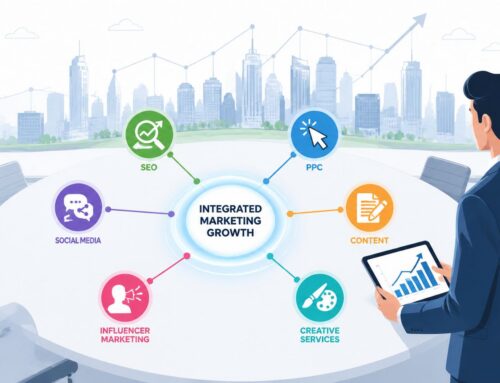
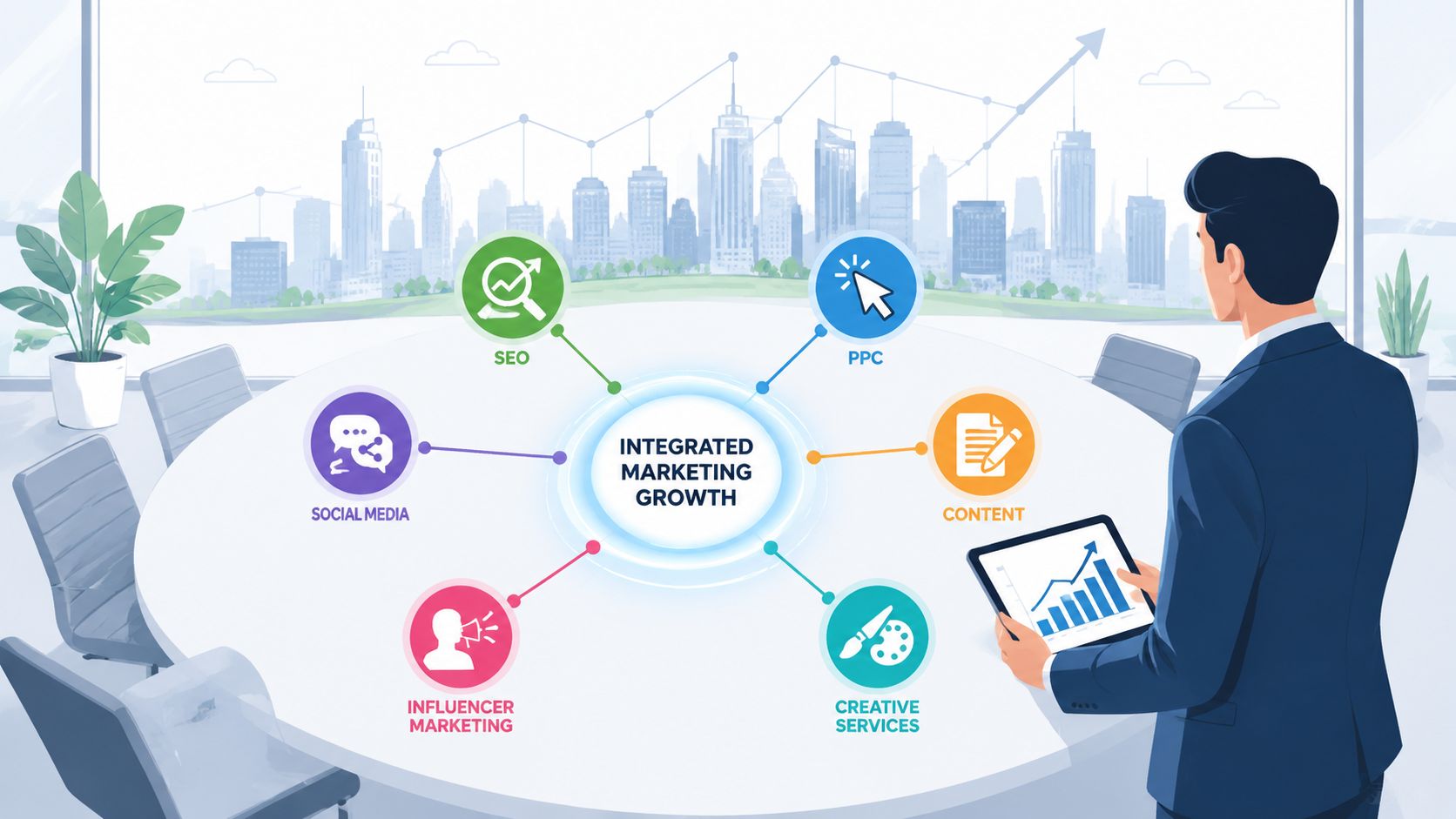
That's also why nonprofits need to stop separating “brand” from “results.” Your story matters because it drives action. Your voice matters because it shapes trust. But trust still has to move somewhere. A solid framework for that shift is thinking about marketing as part of a broader growth system, not a disconnected set of channels, much like the approach outlined in social responsibility marketing.
The practical standard is simple. Every campaign should answer three questions: who is it for, what action should they take, and how will you measure whether they took it?
Decoding Nonprofit Marketing Services
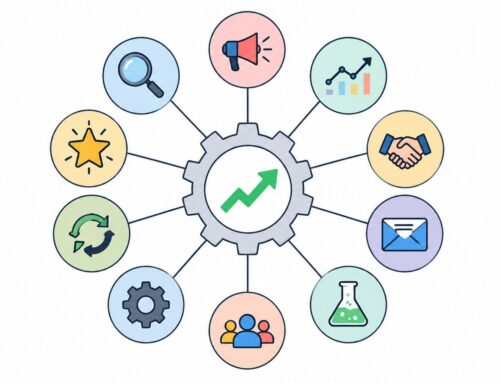
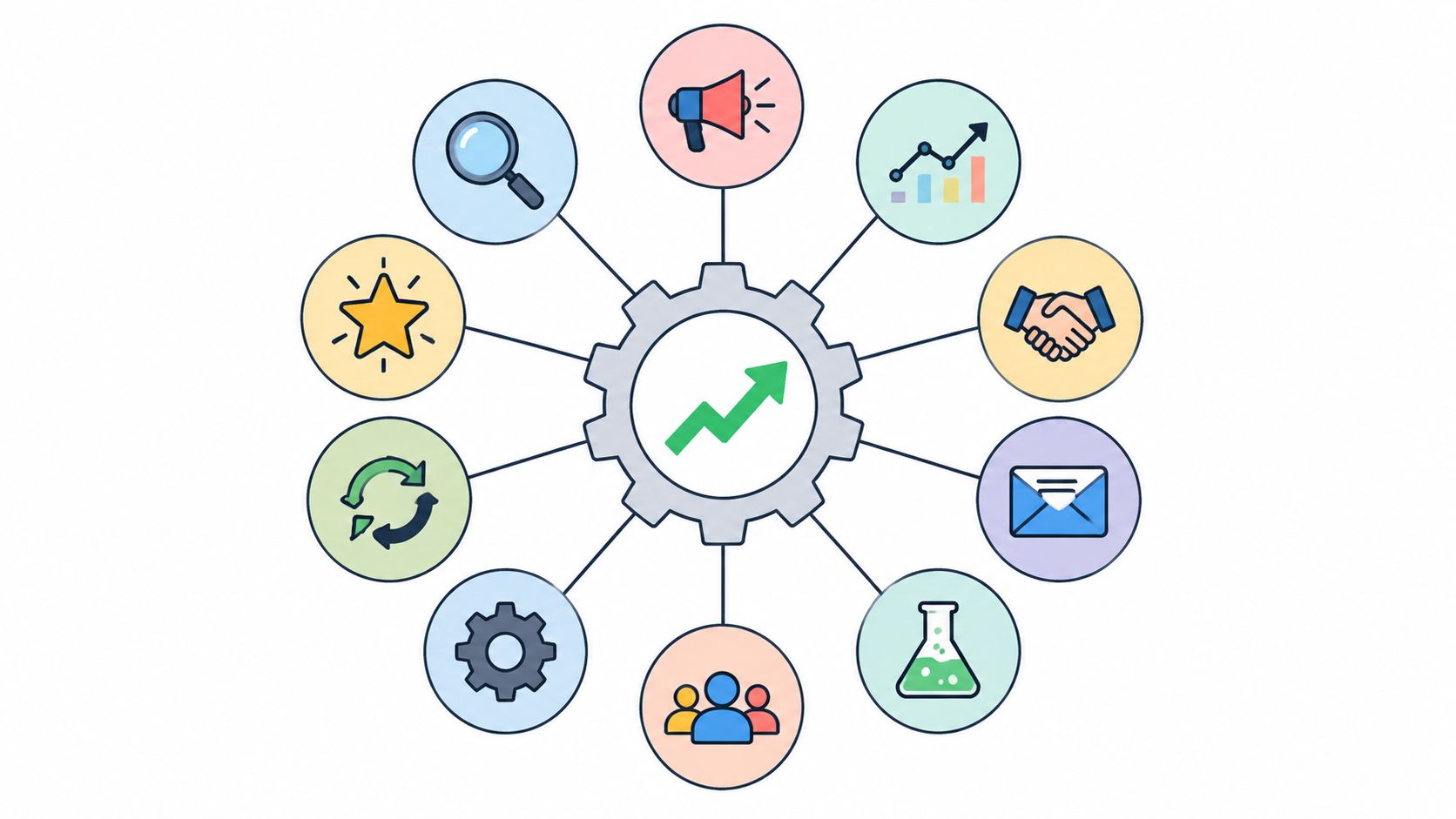
Hearing ‘nonprofit marketing services' often brings promotion to mind. That's too narrow. Marketing is not a megaphone. It's an engine for the mission.
A megaphone only broadcasts. An engine pulls in attention, routes it toward the right action, and keeps moving after the first interaction. That distinction matters because many nonprofits buy awareness work when they need conversion work.

What awareness work does
Awareness services help more people discover and recognize your organization. That includes:
- Brand messaging: Clarifying who you are, what you do, and why it matters
- Content creation: Blogs, videos, campaign stories, and educational assets
- Social presence: Community updates, storytelling, and visibility across platforms
- Public-facing design: Visual identity, campaign creative, and site presentation
These services matter. If people don't understand your mission, they won't support it. If they can't remember your name, they won't come back.
What action-driving work does
Conversion-focused services are where many nonprofits fall short. These services are built to move people from interest to commitment:
- Donation landing pages: Pages designed around one ask, one audience, and one next step
- Email automation: Welcome sequences, donor nurture flows, lapsed donor reactivation, event follow-up
- CRM integration: Tracking source, response, and follow-up so nobody falls through the cracks
- Fundraising campaign architecture: Channel coordination tied to donation goals, not just visibility
- Testing and analytics: Reviewing what messages, forms, audiences, and offers produce results
Awareness tells your story. Conversion asks for action and makes that action easy.
The strongest nonprofit marketing services connect both sides. They don't just “raise awareness.” They create a path from discovery to giving, volunteering, subscribing, attending, advocating, and returning.
If your team needs a practical companion piece on planning, this roundup of effective nonprofit marketing strategies is useful because it forces the conversation back to goals and execution rather than channel hype.
The test board members should use
Ask one blunt question when reviewing any proposed service: Does this help us get known, or does it help us get results?
Sometimes the answer is both. Often it's not.
A website redesign that improves donation flow can do both. A social content calendar with no conversion path usually won't. A storytelling campaign without follow-up segmentation may increase attention, but attention by itself doesn't close the loop.
That's why nonprofit marketing services should be bought in the same way you'd fund development infrastructure. The right service isn't the one with the nicest creative deck. It's the one that makes the next donor action more likely.
Core Service Areas Your Mission Needs
A board approves a bigger marketing budget. Six months later, the team can show more posts, more traffic, and more opens, but flat donations. That is a service mix problem.
Your mission needs services that move a supporter from attention to action, then from first action to repeat value. If a vendor cannot show how its work affects donations, registrations, qualified volunteer leads, sponsor conversations, or retained donors, you are buying activity.
Social media and community building
Social should support fundraising and donor acquisition, not sit off to the side as a branding task. The service you want is not “content creation.” It is content tied to a response path.
That means four things:
- Message sequencing: Posts should build toward a specific ask instead of treating every update as a standalone story
- Channel-fit creative: Facebook, Instagram, LinkedIn, and short-form video each need different framing, calls to action, and landing pages
- Active community management: Replying to comments and direct messages helps remove friction before someone gives, registers, or volunteers
- Traffic capture: Social content should drive supporters to pages your team can measure, retarget, and improve
If your agency reports impressions and engagement but cannot connect social traffic to form fills, donations, or event signups, the service is incomplete.
Email and automation
Email is still one of the few channels your nonprofit controls. Treat it like owned revenue infrastructure.
The right email service includes lifecycle design, segmentation, testing, and list hygiene. M+R's benchmark reporting shows why nonprofits keep investing in email and digital fundraising. It remains a core channel for online revenue and supporter retention when teams build targeted journeys instead of sending the same message to everyone (M+R Benchmarks).
Ask for these systems:
- Subscriber welcome series: Introduce the mission, prove impact, and present a clear first conversion
- First-donor follow-up: Confirm the gift, report what happens next, and present the next best action
- Appeal sequences: Build urgency across multiple sends with message variation, not one blast and a reminder
- Lapsed supporter reactivation: Re-engage past donors, attendees, and volunteers based on prior behavior
A monthly newsletter by itself will not carry revenue goals. It can support them. It cannot replace a donor journey.
Fundraising campaign management
Nonprofit marketing services either produce return or waste budget.
Campaign management should tie audience selection, offer, creative, landing page, form flow, email follow-up, and reporting to one target outcome. For many nonprofits, that means one number first: cost to acquire a donor. Awareness matters, but it does not pay program costs.
Board members should ask to review the full campaign path. Start with the ad, email, or post. Then inspect the landing page, donation form, thank-you page, follow-up emails, and retargeting logic. Weakness in any one step drags down the whole campaign.
Website, content, and conversion infrastructure
Your website is not a brochure. It is the place where interest becomes measurable action.
That changes how you should buy website and content services. Prioritize donation page clarity, page speed, mobile form completion, search visibility for high-intent topics, and content that answers the question a supporter asks before acting: Why this mission, why now, and what happens if I help? If your team needs a stronger strategic foundation, this piece on content marketing for business growth is useful because it frames content as a conversion system, not a publishing calendar.
Event-driven nonprofits need the same discipline. Registration flow, reminder emails, attendance tracking, and post-event follow-up affect revenue more than event branding alone. For the operations side, use this guide to nonprofit event planning.
Measurement and outbound donor development
Many agencies stop at storytelling. That leaves a dangerous gap between brand lift and financial return.
You need services that connect marketing engagement to pipeline creation and donor follow-up. That can include qualified lead scoring for major donor prospects, sponsor outreach support, partner prospecting, board-introduced relationship campaigns, and disciplined follow-up after events or high-intent site visits. The Association of Fundraising Professionals stresses donor retention and relationship building because long-term fundraising performance depends on what happens after the first gift, not just how many people saw the campaign (AFP donor retention resources).
The best service mix is performance-oriented. Storytelling earns attention. Conversion systems turn that attention into gifts, meetings, registrations, and repeat donors. If your current marketing partner only reports engagement, they are measuring the top of the funnel and asking you to guess the return.
Engagement Models and Typical Pricing
The way you hire matters almost as much as who you hire. The wrong engagement model creates vague deliverables, weak accountability, and endless reports that describe activity instead of outcomes.
Three models dominate nonprofit marketing services. Each has a place. One of them deserves far more attention from boards.
The three models in plain terms
A monthly retainer is ongoing support for strategy and execution. It works when you need a team involved across channels every month. The risk is obvious. You can end up paying for motion instead of progress if the scope is broad and the reporting is fuzzy.
A project-based fee is best when the need is contained. Think website redesign, brand messaging, campaign launch, or CRM cleanup. It's clean and predictable, but it can create a handoff problem if nobody owns optimization after the project ends.
A performance-based model ties compensation to agreed outcomes. That doesn't mean an agency controls every fundraising variable. It means payment is connected, at least in part, to results that matter. This model forces sharper goal-setting and better reporting.
Nonprofit Marketing Agency Pricing Models
| Model | Best For | Pros | Cons |
|---|---|---|---|
| Monthly retainer | Ongoing execution across channels | Consistency, strategic continuity, easier planning | Can drift into vague deliverables and low accountability |
| Project-based | Defined initiatives with a clear start and end | Clear scope, easier budgeting, strong for specialized work | Limited continuity, optimization may stop after launch |
| Performance-based | Organizations focused on measurable growth and ROI | Strong incentive alignment, clearer success metrics, better board defensibility | Requires tighter tracking, shared definitions, and disciplined reporting |
Why performance-based deserves serious attention
Too many nonprofits still accept retainers built around deliverables like “content creation,” “campaign management,” or “brand awareness.” Those are inputs. Boards should care about outputs.
The stronger approach is to define success in terms your finance committee respects:
- Qualified donor actions
- Online donation conversion improvements
- Recurring gift growth
- Reactivation of existing supporters
- Campaign revenue tied to channel performance
There's also a governance advantage. Performance-based structures force both sides to define attribution, reporting cadence, and success criteria early. That prevents the classic end-of-quarter problem where everyone agrees the work was “valuable” but nobody can prove it.
Contract advice: If an agency proposal is heavy on tasks and light on outcomes, send it back.
Retainers aren't bad. Projects aren't bad. But if your nonprofit is under pressure to justify spend, a model that rewards results is usually the more mature choice.
Measuring What Matters With Outcome-Driven KPIs
A board packet lands on the table. It shows traffic up, followers up, and email engagement up. Then someone asks the only question that matters: did any of that produce more donors, more recurring gifts, or more program participation?
That is the test. Nonprofit marketing earns its budget when it changes behavior and produces revenue, not when it generates busy charts.

The benchmarks that actually matter
Your reporting model should connect four points in a straight line: audience attention, supporter action, financial return, and mission impact. If that chain breaks, you are measuring activity instead of performance.
Analysts at Tapp Network found that nonprofit websites often show a large gap between engagement and conversion, with meaningful site interaction far outpacing completed actions such as donations or sign-ups, according to its nonprofit digital marketing benchmark report. That gap is where marketing waste hides. It is also where growth sits.
This is why I push boards to stop treating storytelling as the finish line. Storytelling gets attention. Conversion systems turn that attention into gifts, registrations, volunteer actions, and retained supporters. If your agency can talk about brand voice for an hour but cannot explain conversion paths, attribution, and donor payback period, you have a creative vendor, not a growth partner.
If your team needs a practical framework for judging whether an agency can report on outcomes instead of just activity, use this guide on how to choose a digital marketing agency that measures real business results.
The KPI set I'd put in front of a board
Keep the dashboard tight. Every metric should answer one of three questions: Are we acquiring the right supporters? Are we converting them? Are they becoming more valuable over time?
- Online donation conversion rate: What share of visitors who reach a giving page complete a donation?
- Cost per acquired donor: How much did it cost to generate a first-time donor by channel?
- Average gift by source: Which campaigns bring in higher-value donors, not just more names?
- Donor lifetime value: How much revenue does an acquired donor produce over time?
- Recurring gift conversion rate: How effectively are you turning one-time donors into monthly supporters?
- Email-to-donation rate: Which email sequences lead to gifts?
- Landing page conversion rate: Which pages move supporters to act, and which pages leak demand?
- Return on ad spend: If you are using paid media, what revenue came back from each dollar spent?
That KPI mix does two jobs at once. It protects the board from vanity reporting, and it forces the marketing team to manage the full funnel instead of celebrating top-of-funnel noise.
What to stop reporting first
A metric can be useful for channel management and still be weak for board oversight. Keep those two levels separate.
Cut these from the top line unless you can tie them to a downstream result:
- Raw follower growth
- Page views without conversion context
- Email open rates by themselves
- Total engagements across channels
- Video views without assisted conversion data
A simple rule works well here.
If a KPI can improve while donation revenue, retention, and supporter action stay flat, it does not belong at the center of board reporting.
The right nonprofit marketing services partner will show how story, channel, conversion, and revenue connect. That is the gap many nonprofits miss. They invest in awareness, celebrate engagement, and underfund the systems that turn interest into sustainable growth. A performance-based marketing model fixes that by making ROI visible and forcing every campaign to prove its value.
How to Evaluate and Hire the Right Agency Partner
Hiring an agency shouldn't feel like buying creative services off a menu. You're choosing an operating partner. The wrong partner gives you polished assets and weak results. The right one helps your team make better decisions, fix conversion leaks, and report progress in terms the board understands.

Start with your own clarity
Before you interview anyone, write down:
- Your top objectives: New donors, recurring gifts, volunteer sign-ups, event registrations, program participation
- Your current weak point: Awareness, conversion, follow-up, reporting, internal capacity
- Your baseline systems: CRM, email platform, donation tool, website CMS, analytics setup
- Your decision owners: Who approves, who manages, who reports to the board
Without that, you'll get generic proposals because you asked a generic question.
For a practical framework on narrowing options and structuring the decision, this guide on how to choose a digital marketing agency is a useful lens, especially if your team keeps getting distracted by portfolios instead of process.
Questions that expose substance
Don't ask an agency whether it understands storytelling. Every agency says yes. Ask questions that reveal whether it understands conversion, accountability, and nonprofit constraints.
Use questions like:
- How will you define success in financial and supporter terms?
- What metrics will you report monthly, and which ones belong in a board update?
- How do you improve conversion when traffic exists but gifts don't?
- What does your email and CRM workflow look like after a first donation?
- What access do you need to our systems to measure performance accurately?
- How do you handle attribution when multiple channels influence one gift?
Ask an agency to describe the path from first touch to donation. If they stay at the channel level, keep looking.
Video can also help your team think through the vetting process from a practical angle:
What to look for in proposals and references
Strong proposals usually include a diagnosis, not just a list of services. They identify where your funnel is underperforming, what they'll change first, how success will be measured, and who is responsible on both sides.
When you check references, ask:
- Did the agency improve decision-making or just produce materials?
- Was reporting understandable and tied to outcomes?
- Did they challenge weak assumptions, or just take orders?
- Would you hire them again if board scrutiny increased?
The best agency relationships are not built on chemistry alone. They're built on trust plus operational rigor.
Your Pre-Engagement Checklist for Success
Most failed agency relationships start before the contract. The nonprofit isn't ready, the goals are blurry, the data is scattered, and nobody owns the partnership internally. Then everyone wonders why the reporting feels vague.
Use this checklist before you hire anyone:
- Define your top three goals: Focus on outcomes such as new donors, recurring gifts, volunteer growth, or event registrations.
- Choose your primary audience segments: Separate first-time donors, existing donors, volunteers, lapsed supporters, and institutional prospects.
- Audit your current funnel: Identify where people discover you, where they click, where they drop off, and what follow-up exists.
- Gather your baseline data: Pull your current donation trends, email performance, top traffic sources, and campaign history.
- List your systems: CRM, email platform, donation software, analytics, event tools, and who has access to each.
- Set your budget logic: Don't just pick a number. Define what result would justify the investment.
- Name one internal owner: One person should coordinate approvals, data access, and communication with the agency.
- Decide your reporting cadence: Monthly is usually right. Board reporting can be less frequent, but it should still tie back to outcomes.
- Define core principles: Brand standards, compliance requirements, review timelines, and data ownership should be clear before kickoff.
A nonprofit that enters an agency partnership with clear goals and clean data will usually outperform one with a bigger budget and weak internal discipline.
The board's job isn't to demand more marketing. It's to insist on better marketing. That means services tied to outcomes, reporting tied to ROI, and partners who know the difference between attention and conversion.
If your organization needs a partner that can connect brand storytelling, lead generation, content, outreach, and measurable growth, take a serious look at ReachLabs.ai. Their approach fits nonprofits that are done paying for vague activity and want marketing tied to clear business and fundraising outcomes.