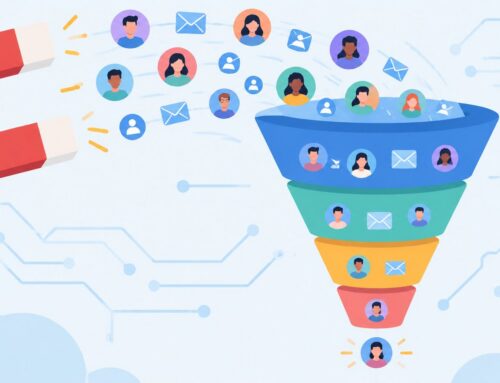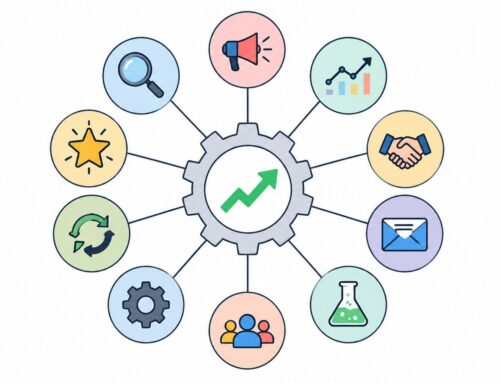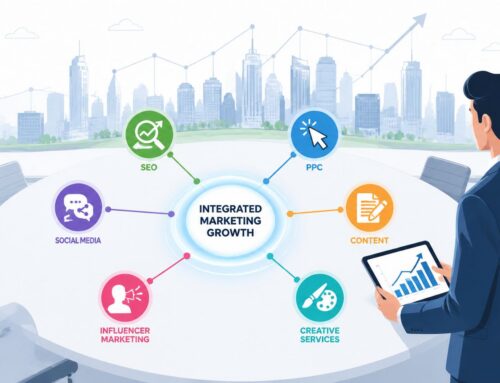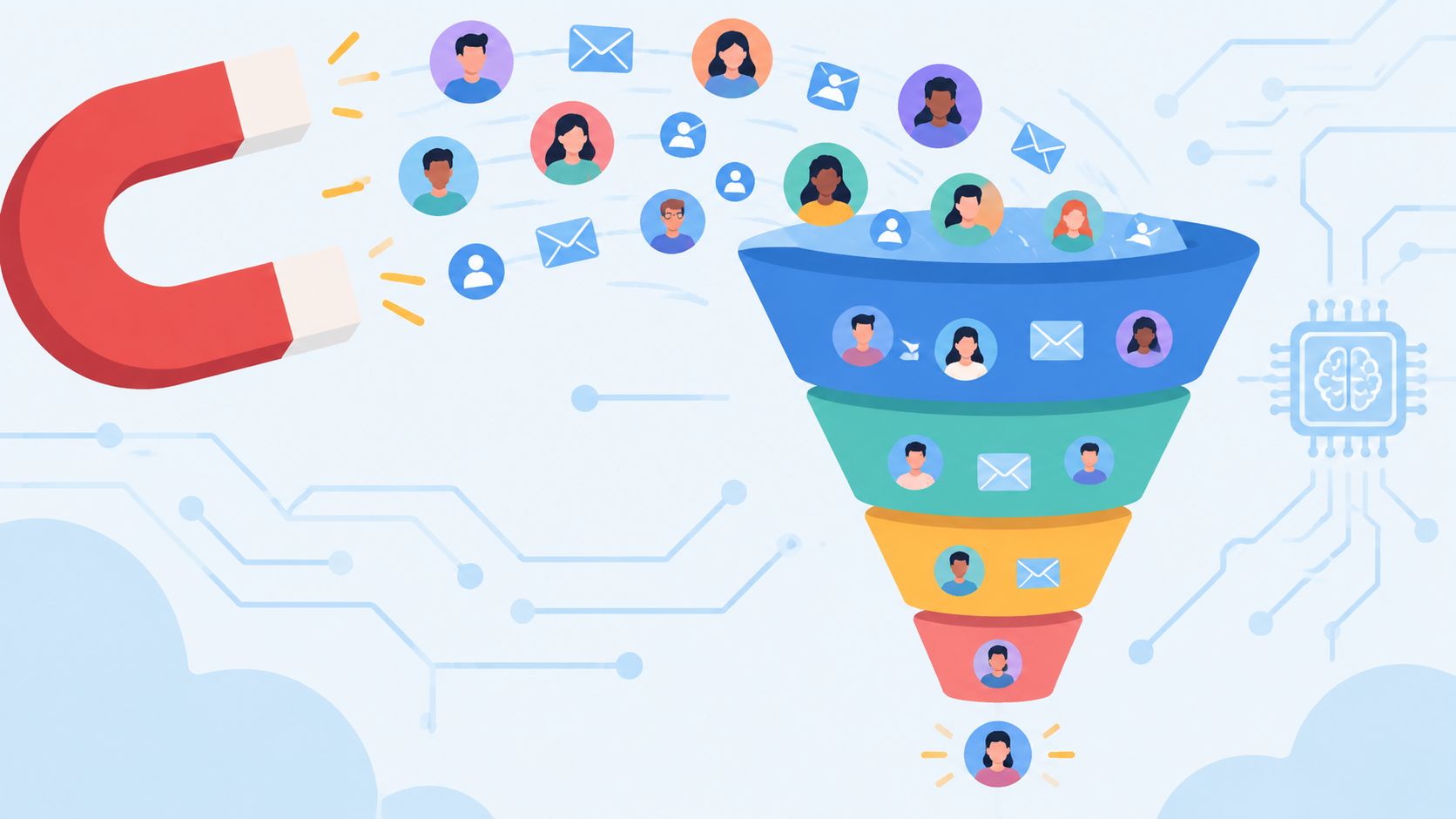
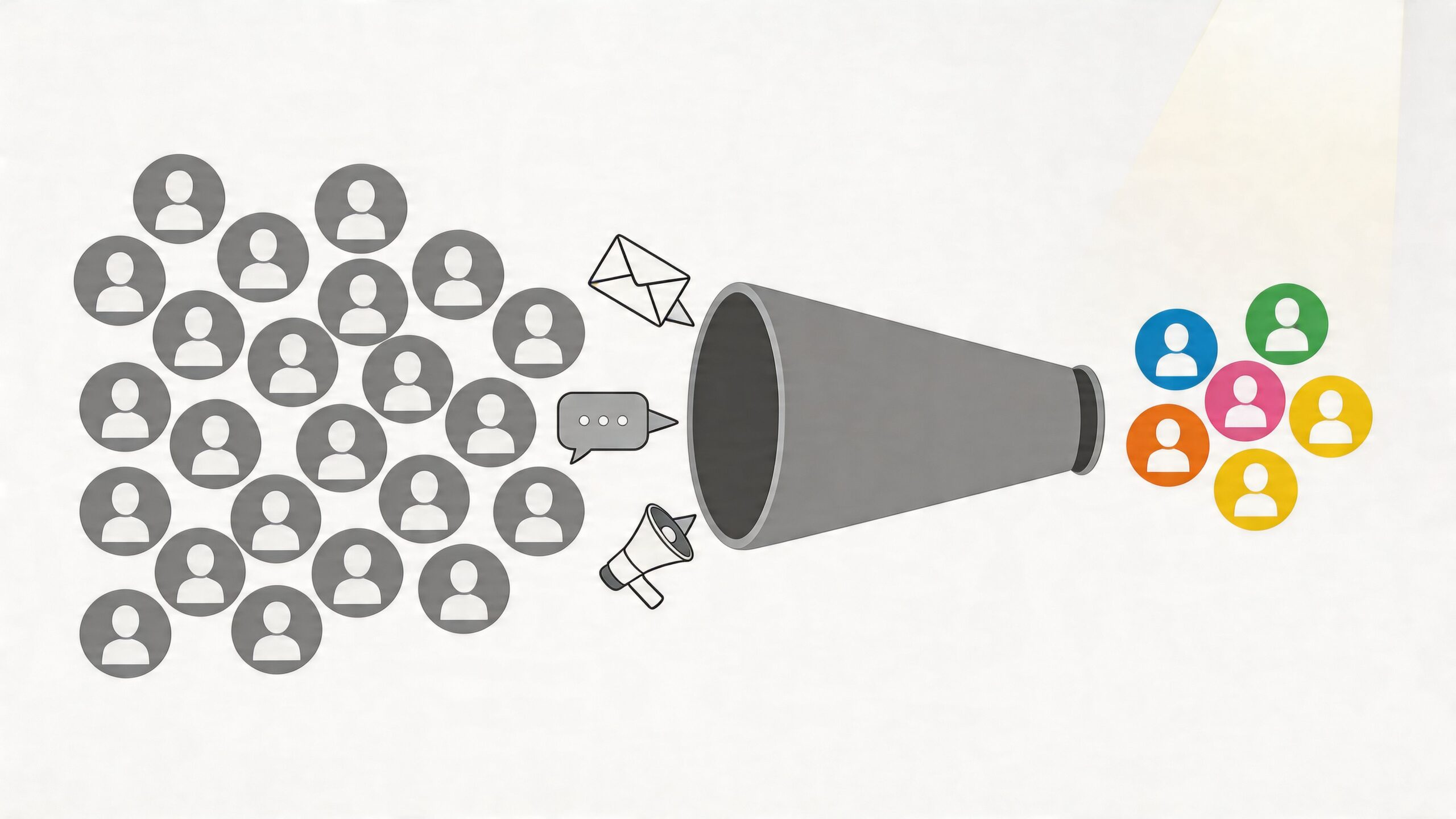
The most common advice in marketing is still wrong. It tells businesses to widen the funnel, publish for everyone, advertise everywhere, and let volume solve the problem. In practice, that approach usually creates expensive noise. Teams burn budget on low-intent clicks, vague messaging, and creative that has to be bland enough to fit too many audiences.
Niche digital marketing works because it cuts out that waste. It replaces broad relevance with specific relevance. Instead of asking, “How do we reach more people?” the better question is, “Which exact group buys faster, stays longer, and responds to a sharper message?”
That shift changes more than campaign targeting. It changes pricing, delivery, sales conversations, content planning, and margins. At ReachLabs.ai, that’s the key distinction between generic marketing and a profitable niche strategy. A niche isn’t a narrow version of broad marketing. It’s a different operating model.
Mass-market campaigns can still make sense for huge brands with broad demand and large budgets. Most SMBs and growth-stage teams don’t have that luxury. They need a market position that compounds. They need repeatable systems. They need messaging that sounds like it was written for one room, not a stadium.
Beyond Broad Strokes An Introduction
Broad targeting feels safer because it looks bigger. More potential customers, more channels, more offers, more content. But “more” often hides weak fit. When a campaign tries to appeal to everyone, it usually speaks in generalities. General claims attract general interest, and general interest rarely converts well.
That’s the problem niche digital marketing solves. It trades reach for fit, and fit is what drives efficient growth. A business that understands a specific audience can write sharper copy, build more relevant landing pages, choose fewer channels, and stop paying to educate people who were never good prospects in the first place.
Why generic campaigns stall
Generic marketing usually breaks in the same places:
- Weak positioning: The offer sounds interchangeable with ten competitors.
- Loose targeting: Ads bring in curiosity traffic instead of buying intent.
- Bloated execution: Teams build too many assets for too many personas.
- Bad feedback loops: Results get averaged across unrelated audience segments.
The result isn’t just lower performance. It’s slower learning. Teams can’t tell whether the problem is the message, the market, the channel, or the offer because everything is mixed together.
Broad marketing creates broad data. Broad data makes weak decisions.
A niche strategy fixes that by making the market smaller and the signal clearer. You stop trying to win attention from the whole category and start building authority with the segment most likely to care. That’s where sustainable growth starts.
The Strategic Power of Niche Marketing
A generalist marketer is like a family doctor. Useful, versatile, and often the right first stop. A niche marketer is more like a specialist surgeon. Fewer patients need that exact expertise, but the people who do need it value it more, trust it faster, and pay more for it.
That’s why specialization changes economics, not just branding. The more clearly you solve a specific problem for a specific audience, the easier it becomes to justify premium pricing, attract referrals, and standardize delivery.

Why specialists outperform generalists
Clients don’t hire agencies because they like variety. They hire agencies because they want risk reduced. A specialist reduces perceived risk in four ways:
- Clearer proof of fit: The buyer sees direct relevance to their business model.
- Faster diagnosis: The agency already knows the common blockers in that niche.
- Tighter execution: Fewer experiments are wasted on basics the team should already know.
- Stronger retention: When the agency fully understands the client’s market, switching becomes harder.
Niche digital marketing is operationally powerful. You aren’t rebuilding your process every time. You’re refining the same core engine for similar problems.
Specialized digital marketing agencies operating within defined niches achieve profit margins between 20-30%, compared with 10-15% for generalist agencies, according to ALM Corp’s analysis of profitable agency niches.
That difference matters because it comes from structural advantages, not short-term hacks. Specialized agencies can command higher rates, lower acquisition costs through reputation effects, and create repeatable delivery systems.
What niche authority actually looks like
Authority in a niche doesn’t mean posting thought leadership all day. It means the market starts to associate you with a specific outcome. That can show up as:
| Signal | Broad Positioning | Niche Positioning |
|---|---|---|
| Offer | “We do digital marketing” | “We help SaaS teams improve pipeline quality through intent-led content and paid social” |
| Sales call | Educating from scratch | Diagnosing a known pattern |
| Creative brief | Generic audience assumptions | Specific buyer pains and language |
| Delivery model | Custom every time | Standardized with room for adaptation |
A niche strategy makes the business easier to run because the market knows what to hire you for. That clarity is a margin lever.
How to Identify Your Profitable Niche Market
Most businesses choose a niche backwards. They start with a trendy category, then try to force relevance into it. A better approach is to find the overlap between expertise, demand, and commercial fit. If one of those is missing, the niche usually looks good on paper and underperforms in practice.

Start with the problem, not the label
“Healthcare” isn’t a niche. “Patient acquisition for multi-location dental clinics” is getting closer. “Local SEO and paid search for pediatric dental practices in competitive metro areas” is closer still.
The market becomes useful when you can answer three questions clearly:
- Who is the buyer?
- What expensive problem do they want solved?
- Why are broad providers bad at solving it?
If you can’t answer those, you don’t have a niche yet. You have a category.
Use segmentation before you use branding
A niche should be validated with audience signals, not intuition alone. Effective niche identification uses segmentation that layers demographics with behavioral signals, and this kind of targeting can reduce cost-per-conversion by 20-40% when messaging aligns with high-intent queries, as described in Seven Figure Agency’s guide to niche market identification.
That matters because profitable niches are usually hidden inside broader markets. You find them by looking at how people behave, not by reading industry lists.
A practical validation framework
Use this filter before you commit resources:
- Existing expertise: Look at clients, projects, or internal experience your team already has. Prior familiarity lowers ramp time.
- Pain severity: Choose problems that affect revenue, lead flow, retention, compliance, or sales efficiency. Nice-to-have problems produce slow deals.
- Message specificity: If you can write a headline that sounds tailor-made for the audience, that’s a good sign.
- Channel concentration: Strong niches usually gather in a small number of channels, communities, or search patterns.
- Sales practicality: A niche can be interesting and still be commercially poor if budgets are tiny, churn is high, or decision-making is chaotic.
Check the search layer
Keyword research won’t define your niche on its own, but it will expose language, intent, and content gaps. Tools like Ahrefs, Semrush, Google Search Console, and community search on Reddit or LinkedIn are useful here. If you need a practical workflow for finding niche keywords, that process helps translate audience pain points into terms you can build content and landing pages around.
Look for patterns such as:
- High-intent phrasing: Terms that imply comparison, vendor evaluation, or immediate need.
- Repeated objections: Search queries that reveal fear, confusion, or friction before purchase.
- Underdeveloped SERPs: Results pages filled with generic content often signal room for a specialist.
Practical rule: If the same three objections keep appearing in sales calls, support tickets, and keyword patterns, you’re probably looking at a niche worth testing.
Run a gap analysis like an operator
The fastest way to spot a profitable niche is to ask where broad competitors stay vague. They often avoid complex segments, low-volume but high-value submarkets, or audiences that require domain knowledge to serve well.
For example, B2B influencer campaigns are often discussed as if they work exactly like consumer creator programs. They don’t. The mechanics, trust signals, and buying cycles differ. That kind of mismatch creates room for a niche provider that understands the actual market.
A valid niche is not just underserved. It’s underserved by teams that don’t want to do the hard part.
Creating a Detailed Niche Audience Profile
Once the market is clear, the next mistake is building a shallow persona. Age range, job title, and company size won’t get you very far. Good niche marketing comes from understanding what the buyer is trying to avoid, what they trust, where they spend attention, and what makes them act now instead of later.
A useful profile goes beyond demographics
Take a specific example. A first-time founder launching a sustainable fashion ecommerce brand isn’t just “female, millennial, interested in ethical products.” That profile is too soft to guide creative or media decisions.
A workable profile sounds more like this:
- Daily tension: She wants growth without looking like a brand that borrowed the language of sustainability without doing the work.
- Information sources: She follows founder-led LinkedIn posts, niche ecommerce newsletters, Shopify communities, and creator reviews instead of mainstream business media.
- Purchase triggers: She buys when a service or tool helps her move faster without compromising brand trust.
- Conversion blockers: She’s skeptical of agencies that use recycled playbooks from beauty, fashion, and lifestyle brands without understanding margin pressure or retention.
That level of detail changes everything. It affects landing page copy, channel choice, offer structure, creative references, and onboarding.
Build the profile around buying behavior
A strong audience profile should answer these questions:
| Profile element | What to capture |
|---|---|
| Core pain | What problem is costing them money, time, or credibility |
| Desired outcome | What “better” looks like in their words |
| Watering holes | Which podcasts, creators, groups, and platforms shape their thinking |
| Buying context | Who approves the spend, and what has to be true before they move |
| Language cues | The phrases they use to describe the problem |
For teams that need a starting point, a structured customer persona template helps organize this into something the strategy, content, and creative teams can all use.
What weak profiles get wrong
Weak personas tend to overfocus on biography and underfocus on decision-making. They tell you what the person is, not how they buy.
The best audience profiles read less like census data and more like sales intelligence.
A detailed niche audience profile should let a strategist answer practical questions fast. What proof will this person trust? Which objections should appear on the page before the CTA? Which channels are noise, and which channels shape consideration?
That’s when a profile becomes useful. It stops being a document and starts becoming a tool.
Tailoring Channels and Creative for Your Niche
A niche strategy fails when teams pick channels by popularity instead of audience behavior. The right channel isn’t the one with the most users. It’s the one your buyer uses when they’re open to influence.

Match the channel to the buying motion
A B2B SaaS niche often performs better with a LinkedIn-first model, founder content, expert partnerships, and retargeting around intent signals. A hobby-driven consumer niche may respond better to Pinterest, TikTok, creator content, and search-led ecommerce landing pages.
Channel choice should answer one question: where does this audience go to reduce uncertainty before buying?
That’s why influencer strategy works differently inside niche digital marketing. The influencer marketing segment is projected to reach $24 billion by the end of 2024, and micro-influencers generate an average ROI of $5.78 earned per $1 spent, according to Elementor’s digital marketing statistics roundup. For niche campaigns, that matters because trust is concentrated. Smaller creators often have tighter audience alignment than celebrity-scale accounts.
Creative should sound like an insider
Once the channel is right, creative has to match the culture of the niche. Many campaigns often falter here. They target the right audience with the wrong tone.
Use these creative filters:
- Message fit: State the problem the way the audience describes it, not the way your team labels it internally.
- Visual fit: Borrow cues from the niche’s native environment. B2B authority content, product-led demos, and creator testimonials all signal different things.
- Offer fit: A high-consideration niche often needs audits, examples, or diagnostic content. Low-friction consumer niches may respond to bundles, use cases, and creator validation.
- Proof fit: Show the type of evidence that audience trusts. For some buyers, that’s expert commentary. For others, it’s product use in context.
Teams producing lots of ad variants often use tools like the ShortGenius AI ad creative tool to generate and test multiple visual directions quickly, especially when each subsegment needs a different angle instead of one generic concept.
Niche vs. Broad Marketing A Strategic Comparison
| Metric | Niche Marketing Approach | Broad Marketing Approach |
|---|---|---|
| Audience definition | Specific buyer segment with clear pain points | Large mixed audience with varied intent |
| Budget use | Concentrated on fewer high-fit channels | Spread across more channels and wider targeting |
| Messaging | Specific language tied to known problems | General value propositions |
| Creative style | Built around audience culture and objections | Designed for widest possible relevance |
| KPI focus | Qualified leads, conversion quality, retention signals | Reach, traffic volume, blended averages |
| Optimization | Segment-level adjustments | Campaign-level adjustments |
Organic and paid work better together in a niche
In niche markets, paid media creates speed and organic content creates trust. One without the other usually stalls. Teams that want to understand the trade-offs can compare this directly in organic vs paid social media strategy guidance.
The key is consistency. If paid ads promise one thing and the organic presence signals something else, the niche audience notices fast. Smaller markets are less forgiving because people share recommendations and skepticism in the same places.
Real-World Niche Marketing Examples
The easiest way to understand niche digital marketing is to look at what focused execution looks like. Not vague “brand awareness” examples. Specific audience, specific channel, specific message.

Example one B2B micro-influencers for a vertical SaaS offer
Consider a legal tech company selling workflow software to small law firms. A broad campaign aimed at “business productivity” would waste spend immediately. The buyer doesn’t want productivity content. The buyer wants fewer admin bottlenecks, less case-handling friction, and software that fits legal operations.
A niche strategy would build around legal-adjacent voices on LinkedIn, newsletter sponsorships in legal operations communities, vertical landing pages, and ad creative that references daily workflow pain in plain language. The current market gap presents an opportunity. AI-driven personalization for B2B micro-influencer campaigns is emerging, and micro-influencers reportedly yield 60% higher engagement rates, while B2B adoption lags at 22% of campaigns, according to LiveChat’s overview of growing digital marketing niches.
That gap creates room for specialist execution. Instead of hiring broad business creators, the company partners with smaller experts who already have trust inside legal operations.
The narrower the buying context, the more expensive generic relevance becomes.
A short explainer on creator-led niche strategy helps here:
Example two a product brand for a very specific identity
Now take a consumer brand selling custom pet portraits focused on one dog breed community. That sounds narrow until you look at how these communities behave. They share photos constantly, follow breed-specific creators, join owner groups, and buy products that reflect identity as much as utility.
The winning strategy isn’t broad pet marketing. It’s breed-specific creative, creator collaborations with trusted micro-communities, landing pages that mirror owner language, and seasonal offers designed for gifting moments. The content doesn’t say “custom pet art for animal lovers.” It says, in effect, “this is made for people obsessed with this exact kind of dog.”
What both examples have in common
The B2B SaaS brand and the DTC product brand look different on the surface, but the mechanics are the same:
- They chose a narrow buyer context
- They matched channels to where trust already exists
- They used language that signaled insider understanding
- They built offers around known objections, not generic interest
That’s the recurring pattern in niche digital marketing. Different industries, same discipline.
Measuring and Optimizing Your Niche Strategy
A niche strategy should be measured differently from a broad awareness campaign. If you still judge success by top-line traffic or impression volume, you’ll miss what makes niche execution valuable in the first place.
Track the metrics that reflect fit
The most useful dashboard for niche digital marketing is usually smaller than teams expect. It should focus on whether the right audience is moving through the funnel efficiently.
Use metrics like:
- Conversion rate by segment: Not blended conversion rate across all traffic.
- Customer acquisition cost by niche audience: One segment may justify higher spend because the downstream value is stronger.
- Customer lifetime value: A niche with slower top-of-funnel volume can still outperform if retention is stronger.
- Sales-qualified lead quality: Sales feedback matters because poor-fit leads distort marketing reporting.
- Content-to-pipeline contribution: Especially important in longer buying cycles.
Zero-click search changed what matters
The digital advertising market is projected to reach $843.48 billion in 2025, and 58.5% of U.S. Google searches produce zero clicks, according to this review of fast-growing digital marketing niches. That means visibility alone is not enough. In many cases, buyers form opinions before they ever visit the site.
So the optimization loop has to include more than web analytics. It should pull in sales objections, CRM outcomes, creator performance, landing page behavior, and assisted conversions from content that influences the deal before the final click.
Build a simple operating cadence
A practical review cycle looks like this:
- Review segment performance weekly. Look for channel-message mismatch before spend compounds.
- Audit lead quality monthly. Compare marketing-reported wins with sales-reported fit.
- Refresh creative by objection. New variants should answer known hesitation, not just rotate visuals.
- Reallocate budget quarterly. Move spend toward segments with stronger margin and retention signals.
For teams formalizing that process, a framework for how to measure marketing effectiveness helps connect campaign metrics to business outcomes instead of keeping reporting trapped in platform dashboards.
If a niche campaign brings fewer leads but better customers, the campaign is working. The dashboard should prove that, not hide it.
Niche Digital Marketing FAQs
How narrow should a niche be?
Narrow enough that your message sounds specific, but not so narrow that the market can’t support sustained demand. A good test is whether the niche has a distinct problem, language pattern, and buying context. If it still sounds like a general industry label, it’s probably too broad.
Can a small business use niche digital marketing without a large budget?
Yes. In many cases, niche strategy is more suitable for smaller budgets because it reduces waste. Fewer channels, clearer messaging, and tighter audience fit usually create better learning and cleaner optimization than broad campaigns.
Should I choose one niche forever?
No. Start with one clear niche so the business can build proof, systems, and reputation. Later, you can expand into adjacent niches that share similar buying behavior, channel patterns, or operational needs. The mistake is expanding before the first niche is stable.
What usually fails first in a niche strategy?
Most failures come from one of three issues:
- The niche is too vague
- The audience profile is too shallow
- The channel choice is based on trend, not behavior
Sometimes the service is fine and the targeting is wrong. Sometimes the targeting is right and the creative still sounds generic. Niche marketing is less forgiving because relevance has to show up in every part of execution.
Is niche marketing only for agencies?
No. It works for agencies, SaaS teams, ecommerce brands, service businesses, and creator-led companies. Any business that benefits from trust, repeatable sales patterns, and stronger margins can apply the same logic.
If your team is trying to move from generic campaigns to a sharper niche strategy, ReachLabs.ai offers services across digital strategy, creative, influencer campaigns, and managed outreach with a specialist-led model. The practical goal is simple: define the right segment, build the right message, and create a system that scales without turning back into broad, expensive noise.