
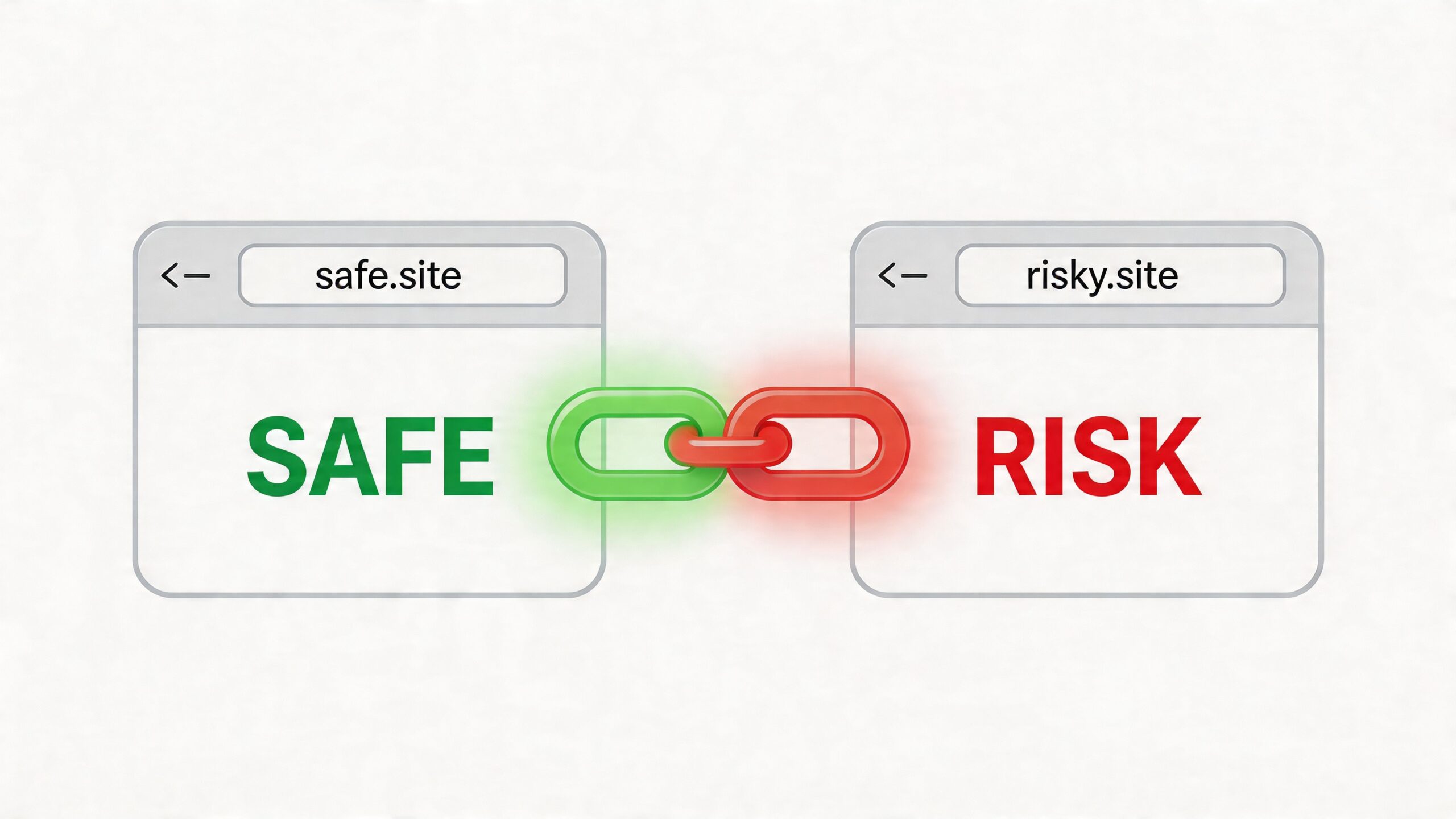
The old advice on reciprocal links is too blunt to be useful in 2026. “Never do link exchanges” sounds safe, but it doesn’t match how the web works.
A large Ahrefs analysis found that 73.6% of high-traffic domains had at least one reciprocal link, and 43.7% of top-10 ranking pages for competitive queries contained reciprocal links according to the Ahrefs study summary. That doesn’t mean you should start swapping links with anyone who asks. It means reciprocal links SEO should be treated as a judgment call, not a taboo.
The right question isn’t whether reciprocal links exist in strong backlink profiles. They do. The right question is whether your reciprocal links look like a natural byproduct of useful relationships, or a pattern built to manipulate rankings.
Reciprocal Links The Misunderstood SEO Tactic
Reciprocal links are neither poison nor a growth hack. They are a normal byproduct of doing business on the web, and they become risky only when teams turn them into a system.
I usually see two bad starting points. One client has been told to reject every two-way link on sight. Another wants to approve every swap request because it looks faster than earning links the hard way. Both approaches miss how search engines assess links in 2026.
The first camp is working from an old defensive rule. That rule existed for a reason. Years ago, low-quality exchange pages, link rings, and keyword-stuffed partner sections were common, so avoiding reciprocal links entirely was a simple way to avoid trouble. The problem is that a blanket ban also causes teams to pass on legitimate editorial links from suppliers, partners, industry associations, and complementary products.
The second camp creates a different problem. Once link exchanges become repeatable outreach, the pattern gets obvious. Relevance slips. Anchor text starts to look coordinated. Pages built for users turn into inventory for trades. That is where a tactic that can be harmless in small doses starts creating unnecessary risk.
Why the old warning falls short
Search engines assess context, not just the existence of a two-way link. A manufacturer linking to a certified installer, and the installer linking back to the manufacturer, makes sense. A payroll SaaS company swapping links with a casino blog does not. The difference is not subtle.
Google has been consistent on the broader principle for years. Exchanging links at scale for ranking benefit falls under link spam, while normal editorial linking between relevant sites is part of how the web works. That distinction matters more than the simple question of whether both sites happen to link to each other.
Reciprocal links become a problem when the pattern looks engineered for rankings instead of useful for readers.
What this means in practice
A healthy backlink profile can include some reciprocal links and still look completely normal. That often happens after partnerships, integrations, co-marketing, citations, or resource-page placements where each mention has a real reason to exist.
What fails is overuse.
If a brand depends on direct swaps as a core acquisition channel, quality control usually breaks down fast. The team starts accepting weaker sites, weaker pages, and weaker topical fit just to keep volume up. At that point, reciprocal links stop being incidental and start becoming the footprint.
For most companies, the right policy is simple. Allow reciprocal links when the page would deserve the link even without the return. Decline them when the only value is the trade itself. That is the difference between a natural backlink profile and one built on an outdated shortcut.
What Are Reciprocal Links Really
A reciprocal link is a two-way link relationship. Site A links to Site B, and Site B links back to Site A.
That definition is neutral. It describes a pattern, not a penalty.
Reciprocal links are a common feature of legitimate sites. Agencies link to software partners. Integration partners link to each other’s setup docs. Industry publishers cite a vendor study, then get cited later in a methodology page or commentary piece. On many strong sites, some level of reciprocity shows up because businesses in the same topic cluster reference each other over time.

What matters is the reason the links exist and how often this pattern appears in your profile.
A useful comparison is two businesses serving the same audience at different points in the buying process. If both recommendations help the visitor complete a task, the reciprocity is a byproduct of relevance. Online, the same logic holds. Shared audience, clear topical fit, and page-level context usually separate a normal reciprocal link from a manufactured swap.
Reciprocal links sit on a risk spectrum
Treating every reciprocal link as toxic is outdated. Treating every swap as harmless is careless. In practice, these links fall on a spectrum from editorial and low-risk to coordinated and high-risk.
As noted in Andrew Linksmith’s guidance on reciprocal links, safe reciprocal link building involves a spectrum of approaches: natural occurrences with zero risk, selective agreed exchanges with relevant partners at low risk, and bulk, automated schemes carrying a high risk of penalties.
That framing is more useful than the old blanket rule to avoid all reciprocation.
- Natural reciprocal links: One site references a useful resource, case study, or tool. Later, the other site independently cites a relevant page in return. There is no formal trade, and each link stands on its own editorial value.
- Selective agreed exchanges: Two relevant sites choose specific pages where cross-linking improves the content. This can be reasonable when the pages are strong, the audiences overlap, and the link would stay even if rankings were not part of the discussion.
- Bulk or automated exchanges: Outreach templates, link swap groups, low-value resource pages, and unrelated domains create a visible pattern. These are the arrangements that push reciprocal linking into link spam territory.
A simple agency rule helps here. Approve the link if the page is better with it. Decline it if the only argument is “they’ll link back.”
Examples that clarify the difference
A sound reciprocal link might involve a CRM consultant citing a sales platform’s benchmark report in a detailed article, then earning a later mention in that platform’s implementation guide. The topic match is tight. The pages have a real editorial reason to reference each other.
A weak version usually shows up on thin partner pages with no context, no traffic, and no clear user value.
The high-risk version is broader and easier to spot. Networks of sites cross-link through footers, generic guest posts, directories, and token resource pages built for swaps. At that point, the reciprocal link is no longer incidental. It becomes the method.
How Search Engines Interpret Your Link Swaps
Search engines don’t just ask, “Did these two sites link to each other?” They ask a better set of questions.
Do these sites belong in the same topical neighborhood? Does the placement help the reader? Is the link embedded in meaningful content, or bolted onto a page for SEO? Does the broader backlink profile look diverse, or does it lean heavily on mirrored relationships?

Context matters more than the swap itself
The strongest clue search engines use is context. If a cybersecurity vendor links to a compliance consultant inside a detailed article on audit readiness, that relationship makes sense. If that consultant later links back from a guide on security documentation, that also makes sense.
The user gets a better path through related information. The sites reinforce each other’s topical relevance. The reciprocal pattern exists, but it isn’t the main story.
By contrast, if a fitness blog and a payroll software site link to each other, the exchange has no editorial logic. Even if both sites have real traffic, the mismatch weakens the signal.
Ratio and pattern still matter
Reciprocal links become more suspicious when they represent too much of the backlink profile. That’s where many teams make a mistake. They hear that reciprocal links are common, then assume more of them must be fine.
The better interpretation comes from Linkody’s analysis of reciprocal links in SEO, which states that 43.7% of top-ranking pages have reciprocal links and that maintaining a low reciprocity ratio, ideally 10-20% of the total backlink profile, helps avoid manipulation flags.
That gives you a practical benchmark. Not a target to chase, but a boundary to respect.
What search engines are likely rewarding
Three qualities usually separate a healthy reciprocal link from a weak one:
Topical alignment
The two sites cover related subjects or serve adjacent needs.Editorial placement
The link sits inside useful content, not in a sitewide footer, widget, or token partner page.Profile diversity
Reciprocal links are one small part of a broader backlink mix that includes one-way earned links, mentions, digital PR coverage, and citations.
If a reciprocal link improves the page for a reader, it starts from a better place than a link placed only to complete a trade.
This is why reciprocal links SEO works best when the exchange is almost incidental. Search engines can tolerate mutual linking. They don’t trust obvious dependency on it.
The Real Risks And Penalties Of Bad Reciprocal Linking
Bad reciprocal linking usually doesn’t fail in one dramatic moment. It fails in two ways.
Sometimes you get a clear problem. A manual action, a warning in Search Console, a visible sign that Google sees a manipulative pattern. Other times the damage is quieter. Rankings soften, pages stop moving, and authority signals weaken because the links aren’t carrying weight.
What bad patterns look like
The risk usually comes from behavior, not from the existence of a two-way link.
Common red flags include:
- Scaled exchanges: Dozens of swap requests sent from templates, with little review of relevance.
- Unrelated partners: Links between sites that don’t share a topic, audience, or business context.
- Weak placements: Footer, sidebar, or thin partner pages created mainly to host outbound links.
- Manipulative anchors: Repeated keyword-heavy anchor text that looks written for rankings rather than users.
- Reciprocity dependence: A backlink profile where too many links are mirrored by outgoing links to the same domains.
A lot of businesses inherit these issues rather than create them. An old agency may have run link exchanges years ago. A founder may have said yes to every partnership request. A marketing team may have treated “resources” pages like a dumping ground.
Why this creates broader SEO problems
Once reciprocal linking gets sloppy, the issue often spreads beyond rankings. Poor outbound link decisions can weaken trust signals, create strange associations, and make the site look less editorially disciplined.
That’s one reason backlink cleanup often overlaps with brand protection work. If a company is associated with low-quality sites, that can affect how prospects, journalists, and partners perceive the brand. It’s the same reason many teams connect backlink reviews with broader search engine reputation management services.
What to avoid without exception
Some practices are almost never worth defending:
- Automated exchange networks
- Large partner pages built only for cross-linking
- Sitewide reciprocal links
- Link swaps with thin, expired, or obviously commercialized sites
- Any exchange where the only rationale is “we both want a backlink”
A reciprocal link should survive a simple test. If you removed the SEO incentive, would you still want the link on the page?
If the answer is no, pass on it.
The biggest practical mistake isn’t having a few reciprocal links. It’s letting low standards turn a limited tactic into a visible pattern. Search engines don’t need to believe you’re running a scheme at industrial scale. They only need enough evidence that your links weren’t placed to help users.
A Modern Framework For Safe Reciprocal Linking
If a client asks whether a reciprocal link opportunity is worth pursuing, the answer should come from a framework, not a gut feeling.
The safest approach is selective, editorial, and boring. That’s a compliment. Good link decisions rarely look clever.
Start with partner quality
The first filter is whether the other site deserves association with your brand and your backlink profile.
According to SEO Guru Atlanta’s guidance on reciprocal links, the ranking value of a reciprocal link is determined by domain authority transfer and contextual relevance, and a single link from a high-authority site with DR 50+ in a related niche provides more SEO equity than many links from low-authority, unrelated sites.
That points to the right priority. Don’t count opportunities. Vet them.
Use a practical review process:
Check topical fit
The site should operate in your niche or an adjacent one. Audience overlap matters more than broad “business” relevance.Review organic footprint
Look at the site in Ahrefs or Semrush. Is it publishing real content? Does the backlink profile look clean? Are the pages indexed and maintained?Assess editorial standards
Read the actual page where the link would live. If the content is thin, outdated, or obviously built to host links, walk away.Avoid direct keyword competitors when the exchange helps them more than you
Collaboration works best with complementary brands, not pages fighting for the same query.
Then review the placement
A strong partner can still offer a weak placement.
The link should appear inside content where a reader would expect it. Useful placements include product integration guides, tutorials, research roundups, partner explainers, and resource lists with real editorial curation.
Poor placements usually share one trait. They exist to satisfy the exchange.
Keep the ratio low and the profile varied
Reciprocal links should be a minority tactic. If they become a meaningful share of your backlink acquisition, the strategy is drifting.
That doesn’t mean obsessing over one exact threshold every month. It means monitoring whether your profile still looks like a natural mix of earned links, citations, mentions, digital PR, guest contributions, and partnerships.
A quick operating rule works well:
- Use reciprocal links when the relationship already exists or the content fit is obvious.
- Prefer one-way earned links whenever you can.
- Decline exchanges that require awkward placement, forced anchor text, or relevance gymnastics.
Reciprocal Linking At a Glance Safe vs. Risky
| Characteristic | Safe Strategy (Low Risk) | Risky Tactic (High Risk) |
|---|---|---|
| Partner selection | Relevant, reputable, adjacent audience | Unrelated or questionable sites |
| Link location | Contextual placement inside useful content | Footer, sidebar, or thin partner page |
| Intent | Helps readers discover supporting information | Exists mainly to trade SEO value |
| Volume | Occasional and selective | Repeated and systematic |
| Anchor text | Natural brand or descriptive phrasing | Over-optimized keyword anchors |
| Relationship | Genuine collaboration or editorial fit | Cold transactional swap |
| Role in strategy | Small part of a diverse backlink profile | Core method for acquiring links |
A practical approval checklist
Before saying yes, run through this list:
- Would I link to this page even without a return link?
- Will this help the user complete a task or understand a topic better?
- Does the site publish content I’d be comfortable referencing publicly?
- Is this one opportunity among many link types, or part of a pattern?
If those answers hold up, reciprocal links SEO can be perfectly reasonable. If they don’t, the fastest win is saying no.
Smarter Link Building Alternatives To Prioritize
Reciprocal links can support SEO. They shouldn’t define it.
The stronger long-term play is to build assets and relationships that attract links without requiring a return favor. That gives you a healthier profile, stronger brand signals, and less maintenance.

Build assets worth citing
The cleanest links usually come from content that solves a real problem better than what already exists.
That includes:
- Original research and benchmark content
- Free tools and templates
- Detailed guides with firsthand expertise
- Visual explainers, checklists, and implementation resources
If your content team needs a structured way to plan that work, this guide to a powerful SEO content strategy is useful because it frames content around search intent, topical authority, and sustainable publishing decisions.
Use collaboration without turning it into a swap
A useful 2026 direction is collaborative content that earns links as a byproduct of expertise sharing rather than as a negotiated trade. According to Bluehost’s reciprocal link analysis, a key trend for 2026 is genuine collaboration, and co-creating content like interviews or expert roundups can drive engagement lifts of 15-25% while aligning with Google’s E-E-A-T guidelines.
That matters because it changes the posture. You’re not asking, “Can we exchange links?” You’re building something both audiences want.
Formats that work well include:
- Expert roundups
- Interviews with operators or founders
- Joint webinars turned into blog content
- Partner guides for integrations or workflows
- Co-authored industry explainers
These often produce natural reciprocal links, but the collaboration is the point. The link is secondary.
A deeper look at modern link acquisition tactics can help teams broaden beyond exchanges. This resource on link building for ecommerce sites is useful even outside ecommerce because the principles around asset creation, outreach quality, and authority building are transferable.
Digital PR and guest contributions still matter
Digital PR remains one of the best ways to earn one-way links at scale. Good stories, proprietary data, and strong expert commentary create link opportunities that don’t depend on reciprocity.
Guest contributions also still work when the publication is selective and the content adds real value. The aim isn’t to plant anchor text. The aim is to publish something a respected audience would read even if no backlink existed.
For a broader perspective on where reciprocal links fit, this short video is worth watching.
The most durable SEO programs don’t reject reciprocal links outright. They just stop treating them as the center of the plan.
How To Audit And Monitor Your Link Profile
You don’t need a complicated workflow to audit reciprocal links. You need a consistent one.
The goal is to answer three questions. Which domains link to you? Which domains do you link to? Where do those lists overlap, and are those overlaps defensible?
A simple audit process
Start with your backlink tool of choice. Ahrefs, Semrush, and Moz can all export referring domains. Then pull your outbound links from a crawler or site audit tool. Some teams use Screaming Frog for this because it makes outbound link extraction straightforward.
Once you have both lists, compare them in a spreadsheet. Any domain that appears on both is part of a reciprocal relationship.
Then review each overlap manually.
Look for:
- Relevance: Does the other site belong in your topical ecosystem?
- Placement quality: Is the link in editorial content or in a weak sitewide area?
- Content quality: Would you still be comfortable linking there today?
- Pattern issues: Are several overlaps coming from the same campaign, template, or low-quality outreach effort?
Use Search Console and monitoring tools
Google Search Console helps you verify which sites are linking to you and whether any changes in visibility correlate with cleanup or new partnerships. It won’t give you every forensic detail, but it’s a good free validation layer.
If you’re building a monitoring stack, this roundup of best SEO monitoring tools is a useful reference because it helps teams compare platforms for backlink visibility, rank tracking, and alerting.
For a deeper technical review, many teams combine backlink checks with a broader site review through SEO audit services, especially when they’ve inherited an old domain with years of mixed-quality link building.
Audit reciprocal links like a reviewer, not a collector. The question isn’t how many you have. It’s whether each one makes sense.
When cleanup is worth doing
Cleanup usually makes sense when you spot a pattern of poor-quality exchanges, irrelevant sites, or placements you wouldn’t approve today. Remove what you control first. Ask partners to remove links when needed. Use disavow cautiously and only when you’re dealing with links you can’t clean up directly and don’t want associated with the site.
Monitoring matters because reciprocal links can drift. A decent partner today can become a weak one later. Pages get rewritten, domains change hands, and once-useful resource pages can turn into clutter. A light recurring review prevents old decisions from becoming future problems.
FAQ on Reciprocal Linking Strategy
Should you ask for reciprocal links directly
Sometimes, but only when there’s already a logical fit. Cold emails that say “you link to me and I’ll link to you” are usually low quality because they start with the transaction, not the user. Better outreach starts with a specific page, a real content gap, and a clear reason the link helps readers.
How many reciprocal links are too many
There isn’t a single magic number for every site. The better rule is proportion and pattern. If reciprocal links become a visible share of your backlink profile, or if they cluster around weak placements and mediocre sites, you’re pushing too far. Keep them limited, relevant, and clearly secondary to one-way earned links.
Are nofollow reciprocal links useful
They can still have value for referral traffic, partnerships, and user experience. They just aren’t the same as an editorial dofollow backlink for SEO. If a nofollow link makes sense for users, it can still be worth having. If the only reason for the exchange is ranking impact, a nofollow arrangement usually isn’t worth pursuing.
Should you remove old reciprocal links
Remove them if they come from irrelevant, low-quality, or manipulative relationships. Keep them if they still serve readers and come from solid sites. A reciprocal link isn’t guilty by definition. It should be judged by relevance, context, and current quality.
What’s the safest use of reciprocal links SEO
Use reciprocal links as a side effect of legitimate partnerships, collaborations, and editorial references. Don’t build your link strategy around swaps. Build authority with content, digital PR, expert contributions, and partnerships that would still make business sense without the backlink.
If you want a second opinion on whether your backlink profile looks natural or risky, ReachLabs.ai can help assess the pattern, identify weak exchange footprints, and build a cleaner SEO strategy around content, authority, and sustainable link acquisition.