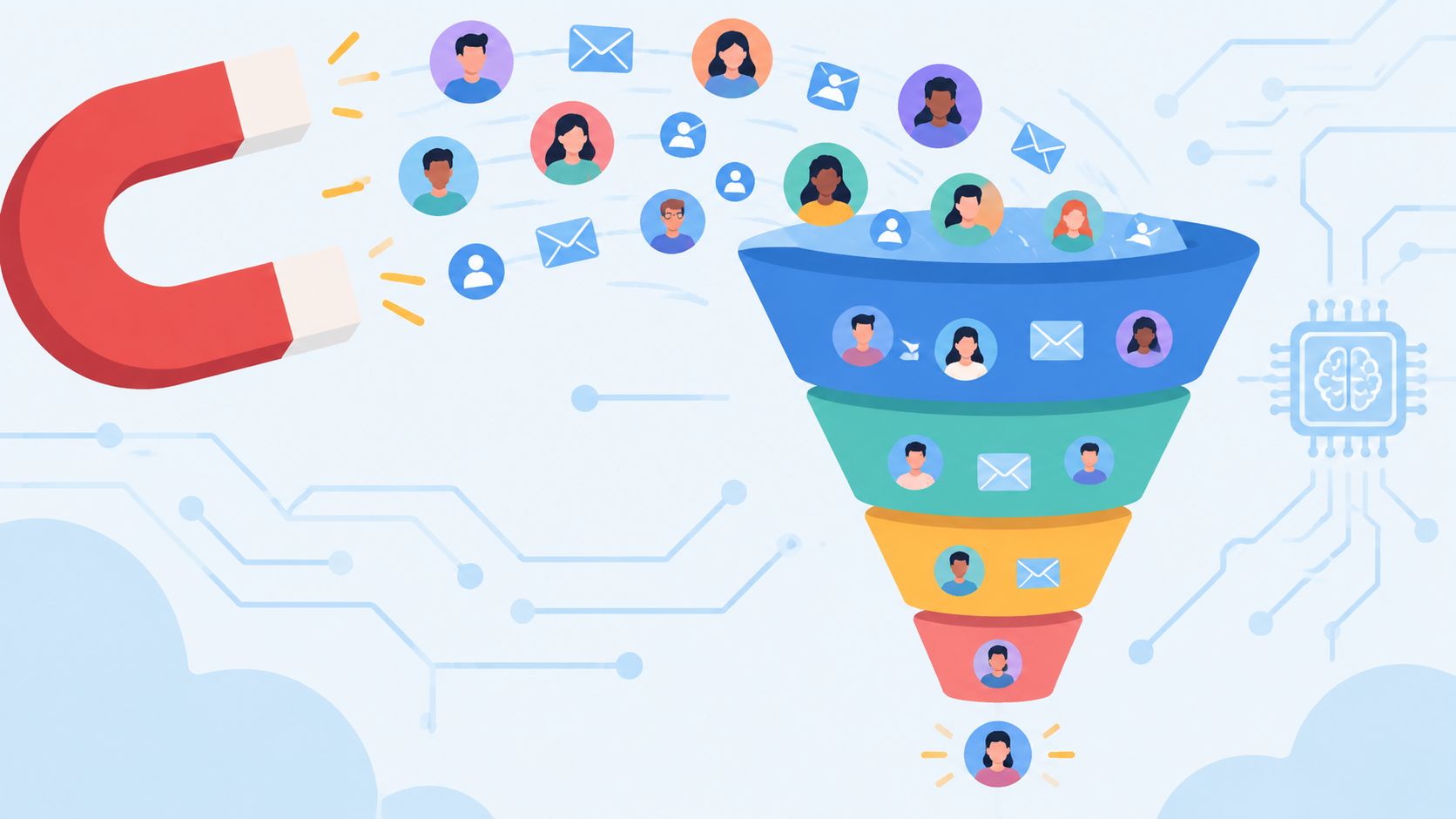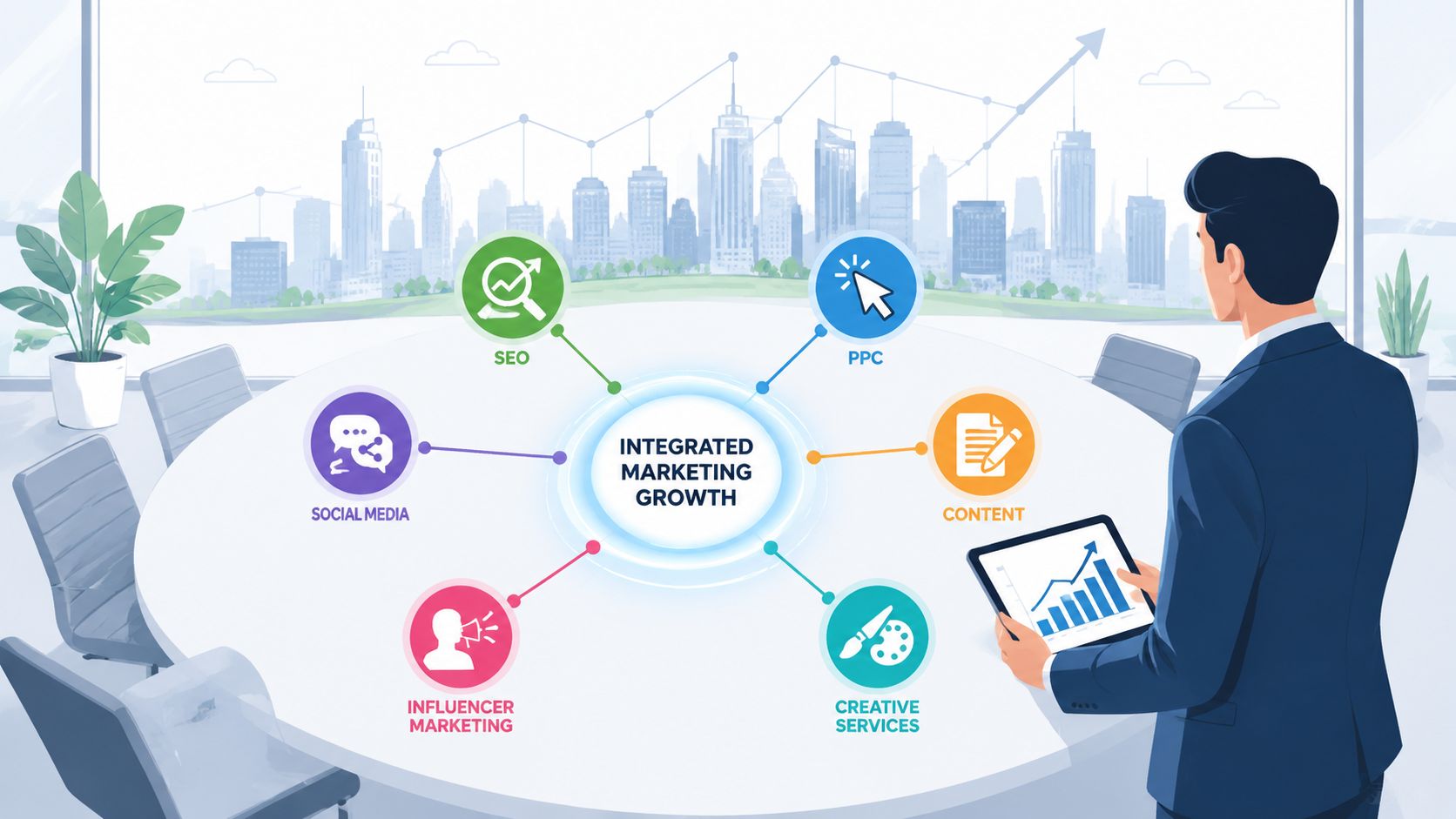
In today's competitive market, simply attracting website visitors isn't enough. The critical challenge is converting that initial curiosity into a pipeline of qualified leads ready for engagement. A well-defined approach can transform your marketing efforts from a cost center into a predictable, scalable revenue engine. This guide moves beyond generic advice to provide a comprehensive blueprint of ten proven lead generation marketing strategies, each designed to build a robust sales pipeline and fuel sustainable growth.
We will dissect each tactic, offering a detailed breakdown of how it functions, why it remains effective, and a clear path for implementation. This isn't a list of vague concepts; it's a collection of actionable frameworks. You will discover how to turn content into a lead-generating machine, leverage paid social for targeted outreach, and build automated email nurture campaigns that guide prospects through the buyer's journey. From the high-touch precision of Account-Based Marketing (ABM) to the broad appeal of webinars and free digital tools, you'll find strategies adaptable to your specific business model.
Whether you're a B2B SaaS company targeting enterprise clients or a direct-to-consumer brand expanding your customer base, this roundup provides the insights you need. We'll cover everything from search engine marketing and influencer partnerships to the power of community building and conversational chatbots. Get ready to explore the specific tactics and fresh perspectives that will define marketing success and help you consistently generate high-quality leads. Let’s dive into the strategies that will build your growth foundation.
1. Content Marketing & SEO
Content marketing and Search Engine Optimization (SEO) form a powerhouse duo among lead generation marketing strategies. This approach involves creating and distributing valuable, relevant content like blog posts, in-depth guides, and videos. The goal is to attract, engage, and convert a clearly defined audience by addressing their specific questions and problems. By optimizing this content for search engines, you capture organic traffic from users actively seeking solutions you provide, establishing your brand as a trusted authority.
This strategy excels at building a sustainable, long-term asset. Unlike paid ads that stop when you stop paying, high-ranking content can generate leads for years. For instance, HubSpot's renowned marketing blog attracts millions of monthly visitors, while Moz's "Beginner's Guide to SEO" has become an industry staple, consistently driving qualified traffic and leads. These examples prove that investing in high-quality, helpful content pays significant dividends.
How to Implement Content Marketing & SEO
To effectively use content for lead generation, a strategic approach is essential. Start by identifying topics that solve your audience's most pressing problems and align with your offerings.
- Focus on High-Intent Keywords: Use tools like Ahrefs or SEMrush to find "bottom-of-funnel" keywords. These are terms users search for when they are close to making a purchase decision (e.g., "best project management software for small teams" vs. "what is project management").
- Create Pillar Content: Develop comprehensive, long-form guides (often 3,000+ words) on core topics in your industry. These "pillar pages" act as a central hub, linking out to more specific "cluster" blog posts, which strengthens your topical authority.
- Embed Lead Capture Forms: Don't let visitors leave without a chance to convert. Integrate clear calls-to-action (CTAs) and lead capture forms directly within your content. Offer a content upgrade, like a downloadable checklist or ebook, in exchange for their contact information.
- Refresh and Repurpose: Keep your top-performing content current by regularly updating it with new information. Repurpose successful blog posts into different formats like infographics, videos, or webinar presentations to reach a wider audience.
The following graphic summarizes the key performance indicators for a successful content and SEO strategy.
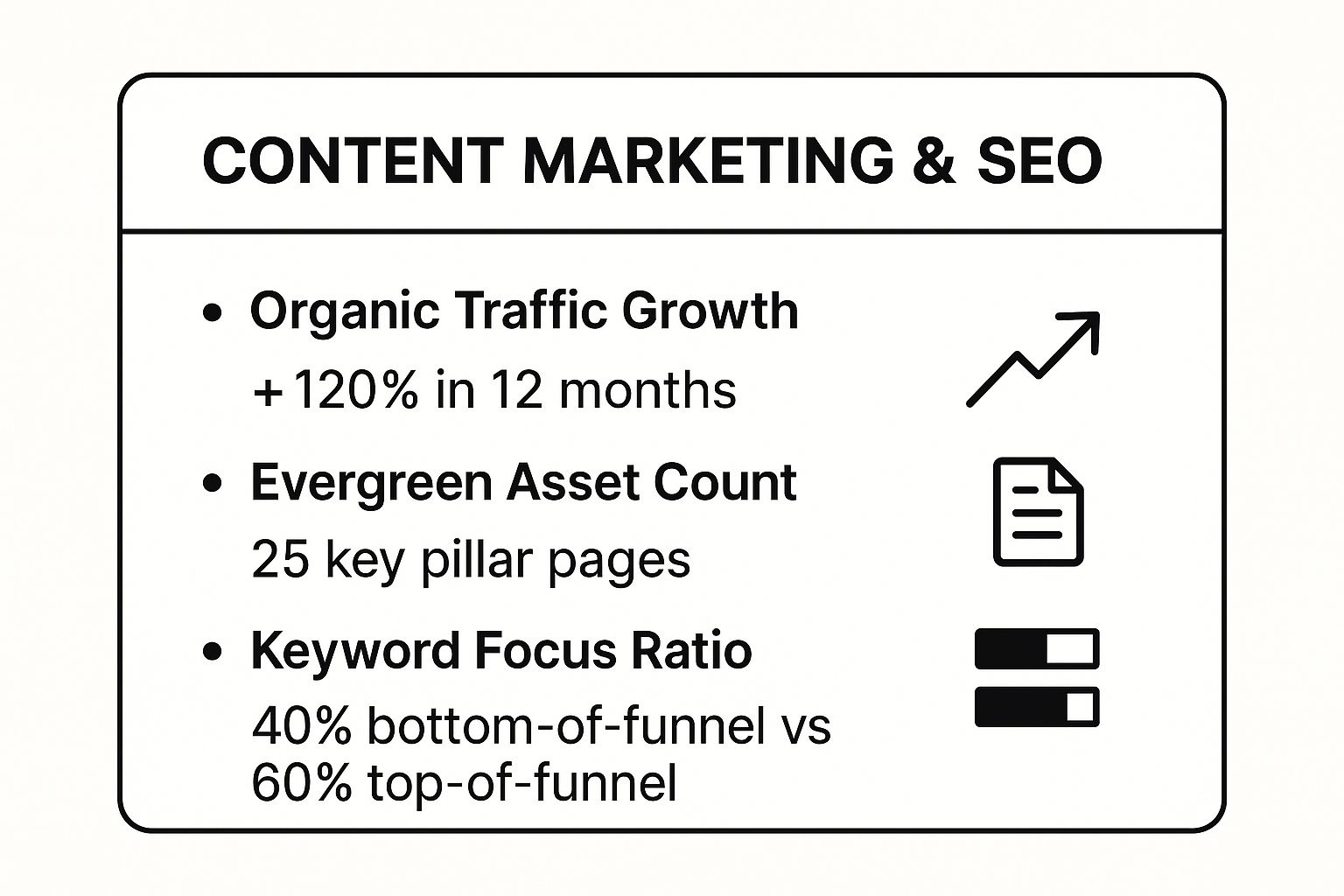
As the data shows, a balanced keyword strategy and a commitment to building evergreen assets directly contribute to significant organic traffic growth. This approach turns your website into a reliable, self-sustaining lead generation machine.
2. Social Media Advertising (Paid Social)
Paid social media advertising is one of the most direct and scalable lead generation marketing strategies. This method involves using platforms like Facebook, Instagram, and LinkedIn to deliver targeted advertisements to specific demographics, interests, and online behaviors. Unlike organic social media, paid social allows you to reach a precisely defined audience with sponsored content designed specifically to capture leads, often using native lead forms that simplify the conversion process.
This strategy excels at generating high-quality leads quickly by reaching potential customers where they are already active and engaged. For example, Salesforce runs highly targeted LinkedIn campaigns that generate thousands of qualified B2B leads monthly by reaching decision-makers with relevant content. Similarly, Shopify uses Facebook Lead Ads with pre-filled forms to seamlessly acquire contact information from aspiring ecommerce entrepreneurs, dramatically reducing friction and increasing conversion rates.
How to Implement Social Media Advertising
An effective paid social campaign requires precise targeting, compelling creative, and a frictionless user experience. Start by defining your ideal customer profile and choosing the platform where they are most active.
- Utilize Platform-Native Lead Forms: Use tools like Facebook Lead Ads or LinkedIn Lead Gen Forms. These forms pre-populate with a user's profile information, which minimizes effort and significantly boosts form completion rates.
- Target Warm Audiences First: Begin your campaigns by targeting users who have already interacted with your brand. Create custom audiences from your website visitors, email lists, or video viewers to achieve higher conversion rates and lower costs.
- Test and Optimize Creatively: Continuously test different ad creatives, copy variations, headlines, and calls-to-action (CTAs). Use A/B testing to identify which combinations resonate most with your audience and drive the lowest cost per lead.
- Implement Immediate Follow-Up: Connect your lead forms to your CRM or email marketing platform to trigger an automated welcome sequence. A rapid follow-up is critical for engaging new leads while their interest is at its peak.
By combining granular targeting with a seamless user experience, paid social becomes a powerful and predictable engine for driving new business inquiries. It is an essential component of modern lead generation marketing strategies.
3. Email Marketing & Nurture Campaigns
Email marketing is one of the most direct and effective lead generation marketing strategies. It involves capturing email addresses through opt-in forms and then systematically nurturing these prospects with valuable content. This approach builds a direct line of communication, guiding subscribers from initial interest to conversion through personalized welcome series, drip campaigns, and segmented broadcasts.
This strategy excels because you own the audience. Unlike social media or SEO, you aren't subject to algorithm changes; your list is a direct asset. For instance, Groove HQ generated $100,000 in new revenue from a single storytelling-focused email campaign. Similarly, Airbnb increased bookings by 25% by sending personalized neighborhood guides, proving that targeted, helpful email content drives tangible business results.
How to Implement Email Marketing & Nurture Campaigns
An effective email strategy is built on relevance and personalization. Start by delivering on the promise you made at sign-up, then continue providing value that moves leads closer to a purchase decision. Discover more about lead nurturing automation to streamline this process.
- Segment Your Lists: Group subscribers based on their behavior, demographics, or where they are in the sales funnel. This allows for highly targeted messaging that resonates more deeply than a generic broadcast.
- Write Compelling Subject Lines: Aim for subject lines between 6-10 words, as this range often yields the best open rates. Create curiosity or clearly state the value inside the email to entice readers to click.
- Use a Single, Clear CTA: Each email should have one primary goal. Avoid overwhelming your audience with multiple requests. Use a prominent button or link that clearly directs them to the desired action.
- Test and Optimize: Experiment with different send times, content formats, and email frequency to discover what works best for your specific audience. What works for one industry may not work for another.
- Implement Re-engagement Campaigns: Create an automated sequence to win back subscribers who have become inactive. Offer them a special incentive or remind them of the value you provide to bring them back into the fold.
4. Webinars and Virtual Events
Webinars and virtual events have become indispensable lead generation marketing strategies for engaging audiences on a personal level. This approach involves hosting live or pre-recorded online seminars, workshops, or conferences to provide valuable educational content or product demonstrations. By requiring registration, you capture high-quality lead data from an audience that has actively shown interest in your expertise, establishing your brand as a thought leader in the process.
This strategy excels at building direct relationships and accelerating the sales cycle. Unlike static content, webinars allow for real-time interaction, Q&A sessions, and personalized engagement. For example, Russell Brunson's ClickFunnels reportedly generates millions monthly using a consistent webinar funnel, while Salesforce's annual Dreamforce event attracts hundreds of thousands of registrants, proving the immense lead-capturing power of virtual events at any scale.
How to Implement Webinars and Virtual Events
To leverage webinars effectively, your focus must be on delivering tangible value before making a sales pitch. Begin by selecting a topic that solves a significant pain point for your target audience and showcases your solution's benefits.
- Promote Extensively: Start promoting your event 2 to 3 weeks in advance across all channels, including email marketing, social media, and paid ads. Build anticipation to maximize registrations.
- Structure for Engagement: Keep the main presentation concise, ideally 45 minutes, leaving ample time for a live Q&A session at the end. This interaction is often the most valuable part for attendees.
- Automate Your Reminders: Send an automated reminder sequence to registrants at key intervals, such as one week, one day, and one hour before the event starts, to maximize live attendance rates.
- Segment Your Follow-Up: After the event, send tailored follow-up emails. Attendees should receive a link to the recording and a specific call-to-action, while no-shows should receive a "sorry we missed you" email with a link to watch the replay.
- Offer the Replay: Always record your live session. Gating the replay behind a form allows you to continue generating leads from the content long after the live event has concluded.
5. Search Engine Marketing (PPC/Google Ads)
Search Engine Marketing (SEM), primarily through pay-per-click (PPC) platforms like Google Ads, is a powerful strategy for capturing high-intent prospects at the exact moment they are looking for solutions. This approach places your business's ads at the top of search engine results pages (SERPs) for targeted keywords. When users search for terms related to your offerings, your ads appear, prompting them to click through to an optimized landing page designed specifically for conversion.
This strategy's main advantage is its speed and precision. Unlike organic methods, SEM can generate traffic and leads almost instantly. For example, Unbounce famously increased its conversion rates by 48% using targeted PPC campaigns paired with personalized landing pages. Similarly, many local service businesses report an impressive $8 to $12 return for every $1 spent on Google Ads, demonstrating its effectiveness in driving immediate, measurable results and making it one of the most direct lead generation marketing strategies available.
How to Implement Search Engine Marketing
A successful PPC campaign requires meticulous planning and continuous optimization. To maximize your investment in paid search, mastering the Google Ads lead generation best practices is crucial for turning clicks into valuable customers.
- Focus on Long-Tail Keywords: Target longer, more specific phrases (e.g., "emergency plumbing service in brooklyn") that indicate higher purchase intent and typically have lower competition and cost-per-click.
- Create Tightly Themed Ad Groups: Organize your campaigns into small, highly relevant ad groups, each containing just 5-20 closely related keywords. This ensures your ad copy directly matches the user's search query, boosting relevance.
- Use Negative Keywords Extensively: Build a robust list of negative keywords to prevent your ads from showing for irrelevant searches. This filters out unqualified traffic and protects your budget from wasted clicks.
- Align Ad Copy and Landing Pages: Ensure a seamless user experience by matching your landing page headline and content directly to the promise made in your ad copy. This consistency is key for achieving a high Quality Score and improving conversion rates.
- Implement Conversion Tracking: Set up conversion tracking from day one to measure exactly which keywords, ads, and campaigns are generating leads. Optimize your bids and budget based on lead quality, not just the total number of conversions. Explore different search engine marketing strategies to find what works best for your goals.
6. Influencer and Partnership Marketing
Influencer and partnership marketing leverages the audiences of established industry figures, complementary brands, or content creators to generate highly qualified leads. This strategy involves collaborations like co-marketing initiatives or sponsored content that introduce your brand to a relevant, engaged audience. By tapping into the pre-existing trust between an influencer and their followers, you can bypass the traditional sales funnel and capture warm leads.
This approach is powerful because it relies on social proof and borrowed credibility. A recommendation from a trusted source is far more effective than a direct advertisement. For example, Dropbox famously achieved 3900% growth by creating a referral program that rewarded both the referrer and the new user. Similarly, Shopify’s partner program, which enlists agencies and developers, now drives a significant portion of its new merchant signups, proving the immense potential of strategic alliances.
How to Implement Influencer and Partnership Marketing
To succeed with this lead generation marketing strategy, you must focus on mutual value and authentic alignment. Start by identifying potential partners whose audience profile matches your ideal customer but who are not direct competitors.
- Create a Clear Value Proposition: Clearly outline what’s in it for your partner. This could be a revenue share, commissions, exposure to your audience, or access to your product. Make the benefits tangible and compelling.
- Equip Partners for Success: Don't expect partners to do all the work. Provide them with a toolkit containing ready-made promotional materials, co-branded landing pages, and unique tracking links or codes to easily measure ROI.
- Focus on Long-Term Relationships: Aim to build lasting alliances rather than one-off transactional campaigns. Nurturing relationships leads to more authentic endorsements and a more sustainable stream of high-quality leads over time. For more tips, you can learn more about influencer marketing for small businesses.
- Start with Micro-Influencers: For many brands, starting with micro-influencers (10k-100k followers) yields better results. They often have higher engagement rates and a more dedicated, niche audience, making their recommendations feel more personal and trustworthy.
7. Conversational Marketing & Chatbots
Conversational marketing revolutionizes lead generation marketing strategies by replacing static forms with real-time, one-on-one conversations. This approach uses chatbots, live chat, and messaging apps to engage website visitors the moment they arrive, providing immediate answers and guidance. It removes the friction of waiting for an email response, capturing leads by qualifying them and booking meetings directly within a chat window.
This strategy thrives on immediacy and personalization, creating a more human-centric buying experience. Companies like Drift have shown that engaging prospects in real-time can dramatically boost conversion rates, while Domino's Pizza's ordering bot demonstrates how conversations can streamline transactions. Similarly, Landbot increased its own demo requests by 60% using its chatbot, proving the model's effectiveness at converting interest into action.
How to Implement Conversational Marketing & Chatbots
To launch an effective conversational strategy, focus on creating seamless, helpful interactions that guide visitors toward a specific goal. Your aim is to be a helpful assistant, not an intrusive salesperson.
- Ask Qualifying Questions: Instead of presenting a long form, use the chatbot to ask qualifying questions one at a time. This feels more like a natural conversation and keeps the user engaged.
- Enable Instant Booking: Integrate your chatbot with a calendar tool like Calendly. This allows qualified leads to book a demo or sales call directly in the chat, eliminating back-and-forth emails.
- Use Branching Logic: Customize conversation flows based on the specific page a visitor is on or their past behavior. A visitor on your pricing page should receive a different message than someone reading a blog post. To significantly boost your lead generation efforts, consider implementing an effective chatbot for lead generation that leverages this kind of contextual intelligence.
- Provide a Human Escape Hatch: While chatbots are powerful, always include a clear and easy option for visitors to connect with a live human agent. This ensures complex queries are handled effectively and prevents user frustration.
8. Lead Magnets and Free Tools
Lead magnets and free tools are cornerstone lead generation marketing strategies that operate on the principle of reciprocity. This approach involves offering a valuable, free resource in exchange for a prospect's contact information, typically an email address. These resources, which can range from ebooks and templates to interactive quizzes or software, provide immediate value by solving a specific problem for the user, thereby capturing high-intent leads for future marketing efforts.
This strategy excels at converting passive website visitors into active leads by offering an irresistible, no-risk value proposition. HubSpot's Website Grader, for example, has analyzed millions of websites, generating a massive volume of leads by providing a personalized, valuable report. Similarly, CoSchedule's Headline Analyzer tool attracts hundreds of thousands of users annually, many of whom later convert to paid subscribers. These examples highlight how offering genuine utility upfront builds trust and a strong sales pipeline.
How to Implement Lead Magnets and Free Tools
Effective implementation hinges on creating a resource that your target audience finds genuinely useful and making the exchange seamless. Start by identifying a common pain point that can be solved with a simple tool or a piece of high-value content.
- Solve One Specific Problem: Design your lead magnet to offer a quick, tangible win. A checklist for "10 Steps to a Perfect Blog Post" is more effective than a vague ebook on "Content Marketing." The goal is immediate gratification and value.
- Create a Clear Upgrade Path: Ensure your free resource naturally leads to your paid product. If you offer a free social media post template, the next logical step for the user might be your full social media scheduling software.
- Gate Advanced Features, Not Basic Utility: For free tools, provide core functionality for free to attract a wide audience. Reserve more powerful, professional-grade features for paid upgrades, as Canva does successfully with its free versus Pro versions.
- Deliver Immediately: Fulfill your promise instantly. Send the lead magnet via an automated email immediately after the user subscribes. This reinforces trust and keeps the momentum going while their interest is at its peak.
9. Account-Based Marketing (ABM)
Account-Based Marketing (ABM) is a focused lead generation marketing strategy that flips the traditional marketing funnel on its head. Instead of casting a wide net to capture as many leads as possible, ABM concentrates marketing and sales resources on a predefined set of high-value target accounts, creating highly personalized campaigns designed to resonate with each specific organization. This approach treats individual prospect accounts as markets of one.
This strategy is exceptionally powerful for B2B companies with long, complex sales cycles and high-value deals. For example, DocuSign implemented an ABM strategy for its enterprise accounts and saw a 22% increase in average deal size. Similarly, data cloud company Snowflake used ABM to target Fortune 500 companies, which resulted in a 70% increase in its sales pipeline. These cases show how a hyper-focused approach can yield significant results.
How to Implement Account-Based Marketing
Effective ABM requires tight alignment between marketing and sales teams to identify, engage, and close target accounts. The process begins with careful selection and deep research, followed by coordinated, multi-channel outreach.
- Identify Your Ideal Accounts: Start small by defining your Ideal Customer Profile (ICP) and selecting 10-20 high-value target accounts that fit it perfectly. This allows you to refine your approach before scaling.
- Research Key Decision-Makers: Go beyond surface-level data. Thoroughly research the company’s pain points, business goals, and the key stakeholders involved in the buying decision. Use tools like LinkedIn Sales Navigator to map the account.
- Create Personalized Campaigns: Develop account-specific content, messaging, and offers. This could include personalized landing pages, industry-specific case studies, or even custom direct mail packages. The goal is to show you understand their unique challenges.
- Coordinate Multi-Channel Outreach: Execute a synchronized campaign across multiple touchpoints. Use a mix of LinkedIn ads targeted at the specific account, personalized email sequences, direct mail, and coordinated sales calls to surround the key decision-makers with a consistent message.
- Measure Account-Level Engagement: Shift your metrics from individual lead counts to account-level engagement. Track how many contacts within a target account are interacting with your content, visiting your site, or responding to outreach to gauge overall interest and progress.
10. Community Building and User-Generated Content
Community building is a powerful, long-term approach to lead generation that focuses on creating a loyal and engaged group around your brand. This strategy involves cultivating spaces like forums, social media groups, and dedicated platforms where customers and prospects can interact with each other and your team. By fostering a sense of belonging and shared value, you can generate leads organically through peer recommendations, valuable user-generated content (UGC), and authentic brand advocacy.
This approach builds a defensible moat around your business that competitors cannot easily replicate. For example, Notion’s community-driven template gallery accounts for over 40% of its new user signups, while Salesforce’s Trailblazer Community boasts millions of members who help each other, providing immense value and driving qualified leads. These communities transform passive audiences into active participants and brand champions, making this one of the most sustainable lead generation marketing strategies.
How to Implement Community Building and UGC
Successfully building a community for lead generation requires a "value-first" mindset. Instead of direct selling, your goal is to facilitate connections and provide resources that empower your members.
- Provide Value Before Asking for Anything: Adopt a 90/10 rule. Dedicate 90% of your efforts to providing value, answering questions, and facilitating discussions, with only 10% focused on direct promotion. Show up authentically in existing communities before attempting to build your own.
- Empower Superusers and Advocates: Identify your most active and helpful members. Empower them with special access, recognition, or moderator roles. These "superusers" will become your most effective advocates, amplifying your reach and credibility.
- Feature User-Generated Content: Actively encourage and showcase content created by your community. This could be anything from product templates and tutorials to success stories and creative projects. Featuring members builds loyalty and provides social proof that attracts new prospects.
- Create a Feedback Loop: Use your community as a direct line to your audience. Listen to their discussions, pain points, and ideas to inform your product development and marketing messages. This demonstrates that you value their input and builds a stronger, more relevant brand.
Lead Generation Strategies Comparison Matrix
| Strategy | Implementation Complexity 🔄 | Resource Requirements ⚡ | Expected Outcomes 📊 | Ideal Use Cases 💡 | Key Advantages ⭐ |
|---|---|---|---|---|---|
| Content Marketing & SEO | Medium to High 🔄 | Moderate (content creation, SEO tools) ⚡ | Long-term organic traffic, brand authority 📊 | B2B, SaaS, service providers with longer sales cycles | Cost-effective, builds trust, multi-channel support ⭐ |
| Social Media Advertising (Paid Social) | Medium 🔄 | Variable (ad spend varies widely) ⚡ | Fast lead generation, scalable results 📊 | B2C, e-commerce, event promotion, targeted B2B | Highly targeted, fast ROI, detailed analytics ⭐ |
| Email Marketing & Nurture Campaigns | Medium 🔄 | Moderate (email platform + content) ⚡ | High ROI, strong lead nurturing 📊 | All business types, especially longer sales cycles | Highest ROI, direct communication, automation ⭐ |
| Webinars and Virtual Events | High 🔄 | High (production, promotion, hosting) ⚡ | Engaged, high-quality leads 📊 | B2B SaaS, coaching, online courses, high-ticket sales | Builds authority, interactive, repurposable content ⭐ |
| Search Engine Marketing (PPC/Google Ads) | Medium to High 🔄 | High (ad spend + management) ⚡ | Immediate visibility and traffic 📊 | Local services, SaaS, e-commerce, B2B with defined search | Immediate traffic, budget control, high intent ⭐ |
| Influencer and Partnership Marketing | Medium 🔄 | Moderate (partner coordination) ⚡ | Audience expansion, credibility 📊 | SaaS, consumer products, professional services | Access to engaged audiences, cost-effective ⭐ |
| Conversational Marketing & Chatbots | Medium 🔄 | Moderate (chatbot and CRM integration) ⚡ | Increased conversions, instant engagement 📊 | B2B SaaS, e-commerce, companies with sales teams | 24/7 engagement, higher conversion rates ⭐ |
| Lead Magnets and Free Tools | Medium 🔄 | Moderate (creation and promotion) ⚡ | High conversion rates from targeted leads 📊 | Content-driven, educational businesses | High perceived value, long-term assets ⭐ |
| Account-Based Marketing (ABM) | High 🔄 | High (research, personalization) ⚡ | Higher ROI, deal size, shorter cycles 📊 | Enterprise B2B, high-value contracts | Personalized, sales-marketing alignment ⭐ |
| Community Building and User-Generated Content | High 🔄 | High (community management) ⚡ | Loyal audience, organic lead generation 📊 | SaaS, membership businesses, B2B brands | Engaged users, advocacy, customer insights ⭐ |
Building Your Integrated Lead Generation Machine
We've explored a comprehensive arsenal of ten powerful lead generation marketing strategies, from the foundational pillars of Content Marketing and SEO to the highly targeted approach of Account-Based Marketing (ABM). Each tactic, whether it's the engaging immediacy of a webinar or the automated efficiency of a chatbot, holds the potential to significantly boost your pipeline. However, viewing these strategies as a simple menu to pick from is a common mistake. The true catalyst for exponential growth isn't just selection; it's integration.
The most successful marketing engines are not built on a single, isolated tactic. Instead, they are sophisticated, interconnected systems where each component amplifies the others. Your high-value blog post on industry trends isn't just an SEO asset; it's the creative fuel for a targeted social media ad campaign. The leads you capture from that ad aren't just names on a list; they are prime candidates for a meticulously crafted email nurture sequence that guides them toward a solution.
From Strategy to System: Your Actionable Next Steps
Transitioning from a list of tactics to a cohesive lead generation machine can feel daunting. The key is to start small, measure rigorously, and scale intelligently. Don't try to implement all ten strategies at once. Instead, adopt a phased approach focused on creating a resilient, multi-channel system.
Here’s a practical roadmap to get you started:
-
Audit and Align: Begin by revisiting your Ideal Customer Profile (ICP). Which channels do they frequent most? What kind of content resonates with them? This analysis will immediately help you prioritize. If your audience is highly active on LinkedIn and responds to data-driven insights, a combination of thought leadership content, targeted LinkedIn ads, and an insightful webinar might be your ideal starting point.
-
Select Your Core & Complementary Tactics: Choose one foundational strategy (like Content Marketing or PPC) and pair it with one or two complementary tactics. For example:
- Core: Content Marketing (e.g., creating in-depth guides).
- Complementary: Lead Magnets (gating the guides) and Email Marketing (nurturing the sign-ups).
This creates a complete, functional funnel from initial awareness to lead nurturing.
-
Define Your Metrics for Success: Before you launch, establish clear Key Performance Indicators (KPIs) for each stage of your integrated funnel. This goes beyond just tracking "leads." You need to monitor metrics like:
- Cost Per Lead (CPL): How much does it cost to acquire a lead from this specific channel combination?
- Lead-to-Opportunity Conversion Rate: What percentage of these leads are qualified enough to become sales opportunities?
- Customer Acquisition Cost (CAC): What is the total cost to acquire a paying customer through this system?
-
Iterate and Optimize: Your initial strategy is a hypothesis, not a final blueprint. Use A/B testing on your ad creative, landing page copy, and email subject lines. Analyze your webinar attendance and engagement data to refine future topics. The data you collect is your most valuable asset for turning a good lead generation strategy into a great one.
The Power of a Holistic Approach
Mastering these individual lead generation marketing strategies is essential, but integrating them is what separates industry leaders from the competition. A holistic approach creates a powerful flywheel effect. The community you build provides user-generated content for your social channels. The questions asked in your webinars become the topics for your next SEO-optimized blog posts. The data from your chatbot conversations informs the personalization of your ABM outreach.
This interconnectedness builds a resilient marketing ecosystem that doesn't just capture demand-it actively creates it. You move beyond one-off campaigns and begin building sustainable brand equity and a predictable, scalable pipeline of high-quality leads. This is the ultimate goal: a marketing machine that works for you, consistently driving growth and solidifying your market position.
Ready to stop juggling disparate tactics and start building a cohesive, data-driven lead generation machine? At ReachLabs.ai, we specialize in designing and executing integrated marketing systems that deliver predictable results. Let our team of experts help you build the powerful, scalable lead pipeline your business deserves. Learn more at ReachLabs.ai.