Leads are coming in, but not in a way that anyone would call a system. A website form submits at noon. A founder gets a LinkedIn message that never reaches the CRM. A referral arrives by email and sits in someone's inbox until Friday. Sales says the leads are weak. Marketing says nobody follows up. The dashboard looks busy, but pipeline still feels unpredictable.
That's a common stage for agencies, consultancies, and SMBs selling high-consideration services. You don't need more names thrown into a spreadsheet. You need a lead generation system that decides what to capture, what to ignore, how to qualify interest, and when to move a contact into a real sales conversation.
For premium B2B offers, quality beats volume. A narrow, disciplined machine usually outperforms a noisy funnel stuffed with bad-fit leads. The work is less about chasing every possible inquiry and more about building a repeatable path from first signal to qualified opportunity.
Escaping the Chaos of Random Leads
Teams typically don't start with a broken process. They start with no process that can survive growth.
At first, the patchwork feels manageable. A contact form sends an email. Someone manually copies details into HubSpot or Pipedrive. Another prospect comes in through LinkedIn. A third arrives from a webinar registration. You can still keep it all in your head, until you can't.
Then the cracks show:
- Response times slip: nobody owns first touch.
- Lead context disappears: sales sees a name, but not what content they consumed or which service page they viewed.
- Bad-fit inquiries eat time: the team treats every lead like it deserves the same effort.
- Reporting turns political: marketing counts submissions, sales counts meetings, leadership wants revenue.
Recent 2026 data makes the core problem obvious. 96.45% of website visitors are not ready to buy on their first visit, according to Email Vendor Selection's lead generation statistics. If your model depends on immediate conversion, most of your effort leaks out of the funnel before anyone even notices.
That's why a lead generation system matters. It gives your team a way to capture interest early, store it correctly, qualify it consistently, and nurture it until timing and fit line up.
Random lead flow creates random pipeline.
For high-ticket B2B sales, this is even more important. Many prospects need internal alignment before they're willing to book a serious conversation. They may watch your content for weeks, reply to an outreach message later, or reappear after a referral warms them up. Without a system, those signals stay disconnected. With one, they become a trackable buying journey.
What Is a Lead Generation System Really
A lead generation system is the operating model that turns scattered buying signals into qualified sales conversations.
For agencies, consultants, and SMB service teams with longer sales cycles, that distinction matters. High lead volume can look healthy in a dashboard and still produce weak pipeline if the wrong companies fill out forms, the right contacts get no follow-up, or sales receives records with no context. A working system solves for fit, timing, and handoff quality, not just capture.

Raw interest is not pipeline
A page visit, webinar signup, referral, outbound reply, or content download is only a signal. It may mean active demand. It may mean casual research. It may mean a junior employee gathering options months before a budget exists.
The system's job is to add structure before sales spends time. That means capturing the source, preserving behavioral history, checking for fit, filling in missing firmographic data where possible, routing records correctly, and keeping every touch tied to the contact or account record. Without that layer, marketing generates activity and sales inherits guesswork.
The practical standard is simple. A real lead generation system turns disconnected interactions into usable sales intelligence.
The five working stages
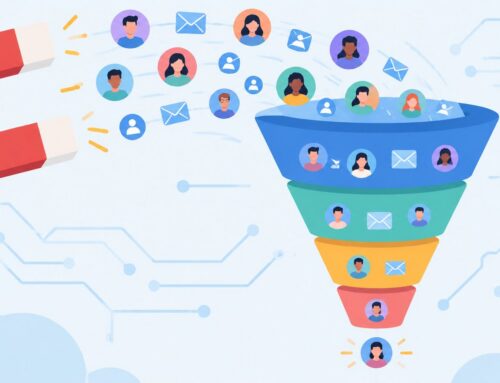
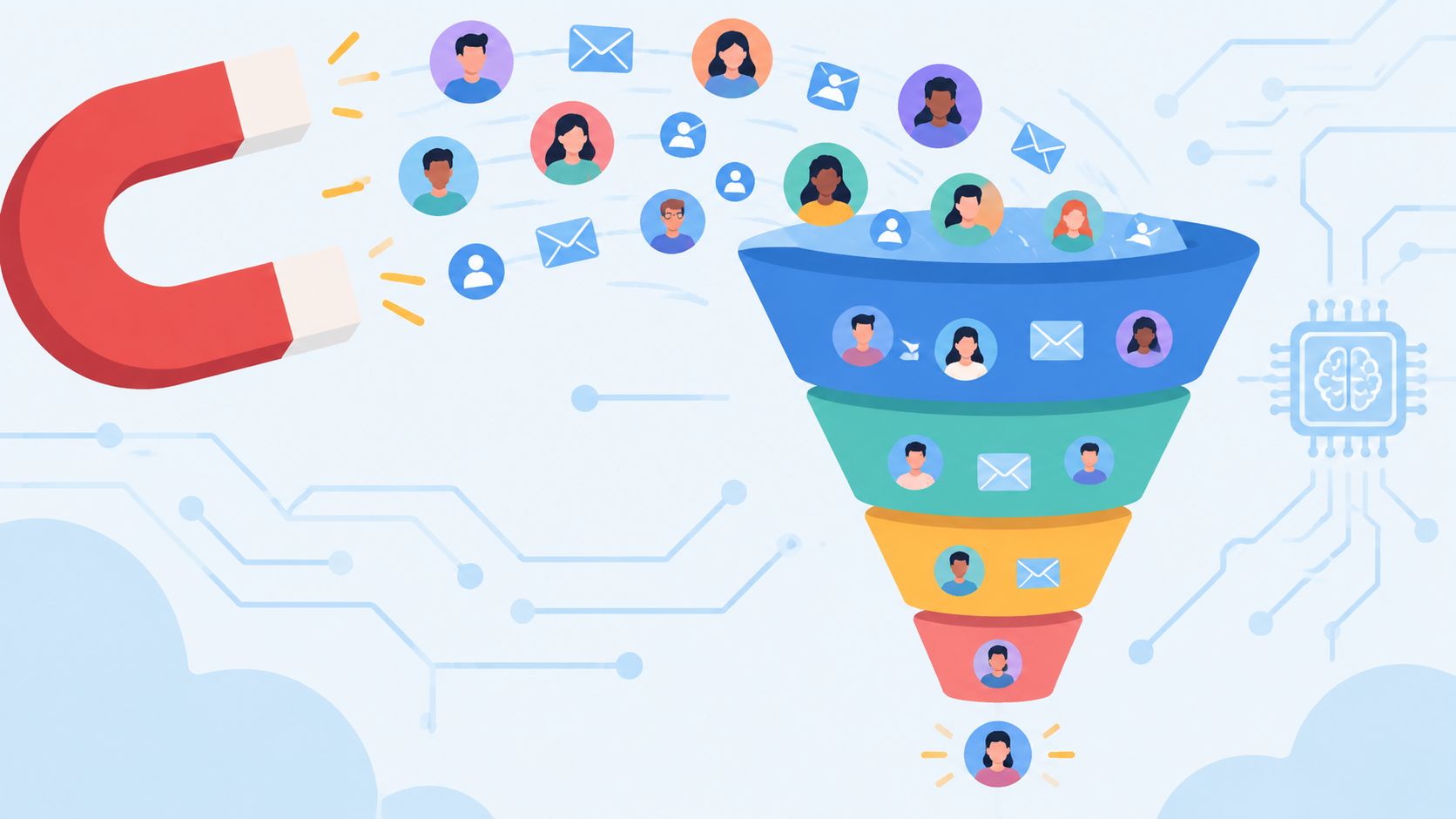
In practice, the system usually runs through five stages:
Collection
Interest enters through forms, referrals, outbound responses, paid campaigns, webinars, content offers, and social channels.Qualification
The system checks basic validity and screens for fit. For high-consideration B2B, this often matters more than pure volume because a small number of well-matched accounts can outperform a large batch of weak inquiries.Storage
Lead and account data live in one source of truth, usually the CRM, with activity history attached so the record stays useful after the first conversion event.Routing
Records move to the right owner, workflow, or nurture path based on criteria such as service line, geography, company size, urgency, or buying stage.Handoff
Sales receives context. That includes what the prospect asked for, what content they engaged with, how they entered the funnel, and why the record was prioritized.
Practical rule: If an AE or founder has to dig through inboxes, form notifications, and website analytics before a first call, the system is not set up well enough.
Forms usually expose the gap first. Teams either ask for too much and depress conversion, or ask for too little and flood sales with low-context leads that no one can prioritize. BuildForm's guide to optimizing forms is a useful reference if you need to tighten that balance.
The point is operational, not theoretical. Campaigns create attention. A lead generation system decides whether that attention becomes qualified pipeline, stalled follow-up, or noise.
The 7 Core Components of a Winning System
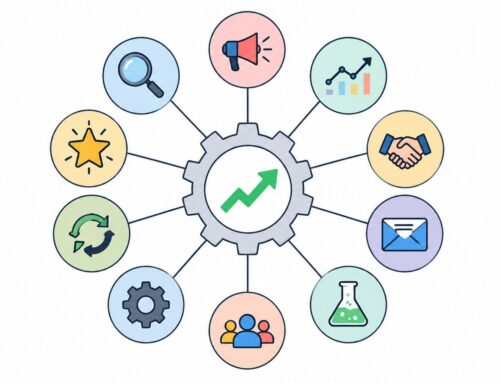
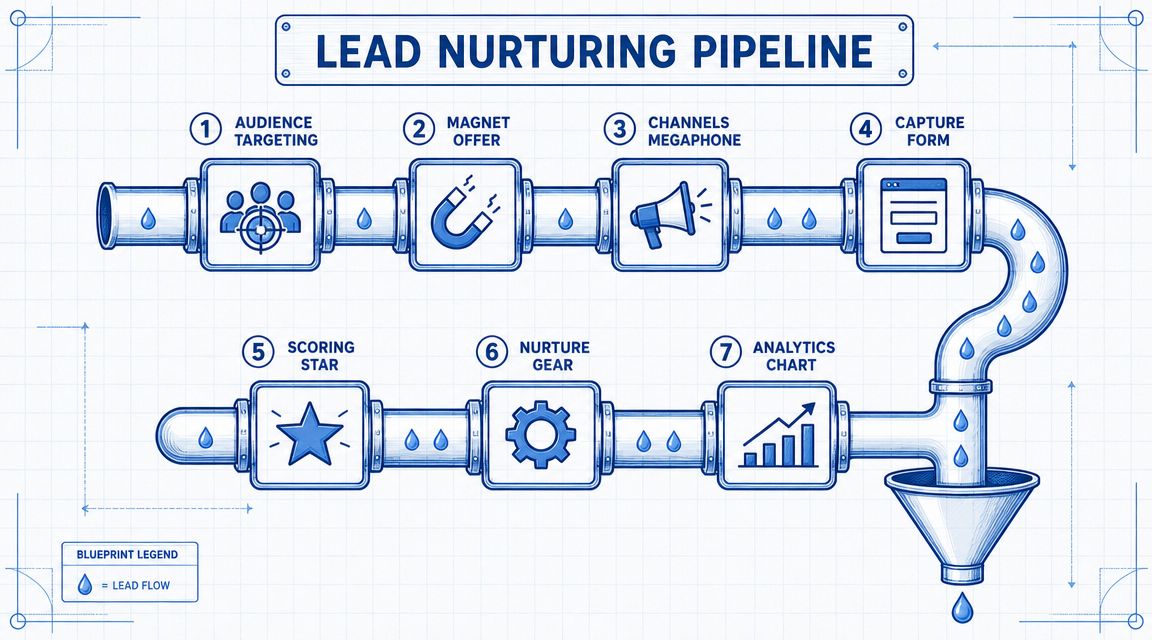
A strong lead generation system has seven parts. If one is weak, the whole machine gets noisier, slower, and harder to trust.

Audience and offer fit
Start with the ideal customer profile. For high-consideration B2B, broad targeting usually hurts more than it helps. You need to define company type, likely pain points, buying triggers, budget reality, and who inside the account tends to influence the decision.
That buying group is rarely one person. A typical B2B purchase involves 6 to 10 decision-makers, according to Expandi's demand and lead generation analysis. Your system has to support that reality. One contact may engage with content, another may care about delivery risk, and another may approve spend. If your nurturing only speaks to a single champion, deals stall.
Then define the offer. At this stage, many teams drift into generic content. Good offers create a next step that matches the buyer's level of intent.
Examples by intent level:
- Early interest: checklists, guides, short webinars, teardown content
- Mid-stage evaluation: case-style walkthroughs, service comparisons, audit requests
- Late-stage intent: strategy calls, demos, scoped consultations
Channels and capture paths
You don't need to be everywhere. You need a few channels that match how buyers research.
For many B2B teams, that means a mix of:
- Content and SEO for demand capture
- Email for follow-up and reactivation
- LinkedIn for direct access to relevant buyers
- Paid search or paid social where intent justifies spend
- Referrals and partnerships for warm introductions
The key is that each channel should feed a defined capture path. A blog post should point to a relevant resource. A LinkedIn conversation should route into a CRM workflow. A webinar registration should trigger follow-up by role and topic.
Forms and landing pages
Interest converts to data.
Too many teams force all traffic into the same bloated form. That creates friction and lowers intent clarity. Instead, build forms around context. A contact page can stay simple. A diagnostic request should ask sharper qualifying questions. A high-intent page can ask for more because the buyer expects it.
Use progressive profiling where possible. Don't ask for everything upfront if the next step can reveal more.
A short form with weak routing can waste more time than a longer form with strong qualification.
Scoring and qualification
Scoring matters when you have enough inbound signals that not every lead deserves the same response. The strongest models don't score based on one action alone. They look at fit, engagement, and behavior together.
Useful scoring inputs often include:
- Firmographic fit: industry, company size, geography, service need
- Engagement level: email clicks, webinar attendance, content consumption
- Behavioral intent: pricing page visits, repeat service-page views, demo or consult requests
This prevents the classic mistake of overvaluing shallow activity. Someone who downloaded a guide out of curiosity should not be routed the same way as someone who reviewed your pricing and requested a call.
Nurturing and follow-up
For high-value deals, nurturing is not just email automation. It's sequenced trust-building.
That may include educational emails, retargeted content where available, direct outreach from sales, referral activation, or account-based touches to multiple stakeholders. The best nurture programs don't just “stay in touch.” They answer the objections that keep premium deals from moving.
What works:
- Follow-up tied to the lead's actual interest
- Messages specific to pain point or role
- Sales and marketing using the same qualification language
What doesn't:
- Generic newsletters sent to every lead
- Immediate hard pitches after low-intent actions
- Handing cold contacts to sales because they filled one form
CRM handoff and reporting
A lead generation system fails in an understated manner when data and ownership are fuzzy. Marketing thinks the lead was delivered. Sales says it never arrived. Nobody can prove either side is wrong.
Clean handoff rules solve that. Define when a lead becomes sales-owned, what context must be attached, and what follow-up standard applies. Then report on pipeline movement, not just top-of-funnel activity.
The winning system is the one that helps your team answer three operational questions fast:
- Which sources create qualified opportunities?
- Which offers attract the right buyers?
- Where do good leads stall?
Your Step-by-Step Implementation Roadmap
A new lead gen system usually breaks in one of two ways. The team tries to launch every channel, rule, and workflow at once, or they collect names for months without building the routing and follow-up needed to turn interest into pipeline.
For high-consideration B2B sales, the second mistake is more expensive. A few well-matched leads handled correctly will beat a large batch of low-intent contacts sitting untouched in the CRM.

Phase one builds the foundation
Start with definition, not software.
Document your ICP, buying committee, main service lines, and qualification criteria in plain language. If sales, marketing, and leadership each describe a good lead differently, the system will drift before the first workflow goes live.
Then choose one or two offers tied to real buying intent. For an agency, that might be an audit, a strategy session, or a guide built around a costly operational problem. Broad awareness offers can have a place, but they should not be the center of an SMB lead gen system built for quality.
Write down four things before you configure anything:
- Entry points: where the right leads currently come from
- Conversion actions: the next step you want each lead to take
- Disqualifiers: firmographic or situational signs of poor fit
- Sales-readiness signals: behaviors that justify fast human follow-up
Phase two builds the operating layer
Now set up the basic infrastructure. Forms, landing pages, CRM fields, lifecycle stages, ownership rules, and source tracking all belong here.
Keep the model simple enough to survive handoffs, turnover, and future edits. I have seen teams build detailed field structures that look smart in a planning doc and fail the moment someone new has to use them. If a manager cannot explain the naming convention and stage logic in a few minutes, simplify it.
Form design matters here. Ask for enough information to qualify and route, but not so much that high-fit buyers abandon the page. Every form should feed a specific path in the CRM with a clear owner and a defined next action.
Phase three adds prioritization and follow-up
Once capture and routing work, add scoring and nurture.
As noted earlier, lead scoring works best when it combines fit, engagement, and buying signals. Start with a light model your sales team believes in. Company size, industry, role, repeat visits to high-intent pages, and request type are usually enough for version one. You can refine the thresholds after a few months of closed-loop feedback.
Follow-up should also reflect deal complexity. Someone requesting an audit needs a different path than someone downloading an educational asset. A short, role-aware sequence often performs better than a long generic stream, especially in agency and SMB sales where buyers want relevance fast. ReachLabs has a useful reference on lead nurturing automation if you are mapping CRM triggers to practical follow-up steps.
Build for clarity first. Fancy scoring logic does not help if reps ignore it.
Phase four improves what the market proves
Do not wait for the system to feel finished before you review performance. Live systems reveal problems faster than planning sessions do.
Use a short operating cadence. Weekly is enough for most SMB teams at the start.
- Review lead quality by source, offer, and campaign
- Check routing and field completion inside the CRM
- Compare sales acceptance and rejection reasons
- Adjust scoring, forms, and nurture paths based on opportunity creation
This is also the point where restraint matters. Do not add channels just to increase volume. If your current sources are producing mixed quality, more traffic usually creates more noise, not more pipeline. Teams that are still finding prospective customers on hard mode often have a process problem before they have a traffic problem.
Choosing Your Tech Stack and Setting KPIs
The right stack is the one your team will use. Most SMBs don't need a sprawling martech setup on day one. They need a reliable CRM, basic automation, clean forms, and reporting they trust.
Marketing automation deserves a central role here. According to Regie.ai's lead generation statistics roundup, 80% of users report an increase in leads, and some studies show qualified leads can increase by 451% when automation supports systematic nurturing and scoring. The lesson isn't “buy more software.” It's that hand-managed follow-up eventually caps out.
Pick tools by job, not by hype
A practical stack usually breaks into four layers:
- CRM for contact history, deal stages, assignment, and reporting
- Automation for email sequences, scoring, routing, and alerts
- Capture tools for forms, landing pages, chat, or meeting scheduling
- Analytics for source tracking, funnel visibility, and performance review
If your team is already in “finding prospective customers on hard mode,” this overview from DMpro on finding prospective customers on hard mode is a useful sanity check before adding another lead tool.
Lead Generation System Tech Stack Comparison
| Component | SMB Starter Stack (Lean & Low-Cost) | Scalable Growth Stack (Integrated & Powerful) |
|---|---|---|
| CRM | HubSpot Starter, Pipedrive, Zoho CRM | HubSpot Pro, Salesforce |
| Marketing automation | Native CRM workflows, Mailchimp, Kit | HubSpot automation, Marketo, ActiveCampaign |
| Forms and landing pages | Typeform, Tally, native CRM forms | Dedicated landing page builder plus CRM-native forms |
| Scheduling | Calendly | Calendly with CRM sync and routing logic |
| Enrichment and validation | Basic email verification and manual research | Dedicated validation and enrichment workflows |
| Reporting | CRM dashboards and spreadsheet reviews | Multi-touch reporting inside CRM and BI dashboards |
| Outreach support | Manual LinkedIn and email follow-up | Sequenced outreach with tighter segmentation and automation |
Set KPIs that map to revenue
For a high-consideration B2B lead generation system, vanity metrics create false confidence. A spike in traffic or form fills can hide serious quality problems.
Track KPIs in three groups:
- Lead quality indicators: accepted leads, rejected leads, duplicate rate, bad-contact rate
- Pipeline movement indicators: lead-to-meeting, meeting-to-opportunity, stalled-stage reasons
- Efficiency indicators: cost per lead, response time, workload by rep or channel
If you're evaluating AI-assisted workflow support, ReachLabs.ai's AI lead generation page is one example of how teams are packaging automation around qualification and demand capture. Treat solutions like that as infrastructure decisions, not silver bullets.
Best Practices for High-Value Lead Generation
High-value lead generation looks different from high-volume lead capture. The goal isn't to stuff the top of the funnel. The goal is to filter early, respond fast, and keep the right accounts moving.

Protect data quality at the door
Bad records contaminate everything after capture. ActiveProspect highlights point-of-entry validation, including email and phone verification, as a core practice in its guide for technology developers. That improves lead quality, shortens speed-to-lead, and reduces compliance risk before junk enters your CRM.
For SMBs, that means validating early instead of cleaning later. For agencies, it means baking validation into every client workflow template so operations don't depend on manual cleanup.
Build around first-party signals
Tracking is less reliable than it used to be. Third-party cookie changes, app tracking limits, and noisier attribution have pushed smart teams back toward what they can directly observe: form submissions, CRM history, email engagement, meeting outcomes, and sales feedback.
That makes first-party data capture a strategic asset. Strong content, clear offers, useful forms, and disciplined CRM hygiene now matter more than perfect channel attribution.
Use fewer channels, but run them properly
The fastest way to weaken a lead generation system is to spread a small team across too many motions. For most SMBs, one content engine plus one outbound or social channel is enough to build momentum. For many service firms, LinkedIn lead generation fits naturally because it combines targeting, direct conversation, and account-level visibility.
Good systems suppress weak-fit leads on purpose. That protects sales time and keeps forecasting honest.
A few operating habits make a real difference:
- Define qualified lead status together: sales and marketing need one shared standard.
- Route by relevance: territory, vertical, and service line should shape handoff.
- Nurture by problem, not by list: segment follow-up around buyer pain and readiness.
- Review lost and rejected leads: disqualification patterns often reveal broken targeting upstream.
Turn Your System into a Growth Engine
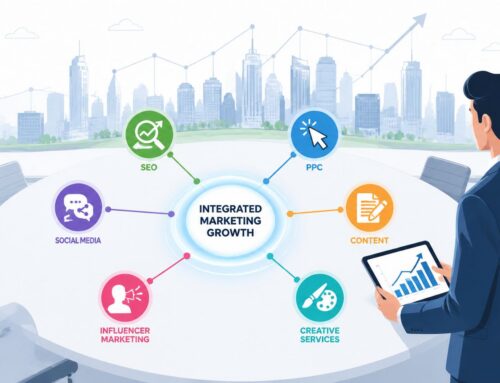
A lead generation system changes how a business grows. Instead of chasing isolated tactics, you create a machine that captures intent, filters noise, routes real opportunities, and gives sales the context to close.
That's the difference between “we got some leads this month” and “we know how pipeline is built.”
For agencies, consultants, and SMBs selling high-consideration services, the strongest system usually isn't the loudest. It's the one with sharper qualification, cleaner data, tighter follow-up, and better alignment between marketing and sales. If you're also using LinkedIn as part of that mix, RedactAI has a useful perspective on how to build a consistent B2B lead pipeline without relying on one-off bursts of activity.
Build the machine once. Improve it continuously. Then let it compound.
If you want help designing or tightening your lead generation system, ReachLabs.ai can support the strategy, content, outreach, and workflow design needed to turn scattered lead activity into a more predictable pipeline.