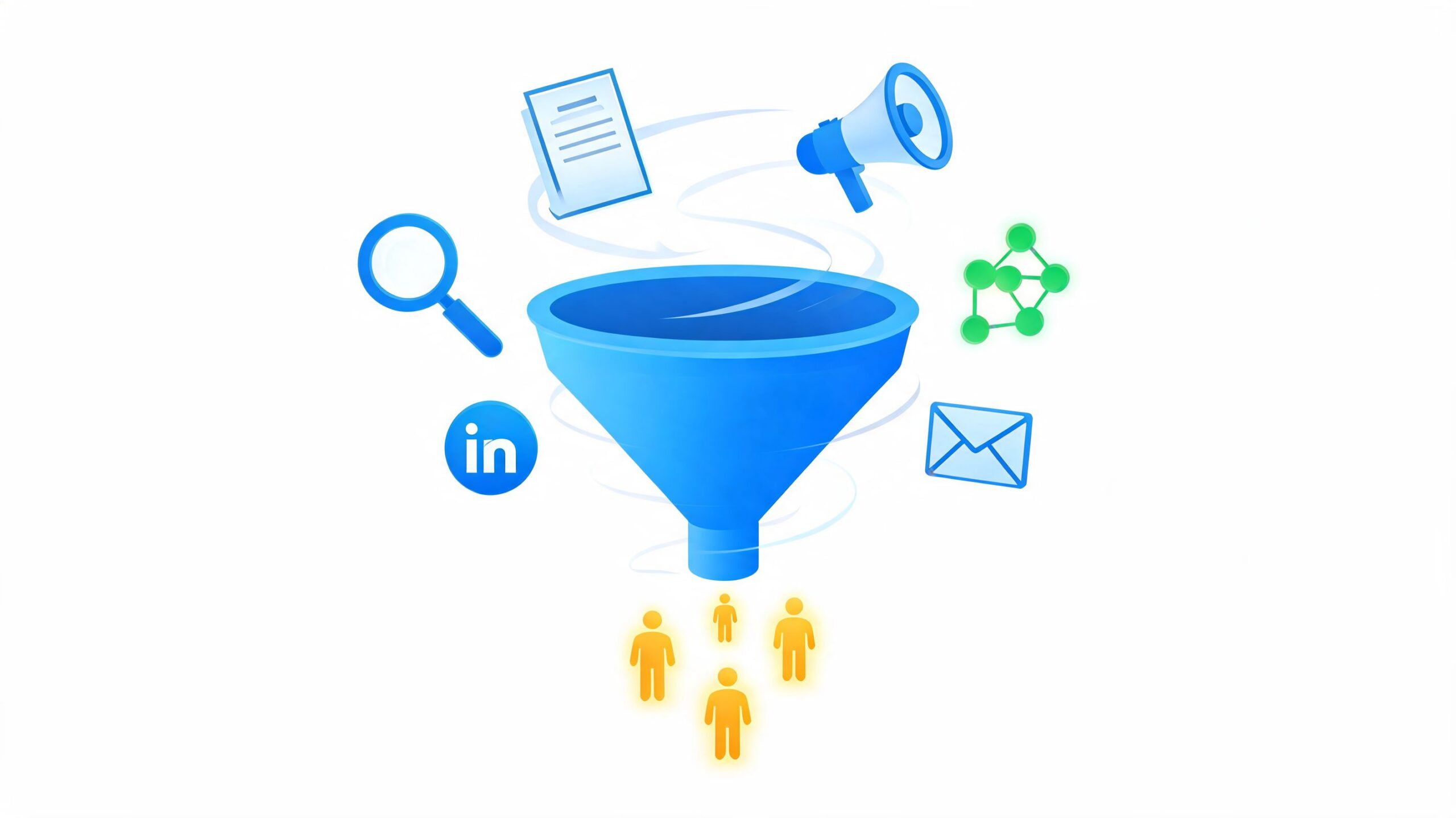
Most advice about lead generation online still starts in the wrong place. It starts with tactics. Run ads. Publish more content. Send more outbound. Add a chatbot. Offer a checklist.
That's how teams end up with activity instead of pipeline.
A lead generation program doesn't fail because the team lacked channel options. It fails because the parts were never built to work together. Traffic goes to generic pages. forms collect names with no qualification logic. Sales follows up too early or too late. Reporting stops at cost per lead, even when the sales team is drowning in bad fit inquiries.
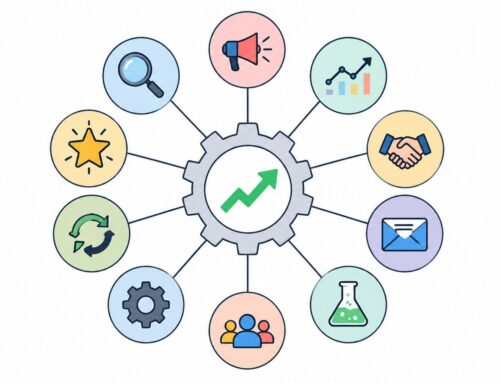
The fix is to treat lead generation online like an operating system. Strategy defines who you want. Channels attract attention from that market. funnels convert interest into usable signals. Qualification decides what deserves human follow-up. Nurture closes the gap between first touch and sales readiness. If one layer is weak, the rest underperform.
Stop Chasing Leads and Start Building an Engine
The obsession with “more leads” is expensive. A 2025 industry summary reports that the mean cost per lead across industries is $198.44, and 68% of B2B businesses still struggle to generate leads according to this lead generation statistics roundup. If your system is loose, every low-intent click, every bad-fit form fill, and every unqualified handoff gets more costly.
That's why the right question isn't “How do we get more names into the CRM?” It's “How do we build a repeatable system that creates qualified opportunities?”
I've seen the same pattern across service firms, SaaS teams, and agencies. The companies that grow predictably don't rely on one heroic channel. They build a connected engine:
- A clear market definition so messaging lands with the right buyers
- Acquisition channels with role clarity so each channel does a specific job
- Conversion paths that remove friction instead of adding choices
- Qualification logic so sales only spends time where intent and fit are real
- Feedback loops so campaign data changes strategy, not just dashboards
Practical rule: If sales says the leads are bad, the answer usually isn't “drive more traffic.” It's “tighten targeting, offers, and qualification.”
This is also why broader thinking matters. If you want a useful outside view on how channels should work together, The AI CMO has a solid perspective on omnichannel execution growth tactics that complements this engine-based approach.
Lead generation online works when the funnel gets smarter, not wider. A smaller stream of well-matched prospects will outperform a noisy pile of cheap conversions that never turn into revenue.
Build Your Blueprint Ideal Customer Profile and Offer
Most broken lead gen programs can be traced back to one issue. The team started promoting before they defined who the offer was for.
That creates three predictable problems. The targeting stays broad. The contact data gets messy. The campaign gets judged on volume instead of quality. Those are exactly the recurring failure points identified in this review of common B2B lead generation mistakes.
What a real ICP includes
A useful Ideal Customer Profile is not a soft persona like “marketing managers at growing companies.” It's a filter.
For a fictional B2B SaaS company selling workflow software, an actual ICP might look like this:
| ICP layer | What to define | Example for the SaaS company |
|---|---|---|
| Firmographic fit | Company size, industry, geography, business model | Mid-market SaaS and services firms in North America |
| Operational context | Team structure, maturity, sales motion | Has a sales team, active demand gen, and a CRM already in place |
| Pain profile | Problems painful enough to create buying urgency | Lead handoff is messy, attribution is unclear, reps complain about quality |
| Trigger events | Conditions that make action more likely | New funding, new GTM leader, CRM migration, paid spend increasing |
| Buying committee | Who feels the pain, who signs, who blocks | Marketing leader, RevOps owner, sales leader, finance approver |
At this stage, many teams confuse buyer personas with ICP. The ICP defines the account that should enter the system. The persona defines the people inside that account and how to message them. If your team needs a clean way to separate those two, this guide on how to create buyer personas is a useful companion.
Find where attention already exists
Once the ICP is sharp, the next step is channel mapping. Don't ask “Which channels are popular?” Ask “Where does this buyer already spend attention when a problem becomes urgent?”
For the SaaS example, that usually means:
- Search behavior when the team actively compares solutions or looks for fixes
- LinkedIn activity when operators discuss tools, workflows, and team changes
- Review sites and communities where buyers validate vendor claims
- Email and direct outreach after a trigger event creates immediate relevance
That's why a planning document matters. A good ICP should connect market definition, pain points, and route-to-market decisions in one place. If you want a practical model, RevoScale's strategic map for B2B go-to-market is a helpful reference.
The better your ICP gets, the less your team argues about channels, content, and lead quality. Those decisions become easier because the audience is no longer abstract.
Build the offer around pain, not format
Teams often ask what lead magnet format converts best. That's the wrong question. Buyers don't care whether the asset is a webinar, teardown, checklist, calculator, or audit. They care whether it helps them solve a live problem.
For the fictional SaaS company, a strong offer could be:
- A workflow audit for buyers already evaluating process issues
- A comparison guide for prospects choosing between categories or vendors
- A benchmark worksheet for teams trying to diagnose internal inefficiency
- A live consult for high-intent accounts with visible trigger events
The offer should match the buyer's stage. Early-stage buyers want clarity. Mid-stage buyers want confidence. Late-stage buyers want risk reduction.
Weak offers are generic and self-centered. Strong offers make a specific promise to a specific buyer under a specific condition.
The Acquisition Engine A Channel-by-Channel Playbook
Acquisition only looks fragmented from the outside. Inside a working system, each channel has one job. Search captures existing intent. Paid media accelerates reach and retargets attention. Social builds familiarity. Direct outreach converts known-fit accounts into conversations.
That's the frame. Here's how to run it.

SEO with the content hub and spoke model
If you want durable lead generation online, start with search. 2025 data shows that 27% of marketers identify organic search as their most impactful lead channel, and SEO leads are reported to close at 14.6%, compared with 1.7% for outbound leads like cold calls, according to these lead generation benchmarks.
The mistake is publishing isolated blog posts with no structure behind them.
The better model is a content hub and spoke system:
- Hub page targets the core commercial topic. Example: “workflow automation software for distributed sales teams.”
- Spoke pages answer adjacent high-intent questions. Example: integration issues, implementation concerns, comparison queries, and pricing-related searches.
- Conversion asset sits inside the cluster. Not a generic newsletter box. A tightly matched offer that helps a buyer move forward.
For an agency client, that might look like one high-value pillar page supported by comparison articles, implementation guides, and pain-point posts. The intent path matters more than sheer output. A post that attracts curiosity but no commercial fit can still waste resources.
Paid media with high-intent retargeting
Paid campaigns fail when teams send cold traffic to broad homepages and hope the algorithm figures it out. It won't.
A better paid play is high-intent retargeting. Treat paid social and search as a sequencing tool:
| Stage | Audience | Message angle | Destination |
|---|---|---|---|
| Cold | ICP-fit audiences | Pain and problem framing | Educational page or focused resource |
| Warm | Site visitors who engaged | Proof, process, objection handling | Landing page with one offer |
| Hot | Return visitors and high-intent engagers | Direct CTA and low-friction next step | Demo, audit, consult, or booking page |
The creative should change with the stage. Cold ads should teach. Warm ads should narrow. Hot ads should ask for action.
If you market visual or location-driven services, the same principle applies with stronger creative proof. In some categories, short-form demonstration content carries much of the trust load. Framesurfer's breakdown of effective property video marketing strategies is a good example of how format and channel behavior shape conversion quality.
Social content with a demand-capture role
Organic social is not a replacement for search, email, or outbound. It's a trust amplifier.
The practical mistake is posting disconnected thought leadership with no route into the funnel. A better approach is to turn social into a staging area for demand capture:
- Publish opinionated content tied to real operating problems
- Use carousels, short videos, and text posts to simplify one pain point at a time
- Send engaged users to one relevant next step, not five
- Recycle sales objections into posts because those objections already signal buying friction
One of the simplest ways to do this is to treat every recurring sales conversation as a content prompt. If prospects keep asking the same question, answer it publicly. Then build a page or asset behind it.
If your team wants examples of how social fits into a real lead workflow, this guide to social media lead generation systems is useful because it ties content to capture and follow-up instead of treating posting as the goal.
Social doesn't need to generate every lead directly. It needs to make future conversion easier by building familiarity before the click.
LinkedIn with value-first outreach
For B2B teams, LinkedIn deserves special treatment because it sits between social, data, and direct outreach. It is not just a branding channel.
The problem is that most LinkedIn outreach is still lazy. Generic connection request. Immediate pitch. Zero context. That pattern burns trust.
The stronger play is value-first LinkedIn outreach built around account fit and trigger relevance.
A simple sequence looks like this:
- Identify accounts that match the ICP and show a credible buying trigger.
- Review context before outreach. Hiring patterns, recent launches, leadership changes, content themes.
- Send a short connection request with relevance, not a sales pitch.
- Follow with insight tied to the account's likely problem.
- Only then offer a next step if the interaction shows intent.
Here's the tone difference.
Bad outreach:
“We help businesses scale lead generation online. Want to book 15 minutes?”
Better outreach:
“Noticed your team is expanding sales coverage while running paid acquisition. That usually exposes lead-routing and qualification issues pretty quickly. I can send a short framework we use to tighten handoff if useful.”
That second message works because it reflects observation, not automation theater.
Email and outbound with multi-touch discipline
Outbound still has a place, but not as a volume contest. The strongest execution starts with narrow targeting, verified data, and a real sequence.
The practical workflow is simple:
- Define the ICP first
- Build and verify the contact list
- Segment by fit and likely pain
- Run a multi-touch sequence instead of one message
- Measure opens, replies, meetings, and downstream conversion
Several B2B prospecting sources summarized in this guidance on lead generation mistakes and ROI recommend multiple touchpoints before expecting a response, with references to 5 to 7 touchpoints and in some cases 5 to 10 attempts before a prospect pays attention. That's why one-email “campaigns” usually underperform. They confuse sending with prospecting.
Tools matter here, but process matters more. Teams commonly combine a CRM, email sequencing software, enrichment providers, LinkedIn Sales Navigator, and scheduling software. Some also use managed outreach partners. For example, ReachLabs.ai offers managed LinkedIn outreach and AI-assisted lead qualification as one operating option alongside in-house systems and other specialist vendors.
The test for every acquisition channel is the same. Can it bring in the right accounts, create identifiable intent, and hand that signal into a funnel built to convert?
The Conversion Point Designing Funnels That Work
Traffic is easy to waste. The handoff from attention to action is where most campaigns leak.
A peer-reviewed review found that the average conversion rate from prospects to qualified leads is about 10%, and only 1% to 6% of leads ultimately become customers, which is why conversion-point optimization matters so much. That should change how you look at landing pages. Small improvements in clarity, friction, and qualification have outsized impact because the funnel narrows quickly.

What a landing page must do
A high-performing page doesn't try to impress. It resolves doubt.
I look for five elements immediately:
- Headline that states the outcome or problem solved
- Subhead that clarifies who it's for
- Proof that reduces perceived risk
- Form or CTA with the right level of friction
- Page flow that keeps the visitor on one path
If the headline is vague, the visitor stalls. If the page offers too many choices, attention splits. If the form asks for too much too early, only the most patient users continue, and they may not even be the best-fit buyers.
A lot of teams improve results by reducing page ambiguity. One offer. One audience. One next step.
Match form friction to buying intent
The right number of fields depends on what you're offering and how much buying intent is present. A high-intent demo request can justify more qualification fields than a top-of-funnel resource. The mistake is applying the same form logic everywhere.
Use this rule of thumb:
| Offer type | Visitor intent | Form approach |
|---|---|---|
| Guide or checklist | Early-stage curiosity | Keep the ask light |
| Webinar or workshop | Mid-stage evaluation | Ask for role and company context |
| Audit or consultation | High-intent problem solving | Add qualification fields that help routing |
That's where page strategy matters more than “best practices” copied from templates. The goal isn't the highest raw conversion rate. The goal is the highest useful conversion rate.
If you're refining this part of the system, this breakdown of a high-converting landing page is worth reviewing because it focuses on persuasion and friction in the right order.
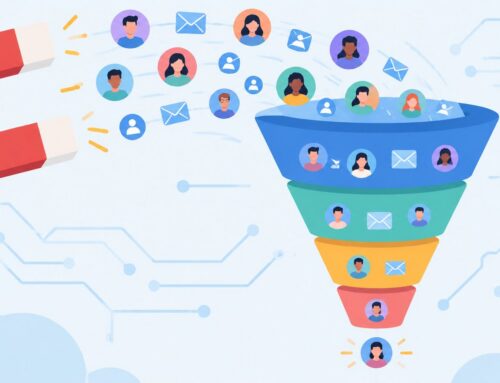
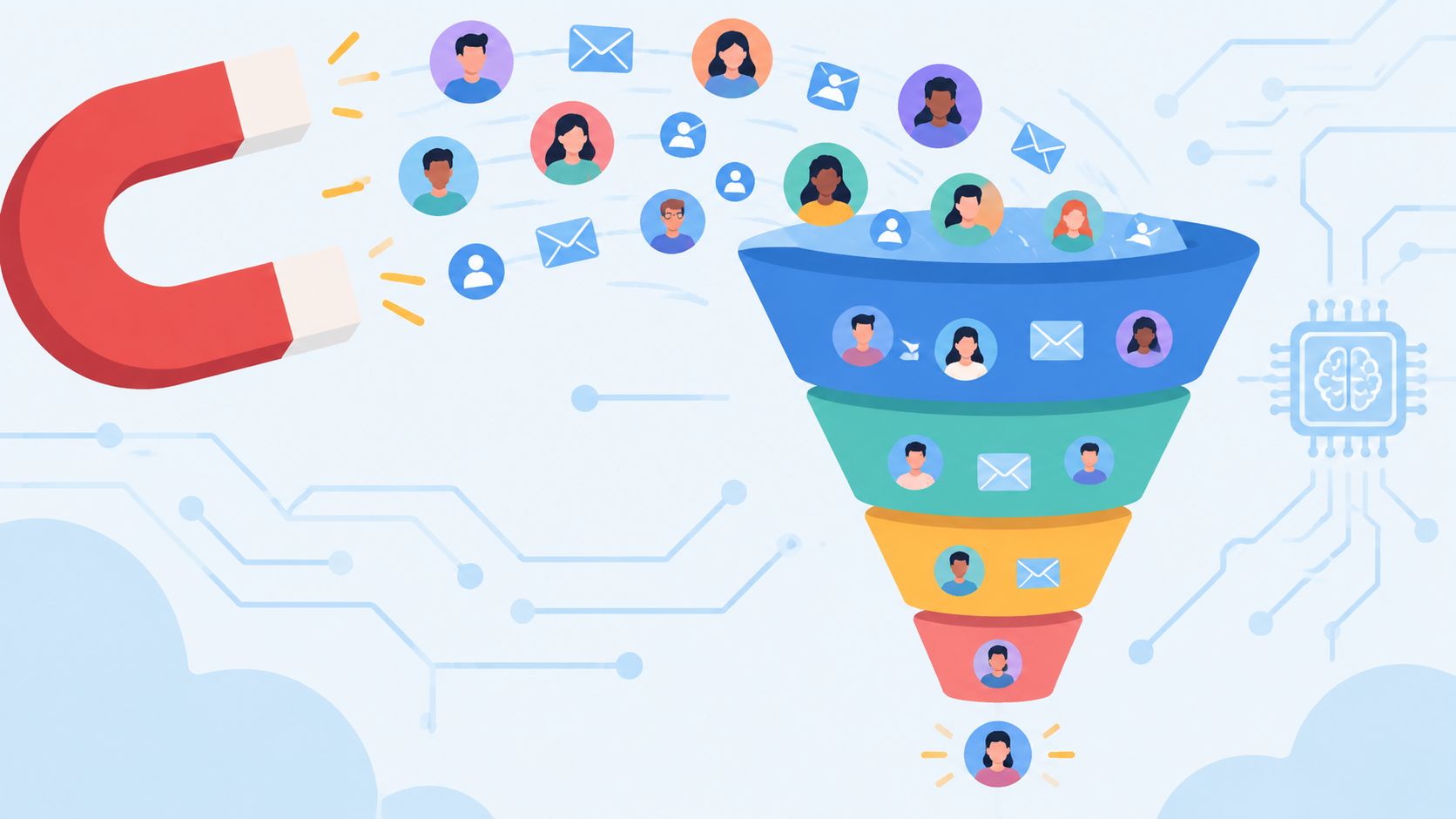
After the opt-in, the path should stay tight. A simple funnel still works well: ad or content click, landing page, thank-you page, then nurture. Each step has a single job.
A quick visual explainer helps here:
Good funnels don't ask for commitment all at once. They ask for the next reasonable step, then use every following touch to increase confidence.
From Lead to Opportunity Qualification and Nurturing
Two leads hit the same website on the same day.
The first lead downloads a practical guide, visits the pricing page later that afternoon, then returns the next morning from a company IP tied to an account that fits the ICP. The second lead grabs the same guide, never comes back, and works at a company your team would never sell to.
If sales calls both within minutes, one prospect feels understood and the other feels chased.

The difference between a lead and an opportunity
Many online lead generation systems break at this stage. A form fill gets treated as sales-ready, even when there's no evidence of fit or timing.
The more useful question is the one many tactic lists ignore: how do you know which anonymous visitors are in-market, and what is the compliant way to act on that signal? That's the gap highlighted in this discussion of untapped lead generation sources and visitor identification.
A practical scoring model uses two buckets:
- Fit score based on company profile, role, use case, and market alignment
- Intent score based on behaviors such as repeat visits, pricing-page engagement, webinar attendance, or consult requests
A lead becomes marketing-qualified when it clears a threshold for interest and profile match. It becomes sales-qualified when there is enough evidence that a real buying conversation is warranted.
A simple nurture sequence that respects timing
Go back to those two leads.
Lead one should move fast. That person has fit and intent. The system should route the account, enrich context, and trigger a timely sales follow-up with specifics.
Lead two should not get the same treatment. That lead belongs in nurture until behavior changes.
A simple automated nurture flow works well:
- Email one delivers the asset and frames the problem clearly. No hard sell.
- Email two addresses a decision obstacle. Common implementation question, cost concern, or process issue.
- Email three offers a defined next step. Audit, consult, walkthrough, or reply-based conversation.
The tone matters. Good nurture sounds like guidance. Bad nurture sounds like a delayed sales script.
Teams often lose good opportunities by forcing a sales conversation before the buyer has enough internal clarity to have one.
Qualification protects both sides. Sales gets cleaner opportunities. Prospects get communication that matches their stage instead of pressure that arrives too early.
Closing the Loop Metrics Tools and Optimization
A lead generation engine gets better only when the reporting changes behavior. Dashboards alone don't help. Teams need a closed loop between strategy, channels, conversion points, and qualification.
The easiest way to break that loop is to stop at top-line lead volume. A campaign can produce plenty of names and still fail if those names don't convert into meetings, opportunities, and revenue-bearing conversations.
The metrics that actually guide decisions
Teams often track too much and learn too little. Start with a narrow set of metrics tied to decisions:
| Metric | What it tells you | What to do if it slips |
|---|---|---|
| Cost per lead | Efficiency at the top of funnel | Review targeting, creative, and channel mix |
| Cost per qualified lead | Whether spend is producing usable pipeline | Tighten ICP, forms, and scoring thresholds |
| Landing page conversion rate | Whether the offer and page match intent | Rework headline, CTA, and friction level |
| Meeting-booking rate | Whether follow-up and qualification are aligned | Improve routing, timing, and nurture |
| Conversion by source | Which channels produce real opportunities | Reallocate budget and content effort |
| Funnel velocity | How quickly leads move toward opportunity | Find bottlenecks in handoff and nurture |
These metrics should feed upstream decisions. If paid leads are cheap but qualification is poor, the problem usually sits in targeting or offer design. If organic traffic is strong but form completions are weak, the issue may be message mismatch on the landing page. If leads convert to meetings but not opportunities, sales enablement or qualification criteria may need work.
Keep the tech stack lean
You don't need a bloated stack to run lead generation online well. Many organizations can operate with three core layers:
- CRM to manage records, lifecycle stages, and pipeline visibility
- Analytics platform to track source, behavior, and conversion flow
- Email automation tool to run nurture, routing, and follow-up logic
Then add selectively. Maybe enrichment. Maybe call tracking. Maybe visitor identification. Maybe form software with stronger routing. But only after the core system is producing clean data.
Value isn't the tool count. It's the consistency of definitions. If marketing and sales don't agree on what qualifies as a good lead, no dashboard will fix that.
Optimization should change the blueprint
The system operates as an engine instead of a campaign calendar. Metrics from conversion and pipeline should shape the ICP. ICP changes should shape channels. Channel performance should reshape offers. Offers should influence nurture and qualification rules.
That loop is what separates random activity from a repeatable growth model.
Lead generation online works when every layer answers a practical question:
- Who exactly are we trying to reach?
- Which channel is best suited to reach them?
- What action should they take next?
- How do we know they're worth sales attention?
- What did the outcome teach us about the system?
If your current program feels noisy, that's usually a design problem, not a hustle problem. Tighten the blueprint. Give each channel a job. Fix the handoffs. Then measure what happens after the form fill.
If you want a partner to help build that system, ReachLabs.ai supports lead generation online through integrated strategy, paid and organic acquisition, landing page optimization, managed outreach, and qualification workflows designed around pipeline quality rather than raw lead volume.