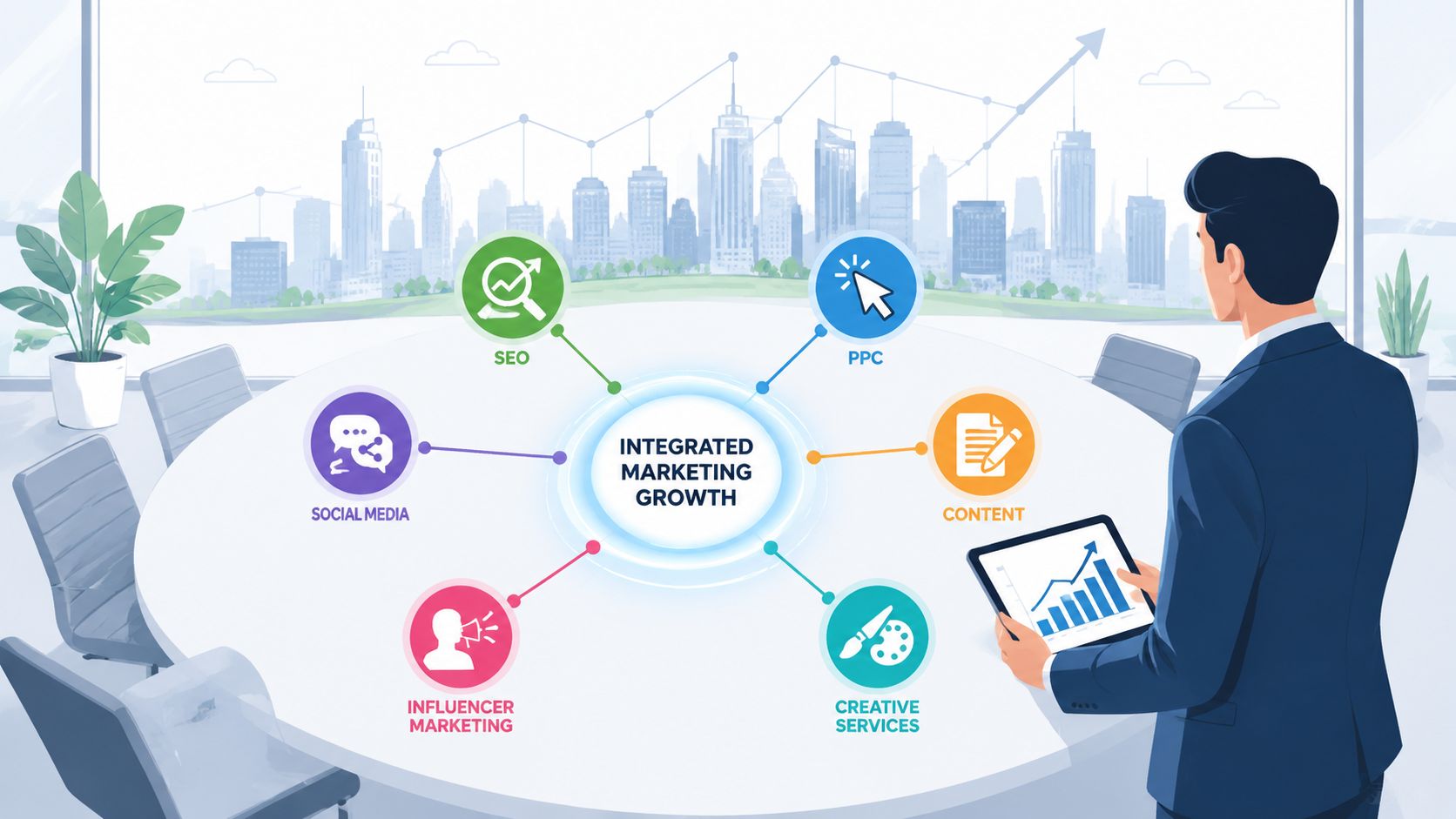
In a competitive market, a 'wait-and-see' approach to marketing is a recipe for being left behind. A meticulously crafted marketing plan is not just a document; it's your strategic blueprint for navigating the market, connecting with your audience, and achieving measurable growth. It transforms ambitious goals into actionable steps, ensuring every dollar spent and every hour invested moves your business forward. Without this roadmap, even the most creative campaigns risk falling flat, disconnected from core business objectives and failing to deliver a tangible return on investment.
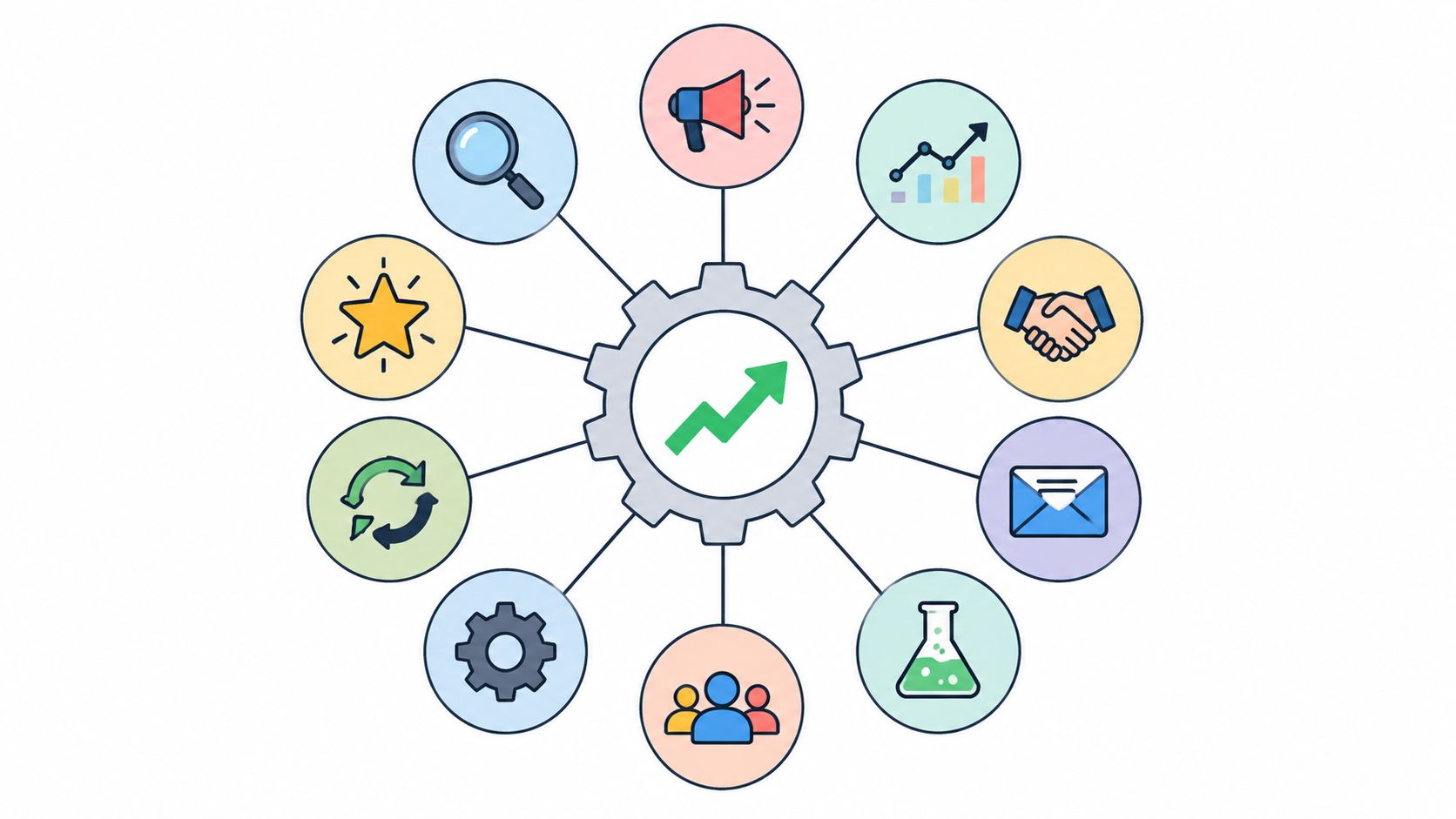
This guide is designed to eliminate that guesswork. We will break down the 10 indispensable elements of a marketing plan, providing a clear, step-by-step framework to build a strategy that doesn't just compete, but dominates. Each component serves a critical function, from defining your purpose in the executive summary to tracking your success with precise performance metrics. Understanding how these pieces fit together is the difference between sporadic success and a sustainable growth engine.
By mastering these foundational concepts, you'll gain the clarity needed to make smarter decisions, allocate resources effectively, and align your entire team toward a common vision. We will move beyond theory and provide actionable insights and practical examples for each element, ensuring you have the tools to construct a comprehensive plan. Whether you're a startup founder sketching out your first strategy or a seasoned marketer refining your approach, mastering these elements of a marketing plan is the key to unlocking consistent, predictable, and unstoppable growth. Let's build your blueprint.
1. Executive Summary: Your Plan's 30-Second Pitch
The Executive Summary is a concise, high-level overview of your entire marketing plan. Positioned at the very beginning of the document, its purpose is to provide busy stakeholders with a snapshot of your core objectives, the strategies you'll employ to achieve them, and the anticipated outcomes. It’s the "elevator pitch" for your plan, designed to secure buy-in and justify resource allocation in under a minute.
Think of it as the trailer to your movie. It needs to be compelling enough to make executives, investors, and department heads want to see the whole film. A well-crafted summary is one of the most critical elements marketing plan documents must contain because it sets the stage and communicates value instantly. If this section fails to capture attention, the detailed pages that follow may never get the consideration they deserve.
Real-World Examples in Action
- Apple: An executive summary for a new iPhone launch would likely emphasize its commitment to innovation, superior user experience, and a projected market share increase, all while reinforcing its premium brand identity.
- Nike: For a new shoe line, Nike’s summary would focus on leveraging top-tier athlete endorsements, innovative performance technology (like a new cushioning system), and a strategy to dominate the professional and amateur athletic markets.
- Coca-Cola: A summary for a holiday campaign would highlight its goal to strengthen emotional connections with consumers globally, emphasizing brand consistency across markets and projecting a specific percentage increase in sales during the campaign period.
How to Write an Effective Executive Summary
To ensure your summary is impactful, follow these actionable steps. The key is to distill complex information into a powerful, persuasive brief.
- Write it Last: This is the golden rule. Only after you have detailed your strategies, budgets, and KPIs can you accurately summarize them.
- Be Specific with Metrics: Avoid vague goals like "increase brand awareness." Instead, use concrete figures: "Achieve a 15% increase in organic search traffic and generate 300 new MQLs in Q3."
- Focus on the 'Why': Clearly state the problem or opportunity your plan addresses. Connect your marketing activities directly to overarching business goals, such as revenue growth or market expansion.
- Keep it Jargon-Free: Your audience will range from the CEO to the sales team. Use clear, accessible language that everyone can understand and get behind.
2. Market Analysis and Research: Your Strategic Blueprint
Market Analysis and Research is the investigative phase of your marketing plan. It's a deep dive into your industry's landscape, examining market size, growth trends, customer behavior, and the competitive environment. This section serves as the evidence-based foundation for every strategic decision that follows, ensuring your plan is grounded in reality, not assumptions. It's the "where to play" and "how to win" guide for your entire marketing effort.
Without this rigorous analysis, your strategies are essentially shots in the dark. A thorough understanding of the market is one of the most fundamental elements marketing plan success hinges on, as it illuminates opportunities, identifies potential threats, and provides the clarity needed to build a sustainable competitive advantage. It tells you where the goalposts are before you even start kicking the ball.

Real-World Examples in Action
- Airbnb: Its initial market research identified a significant gap: travelers seeking authentic, local experiences and homeowners with underutilized space. This analysis of unmet demand directly fueled its disruptive business model.
- Netflix: By analyzing trends like rising cable costs and the consumer shift toward on-demand content (cord-cutting), Netflix pivoted from DVD rentals to a streaming-first model, perfectly positioning itself to dominate the new media landscape.
- Tesla: Tesla's analysis revealed a largely untapped market for premium electric vehicles. It identified a segment of environmentally conscious consumers who also desired high performance and luxury, a niche that legacy automakers had ignored.
How to Conduct Effective Market Analysis
To build a robust and actionable analysis, combine multiple data sources and analytical frameworks. This provides a multi-dimensional view of your market.
- Blend Primary and Secondary Research: Use primary data from customer surveys and interviews to understand your specific audience. Complement this with secondary data from industry reports (Gartner, McKinsey) and government statistics for broad market context.
- Perform a Deep Competitor Analysis: Go beyond just knowing who your competitors are. Use a comprehensive competitor analysis framework to dissect their pricing, messaging, and digital strategies using tools like SimilarWeb and SEMrush.
- Leverage Analytical Frameworks: Employ established models like Porter's Five Forces to understand industry attractiveness or a SWOT analysis to map your internal strengths against external opportunities.
- Segment Your Market: Don't treat your market as a monolith. Break it down into smaller, manageable segments based on demographics, geography, psychographics, and behavior to tailor your marketing efforts effectively.
3. Target Audience and Customer Personas
Your Target Audience and Customer Personas are detailed profiles of your ideal customers. This foundational element moves beyond simple demographics to uncover psychographics, behaviors, pain points, and motivations. By creating these fictional yet data-driven characters, you humanize your audience, which ensures every marketing decision is hyper-focused on the people most likely to convert.

Without a deep understanding of who you're talking to, your messaging will be generic and ineffective. Personas are one of the most vital elements marketing plan documents can include because they guide everything from content creation and product development to ad targeting. A crucial step in defining your ideal customer is to build a robust customer segmentation strategy that groups your audience into meaningful clusters before you build out individual personas.
Real-World Examples in Action
- HubSpot: The company famously developed personas like "Marketing Mary" to represent their ideal B2B marketing manager. This helps their content team create targeted blog posts, webinars, and tools that directly address Mary's professional challenges.
- Facebook (Meta): The platform targets vastly different personas with its ad tools. A campaign for a new mobile game might target "Gamer Gary," a Gen Z male, while a local business tool would be aimed at "Small Business Susan," a Gen X entrepreneur.
- Ferrari: This luxury brand creates ultra-specific personas for high-net-worth individuals. They focus on psychographics like a desire for exclusivity, a passion for performance engineering, and an appreciation for heritage, rather than just income level.
How to Write an Effective Persona Section
To ensure your personas are actionable and not just theoretical, follow these steps to ground them in real-world data and insights.
- Use Real Customer Data: Go beyond guesswork. Dive into your CRM, Google Analytics, and social media insights to find patterns in demographics, behavior, and purchase history.
- Conduct Customer Interviews: Speak directly with your best customers. Ask about their goals, challenges, and what they value most about your product or service to uncover deep motivations.
- Create 3-5 Detailed Personas: Avoid having just one generic persona. Develop a few distinct profiles that represent your key audience segments. You can learn more about how to create detailed buyer personas here.
- Give Them a Name and Face: Assign each persona a name, a stock photo, and a job title. This simple step makes them memorable and helps your team visualize who they are creating for.
- Review and Update Annually: Markets and customer needs evolve. Revisit your personas each year to ensure they still accurately reflect your ideal customer profile.
4. Marketing Objectives and Goals: Defining Your Destination
Your Marketing Objectives and Goals are the specific, measurable targets that provide direction and purpose for your entire plan. While the executive summary is the pitch, this section is the destination on your map. It translates broad business ambitions into clear, actionable benchmarks that the marketing team must achieve, typically within a 6 to 12-month timeframe. This clarity is what makes it one of the most vital elements marketing plan documents must include.
Without defined objectives, marketing efforts become a series of disconnected activities with no clear way to measure success or failure. Frameworks like SMART (Specific, Measurable, Achievable, Relevant, Time-bound), popularized by George T. Doran, provide the structure needed to turn vague aspirations into concrete goals that guide strategy, justify budgets, and hold teams accountable for performance.
Real-World Examples in Action
- Salesforce: Instead of a general goal to "grow," Salesforce might set a marketing objective to "drive a 30% year-over-year increase in enterprise cloud subscription revenue by acquiring 500 new Fortune 1000 clients through targeted ABM campaigns."
- Shopify: A goal to "help merchants" is too broad. Shopify's marketing objective might be to "increase the average new merchant's first-month sales by 50% through improved onboarding email sequences and educational webinar attendance."
- Mailchimp: Rather than just "get more users," a focused objective would be to "increase new SMB user adoption by 25% in Q4 by launching a referral program and a targeted paid social campaign focused on entrepreneurs."
How to Write Effective Marketing Objectives
To ensure your goals are more than just items on a wishlist, follow these actionable steps. The key is to connect them directly to business outcomes and resource realities.
- Use the SMART Framework: This is non-negotiable. Define exactly what you want to achieve ("Increase MQLs"), how you'll measure it ("by 20%"), if it's attainable, why it matters ("to support sales pipeline"), and the deadline ("by the end of Q2").
- Set Both Outcome and Activity Goals: Balance lagging indicators like "achieve $2M in marketing-sourced revenue" (outcome) with leading indicators like "generate 1,000 qualified leads per month" (activity). This helps track progress in real time.
- Break Down Annual Goals: A large annual target can feel overwhelming. Deconstruct it into quarterly and monthly milestones to create momentum, allow for regular performance reviews, and make agile adjustments.
- Ensure Alignment with Resources: Your goals must be achievable with your allocated budget and team capacity. A goal to double website traffic is unrealistic if your content and ad spend budgets have been cut.
5. Marketing Strategies and Tactics: The Actionable Blueprint
This section is the operational core of your entire plan, translating your high-level objectives into a concrete action plan. It details the specific approaches, channels, campaigns, and activities you will use to reach your target audience and achieve your goals. While objectives define what you want to accomplish, your strategies and tactics define how you will get there.
These are among the most crucial elements marketing plan documents must contain, as they bridge the gap between vision and execution. This is where you outline whether you will pursue content marketing, paid advertising, social media engagement, SEO, or a mix of approaches. It's the playbook your team will follow day-to-day to move the needle and generate measurable results.
Real-World Examples in Action
- Dollar Shave Club: Its viral video strategy was a tactic that disrupted the entire men's grooming industry. The strategy was to use humor and a direct-to-consumer model to challenge established giants like Gillette.
- Glossier: The brand’s strategy was to build a community-first brand. Its tactics included leveraging user-generated content, empowering micro-influencers, and creating an authentic social media presence that felt more like a conversation than an advertisement.
- HubSpot: A pioneer of inbound marketing, HubSpot's strategy is to educate rather than interrupt. Its primary tactics include creating valuable blog posts, ebooks, and free tools to attract and nurture leads.
How to Define Effective Marketing Strategies and Tactics
To build a plan that delivers, you must be both strategic in your channel selection and methodical in your execution. Use these steps to craft a powerful and efficient action plan.
- Focus on High-Impact Channels: Instead of spreading your resources thin across a dozen platforms, identify the 3-5 primary channels where your target audience is most active and engaged.
- Allocate Your Budget Wisely: Use the 70/20/10 rule. Allocate 70% of your budget to proven, high-ROI tactics, 20% to promising new channels, and 10% to purely experimental ideas.
- Document Your Playbooks: For each primary tactic (e.g., blog content creation, Google Ads campaign), create a detailed playbook. This ensures consistency, simplifies onboarding, and makes success repeatable.
- Test and Scale: Before committing significant budget, run small-scale tests to validate your assumptions. Track which tactics drive the highest ROI and then scale the winners aggressively.
6. Budget and Resource Allocation: Fueling Your Strategy
Your Budget and Resource Allocation section is the financial blueprint that brings your marketing strategy to life. It details how you will distribute funds and human resources across different channels, campaigns, and initiatives. This section is where ambition meets reality, transforming your strategic goals into a financially viable and executable plan that ensures every dollar and every team hour is spent efficiently and accountably.
This is one of the most pragmatic elements marketing plan documents must include, as it provides the guardrails for your operations. Without a clear budget, even the most brilliant marketing ideas are just concepts. A well-defined allocation plan demonstrates foresight, justifies expenditures to stakeholders, and sets the foundation for measuring return on investment (ROI). It’s the engine that powers your marketing vehicle toward its objectives.
Real-World Examples in Action
- Enterprise SaaS Company: A company like Salesforce might allocate over 40% of its budget to content marketing and thought leadership, including whitepapers, webinars, and its large-scale Dreamforce conference, to nurture long B2B sales cycles.
- Direct-to-Consumer (DTC) Brand: A brand such as Warby Parker might dedicate 20-30% of its budget to paid social and search ads for immediate customer acquisition, with another 10-15% allocated to influencer partnerships to build social proof and community trust.
- B2B Tech Firm: A business targeting other businesses will often dedicate a significant portion, perhaps 15-20%, of its marketing budget to trade shows, industry events, and conferences to facilitate high-value networking and lead generation.
How to Write an Effective Budget and Resource Allocation Plan
To create a budget that is both realistic and effective, you need a methodical approach. This plan should be a living document, not a static one set in stone at the beginning of the year.
- Use Zero-Based Budgeting: Instead of simply adjusting last year's budget, start from zero. This forces every department and channel to justify its spending for the upcoming period, ensuring every expense is tied directly to a strategic priority.
- Allocate Based on ROI: Analyze historical performance data and marketing attribution models. Prioritize and fund the channels and tactics that have proven to deliver the highest return, rather than spreading your budget too thinly across every available option.
- Build in a Contingency Fund: The market is unpredictable. Set aside 10-15% of your total budget as a contingency to either capitalize on unexpected opportunities (like a new trending platform) or navigate unforeseen challenges without derailing your core campaigns.
- Review and Re-forecast Quarterly: Don't wait until the end of the year to see what worked. Conduct quarterly budget reviews to compare actual spending against your plan and reallocate funds from underperforming initiatives to those exceeding expectations.
7. Marketing Channels and Media Mix: Reaching Your Audience Where They Are
The Marketing Channels and Media Mix is your strategic roadmap for how and where you will communicate with your target audience. It involves selecting the right platforms (like social media, email, or print) and balancing your owned (website, blog), paid (ads, sponsorships), and earned (PR, reviews) media to create an integrated and efficient communication system. This is where your message meets your market.
A well-defined channel strategy is one of the most vital elements marketing plan documents can include because it ensures you invest your resources wisely. Instead of broadcasting your message everywhere, you focus your budget and effort on the channels where your ideal customers are most active and receptive. This deliberate approach maximizes reach, engagement, and ultimately, return on investment.
Real-World Examples in Action
- Peloton: Masterfully blends its channels. It uses its owned media (the Peloton app and community features) for retention, powerful paid social ads for acquisition, and leverages earned media (customer testimonials and fitness media reviews) to build immense credibility.
- Dollar Shave Club: Initially built its empire almost exclusively on digital channels. Its viral YouTube video (earned and owned media) was supported by targeted paid social media campaigns, creating a cost-effective and explosive growth model.
- Luxury Brands (e.g., Rolex): Often use a highly selective mix. They balance high-touch experiential events and exclusive print advertising with a carefully curated digital presence, ensuring their channels reinforce the brand’s elite and aspirational positioning.
How to Build an Effective Channel and Media Mix
To ensure your message lands with the right people at the right time, follow these actionable steps for channel selection and optimization.
- Audit Your Audience's Attention: Before investing a single dollar, research where your target audience genuinely spends their time online and offline. Use surveys, analytics, and competitor analysis to identify their primary information hubs.
- Start Focused, Then Expand: Don't try to be on every platform at once. Select two or three core channels where you can make a significant impact, master them, and then strategically expand as you gather performance data.
- Track Channel-Specific Performance: Use analytics tools to monitor key metrics for each channel. Identify your top performers for leads, conversions, and engagement, and reallocate your budget to double down on what works.
- Ensure Message Consistency: While content should be tailored to each platform's format, your core brand messaging, tone, and visual identity must remain consistent across all channels to build a cohesive brand experience.
8. Content Strategy and Messaging
Content Strategy and Messaging is the blueprint for creating, distributing, and managing valuable content to attract and retain a specific audience. It's not just about what you say, but how, where, and when you say it. This core component ensures every blog post, video, and social media update is cohesive, purposeful, and aligned with your brand voice, ultimately driving profitable customer action.
A well-defined strategy is one of the most vital elements marketing plan documents can include because it transforms marketing from a series of random acts into a cohesive, value-driven machine. It builds trust, establishes authority, and nurtures relationships by consistently delivering content that addresses your audience's pain points and interests, rather than just promoting products.

Real-World Examples in Action
- HubSpot: Their blog is a masterclass in content strategy, generating millions of monthly visitors by providing comprehensive, SEO-optimized articles that solve real problems for marketers and salespeople.
- Buffer: The company built its brand on transparency, using its blog and social channels to share educational content about social media marketing, business growth, and even its own internal operations.
- The Hustle: This daily email newsletter demonstrates a powerful content-first model, growing a massive, loyal audience by delivering witty and insightful business and tech news directly to inboxes.
How to Build an Effective Content Strategy
To ensure your content resonates and drives results, follow these actionable steps. The goal is to create a sustainable system for producing high-impact content.
- Define Your Content Pillars: Establish 3-5 core themes that align with both your audience's interests and your business expertise. These pillars will guide all your content creation efforts.
- Develop an Editorial Calendar: Plan your content 3-6 months in advance. This calendar should map out topics, formats, channels, and publication dates to ensure consistency.
- Repurpose and Amplify: Don't let great content die after one post. Repurpose a long-form article into a video script, an infographic, a series of social media posts, and a podcast segment. For video content, you can use YouTube summarization tools to quickly create text-based summaries for blogs or newsletters.
- Optimize Everything for SEO: Conduct thorough keyword research for every piece of content. Optimize titles, meta descriptions, headers, and body copy to improve search engine visibility and attract organic traffic.
- Focus on Genuine Value: Prioritize educating, entertaining, or inspiring your audience over direct promotion. When you provide genuine value, you build trust that naturally leads to conversions.
9. Performance Metrics and KPIs: Measuring What Matters
Performance Metrics and Key Performance Indicators (KPIs) are the quantifiable measures used to gauge the effectiveness of your marketing efforts against your objectives. This section of your plan translates your strategic goals into a scorecard. It moves marketing from a cost center to a provable revenue driver by defining exactly how success will be measured, monitored, and reported.
Without clearly defined metrics, you're flying blind. You can't know what's working, what's failing, or how to optimize your resource allocation for better results. This is one of the most crucial elements marketing plan documents must include because it ensures accountability and provides the data-driven insights needed for continuous improvement. It’s the mechanism that proves the value of your marketing investment.
Real-World Examples in Action
- SaaS Company: A business-to-business software company would track its MQL (Marketing Qualified Lead) to SQL (Sales Qualified Lead) conversion rate to measure the quality of leads marketing is delivering to the sales team.
- E-commerce Brand: A direct-to-consumer store would focus heavily on Return on Ad Spend (ROAS) to ensure its advertising budget is profitable and Customer Lifetime Value (CLV) to guide customer retention strategies.
- Content Marketers: A team focused on inbound marketing would track organic traffic growth, new leads generated from content downloads, and the overall Cost Per Lead (CPL) to validate their content strategy's ROI.
How to Define Effective Metrics and KPIs
To ensure your metrics provide clear, actionable insights, follow these best practices. The goal is to focus on indicators that directly reflect business health and growth.
- Align KPIs with Objectives: Select 5-7 core KPIs that directly tie back to your main business goals. If your goal is revenue growth, focus on metrics like Customer Acquisition Cost (CAC) and CLV, not just vanity metrics like social media likes.
- Distinguish Leading vs. Lagging: Use a mix of indicators. Lagging indicators (like quarterly sales) report past results, while leading indicators (like website conversion rates or demo requests) can help predict future outcomes.
- Establish Baselines and Targets: You can't measure progress without a starting point. Document your current performance (baseline) for each KPI and set a realistic, time-bound target for improvement.
- Automate Your Tracking: Use dashboard tools like Google Analytics, HubSpot, or dedicated BI platforms to create automated, real-time reports. This saves time and provides immediate visibility into performance. You can find many relevant marketing performance metrics examples on reachlabs.ai to inspire your dashboard.
10. Implementation Timeline and Project Management: Your Blueprint for Execution
An Implementation Timeline is the detailed, chronological roadmap that turns your marketing strategy from a document into a series of coordinated actions. It specifies what needs to happen, when it will happen, and who is responsible. This critical component transforms abstract goals into a tangible project plan, ensuring every campaign, task, and initiative is launched on schedule and works in harmony with others. Without it, even the most brilliant strategy can collapse into chaos.
This timeline is one of the most practical elements marketing plan documents must include because it provides clarity, fosters accountability, and aligns the entire team. It acts as the central nervous system for your marketing operations, synchronizing content creation, ad launches, social media schedules, and PR efforts to create maximum impact. A well-structured timeline prevents resource conflicts, manages expectations, and keeps your entire department moving in the same direction.
Real-World Examples in Action
- SaaS Company: A SaaS firm planning a major feature launch would use a timeline to coordinate blog posts, a webinar series, email nurture sequences, and paid ad campaigns, ensuring they all deploy in a logical order to build momentum toward the release date.
- Retail Brand: For Black Friday, a retail brand’s timeline would meticulously map out pre-hype social media teasers, email-exclusive early access, the main promotion launch, and post-sale follow-ups, with each activity scheduled down to the hour.
- Enterprise Software: An enterprise company's 12-month plan would schedule quarterly thought leadership reports, participation in key industry conferences, and targeted ABM campaigns, all aligned with the sales team's fiscal targets.
How to Build an Effective Implementation Timeline
To create a timeline that drives execution and prevents bottlenecks, follow these actionable steps. The goal is to create a living document that guides daily work and adapts to new information.
- Use Project Management Tools: Leverage platforms like Asana, Trello, or Monday.com to create a visual, shareable timeline. These tools make it easy to assign tasks, set deadlines, and track progress.
- Identify Critical Dependencies: Map out which tasks must be completed before others can begin. For example, website landing page copy must be finalized before the design phase can start.
- Build in a Buffer: Reality rarely matches the plan perfectly. Incorporate a 20-30% buffer for key deadlines to accommodate unexpected delays or feedback rounds without derailing the entire schedule.
- Break It Down: Deconstruct large campaigns (e.g., "Q3 Product Launch") into smaller, manageable milestones and individual tasks (e.g., "Draft press release," "Design social media graphics," "Set up ad audiences").
- Schedule Review Cycles: Don't just plan for execution; schedule regular check-ins. Set aside time weekly or bi-weekly to review progress against the timeline, analyze early performance data, and make necessary adjustments.
10-Point Marketing Plan Elements Comparison
| Item | Implementation complexity 🔄 | Resource requirements ⚡ | Expected outcomes 📊⭐ | Ideal use cases 💡 | Key advantages ⭐ |
|---|---|---|---|---|---|
| Executive Summary | Low — concise synthesis 🔄 | Minimal — time from leaders ⚡ | High-level alignment; stakeholder buy-in 📊 | Investor updates, executive reviews 💡 | Quick clarity; saves stakeholders' time ⭐ |
| Market Analysis and Research | High — deep, data-driven 🔄🔄 | High — analysts, tools, primary research ⚡⚡ | Evidence-based insights; opportunity identification 📊 | New market entry, strategic planning 💡 | Reduces risk; informs strategy with data ⭐ |
| Target Audience and Customer Personas | Medium — analytical + qualitative 🔄 | Medium — CRM, interviews, analytics ⚡ | Better targeting; improved personalization 📊 | Segmenting campaigns; product-market fit work 💡 | Higher relevance; reduced wasted spend ⭐ |
| Marketing Objectives and Goals | Medium — requires alignment 🔄 | Low–Medium — planning, benchmarks ⚡ | Measurable targets; accountability and focus 📊 | Annual/quarterly planning; OKRs setup 💡 | Clear focus; enables performance measurement ⭐ |
| Marketing Strategies and Tactics | High — many moving parts 🔄🔄 | High — execution teams, budgets ⚡⚡ | Campaign-level outcomes; channel-dependent 📊 | Campaign launches; growth initiatives 💡 | Actionable roadmap; scalable execution ⭐ |
| Budget and Resource Allocation | Medium–High — trade-offs needed 🔄🔄 | High — financial planning, modeling ⚡⚡ | Efficient spend; ROI visibility 📊 | Annual budgeting; reallocation decisions 💡 | Fiscal control; prioritizes high-impact activities ⭐ |
| Marketing Channels and Media Mix | High — integration complexity 🔄🔄 | Medium–High — channel expertise, tools ⚡⚡ | Improved reach and frequency; brand lift 📊 | Integrated campaigns; multi-touch strategies 💡 | Diversified reach; reduces single-channel risk ⭐ |
| Content Strategy and Messaging | Medium — editorial + SEO work 🔄 | Medium — creators, SEO, calendar ⚡ | Long-term traffic, engagement, thought leadership 📊 | Inbound marketing; brand storytelling 💡 | Builds authority; cost-effective organic growth ⭐ |
| Performance Metrics and KPIs | Medium — selection & attribution 🔄 | Medium — analytics, dashboards ⚡ | Measurable performance; optimization opportunities 📊 | Reporting cycles; continuous improvement 💡 | Data-driven decisions; accountability ⭐ |
| Implementation Timeline & Project Management | Medium — scheduling and dependencies 🔄 | Medium — PM tools, coordination ⚡ | On-time launches; fewer bottlenecks 📊 | Campaign rollouts; cross-functional projects 💡 | Better coordination; mitigates timing risk ⭐ |
From Plan to Profit: Activating Your Strategy
We've journeyed through the ten essential components that form the backbone of a formidable marketing plan. From the high-level clarity of an Executive Summary to the granular detail of an Implementation Timeline, each element serves a distinct and critical purpose. Together, they transform abstract business ambitions into a concrete, actionable roadmap designed for measurable success.
However, the true value of understanding these elements of a marketing plan lies not in the document itself, but in the strategic thinking it cultivates. The process of defining your target audience, setting specific goals, and allocating a budget forces a level of discipline and focus that is often the missing link between a great idea and a profitable reality. This document is more than a set of instructions; it is your strategic compass in a crowded and ever-changing marketplace.
The Marketing Plan as a Living Document
It's tempting to finalize your plan, file it away, and consider the job done. This is the single most common mistake that renders a marketing plan ineffective. The market does not stand still, and neither should your strategy. Your plan must be a living, breathing entity, subject to regular review and agile adaptation.
Think of it this way:
- Market Analysis is not a one-time event. New competitors emerge, and consumer trends shift. Revisit this section quarterly.
- Customer Personas evolve. Are their pain points the same as they were six months ago? Use customer feedback and survey data to keep them current.
- Performance Metrics are your feedback loop. If your KPIs indicate a channel is underperforming, don't be afraid to reallocate resources from your budget to a more promising tactic.
This iterative approach is what separates market leaders from the rest. The ability to pivot based on real-world data, rather than sticking rigidly to an outdated plan, is a superpower in modern marketing. Your plan provides the structure, but your agility in execution delivers the results.
Actionable Next Steps: Turning Insight into Impact
You now have the blueprint. The next step is to move from planning to doing. To ensure your efforts gain immediate traction, focus on these three critical actions:
- Prioritize One Key Objective: Don't try to boil the ocean. Look at your marketing objectives and identify the single most impactful goal you can achieve in the next 90 days. Is it lead generation? Brand awareness? Focus your initial energy there to build momentum.
- Establish Your Core KPIs: Before you launch a single campaign, ensure your tracking is in place. You cannot optimize what you cannot measure. Define the 3-5 key performance indicators that directly reflect your primary objective and make sure your analytics tools are configured to capture them accurately.
- Schedule Your First Review: Put a date on the calendar, one month from today, to review your progress. This simple act creates accountability and reinforces the habit of treating your marketing plan as a dynamic tool for growth, not a static document.
Mastering these elements of a marketing plan is an ongoing discipline, not a one-time task. It is the foundation upon which sustainable growth, brand loyalty, and market leadership are built. By embracing this framework not just as a document to be written, but as a system to be implemented, reviewed, and refined, you are equipping your business with the strategic engine it needs to thrive. Your plan is the map, but your consistent, data-informed action is what will guide you to your destination.
Feeling overwhelmed by the sheer scope of building and executing a comprehensive marketing strategy? You don't have to do it alone. The experts at ReachLabs.ai specialize in transforming the core elements of a marketing plan into a dynamic, results-driven engine for growth, combining data-driven insights with world-class creative execution. Visit ReachLabs.ai to see how our collective approach can help you build and activate a plan that delivers tangible business impact.