
Generating leads for your digital marketing agency is all about identifying and attracting potential clients. A solid system takes you beyond relying on random referrals or lucky breaks. It builds a predictable pipeline of high-value clients through smart strategic channel selection, compelling offers, and consistent nurturing.
Why Predictable Lead Generation Is Your Agency's Lifeline

Let's be real—the feast-or-famine client cycle is exhausting. One month you’re swamped with new accounts, and the next you’re nervously checking your inbox, praying a referral comes through. This rollercoaster isn't just stressful; it's the single biggest roadblock to scaling your agency. Getting off this ride means building a system for predictable digital marketing agency lead generation.
A powerful strategy isn't about chasing every shiny object. It’s about building a repeatable engine that consistently attracts the right clients—the ones who value your expertise, stick to the process, and deliver a high lifetime value. This shifts your agency from being a passive service provider waiting for the phone to ring into a proactive business that controls its own growth.
The Pillars of a Growth Engine
This engine is built on a few core pillars that have to work in sync. If one is missing, the whole thing sputters and stalls. For a deep dive into boosting your agency's growth and keeping your pipeline full, check out these proven effective lead generation strategies for agencies.
Think of these pillars as your playbook for turning sporadic wins into a scalable revenue stream:
- Defining Your Ideal Client: Go deeper than basic demographics. You need a data-backed profile of the businesses that are not just a good fit, but a profitable one.
- Choosing High-Impact Channels: Instead of spreading yourself thin across every platform, focus your time and money on the 1-3 channels where your best clients actually hang out.
- Creating Offers That Convert: Develop high-value lead magnets that solve a genuine pain point for your prospects. Make the offer so good they’re happy to trade their contact information for it.
- Nurturing Prospects Strategically: Guide leads from that first touchpoint to a sales-ready conversation using automated, value-packed communication.
A consistent lead generation system is the ultimate form of agency stability. It lets you hire with confidence, invest in new services, and forecast revenue without constantly worrying about where the next client will come from.
By nailing these elements, you stop reacting and start building. This guide will walk you through each piece, giving you a clear roadmap for constructing a lead generation machine that fuels sustainable growth for the agency you want to run.
Defining Your Ideal High-Value Clients
Before you even think about launching a campaign, your first move has to be figuring out exactly who you're talking to. A spray-and-pray approach is a surefire way to burn through your budget and end up with a list of low-quality, tire-kicker leads. What you really need is a data-backed Ideal Client Profile (ICP) to act as your agency's true north.
This isn't about creating vague, fluffy personas. It's a deep, analytical dive into your best clients—both past and present. Think about it: who were your most profitable accounts? Which ones were a dream to work with and got incredible results from your services? Those are the clients you want to clone.
Uncovering Firmographics and Psychographics
Let's start with the basics: their firmographics. These are the hard, objective facts about a company. You can pull most of this right from your client list or CRM.
- Industry: Which niches do your best clients belong to? Get specific. Don't just say "tech"—dig deeper into "B2B SaaS" or "FinTech."
- Company Size: How many employees are on their payroll? This is often a good indicator of their marketing budget and how complex their approval process might be.
- Annual Revenue: What's their revenue range? This helps you quickly qualify whether they can actually afford your premium services.
Once you’ve got the firmographics down, it’s time to look past the numbers and explore their psychographics. This is where you get into the human side of the business—their goals, their biggest headaches, and what drives them. What keeps their CMO up at night? What's standing in the way of their growth?
An ICP isn’t just a list of industries. It's a detailed blueprint of a business that not only needs what you offer but is also set up to get amazing results with you. That’s how you create long-term, high-value partnerships.
To really zero in on these clients, you'll need to use Modern B2B Prospecting strategies that put the ICP first. For example, a tool like LinkedIn Sales Navigator is perfect for filtering companies by these firmographic details. Then, you can use industry reports and even client interviews to uncover those deeper psychographic pain points. For a more detailed walkthrough, check out our guide on how to identify your target audience.
Building this profile does more than just sharpen your marketing messages; it brings your entire agency into alignment. Your sales team knows exactly who to chase, your content team knows what problems to write about, and your service delivery team knows what a "win" looks like for the client. This simple exercise puts an end to the exhausting cycle of chasing bad-fit leads and focuses all your energy on attracting clients who will become your next great case study.
Choosing Your High-Impact Lead Generation Channels
Trying to be everywhere at once is a classic agency mistake. Spreading your team thin across a dozen different channels is a fast track to burnout, not a pipeline full of qualified leads. The real key to building a powerful system for digital marketing agency lead generation is to get strategic and pick your battles.
Focus your energy and budget on one to three core channels where you know your Ideal Client Profile (ICP) spends their time. This is about being in the right places, not all the places.
For instance, if your agency is the master of e-commerce SEO, you could strike gold by becoming a valued member of subreddits or forums for Shopify store owners. By genuinely helping people and answering technical questions, you naturally position your agency as the go-to expert. Inbound inquiries will start flowing in without you ever having to make a single cold call.
Aligning Channels With Your Ideal Clients
Let your ICP be your north star here. If you’re targeting marketing VPs at B2B SaaS companies, your time is far better invested on LinkedIn than on Instagram. You have to think like your clients: where do they go when they need solutions, ask for advice, or look for a new agency partner?
This chart breaks down the kind of firmographic data you should be thinking about to zero in on those high-value clients.
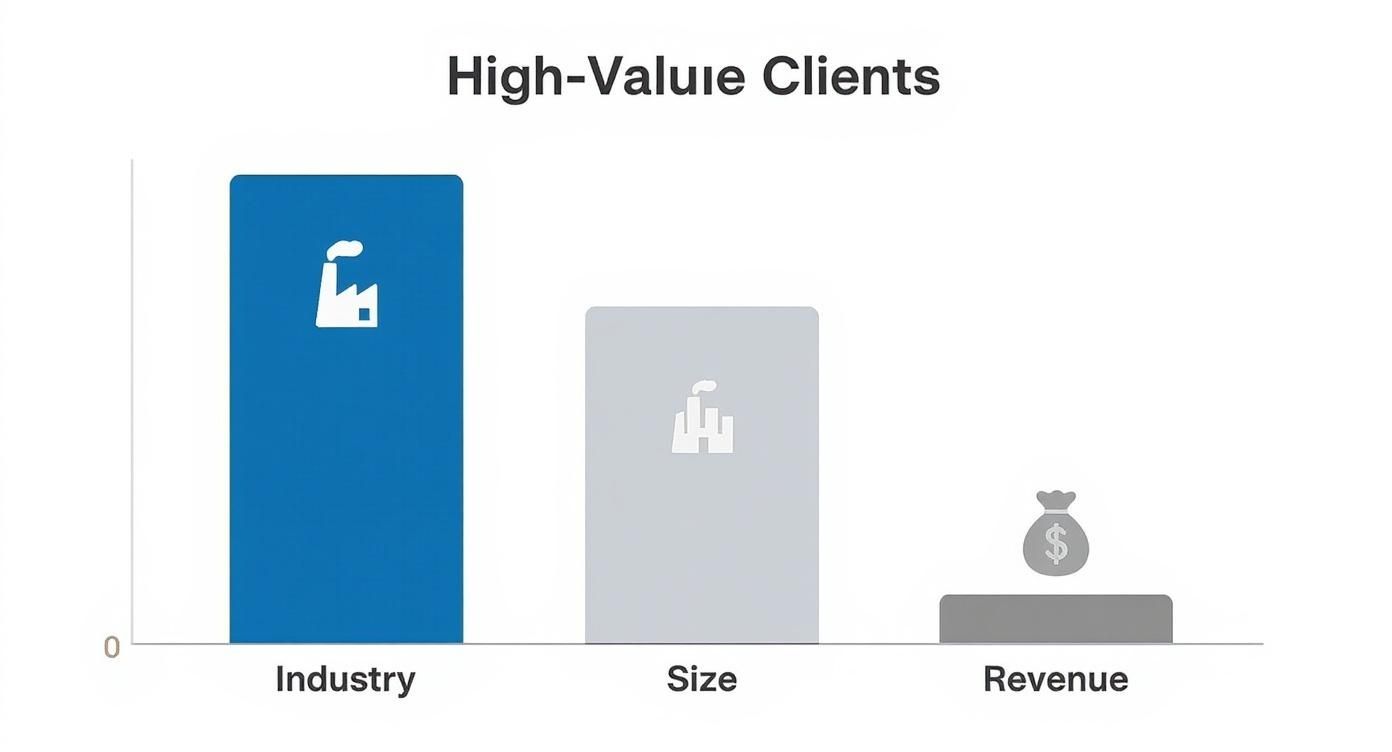
As you can see, getting specific about industry, company size, and revenue brackets is what allows for the kind of precise, effective targeting that actually works.
On the flip side, an agency specializing in local service businesses—think plumbers, roofers, or electricians—will probably see the best results from hyper-local Google Ads and a killer Google Business Profile strategy. Their ideal clients aren't scrolling through enterprise case studies; they're frantically searching for "local SEO services near me" when they need help, now.
Comparing Top Lead Generation Channels for Agencies
To make this decision easier, it helps to weigh the pros and cons of the most common channels. Each one comes with a different price tag, time commitment, and sales cycle. This table breaks down what you can realistically expect from each.
| Channel | Average Cost Per Lead (CPL) | Time to See Results | Best For Attracting… |
|---|---|---|---|
| SEO & Content | $50 – $200+ | 6-12 months | Inbound leads who are problem-aware and already see you as an authority. |
| Paid Ads (Google/Social) | $100 – $400+ | 1-3 months | Immediate, targeted traffic from prospects actively searching for solutions. |
| LinkedIn Outreach | $200 – $600+ | 2-4 months | High-value B2B decision-makers and enterprise-level accounts. |
| Referrals & Networking | $0 – $100 | Immediate to ongoing | High-trust, warm leads that often close faster than any other channel. |
Choosing the right channel is a balancing act. If you need leads now, paid ads are your best bet, but if you're building a sustainable, long-term asset, nothing beats a solid SEO and content strategy.
The Power of Content and Precision Outreach
Content marketing is still a dominant force, but you have to be smart about it. Fresh research shows that 87% of marketers see content as their single most effective tool for generating demand. Video, in particular, is crushing it, with 58% of B2B marketers naming it their top-performing format for lead gen. If you want to dive deeper into the numbers, you can explore the latest research on B2B lead generation.
This is exactly where your channel and content strategies need to sync up perfectly.
-
LinkedIn Outreach: For agencies chasing enterprise-level clients, a targeted Account-Based Marketing (ABM) approach on LinkedIn can be incredibly profitable. Instead of casting a wide, generic net, you focus on creating custom content and personalized messages for a hand-picked list of high-value dream clients.
-
SEO-Driven Content: Building out comprehensive pillar pages and blog posts around your core services (think "The Ultimate Guide to SaaS Content Strategy") establishes your agency as a thought leader. It's a long game, for sure, but it creates a sustainable pipeline of inbound leads who already trust your expertise before they even talk to you.
Don’t just choose a channel because it's popular. Choose it because your ideal clients live there. A highly engaged audience of 100 perfect-fit prospects is infinitely more valuable than a disengaged audience of 10,000 wrong-fit followers.
At the end of the day, your resources—both your team's time and your marketing budget—are finite. By going deep on a few carefully selected channels, you can master their nuances, build real momentum, and create a predictable flow of qualified leads you can actually close.
Crafting Offers That Actually Convert
Your agency's expertise is your most valuable asset, so why are you giving it away for free in endless consultations? A truly effective lead generation machine is built on an irresistible offer—a lead magnet—that solves a very specific, nagging problem for your ideal client. We're not talking about another generic "free ebook" that gets downloaded and forgotten.
The goal here is to create something so valuable that prospects are genuinely excited to hand over their contact information. This is how you position your agency as an expert problem-solver right from the very first touchpoint.
Moving Beyond Basic Lead Magnets
Get inside the head of your Ideal Client Profile (ICP). What are the pain points they wrestle with every single day? Your offer should be the immediate, tangible solution or at least the clear first step toward fixing it.
Here are a few practical examples that consistently get results:
- A DIY Google Analytics Audit Template: Give a marketing manager a step-by-step checklist they can use right now to find critical tracking errors on their website.
- An ROI Calculator for a Specific Service: Build a simple tool where a prospect can plug in their own numbers and see the potential financial upside of your SEO or PPC services.
- An Exclusive, In-Depth Case Study: Don't just tell a success story. Break down the exact strategy, the tactics used, and the metrics that prove how you delivered incredible results for a similar company in their industry.
The best lead magnets don't just tell prospects what to do; they give them a tool to start doing it. This taste of success is what motivates them to hire you for the full solution.
Building Your High-Value Offer
To come up with these assets, start with your ICP's biggest challenges. What questions are they constantly typing into Google? What metric is their boss hounding them about? Your offer needs to be the answer.
Once you have a compelling asset ready, it needs a dedicated home: a landing page designed for one purpose and one purpose only—conversion.
This page must instantly communicate the value of what you're offering and make it dead simple for the visitor to take action. If you want to get into the nitty-gritty of what makes these pages work, check out our detailed guide on creating a high-converting landing page. This is the critical point where website traffic becomes actual, tangible leads for your sales pipeline.
You can't overstate the power of content in this whole process. The lead generation solutions market is projected to hit $21.43 billion by 2033, and content is a primary reason why. It’s proven to be three times more efficient than outbound marketing for getting new leads. In fact, a solid 72% of companies say their content marketing directly boosts their lead volume.
These numbers aren't just trivia; they're a clear signal that producing consistent, high-quality content is the foundation of a modern lead gen strategy. When you pair a high-value asset with a focused landing page, you create a reliable engine for attracting qualified prospects.
Turning Cold Prospects into Warm Opportunities
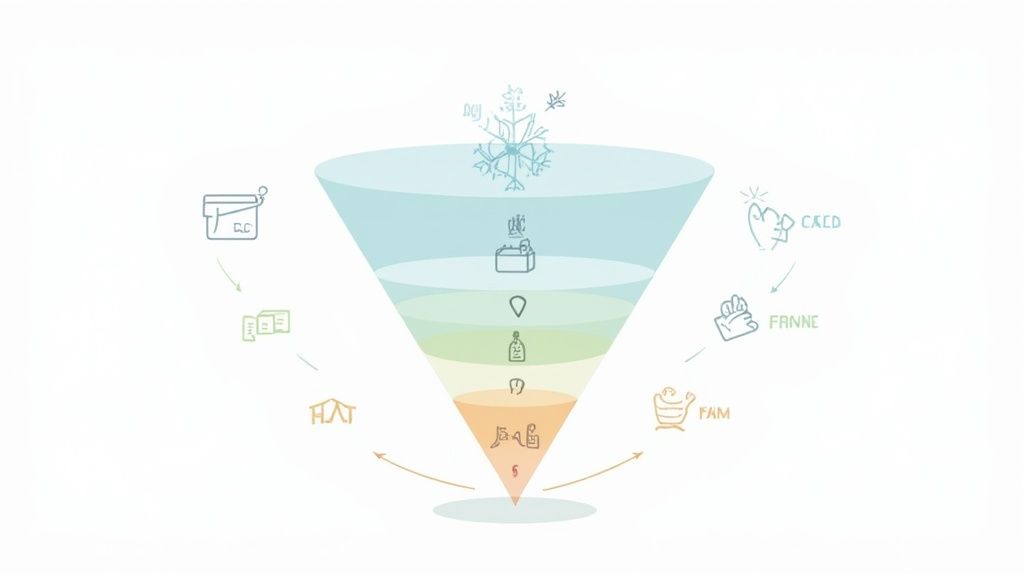
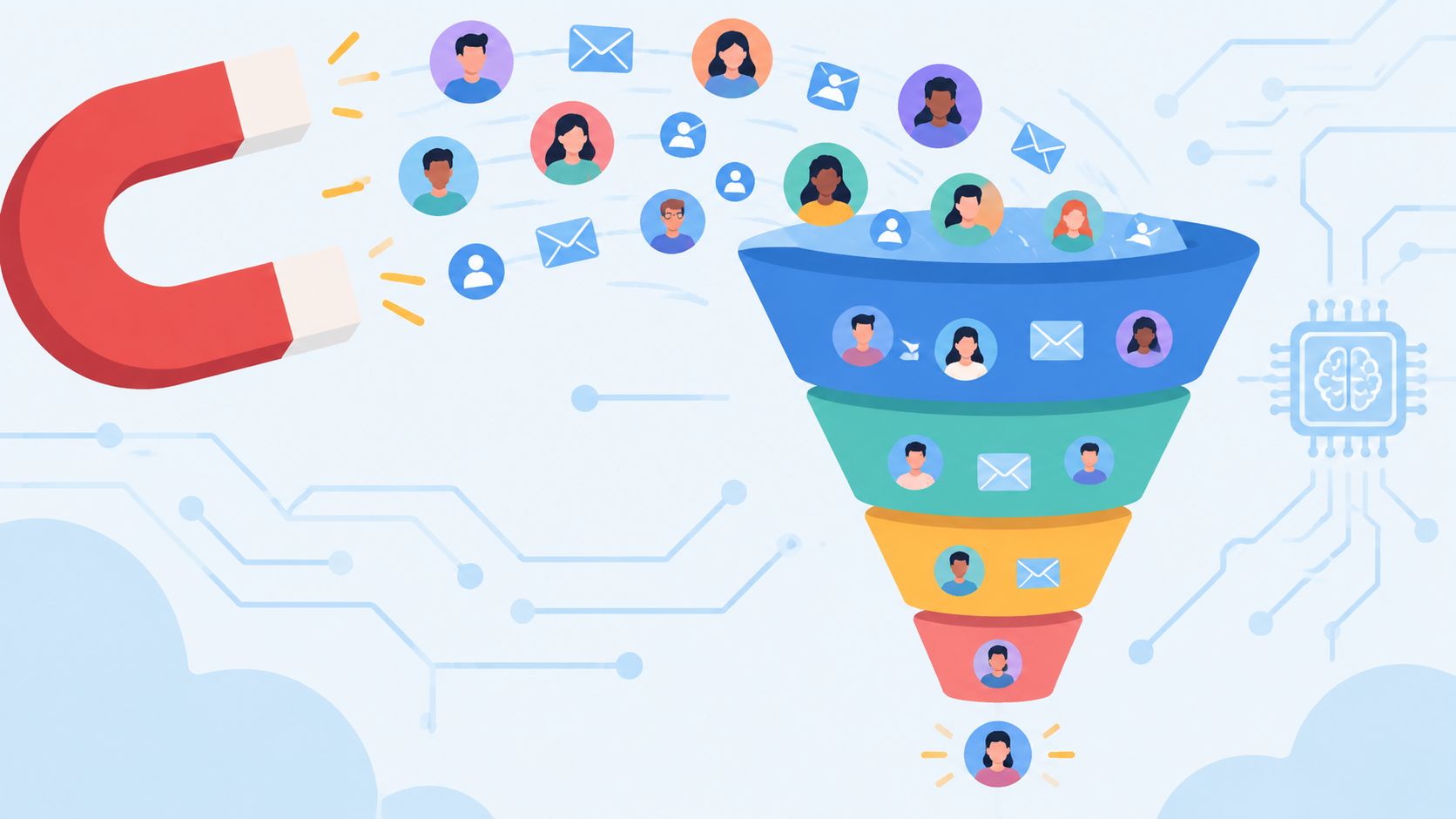
Getting a name and an email address is just the starting line. The real work in digital marketing agency lead generation—the part where the magic happens—is in the follow-up. This is your chance to build trust and show them you're the expert they've been looking for.
This is where you turn a cold prospect who just downloaded a freebie into someone who’s genuinely interested in a conversation.
A lot of agencies stumble right here. They either come on too strong with a hard sell or, even worse, do nothing and let the lead go cold. The sweet spot is a simple but effective lead nurturing system that guides prospects toward a sales call without ever feeling pushy. My go-to method? A short, automated email sequence.
A Practical 5-Part Nurture Sequence
I've used this sequence countless times because it’s built to create a relationship first and sell second. Each email has a specific job, moving the prospect one step closer to trusting your agency.
-
Deliver the Goods, Instantly: This first email needs to land in their inbox within minutes. Its only job is to deliver the lead magnet they asked for. Keep it short, thank them, and give them a clear link. No frills, just value.
-
Share a Relevant Success Story: A day or two later, follow up with a short email that connects their problem to a real result you’ve delivered. I usually frame it like this: "Since you were interested in [Topic of Lead Magnet], I thought you’d find this story about how we helped a similar company achieve [Specific, Tangible Result] useful."
-
Tackle a Common Objection: Now you get proactive. Think about the one thing that makes prospects hesitate. If it's ROI, send an email titled "The ROI Question." Briefly explain your approach to tracking and proving value. This builds massive credibility because you're addressing their fears before they even voice them.
-
Offer More Free Value: Send another high-value resource, but don't ask for anything in return. It could be a link to a killer blog post, a short video tip, or an invite to a free webinar. This move solidifies your role as a helpful expert, not just a vendor.
-
Make the Low-Pressure Ask: It's finally time to make an offer. But instead of the aggressive "Book a Sales Call," try something softer. I prefer something like, "Would a brief, 15-minute strategy session be helpful?" It feels less like a sales pitch and more like a collaborative next step.
Effective lead nurturing isn't about constant selling; it's about consistent value. Give your prospects the tools and insights they need, and they will naturally see your agency as the solution when they're ready to buy.
Why Nurturing Is Non-Negotiable
Ignoring lead nurturing is like leaving money on the table. Seriously. The average cost per lead can run you around $198, but if you don't follow up, you're looking at a dismal conversion rate of about 2.9%.
On the flip side, consistent nurturing can boost the odds of a purchase by a staggering 47%. That number alone shows just how crucial this continuous engagement is. You can discover more insights about lead generation statistics on seoprofy.com.
By building a genuine relationship, you ensure that when a prospect is finally ready to hire an agency, yours is the only one they consider. A great way to focus your energy is by understanding what lead scoring is and using it to identify the hottest prospects in your pipeline.
Common Questions About Agency Lead Generation
When it comes to getting new clients for your agency, it's easy to get stuck on a few key questions. Everyone seems to have a different opinion, but getting straight answers can be the difference between spinning your wheels and actually growing your business. Let's tackle some of the most common questions I hear from agency owners.
How Much Should My Agency Actually Budget for Getting New Clients?
There’s no one-size-fits-all answer here, as your budget really depends on your growth targets, the industry you're in, and which channels you're using. But if you’re looking for a solid starting point, most established agencies I've seen do well by putting 5-10% of their total revenue toward marketing.
Now, if you're a newer agency and need to make a splash, you'll probably need to be more aggressive. Pushing that budget up to 10-15% is a more realistic figure for driving rapid growth.
The real game-changer is moving away from picking a random number and instead thinking in terms of data. You need to get obsessed with two metrics: Customer Acquisition Cost (CAC) and Lifetime Value (LTV). For instance, if you know the average client is worth $30,000 to your agency over time (your LTV), you can comfortably spend up to $3,000 to land that client and still have a very healthy profit margin.
Start by tracking everything. Know what you're spending on ads, content, tools—everything. Then, you can figure out your cost per qualified lead for each channel and double down on what’s working.
What's the Fastest Way for a New Agency to Get Leads?
When you’re just starting out, you need cash flow and you need it yesterday. For that, direct outreach is almost always your best bet. Long-term strategies like SEO and content marketing are essential for building a sustainable business, but honestly, they can take a good 6-12 months to start delivering consistent results.
You can't wait that long for your first client.
To get conversations going right now, focus on these tactics:
- Hyper-Targeted LinkedIn Outreach: Don't just spray and pray. Zero in on a very specific niche. For example, run a campaign targeting Marketing VPs at B2B tech companies with 50-200 employees. You can get meetings on the calendar within a few weeks.
- Smart Strategic Partnerships: Find businesses that serve the same clients you do but don't compete. If you run a web design agency, partnering with a copywriter or a brand strategist is a no-brainer for sharing leads.
- Small, Punchy Paid Ads: You don't need a massive budget. A small, highly targeted ad campaign on Google or LinkedIn can quickly validate your offer and bring in a handful of your first real leads.
The goal in the beginning is simple: land those first few clients to get revenue in the door and build some case studies. That early momentum gives you the proof and the cash to fuel your bigger, long-term marketing plans.
How Do I Know if My Lead Generation Is Actually Working?
Just counting new email subscribers is a vanity metric. To really know if your efforts are paying off, you have to track a few key performance indicators (KPIs) all the way through your sales process.
First, look at the top of your funnel—things like website traffic and how many people are filling out your contact forms. Then, you have to dig deeper into lead quality. Are these people just kicking tires, or are they genuine prospects? This is where you track Marketing Qualified Leads (MQLs) and Sales Qualified Leads (SQLs).
Ultimately, it all comes down to the bottom-of-the-funnel numbers: your lead-to-client conversion rate and your Customer Acquisition Cost (CAC). These are the metrics that tell you the real story. Are we getting enough leads? Are they the right kind of leads? And how much does it cost us to turn a maybe into a paying client? A simple CRM is all you need to start monitoring these numbers and spot where things are breaking down.
At ReachLabs.ai, we specialize in building data-driven strategies that turn your marketing efforts into a predictable engine for growth. Our team of experts takes a holistic approach to elevate your brand's voice and deliver the qualified leads you need to scale.
Ready to build a reliable pipeline? Learn more about our digital marketing solutions.