Let's cut through the jargon. Brand development is the long-term, strategic game plan for creating and strengthening your brand's reputation. It's not about a single logo design or one catchy tagline; it’s the ongoing, deliberate effort to shape how people perceive, experience, and ultimately remember your business.
Building Your Brand Blueprint
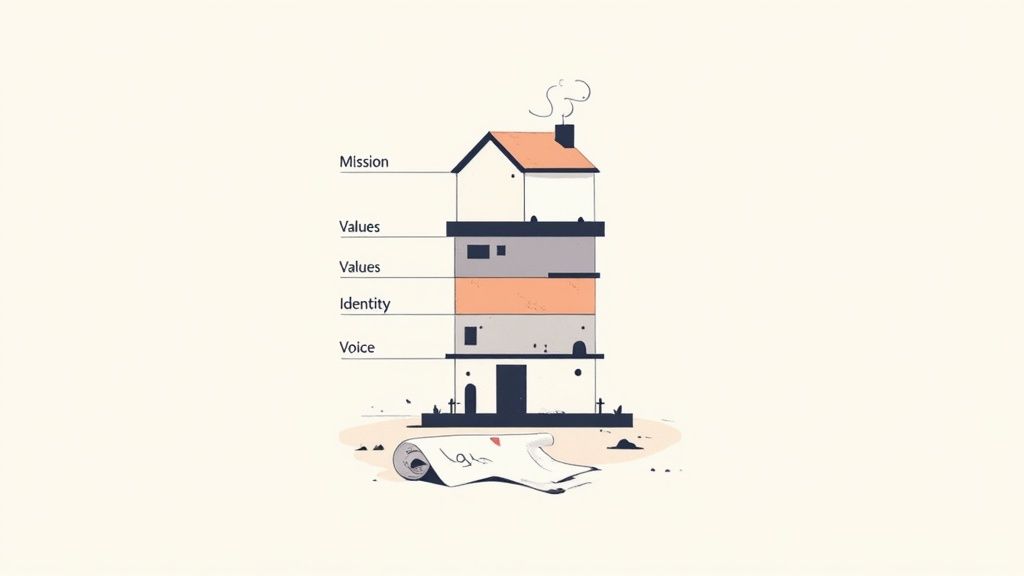
Think of it like building a house. You wouldn't just start nailing boards together. Brand development is the architectural blueprint that ensures everything works together—from the solid foundation (your mission and values) to the final coat of paint (your marketing materials).
Without this strategic plan, you risk ending up with a jumble of disconnected rooms and a weak structure that can't handle the inevitable market storms.
This process is so critical because it directly shapes:
- Customer Loyalty: A well-developed brand builds an emotional connection, turning first-time buyers into genuine, lifelong fans.
- Market Position: It answers the question, "Why you?" It carves out a distinct and defensible space for your business, making you the obvious choice for your ideal customer.
- Sustainable Growth: A strong brand is a powerful asset that appreciates over time, allowing you to command higher prices and attract the best talent in your industry.
The financial proof is in the numbers. Brand development isn't just a creative exercise; it's a massive driver of economic value. In 2025, the combined value of the Top 100 global brands soared to a record $10.7 trillion, with Apple alone hitting a valuation of $1.3 trillion. This shows just how much a powerfully developed brand can impact market dominance and financial success.
Differentiating Key Concepts
To really get a grip on brand development, we need to untangle it from a few other terms that often get thrown around interchangeably. Understanding the difference between branding agencies and naming agencies, for example, shows just how specialized the different parts of this process can be.
Let's clear things up with a simple breakdown before we dive deeper.
Brand vs Branding vs Brand Development Explained
This table lays out the three core concepts that are easy to confuse but essential to understand.
| Concept | Definition | Example |
|---|---|---|
| Brand | The perception people have of your company. It’s the result—the gut feeling someone has about you. | When you think of Nike, you immediately connect it with athletic performance, innovation, and that "Just Do It" spirit. |
| Branding | The active process of shaping that perception with tangible elements. These are the actions you take. | This includes designing the iconic Nike swoosh, choosing specific fonts, and running those inspirational ad campaigns. |
| Brand Development | The overarching strategic framework that guides all your branding activities to achieve long-term goals. It's the strategy. | Nike’s strategic shift from simply selling shoes to building a global fitness and empowerment community. |
In short, your brand is the reputation, branding is what you do to build it, and brand development is the master plan that guides it all.
The Core Components of a Strong Brand Strategy
A powerful brand doesn’t just happen by accident. It's built on a few essential pillars that work in harmony to create an experience people remember and connect with. Getting these core components right is the first real step in brand development, transforming a big idea into something tangible.
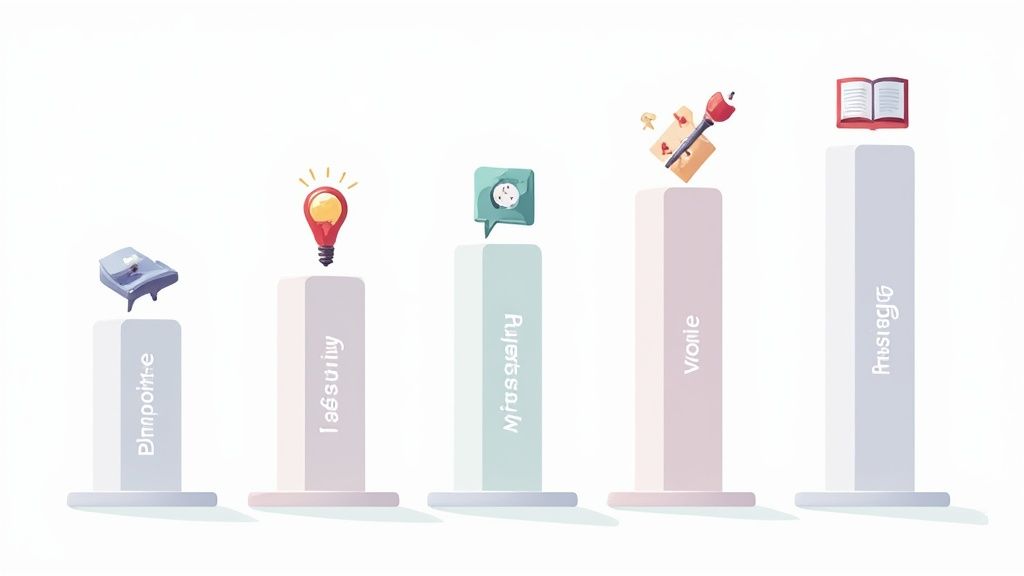
Think of it like building a house. You need a solid foundation before you can even think about what color to paint the walls. Let's break down the foundational elements every successful brand strategy needs.
Define Your Brand Purpose
Long before you think about profits, you need to define your brand purpose. This is your "why." It's the reason you get up in the morning, the impact you want to make on your customers or even the world. This is the soul of your brand, and it should be the North Star for every decision you make.
Take Patagonia, for instance. Their purpose isn't simply to sell high-quality outdoor gear. It's "to save our home planet." That single, powerful idea drives everything from their product materials to their corporate activism, attracting a fiercely loyal community that shares those same values.
Establish Your Brand Positioning
If purpose is your "why," then brand positioning is all about carving out a specific, meaningful spot in the market and, more importantly, in your customer's mind. It answers one simple but crucial question: "Of all the options out there, why should I choose you?" It’s your unique promise, brought to life.
A clear positioning statement will always address:
- Your Target Audience: Who, specifically, are you talking to?
- Your Category: What world does your brand live in?
- Your Key Differentiator: What’s the one thing you do better than anyone else for that audience?
Trying to be everything to everyone is a surefire way to become nothing special to anyone. Positioning is about making a choice and owning it.
Craft Your Brand Identity
While your purpose is the intangible soul, your brand identity is the tangible body. It’s the complete set of sensory elements—everything people can see, touch, and hear—that you use to present your brand to the world. This is where your brand’s personality becomes real.
Your brand identity is what your audience can see, hear, and feel. It’s the visual shortcut to who you are, making your brand instantly recognizable across every platform and interaction.
The most critical pieces of your brand identity include:
- Logo: Your brand's most recognizable visual signature.
- Color Palette: The specific shades that trigger the right feelings.
- Typography: The fonts that give your brand a distinct voice.
- Imagery: The style of photography, illustration, and graphics you use.
Consistency across these elements is what builds recognition. To see how to document these rules, our guide on how to create brand guidelines offers a great roadmap.
Develop Your Brand Voice and Messaging
Finally, there’s your brand voice. This is the unique personality that shines through in all your communication. Are you clever and rebellious like Dollar Shave Club? Or are you motivational and determined like Nike? Whatever it is, that voice needs to show up everywhere, from your website copy to your customer support chats.
Your brand messaging builds directly on that voice. It's the core story you consistently tell your audience—the narrative that weaves together your purpose, positioning, and promise. When all these components click into place, you've created more than just a business. You've created a brand that can stand out and last.
Building Unshakeable Brand Trust and Consistency
In business today, trust is everything. And the only way to earn it is through consistency. Think of your brand as a promise you make to your customers. Every single touchpoint—from your website's design to a customer service email—is a chance to either keep that promise or break it.
When experiences are all over the place, it creates doubt. Imagine a brand whose social media is fun and informal, but its website is stiff and corporate. It’s confusing. That confusion makes customers wonder which version is the real you, and it slowly erodes their confidence.
The Power of a Unified Experience
This is where brand consistency comes in. It’s the hard work of making sure every interaction reflects your core identity. It's about creating an experience that feels unified, predictable, and reliable, no matter where someone encounters your brand. This goes way beyond just plastering your logo everywhere; it’s about a consistent tone of voice, a cohesive visual style, and a standard of service people can count on.
When you nail this, your brand becomes more than just a business—it becomes a dependable presence in your customers' lives. People feel more comfortable when they know what to expect, making them more likely to buy from you and even recommend you to others. You’re building a powerful sense of familiarity that competitors will find almost impossible to copy.
Building a brand is a lot like building a friendship. It requires showing up consistently, being reliable, and proving you can be trusted over and over again. This sustained effort is what turns a one-time transaction into a long-term relationship.
The numbers back this up. By 2025, a staggering 81% of consumers say they need to be able to trust a brand before they'll buy from it. What's more, companies that keep their branding consistent see their revenue increase by 10% to 20%, according to research highlighted by Exploding Topics on branding's impact. The link between reliability and the bottom line is crystal clear.
From Trust to Lasting Value
Ultimately, all this consistency is what builds brand equity—the immense, intangible value your brand holds in the minds of your audience. A brand with high equity can charge more, attract the best employees, and ride out tough economic times far better than its less-consistent rivals.
Think of each consistent interaction as a deposit into your brand's trust fund. The more positive and predictable experiences you deliver, the more valuable your brand becomes. This is the heart of brand development: turning big ideas like your purpose and positioning into real, tangible value that lasts. To get a better handle on this, check out our guide on how to build brand equity and solidify your place in the market.
Your Step-by-Step Brand Development Framework
Knowing the "what" and "why" of brand development is one thing, but actually doing it? That's a whole different ball game. To keep it from feeling overwhelming, it's best to follow a clear, structured framework. This isn't about waiting for a single creative spark; it's a deliberate journey to build something that truly lasts.
Think of this framework as your roadmap. Each stage builds directly on the last, making sure you create a brand that’s not just easy on the eyes but also strategically sound, deeply researched, and ready for the long haul.
Let's walk through the five core stages.
Stage 1: Research and Discovery
Before you can build your brand, you have to understand the world it's going to live in. This first stage is all about listening. You need to dive headfirst into market research to get to know your target audience as people—what do they need, what do they want, and what keeps them up at night?
At the same time, you'll be putting your competition under the microscope. Who are they, really? What are their strengths and weaknesses? Most importantly, where are the gaps in the market that your brand can perfectly fill? This is where you find your opening.
Stage 2: Strategy and Positioning
With all that research in your back pocket, it’s time to make some big decisions. This is where you turn raw data into a focused brand strategy. It's all about defining who you are and staking your claim in the marketplace.
During this phase, you'll be focused on:
- Defining Your Mission: Getting crystal clear on your brand's purpose and where you're headed.
- Crafting Your Positioning Statement: A short, powerful summary of who you serve, what you do, and why you’re the best choice.
- Identifying Your Brand Personality: Deciding on the human traits and voice that will color every piece of communication.
This strategic work can be the toughest part of the entire process, demanding sharp insights and a clear vision. To see how the pros handle this, you can learn more about what a brand strategist does and the immense value they bring to the table.
Stage 3: Design and Identity Creation
Now for the fun part—making your strategy visible. The design phase is where you create all the visual and verbal elements that will represent your brand to the world. It’s about building a complete sensory experience that truly brings your brand’s personality to life.
This includes everything from your logo and color palette to your typography and tone of voice. Every single element should flow directly from the strategic choices you made in the last stage. That’s how you ensure everything feels authentic and consistent.
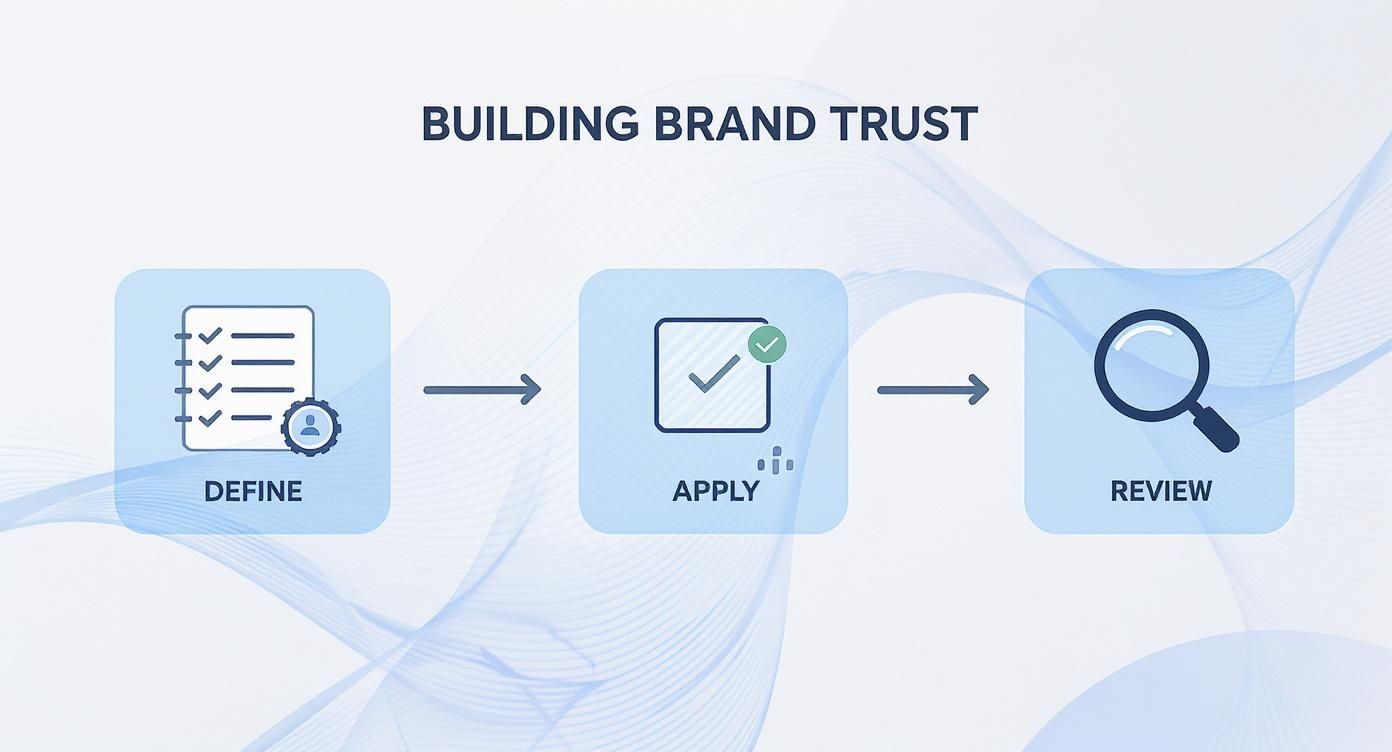
As you can see, building trust isn't a one-and-done deal. It’s a continuous cycle of defining your brand, applying it consistently, and reviewing the results.
Stage 4: Implementation and Launch
Your strategy is locked in and your identity is designed. It's go-time. The implementation stage is all about rolling out your new brand across every single customer touchpoint in a coordinated way.
This means updating your website, refreshing social media profiles, printing new marketing materials, and getting your internal team on the same page. A great launch is carefully planned to build buzz and make a strong first impression that lines up perfectly with the promises your brand makes.
Stage 5: Monitoring and Evolution
Finally, never forget that brand development is a process, not a project. Once it’s out in the wild, your brand starts to take on a life of its own. It's crucial to monitor how people perceive it and how it’s performing against your goals.
A brand is a living entity. It must be nurtured, measured, and allowed to evolve to remain relevant and resonant with its audience over time.
This final stage is all about tracking key metrics, listening to customer feedback, and keeping a close watch on market trends. This ongoing analysis is what allows you to make smart adjustments, ensuring your brand stays strong, relevant, and connected for years to come.
To give you a clearer picture of how these stages fit together, here’s a simple table outlining the entire process.
Brand Development Process Framework
| Stage | Key Objective | Example Deliverables |
|---|---|---|
| 1. Research & Discovery | Understand the market, audience, and competitive landscape. | Audience Personas, Competitive Analysis Report, Market Trends Summary |
| 2. Strategy & Positioning | Define the brand's core purpose, promise, and personality. | Mission Statement, Brand Positioning Statement, Voice & Tone Guide |
| 3. Design & Identity | Create the tangible visual and verbal assets of the brand. | Logo & Brand Guidelines, Color Palette, Typography System, Website Design |
| 4. Implementation & Launch | Roll out the new brand consistently across all channels. | Launch Plan, Updated Marketing Collateral, Social Media Campaign |
| 5. Monitoring & Evolution | Track performance, gather feedback, and adapt over time. | Brand Health KPIs, Customer Feedback Surveys, Annual Brand Review |
This framework provides a reliable path from initial idea to a living, breathing brand that connects with customers and drives growth.
How Brand Development Shapes Global Economies
https://www.youtube.com/embed/HGQjUCCclbM
Brand development isn't just for corporate boardrooms; it plays out on a global scale, shaping the fortunes of entire nations. Think about it: just like a company, a country has a brand. It's the sum of all the perceptions people have about its culture, its stability, its innovation, and its values. This "nation brand" is an incredibly powerful asset in the world economy.
A strong national brand works like a magnet, pulling in tourism, foreign investment, and top-tier talent from every corner of the globe. It's the ultimate form of soft power—shaping international relations and trade through reputation and appeal, not force. When a country gets its brand right, it becomes a premier destination for both business and leisure.
The Economic Impact of a Nation's Brand
The link between a nation's brand value and its economic health is surprisingly direct and measurable. A positive global image can actually lower the cost of borrowing on international markets. It can also boost exports, as products from that country are often perceived as being higher quality, and it can even increase the value of its corporations.
This isn't just theory. Look at the strategic branding efforts of countries like Japan, a name that's practically synonymous with technological precision and quality. Or Italy, which has carefully cultivated an association with luxury fashion and culinary mastery. These reputations didn't just happen by chance. They're the product of deliberate, long-term brand development that translates directly into economic muscle.
Nation branding is simply brand development on a macro level. It’s about strategically managing a country's image to carve out a competitive identity in a globalized world, which in turn drives economic growth and diplomatic influence.
This strategic management is vital. For instance, the United States held its spot as the most valuable nation brand heading into 2025, with an estimated valuation of a staggering $37.3 trillion. This immense value was propped up by a strong real GDP growth rate of 2.8% in 2024, proving just how deeply economic performance and brand perception are intertwined. A strong brand makes the U.S. a more attractive place for international investment and talent. You can dig deeper into the data by checking out Brand Finance's report on how national brand value is calculated and ranked.
National Brands as Competitive Advantages
In a world where capital and talent can move almost anywhere, a country’s brand is one of its most critical competitive edges. Nations are in constant competition to be seen as:
- Innovative Hubs: Think of Germany's rock-solid reputation for engineering.
- Tourist Destinations: Consider the powerful cultural allure of France.
- Stable Investment Havens: Look at Switzerland's brand of financial security and stability.
Ultimately, to really understand brand development, you have to look beyond company logos. It's a fundamental force that dictates how countries compete, cooperate, and prosper on the world stage.
Common Questions About Brand Development
As you start to wrap your head around brand development, a few practical questions almost always pop up. It's one thing to understand the theory, but another thing entirely to put it into practice. Let's dig into some of the most common questions we hear from business owners and marketers.
Getting clear on these details is what separates a brand that just exists from one that truly connects and grows.
How Is Brand Development Different From Marketing?
This is easily the question I get asked the most. The simplest way to think about it is this: brand development is building the car, and marketing is driving it.
Brand development is all the deep, strategic work you do to figure out who you are as a company. It's about defining your core identity, your values, and the unique promise you make to your customers. It's the blueprint for everything.
Marketing, on the other hand, is how you tell people about that brand. It's the specific tactics—the advertising, the social media posts, the email campaigns—you use to get the word out and bring people in.
Your marketing will always be more focused, effective, and efficient when it's built on the foundation of a strong, clearly defined brand. Without that core identity, your marketing efforts can feel random, disconnected, and inconsistent.
How Often Should a Company Revisit Its Brand Strategy?
Your core purpose—your "why"—should be timeless. But your strategy needs to breathe and adapt, otherwise, you risk becoming irrelevant.
As a rule of thumb, it’s a good idea to do a light brand audit every year and a major strategic review every 3-5 years. That said, some events should trigger an immediate look under the hood:
- A major shake-up in your market
- A serious new competitor enters the scene
- Your business pivots to a new direction
- You go through a merger or acquisition
Think of these moments as critical checkpoints. They're opportunities to make sure your brand is still aligned with where your business is headed and what's happening in the world around you.
Can a Small Business Afford Brand Development?
Absolutely. The better question is, can a small business afford not to? Brand development isn't about spending a fortune on a Super Bowl ad; it’s about clarity, strategy, and consistency.
It all starts with the fundamentals that don't cost a dime: getting crystal clear on who your ideal customer is, what makes you truly different from the competition, and the value you promise to deliver, every single time.
Developing a consistent voice, a simple visual identity, and a clear message is often more about focused effort than a big budget. In a noisy world, a well-defined brand is a small business's secret weapon for cutting through the static and building a community of loyal customers.
At ReachLabs.ai, we live and breathe this stuff. We take your brand's unique identity and use smart, data-driven strategies to make sure it gets seen and remembered. Discover how we can help your voice resonate at https://www.reachlabs.ai.