Your team is probably already talking about AR without calling it AR.
A customer taps an Instagram effect to see how lipstick looks on their face. Someone opens Snapchat and tries a branded Lens because it's funny enough to send to friends. A creator uses a TikTok effect that makes a video feel more interactive than a standard post. None of that feels like a futuristic tech demo. It feels normal.
That's why augmented reality social networking matters. It's no longer a side experiment for innovation teams. It's part of how people create, react, shop, and share inside social apps. For a marketer, that changes the question from “Should we try AR?” to “Where does AR fit in our funnel, and how will we measure whether it works?”
Most guides stop at filters. That's too shallow. The main opportunity is using AR to move people from attention to action. The main challenge is doing that without creating privacy concerns or measuring success with the wrong metrics.
The New Social Layer Why AR Networking Matters Now
AR already sits inside everyday social behavior. People use it when they try on sunglasses through a camera, drop animated effects into a Story, or interact with a branded face filter that changes with movement. They may never say “I'm using augmented reality social networking.” They just use the feature because it's fast, playful, and built into the app they already open.
That behavior has scale. One industry summary said mobile AR users were expected to reach 1.96 billion in 2021 and 2.4 billion by 2023, and that more than 75% of Snapchat's 218 million daily users used its AR lenses every day, with daily active users interacting with a Snap AR product nearly 30 times a day on average according to industry coverage of social AR adoption. For marketers, those numbers matter less as trivia and more as a signal. AR isn't occasional behavior. On major camera-first platforms, it became repeated behavior.
Why this changes social strategy
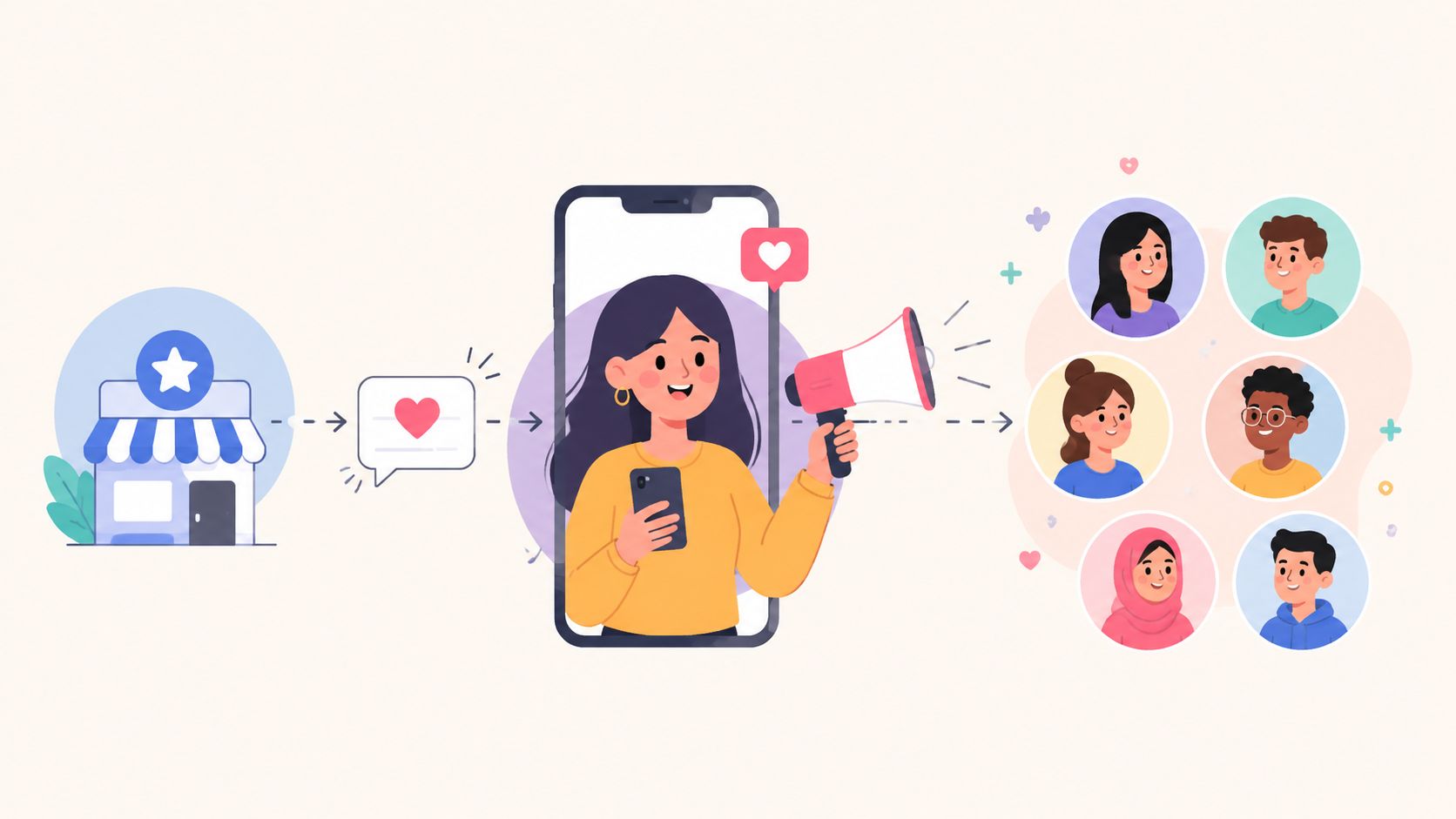
In a crowded feed, static creative has a hard job. It has to stop the scroll and communicate value in seconds. AR changes the interaction model. Instead of asking someone to watch, it asks them to participate.
That creates three practical advantages:
- Higher intent signals: A tap to try a Lens or virtual try-on usually shows more curiosity than a passive impression.
- Built-in sharing behavior: AR content often turns the user into the creator, which changes distribution.
- Stronger product context: Beauty, fashion, accessories, home décor, entertainment, and events can all use AR to make an offer feel more concrete.
AR works best when it gives the user something to do, not just something to look at.
The opportunity most brands miss
Many brands still treat AR as a campaign extra. They launch one effect, get a burst of novelty, then move on. That leaves value on the table.
A better view is to treat AR as a social layer across the funnel. At the top, it can earn attention. In the middle, it can help people explore a product or identity. Near conversion, it can reduce hesitation by letting the user preview the thing in context. That's where augmented reality social networking becomes strategic instead of decorative.
Understanding Augmented Reality Social Networking
The easiest way to understand augmented reality social networking is to think of it as a digital layer placed over the physical world through your phone camera. You still see your face, your room, your desk, or the street in front of you. The app adds responsive digital elements on top.
That's why AR feels different from standard photo editing. The digital content moves with you, reacts to your face or surroundings, and updates in real time. It behaves more like a live effect than a finished image.

What makes AR social
In plain language, AR social features turn the camera into an interactive surface. Independent coverage describes augmented reality social networking as using real-time, computer-vision-driven overlays that let users interact with digital objects within a live camera feed, which is why Snapchat Lenses and Instagram filters feel immediate and personal in this overview of AR in social networks.
If that phrase sounds technical, break it into three parts:
The camera sees the actual scene
Your front or rear camera captures what's already there.The software recognizes key signals
It identifies a face, eyes, a surface, or movement.The app places digital content on top
That could be makeup, glasses, text, animation, a game element, or a 3D object.
The result is simple from the user's point of view. Open camera. Select effect. Interact. Share.
AR versus VR in one clear distinction
People often mix up AR and VR. The difference is straightforward. AR adds to reality. VR replaces reality.
If you're trying to explain that internally, a practical resource is this guide on AR and VR explained, which separates the two in a way non-technical teams can use.
Practical rule: If the user still sees their real environment and digital content is layered on top, you're dealing with AR.
Why users respond to it
AR social experiences work because they reduce the distance between seeing and trying. A normal ad says, “Imagine this on you.” AR says, “See it on you right now.”
That matters in social environments where people move quickly and interact casually. AR fits the rhythm of Stories, Reels, and short-form video because it's immediate. There's no separate editor, no complex setup, and no need to explain much.
A few examples make this concrete:
- Virtual try-on: A shopper tests sunglasses or lipstick through the front camera.
- World effects: A user places a digital object on a table or floor in a video.
- Playful identity tools: Face effects, masks, or animated overlays help creators make content that feels more expressive.
- Interactive prompts: A brand gives users a branded effect and lets them create their own version of the campaign.
Why marketers should care about the mechanics
The technology matters only because of what it changes in behavior. AR can turn a user from viewer into participant. It can give someone a reason to open the camera, spend more time with the creative, and share an experience with friends instead of just liking a post.
That's the foundation for every serious AR strategy. Before you talk about campaign ideas, you need to understand one thing. Augmented reality social networking isn't just content. It's a format for interaction.
Key Platforms Powering Today's AR Experiences
Not all social AR platforms do the same job. They may all offer effects, filters, and camera-based experiences, but the user mindset differs by platform. That changes creative direction, distribution, and what kind of business outcome is realistic.
Snapchat built the playbook
Snapchat helped establish the model that many platforms followed. eMarketer projected that 43.7 million people in the U.S. would use social network AR at least monthly in 2020, representing 20.8% of social network users, and identified Snapchat as the main driver in its analysis of AR in social media.
That's important historically because it marked the point where social AR looked less like novelty and more like routine consumer behavior. On Snapchat, AR feels native. Users already expect to open the camera, play with effects, and send or post what they make.
For brands, Snapchat tends to fit campaigns where the goal is:
- Participation: Users actively try the experience.
- Playfulness: Humor, transformation, and visual surprise work well.
- Shareable branded moments: The user becomes the distribution channel.
Snapchat's AR identity is strong because the camera sits at the center of the product experience.
Meta platforms focus on identity and commerce
Instagram and Facebook brought AR into ecosystems built around creators, communities, and shopping behavior. On Instagram in particular, AR often works best when it blends with beauty, fashion, lifestyle, or creator-led content.
The platform logic is different from Snapchat. Instead of feeling purely playful, Instagram AR often sits closer to self-presentation and product discovery. A branded effect can work as entertainment, but it can also support product consideration when it feels useful rather than gimmicky.
Typical Meta use cases include:
- Beauty and style filters
- Product previews
- Story and Reel enhancements
- Campaign assets tied to creator content
The practical question isn't whether Instagram supports AR. It's whether your concept matches how people use Instagram. If it doesn't support identity, aspiration, or creator expression, it may feel out of place.
TikTok rewards effect-led creativity
TikTok's AR environment is tightly connected to trends, remix culture, and performance. Effects there often work best when they're part of a repeatable content behavior, not just a branded visual.
A strong TikTok AR concept usually does one of two things. It either gives creators a format they want to copy, or it turns the effect into a challenge, joke, reaction style, or transformation that people can build on.
On TikTok, the effect is rarely the whole campaign. The behavior around the effect is the campaign.
That distinction matters. If your AR idea depends on users following a template, TikTok may be a better fit than a more polished commerce-first approach.
A practical comparison
| Platform | AR Development Tool | Key Audience | Primary Use Case |
|---|---|---|---|
| Snapchat | Lens Studio | Camera-first social users | Playful branded Lenses, interactive effects, shareable experiences |
| Instagram and Facebook | Spark AR | Creator-led, lifestyle, community, and shopping audiences | Brand expression, beauty and fashion effects, product discovery |
| TikTok | Effect House | Trend-driven short-form video creators and audiences | Participatory effects, challenges, remixable formats |
How to choose the right platform
Don't choose based on where AR looks coolest in a pitch deck. Choose based on the behavior you want.
If you want attention and sharing
Snapchat often fits best when the experience itself is the hook. The user opens the camera and immediately gets the point.
If you want product exploration
Instagram is often stronger when the experience supports brand identity, aesthetics, or shopping behavior.
If you want creator participation
TikTok works when the effect can become a format others repeat, reinterpret, or build into a broader trend.
A lot of AR campaigns fail because the concept is fine but the platform fit is poor. Augmented reality social networking works best when the creative idea matches the native behavior of the app.
Inspiring Brand Campaigns in AR Social Media
The most useful way to think about AR campaigns isn't “Which filter should we make?” It's “What kind of behavior are we trying to trigger?” Once you frame it that way, better campaign ideas appear.

Virtual try-on that reduces hesitation
A beauty or fashion brand can use AR to answer the question customers already have. Will this look right on me?
That's where virtual try-on is more than a novelty. It turns social browsing into lightweight product testing. A lipstick shade, pair of frames, sneaker colorway, or accessory becomes easier to imagine because the customer doesn't have to imagine it from scratch.
This also connects to broader creative production. If your team is exploring scalable visual merchandising or synthetic product presentation, tools related to an ai fashion model can complement AR thinking by helping brands test how products appear across different visual contexts before campaign launch.
Gamified experiences that keep people engaged
Entertainment brands, sports teams, and event marketers often get more value from AR when they treat it like a mini interaction rather than a static effect. A face filter might get a smile. A branded game mechanic gets repeat use.
Think of a film release that adds a mission-based effect, a sports campaign that asks fans to reveal team visuals, or a launch that uses camera interaction as part of a contest. The point isn't the technology. The point is that the user has a reason to stay longer and share the result.
For inspiration on how interactive concepts can pair with creator distribution, this roundup of influencer marketing campaign ideas is useful because AR works best when it's embedded in a broader social rollout rather than launched in isolation.
Place-based and educational overlays
Retailers, destinations, museums, and event spaces can use AR to add a digital layer to a physical environment. Instead of only changing a face, the campaign changes how someone experiences a place.
That can look like:
- Store overlays: Product info, styling prompts, or visual storytelling inside a retail space.
- Event activations: Branded portals, hidden interactions, or photo moments tied to attendance.
- Cultural storytelling: Historical or educational context layered onto landmarks or exhibits.
These experiences work because they connect online sharing with an offline setting. The content often feels more memorable because the user can point to where it happened.
A short demo can help spark ideas for teams that haven't seen this range before.
User-generated content prompts that travel farther
Some of the strongest AR campaigns don't feel like ads. They feel like creative tools. The brand gives users an effect, frame, challenge, or visual language. Then the audience does the distribution.
That's the difference between a campaign people notice and a campaign people use.
The best social AR campaigns give up some control. Users make the content their own, and that's what gives the campaign reach.
A practical pattern looks like this:
- A simple prompt that people understand instantly
- A flexible effect that works across many faces, spaces, or styles
- A social reason to share, such as humor, identity, competition, fandom, or self-expression
If you're planning augmented reality social networking for a brand, use these campaign types as strategic templates. Try-on supports consideration. Gamified AR supports engagement. Place-based layers support experience. UGC prompts support organic spread.
Developing Your AR Marketing Strategy
A weak AR campaign usually fails before design starts. The team gets excited about the effect, then asks what business goal it serves. That order needs to be reversed.
AR should start with a job to do inside the marketing funnel. Otherwise you end up with an expensive effect that people try once and forget.

Start with the funnel, not the feature
A useful strategy begins with one of four intents:
- Awareness: You want people to encounter the brand in a memorable, shareable way.
- Consideration: You want them to explore a product, style, or offer more actively.
- Conversion support: You want to reduce uncertainty before purchase.
- Community and advocacy: You want creators or customers to make branded content voluntarily.
Each goal changes the experience you should build. A conversion-support Lens shouldn't look like a joke effect. A community campaign shouldn't feel like a product demo.
Build around audience behavior
The second step is matching the idea to the user's actual social habits. Don't ask where your brand wants to be. Ask where your audience already uses the camera.
That includes practical constraints, not just demographics. Research from ITIF notes that AR and VR can reduce barriers for some communities, but factors such as cost, disability, and platform access can also reproduce inequality when teams ignore inclusive design in its work on AR and VR, equity, and inclusion.
That has two implications for marketers:
- Design for accessibility: Keep interactions simple and readable.
- Avoid assuming everyone has the same device comfort or platform access: A campaign that works for heavy Instagram users may exclude other parts of your audience.
A flashy AR concept that only works for a narrow slice of users may create buzz, but it won't create broad marketing value.
A practical planning framework
Define the campaign role
Write one sentence that explains where AR fits. Example: “Use AR to help shoppers preview the product in a way static ads can't.”
Choose the build path
Some teams can use platform-native tools. Others need outside support. If you're evaluating partners for technical execution, broader directories like this guide to Web3 and AI IT firms can help shortlist vendors with emerging-technology capabilities.
Plan distribution before launch
Discovery is part of the campaign, not a post-launch task. Think through creator partnerships, paid support, organic social placement, QR triggers, event tie-ins, or landing page placements before the asset is finished.
Connect AR to adjacent channels
AR usually performs better when it's part of a wider campaign ecosystem. If you're mapping that broader plan, this resource on how to create an influencer marketing strategy is helpful because creators often provide the first wave of demonstrations that make AR easy for audiences to understand.
What good strategy looks like
Good augmented reality social networking strategy is boring in the best way. Clear objective. Clear audience. Clear platform fit. Clear rollout plan. Clear success criteria.
That discipline is what turns AR from a novelty asset into a functioning part of the funnel.
Measuring ROI and Preparing for What's Next in AR
AR reporting gets messy when teams measure only reach. Impressions matter, but they rarely tell you whether the experience changed behavior. For augmented reality social networking, stronger signals usually come from interaction.
Look at metrics such as:
- Use rate: How many people opened or activated the effect
- Engagement depth: Session time, repeat use, or completion of the interaction
- Sharing behavior: Saves, shares, posts, or creator reuse
- Traffic and conversion support: Product page visits, add-to-cart actions, or downstream sales when the AR unit is tied to commerce
If your team needs a broader framework for connecting social activity to business results, this guide on how to measure social media ROI is a practical companion.
The trust issue most teams underweight
A critical issue sits underneath all AR measurement. Privacy.
Coverage of AR social networking often focuses on creativity and engagement, but AR systems can collect sensitive environmental, biometric, and movement-related data. That creates a real trust challenge, as discussed in this piece on how AR is changing social media. If users feel watched rather than helped, the campaign may damage brand perception even if engagement looks strong.
That means brands should ask:
- What data does this experience require?
- Is the value exchange obvious to the user?
- Are disclosures clear and easy to understand?
- Would this still feel acceptable if explained plainly in a campaign brief?
The next phase of AR in social media will likely involve more collaborative experiences, richer shopping flows, and tighter links between digital and physical environments. But long-term advantage won't come from the flashiest effect. It will come from brands that pair useful experiences with disciplined measurement and visible respect for user trust.
If you want help turning AR ideas into a measurable social strategy, ReachLabs.ai can support campaign planning, creative direction, influencer integration, and ROI-focused execution across your broader digital marketing funnel.