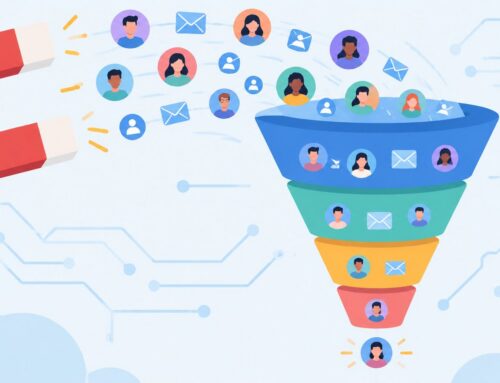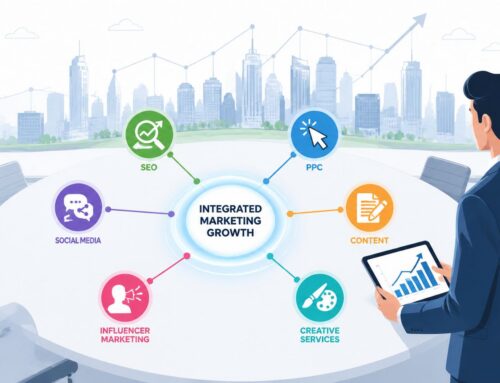
So, what exactly is full-service digital marketing? It's an all-in-one approach where a single agency manages every piece of your brand's online puzzle, from big-picture strategy all the way down to execution. This model ensures that every channel—whether it's SEO, paid ads, or content—works in perfect harmony, getting rid of disconnected efforts and presenting a clear, unified message to your audience.
What Full Service Digital Marketing Actually Means
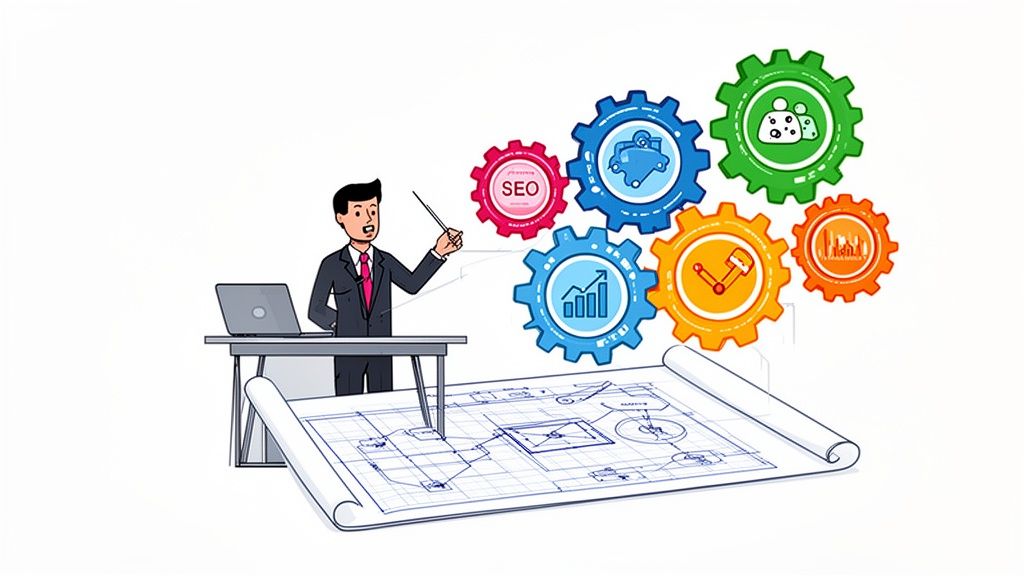
Let’s skip the industry buzzwords. Imagine a full-service digital marketing agency as the general contractor building your brand’s home online. You wouldn't hire a plumber, an electrician, and a framer to work without a master blueprint, right? If you did, each specialist would be off in their own world, likely causing clashes, delays, and a whole lot of wasted money.
That's precisely what an integrated model prevents. It ensures every digital tactic is built on the same strategic foundation. It’s the fundamental difference between trying to duct-tape a bunch of freelance services together and having one expert team steer the entire ship. This unified command prevents the mixed messages and wasted energy that inevitably pop up when different specialists operate without a shared vision.
The Power of a Unified Blueprint
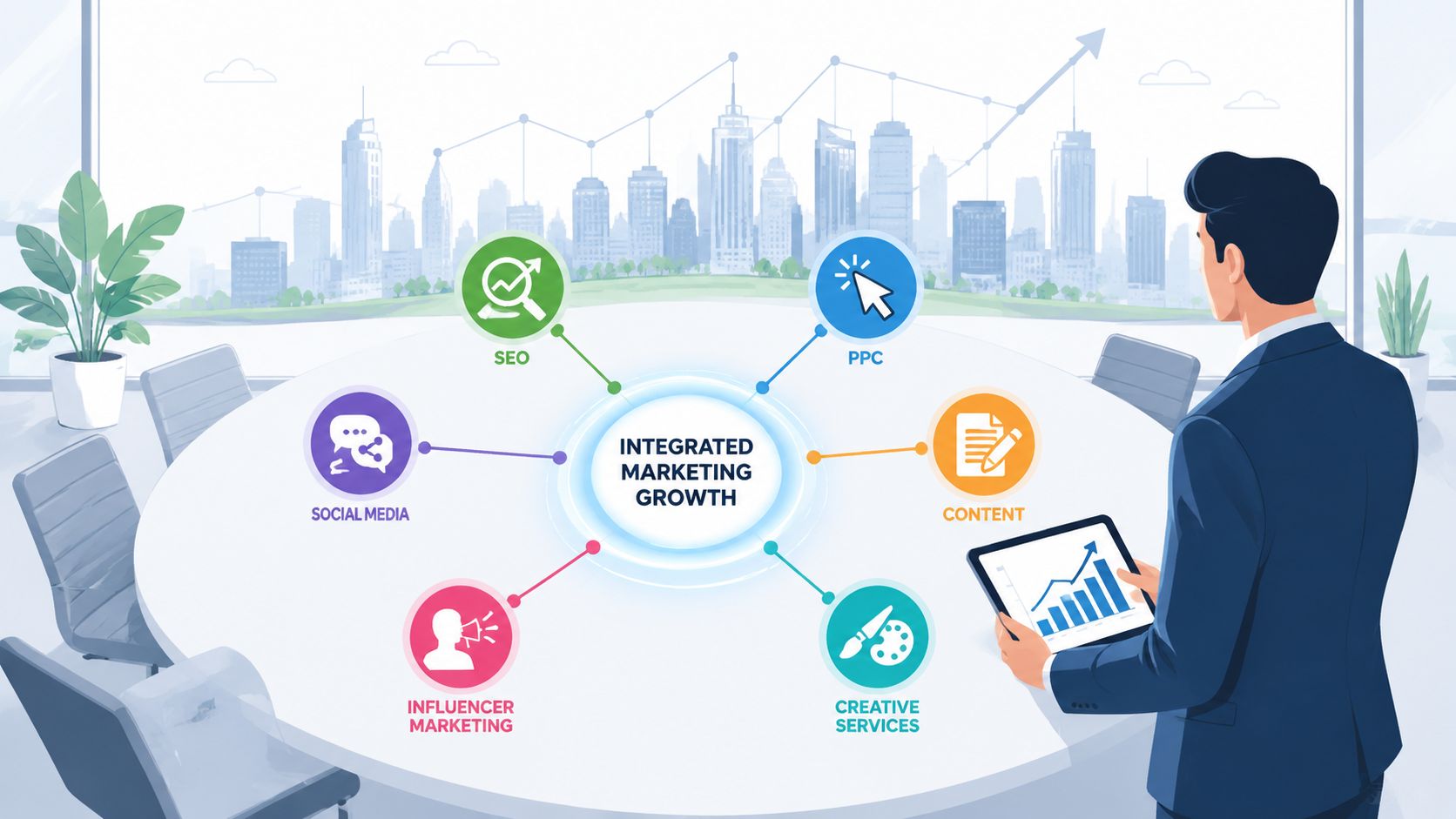
The magic of full-service digital marketing lies in that strategic cohesion. When one team has its hands on all the levers, incredible synergies start to happen. For example, the keyword insights your SEO team uncovers can become the exact topics your content team writes about. That very same content can then be promoted with paid social media ads, and the performance is tracked by an analytics team—all under one roof.
This interconnected approach creates a powerful growth loop where every activity feeds and strengthens the others. Instead of different teams reporting on their own isolated metrics, a full-service partner sees the whole picture and connects the dots. If you want to get into the nitty-gritty of the roles involved, our guide on what a digital marketing agency does offers a much deeper look.
A full-service approach transforms your marketing from a series of disconnected actions into a single, intelligent system. Every piece of data from one channel becomes fuel for optimizing another, creating momentum that isolated tactics simply cannot replicate.
Moving Beyond Specialized Silos
Hiring individual specialists for SEO, PPC, and social media can feel like a smart, budget-friendly move at first. The problem is, it almost always leads to strategic silos. Each specialist is laser-focused on crushing their own channel's goals, which can sometimes come at the expense of the brand's overall objectives.
- An SEO Specialist is obsessed with ranking for high-volume keywords.
- A PPC Manager lives and breathes click-through rates and conversion costs.
- A Content Writer just wants to create articles or videos people will love.
Without a central strategy tying it all together, these efforts can easily pull in different directions. The keywords the SEO expert is targeting might have nothing to do with the messaging in the PPC ads, and the content writer could be producing beautiful assets that don't actually support either goal. A full-service digital marketing partner serves as that strategic hub, making sure every single action, big or small, drives the main business objectives forward for more sustainable and meaningful growth.
The Core Services of an Integrated Marketing Agency
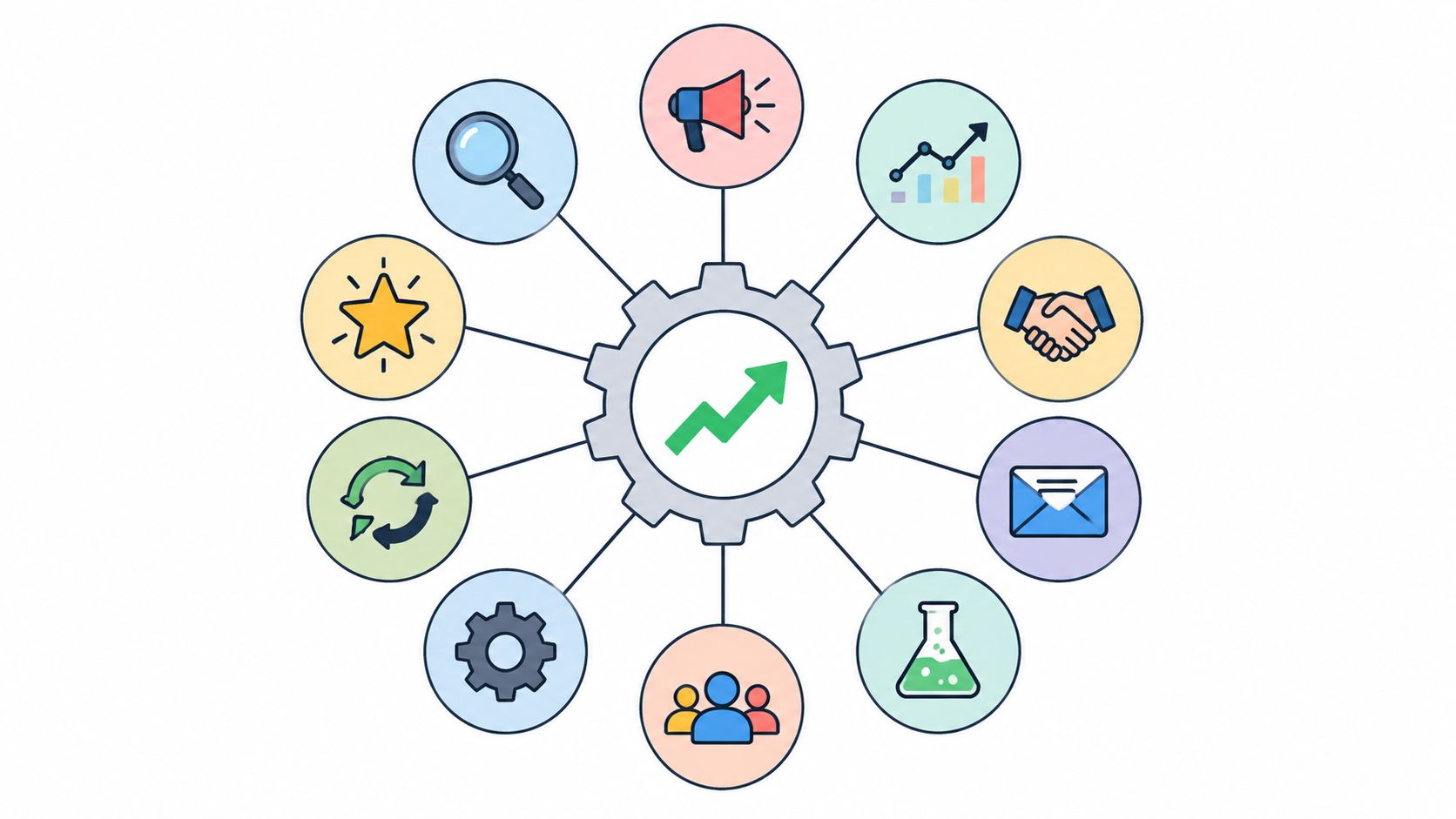
A true full-service digital marketing agency isn't just a business that offers a menu of disconnected services. Think of it more like a high-performance engine. Each part—strategy, content, SEO, paid ads—is meticulously engineered to work together, creating a system that's far more powerful than the sum of its parts.
Let’s pop the hood and see how this synergy is actually built.
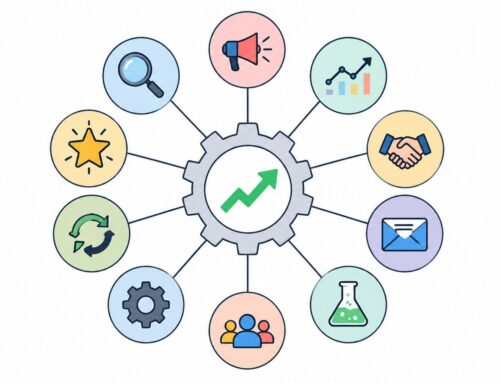
At the very heart of the operation is a unified strategy, the master blueprint that guides every decision. From there, specialized channels branch out, each feeding crucial data back to the core and making the other channels stronger. This is how you turn isolated marketing tactics into a cohesive growth machine.
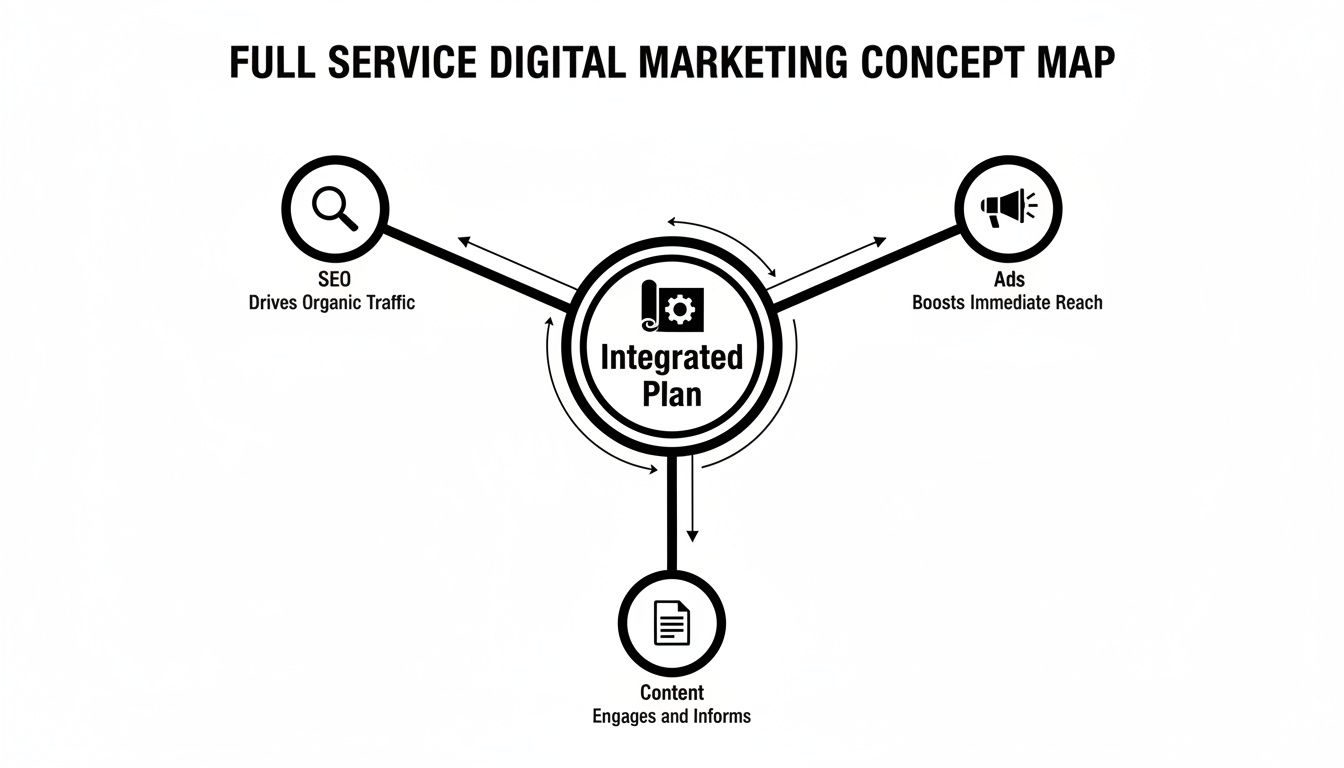
This interconnected approach means success isn't just about winning at SEO or running a great ad campaign in a silo. It’s about how every single effort is coordinated to hit one overarching business goal. Let's break down the components of this engine.
Strategic Planning: The Master Blueprint
Before a single keyword is researched or a dollar is spent on ads, everything starts with strategy. This isn't a fluffy, high-level document; it’s a deep dive into your business. A good agency will immerse themselves in your goals, your ideal customer, the competitive landscape, and what makes you unique. It's as much about business consulting as it is about marketing.
This strategic plan becomes the North Star for every action that follows. It defines what success actually looks like (the key performance indicators, or KPIs), dictates how the budget is allocated, and shapes the core story you’ll tell across every single channel. Without it, you’re just running random plays with no game plan.
Search Engine Optimization (SEO): Building Foundational Trust
At its core, Search Engine Optimization (SEO) is the practice of making your website more visible in organic search results on platforms like Google. The goal is simple: attract people who are actively looking for the exact solutions you provide. This isn't about quick tricks; it's a long-term strategy built on authority and trust.
An integrated SEO approach rests on three pillars:
- On-Page SEO: Optimizing individual web pages to signal their relevance to search engines. This includes deep keyword research, crafting high-quality content, and refining elements like meta descriptions and header tags.
- Off-Page SEO: Building your website's authority and reputation across the web. The biggest piece of this puzzle is earning high-quality backlinks from other respected sites, which act like votes of confidence in Google's eyes.
- Technical SEO: Ensuring search engines can easily crawl, understand, and index your site. This covers everything from site speed and mobile-friendliness to clean site architecture.
In a full-service model, SEO never operates in a vacuum. The keyword insights unearthed by the SEO team become the creative brief for the content team, telling them exactly what questions your audience is asking.
Content Marketing: Fueling the Entire Engine
Content marketing is all about creating and sharing genuinely valuable information to attract and engage your target audience. It’s about being the expert, not just the salesperson. By consistently providing answers and solutions, you build trust and establish your brand as the go-to authority.
We're talking about blog posts, in-depth guides, case studies, videos, and webinars. The insights from SEO tell the content team what to create. For example, if SEO research shows a spike in searches for "how to improve B2B lead quality," the content team knows to produce a definitive guide on that exact topic.
A great piece of content isn't a one-and-done asset. It can become the centerpiece of a social media campaign, the landing page for a paid ad, a valuable resource for an email newsletter, and a long-term organic traffic driver.
Paid Media: Adding Precision and Speed
While SEO builds momentum over time, paid media (also known as PPC or SEM) delivers immediate visibility and results. This is where you pay for placement on platforms like Google Ads or social networks to drive highly specific traffic to your website.
Here’s where the integration gets powerful. That amazing guide your content team wrote? The paid media team can promote it with targeted ads on LinkedIn to get it in front of the perfect executive audience. The keyword data from the SEO team? It can be used to build hyper-relevant Google search ads that capture potential customers the very moment they’re looking for a solution.
This is a two-way street. The data from paid campaigns—which headlines get the most clicks, which landing pages convert best—provides instant feedback that helps refine both the SEO and content strategies.
Data Analytics and Reporting: The Essential Feedback Loop
None of this works without a rock-solid analytics framework. Data analytics is the process of measuring, analyzing, and reporting on marketing performance to see what's working, what isn't, and where the next opportunity lies. It’s the feedback loop that makes the whole system smarter over time.
A full-service agency connects the dots, tracking user behavior across every channel to paint a complete picture of the customer journey. They focus on answering the big questions:
- Which channels are actually driving qualified leads?
- What is the real return on investment (ROI) from each campaign?
- Where are people dropping off in the sales funnel?
To understand how these services feed into one another, let's look at a simple breakdown.
How Integrated Marketing Services Work Together
This table illustrates how each service has a primary goal but also provides critical support and data to the other functions, creating a cycle of continuous improvement.
| Service Component | Primary Goal | How It Integrates with Others |
|---|---|---|
| Strategic Planning | Define business goals, KPIs, and the overarching marketing roadmap. | Provides the "North Star" for all other services, ensuring every action is aligned with business objectives. |
| SEO | Drive high-intent organic traffic by improving search engine visibility. | Uncovers keyword data and user intent that informs content creation and paid media targeting. |
| Content Marketing | Build trust and authority by creating valuable, relevant assets. | Creates the fuel (blog posts, guides) that SEO ranks and paid media promotes. |
| Paid Media | Generate immediate, targeted traffic and leads through advertising. | Provides rapid A/B testing data to refine messaging for content and SEO. Amplifies top-performing content. |
| Data Analytics | Measure performance, calculate ROI, and identify optimization opportunities. | Acts as the central feedback loop, providing insights that allow the strategist to refine budgets and tactics across all channels. |
This data-driven approach removes the guesswork. If analytics show that a paid campaign on LinkedIn converts at a much higher rate, the strategist can confidently shift more budget to that channel.
This continuous cycle of execution, measurement, and refinement is what truly drives sustainable growth. It's especially critical now, as mobile devices account for roughly 63% of all web traffic. This shift has made mobile-first strategies non-negotiable. The impact is clear: in the U.S. alone, mobile e-commerce sales hit an astonishing $511.8 billion. This shows the massive opportunity for businesses that work with agencies skilled in both mobile SEO and targeted mobile advertising. You can find more of these insights on MediaValet's blog about digital marketing statistics.
Why a Unified Marketing Approach Drives Better Results
It's one thing to understand the individual pieces of full service digital marketing, but the real magic happens when you see how they all work together. Shifting from a collection of separate tactics to a single, unified strategy is like trading a garage band for a symphony orchestra. Sure, each instrument can make some noise on its own, but when guided by one conductor, they create something powerful and unforgettable.
A unified approach gets rid of the friction and mixed messages that almost always happen when you split marketing across different vendors. When your SEO specialist, content writer, and paid media manager are all on the same team, working from the same playbook, their efforts don't just add up—they multiply. That synergy is the secret to unlocking real, exponential growth.
The Power of Strategic Consistency
Consistency is the absolute bedrock of brand trust. Think about it: customers bump into your brand all over the place—a Google search, a social media ad, a blog post, an email. When the voice, message, and look are the same everywhere, it creates a smooth, reliable experience. That's incredibly hard to pull off when different teams are running different channels.
A full service digital marketing partner essentially becomes your brand's central nervous system, making sure every single message is perfectly aligned.
- The promise you make in a Facebook ad is backed up on the landing page.
- The tone of your blog content perfectly matches your social media posts.
- The customer pain points you target with SEO are the same ones you talk about in your email campaigns.
This consistency builds a powerful sense of familiarity and reliability. It makes your brand the no-brainer choice when a customer is finally ready to pull the trigger.
A brand that speaks with one voice across all channels is a brand that earns trust. Inconsistent messaging just creates confusion and chips away at the confidence you work so hard to build.
Gaining Operational Efficiency and Speed
Juggling multiple agencies or freelancers isn't just a headache; it's wildly inefficient. It creates communication black holes, finger-pointing when goals are missed, and a ton of redundant work. How much time is wasted just trying to get your SEO firm and your PPC agency on the same page? A unified model collapses all those communication lines into one streamlined workflow.
Instead of endless coordination meetings, a full service digital marketing team has one quick internal huddle. Insights get shared instantly. For example, a killer ad creative from the paid media team can be immediately repurposed for organic social posts. This kind of agility means your brand can pivot fast and jump on opportunities without getting bogged down in red tape. To truly maximize reach and impact, a unified approach often relies on a modern multi-channel content strategy, turning single pieces of content into a whole library of assets for different platforms.
This consolidated management doesn't just save you time—it saves you money. You cut out overlapping tasks and ensure your marketing budget is being spent in the smartest way possible, with every dollar pushing toward the same goal.
Accessing a Collective of Diverse Expertise
Maybe the biggest win here is getting access to a diverse, interconnected team of specialists. A small in-house team is usually made up of generalists—jacks of all trades, but masters of none. A full-service agency, on the other hand, brings a whole roster of deep experts to the table, all working together on your account.
Just picture a brainstorming session where all these pros are focused on your business:
- A Data Analyst pinpoints a high-converting audience segment you never knew you had.
- A PPC Specialist immediately launches a new ad campaign to target that exact group.
- A Content Strategist outlines a blog post that speaks directly to that segment's biggest problems.
- A Creative Director designs visuals that will grab their attention instantly.
This fusion of specialized knowledge produces strategies with a depth and sophistication that a lone marketing generalist just can't match. This collective brainpower means you get all the benefits of an enterprise-level marketing department dedicated to your growth, but without the massive overhead of hiring one.
How to Choose the Right Digital Marketing Partner
Picking a full service digital marketing agency is one of the biggest calls you’ll make for your company’s growth. It’s not just about hiring another vendor; you’re looking for a partner who will be in the trenches with you. To get it right, you have to look past the slick sales pitches and really understand the substance behind their promises.
The real goal is to find a team that clicks with your company’s culture, communication style, and long-term vision—not just your budget. This means you need a solid game plan to evaluate potential partners and compare them fairly.
Look Beyond Vanity Metrics
Every agency will come armed with impressive-looking case studies. Your job is to be the detective and figure out what’s real business impact versus what’s just a "vanity metric," like a bunch of impressions or a jump in follower count.
When an agency shows you a case study, don’t just nod along. Ask them to connect the dots between their marketing actions and the client’s bottom line.
Instead of accepting a generic stat like, "We boosted their website traffic by 300%," you need to ask tougher questions:
- Okay, but was it the right kind of traffic?
- How much did the lead-to-customer conversion rate actually improve?
- What did that mean for their revenue or customer lifetime value in the end?
A truly great partner will be genuinely excited to show you how their work created tangible business growth, not just digital noise. They'll have the data to prove it and will be upfront about what worked and what didn't.
Ask the Tough Questions
Think of your initial calls with an agency as an audition. This is your chance to see how they think on their feet. Come prepared with a list of sharp, situational questions that push them beyond their rehearsed spiels. This is where you’ll see their real problem-solving skills and strategic depth.
Here are a few powerful questions to keep in your back pocket:
- On Strategy Adaptation: "Tell me about a time a campaign wasn't performing as expected. What specific steps did you take to figure out the problem and pivot the strategy?"
- On Reporting Transparency: "Could you share a sample performance report you send to clients in a similar industry? I want to see exactly how you communicate results."
- On Team Structure: "Who on your team would actually be working on our account every day? What’s their background, and how much access will we have to senior leadership?"
- On Client Onboarding: "What does your onboarding process look like for the first 90 days? What key milestones should we expect to hit in that time?"
Their answers will reveal far more about their capabilities than any polished sales deck ever could. For a deeper dive, check out our complete guide on how to choose a digital marketing agency, which breaks down the entire evaluation process.
Your Agency Evaluation Checklist
To help you stay organized and compare agencies apples-to-apples, we've put together this practical checklist. Use it during your discovery calls to ensure you're covering all the essential bases and making an informed decision.
| Evaluation Criteria | What to Look For | Key Questions to Ask |
|---|---|---|
| Industry Experience | Direct experience in your niche or with similar business models. | "Can you share case studies from clients in our industry?" "What unique challenges do you see in our market?" |
| Strategic Approach | A data-driven, customized strategy, not a one-size-fits-all template. | "Based on what you know about us, what would be your top priorities in the first 90 days?" "How do you stay ahead of market trends?" |
| Team Expertise | A clear roster of specialists for each service area (SEO, paid media, content, etc.). | "Who will be our main point of contact?" "Can we meet the key team members who will be working on our account?" |
| Communication & Reporting | Transparent, regular communication and clear, actionable performance reports. | "What does your communication cadence look like?" "What KPIs do you prioritize, and why?" |
| Cultural Fit | A collaborative, partnership-oriented mindset that aligns with your company's values. | "How do you handle disagreements or strategic pivots with clients?" "Describe your ideal client relationship." |
| Tools & Technology | A modern tech stack for analytics, project management, and execution. | "What marketing and analytics tools do you use?" "How do you leverage technology to improve campaign performance?" |
Remember, this checklist isn't about finding an agency that scores a perfect 10 in every box. It's about finding the one with the right combination of strengths that best aligns with your specific goals and how your team likes to work.
Understanding Common Pricing Models
Figuring out how agencies charge is key to finding a partner that makes sense financially. While most proposals are custom, the payment structures usually fall into one of a few common buckets.
A partner’s pricing model should reflect a commitment to your long-term success, not just billable hours. The right structure creates a shared incentive for growth, making the agency a true extension of your team.
Here's a quick look at the models you'll most likely run into:
- Monthly Retainer: This is the go-to model for ongoing, comprehensive marketing. You pay a set fee each month for a clearly defined scope of work. It’s perfect for long-term partnerships because it allows the agency to become a strategic part of your team, constantly optimizing your efforts.
- Project-Based Fee: This is a one-time flat fee for a specific project with a clear beginning and end, like a website overhaul, a brand launch, or a targeted campaign.
- Performance-Based Pricing: With this model, the agency's pay is directly tied to the results they deliver. This could be a percentage of ad spend, a fee for each lead they generate, or even a cut of the revenue they help create. It perfectly aligns your goals with theirs but is typically used for specific channels like paid ads rather than a full-service engagement.
In the end, choosing the right full service digital marketing partner is about finding a team that thinks strategically, proves its worth with real data, and offers a transparent way of working together that sets you both up for a win.
What to Expect When You Hire a Full Service Agency
Bringing a full service digital marketing agency on board is a real partnership, not just another vendor transaction. Knowing what the process looks like from the start helps everyone get on the same page and sets the stage for success. Think of it less like a sprint for immediate results and more like a marathon of steady, continuous improvement.
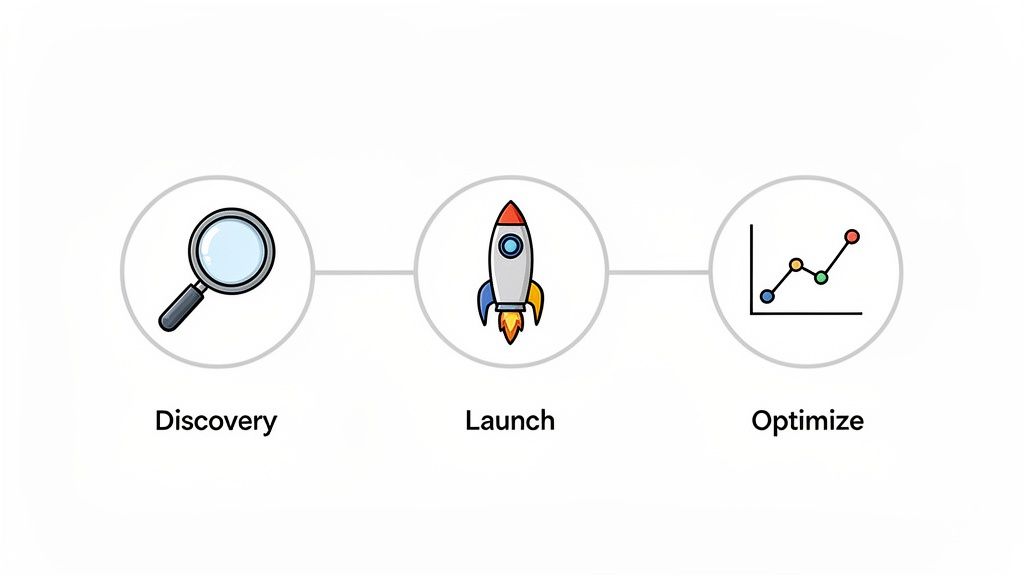
It’s a lot like building a custom home. You don't break ground one day and move in the next. First, you need architects to draw up blueprints, a crew to pour the foundation, and framers to erect the structure. Only then can you start thinking about paint colors. A solid marketing partnership works the same way, following a clear, phased approach.
Phase 1: Discovery and Strategy (Months 1-2)
The first 30 to 60 days are all about creating the master blueprint for your marketing. This is an intense deep-dive where the agency's team essentially becomes an extension of yours. Get ready for a lot of questions and collaborative workshops; they need to get inside your business to truly understand your goals, customers, and what makes you different.
During this initial phase, your big-picture business objectives get translated into a tangible marketing plan. Here’s what’s happening behind the scenes:
- Comprehensive Audits: They'll pick apart your current website, SEO performance, social media channels, and any past ad campaigns to see what’s worked and what hasn’t.
- Competitor Analysis: The team will size up your competition, pinpointing their strengths and, more importantly, finding gaps you can exploit.
- Customer Persona Development: You’ll work together to build sharp, detailed profiles of your ideal customers. This is what guides every message and ad you run.
- Strategic Roadmap Creation: The result is a documented plan that clearly lays out the channels, tactics, budgets, and success metrics for the coming months.
The groundwork laid in these first two months is absolutely critical. A solid, well-researched strategy prevents you from throwing money away on ads that don't convert or content that doesn't resonate, which has a massive impact on your long-term ROI.
Phase 2: Foundational Setup and Campaign Launch (Months 2-3)
Once the strategy is locked in, it's time to start building. The agency will shift gears to setting up the essential infrastructure and getting your first campaigns out the door. This is where all the technical pieces fall into place—they'll be configuring analytics platforms, installing tracking pixels, and shoring up your website's technical SEO. Every click and conversion needs to be measured accurately.
At the same time, the creative and content teams get to work. Your first blog posts will go live, initial social media ads will launch, and your first Google Ads campaigns will start pulling in traffic. The goal here isn't perfection; it's about establishing a performance baseline and gathering that crucial first batch of data.
Phase 3: Ongoing Optimization and Scaling (Months 4+)
With campaigns running and data coming in, the real work begins. Great full service digital marketing is all about testing, learning, and refining what you’re doing. From month four onward, the agency’s focus will be on optimizing performance and pouring gas on what’s already working.
The team will be constantly analyzing data to make smart adjustments. That could mean shifting budget from a lazy ad campaign to a high-performer, or creating more content around a topic that's suddenly driving a ton of organic traffic. This constant feedback loop is what creates sustainable growth and makes your marketing smarter and more efficient over time.
Measuring Marketing Success with KPIs That Matter
It's easy to get caught up in flashy numbers like social media likes and website impressions. But let's be honest—those metrics don't pay the bills. A real full service digital marketing partner knows this and steers the conversation away from "vanity metrics" toward the key performance indicators (KPIs) that actually signal business growth.
This is all about tracking the numbers that show a clear return on your investment.
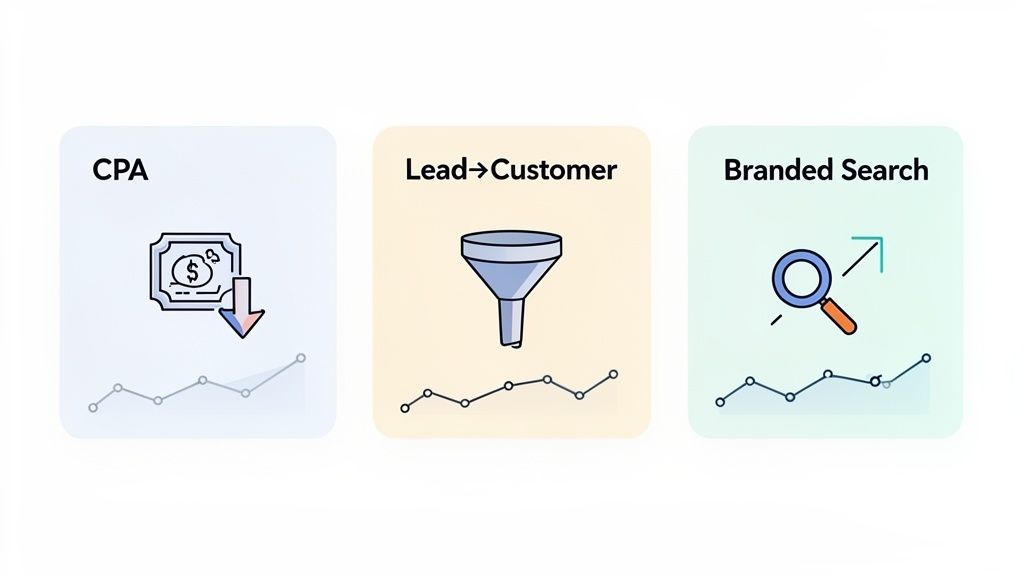
We're talking about measuring success with data that your C-suite actually cares about. Before you can do that, it's worth taking a moment to understand KPI vs. metrics. Think of KPIs as the vital signs of your business—they're directly tied to your most important objectives.
Tying Metrics to Business Goals
A top-tier agency doesn't just hand you a spreadsheet full of numbers. They organize metrics around your strategic goals, so every report tells a story about how marketing is impacting the business. Suddenly, analytics isn't a chore; it's a clear guide for making smarter decisions.
For instance, your KPIs will look very different depending on what you're trying to achieve:
- If you need more leads, you'll zero in on Cost Per Acquisition (CPA). This tells you exactly how much it costs to land a new customer. You'll also obsess over the Lead-to-Customer Rate, which reveals how many of those hard-won leads your sales team is actually converting.
- If you're building brand awareness, you'll watch your Share of Voice to see how your visibility stacks up against competitors. A jump in branded search traffic is another huge win—it means people are starting to look for you by name.
A true marketing partner provides transparent, data-driven reporting that connects every marketing activity to a bottom-line result. Their goal is to prove value, not just activity.
This is the kind of accountability that separates a simple vendor from a genuine strategic partner. To see what this looks like in action, check out our guide on building a data-driven digital marketing agency relationship. When you focus on KPIs tied to revenue and growth, you can be confident your marketing investment is working just as hard as you are.
Got Questions About Full-Service Marketing? We've Got Answers.
Jumping into the world of marketing agencies can feel like a big step, and it's natural to have questions. Here are some straight-up answers to the things we hear most often from business owners who are thinking about bringing on a full-service digital marketing partner.
How Much Does Full-Service Digital Marketing Cost?
This is the big one, and the honest answer is: it depends. The cost really hinges on your specific goals and how many services you need to get there. Most agencies work on a monthly retainer model instead of a one-time project fee, simply because marketing is an ongoing effort, not a one-and-done task.
Factors that will move the needle on price include how many channels you're active on, how aggressive your growth targets are, and how crowded your market is. The key thing to remember is that you're not just buying services; you're investing in results. A cheaper agency that doesn't deliver isn't a bargain—it's just a cost.
Is a Full-Service Agency Right for a Small Business?
Yes, absolutely. In fact, it can be a game-changer. A great full-service partner acts like your own outsourced marketing department, giving you instant access to a whole team of specialists for a fraction of what it would cost to hire them all individually.
Think of it this way: you get a strategist, a content creator, an SEO pro, and a paid ads manager all working on your business for less than the salary of a single senior-level marketing director. It’s about finding a team that can grow with you, right from the start.
What's the Difference Between a Full-Service and a Specialized Agency?
It’s a bit like the difference between your family doctor and a heart surgeon. Both are experts, but they serve different needs.
- A specialized agency is a master of one craft, like SEO or Google Ads. They’re the perfect call when you know exactly what you need fixed and just want the best person for that specific job.
- A full-service agency is more like your family doctor. They see the big picture of your company's digital health. They make sure every moving part—from your social media to your email campaigns—is working together towards the same business goal. This stops different channels from working in silos and makes sure your overall strategy is cohesive and powerful.
At ReachLabs.ai, we don't just manage channels; we build the unified blueprint your brand needs for remarkable growth. See how our integrated team can become your strategic partner by exploring our approach at https://www.reachlabs.ai.