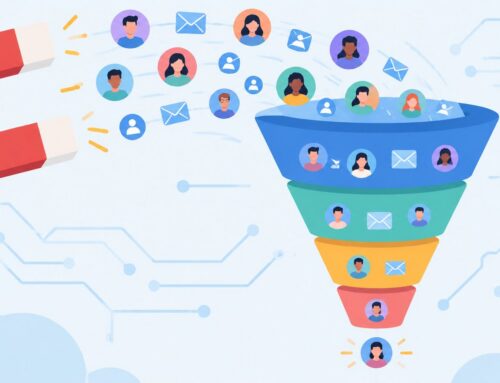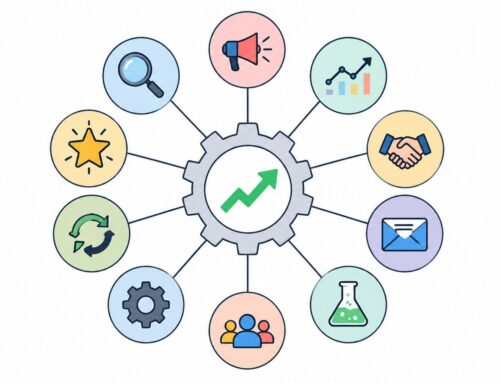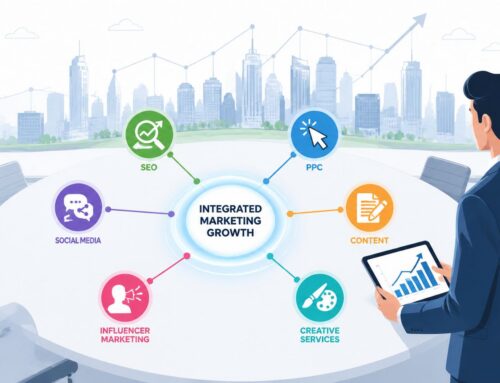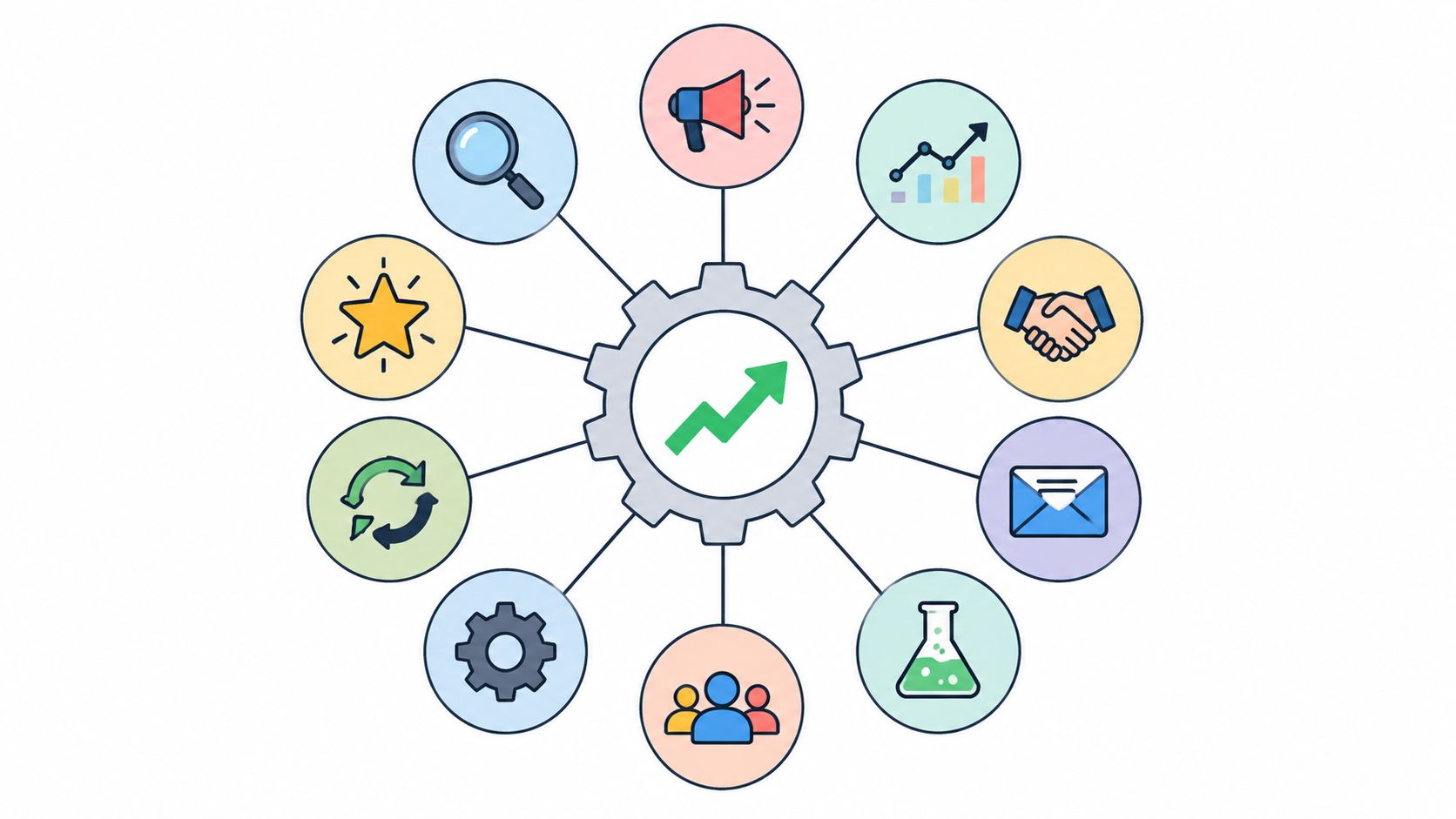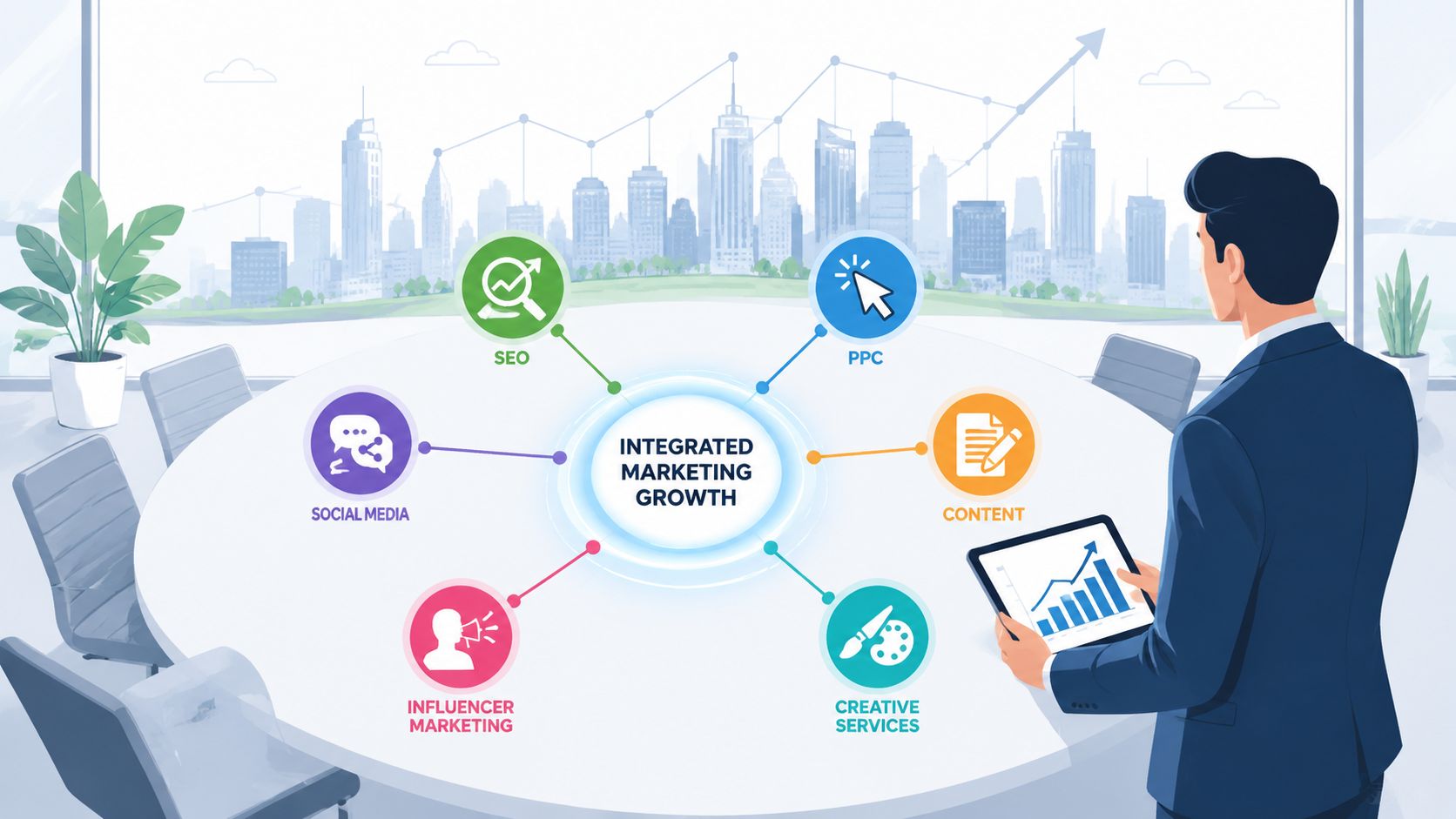
At its most fundamental level, the function of marketing is to find, attract, and keep the right customers—and to do so profitably. It's the whole process of figuring out who needs what you're selling, showing them why you're the best choice, and building a genuine relationship that keeps them coming back.
Marketing Is More Than Just Advertising
It's a common misconception. When people hear "marketing," they immediately think of flashy ads, clever social media campaigns, or catchy commercials. But those are just the tactics, the visible tip of the iceberg. The real work of marketing runs much deeper, woven into the very fabric of a business.
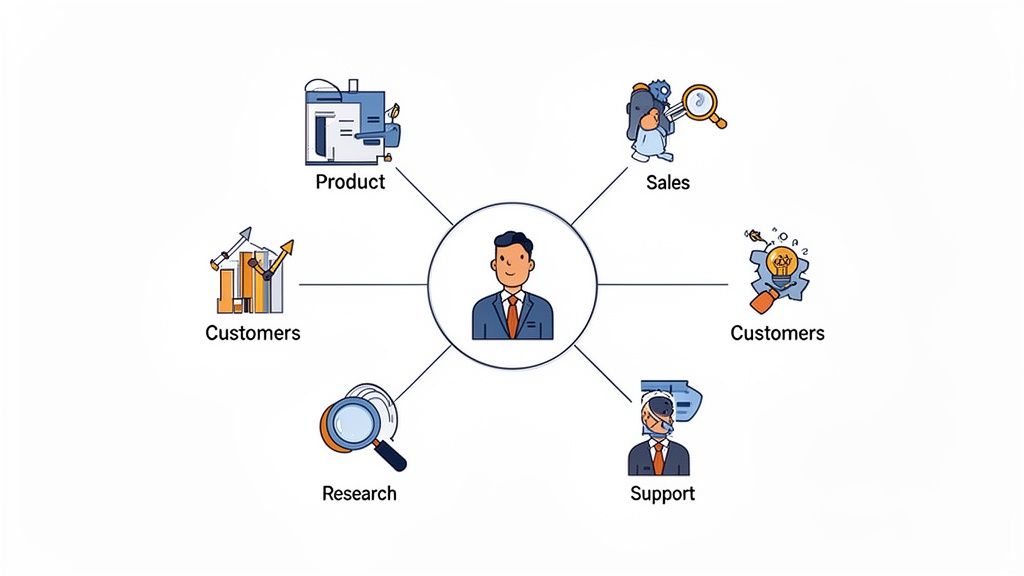
Think of marketing as the central nervous system of your company. It connects every single department—from product development to sales and customer support—with one unifying goal: putting the customer first. It’s the engine that powers real growth by building a bridge between what your company offers and what your customers truly want and need.
The Strategic Role of Marketing
Marketing can't operate in a vacuum; its job is to guide the entire customer journey. This journey starts the moment someone first hears about your brand and continues long after they've become a loyal customer.
To do this well, marketing has to own four key strategic areas:
- Understanding the Market: This is all about deep-dive research. What are your customers' biggest headaches? What are your competitors up to? What shifts are happening in the industry that you need to know about?
- Informing Product Development: Marketing acts as the voice of the customer, feeding crucial insights back to the product team. This ensures you’re building something people will actually be excited to buy, not just something you think they want.
- Creating Demand: Once you have a great product, it’s marketing’s job to get people interested. Through smart messaging and strategic positioning, it generates the buzz and desire that pulls customers in.
- Enabling Sales: A strong marketing function doesn't just hand over a list of names. It provides the sales team with well-qualified leads and the insights they need to have meaningful conversations and close deals more effectively.
Every powerful strategy is built on a solid foundation of research. To get it right, you have to master the essential marketing research stages that set the direction for everything that follows.
The ultimate goal is not just to make a sale, but to create a customer who creates more customers. This shift from a one-time transaction to a long-term relationship is where marketing delivers its greatest value.
By focusing on these core functions, marketing ensures that every part of the business is aligned with the mission of winning and keeping happy, profitable customers.
The Four Core Functions of Marketing at a Glance
To make it even clearer, let's break down these functions into a simple table. This gives you a quick snapshot of what marketing does and why it matters to the business's bottom line.
| Marketing Function | Primary Objective |
|---|---|
| Market Research | To understand customer needs, competitor activities, and market trends. |
| Product Development | To guide the creation of products and services that solve real customer problems. |
| Promotion & Demand | To generate awareness, interest, and desire for the company's offerings. |
| Sales Enablement | To attract qualified leads and support the sales process for conversion. |
Think of these as the four pillars holding up your entire growth strategy. When all four are working in harmony, your business is positioned to not just compete, but to lead its market.
Capturing Attention and Building Awareness
Before you can make a single sale, people need to know you exist. It’s that simple. This is the first and most fundamental job of marketing: cutting through the noise to grab attention and build brand awareness.
This isn't about being the loudest person at the party. It’s about being seen by the right people, in the right places, at exactly the right time.
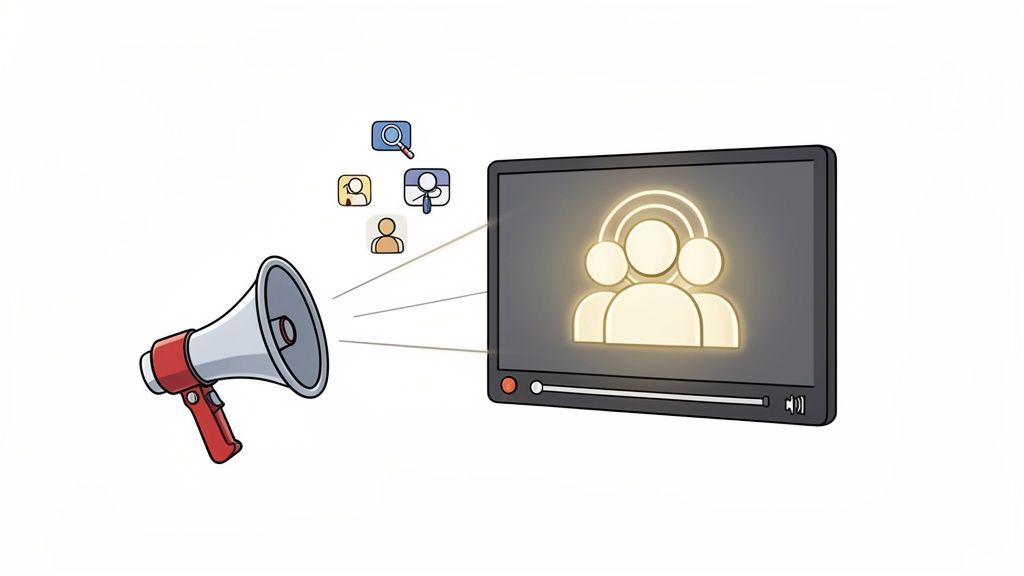
Think of your brand as a lighthouse. You’re not trying to light up the whole ocean. Your goal is to cast a focused, powerful beam to guide specific ships—your ideal customers—to your shore. This initial visibility is the bedrock of the entire customer journey.
Strategies for Building Visibility
Building this kind of awareness isn't about guesswork; it requires a smart mix of tactics designed to meet your audience where they already hang out. It’s about creating value and starting conversations, not just broadcasting your name.
Here are a few of the most effective ways to do it:
- Content Marketing: This is all about creating and sharing genuinely useful articles, videos, and guides that solve your audience's problems. It instantly positions you as a helpful expert, not just another company trying to sell something.
- Search Engine Optimization (SEO): SEO ensures that when someone types a problem into Google that you can solve, your brand shows up. It’s one of the most powerful ways to get in front of people who are actively looking for help.
- Social Media Presence: Being active on the platforms where your ideal customers spend their time allows you to build a real community and show the human side of your brand. The goal here is genuine connection, not constant sales pitches.
The amount of money being poured into these kinds of activities is staggering. In a landmark shift, global ad spending has officially crossed the $1 trillion mark—a figure that doubled in under a decade. This boom is almost entirely driven by the effectiveness and trackable results of digital marketing. You can discover more insights about advertising trends and see what this means for businesses today.
A Real-World Example of Awareness
Remember Dollar Shave Club? Back in 2012, they were a tiny startup trying to take on giants like Gillette. They didn't have a massive ad budget, so they did something different. They made a single, hilarious YouTube video called "Our Blades Are F***ing Great."
The video went viral almost instantly, racking up millions of views and signing up 12,000 new subscribers in just 48 hours. It wasn't just an ad; it was brilliant, entertaining content that nailed the brand's personality and value.
That one video launched them from total obscurity into a household name. It’s the perfect example of how a clever awareness strategy can completely level the playing field, proving that a great idea can be way more powerful than a billion-dollar budget. This first function of marketing truly sets the stage for everything else.
Turning Interest Into Qualified Leads
Okay, so you’ve captured someone’s attention. Great start. But a fleeting glance doesn't pay the bills. The next critical job for marketing is to hold that attention and turn casual curiosity into genuine interest. This is where you move from being just another name they’ve seen to a resource they actually value.
The goal is to gently guide a potential customer from, "Oh yeah, I've heard of them," to, "Hmm, I'm really interested in what they have to say." This isn't about hitting them with a hard sales pitch. It's the opposite. You do this by generously offering real value, demonstrating your expertise, and building a foundation of trust long before you ever ask for the sale.
From Awareness to Engagement
To really nurture that initial spark of interest, you have to stop broadcasting at people and start educating them. Your audience has problems, and they're actively looking for solutions. Your job is to be the one who provides the answers and insights they need. To get this right, it's crucial to understand what is lead generation marketing and how it builds a real, sustainable sales pipeline.
A few tried-and-true tactics for this stage include:
- Insightful Ebooks and Whitepapers: Create in-depth guides that dig deep into a specific pain point your audience is struggling with.
- Helpful Webinars: Host live or on-demand sessions that teach a valuable skill or break down a complex industry trend.
- Compelling Case Studies: Show, don't just tell. Use real-world examples of how you've helped others get results, offering concrete proof that you can deliver.
The core principle here is simple: Give before you get. When you provide high-value content without asking for anything in return, you build incredible credibility and position your brand as the go-to authority.
This educational mindset is the heart of modern marketing. Think about a company like HubSpot—they built their entire empire on this model by offering a massive library of free blogs, templates, and courses. They figured out that if they solved their audience's problems first, they would naturally be the first choice when it was time to buy. You can explore a variety of effective demand generation strategies that are built on this exact principle.
This function is where marketing proves its worth as a relationship-builder. It’s a methodical process of turning a casual observer into a qualified lead—someone who not only understands their problem but also sees your solution as the clear, logical answer. By focusing on education and trust, you create a smooth, natural path that leads them right to the final stages of their journey with you.
Converting Prospects Into Customers
This is where marketing’s rubber meets the road—the point where all your efforts directly hit the bottom line. After you’ve captured someone's attention and nurtured their interest, the next critical job is turning those warmed-up prospects into paying customers. This stage is all about making the decision to buy feel not just easy, but completely irresistible.
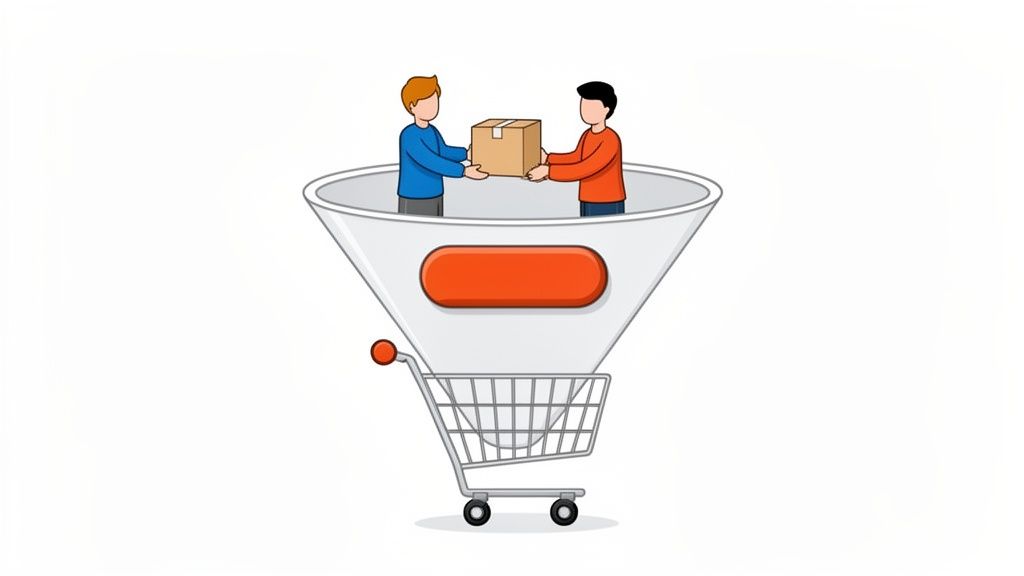
Think of it as the final mile in a marathon. All the hard training and pacing got you here; now it’s time for a strong, decisive finish. Marketing makes this happen with crystal-clear calls-to-action (CTAs), friction-free checkout experiences, and persuasive copy that wipes away any last-minute doubt.
Bridging the Gap Between Marketing and Sales
A huge piece of the conversion puzzle is getting marketing and sales to work in perfect harmony. Marketing shouldn’t just toss a list of names over the fence. Its job is to arm the sales team with qualified, educated leads who are already convinced and ready to act. That kind of teamwork is what turns potential into profit.
Here’s how marketing helps close the deal:
- Crafting Irresistible Offers: This could be a limited-time discount, a free trial, or an exclusive bonus—that final nudge someone needs to commit.
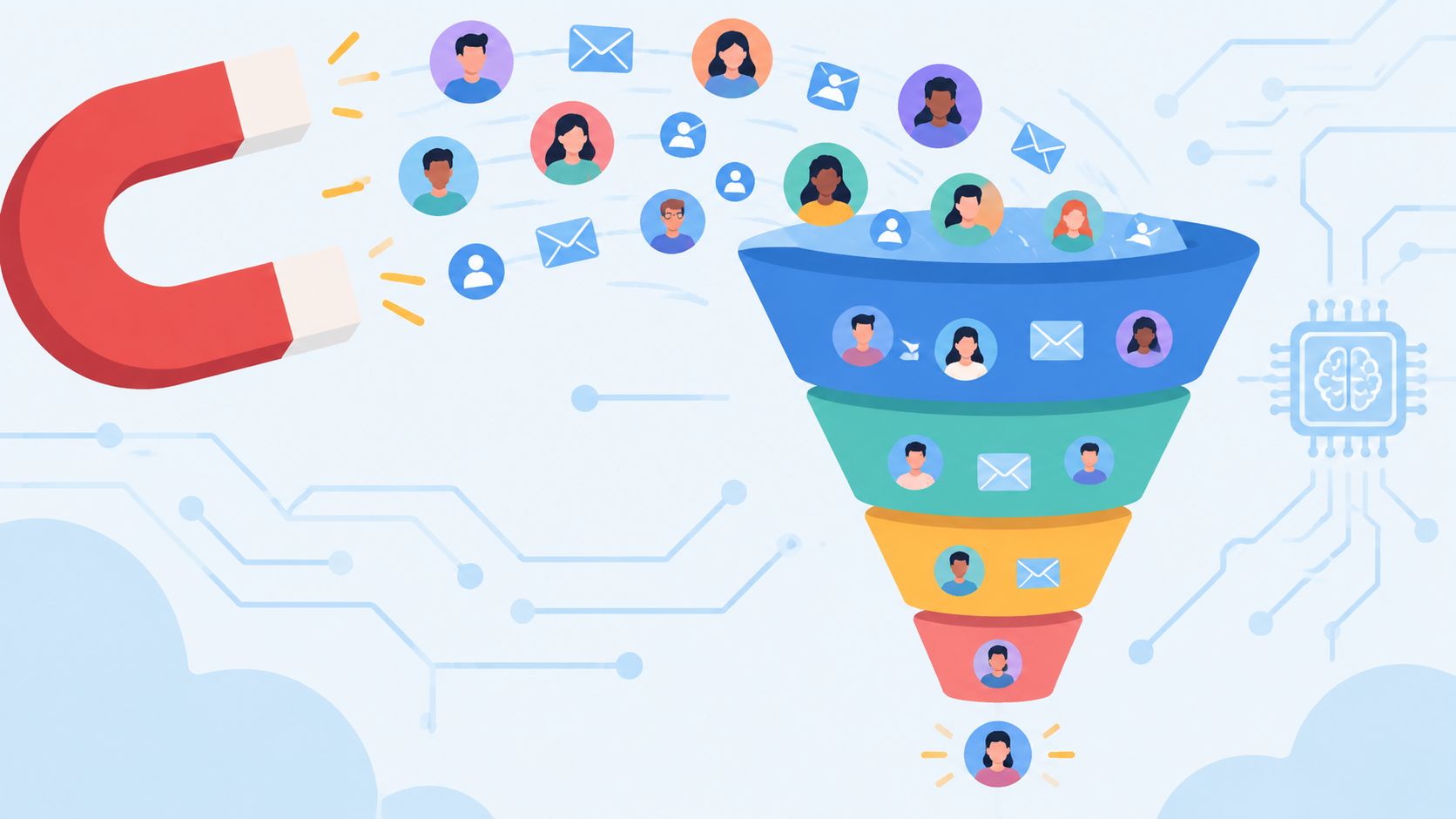
- Optimizing the Purchase Path: Marketing teams obsess over making the buying process seamless. They analyze every step to remove friction, ensuring a smooth ride from the product page to the final "thank you." You can see exactly how this structured journey works in our guide on the conversion funnel.
- Providing Sales Enablement Tools: Marketing creates the powerful case studies, compelling product demos, and detailed data sheets that sales reps use to confidently close deals.
This function has moved way beyond just generating leads; it now gets incredibly close to the final purchase decision. A perfect example of this is the explosive growth of retail media, where brands place hyper-targeted ads directly on retailer websites like Amazon or Walmart.
The goal here is simple: turn a prospect's interest into a measurable action. This is how marketing closes the loop and proves it’s not a cost center, but a powerful engine for revenue.
The rise of retail media networks makes this shift undeniable. This market is projected to skyrocket to over $190 billion by 2026, and some brands are already reporting returns on investment between 200% and 400%. By getting in front of buyers right at the digital shelf, marketing's role in driving immediate sales has become more direct and measurable than ever.
Ultimately, converting prospects is about making the choice to buy from you feel like the most natural, logical, and satisfying decision they could possibly make.
Creating Loyalty and Brand Advocates
The best marketing doesn't stop when the cash register rings. Far from it. The final, and arguably most powerful, function of marketing is all about transforming a one-time buyer into a lifelong fan—someone who actively champions your brand. This is where a simple transaction blossoms into a real relationship.
It's about making your customers feel seen, heard, and genuinely valued, long after their credit card is back in their wallet. Think of it as a shift in mindset: you move from constantly hunting for new leads to nurturing the relationships you've already built. After all, keeping an existing customer is much, much more profitable than acquiring a new one.
The Flywheel of Customer Loyalty
Instead of a traditional funnel with a clear end, picture this process as a self-sustaining flywheel. A happy customer's great experience creates momentum. They don't just come back for more; they start telling their friends, family, and colleagues about you.
This word-of-mouth marketing is pure gold. In fact, an incredible 92% of consumers trust recommendations from people they know above all other forms of advertising. When you create true brand advocates, you're essentially building an unpaid, highly passionate, and incredibly effective marketing team. Your customers become your best marketing channel, creating a growth loop that fuels itself.
Strategies That Build Lasting Relationships
Fostering this kind of deep-seated loyalty isn’t an accident; it requires a deliberate and consistent effort. It's about adding value at every turn, even when you're not actively trying to sell something.
- Smart Follow-Up Communication: Go beyond the generic "thank you for your order" email. Send a follow-up with helpful tips on getting the most out of their purchase. A simple "how are you enjoying it?" email a few weeks later can work wonders.
- Valuable Loyalty Programs: Reward repeat business with exclusive discounts, early access to new products, or a points system that feels genuinely rewarding. Make them feel like a VIP, an insider.
- Active Community Building: Create a space—whether it's a private Facebook group, a Slack channel, or a dedicated forum—where customers can connect with each other and your team. This fosters a powerful sense of belonging.
By focusing on the post-purchase experience, you're not just aiming for retention; you're building a community of advocates who will champion your brand. This dedication is crucial for increasing customer lifetime value and ensuring your business thrives for years to come.
You can dive deeper into these strategies by exploring our guide on increasing customer lifetime value, which outlines practical steps for turning satisfaction into loyalty. This final function closes the loop, proving that great marketing is a continuous cycle of creating and delivering value.
Putting Your Marketing Functions Into Action
Knowing what the functions of marketing are is the first step. The real magic happens when you get them to work together for your business.
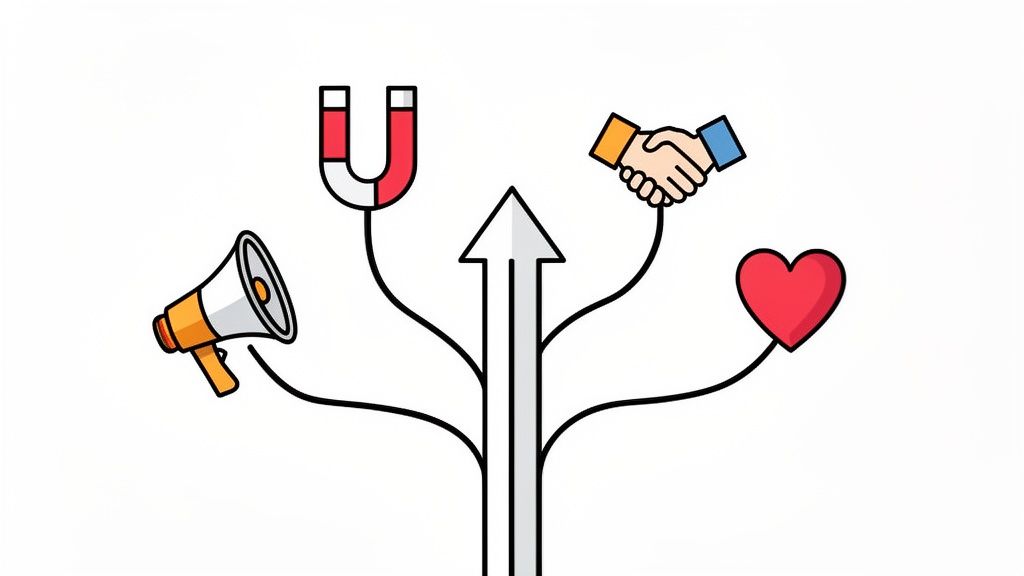
Think of it less like a checklist of separate tasks and more like a set of interconnected gears in a well-oiled machine. When one gear turns, the next one should move with it, creating a smooth, powerful motion that drives your business forward. Your awareness campaigns should pull in the right kind of people for your lead magnets. Those lead magnets, in turn, need to set the stage perfectly for the solution you're selling, making the final conversion feel like the most natural next step.
And it doesn't stop there. The experience a customer has after they buy from you should be so good that it creates new awareness all on its own through glowing reviews and word-of-mouth recommendations.
Auditing Your Marketing Machine
So, where do you start? Take a hard look at your current marketing and find the bottleneck. It's all about identifying the weakest gear in your machine.
For example, are you getting tons of website traffic but almost no one signs up for your email list? That tells you your awareness function is humming along, but your lead generation is stuck. On the flip side, maybe you're great at closing deals, but customers rarely come back for a second purchase. If that's the case, your energy needs to shift toward building loyalty.
Finding that one weak link shows you exactly where to focus your time and money for the biggest return.
This flywheel concept really brings it to life. A fantastic customer experience doesn't just end with a sale; it kickstarts a cycle of repeat business and new referrals.
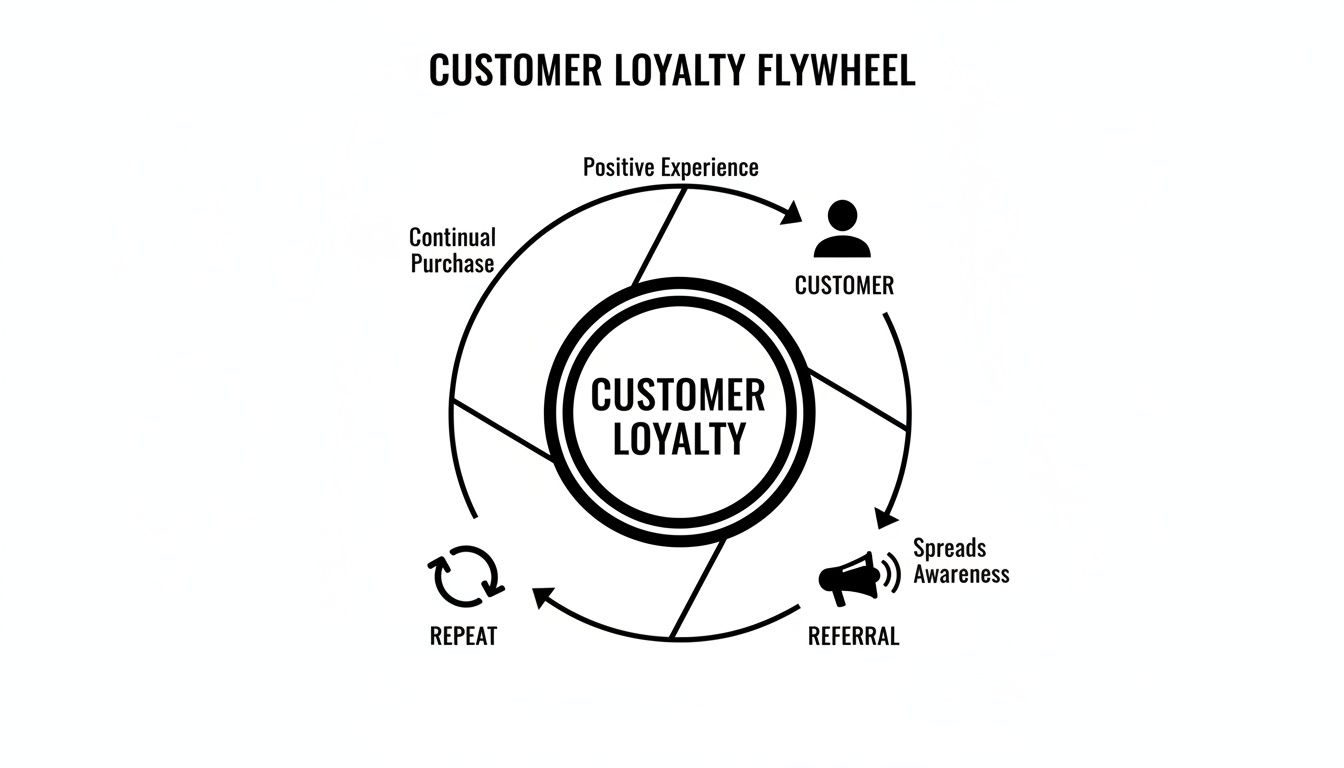
As the diagram shows, that initial great experience is what powers the whole thing. It builds momentum that leads directly to repeat purchases and referrals, which then feeds right back into creating awareness for the next wave of customers.
A successful marketing strategy ensures each function supports the others. Your goal is to create a smooth, predictable system where one stage effortlessly flows into the next, driving sustainable growth for your business.
By pinpointing and strengthening each function one by one, you build a powerful, cohesive system. This is what turns marketing from a cost center into a reliable engine for revenue.
For many businesses, this is where bringing in a team like ReachLabs.ai can make all the difference. We specialize in operationalizing these functions, making sure every piece of your marketing works in harmony to hit your specific business goals.
Common Questions About Marketing Functions
Once you start digging into the core functions of marketing, a few practical questions always pop up. Let's tackle some of the most common ones to help you connect these ideas to your own business strategy.
What Is the Most Important Function of Marketing?
This is a bit of a trick question, because the honest answer is: it depends. The "most important" function changes based on where your business is right now and what you're trying to achieve.
For a brand-new startup, for instance, everything revolves around Awareness. Their main job is to just let people know they exist. But an established company with a solid customer base? They might shift their focus to Loyalty and Advocacy, trying to get more value from the customers they already have.
The key is that all these functions are linked. If you ignore one, the others will suffer. You're aiming for a balanced strategy where every piece works together.
How Does Marketing Differ From Sales?
People often use these terms interchangeably, but they're two very different (though closely related) jobs.
Think of marketing as the person on stage warming up the crowd. They're telling a great story, building excitement, and getting everyone interested and trusting. Their goal is to attract and educate people, creating a pool of qualified leads.
Sales, then, is the person who steps into that warmed-up crowd for one-on-one conversations. They answer specific questions, handle objections, and close the deal. Marketing casts the wide net; sales brings the fish into the boat. The best companies have these two teams talking to each other constantly.
A great marketing function makes the sales team's job infinitely easier—sometimes it even makes it unnecessary. It primes the audience so well that by the time they talk to a salesperson, they're already sold on the value.
How Do I Measure the Success of Marketing Functions?
You can't improve what you don't measure. Each marketing function has its own set of key performance indicators (KPIs) you should be watching.
- Awareness: Keep an eye on website traffic, social media impressions, and how many people are searching for your brand name directly.
- Lead Generation: Track your landing page conversion rates, the number of new email subscribers, and your total count of marketing-qualified leads (MQLs).
- Conversion: This is where the money is. Look at sales revenue, customer acquisition cost (CAC), and shopping cart abandonment rates.
- Loyalty: Monitor customer lifetime value (CLV), churn rate (how many customers you lose), and how often people come back to buy again.
Pulling all this off—and measuring it correctly—takes a coordinated effort. ReachLabs.ai helps businesses build and manage a powerful marketing system that turns strategy into real, measurable results. Learn how our collective approach can drive your growth.