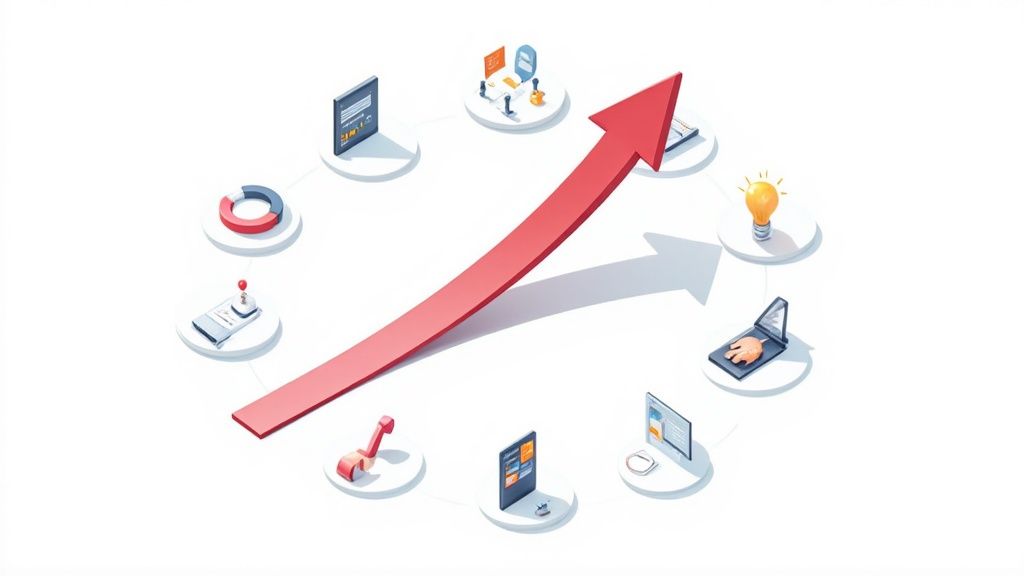
In today's saturated market, simply attracting attention isn't enough. True growth is driven by creating genuine, sustained interest in what you offer. This is the core of demand generation, a holistic approach that builds awareness, establishes credibility, and nurtures relationships long before a prospect is ever ready to buy. It's the strategic engine that separates fleeting trends from lasting revenue.
While traditional lead generation focuses on capturing existing demand, the demand generation strategies outlined here are designed to create it from the ground up. This shift is crucial for building a predictable, scalable pipeline. Instead of just chasing leads, you're building an audience that actively seeks out your solutions because they trust your expertise and understand your value. This proactive methodology ensures your brand is the first one they think of when a need arises.
This guide moves beyond theory and dives directly into execution. We've compiled a definitive list of 10 proven strategies, from Content Marketing and Account-Based Marketing (ABM) to Video Marketing and Referral Programs. Each entry is a comprehensive, actionable playbook.
Inside each section, you will find:
- A clear, step-by-step implementation checklist.
- Key metrics to track for measuring success.
- Real-world examples and use-cases.
- A curated list of tools to get the job done.
Whether you're a startup looking to make your mark or an established enterprise aiming to refine your approach, this guide provides the blueprint to build a powerful demand engine and fuel sustainable growth.
1. Content Marketing
Content marketing is a cornerstone of modern demand generation strategies. It involves creating and distributing valuable, relevant, and consistent content to attract and retain a clearly defined audience. Unlike traditional advertising that interrupts, content marketing provides genuine value upfront, building trust and establishing your brand as a thought leader. By addressing your audience's pain points and answering their questions, you naturally pull them into your ecosystem.
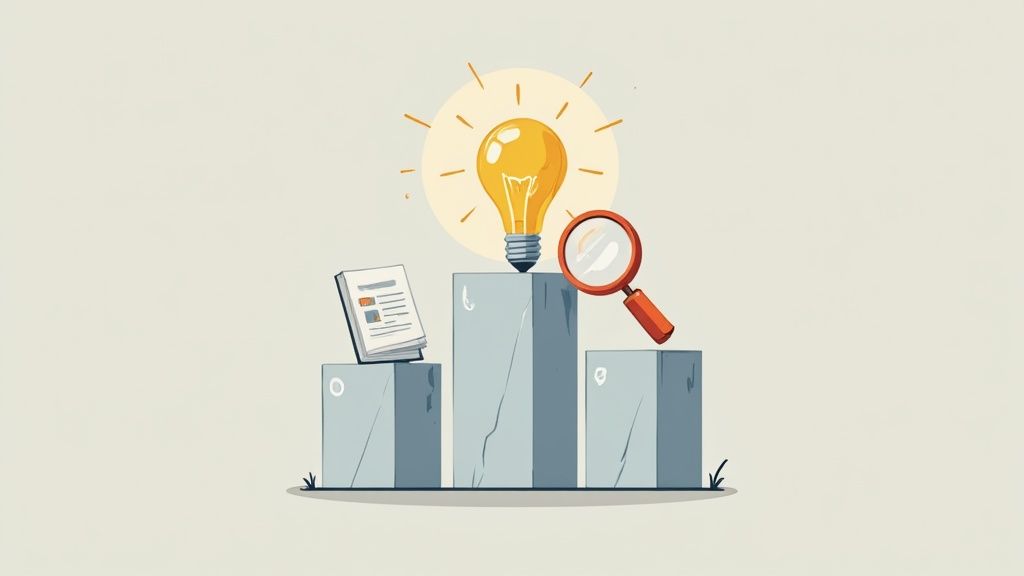
This approach works because it shifts the focus from selling to helping. When a potential customer searches for a solution, your high-quality content is there to guide them, creating a positive brand association long before they are ready to buy. This educational approach nurtures leads through the funnel, warming them up for a sales conversation without aggressive tactics.
Implementation Checklist
- Define Your Audience: Create detailed buyer personas to understand their challenges, goals, and content preferences.
- Conduct Keyword & Topic Research: Identify high-intent keywords and topics your audience is searching for. Focus on solving specific problems.
- Create Pillar Content: Develop comprehensive, in-depth guides or articles on core topics central to your business.
- Produce Supporting Content: Create smaller pieces of content (blog posts, videos, infographics) that link back to your pillar pages.
- Establish a Publishing Cadence: Maintain a consistent schedule to keep your audience engaged and improve your SEO.
- Distribute & Promote: Share your content across multiple channels like social media, email newsletters, and online communities. An effective content plan requires a solid promotional engine; for more details, see these powerful content distribution strategies.
Key Metrics to Track
- Organic Traffic: The number of visitors arriving from search engines.
- Keyword Rankings: Your position in search results for target keywords.
- Engagement Rate: Likes, shares, comments, and time on page.
- Leads Generated: The number of new contacts captured through content-gated forms.
- Conversion Rate: The percentage of visitors who take a desired action.
Best For: B2B and B2C companies with longer sales cycles, businesses aiming to establish industry authority, and brands focused on organic growth. Companies like HubSpot and Moz have built empires on this strategy by providing immense educational value, proving its power as a long-term demand generation engine.
2. Account-Based Marketing (ABM)
Account-Based Marketing (ABM) is a highly focused B2B strategy that flips the traditional marketing funnel on its head. Instead of casting a wide net to capture as many leads as possible, ABM treats individual high-value accounts as markets of one. It involves an integrated effort between marketing and sales teams to create personalized buying experiences for a select group of target companies.
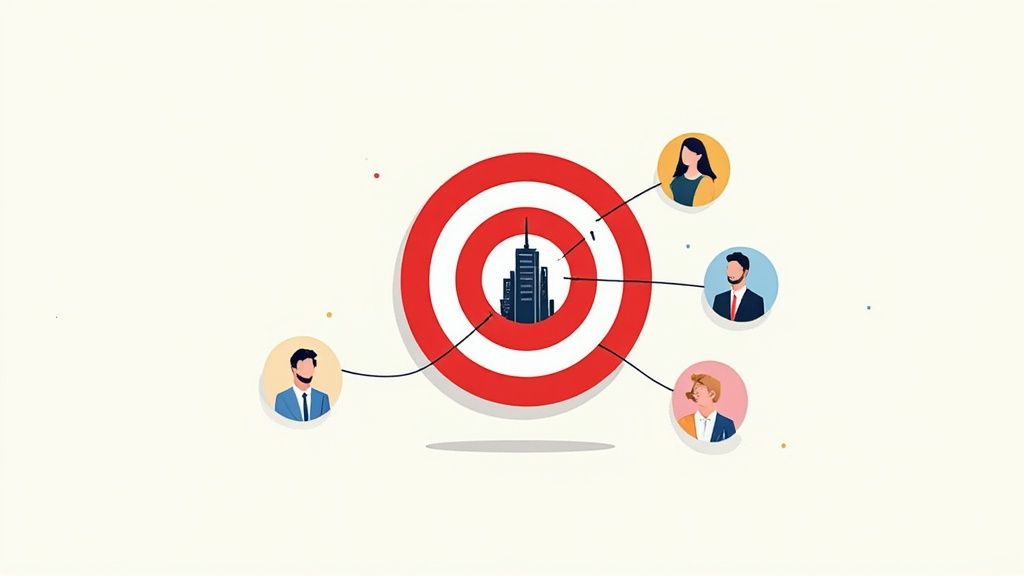
This hyper-targeted approach works because it eliminates wasted resources on prospects who are a poor fit. By focusing all efforts on accounts with the highest revenue potential, ABM delivers a highly relevant and coordinated message to key decision-makers. This tailored engagement builds stronger relationships and significantly increases the likelihood of closing large, complex deals, making it one of the most efficient demand generation strategies for enterprise sales.
Implementation Checklist
- Identify & Select High-Value Accounts: Work with sales to create an Ideal Customer Profile (ICP) and select a small, manageable list of target accounts.
- Research Accounts & Key Contacts: Map out the organizational structure, identify key decision-makers, and uncover their specific pain points and business goals.
- Develop Personalized Content & Messaging: Create account-specific value propositions, tailored content, and personalized outreach campaigns.
- Execute Coordinated Campaigns: Launch multi-channel campaigns across advertising, email, social media, and direct mail, ensuring a consistent message.
- Align Sales Outreach: Equip the sales team with insights and messaging to conduct personalized, timely follow-ups.
- Measure, Analyze, and Optimize: Use closed-loop reporting to track account engagement, pipeline velocity, and revenue impact.
Key Metrics to Track
- Account Engagement: The level of interaction from target accounts (e.g., website visits, content downloads, event attendance).
- Pipeline Velocity: How quickly target accounts move through the sales funnel.
- Deal Size: The average contract value of deals won from target accounts.
- Win Rate: The percentage of opportunities from target accounts that are successfully closed.
- Return on Investment (ROI): The revenue generated from ABM campaigns compared to the cost.
Best For: B2B companies with high-value, complex sales cycles, businesses targeting enterprise-level clients, and organizations looking to deepen relationships with existing strategic accounts. Companies like Terminus and Demandbase not only provide ABM platforms but also use the strategy themselves to land major deals, showcasing its effectiveness.
3. Social Media Marketing
Social media marketing is a powerful demand generation strategy that leverages platforms like LinkedIn, Instagram, and TikTok to build brand awareness, engage with target audiences, and drive traffic. It goes beyond simple posting; it's about creating a community, participating in relevant conversations, and delivering value directly within the platforms where your ideal customers spend their time. This strategy humanizes your brand, making it more relatable and approachable.
This approach works by meeting customers where they are and building relationships over time. Instead of waiting for them to find your website, you proactively engage them with compelling content tailored to each platform’s culture. By combining organic content, community management, and targeted paid advertising, you can capture attention, nurture interest, and guide followers into your marketing funnel in a way that feels natural and non-intrusive.
Implementation Checklist
- Select the Right Platforms: Research where your target audience is most active. A B2B SaaS company might focus on LinkedIn, while a D2C fashion brand would prioritize Instagram and TikTok.
- Develop a Content Strategy: Plan a mix of content types, including educational posts, behind-the-scenes looks, user-generated content, and promotional material.
- Establish a Consistent Brand Voice: Define your brand's personality, whether it's witty and humorous like Wendy's or professional and insightful like Slack.
- Engage with Your Community: Respond to comments, answer messages, and participate in relevant conversations. Authentic interaction is key. To dive deeper, explore these effective social media engagement strategies.
- Utilize Paid Social Ads: Use platform targeting tools to run campaigns that reach specific demographics, interests, and behaviors to drive lead generation.
- Partner with Influencers: Collaborate with creators who have an authentic connection with your target audience to build trust and expand your reach.
Key Metrics to Track
- Reach & Impressions: The total number of unique users who saw your content.
- Engagement Rate: The percentage of your audience that interacts (likes, comments, shares) with your posts.
- Follower Growth: The rate at which you are gaining new followers.
- Click-Through Rate (CTR): The percentage of users who click on a link in your post or ad.
- Conversions from Social: The number of leads or sales generated directly from social media channels.
Best For: B2C brands aiming to build community, B2B companies targeting specific professional demographics, and businesses of all sizes looking to increase brand visibility and generate top-of-funnel interest. Companies like Glossier and Dollar Shave Club have demonstrated how a social-first approach can build a loyal customer base and drive explosive growth.
4. Email Marketing & Nurture Campaigns
Email marketing is a powerful, direct-to-consumer demand generation strategy. It involves sending targeted messages to a list of subscribers to nurture relationships, maintain top-of-mind awareness, and guide prospects through the buyer's journey. By segmenting your audience and delivering personalized content, you can move leads from initial awareness to purchase-ready status in a highly cost-effective manner.
This strategy works because it allows for a direct, one-to-one conversation at scale. Unlike public-facing content, email feels personal and allows you to tailor your messaging based on a user's behavior, interests, and stage in the sales funnel. Automated nurture sequences ensure that no lead is left behind, providing consistent value and gentle nudges toward conversion over time. It's a key part of most demand generation strategies because it excels at converting interest into action.
Implementation Checklist
- Choose an Email Service Provider (ESP): Select a platform like Mailchimp, Klaviyo, or ActiveCampaign that fits your segmentation and automation needs.
- Build a Quality List: Use lead magnets, website pop-ups, and content gates to collect email addresses from interested prospects. Never buy lists.
- Segment Your Audience: Group contacts based on demographics, behavior (e.g., pages visited, content downloaded), and engagement level.
- Map Out Nurture Sequences: Design automated email workflows for different segments, such as a welcome series, a re-engagement campaign, or a trial user onboarding flow.
- Personalize Your Content: Use dynamic content and merge tags to go beyond just using a first name. Tailor offers and information to each segment.
- Write Compelling Copy: Craft subject lines that boost open rates and email body content that provides clear value and a strong call-to-action. You can master this process with effective lead nurturing automation.
Key Metrics to Track
- Open Rate: The percentage of recipients who opened your email.
- Click-Through Rate (CTR): The percentage of recipients who clicked on a link in your email.
- Conversion Rate: The percentage of recipients who completed a desired action (e.g., made a purchase, booked a demo).
- Unsubscribe Rate: The percentage of recipients who opted out of your email list.
- List Growth Rate: The speed at which your email list is expanding.
Best For: B2B and e-commerce businesses of all sizes. It is especially effective for companies with considered purchase cycles that require lead nurturing and for direct-to-consumer brands looking to drive repeat purchases and build loyalty. Companies like Intercom and Klaviyo have built their entire platforms around the power of targeted, behavioral email marketing.
5. Search Engine Marketing (SEM) & Paid Search
Search Engine Marketing (SEM) is a powerful demand generation strategy that combines organic search engine optimization (SEO) with paid search advertising (PPC) to capture high-intent prospects at the exact moment they are looking for a solution. While SEO builds long-term authority, paid search offers immediate visibility, allowing you to place your brand at the top of search results for specific, commercially-focused keywords. This dual approach ensures you are present when purchase intent is highest.
This method works by directly answering a user's query. When someone searches "best CRM software for small business," they are not passively browsing; they are actively seeking a solution. By running a targeted ad for that search term, you meet them in their moment of need, driving highly qualified traffic to a dedicated landing page. This precision makes SEM an incredibly efficient way to generate leads and sales. To further explore the nuances of paid search, you might find a complete guide to PPC advertising (SEM) helpful.
Implementation Checklist
- Define Campaign Goals: Determine if you are aiming for leads, sales, or website traffic to structure your campaigns accordingly.
- Conduct High-Intent Keyword Research: Focus on keywords that signal commercial intent, such as those including "buy," "service," "pricing," or "software."
- Structure Ad Groups: Create tightly themed ad groups with a small set of related keywords to ensure ad copy relevance.
- Write Compelling Ad Copy: Craft ads with a clear value proposition, a strong call-to-action (CTA), and relevant keywords.
- Create Dedicated Landing Pages: Send traffic to specific, optimized landing pages that match the ad's promise, rather than your homepage.
- Set Up Conversion Tracking: Accurately track actions like form submissions or purchases to measure ROI and optimize campaigns effectively.
- Use Negative Keywords: Build a list of negative keywords to prevent your ads from showing for irrelevant searches, saving you money.
Key Metrics to Track
- Click-Through Rate (CTR): The percentage of people who click your ad after seeing it.
- Cost Per Click (CPC): The average amount you pay for each click.
- Conversion Rate: The percentage of clicks that result in a desired action (e.g., a sale or lead).
- Cost Per Acquisition (CPA): The total cost to acquire one new customer.
- Quality Score: A Google metric that rates the quality and relevance of your keywords and ads.
Best For: Businesses of all sizes seeking immediate, high-intent traffic. It is especially effective for e-commerce brands, local service providers, SaaS companies, and any business where customers actively search for solutions online. Platforms like Google Ads have made this one of the most scalable and measurable demand generation strategies available.
6. Webinars & Virtual Events
Webinars and virtual events are highly effective demand generation strategies that allow you to connect with a broad audience in a direct and interactive format. These online events serve as a powerful platform to educate prospects, demonstrate product value, and position your brand as an industry authority. By delivering targeted, high-value content, you can capture detailed registration information and generate a pipeline of qualified, engaged leads.
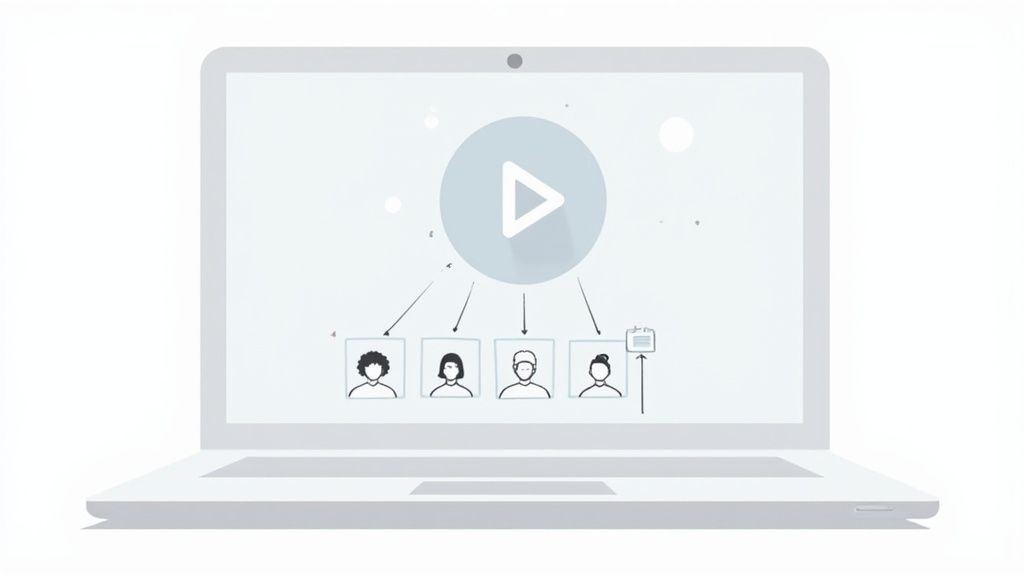
This approach works because it offers a high-value exchange: prospects provide their contact information in return for access to expert knowledge, training, or unique insights. The live, interactive nature of a webinar, complete with Q&A sessions and polls, creates a sense of community and urgency, fostering a deeper connection than static content. Companies like Drift and Salesforce have mastered this by hosting regular sessions that address specific customer pain points, effectively turning educational content into a reliable lead-generation machine.
Implementation Checklist
- Select a Relevant Topic: Choose a subject that directly addresses a significant challenge or question your target audience faces.
- Promote Extensively: Begin promoting your event at least two to three weeks in advance across email, social media, and paid channels.
- Design Engaging Content: Create a visually compelling presentation and keep the core content to around 45 minutes to maintain audience attention.
- Optimize Your Registration Page: Create a landing page with a clear value proposition, speaker details, and a simple form to capture essential lead data.
- Follow Up Promptly: Send a thank you email with a recording of the webinar to all registrants within 24 hours of the event.
- Repurpose Your Content: Turn the webinar recording into blog posts, social media clips, and on-demand content to extend its reach and value.
Key Metrics to Track
- Registration Rate: The percentage of landing page visitors who sign up.
- Attendance Rate: The percentage of registrants who attend the live event.
- Audience Engagement: Metrics like questions asked, poll participation, and average viewing time.
- Leads Generated: The total number of new contacts captured.
- Sales Qualified Leads (SQLs): The number of attendees who become qualified leads for the sales team.
Best For: B2B companies, particularly in SaaS and tech, that need to educate prospects on complex solutions. It's also ideal for brands aiming to build authority and capture high-intent leads for nurturing and sales follow-up.
7. Influencer Marketing & Partnerships
Influencer marketing leverages the credibility of established voices to introduce your brand to new, highly engaged audiences. This strategy taps into the trust that influencers have built with their followers, using their authority to generate awareness and drive interest. Rather than a direct advertisement, it's a powerful form of social proof that feels more like a trusted recommendation.
This approach works because it bypasses traditional advertising skepticism. When a potential customer sees someone they admire and trust using or endorsing your product, the message lands with greater authenticity and impact. It's a way to borrow credibility and quickly build a positive brand association within a specific niche, from B2B thought leaders on LinkedIn to beauty gurus on TikTok.
Implementation Checklist
- Identify Aligned Influencers: Find creators whose audience matches your ideal customer profile and whose values align with your brand.
- Start Small: Begin with micro-influencers (10k-100k followers) who often have higher engagement rates and are more cost-effective.
- Define Clear Goals: Establish specific campaign objectives, whether it's brand awareness, lead generation, or direct sales.
- Provide Creative Freedom: Give influencers the flexibility to create content in their authentic style while adhering to key brand guidelines.
- Build Long-Term Relationships: Focus on creating ongoing partnerships rather than one-off transactional posts for more sustained impact.
- Ensure Compliance: Adhere to all FTC guidelines by clearly disclosing sponsored content.
- Establish Tracking Mechanisms: Use unique promo codes, UTM parameters, and affiliate links to measure performance accurately.
Key Metrics to Track
- Reach & Impressions: The total number of unique users who saw the content and the total number of times it was displayed.
- Engagement Rate: The percentage of the audience that liked, commented, or shared the content.
- Referral Traffic: The volume of traffic driven to your website from the influencer's links.
- Cost Per Acquisition (CPA): The total campaign cost divided by the number of new customers acquired.
- Conversion Rate: The percentage of referral visitors who completed a desired action (e.g., made a purchase, signed up).
Best For: B2C brands in visually driven industries like fashion, beauty, and fitness; B2B companies looking to partner with industry experts and thought leaders; and any business aiming to quickly build trust and reach niche audiences authentically. Brands like Glossier and Daniel Wellington famously scaled their businesses using this powerful demand generation strategy.
8. Marketing Automation & Lead Scoring
Marketing automation is a technology-driven strategy that handles repetitive marketing tasks, nurtures leads at scale, and qualifies prospects based on their behavior and demographic data. It uses software to automate actions like email sends, social media posts, and ad campaigns, ensuring no potential customer falls through the cracks. By adding lead scoring, you can systematically rank prospects based on their perceived value, allowing sales teams to prioritize the most qualified leads.
This approach works because it creates a personalized and timely experience for every lead without manual intervention. By tracking engagement, such as email opens, page visits, and content downloads, you can assign scores that indicate sales readiness. This data-driven process ensures that your sales team spends their time on high-intent prospects, dramatically improving efficiency and conversion rates for your demand generation strategies.
Implementation Checklist
- Define Lead Scoring Criteria: Work with your sales team to establish a point system based on demographics (job title, company size) and behaviors (website visits, form submissions).
- Map the Customer Journey: Outline the key stages a lead moves through and design automated workflows (e.g., welcome series, nurture campaigns) for each stage.
- Choose an Automation Platform: Select a tool that fits your needs and budget, such as HubSpot, Marketo, or ActiveCampaign.
- Implement Behavioral Triggers: Set up automated communications based on specific actions, like sending a follow-up email after a user downloads an ebook.
- Integrate with Your CRM: Ensure seamless data flow between your marketing automation platform and your CRM so sales has a complete view of each lead.
- Test and Optimize: Launch your initial workflows, then regularly review performance data to refine your scoring rules and messaging.
Key Metrics to Track
- Marketing Qualified Leads (MQLs): The number of leads who have met your pre-determined scoring threshold.
- Sales Qualified Leads (SQLs): The number of MQLs that the sales team has accepted as viable prospects.
- MQL to SQL Conversion Rate: The percentage of marketing-qualified leads that become sales-qualified.
- Lead Velocity Rate (LVR): The month-over-month growth in qualified leads.
- Campaign Engagement Rates: Open rates, click-through rates, and conversion rates for automated campaigns.
Best For: B2B companies with complex sales cycles, businesses that need to nurture a high volume of leads, and organizations looking to align marketing and sales efforts. Platforms like Pardot (Salesforce) and Microsoft Dynamics 365 Marketing excel here by creating a unified system for tracking and engaging leads from initial awareness to final purchase.
9. Referral & Advocacy Programs
Referral and advocacy programs are powerful demand generation strategies that transform your happiest customers into an active, motivated marketing channel. This approach incentivizes word-of-mouth marketing, leveraging the trust and credibility of existing relationships to acquire new customers. Instead of casting a wide net, you empower your loyal user base to bring in highly qualified leads who already have a positive impression of your brand.
This strategy works because a recommendation from a trusted friend is the most potent form of marketing. Referred customers typically have a higher lifetime value and lower churn rate because they enter the funnel with pre-built trust and a clearer understanding of the product's value. Companies like Dropbox famously used a two-sided referral program, rewarding both the referrer and the new user with extra storage space, fueling their exponential growth.
Implementation Checklist
- Define Program Goals: Clearly outline what you want to achieve, whether it's new user sign-ups, demo requests, or sales.
- Offer Compelling Incentives: Design a two-sided reward system that benefits both the referrer and the new customer. This can be credits, discounts, exclusive features, or cash.
- Make Sharing Effortless: Provide customers with unique referral links, pre-written social media posts, and one-click email sharing options.
- Promote the Program: Continuously remind your customers about the referral program through email campaigns, in-app notifications, and social media.
- Track & Recognize Advocates: Use a reliable system to track referrals and publicly celebrate your top advocates to encourage more participation.
- Nurture New Leads: Create a dedicated onboarding experience for referred customers to validate the positive experience their friend promised.
Key Metrics to Track
- Referral Rate: The percentage of your customers who refer at least one new customer.
- Invitation Conversion Rate: The percentage of referred leads who become customers.
- Cost Per Acquisition (CPA): The total cost of referral rewards divided by the number of new customers acquired.
- Lifetime Value (LTV) of Referred Customers: Compare the LTV of referred customers to non-referred customers.
Best For: B2C and B2B SaaS companies with a loyal user base, e-commerce brands, and any business where customer trust is a key differentiator. The success of programs from brands like Uber, Tesla, and Slack demonstrates that a well-executed referral system can be one of the most cost-effective and scalable demand generation strategies available.
10. Video Marketing
Video marketing leverages engaging visual content to capture attention, educate prospects, and drive action across various platforms. As a core component of modern demand generation strategies, it excels at conveying complex information in a digestible format. Videos build a deeper, more personal connection with the audience, making your brand more memorable and trustworthy. From short-form social clips to in-depth webinars, video content meets consumers where they are, catering to their preference for dynamic media.
This strategy works because it combines audio and visual elements to create a powerful storytelling medium. It simplifies product demos, brings customer testimonials to life, and makes educational content more engaging than text alone. By humanizing your brand and showcasing value in action, video marketing effectively moves prospects through the awareness, consideration, and decision stages of the buyer's journey, generating qualified demand along the way.
Implementation Checklist
- Define Video Goals: Determine the primary objective for each video: brand awareness, lead generation, or product education.
- Choose Your Format: Select the right format for your goal, such as how-to guides, customer testimonials, product demos, or behind-the-scenes content.
- Script & Storyboard: Outline the narrative, key talking points, and visual flow before you start filming to ensure a cohesive message.
- Optimize for Each Platform: Tailor video length, dimensions, and style for the platform where it will be shared (e.g., vertical for Instagram Reels, horizontal for YouTube). In today's visually-driven landscape, successful demand generation increasingly relies on compelling visual content, such as mastering effective video marketing for social media.
- Include a Clear CTA: Tell viewers exactly what to do next, whether it’s visiting a landing page, downloading a resource, or booking a demo.
- Promote Your Video: Distribute your video across your website, social media channels, email newsletters, and paid ad campaigns to maximize reach.
Key Metrics to Track
- View Count: The total number of times your video has been watched.
- View-Through Rate (VTR): The percentage of viewers who watched the entire video.
- Click-Through Rate (CTR): The percentage of viewers who clicked on your call-to-action.
- Engagement Rate: Likes, comments, shares, and saves.
- Conversion Rate: The percentage of viewers who completed the desired action after watching.
Best For: B2B and B2C companies in visually-driven industries, brands with complex products needing clear explanations, and any business looking to increase engagement and humanize its brand. Companies like Slack use concise demo videos to showcase product value, while Dollar Shave Club built its brand on a viral, personality-driven video ad.
Demand Generation Strategies: 10-Point Comparison
| Strategy | Implementation complexity (🔄) | Resource & cost (⚡) | Expected outcomes & impact (📊⭐) | Ideal use cases (💡) |
|---|---|---|---|---|
| Content Marketing | 🔄🔄 | ⚡⚡ | 📊 Long-term organic traffic, authority; ⭐⭐ | Brand building, thought leadership, top-of-funnel education |
| Account-Based Marketing (ABM) | 🔄🔄🔄 | ⚡⚡⚡ | 📊 High-conversion, larger deal sizes; ⭐⭐⭐ | High-value B2B accounts, enterprise sales |
| Social Media Marketing | 🔄🔄 | ⚡⚡ | 📊 Broad reach and engagement; ⭐⭐ | Consumer brands, community building, real-time campaigns |
| Email Marketing & Nurture Campaigns | 🔄🔄 | ⚡⚡ | 📊 Very high ROI and measurable conversions; ⭐⭐⭐ | Lead nurturing, retention, cross-sell/up-sell programs |
| Search Engine Marketing (SEM) & Paid Search | 🔄🔄🔄 | ⚡⚡⚡ | 📊 Immediate visibility and high-intent conversions; ⭐⭐⭐ | Capture demand, direct-response campaigns, time-sensitive offers |
| Webinars & Virtual Events | 🔄🔄🔄 | ⚡⚡ | 📊 Qualified leads and engagement signals; ⭐⭐ | Complex-product education, mid-funnel qualification, thought leadership |
| Influencer Marketing & Partnerships | 🔄🔄 | ⚡⚡ | 📊 Increased credibility and niche reach; impact varies; ⭐⭐ | Brand awareness, social proof, niche audience activation |
| Marketing Automation & Lead Scoring | 🔄🔄🔄 | ⚡⚡⚡ | 📊 Scales nurturing and improves lead quality; ⭐⭐⭐ | Complex B2B journeys, high-volume lead operations |
| Referral & Advocacy Programs | 🔄🔄 | ⚡⚡ | 📊 High conversion and low CAC; ⭐⭐⭐ | SaaS, consumer products, loyal customer bases |
| Video Marketing | 🔄🔄🔄 | ⚡⚡⚡ | 📊 Strong engagement and conversion uplift; ⭐⭐⭐ | Product demos, storytelling, social and SEO-driven campaigns |
Integrating Your Strategies Into a Cohesive Growth Engine
We have journeyed through ten distinct yet interconnected demand generation strategies, from the foundational power of Content Marketing and SEO to the targeted precision of Account-Based Marketing and the engaging immediacy of Webinars. Each strategy represents a powerful lever for growth, capable of capturing attention, nurturing interest, and ultimately creating a predictable pipeline of qualified leads for your business.
The true takeaway, however, is not to simply pick one strategy and master it in isolation. The most formidable growth engines are built not on a single pillar but on an integrated, multi-channel framework where each component amplifies the others. Think of it as a synergistic ecosystem rather than a checklist of disconnected tactics.
From Silos to Synergy: Building Your Integrated Framework
Your Content Marketing efforts, for instance, are the fuel for nearly every other strategy. The insightful blog posts, comprehensive whitepapers, and compelling case studies you create can be atomized into social media updates, serve as the core of email nurture campaigns, and provide the foundational credibility for your paid search landing pages.
Similarly, a successful webinar doesn't just end when the broadcast is over. The high-intent attendees it generates are prime candidates for a targeted ABM campaign. The recording can be repurposed into video marketing clips for social media, and the key insights can be developed into a follow-up email series, all managed seamlessly through marketing automation. This is the essence of effective demand generation strategies: creating a flywheel where one activity's output becomes another's input.
Key Insight: The goal is not to execute ten different marketing plans. The goal is to execute one cohesive demand generation plan that leverages ten different channels, each playing a specific, strategic role.
Your Actionable Path Forward
Embarking on this journey can feel overwhelming, but progress is made through focused, iterative steps. Don't try to implement all ten strategies at once. Instead, adopt a phased approach to build momentum and ensure sustainability.
- Audit and Align: Start by evaluating your current resources, team expertise, and, most importantly, your ideal customer profile (ICP). Which one or two strategies from this list offer the most direct path to connecting with your target audience? If your audience is highly active on LinkedIn and you sell a high-ticket B2B solution, a combination of ABM and Video Marketing might be your ideal starting point.
- Launch and Learn: Implement your chosen strategies with a clear focus on measurement. Establish your key metrics from the outset, whether it's Marketing Qualified Leads (MQLs), pipeline value, or customer acquisition cost (CAC). Use this initial phase to test, gather data, and understand what resonates with your audience.
- Optimize and Integrate: Once you've gained traction and have a baseline of performance data, begin optimizing. Refine your messaging, A/B test your creative, and improve your targeting. This is also the stage to look for integration points. How can the leads from your paid search campaign be funneled into a specific email nurture sequence? How can your best-performing social content inform your next webinar topic?
- Scale and Expand: As you master your initial set of strategies and they begin operating as a well-oiled machine, you can strategically layer in additional tactics. This systematic expansion allows you to build a resilient, multi-faceted demand generation engine that isn't overly reliant on a single channel, protecting your business from market shifts and algorithm changes.
By following this disciplined approach, you transform a simple list of demand generation strategies into a living, breathing growth engine that powers your entire organization. This strategic integration is what separates fleeting tactical wins from long-term, sustainable business growth.
Ready to move from theory to execution and build a world-class demand generation engine without the trial and error? ReachLabs.ai combines advanced data analytics with expert-led execution to implement and scale these powerful demand generation strategies for you. Discover how our integrated approach can create a predictable revenue pipeline for your business at ReachLabs.ai.