You're probably in one of two places right now. Either your team is posting often enough to feel busy but not often enough to feel confident, or you've gone the other direction and let social drift into a half-managed channel that gets attention only when someone has spare time.
That's the social media problem for most SMBs. The work looks simple from the outside. Post a few updates. Reply to comments. Maybe run some ads. But the actual job is messier. One platform wants short-form video. Another rewards thought leadership. Another works only if you can target tightly and follow up fast. Meanwhile, your business still needs leads, booked calls, hires, referrals, and repeat customers.
The Social Media Puzzle Every Business Faces
A common pattern shows up in small and mid-sized businesses. The owner knows social matters, the marketing lead knows consistency matters, and nobody has enough time to do it well. So the business starts improvising.
A salesperson records a quick video. The office manager posts a holiday graphic. Someone boosts a post because performance looks flat. A month later, the feed looks active, but leadership still asks the same question: what did any of this do for the business?
That frustration is rational. Social media services often get sold as activity. More posts, more platforms, more “awareness.” But businesses don't buy activity. They buy outcomes. If a local law firm, B2B consultancy, clinic, contractor, or SaaS company can't connect social efforts to pipeline, reputation, or retention, the work starts to feel optional.
The problem isn't that social media is too small to matter. It's the opposite. Social media reached 5.79 billion active users worldwide as of April 2026, representing 69.9% of the global population, up from 970 million users in 2010, according to Backlinko's social media users report. The opportunity is massive. The confusion comes from trying to capture that opportunity without a system.
Most businesses don't need to be everywhere. They need to be deliberate where their buyers already pay attention.
That changes the conversation. Instead of asking, “How do we post more?” the better question is, “What combination of social media services helps this business create demand, capture intent, and build trust over time?”
For some companies, that means a disciplined LinkedIn content engine and paid retargeting. For others, it means local content, review response workflows, and short educational videos. The right answer depends on the business model, sales cycle, and how customers make decisions.
Defining Social Media Services Beyond Just Posting
Hiring social media services is a lot like hiring a general contractor for a renovation. You're not paying one person to show up with a hammer. You're hiring a coordinated group of specialists who each handle a different part of the build.

A strong agency setup usually includes a strategist, a content lead, a designer or video editor, a paid media specialist, and someone who owns client communication and execution. When businesses think they're buying “posting,” they often miss how much planning and technical work sits behind results.
What businesses think they're buying
Most owners start with a narrow definition:
- Posting to social channels means writing captions and putting content on Instagram, LinkedIn, Facebook, or TikTok.
- Basic community management means replying to comments and messages.
- Light reporting means sending a monthly screenshot of reach, likes, and follower growth.
That's the visible layer. It's also the easiest part to commoditize, and usually the least valuable on its own.
What they should be buying instead
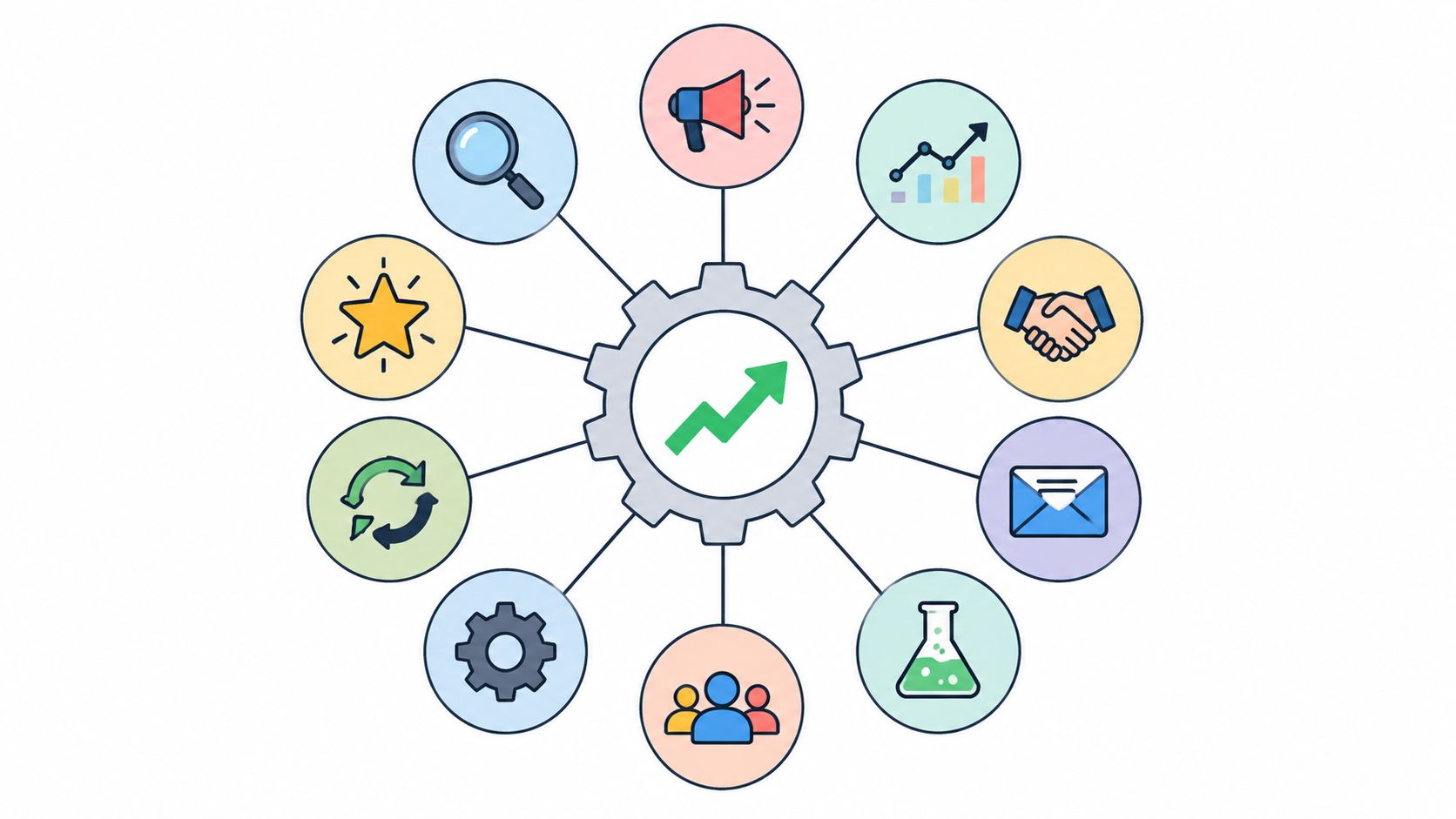
Professional social media services are a managed system. That system usually includes:
- Strategy that ties channels and content to a business objective
- Production that turns ideas into creative assets people will consume
- Distribution across organic and paid channels
- Measurement that tracks whether attention turns into business movement
- Optimization based on what the data shows, not what the team guesses
This is why some low-cost providers feel disappointing. They're selling labor, not a system. They can keep the content calendar full, but they can't tell you why a campaign underperformed or how to fix it.
Practical rule: If a provider can't explain how content, targeting, and reporting connect to revenue or qualified leads, they're offering task execution, not strategy.
That's also why specialist teams usually outperform one-person “do everything” setups in more complex accounts. A business with multiple offers, longer sales cycles, or location-based targeting needs more than a content scheduler. It needs coordinated expertise.
The Core Components of Social Media Service
The easiest way to evaluate social media services is to break them into five operating parts. If one of these parts is missing, results usually become inconsistent fast.

Strategy and planning
This is the piece many businesses skip because it doesn't look productive at first. It is. Strategy decides what the account is trying to accomplish, who it needs to reach, what platforms deserve attention, and how success will be measured.
A real strategy deliverable should include audience definitions, messaging themes, content pillars, posting cadence, campaign priorities, and conversion paths. It should also define what the business won't do. That matters because many social programs fail from overextension, not underinvestment.
Audience quality improves when agencies can unify social platform data with broader marketing data. According to Improvado's analysis of social media data, brands using psychographic and demographic data unification report 15% to 25% higher CTRs due to psychographic-matched content and reduce ad waste by 40% compared with using only native analytics.
Content creation and curation
Content is the build phase. This includes copywriting, graphic design, short-form video, carousels, founder-led thought leadership, customer proof, and repurposing. Good content isn't just polished. It's matched to buyer intent and platform behavior.
A few practical examples:
- Service businesses often need educational posts, FAQs, trust-building client stories, and offer-led calls to action.
- B2B brands tend to benefit from founder or executive content, point-of-view posts, simple explainers, and proof of expertise.
- Local businesses often need location-aware creative, review-driven content, event tie-ins, and quick-turn reactive posts.
If your team is leaning harder into short-form video, this 2026 social media video guide is useful for understanding how different platforms reward different video styles.
Community management and engagement
A surprising amount of value comes after the post goes live. Community management covers comment moderation, direct message routing, response templates, escalation rules, review monitoring, and proactive engagement.
This work directly affects trust. If a prospect asks a buying question in the comments and nobody answers, the post didn't just miss a chance. It sent a signal. The same goes for negative feedback left unanswered or inbound inquiries that sit too long.
Paid social advertising
Paid social takes your strongest messaging and puts it in front of a defined audience on purpose. That includes campaign structure, audience building, creative testing, budget pacing, retargeting, and lead capture.
Paid works best when it doesn't operate in isolation. The best accounts use organic content to learn what messaging earns attention, then move validated angles into paid campaigns. Businesses comparing service structures can see how agencies package this work in offerings like small business social media marketing services.
Analytics and reporting
Reporting should help a business decide what to keep, what to fix, and what to stop. Vanity metrics have a place, but they're not the center of the picture.
A useful report usually answers questions like these:
- What content themes produced qualified conversations
- Which channels assisted pipeline or lead flow
- Where paid spend created efficient results and where it leaked
- What changes should happen next month based on actual performance
If a report is full of charts but thin on decisions, it's not doing its job.
Translating Social Media Activity Into Business Results
Most businesses don't struggle to get activity from social. They struggle to get outcomes. That's why the right way to judge social media services isn't by volume. It's by whether the work moves buyers from attention to action.
The large platforms themselves make the point clearly. Social media isn't a side channel in the digital economy. It's a commercial infrastructure. Statista's overview of social networks notes that Meta generated over $134 billion in annual revenue during 2023, and LinkedIn generated approximately $15 billion in its last financial year. Businesses spend there because buyer attention and monetization both exist there.
What each service area should produce
Not every result shows up as an instant sale. For non-e-commerce SMBs, the path is usually more layered.
- Strategy should tighten focus, reduce wasted effort, and align content with a business goal.
- Content creation should improve recognition, clarify what you do, and give prospects a reason to trust you.
- Community management should increase response quality, reduce friction, and surface buying signals faster.
- Paid social should create a more predictable lead flow when offer, audience, and follow-up are aligned.
- Analytics should tell you which actions are creating momentum and which are just creating noise.
A professional services firm may use social to warm up leads before a sales call. A local home services company may use it to stay visible in-market so referrals convert faster. A founder-led B2B company may use it to build authority that shortens the sales conversation before outreach even starts.
Stop measuring the wrong things
Likes and follower counts aren't useless. They're just incomplete. They tell you that something happened on-platform. They don't tell you whether someone booked a consult, requested a proposal, or recognized your brand when a salesperson reached out later.
For founders who want a practical framework for that shift, this guide for founders on social media ROI is a good companion read.
A stronger social measurement setup usually tracks:
- Lead indicators such as comments with buying intent, direct messages, profile visits, and landing page clicks
- Mid-funnel signals such as form fills, booked calls, webinar signups, or demo requests
- Business outcomes such as influenced pipeline, sales conversations started, repeat business, or referral lift
The reporting discipline matters as much as the creative discipline. Businesses that want a more structured way to think through this can use a framework for measuring social media ROI.
A quick explainer can help clarify how these moving parts connect in practice.
Decoding Pricing Models and Service Packages
Pricing gets confusing because agencies often bundle very different scopes under the same phrase. One firm's “social media management” may mean caption writing and scheduling. Another may include strategy, creative, paid media, reporting, and active community management.
That's why the better question isn't “What does social media cost?” It's “What operating capacity am I buying?”
The three common pricing models
Monthly retainers are the most common for ongoing social media services. They work well when the business needs steady production, recurring optimization, and regular communication. The upside is continuity. The downside is that a vague retainer can hide thin deliverables.
Project-based fees fit one-off needs such as a channel launch, a content sprint, a campaign buildout, or a brand refresh for social. They can be useful if your internal team can maintain the work after setup. They're less useful if the business needs daily or weekly management.
Performance-based or hybrid models usually blend a base fee with incentives tied to agreed outcomes. These can be attractive, but they need tight definitions. Otherwise both sides end up arguing over attribution, lead quality, or factors outside the agency's control.
If the pricing model is easy to understand but the scope is fuzzy, you still don't know what you're buying.
What changes price in the real world
The main cost drivers are usually scope and complexity, not just post volume.
A few of the variables that push pricing up or down:
- Channel count adds workflow, creative adaptation, approvals, and reporting complexity.
- Creative depth changes everything. Simple static posts cost less to produce than recurring video, motion graphics, and founder-led content.
- Paid media involvement adds targeting, testing, budget management, and conversion tracking work.
- Response expectations matter. Daily community management is a very different service than checking notifications twice a week.
- Internal readiness affects effort. Businesses with clear positioning and fast approvals are cheaper to support than businesses still figuring out offer, voice, and process.
Sample Social Media Service Packages
| Feature | Foundation Package (~$1,500/mo) | Growth Package (~$4,000/mo) | Scale Package (~$8,000+/mo) |
|---|---|---|---|
| Strategy | Basic channel focus and monthly direction | Defined content pillars, campaign planning, audience refinement | Multi-channel strategy, testing roadmap, deeper segmentation |
| Content creation | Lightweight post production, simple graphics, caption writing | Mixed asset production including stronger creative variety | High-output creative system with ongoing campaign assets and video support |
| Posting and scheduling | Managed publishing on a limited number of channels | More frequent publishing across core channels | Full publishing workflow across multiple channels and campaign calendars |
| Community management | Basic comment and message monitoring | Active engagement and routing of inbound opportunities | Structured engagement workflow with faster response coverage and escalation rules |
| Paid social | Usually not included or limited support | Campaign management for a focused offer or audience | Full-funnel paid social management with testing and retargeting |
| Reporting | Basic monthly report | Performance reporting with recommendations | Decision-focused reporting tied to lead and revenue signals |
| Best fit | Businesses that need consistency first | SMBs ready to connect content to lead generation | Teams treating social as a serious acquisition and brand channel |
These ranges are examples, not market laws. Some agencies charge more for less. Some boutiques charge less but expect the client to provide assets, approvals, and strategic direction.
The smartest way to compare proposals is to map each one against the five core components. If a package looks cheap because it excludes strategy, creative, and reporting, it isn't cheap. It's incomplete.
How to Choose the Right Agency for Your Business
A polished pitch deck doesn't tell you much. The right agency for social media services is the one that can explain how it makes decisions, how it measures results, and how it handles trade-offs when performance dips.

This matters even more for non-e-commerce businesses, where attribution is usually less obvious. The gap is real. A recent source discussing SMB ROI challenges notes that 64% of marketers are cutting organic budgets due to unproven ROI, while agencies using hybrid organic-paid funnels have achieved 3x to 5x ROI, and only 22% of small businesses use advanced analytics, according to the referenced YouTube discussion on social media ROI gaps for SMBs.
Questions worth asking before you sign
Don't ask an agency whether they “do social.” Ask how they operate.
- How do you define success for a business like ours? Listen for lead quality, sales support, brand authority, response time, and retention signals. Be cautious if the answer stays stuck on reach and engagement.
- What does your reporting include? Ask to see a redacted sample. You want decisions, not screenshots.
- Who will touch the account? A strategist, copywriter, designer, media buyer, and account lead is a healthier setup than one person doing everything.
- How do you handle content approvals and feedback? Slow approvals kill momentum. A good agency has a clear workflow.
- What happens when results are flat? Strong partners talk about testing, diagnosis, audience shifts, creative fatigue, and offer refinement.
What to watch for in the sales process
The sales process often reveals the delivery quality.
Good signs include:
- They ask hard questions about sales cycle, offer quality, margins, and customer journey.
- They discuss trade-offs instead of promising every channel at once.
- They care about tracking and ask how leads are recorded after the click.
- They show process maturity through clear workflows and tools. If you want to understand the operational side better, this breakdown of how to compare agency social media management software is helpful.
Weak signs are easier to spot than most buyers think. Guaranteed viral claims, no interest in CRM or attribution, and no defined account structure usually point to shallow execution.
A social agency should be able to tell you what it won't recommend for your business. Restraint is often a sign of expertise.
If you want a more structured decision checklist, this guide on how to choose a digital marketing agency gives a useful framework for vetting fit, process, and accountability.
Your Action Plan for Getting Started
You don't need a full rebrand or a giant agency search to make progress. Start with a tighter decision process.
Step one, audit what already exists
Look at your current social presence like a buyer would. Are your profiles clear about what you do? Does recent content show proof, expertise, and relevance? Are direct messages, comments, and inquiries being handled consistently?
Write down what is happening, not what you intended to happen.
Step two, pick one business goal for the next quarter
Choose a single priority. More qualified leads. Better local visibility. Stronger founder authority. More booked calls. Cleaner recruiting pipeline. One goal creates focus. Five goals create content chaos.
Then make sure every social activity can be tied back to that priority in some way.
Step three, talk to one or two serious partners
Use the agency questions above and compare answers carefully. Ask each provider how they would structure strategy, content, paid support, and reporting for your business specifically. If the proposal sounds generic, it probably is.
The businesses that get value from social media services usually don't win by posting more. They win by narrowing scope, improving execution, and measuring what matters. That's a much better investment than chasing activity for its own sake.
If your team needs a structured partner for strategy, content, paid campaigns, and measurement, ReachLabs.ai is one option to evaluate alongside other agencies. The useful next step is simple: define your main goal, compare scopes carefully, and choose the partner that can connect social work to real business outcomes.