Think of a search engine marketing (SEM) firm as your brand's personal billboard placement specialist for the internet. They use paid advertising on platforms like Google and Bing to place your business right where customers are looking, capturing their attention at the exact moment they’re searching for a solution you provide. It’s all about getting immediate visibility on the search engine results pages (SERPs) to drive traffic and generate leads, starting from day one.
What Is a Search Engine Marketing Firm
Let’s stick with that billboard idea. You could just buy ad space anywhere, but an SEM firm is the expert who knows which highway has the most traffic (search volume), what time of day your ideal customers are driving by (user behavior), and what message will make them pull over (ad copy). They manage every aspect of your paid advertising campaigns to guarantee your brand shows up at the top of the list when people are ready to buy.
To really get it, you first need to understand the basics of paid search marketing. This isn't the slow, organic growth of building a reputation over time (that's SEO). SEM is a focused, strategic play for instant results.
The Driving Force Behind SEM
Businesses are catching on to the power of this direct-to-consumer approach. The global Search Engine Marketing market is booming, expected to jump from $50.7 billion in 2021 to a staggering $70.7 billion by 2025. This explosion is happening because companies see that paid search provides a direct, measurable line to highly motivated buyers.
At its core, an SEM firm is laser-focused on maximizing your return on ad spend. They accomplish this by excelling in three key areas:
- Speed: Getting your brand seen by potential customers almost instantly.
- Precision: Targeting users with incredible detail, down to the specific keywords they type, their location, and online habits.
- Results: Delivering tangible outcomes you can track, like leads, sales, and qualified website traffic.
An SEM firm doesn’t just buy ads. They engineer a complete, data-backed strategy designed to capture high-intent traffic and turn simple search queries into real business growth.
While powerful on its own, SEM becomes even more effective when it works hand-in-hand with a solid organic strategy. You can learn more about how these two disciplines create a dominant search presence by exploring our integrated https://www.reachlabs.ai/seo-sem-services/.
The Core Services of an SEM Firm
When you hire a search engine marketing firm, you’re not just paying someone to "run ads." You're bringing in a team of specialists to manage a complex, interconnected system designed to capture active buyer intent and turn it into real business growth.
Think of it less like putting up a single billboard and more like building a high-speed pipeline. A good SEM firm connects all the moving parts, ensuring each one works in concert to put your brand in front of the right people at the exact moment they’re ready to buy.
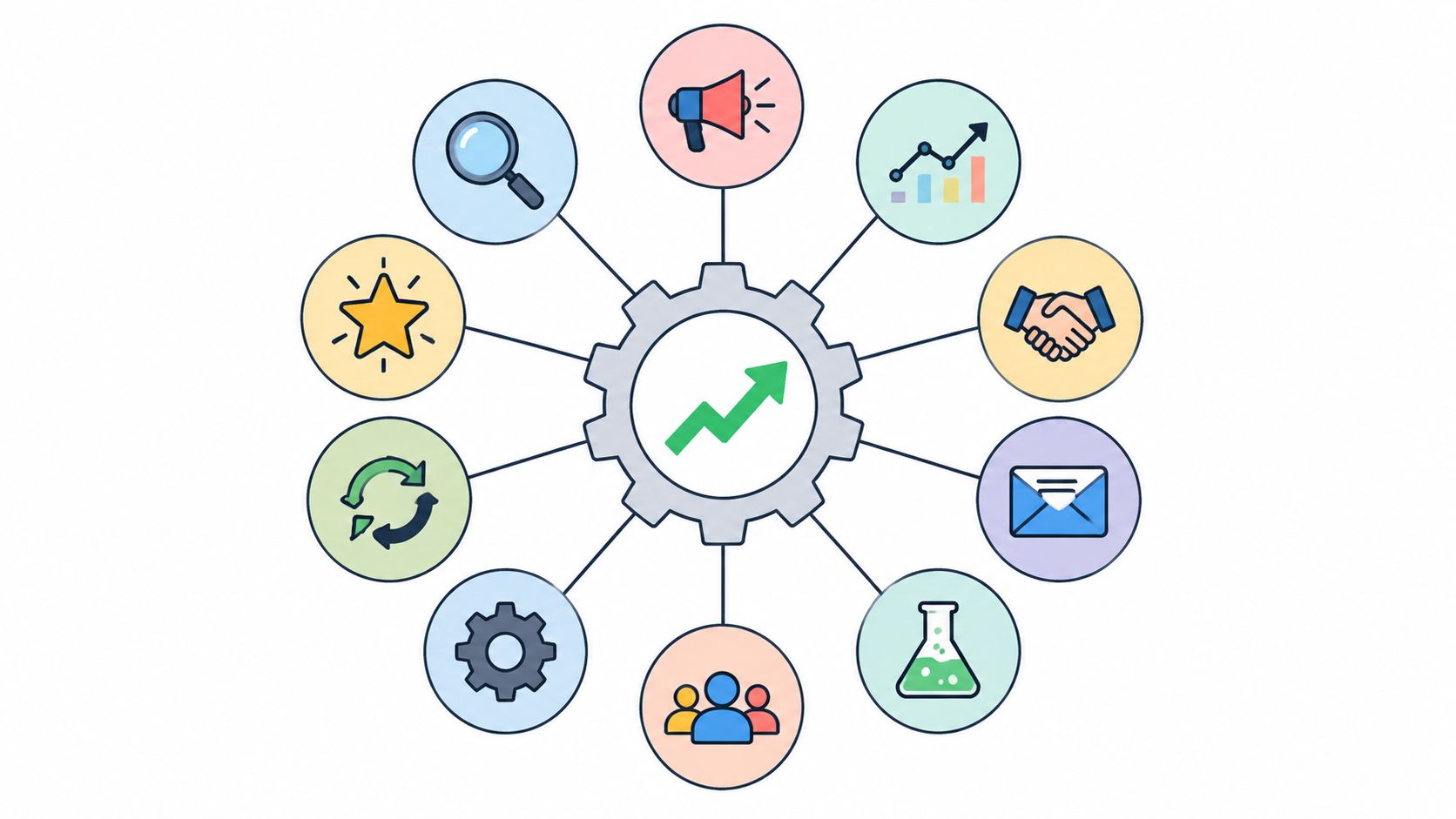
This diagram breaks down how it all works. The SEM firm acts as the central engine, using paid ads to generate immediate traffic and deliver qualified leads directly to your business.

Simply put, a specialized firm turns your investment in paid advertising into a predictable and scalable way to get more customers.
Paid Search and PPC Management
The foundation of any SEM strategy is paid search, which you’ll often hear called pay-per-click (PPC) advertising. This is all about bidding on specific keywords so your ads appear at the top of the search engine results. When someone types "emergency plumber near me" into Google, PPC is what gets your business that top spot.
An SEM firm manages this entire ecosystem. They start with deep keyword research to find the terms that signal real buying intent, then write compelling ads that people actually want to click. From there, professional PPC ad management services involve constant testing and tweaking to make sure every dollar you spend is pulling its weight. This relentless focus on ROI is what makes the difference between a profitable campaign and a money pit.
E-commerce and Shopping Campaigns
For anyone selling products online, visual Shopping Ads are a game-changer. An SEM firm creates and manages these product-centric campaigns, which show up in search results with an image, price, and your store name. They’re incredibly effective because they meet shoppers right when their intent to buy is highest.
Imagine a customer searching for "red running shoes." Seeing a crisp image of the exact pair they had in mind is far more persuasive than a plain text link. The firm handles the entire backend process—from building out your product feed to optimizing bids—to turn those window shoppers into paying customers.
Remarketing and Retargeting Strategies
What happens to the 98% of visitors who check out your site but leave without buying anything? That's where remarketing comes in. A search engine marketing firm uses this strategy to show targeted ads to people who have already visited your website, looked at specific products, or even left items in their cart.
It’s the digital version of a friendly follow-up. By re-engaging people who have already shown interest, you stay on their radar and give them an easy path back to becoming a customer.
This is a massive opportunity. Search advertising is the single largest digital ad category, projected to hit $362.3 billion globally by 2026. With Google being the go-to for 98% of PPC professionals and 68% of all online experiences starting on a search engine, a focused SEM strategy is more critical than ever.
When Should You Hire an SEM Firm?
Knowing when to bring in an expert is just as crucial as knowing what they do. Hiring a search engine marketing firm isn't just about throwing money at ads; it's a strategic move you make when your business hits a specific inflection point.
So, when does it make sense to call in the pros? If you find yourself nodding along to any of these scenarios, it’s probably time.

You Need Results Immediately
Organic growth from SEO is a fantastic long-term play, but it's a slow burn. If you're launching a new product, pushing into a new market, or just desperately need to get the phone ringing now, you don’t have six months to wait for your site to climb the rankings.
This is where an SEM firm delivers pure speed. Think of a startup with a brand-new SaaS product. They can’t afford to wait to build up their domain authority; they need demos and sign-ups today. A targeted paid search campaign puts them right in front of those crucial early adopters from day one.
Your Market Is a Shark Tank
Are your competitors plastered all over the first page of Google? In a crowded industry, trying to outrank established players with SEO alone can feel like pushing a boulder uphill. It’s a long, tough fight.
An SEM firm helps you bypass the line. They can strategically place your ads right alongside—or even above—your biggest rivals. It’s a direct and powerful way to steal a share of that high-intent traffic that would otherwise go straight to the competition, letting you compete for customers who are ready to buy.
When you can’t outrank them, you can outbid them. A smart SEM firm knows how to win those valuable ad spots without a blank check. It’s about sharp bidding strategies and compelling ad quality, not just who has the deepest pockets.
Your Team Lacks the Specialized Skills
Let’s be honest: running a truly successful paid search campaign is a full-time job that demands a very specific skill set. We're talking constant keyword research, obsessive bid management, creative ad copywriting, rigorous A/B testing, and deep data analysis.
If your in-house team is already stretched thin or just doesn't live and breathe this stuff, you’re almost certainly leaving money on the table. Debating the merits of in-house vs agency marketing often comes down to this: bringing in specialists ensures your ad budget is working as hard as it possibly can to get you the best return.
How to Choose the Right SEM Partner
Picking a search engine marketing firm is one of those make-or-break decisions. The right partner can become a powerful engine for customer acquisition. The wrong one can drain your budget fast, leaving you with little to show for it. To get past the flashy sales pitches, you need to know what to look for and what questions to ask.
Think of it this way: you’re not just hiring a vendor; you’re looking for a strategic partner who becomes an extension of your own team. They should be as obsessed with your business goals as you are. That means finding a firm built on transparency, with a proven history of success and a real, genuine interest in your industry.
Evaluate Their Track Record and Industry Fit
First things first, you need to see proof. Any agency worth its salt will be happy to show you case studies and share success stories. But don't just settle for glossy testimonials. Ask for examples of their work with companies that look like yours—similar in size, industry, and overall goals.
If you’re an e-commerce brand, you need a team that lives and breathes ROAS optimization and Google Shopping campaigns. If you run a local service business, their expertise should be in generating qualified leads through hyper-local keywords and call-only ads.
Vague promises are a massive red flag. If a potential partner keeps talking about “increasing traffic” without connecting it to concrete business outcomes like leads or sales, you should be wary. The best firms focus on the metrics that actually matter to your bottom line.
It's also crucial to find out who, specifically, will be managing your account day-to-day. It’s a classic bait-and-switch for a senior partner to handle the sales process, only to hand your account off to a junior manager. Insist on speaking with the person who will actually be in the trenches, managing your ad spend.
Assess Their Strategic Approach and Transparency
A one-size-fits-all strategy is another sign of trouble. A truly great SEM firm will start by asking you questions—and lots of them. They’ll want to dig into your customer lifetime value, your profit margins, and your sales cycle before they even begin to talk about building a strategy.
When you're vetting potential partners, it helps to have a list of core questions ready. These will help you cut through the noise and gauge their expertise, transparency, and overall fit for your business.
Vendor Evaluation Checklist Key Questions
| Category | Question to Ask |
|---|---|
| Strategy | "Based on our business goals, what would your initial 90-day plan look like?" |
| Team | "Who will be my main point of contact, and what is their direct experience?" |
| Reporting | "Can you show me a sample report and explain how you measure success?" |
| Transparency | "Will we have full ownership and access to our ad accounts and data?" |
Clear, honest communication is the bedrock of a good partnership. The firm should provide regular reports that are easy to understand and directly connect campaign performance to your business results. You should never be left wondering where your money is going or what it’s actually achieving. To see what sets the best apart, it's worth learning what makes top-tier pay-per-click experts so effective.
Red Flags to Watch For
Finally, trust your gut. If a promise sounds too good to be true, it probably is. Keep an eye out for these common red flags and be ready to walk away if you spot them.
- Guaranteed #1 rankings or specific results. PPC is a live auction environment. No one can honestly guarantee a specific outcome.
- Vagueness about their strategy. If they can't clearly explain their process and methodology, they might not have a solid one.
- A lack of transparency in reporting. You should always have 100% access and ownership of your own ad account and its data. Period.
- A "set it and forget it" attitude. Effective SEM requires constant monitoring, testing, and optimization. It’s anything but passive.
Choosing the right partner is about finding a true ally who is invested in your growth. By asking smart questions and knowing what to look for, you can turn a nerve-wracking decision into a confident choice that will pay dividends for years to come.
Measuring Success with Your SEM Firm
So, you've signed the contract with your new search engine marketing firm. Now what? The real partnership begins, and it's all about tracking progress to make sure your investment is actually making you money.
It’s easy to get distracted by flashy numbers like total impressions or a high click count. But those are often vanity metrics—they look good on a chart but don't pay the bills. True success is measured with a handful of key performance indicators (KPIs) that connect every dollar you spend directly to your bottom line. Getting comfortable with these numbers is the key to having productive, data-driven conversations with your SEM partner and holding them accountable for results.

Key Metrics That Drive Business Growth
Let's cut through the noise and focus on the numbers that should be front and center in every report and strategy meeting. These are the metrics that show you whether the campaigns are truly working.
Return on Ad Spend (ROAS): This is the big one—the ultimate measure of profitability. It answers the simple question: "For every dollar we put in, how many dollars did we get back?" A 4:1 ROAS, meaning you earn $4 in revenue for every $1 of ad spend, is widely considered a strong benchmark.
Cost Per Acquisition (CPA): Think of this as your "cost to get a customer." It tells you exactly how much you had to spend to generate one new sale or lead. If your average customer is worth $1,000 over their lifetime, a $100 CPA is a fantastic investment. Knowing this number helps your firm make smart, profitable decisions about where to put your budget.
Conversion Rate: This is the percentage of people who click your ad and then do what you want them to do—buy a product, fill out a form, or call you. A healthy conversion rate is a sign that everything is clicking: your ad is resonating with the right people, and your landing page is sealing the deal.
These are your core financial metrics. They give you a crystal-clear picture of whether your SEM efforts are an expense or an investment.
Indicators of Campaign Health
Beyond the money metrics, a couple of other KPIs act as the pulse of your campaigns. A great SEM firm is obsessed with these because they directly impact how much you pay and how often you show up.
Click-Through Rate (CTR) isn't just about traffic. A high CTR is a powerful signal to Google that your ad is relevant and helpful to searchers. Google rewards this relevance with lower ad costs and better ad placements.
Finally, there’s Quality Score. This is Google's behind-the-scenes rating of your ads, keywords, and landing pages. It has a massive, direct impact on your campaigns. A high Quality Score means you pay less for each click and can earn a better ad position. Any skilled SEM expert will be constantly working to improve this score by testing ad copy, optimizing your landing pages, and honing your keyword strategy.
Common Questions About SEM Firms
Before you sign on the dotted line with an SEM firm, you’re bound to have some practical questions. It’s smart to get a handle on the details around cost, timing, and whether it’s even the right fit for your company. Getting these answers upfront helps you set clear expectations and make a much better decision.
So, let's tackle the questions we hear most often from businesses weighing their options.
How Much Does Hiring a Firm Cost?
This is usually the first question, and the honest answer is: it depends. The cost of hiring an SEM firm is almost always tied to the size of your ad budget. Most agencies use one of three common pricing models, so you can typically find a structure that works for your financial plan.
Here’s how they usually break down:
- Percentage of Ad Spend: This is the most common model. The firm takes a percentage of your monthly ad budget, typically somewhere between 10-20%, as their management fee. It's a simple approach that scales right along with your marketing investment.
- Flat Monthly Retainer: You pay a fixed fee every month, no matter what. This model gives you total cost predictability, which is a huge plus for businesses that need to stick to a strict monthly budget.
- Performance-Based: Here, the agency's fee is directly linked to the results they generate. They might get paid a flat rate for every lead or a percentage of the revenue they drive. It’s an “eat what you kill” model that aligns their success with yours.
How Long Until We See Results?
While paid search is much faster than waiting for SEO to kick in, it’s not instant. There’s always an initial setup and learning phase. Your firm will need a few weeks to build out the campaigns, do their keyword research, and start gathering the first bits of performance data.
You’ll start seeing meaningful results and get a real sense of your Return on Investment (ROI) within the first 60-90 days. That timeframe gives the team enough data to start optimizing—tweaking your ad copy, refining your audience targeting, and dialing in the bidding strategy to get the best bang for your buck.
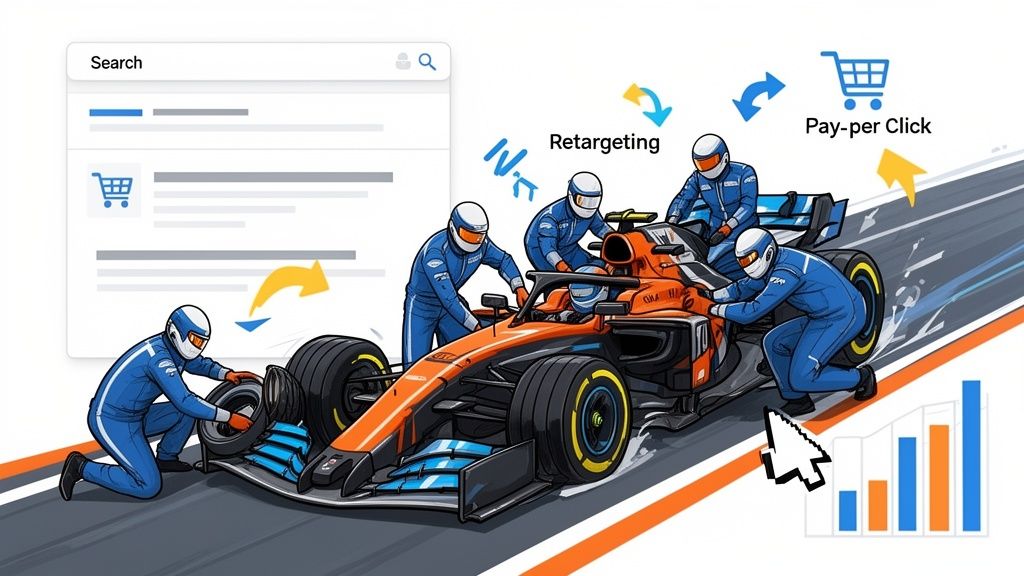
Think of the first month as building the engine and the next two as fine-tuning it on the racetrack. True momentum builds after this initial optimization phase.
Can Small Businesses Benefit from SEM?
Absolutely. In fact, SEM can be a game-changer for small businesses. The beauty of paid search is its incredible scalability. You don't need a Fortune 500 budget to make an impact; you just need a focused strategy.
A good SEM firm can create hyper-targeted local campaigns that drive foot traffic to your storefront or generate leads within a specific zip code. Because you have complete control over your daily ad spend and can target only the most relevant keywords, even a modest budget can deliver powerful results. For a small business, it's one of the most efficient growth tools available.
Ready to see how a data-driven marketing strategy can transform your business? The team of specialists at ReachLabs.ai integrates creative solutions with expert execution to move the needle. Learn more about our collective approach to building brands and driving results at ReachLabs.ai.