Your brand’s reputation isn't built in boardrooms or through polished press releases anymore. It’s forged in the chaotic, real-time world of platforms like TikTok, X, and Instagram. Every single post, comment, and share is a building block—or a wrecking ball—for your public perception.
Think of it as a press conference that never ends. You’re always on stage, and the audience has a microphone, too. This is why getting a handle on social media isn't just a marketing task; it's a core function of business survival.
Why Social Media and Brand Reputation Are Inseparable
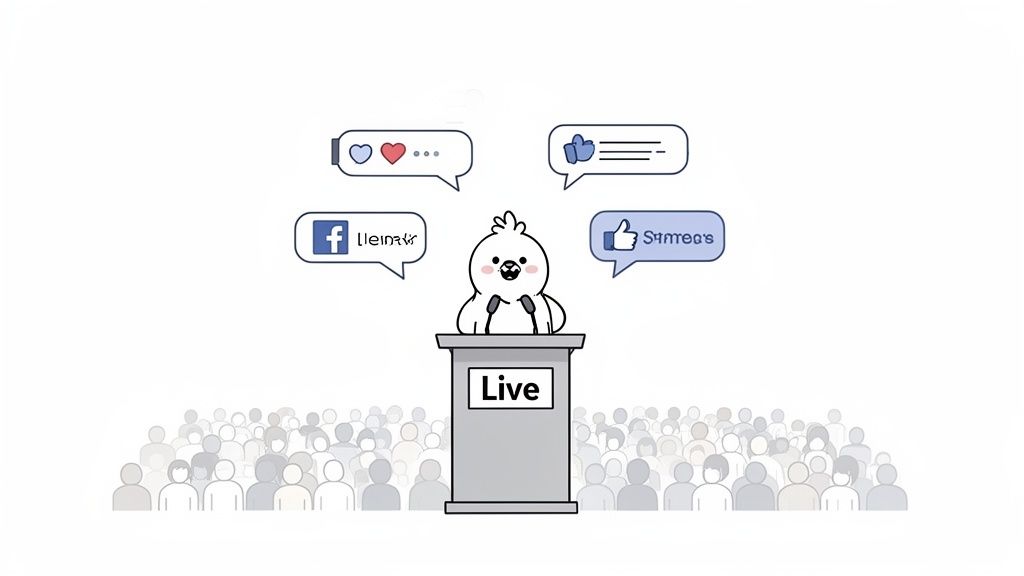
Not too long ago, companies dictated their own image through carefully managed ads and official statements. That era is over. Today, the public holds the megaphone, and your brand's identity is shaped by a constant, live conversation you have with your audience.
This isn’t just some fleeting trend; it’s a seismic shift in how trust is earned. The old one-way street of PR has been replaced by a multi-lane highway of dialogue, where customers, fans, and critics all have a powerful voice.
The Shift From Controlled Messages to Live Conversations
Before social media, a disgruntled customer might complain to a few friends. Their reach was tiny. Now, a single viral TikTok or an angry tweet can circle the globe in hours, making a proactive reputation management and social media strategy an absolute necessity.
Your brand is perpetually on display in this public square. The way you respond to a complaint, celebrate a win, or weigh in on industry news happens in front of everyone, instantly shaping how people see you.
A strong reputation is no longer a static asset; it's a living entity that must be nurtured through consistent, authentic engagement on social platforms. Neglecting this conversation is like leaving your front door wide open for competitors and critics to define who you are.
The financial impact here is massive. Projections show that by 2026, brand reputation will make up a staggering 30–40% of a company's total enterprise value. That’s because your online perception directly influences whether customers buy, investors invest, and partners collaborate. Discover more insights about online reputation management statistics to see just how much is at stake.
Traditional PR vs Modern Social Media Reputation
To really understand how much things have changed, it helps to put the old way of doing things side-by-side with the new reality. The game has been completely reinvented.
| Aspect | Traditional Reputation Management (Past) | Social Media Reputation Management (Present) |
|---|---|---|
| Communication | One-way broadcast (press releases, ads) | Two-way dialogue (comments, DMs, shares) |
| Speed | Slow and controlled release of information | Instant, real-time feedback and news cycles |
| Control | High control over the message and timing | Low control; narrative is co-created with the public |
| Audience Role | Passive consumers of information | Active participants and content creators |
The table above makes it clear: we've moved from a monologue to a dynamic, unpredictable conversation. The old playbook is obsolete, and mastering the new rules of engagement is the only way to protect and grow your brand's value.
How Social Reputation Drives Real Business Growth
A strong social media reputation isn't just about collecting positive comments and racking up followers. Think of it as a powerful engine for real, tangible business growth—a self-sustaining marketing machine fueled by authentic user content and genuine recommendations. That kind of credibility is something a traditional ad campaign can only dream of.
This isn't just a feel-good exercise; it directly impacts customer behavior and, ultimately, your bottom line. When you actively manage your presence, you're building a foundation of trust that shapes purchasing decisions long before someone even thinks about visiting your website.
Today’s customers don't just find brands on social media; they vet them. Platforms like TikTok, Instagram, and even LinkedIn have become the go-to research tools where potential buyers watch your interactions, read what others are saying, and get a feel for your brand's true character.
From Social Proof to Sales
The connection between how people see you online and what they do next is incredibly direct. A positive social reputation is powerful social proof, a clear signal to new customers that your brand is the real deal and delivers on its promises.
Every positive review, user-tagged photo, or enthusiastic comment acts like a mini-testimonial. Together, they build an overwhelming case for choosing you. This digital word-of-mouth is the new gold standard for trust. In fact, it's predicted that 88% of consumers in 2026 will trust online reviews as much as they trust a recommendation from a friend. This makes social media the new frontier for reputation.
This shift gives everyday users immense power to influence a brand's fate. After all, one in three consumers now skips search engines altogether and looks up brands directly on social media, treating these platforms as the ultimate source of truth. You can learn more about how digital marketing is shaping brand reputation on reputationshield.ae.
Building a Resilient Brand Community
Beyond just winning over new customers, an excellent social reputation builds a loyal community that acts as a powerful line of defense. When you engage openly and communicate with authenticity, you don't just get followers—you create advocates.
This community becomes your volunteer defense force when things get tough. They’re the first to jump in and correct misinformation or stand up for your brand against unfair criticism. That kind of resilience is priceless, translating directly into long-term stability and growth. A brand with a loyal following can survive a PR storm that might completely sink a less-respected competitor.
This loyal base doesn't just keep buying from you; they actively protect your brand's value and contribute to a positive story. When you connect social activity to both revenue and resilience, it becomes crystal clear that investing in reputation management and social media is one of the most important things a business can do today. To link these efforts to financial outcomes, check out our guide on how to measure social media ROI.
2. Navigating the High-Stakes World of Social Media
Social media isn't just a marketing channel; it's the modern town square where your brand's reputation is built or broken in real-time. It’s a powerful tool that offers a direct line to your audience, but it's also an unpredictable space where a small mistake can go viral for all the wrong reasons.
Think of your brand's reputation like a ship you've carefully built. Social media is the vast, open ocean. With a good crew and a clear map, you can discover new worlds and trade routes. But if you're not prepared, a sudden storm can capsize you in minutes, with the whole world watching.
The Unforgiving Nature of Social Media Risks
The incredible speed of social platforms is both their biggest asset and their greatest danger. A negative comment, a poorly-timed joke, or a misleading video doesn't just fade away—it can be screen-shotted, shared, and amplified across the globe before your team has even had their morning coffee.
These risks tend to show up in a few common ways:
- The Viral Complaint: One bad customer experience, captured on video and posted to TikTok, can snowball from a single issue into a full-blown crisis that has everyone talking.
- Misinformation and Disinformation: False rumors or intentionally malicious stories can spread like wildfire, damaging your credibility before you even get a chance to set the record straight.
- Inauthentic Marketing Backlash: Today’s audiences have a razor-sharp radar for marketing that feels forced or tone-deaf. Trying to hop on a trend without understanding its cultural context can lead to instant ridicule.
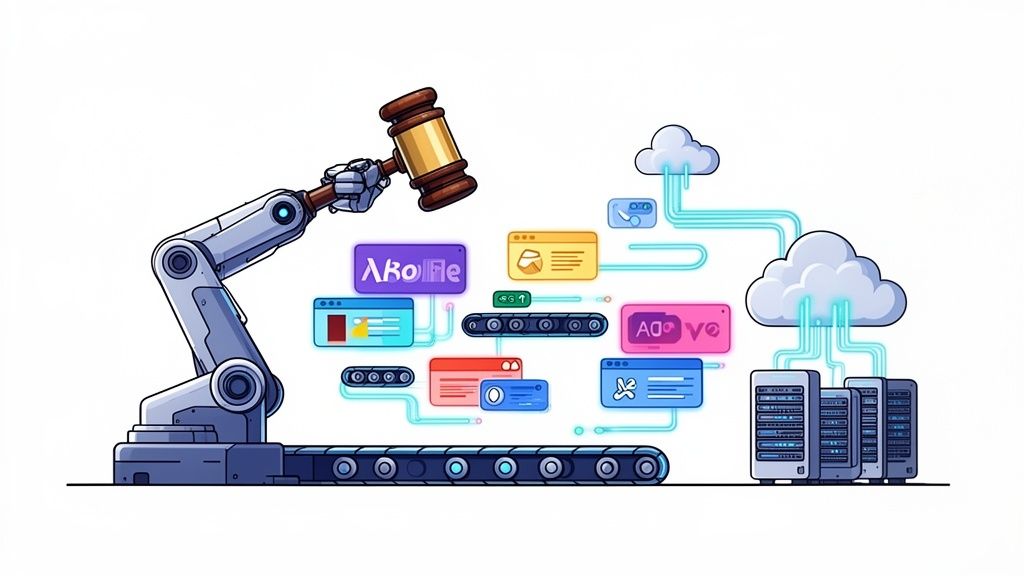
Effectively navigating these waters requires a solid understanding of social media content moderation. This is about more than just deleting comments; it's about fostering a safe community and knowing how to respond when user content threatens your brand's standing.
Seizing the Strategic Upside
While the risks are very real, the opportunities are just as massive for brands that show up with a smart, authentic strategy. Social media lets you graduate from simply broadcasting ads to actually building genuine relationships with the people who matter most.
A proactive mindset can turn potential threats into major wins. For instance, a negative review isn't just a problem to be solved; it's a public opportunity to showcase stellar customer service. When you resolve the issue transparently, you're not just winning back one customer—you're showing thousands of potential buyers that you listen and care.
Social media is the new frontline for reputation. A staggering 80% of executives agree that a crisis on these platforms directly harms brand loyalty and revenue. Yet, the brands that lean in and engage proactively are turning this high-stakes game into their biggest advantage. See the latest research on brand reputation to grasp the full picture.
This is where you can truly set your brand apart from the noise.
Balancing the Equation: A Strategic Overview
To build a resilient strategy, it helps to view the landscape through a balanced lens. Every area that presents a risk also holds a corresponding opportunity if you know how to look for it.
Here is a quick matrix to help you frame your thinking:
Social Media Risk vs. Opportunity Matrix
| Area of Concern | Potential Risk | Strategic Opportunity |
|---|---|---|
| Customer Feedback | A single negative review goes viral and damages credibility. | Publicly resolve the issue to showcase excellent customer service and build trust. |
| User-Generated Content | Users post inappropriate or off-brand content on your channels. | Encourage positive UGC (reviews, photos) to create authentic social proof. |
| Trending Topics | Jumping on a trend without context leads to backlash or ridicule. | Align with relevant cultural moments to increase brand relevance and reach. |
| Employee Activity | An employee's personal post reflects poorly on the brand. | Empower employees to be authentic brand advocates, amplifying positive messages. |
| Direct Communication | Misinformation or false rumors spread unchecked in DMs or comments. | Engage in direct, transparent dialogue to correct the record and build community. |
Ultimately, the goal isn't to avoid risk entirely—that's impossible. The real key is to understand the risks so you can thoughtfully and strategically pursue the opportunities.
Turning Dialogue into a Competitive Advantage
Every single interaction—a comment, a share, a direct message—is a chance to strengthen your reputation. By embracing the conversational nature of these platforms, you can tap into some incredibly powerful drivers for growth.
Here’s where you should focus your energy:
- Amplify User-Generated Content (UGC): Don't just talk about how great your products are; let your customers do it for you. Encouraging them to share their experiences creates a library of authentic content that is far more persuasive than any ad.
- Master Public Customer Service: Treat your social media feeds as a live customer service showcase. Answering questions quickly and resolving problems with grace builds trust not just with the individual, but with everyone watching from the sidelines.
- Cultivate a True Brand Community: Go beyond just collecting followers. Create a space where your most loyal fans can connect, share ideas, and feel a sense of belonging. This community will give you priceless feedback and become your most passionate advocates when you need them most.
A Four-Pillar Framework for Managing Your Reputation
So, we've talked about the risks. Now, how do you get ahead of them? Moving from a reactive stance to proactively managing your reputation requires a solid game plan. A strong reputation management and social media strategy isn't about guesswork—it's about having a system that keeps you in the driver's seat of your brand's story.
I've always found it helpful to break this down into four core pillars: Listen, Analyze, Engage, and Protect. Think of them as a continuous cycle, moving from intelligence gathering to decisive action. This framework is essentially your brand's central nervous system for everything happening online.
Pillar 1: Listen Actively Across All Channels
The first, and arguably most important, pillar is listening. It’s simple: you can’t manage a conversation if you don’t even know it’s happening. This means going way beyond just keeping an eye on your notifications. You need a comprehensive system to catch every mention of your brand, your products, and even your key people across the social web.
Effective listening is an active process. You should be tracking:
- Direct Mentions: The easy ones, where users @tag your official accounts.
- Indirect Mentions: This is where the real gold is. People talking about your brand without tagging you (e.g., "That new coffee at Downtown Cafe is a game-changer.").
- Visual Mentions: Your logo or product showing up in an image or video, often without any text.
- Industry Keywords: Tapping into broader conversations in your market to understand the bigger picture.
This constant stream of information is the lifeblood of your entire strategy. Without it, you’re just flying blind.
Pillar 2: Analyze Data to Uncover Insights
Once the information is flowing in, the next step is to analyze it and find the meaning behind the noise. A thousand raw mentions are just data points; what you really need are insights that can drive smart decisions. The goal here is to turn that flood of comments and posts into real, actionable intelligence.
This is where you start looking for patterns. Ask the right questions: Is sentiment around our new product launch leaning positive or negative? Why is there a sudden spike in complaints from customers in Texas? Is a competitor suddenly owning a conversation we used to lead? Good analysis helps you spot a crisis simmering long before it boils over.
The image below shows exactly what you're trying to get ahead of—how quickly a single piece of misinformation can erupt into a major problem.
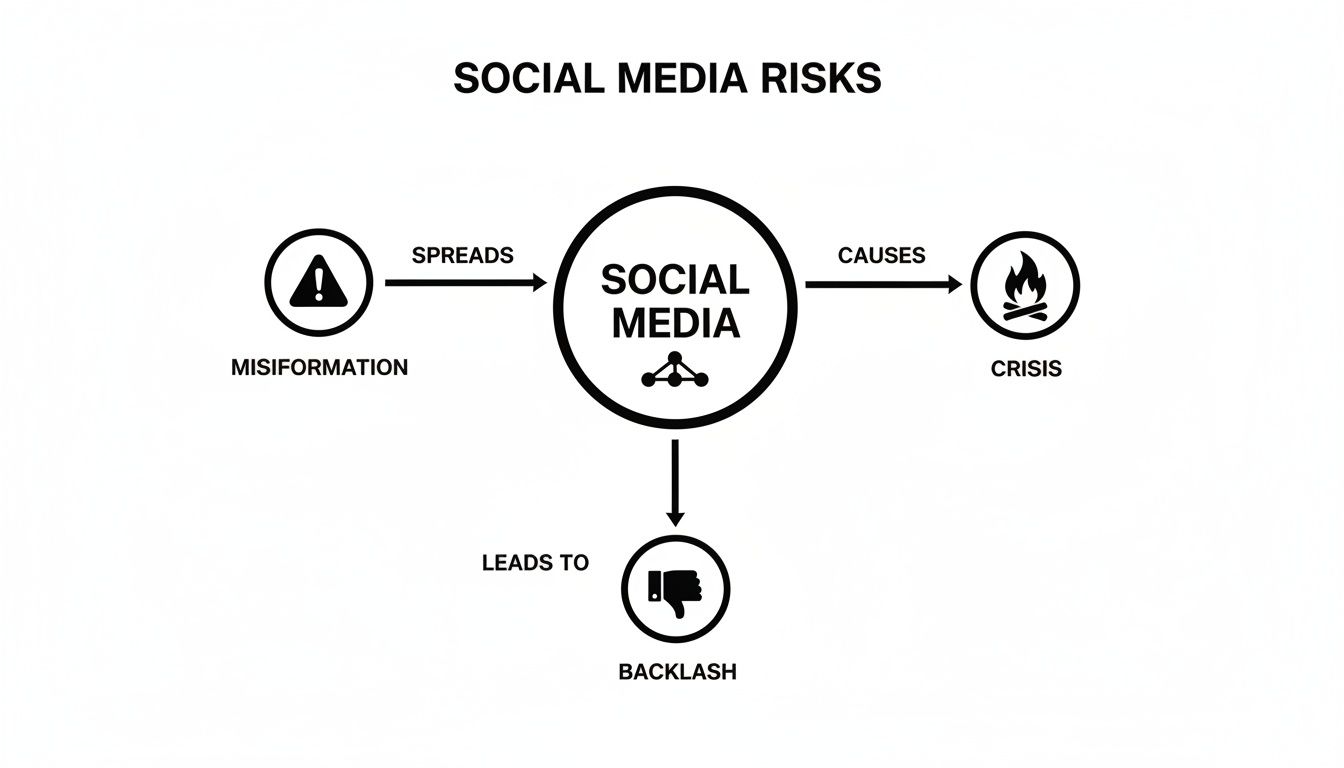
This is a perfect illustration of how fast things can spiral, turning a small issue into widespread public backlash if you're not paying attention.
Pillar 3: Engage Authentically With Your Audience
With solid insights in hand, you’re ready to engage. This is where you step into the conversation. How you handle both glowing praise and sharp criticism in public says everything about your brand's character.
Engagement is not damage control; it's relationship building. Every interaction is an opportunity to reinforce your brand values, showcase excellent customer service, and turn a neutral observer into a loyal advocate.
Your engagement strategy needs clear guidelines for your team on response times, tone of voice, and when to escalate an issue. A quick, empathetic response to a negative review can completely turn the situation around, not just for that customer but for everyone else watching. To really nail this, keeping up with the latest review management trends is a must for building a modern framework.
Pillar 4: Protect Your Reputation Proactively
Finally, we have the Protect pillar, which is all about building long-term resilience. This isn't just about playing defense; it’s about going on offense to build a strong, positive foundation that can withstand future hits.
This means actively encouraging your happy customers to leave reviews, celebrating user-generated content that shows your brand in a positive light, and creating great content that establishes your authority. When you consistently publish these positive, brand-owned assets, you start to shape your own search results. You're building a digital fortress that's much harder for a few negative comments to breach.
Building Your Social Media Crisis Response Playbook
Even with the best planning, a social media storm can pop up out of nowhere. The hard truth about reputation management and social media is that it’s not a matter of if a crisis will happen, but when. That’s where a pre-built crisis response playbook comes in. Think of it like a fire extinguisher in the kitchen—you hope you never need it, but having it removes the panic and gives you a clear, practiced plan.
A crisis can go from a spark to a wildfire in minutes. All it takes is one viral video, a faulty product, or a tweet that misses the mark to unleash a torrent of negative attention. Without a plan, teams scramble, messages get crossed, and the damage spirals. A playbook makes sure everyone knows their role, empowering them to respond with speed and confidence.
Defining Your Crisis Threshold
First things first, you need to define what actually counts as a crisis for your brand. Not every negative comment is a five-alarm fire. Your playbook has to draw a clear line between a minor customer service issue and a genuine threat that requires an all-hands-on-deck response.
Create a simple set of criteria so your team can instantly gauge the severity of a situation. Think about these factors:
- Velocity and Volume: Are you seeing a sudden, massive spike in negative mentions or a specific hashtag?
- Source and Influence: Is the criticism coming from a major news outlet or an influencer with a huge following?
- Topic Sensitivity: Does the conversation touch on sensitive issues like safety, ethics, or discrimination?
- Potential Legal Impact: Is there any chance this could lead to legal action?
Setting these thresholds empowers your team to act decisively when something big is brewing, while handling everyday complaints through the usual channels.
Establishing a Clear Chain of Command
When things go south, confusion is your worst enemy. Your playbook must map out a crystal-clear chain of command, specifying exactly who is responsible for what. This communication tree ensures information gets to the right people immediately.
Your crisis response team is your brand’s emergency response unit. It should include key people from social media, PR, legal, and executive leadership, each with a pre-assigned role in assessing the situation and approving what gets said publicly.
This structure is critical. It stops well-meaning but unauthorized employees from making public statements and ensures your brand speaks with one unified, strategic voice. It also lays out the escalation path, so the social media manager knows exactly who to call at 2 AM on a Saturday if a major problem erupts.
Preparing Pre-Approved Response Templates
While every crisis has its own unique flavor, many follow predictable patterns. Having a set of pre-approved response templates for common scenarios can save you precious time when every second counts. These aren't meant to be rigid, copy-and-paste answers, but flexible frameworks to guide your response.
Your templates should cover a few key bases:
- An Initial Holding Statement: A brief, empathetic message that acknowledges the situation and confirms you're looking into it. This simple step buys you time to get the facts straight.
- A Factual Update Template: A basic structure for delivering clear, concise updates as you learn more. No fluff, just facts.
- An Apology Framework: A guide for crafting a sincere apology that takes responsibility without prematurely admitting liability (your legal team will thank you).
Knowing when to take a heated conversation offline is another vital skill. Your templates should include friendly language for moving a public argument to a private channel like DMs or email. This allows you to resolve the issue directly and de-escalate the public tension. For a deeper dive, our guide on social media crisis management offers more detailed strategies.
A little preparation here goes a long way, ensuring your first move is calm, professional, and on-brand—protecting your reputation when it's under the most pressure.
Essential Tools for Tracking Your Online Reputation
Let's be realistic—you can't manage your brand's story online with good intentions alone. You need the right technology. Think of these tools as your digital eyes and ears, constantly tuned into the massive, ongoing conversation about your brand. They’re what turn the chaotic noise of reputation management and social media into signals you can actually act on.
Trying to track every mention manually is a recipe for disaster. It's simply impossible. Specialized tools automate the heavy lifting, catching conversations everywhere from social media and review sites to forums and news articles. They let you listen at scale, so you can stop just reacting and start strategically shaping how people see your brand.
Choosing Your Monitoring Toolkit
The market for these tools is huge, with everything from free options perfect for a small business to powerhouse enterprise platforms. The right choice really boils down to your budget, your team's bandwidth, and how deep you need to go.
Here’s a quick breakdown of what you'll find:
- Social Listening Platforms: These are the workhorses. They track brand mentions, keywords, and hashtags in real-time, so you always know what’s being said.
- Sentiment Analysis Software: These tools go a step further, using AI to gauge the emotion behind a mention. Is the chatter positive, negative, or just neutral?
- Review Management Dashboards: If you’re juggling reviews on Google, Yelp, and other industry sites, these platforms are a lifesaver. They pull everything into one place so you can respond quickly.
For a deeper dive into specific options, our guide on the top social media analytics tools is a great place to start comparing features.
Beyond Likes: The Metrics That Truly Matter
It’s easy to get caught up in "vanity metrics" like follower counts and likes. They feel good, but they don't tell you much about the health of your reputation. An effective strategy focuses on metrics that actually reflect how the public feels about you.
Your goal isn't just to be talked about; it's to be trusted. The right metrics provide a data-driven view of that trust, moving you beyond superficial engagement to a real understanding of your brand's standing.
The dashboard below is a great example of what this looks like in practice, visualizing the kind of meaningful data you should be tracking.
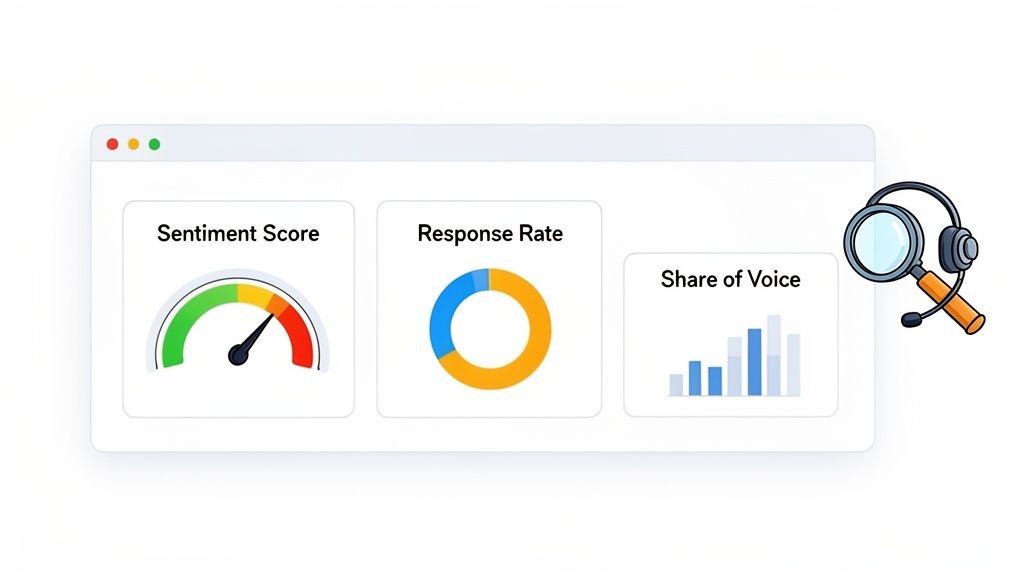
This kind of view gives you an immediate health check on critical data points like sentiment and your share of the conversation.
Here are the key performance indicators you should be watching:
- Sentiment Score: This is your ratio of positive to negative mentions. A consistently high score is a fantastic sign of a healthy reputation.
- Share of Voice (SOV): How much of the conversation in your industry is about you versus your competitors? This tells you how much space you occupy in your customers' minds.
- Response Rate and Time: How quickly and consistently are you replying to people? This is a direct measure of how engaged and customer-focused you truly are.
Your Social Reputation Questions, Answered
Let's be honest, trying to manage how your brand is perceived on social media can feel like you're trying to nail Jell-O to a wall. It’s messy, unpredictable, and leaves you with a lot of questions. We've gathered the most common ones we hear from marketing pros and business owners to give you some straight, practical answers.
How Should We Handle Online Trolls?
It’s tempting to fight back when someone is deliberately trashing your brand online, but engaging with a troll is like wrestling with a pig—you both get dirty, and the pig likes it. This isn't about legitimate customer feedback; it's about bad-faith actors who just want to start a fire.
Your job isn't to win the argument. It’s to protect your community. Here’s how you do it:
- Don't take the bait. Ever. A public back-and-forth is exactly what they’re looking for. Starve them of the attention they crave.
- Quickly assess the situation. Is this just a mean comment, or does it cross the line into harassment or hate speech? The platform's terms of service are your friend here.
- Hide or delete. If a comment is pure vitriol with no substance, get it out of sight. Hiding is often better than deleting because the troll doesn't always know their comment is gone, but your community is protected from it.
- Block and report. For repeat offenders or anyone clearly violating the rules, don't hesitate. Block them and report the account.
Remember, your real customers are watching. Handling genuine criticism with grace while refusing to give trolls a platform shows confidence and reinforces the positive space you’ve worked hard to create.
How Can We Measure the ROI on Reputation Management?
Connecting your reputation management efforts to the bottom line can feel a bit abstract, but it's far from impossible. While it’s not as simple as tracking a click-through rate, the right metrics will absolutely show the value.
You need to draw a clear line from a healthier online reputation to real business growth.
A study by Weber Shandwick found that a massive 63% of a company's market value is tied directly to its reputation. This isn't some fluffy, "nice-to-have" metric. It's a core asset that influences sales, hiring, and even your stock price. Protecting it pays dividends.
Here’s where to focus your measurement efforts:
- Improved Conversion Rates: Watch what happens to your website conversions or sales when you see a spike in positive social sentiment. The two are often linked.
- Lower Customer Acquisition Cost (CAC): A great reputation built on trust and positive word-of-mouth generates more organic leads. That means you spend less to bring in new customers.
- Higher Customer Lifetime Value (CLV): When people feel heard and respected, they stick around. Strong public engagement and great service turn one-time buyers into loyal fans.
- More Positive Reviews: Track the uptick in 4- and 5-star reviews after you start actively and systematically asking happy customers for them.
What Are the First Steps for a Limited Budget?
You don't need a massive budget to get a handle on your social reputation. In fact, some of the most powerful moves you can make are completely free—they just cost you a bit of time and focus.
Start by building a solid foundation.
- Claim Your Turf: Get your brand name locked down on all the key social platforms and, just as importantly, on review sites like Google Business Profile. Think of it as your digital real estate.
- Set Up Free Listening Posts: Use free tools like Google Alerts to get an email anytime your brand name pops up online. It’s your early-warning system.
- Create a Simple Response Playbook: You don't need anything fancy. Just draft a few go-to templates for responding to both positive and negative comments. This keeps your brand voice consistent.
- Just Ask for Reviews: This is so simple, but so many businesses forget. Train your team to make a personal, friendly request to happy customers to leave a review. You’d be surprised how well it works.
At ReachLabs.ai, we take these foundational principles and build them into a powerful, data-driven strategy tailored to your brand. Our collective of marketing experts doesn't just manage your reputation; we actively build and protect it, turning online conversations into measurable business growth. See how we can amplify your brand's voice at https://www.reachlabs.ai.