To really grow your customer lifetime value, you have to stop thinking about one-off sales and start cultivating long-term relationships. From my experience, the most successful brands nail three things: they elevate the customer experience to a new level, build real loyalty with meaningful rewards, and personalize every single interaction. When you get these right, customers don’t just buy from you; they feel seen and valued, which keeps them coming back for years.
What Is Customer Lifetime Value and Why It Matters
Customer Lifetime Value (CLV or CLTV) is one of the most powerful metrics you can track. It’s not about a customer's first purchase or their last one; it’s the total net profit you can expect to earn from them over the entire time they do business with you. Essentially, it’s the long-term financial health score of your customer base.
Think about it in terms of a local coffee shop. One person comes in, grabs a $5 latte, and you never see them again. Another customer also buys a $5 latte, but they come in three times a week for the next two years. Their initial purchases were identical, but their lifetime values are worlds apart—$5 versus over $1,500. That’s CLV in a nutshell. It forces you to zoom out from the immediate transaction and focus on what builds sustainable growth.
The Real Cost of Neglecting CLV
So many businesses get stuck on the customer acquisition hamster wheel, constantly pumping money into finding new buyers. Bringing in new customers is obviously important, but it's a wildly expensive way to grow. The truth is, holding onto the customers you already have is one of the smartest financial moves you can make.
Don't just take my word for it. The data shows that existing customers spend, on average, a whopping 67% more than new ones. This isn't just a quirky stat; it’s a fundamental reality in today's competitive market. Loyalty is what separates the brands that thrive from the ones that merely survive.
A business that only focuses on acquiring new customers is like a bucket with a hole in it. You can keep pouring water in, but you'll always be fighting to keep it full. A business focused on CLV patches the hole first, making sure every drop—and every customer—is retained and valued.
Once you have a firm grasp of your CLV, you can start making much sharper, more strategic decisions everywhere in your business.
- Smarter Marketing Spend: Knowing what a customer is worth over their lifetime tells you exactly how much you can afford to spend to acquire a new one (your Customer Acquisition Cost, or CAC). This insight is gold for optimizing ad budgets and ensuring you're not just spending money, but actually making it.
- Identify Your Best Customers: CLV is your secret weapon for segmenting your audience. It helps you pinpoint your "VIPs"—the small group of customers who drive a disproportionate amount of your revenue. Once you know who they are, you can roll out the red carpet with special perks to reward their loyalty and keep them happy.
- Improved Profitability: Growing the value of your existing customers is pure profit fuel. You boost your revenue without having to shell out the high costs of finding new people, which sends your bottom line straight up.
To get a full picture, you need to be tracking the right marketing performance metrics. CLV stands out as the ultimate measure of your company’s health and its real potential for future growth.
Before we dive into the specific tactics, let's break down the foundational strategies that make all of this possible. These three pillars are the bedrock of any successful CLV enhancement plan.
Three Core Pillars to Increase CLV
| Strategy Pillar | Key Focus | Expected Impact on CLV |
|---|---|---|
| Enhance Customer Experience (CX) | Making every interaction seamless, positive, and memorable. This includes customer support, website usability, and post-purchase follow-up. | Reduces churn and encourages repeat purchases by building an emotional connection to the brand. |
| Build Genuine Loyalty | Moving beyond simple transactional rewards to create a community. This involves exclusive access, recognition, and surprise-and-delight moments. | Increases purchase frequency and turns satisfied customers into vocal brand advocates who refer others. |
| Personalize Every Interaction | Using customer data to deliver relevant product recommendations, targeted offers, and individualized communications that feel one-to-one. | Drives higher average order value (AOV) and makes customers feel understood, strengthening the relationship. |
Mastering these three areas creates a powerful feedback loop where happy, loyal customers not only spend more but also become your most effective marketing channel. Now, let’s get into the actionable steps you can take to put these pillars into practice.
Using Data and AI for Predictive Personalization
Having a mountain of customer data is one thing. Knowing how to use it to predict what your customers want before they even know it—that’s a completely different ballgame. This is where modern tools like Artificial Intelligence (AI) and Customer Data Platforms (CDPs) come in, turning raw data points into a powerful engine for personalization that directly boosts customer lifetime value.
The goal here is to get way beyond generic marketing blasts. We want to create experiences that feel genuinely one-to-one. Think of it as the digital version of a great local shopkeeper who remembers your name, knows your usual order, and suggests a new item you end up loving. That’s the kind of connection that builds real loyalty.
This shift isn't just a fleeting trend; it’s quickly becoming the standard. Projections show that by 2025, AI will power around 95% of all customer interactions. And the companies already on board are seeing a real impact—about 80% of those using AI-powered CDPs report clear gains in customer satisfaction.
Unifying Data to Predict Customer Behavior
Let's be honest, your customer data is probably scattered all over the place. It’s in your e-commerce platform, your email marketing tool, your support desk, and your social media channels. A Customer Data Platform (CDP) is designed to fix this mess. It acts as a central hub, pulling all that information together into a single, unified profile for each customer.
This unified view is where the magic happens. It gives you a complete picture of the customer journey, which is exactly what you need to start anticipating their next move. You can finally ask—and answer—the right questions:
- Who are my real VIPs? A CDP helps you segment customers based on their predicted lifetime value, not just simple demographics.
- Who's about to leave? AI models can spot the subtle signs—like buying less often or visiting your site fewer times—that a customer might be at risk of churning.
- What should they buy next? By analyzing purchasing patterns, predictive analytics can make some incredibly accurate cross-sell and upsell recommendations.
This is what it looks like in practice, using historical data to get a clear view of what’s likely to happen next.
This approach lets you shift from being reactive to proactive. You’re no longer just responding to what customers do; you’re anticipating what they need.
Turning Predictions into Personalized Campaigns
Once you have these predictions, the next step is to set up automated, hyper-personalized campaigns that actually connect with people. This is where a data-driven marketing strategy stops being a buzzword and starts delivering real results.
The magic of predictive personalization is making the customer feel understood, not tracked. When a recommendation is genuinely helpful or an offer arrives at the perfect moment, it builds trust and makes your brand feel indispensable.
Here are a few real-world examples of how this plays out:
-
Automated Product Recommendations: Imagine an online fashion store. Its AI looks at a customer's browsing history, past purchases, and even items they’ve abandoned in their cart. The system then automatically fills the homepage and follow-up emails with similar styles or matching accessories. The chances of another sale just went way up.
-
Perfectly Timed Re-engagement: Think about a subscription coffee service. Instead of a generic "time to reorder" email every 30 days, its predictive model learns that a specific customer usually reorders every 23 days. It then sends a personalized offer on day 21, getting the sale before they even think about checking out another brand.
-
Dynamic Offer Adaptation: A travel booking site can use AI to adapt its offers on the fly. If you've been searching for family-friendly beach resorts, the site can instantly change its featured deals to highlight kid-friendly packages and discounts. That offer is suddenly far more compelling than a generic one.
By putting your data to work with AI, you create a system that constantly gets smarter. Every customer interaction feeds it more data, which makes the predictions more accurate, leading to even better personalization. This continuous loop is the secret to systematically increasing customer lifetime value and building a loyal base that will stick with you for years.
Designing Loyalty Programs That Actually Work
Let's be honest: most loyalty programs feel like a lazy afterthought. You know the type—the generic "earn 1 point for every dollar" system that does absolutely nothing to inspire actual loyalty. If you want to move the needle on customer lifetime value, your program has to be more than just a transaction-tracker. It needs to be woven into the very fabric of your customer experience.
The real secret is to shift your mindset. Stop focusing on what you want customers to do (spend more) and start thinking about what they actually value. A well-designed program isn't just a coupon machine; it's a relationship builder. It offers meaningful, exclusive rewards that make people feel recognized, valued, and genuinely excited to be part of your brand's world.
This infographic paints a stark picture of why this matters, showing the massive difference between your high and low-value customers.
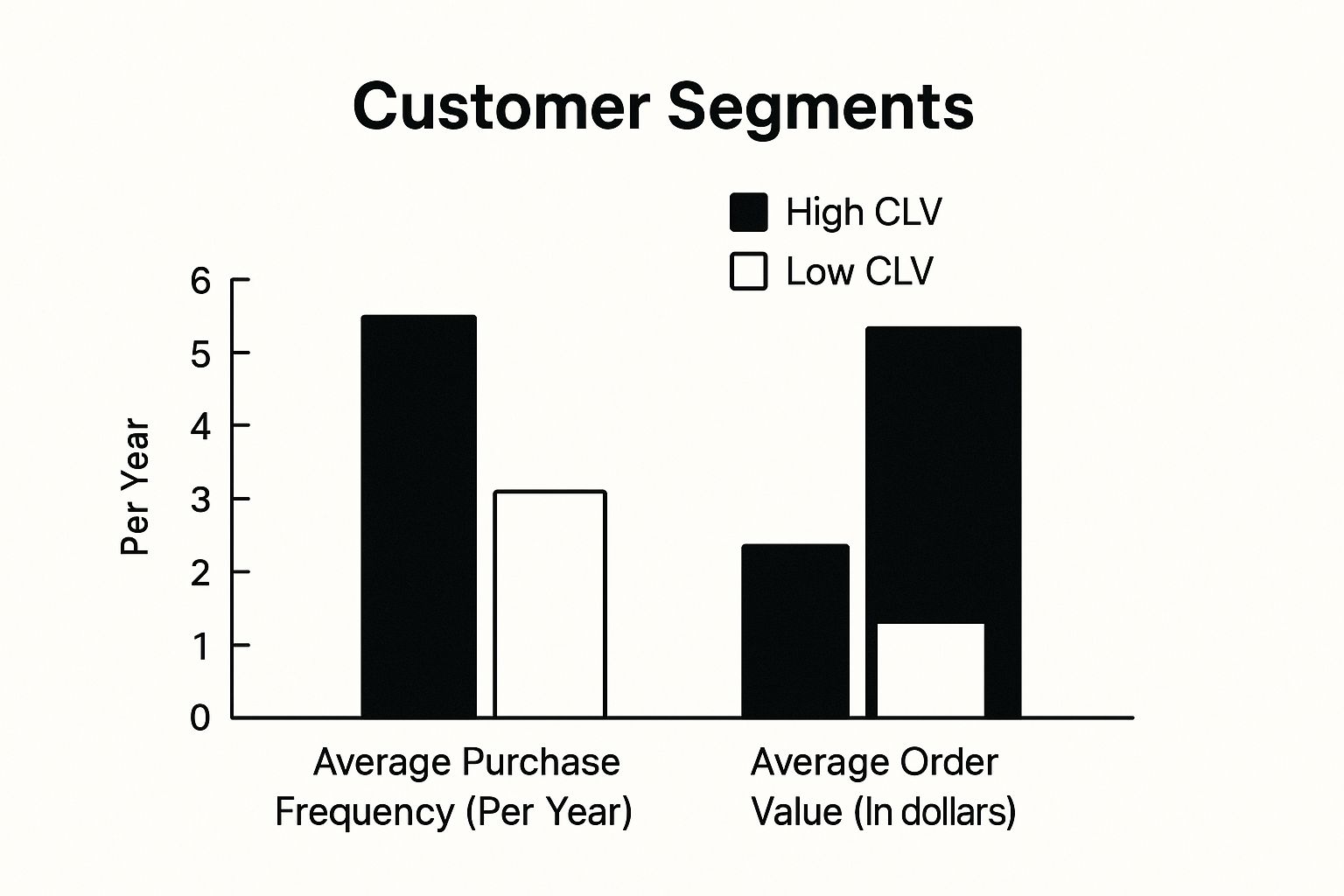
As you can see, your best customers aren't just spending a little more. They come back far more often, creating a powerful compounding effect on your revenue. A great loyalty program is one of your best tools for nurturing this exact behavior.
Choosing the Right Loyalty Model
There's no one-size-fits-all solution here. The best model for your business depends entirely on your product, your sales cycle, and what your customers care about. A SaaS company needs a totally different playbook than a local coffee shop.
I've seen businesses succeed with several core structures, and a good first step is understanding which one fits your context. The table below breaks down the most common models to help you see where your business might fit.
Comparison of Loyalty Program Models
| Program Model | Best For | Key Benefit | Potential Drawback |
|---|---|---|---|
| Points-Based | Businesses with high purchase frequency (e.g., coffee, cosmetics). | Simple for customers to understand and immediately rewarding. | Can feel generic if the rewards aren't compelling. |
| Tiered | Brands with aspirational products (e.g., airlines, luxury retail). | Creates a sense of status and encourages higher spending to unlock new levels. | The entry-level tier must still offer tangible value to get people hooked. |
| Paid/VIP | E-commerce stores or subscription services where upfront value is clear. | Creates an incredibly "sticky" customer base with high engagement. | Requires a strong value proposition to justify the upfront fee. |
Ultimately, the goal is to pick a framework that feels natural for your business and offers a clear path to value for your customers. A complicated system nobody understands is worse than no system at all.
Beyond Generic Discounts: Creative Reward Ideas
The most memorable programs I've ever been a part of offer perks that go way beyond a simple 10% off coupon. These creative rewards make you feel like a true insider—and they're often more cost-effective for the business than just slashing prices.
The best loyalty programs don’t just reward transactions; they reward relationships. They make customers feel seen and appreciated for their continued support, turning a simple purchase into a meaningful interaction.
Think about what your customers really want from you and try integrating some of these ideas:
- Early Access: Give your best customers first dibs on new products or sales. This costs you nothing but creates a powerful sense of exclusivity.
- Exclusive Content: For a software company, this could be a members-only webinar. For a fashion brand, maybe it's a private styling guide.
- Personalized Experiences: A fitness brand could offer a free one-on-one session with a trainer. A B2B company might offer a dedicated strategy call with a product expert.
- Community Recognition: Feature loyal customers on your social media. This public shout-out builds a powerful sense of belonging.
When you focus on simplicity, real value, and creative rewards, you build a program that doesn't just drive sales—it deepens the customer relationship. This approach is a cornerstone of the most successful customer retention strategies that turn one-time buyers into your most passionate advocates.
Elevating the Customer Experience at Every Touchpoint
A fantastic product or a killer loyalty program can only get you so far. The real secret to a high customer lifetime value is built in the small, everyday interactions a person has with your brand.
Every touchpoint matters. From their first click on your website to a support ticket they open a year down the road, each moment is a chance to either build them up or let them down.
A standout customer experience isn't about expensive, over-the-top gestures. It's about being reliable, empathetic, and consistently helpful. When you get this right, people don't just buy again; they form a real connection, making them far less likely to jump ship for a competitor's discount. In fact, research shows a staggering 82.5% of customers are more likely to buy again when they feel understood.
Creating a Frictionless Journey From the Start
That first impression you make sets the stage for the entire relationship. A clunky, confusing onboarding process is one of the fastest ways to trigger buyer’s remorse. The goal? Make it ridiculously easy for new customers to get value from what you offer, right from the get-go.
This means you need clear instructions, intuitive navigation, and proactive guidance. For a SaaS company, this could look like a series of short, helpful welcome emails that walk users through key features. For an e-commerce brand, it’s a buttery-smooth checkout followed by a clear, informative order confirmation.
A great customer experience is like a well-designed tool—it just works, and you don’t have to think about it. The less friction you create, the more likely a customer is to stick around and see the full value you offer.
Transforming Support From a Cost Center to a Loyalty Builder
Too many businesses see customer support as just a necessary expense. That’s a huge mistake. I've learned that a support interaction is one of the most powerful opportunities you have to boost customer lifetime value.
When something goes wrong, you have a golden chance to turn a frustrated person into your biggest fan.
The trick is to shift from just reacting to problems to offering proactive, empathetic support. Give your team the tools and data they need to see a customer's history at a glance. When a support agent understands past purchases and previous interactions, they can offer a real solution, not just read from a script.
Here are a few ways to level up your support:
- Be Everywhere They Are: Offer omnichannel support through live chat, social media, and email. The key is to keep the conversation seamless and contextual, no matter where it happens.
- Empower Them to Help Themselves: A robust knowledge base or FAQ section is a must. Many people prefer to find answers on their own, and this frees up your team for more complex issues.
- Turn Problems into Wins: When you solve an issue quickly and with a human touch, you do more than fix the problem. You build incredible trust and goodwill that pays off for years.
Actively Listening and Responding to Feedback
You can’t improve the customer experience if you don’t know what’s broken. Actively seeking out customer feedback isn't optional—it's a critical piece of the CLV puzzle.
This feedback is your direct line into what your customers are thinking, showing you exactly what they value and where you’re missing the mark.
Make it easy for people to share their thoughts with simple surveys, post-purchase review requests, or by just listening on social media. But don't just collect this data—act on it. When customers see you making changes based on their suggestions, it proves you're listening and that you actually care. That simple act of acknowledgment can be one of the most powerful loyalty drivers you have.
Mastering Smart Upselling and Cross-Selling
Pushing for a higher average order value doesn't mean you have to be pushy. The best ways to lift customer lifetime value are actually about being more helpful, and that's where smart upselling and cross-selling come into play.
When you do it right, it’s not about squeezing extra dollars out of a transaction. It’s about anticipating what your customer really needs and offering them a better solution at just the right moment. This simple shift in perspective builds trust and makes the entire experience more valuable for them.
Upselling vs. Cross-Selling: What's the Difference?
First things first, let's clear up the terminology. People often use these terms interchangeably, but they are two distinct—and powerful—strategies.
- Upselling is about encouraging a customer to buy a better, more premium version of the product they're already considering. Think "upgrade."
- Cross-selling is about suggesting related or complementary items that enhance the original purchase. Think "add-on."
Let's say a customer is about to buy a new camera. Upselling would be pointing them toward a model with a better sensor and 4K video capabilities. Cross-selling, on the other hand, would be recommending a memory card, a camera bag, and a tripod to go with it. Both boost the sale's value, but they solve different problems for the customer.
Dig Into Purchase History for Smarter Recommendations
The secret to making these offers feel helpful instead of salesy is relevance. Nobody likes a generic, one-size-fits-all pitch. The best recommendations are born from data—specifically, a customer's past purchases and browsing behavior.
This is your chance to show you’ve been paying attention. A customer who consistently buys dark roast coffee beans is the perfect person to cross-sell a new French press or a high-end grinder. Suggesting a light, fruity blend would likely fall flat. You’re using their history to curate a personal shopping experience.
The most successful upsell and cross-sell strategies feel less like a sales pitch and more like a helpful concierge service. When you show a customer you understand their needs based on what they’ve done before, you build incredible trust and make their shopping journey easier.
This level of personalization is what turns a generic e-commerce site into a trusted advisor, and it’s a massive driver for long-term customer value.
Put Smart Bundles and Checkout Add-Ons to Work
Beyond one-off suggestions, you can strategically bundle products to increase the average order value while delivering a clear benefit to the customer.
Bundles just make sense. They simplify the buying process and usually offer a small discount, making the whole package more appealing.
- Create “Starter Kits”: A brand selling art supplies could bundle a set of beginner acrylic paints, a pack of brushes, and a canvas pad. It’s the perfect, no-fuss entry point.
- Bundle by Use Case: Think about how people use your products. A fitness apparel company could offer a "Marathon Training" bundle with running shorts, moisture-wicking socks, and energy gels.
Your checkout page is also prime real estate for small, impulse-buy cross-sells. This is the digital equivalent of the candy rack at the grocery store. It’s the perfect spot to offer low-cost but highly relevant add-ons. If someone is buying a new leather wallet, offering a small bottle of leather conditioner for $5 at checkout is a no-brainer.
These little additions might not seem like much on their own, but they add up fast, quietly boosting the value of every single transaction and contributing directly to a much healthier CLV.
Common Questions About Increasing CLV
Once you start putting these ideas into practice, you're bound to have some questions. Moving from the theory of customer lifetime value to the nitty-gritty of making it work is where the real learning happens.
Let's walk through a few of the most common questions I hear from marketers and business owners. The goal here is to give you some quick, practical answers to keep you moving in the right direction.
How Often Should I Calculate Customer Lifetime Value?
Honestly, there's no single magic number. The right cadence really comes down to your business model and how often your customers buy from you.
If you’re running an e-commerce store or a retail shop with a steady stream of transactions, calculating CLV quarterly or even monthly is a smart move. This gives you a near real-time read on customer behavior and helps you see how your latest marketing efforts are landing.
For a SaaS or subscription business, things are a bit different. The sales cycle is longer, so checking in semi-annually or annually will likely give you a clearer picture of meaningful trends. The key is to be consistent. Whatever you choose, stick with it.
Think of CLV not as a static report card, but as a dynamic health monitor for your customer relationships. Tracking it regularly allows you to measure the pulse of your retention strategies and make adjustments before small issues become big problems.
What Is a Good CLV to Customer Acquisition Cost Ratio?
This is the big one. It's how you know if your growth engine is actually profitable. A widely accepted benchmark for a healthy CLV to Customer Acquisition Cost (CAC) ratio is 3:1.
That means for every dollar you spend bringing a new customer in the door, you should get at least three dollars back from them over their entire relationship with you.
Let's break it down:
- A 1:1 ratio is a red flag. You're basically losing money on every new customer once you account for the cost of your products and operations.
- A 3:1 ratio is the sweet spot. It signals a strong, sustainable business.
- Ratios of 4:1 or 5:1 are exceptional. This indicates a highly efficient marketing engine and a very profitable customer base.
While the ideal number can shift a bit depending on your industry, the real goal is to know your own ratio and constantly work on improving it. It's one of the clearest signs of whether your marketing budget is an investment or an expense.
Can Small Businesses Increase CLV Without a Big Budget?
Absolutely. In fact, I'd argue small businesses have a huge advantage here. Boosting CLV isn't just about fancy software; it’s about the human connection you build with your customers.
Many of the most powerful strategies are low-cost but have a massive impact. Personalized customer service costs you time, not money, but it builds incredible loyalty. Think about simple things like a handwritten thank-you note in an order, a personal follow-up email to see how a customer is enjoying their purchase, or even a basic "buy 10, get one free" punch card. These gestures make people feel seen and valued.
Another fantastic tool is simply asking for—and acting on—customer feedback. When you show people you’re genuinely listening, you build a level of trust that no amount of ad spend can replicate.
Which Metric Is More Important: CLV or Customer Satisfaction?
This feels like a trick question, because the two are completely connected—you really can't have one without the other. It’s more helpful to think of them as a cause-and-effect pair.
Customer satisfaction (CSAT) is the leading indicator. High satisfaction scores tell you that customers are happy right now. They feel heard, their needs are being met, and they're far more likely to stick around. It’s your real-time glimpse into the health of your customer relationships.
Customer Lifetime Value (CLV) is the lagging indicator. It's the financial outcome of all that hard work. A rising CLV is the proof that your focus on making customers happy is paying off in real, measurable revenue.
So, your day-to-day focus should be on improving customer satisfaction. Then, use CLV as your ultimate scoreboard to confirm that those efforts are fueling long-term, sustainable growth. You need both to get the full picture.