
In an ever-evolving digital marketplace, relying on yesterday's marketing playbook is a clear path to stagnation. To capture market share and achieve meaningful growth, businesses need a dynamic, multi-channel approach that blends proven fundamentals with innovative tactics. Generic advice no longer delivers results; success now demands specific, actionable, and data-driven strategies that resonate with today's sophisticated consumer.
This guide moves beyond surface-level tips to provide a comprehensive roundup of powerful digital marketing strategy ideas. Each one is designed to address a specific business objective, from explosive brand awareness and lead generation to customer retention and loyalty. We will break down complex concepts into practical, easy-to-implement steps.
Inside, you will find a curated collection of strategies spanning content marketing, paid advertising, community building, conversion rate optimization, and more. For each idea, we will outline:
- Actionable execution steps to get you started immediately.
- Key Performance Indicators (KPIs) to measure your success accurately.
- Real-world examples and mini-case studies for inspiration.
Whether you are an SMB leader aiming to scale efficiently or a seasoned marketer seeking fresh inspiration, these meticulously detailed strategies will provide the blueprint for your next breakthrough. This is not just a list; it is a tactical manual designed to help you build a marketing engine that not only reaches your target audience but also connects with them on a deeper, more profitable level. Let's explore the strategies that will define your success.
1. Content Marketing & SEO Integration
One of the most powerful and sustainable digital marketing strategy ideas is the deep integration of content marketing with search engine optimization (SEO). This approach moves beyond simply creating content; it involves producing high-value, relevant material specifically designed to answer your audience's questions while being technically optimized to rank high in search engine results. The goal is to attract qualified organic traffic by establishing your brand as a definitive authority in its niche.
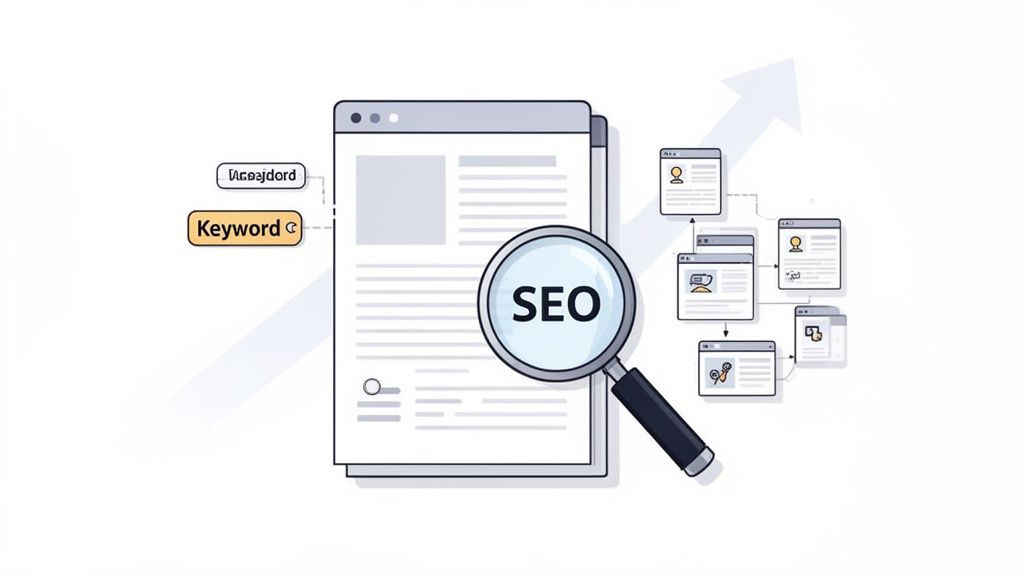
When content and SEO work in tandem, they create a flywheel effect. Exceptional content earns backlinks and social shares, signaling authority to Google, while technical SEO ensures that content is discoverable. Companies like HubSpot have mastered this, turning their blog into a massive lead-generation engine by providing comprehensive guides on virtually every marketing topic.
How to Implement This Strategy
- Conduct Keyword Research: Use tools like Ahrefs or SEMrush to identify terms your audience is searching for. Target long-tail keywords (phrases of three or more words) as they often have lower competition and higher purchase intent.
- Focus on E-E-A-T: Create content that demonstrates Experience, Expertise, Authoritativeness, and Trustworthiness. This is a key factor in Google's quality assessment.
- Optimize and Update: Regularly refresh your top-performing content with new information, statistics, and examples to maintain its relevance and ranking. For a deeper dive into crafting a comprehensive content plan, explore this modern content marketing strategy guide.
- Build Internal Links: Strategically link to other relevant pages on your site to help search engines understand your site structure and pass authority between pages. Discover more about our best practices for content marketing.
2. Influencer Marketing & Brand Partnerships
An increasingly essential digital marketing strategy idea involves leveraging influencer marketing and strategic brand partnerships. This approach goes beyond simple product placements; it focuses on collaborating with creators whose audience and values align with your brand. The core objective is to tap into an existing, engaged community and build trust through an authentic third-party endorsement, driving both brand awareness and direct conversions.
When executed correctly, influencer marketing provides a powerful form of social proof. Instead of a brand talking about itself, a trusted creator shares their genuine experience, making the message more relatable and persuasive. Brands like Gymshark have perfected this by building a long-term ecosystem of fitness creators who have grown alongside the company, creating a powerful and authentic marketing engine.
How to Implement This Strategy
- Prioritize Micro-Influencers: Focus on creators with 10,000 to 100,000 followers. They often have higher engagement rates and a more dedicated niche audience, leading to better ROI than celebrity-level influencers.
- Vet Potential Partners Thoroughly: Use tools like HypeAuditor or AspireIQ to analyze an influencer's audience demographics, engagement metrics, and authenticity. Ensure their followers are your target customers.
- Grant Creative Freedom: Provide a clear brief with campaign goals and key messages, but allow the influencer creative control to ensure the content feels natural to their audience. Authenticity is the key to success.
- Track Performance with Unique Codes: Implement unique discount codes or affiliate links for each influencer. This allows for precise tracking of clicks, conversions, and overall campaign profitability. Dive deeper into our influencer marketing best practices for more advanced tracking techniques.
3. Social media marketing & Community Building
An effective social media presence goes beyond broadcasting promotional messages; it’s about cultivating an engaged and loyal community. This digital marketing strategy idea centers on using platforms like Instagram, TikTok, and LinkedIn not just for reach, but for building genuine relationships. The core objective is to create a two-way dialogue, foster brand advocacy, and turn followers into a thriving community that feels connected to your brand.
When executed well, community building creates powerful social proof and deepens customer loyalty. Brands like Duolingo have achieved viral success on TikTok by embracing platform-native trends and a unique brand personality, making language learning feel fun and relatable. Similarly, Wendy's famously uses its witty and interactive Twitter presence to engage directly with millions of followers, creating a distinctive brand voice that stands out in a crowded market.
How to Implement This Strategy
- Select Platforms Strategically: Don’t try to be everywhere. Focus your efforts on the platforms where your target audience is most active and engaged. A B2B tech company will likely find more value on LinkedIn than on TikTok.
- Prioritize Authentic Engagement: Respond to comments, answer direct messages, and actively participate in conversations. Use social listening tools to monitor brand mentions and audience sentiment, allowing you to engage proactively.
- Create Platform-Specific Content: Tailor your content to fit the unique format and user expectations of each platform. What works as a polished carousel on Instagram may need to be a fast-paced, vertical video for TikTok Reels.
- Leverage User-Generated Content (UGC): Encourage your audience to share their experiences with your brand and feature their content on your channels. UGC builds trust and makes your community feel valued and seen. For more insights, learn how to build an audience from scratch on our blog about business growth strategies.
4. Email Marketing & Marketing Automation
Harnessing email marketing and automation is a foundational digital marketing strategy idea for building direct, lasting relationships with your audience. This approach involves using segmented email campaigns and automated workflows to nurture leads, retain customers, and drive conversions at scale. It moves beyond generic email blasts, focusing instead on delivering personalized, timely, and relevant messages triggered by specific user behaviors.
When executed correctly, marketing automation acts as a powerful engine for engagement and revenue. It allows you to create sophisticated customer journeys that feel personal and one-on-one. Companies like Amazon excel at this, using automated emails to send personalized product recommendations based on browsing history and past purchases, significantly boosting customer lifetime value and repeat business.
How to Implement This Strategy
- Build Your List Organically: Offer valuable lead magnets like ebooks, webinars, or checklists in exchange for an email address. Avoid purchasing lists, which leads to low engagement and high unsubscribe rates.
- Segment Your Audience: Group contacts based on demographics, purchase history, website behavior, and engagement level. This allows for highly targeted messaging that resonates with each specific segment.
- Create Automated Workflows: Set up triggered email sequences for key actions like welcome series for new subscribers, abandoned cart reminders, and post-purchase follow-ups. Tools like Mailchimp or Klaviyo make this accessible.
- Personalize and Test: Go beyond using just a first name. Personalize content based on user data. Continuously A/B test subject lines, send times, and call-to-action (CTA) buttons to optimize performance and improve metrics like open and click-through rates.
5. Paid Advertising (PPC, Display, Programmatic)
Paid advertising offers one of the most direct and scalable digital marketing strategy ideas for driving immediate traffic and conversions. This approach involves paying for ad placements across various platforms, including search engines (PPC), social media feeds, and vast display networks. It provides granular control over targeting, budgeting, and messaging, allowing businesses to reach specific audiences with precision and speed.
Unlike organic strategies that build momentum over time, paid campaigns can generate results from day one. Companies like Dollar Shave Club used aggressive PPC campaigns to rapidly acquire their initial customer base, while Slack leverages targeted LinkedIn ads to reach B2B decision-makers effectively. This strategy’s power lies in its measurability; every click and conversion can be tracked, enabling continuous optimization for better ROI.
How to Implement This Strategy
- Define Clear Objectives and KPIs: Before launching, determine your goal, whether it's lead generation, sales, or brand awareness. Establish your break-even cost-per-acquisition (CPA) and target return on ad spend (ROAS).
- Implement Robust Conversion Tracking: Set up tracking pixels and conversion events correctly from the start using tools like Google Tag Manager. Accurate data is essential for making informed optimization decisions.
- Test and Iterate Relentlessly: A/B test everything: ad copy, headlines, images, calls-to-action, and landing pages. Create multiple ad variations to identify which combinations resonate most with your audience.
- Refine Your Targeting: Use negative keywords to eliminate irrelevant search traffic in PPC campaigns. On social platforms, experiment with lookalike audiences, retargeting website visitors, and layering demographic or interest-based targeting to find your most profitable segments. Learn more about crafting a cohesive paid media plan in this guide to paid advertising strategy.
6. Personal Branding & LinkedIn Strategy
In today's trust-driven economy, building a strong personal brand, especially on a professional platform like LinkedIn, is a potent digital marketing strategy idea. This approach moves beyond corporate messaging by empowering key individuals within a company to become industry thought leaders. The goal is to build credibility, foster genuine connections, and attract high-quality leads and opportunities by associating a human face with your brand's expertise.
This strategy humanizes your business, creating a powerful channel for networking, business development, and talent acquisition. Thought leaders like Gary Vaynerchuk and Arianna Huffington have masterfully used their personal brands to build massive audiences and drive business growth, proving that people connect with people, not just logos. A strong executive presence on LinkedIn can directly translate into enhanced brand visibility and customer trust.
How to Implement This Strategy
- Optimize Your LinkedIn Profile: Treat your profile like a landing page. Use a professional headshot, write a keyword-rich headline that states your value proposition, and craft a compelling "About" section that tells your professional story.
- Create and Share Valuable Content: Consistently post content (1-2 times weekly) that provides genuine value to your network. Share industry insights, relatable professional stories, and expert commentary on current trends to establish your authority.
- Engage Authentically: The key to LinkedIn is networking, not just broadcasting. Spend time daily engaging with others' content through thoughtful comments, participate in relevant LinkedIn Groups, and build genuine relationships before making an ask.
- Leverage LinkedIn Features: Utilize tools like LinkedIn Articles and Newsletters to share long-form thought leadership. These features help you build a dedicated subscriber base and position yourself as a go-to expert in your field.
7. Video Marketing & YouTube Strategy
With video consumption at an all-time high, a dedicated YouTube strategy is no longer a niche tactic but a core component of a modern digital marketing strategy. This involves creating and optimizing video content to engage audiences, build brand authority, and drive conversions. The goal is to leverage the world's second-largest search engine to capture attention through diverse formats like tutorials, vlogs, webinars, and testimonials.
By establishing a presence on YouTube, you tap into a highly engaged audience actively seeking solutions and entertainment. Brands like Blendtec with its viral "Will It Blend?" series or TED-Ed with its educational dominance show how video can create memorable brand experiences and foster community. This approach turns passive viewers into loyal subscribers and customers.
How to Implement This Strategy
- Optimize for Video SEO: Research video-specific keywords and incorporate them into your titles, descriptions, and tags. Create compelling, high-contrast thumbnails to maximize click-through rates.
- Diversify Your Content Formats: Don't stick to one type of video. Experiment with long-form educational content, behind-the-scenes vlogs, customer testimonials, and live streams to keep your audience engaged.
- Embrace Short-Form Video: Capitalize on the trend of short-form video by efficiently converting your existing long-form content into YouTube Shorts. Using a dedicated YouTube to Shorts converter can streamline this process and expand your reach.
- Engage and Analyze: Actively respond to comments to build a community and signal engagement to the YouTube algorithm. Regularly analyze metrics like watch time, audience retention, and traffic sources to refine your content strategy.
8. Conversion Rate Optimization (CRO) & User Experience
Conversion Rate Optimization (CRO) is a systematic process of increasing the percentage of website visitors who take a desired action, be it filling out a form, making a purchase, or subscribing to a newsletter. Rather than chasing more traffic, this strategy focuses on maximizing the value of the traffic you already have. It is a data-driven approach that combines user experience (UX) analysis, A/B testing, and an understanding of user psychology to remove friction and guide users toward a goal.
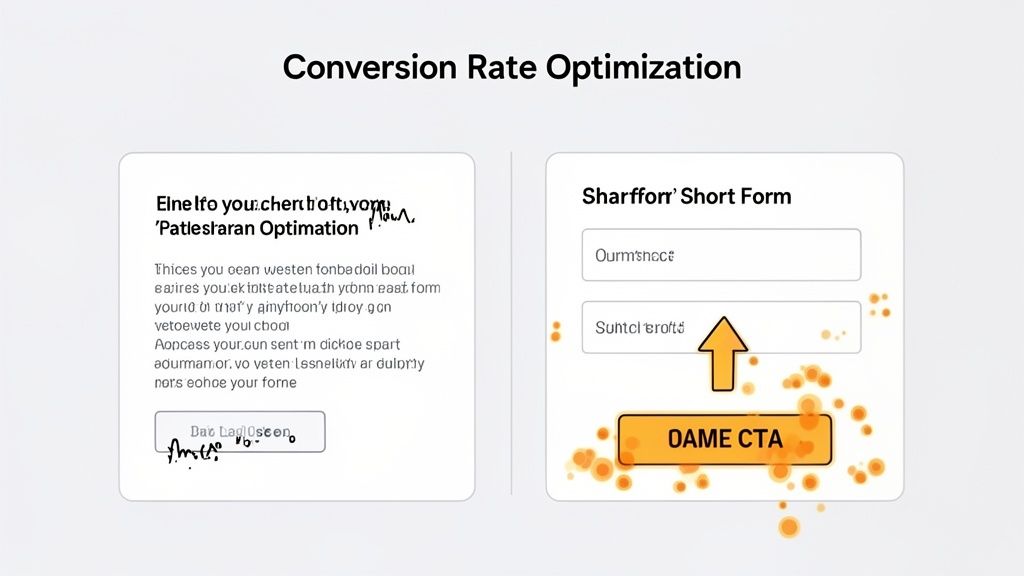
By methodically testing elements like headlines, calls-to-action (CTAs), page layout, and form fields, you can make incremental improvements that lead to significant gains in revenue and leads. Companies like Amazon are masters of CRO, constantly running micro-tests to optimize every step of the purchase journey. This is one of the most high-impact digital marketing strategy ideas because it directly translates effort into measurable business outcomes.
How to Implement This Strategy
- Establish a Baseline: Use tools like Google Analytics 4 to understand your current conversion rates. Install heat-mapping and session-recording tools like Hotjar or Microsoft Clarity to see how users actually interact with your site.
- Formulate a Hypothesis: Identify a high-traffic, high-impact page (like a landing page or checkout). Analyze user behavior to find a potential friction point and form a clear hypothesis, for example, "Changing the CTA button color from blue to orange will increase clicks because it stands out more."
- Run Controlled A/B Tests: Use platforms like Optimizely or VWO to test one variable at a time. Run the test until you achieve statistical significance to ensure your results are reliable, not just random chance.
- Optimize the Small Things: Test everything from headlines and copy to CTA button text, form length, and page speed. Removing even one unnecessary form field can significantly boost completions.
9. Content Partnerships & Collaboration Marketing
A powerful but often underutilized digital marketing strategy idea is to forge content partnerships with complementary brands, publications, or creators. This collaborative marketing approach involves co-creating valuable content to tap into new, relevant audiences and build shared authority. Instead of building an audience from scratch, you leverage the established trust and reach of a partner, creating a win-win scenario that benefits both parties with high-quality content and expanded visibility.
This strategy moves beyond simple guest posting into deeper integrations like co-hosted webinars, joint research reports, or podcast series. For instance, Shopify Plus frequently partners with agencies and tech companies to produce in-depth content and events for their enterprise audience, providing immense value while cross-promoting their respective ecosystems. The core principle is leveraging combined strengths for a greater impact than either party could achieve alone.
How to Implement This Strategy
- Identify Strategic Partners: Look for non-competing businesses that share a similar target audience. Tools like SparkToro can help you discover what your audience reads, watches, and listens to, revealing ideal collaboration candidates.
- Propose Clear Mutual Value: When you reach out, clearly articulate what’s in it for them. Focus on shared benefits like audience growth, lead generation, or enhanced brand credibility rather than just your own goals.
- Co-Create and Cross-Promote: Develop content that highlights the expertise of both partners. Once published, promote it aggressively across all of your combined channels-email lists, social media, and websites-to maximize reach.
- Track Shared KPIs: Establish clear metrics for success from the outset. Track referral traffic, leads generated from partner content, social engagement, and brand mentions to measure the true ROI of the collaboration.
10. Brand Storytelling & Authentic Marketing
In a market saturated with ads and self-promotion, one of the most resonant digital marketing strategy ideas is to connect with your audience on a human level through authentic storytelling. This strategy shifts the focus from selling products to sharing a compelling narrative that reflects your brand’s values, mission, and personality. The goal is to build an emotional connection that fosters deep loyalty and turns customers into advocates.
This approach creates a powerful differentiator that competitors cannot easily replicate. While features and prices can be matched, a genuine brand story is unique. Companies like Patagonia have mastered this by weaving their commitment to environmental activism into every piece of marketing, creating a fiercely loyal community that identifies with their mission, not just their products. This authenticity transforms transactions into meaningful relationships.
How to Implement This Strategy
- Define Your Core Narrative: Start with your "why." What is your founder's story? What mission drives your company? Codify your core values and ensure they are reflected in all communications.
- Show, Don't Just Tell: Use video, behind-the-scenes content, and employee spotlights to give your audience a genuine look at your company culture and operations. Transparency builds trust.
- Elevate Customer Stories: Feature testimonials and user-generated content that showcases how your customers have transformed or benefited from your brand. Their stories are your most powerful social proof.
- Be Vulnerable and Transparent: Don’t be afraid to share challenges, failures, and lessons learned. As Gary Vaynerchuk demonstrates, this level of honesty makes a brand more relatable and human.
11. Community Building & Engagement Marketing
A powerful, long-term digital marketing strategy is to build and nurture a dedicated community around your brand. This moves beyond transactional relationships, focusing on creating spaces for meaningful interaction, shared values, and mutual support. By fostering a sense of belonging in forums, social groups, or platforms like Discord and Slack, you can transform passive customers into passionate brand advocates.
This approach builds immense brand loyalty and creates a direct feedback loop with your most engaged users. For example, software company Miro nurtures a vibrant online community where users share templates, ask questions, and offer product suggestions. This not only reduces support costs but also drives product innovation and turns users into a powerful marketing force through word-of-mouth.
How to Implement This Strategy
- Choose the Right Platform: Select a platform where your audience already spends time. A gaming company might thrive on Discord, while a B2B SaaS business could benefit from a dedicated Slack or Circle community.
- Establish Clear Guidelines: Start with a clear purpose, values, and rules of engagement to ensure the space remains positive and productive for all members.
- Encourage User-Generated Content (UGC): Actively prompt members to share their experiences, projects, and tips. Highlight and reward top contributors to encourage participation and peer support.
- Provide Exclusive Value: Offer community members unique benefits, such as early access to new features, exclusive content, or direct Q&A sessions with company leaders to make membership feel special and worthwhile.
12. Marketing Analytics & Data-Driven Strategy
Shifting from assumption-based decisions to a data-driven approach is one of the most transformative digital marketing strategy ideas a business can adopt. This involves a systematic process of measuring, analyzing, and optimizing all marketing efforts based on performance data. By implementing a robust analytics framework, you can gain deep insights into customer behavior, campaign effectiveness, and channel ROI, allowing you to allocate resources with precision and maximize your impact.
This strategy moves beyond vanity metrics to focus on tangible business outcomes. For example, Airbnb leverages extensive data analysis to understand user journeys, optimize pricing, and personalize recommendations, which has been a cornerstone of its global growth. A data-first mindset ensures that every marketing dollar is accountable and every campaign is an opportunity to learn and improve. It’s the difference between guessing what works and knowing what works.
How to Implement This Strategy
- Establish a Solid Foundation: Implement tools like Google Analytics 4 with proper event tracking and set up consistent UTM parameters for all campaigns. This ensures your raw data is clean, accurate, and ready for analysis.
- Integrate and Visualize Data: Connect your CRM, marketing automation platform, and analytics tools. Create custom dashboards in tools like Google Looker Studio or Tableau to monitor KPIs that matter most to key stakeholders.
- Focus on Key Business Metrics: Move beyond basic traffic and track metrics like Customer Acquisition Cost (CAC), Lifetime Value (LTV), and multi-touch attribution to understand the true impact of each channel.
- Iterate Based on Insights: Conduct regular performance reviews to share findings with your team. Use A/B testing and statistical analysis to validate hypotheses and continuously refine your approach. For a complete guide, explore this blueprint for a data-driven marketing strategy.
12-Strategy Digital Marketing Comparison
| 🔄 Implementation Complexity | ⚡ Resources & Efficiency | 📊 Expected Outcomes | 🎯 Ideal Use Cases | ⭐ Key Advantages / 💡 Tips |
|---|---|---|---|---|
| Content Marketing & SEO Integration | Moderate–high: requires writers, SEOs, and technical fixes | Steady organic traffic growth, improved SERP rankings, qualified leads over months | B2B SaaS, evergreen content plays, brands seeking sustained organic growth | ⭐ Long-term compounding; 💡 Prioritize keyword research, content clusters, and E‑E‑A‑T |
| Influencer Marketing & Brand Partnerships | Moderate: discovery, vetting, and relationship management | Rapid awareness and engagement; variable direct conversions | Consumer brands, DTC, lifestyle, niche communities | ⭐ High authenticity when matched; 💡 Use micro-influencers, track engagement quality |
| Social Media Marketing & Community Building | Moderate: content cadence, community moderation, paid/organic mix | Increased brand visibility, engagement, and short-term traffic spikes | Consumer brands, B2C growth, community-focused launches | ⭐ Real-time engagement; 💡 Focus on platform-specific formats and consistent posting |
| Email Marketing & Marketing Automation | Moderate: setup of automation, segmentation, and CRM integration | High ROI (nurture → conversions), predictable revenue from lists | E‑commerce, SaaS onboarding, lifecycle marketing | ⭐ Very high ROI; 💡 Segment, personalize, and use triggered workflows |
| Paid Advertising (PPC, Display, Programmatic) | Moderate–high: campaign setup, bidding, and creative testing | Immediate traffic and leads with measurable ROI if tracked well | Performance-driven acquisition, product launches, demand capture | ⭐ Fast scalable results; 💡 Set clear ROI targets, implement conversion tracking |
| Personal Branding & LinkedIn Strategy | Low–moderate: profile optimization and regular content creation | Gradual authority, inbound B2B leads, networking opportunities | Executives, founders, B2B sales and thought leaders | ⭐ Strengthens credibility; 💡 Post consistently, optimize headline, engage authentically |
| Video Marketing & YouTube Strategy | High: production, editing, channel optimization, and SEO | High engagement, strong referral traffic, improved SEO and trust | Brands needing deep storytelling or product demos; creator-led growth | ⭐ High engagement potential; 💡 Optimize thumbnails, titles, and repurpose clips |
| Conversion Rate Optimization (CRO) & UX | Moderate: analytics, testing framework, iterative experiments | Improved conversion rates and revenue per visitor, better UX | High-traffic landing pages, checkout funnels, SaaS trial sign-ups | ⭐ Efficient revenue gains; 💡 Test hypotheses, run A/Bs, optimize mobile and speed |
| Content Partnerships & Collaboration Marketing | Low–moderate: partner identification and coordination | Access to new audiences, shared costs, backlink and credibility benefits | Complementary brands, thought leadership, webinar co-hosts | ⭐ Cost-effective reach expansion; 💡 Define mutual KPIs and cross-promote channels |
| Brand Storytelling & Authentic Marketing | Moderate: narrative development and consistent multi-channel execution | Strong emotional connection, higher loyalty and lifetime value | Mission-driven brands, differentiation strategies, employer branding | ⭐ Deep brand differentiation; 💡 Be transparent, share founder/customer stories |
| Community Building & Engagement Marketing | High: ongoing moderation, events, and member management | Long-term retention, advocacy, user-generated content, reduced churn | Memberships, niche products, creator-led ecosystems | ⭐ Creates network effects; 💡 invest in moderators and member recognition |
| Marketing Analytics & Data-Driven Strategy | High: tracking infrastructure, dashboards, and analyst expertise | Clear ROI insights, optimized budget allocation, better channel decisions | Companies scaling marketing spend and needing attribution | ⭐ Enables informed decisions; 💡 Implement GA4/UTMs, ensure data governance and dashboards |
Turning Ideas Into Impactful Results
You've just explored a comprehensive toolkit of digital marketing strategy ideas, each a powerful engine for growth when executed with precision and creativity. From the foundational synergy of Content Marketing and SEO to the human connection forged through Brand Storytelling and Community Building, the path to digital dominance is not about finding a single magic bullet. Instead, it's about building a cohesive, multi-channel machine where each part amplifies the others.
The digital landscape is in perpetual motion, but the core principles detailed here remain constant. True success is rooted in a deep understanding of your audience, a relentless commitment to providing value, and an unwavering focus on data. The most effective brands don't just randomly deploy tactics; they weave together strategies like Paid Advertising and Conversion Rate Optimization to create a seamless customer journey that feels both personal and powerful.
From Inspiration to Implementation
The sheer volume of possibilities can feel overwhelming, but the key is to resist the urge to do everything at once. The journey from a list of ideas to a robust, revenue-generating strategy begins with focused action. Your next steps should be deliberate and strategic:
-
Prioritize Based on Goals: Re-evaluate your primary business objectives. Are you focused on lead generation? Then perhaps a combination of Paid Advertising and a sophisticated Email Marketing Automation funnel is your best starting point. Is brand awareness your top priority? Then a strategy built on Influencer Partnerships, Video Marketing, and Community Engagement will likely yield the strongest results.
-
Conduct a Resource Audit: Be realistic about your team's bandwidth, budget, and expertise. If you have a talented writer, doubling down on Content and SEO is a natural fit. If you have a charismatic founder, leveraging Personal Branding on LinkedIn could be a low-cost, high-impact initiative.
-
Commit to a Pilot Program: Select one or two of the most promising digital marketing strategy ideas and commit to a 90-day pilot. Define clear KPIs, execute with discipline, and analyze the results rigorously. This "test and learn" approach minimizes risk and allows you to build momentum based on real-world data, not just assumptions. A successful strategy is not a static document; it is a living process of continuous measurement and refinement.
The Compounding Power of a Holistic Strategy
Ultimately, the strategies outlined in this article are not just isolated channels. They are interconnected gears in a larger marketing ecosystem. A powerful Brand Story makes your Paid Ads more compelling. An optimized user experience from CRO ensures your SEO traffic converts. Data from your Marketing Analytics informs your next Content Partnership.
When these elements work in harmony, they create a compounding effect that builds unstoppable momentum, strengthens brand equity, and drives sustainable growth. Mastering this integrated approach is what separates fleeting campaigns from enduring market leadership. It's the difference between just being present online and truly owning your digital domain.
Ready to transform these powerful digital marketing strategy ideas from a checklist into a high-performing growth engine for your business? The expert strategists at ReachLabs.ai specialize in building and executing data-driven, holistic marketing systems that deliver measurable results. Visit ReachLabs.ai to discover how our tailored approach can help you turn ambitious goals into tangible revenue.