In the current business environment, a strong digital presence is non-negotiable for growth. Yet, with a vast array of digital marketing strategies for business available, it’s easy to feel overwhelmed. Which channels will deliver the best return on investment? How do you move from broad concepts to a concrete, actionable plan that generates leads and drives sales? The key isn’t just to be active online; it's to be strategically active.
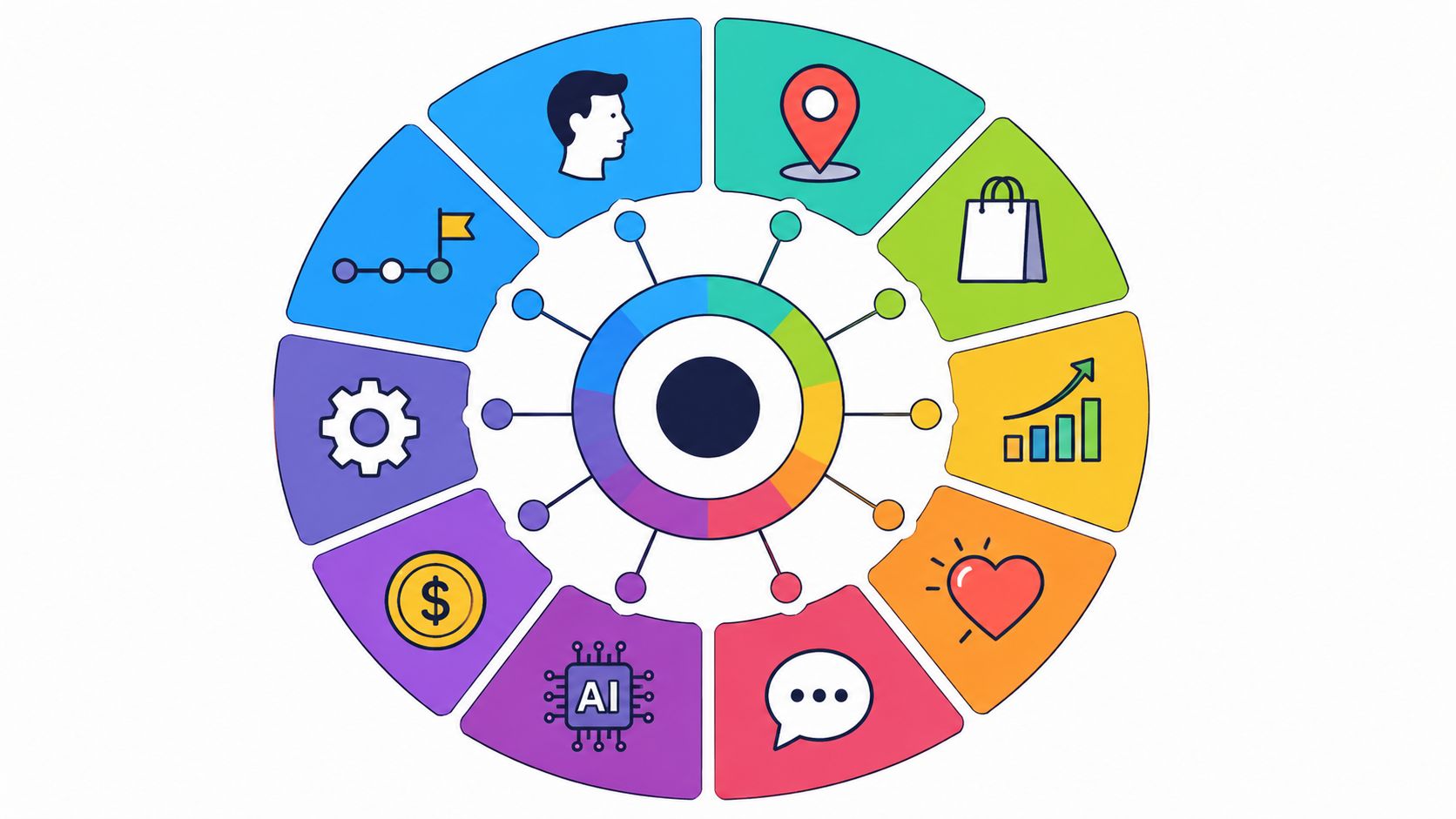
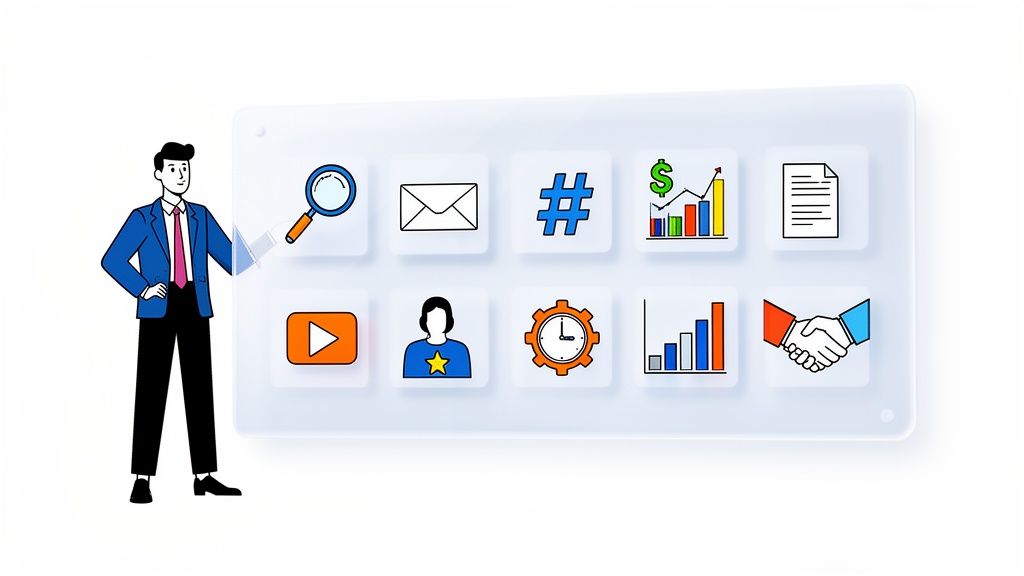
This guide is designed to eliminate the guesswork. We've compiled a comprehensive roundup of 10 essential digital marketing strategies, each tailored to solve specific business challenges. Forget generic advice and surface-level tips. Instead, we provide a blueprint for execution, detailing precisely what each strategy involves, why it is effective, and the key performance indicators (KPIs) you must track to measure success.
Whether you're looking to enhance brand awareness through Content Marketing & SEO, generate high-quality leads via LinkedIn Outreach, or maximize conversions with Paid Advertising, this article provides the clarity you need. We'll explore everything from influencer partnerships to video marketing and conversion rate optimization, offering practical implementation steps, budget considerations, and real-world examples. This is your roadmap to building a cohesive and powerful marketing engine that delivers tangible, measurable results and fuels sustainable business growth. Consider this your definitive resource for selecting and implementing the right digital marketing strategies for your business goals.
1. Content Marketing & SEO Strategy
Content marketing is the practice of creating and distributing valuable, relevant, and consistent content to attract and engage a specific audience. When fused with Search Engine Optimization (SEO), it becomes one of the most powerful digital marketing strategies for business, ensuring your content is discovered by potential customers actively searching for solutions. Instead of pitching products, you provide answers, build trust, and establish your brand as an industry authority.
This foundational strategy works by aligning your content with what your audience is searching for online. By solving their problems and answering their questions, you draw them to your website organically, generating qualified leads and fostering long-term customer loyalty without a hard sell.

Why It Works & Key Metrics
This approach excels at building sustainable, long-term traffic that doesn't disappear when you stop paying for ads. It positions your brand as a helpful expert, making the sales process smoother. Success is measured by tracking organic traffic, keyword rankings, conversion rates from blog posts, and backlinks acquired.
Actionable Implementation Tips
- Conduct Keyword Research: The first step is to understand what your audience is searching for. To find the best keywords for your business, you need to identify topics that have sufficient search volume and align with your offerings.
- Focus on E-E-A-T: Google prioritizes content demonstrating Experience, Expertise, Authoritativeness, and Trustworthiness. Showcase your credentials, cite reliable sources, and create content that genuinely helps the reader.
- Optimize On-Page Elements: Ensure every piece of content has optimized title tags, meta descriptions, and headers (H1, H2, H3). Use your target keyword naturally throughout the text.
- Build Internal Links: Link between related articles on your site to help search engines understand your content structure and keep visitors engaged longer.
Case Note: HubSpot built its entire marketing flywheel around this concept. By creating an extensive library of free, high-quality blogs, templates, and guides covering every imaginable marketing and sales topic, they attract millions of monthly visitors. This traffic converts into leads for their CRM software, demonstrating the immense power of an effective content and SEO strategy.
2. Influencer Marketing & Partnership Strategy
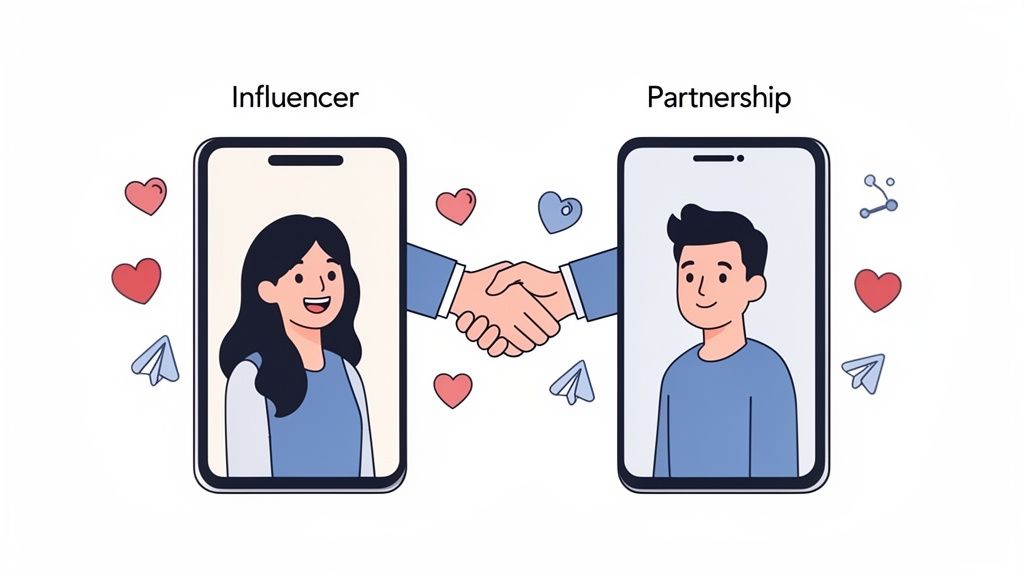
Influencer marketing is a strategy that leverages partnerships with content creators who have established credibility and an engaged audience in a specific niche. This approach moves beyond traditional advertising by tapping into the trust and authenticity these individuals have built with their followers. Instead of the brand speaking directly to consumers, a trusted voice recommends the product or service, making the message feel more like a genuine suggestion than a sales pitch.
This strategy works by borrowing the influencer's credibility and reach to connect with a highly targeted audience in an authentic way. It’s a powerful method for building brand awareness, driving engagement, and generating sales through endorsements that feel natural and integrated into the content consumers already enjoy.
Why It Works & Key Metrics
This approach excels at cutting through the noise of digital advertising and building social proof quickly. A recommendation from a trusted creator can significantly influence purchasing decisions. Key metrics for success include reach and impressions, engagement rate (likes, comments, shares), click-through rates from unique links, and conversion rates measured by sales or sign-ups.
Actionable Implementation Tips
- Prioritize Audience Alignment: Focus on the influencer's audience demographics and engagement rather than just their follower count. A micro-influencer with a highly engaged, niche audience often provides a better return on investment.
- Establish Clear Objectives: Define what you want to achieve before you start. Are you looking for brand awareness, lead generation, or direct sales? Your goal will determine the type of influencer and campaign you run.
- Grant Creative Freedom: While providing clear brand guidelines is essential, allow influencers the creative freedom to present your product in their own authentic voice. Their audience follows them for their unique style, not for scripted ads.
- Track Performance with Unique Codes: Provide each influencer with a unique discount code or affiliate link. This is the most effective way to attribute sales directly to their efforts and measure the campaign's ROI.
Case Note: Watch brand Daniel Wellington experienced explosive growth by pioneering a micro-influencer strategy. They sent their watches to thousands of smaller creators on Instagram, who then posted pictures featuring the product. This created massive user-generated social proof and made the brand appear ubiquitous, contributing to a 900% growth in just three years and solidifying its place as a key digital marketing case study.
3. LinkedIn Outreach & Personal Branding
LinkedIn outreach combines strategic prospecting with professional networking to generate high-value leads and build influential personal brands. This powerful B2B strategy involves sending thoughtful connection requests, crafting personalized messages, and consistently sharing valuable content to establish authority, nurture relationships, and drive business growth directly within a professional ecosystem.
Unlike broad advertising, this approach focuses on one-to-one human connection. By building a strong personal brand as an industry expert, you create an inbound effect where prospects seek you out. It transforms cold outreach into warm conversations, making it an indispensable digital marketing strategy for business in the B2B space.
Why It Works & Key Metrics
This strategy excels at targeting specific decision-makers and building genuine trust, which is critical for high-ticket B2B sales. It bypasses traditional gatekeepers and allows for direct, meaningful engagement. Key metrics to track include connection acceptance rate, reply rate to messages, leads generated, and profile views.
Actionable Implementation Tips
- Optimize Your Profile & Headline: Your LinkedIn profile is your landing page. Craft a headline that clearly states your value proposition and includes relevant keywords, not just your job title.
- Share Valuable Content Consistently: Post 1-3 times per week, sharing industry insights, case studies, or personal perspectives. This establishes your expertise and keeps you top-of-mind.
- Personalize Every Connection Request: Reference a shared connection, a recent post they made, or something specific about their company. Avoid generic, templated requests.
- Engage Before You Connect: Warm up prospects by liking, commenting, and sharing their content for a week or two before sending a connection request. This builds familiarity.
- Use Sales Navigator for Advanced Targeting: Leverage LinkedIn Sales Navigator to filter prospects by company size, role, industry, and recent activities for hyper-targeted outreach.
Case Note: Many B2B tech companies now generate over 60% of their marketing-qualified leads directly from LinkedIn. Executives who build a personal brand by consistently posting thought leadership content often see a 3x higher conversion rate on their outreach efforts compared to those with a passive presence, proving the immense ROI of combining personal branding with strategic outreach.
4. Paid Advertising (PPC, Display & Retargeting)
Paid advertising is a digital marketing strategy where businesses pay to place their ads on search engines, social media platforms, and other websites. This encompasses Pay-Per-Click (PPC) ads on Google, targeted social media campaigns on platforms like Facebook and Instagram, and display ads across the web. It offers immediate visibility and precise targeting, allowing you to reach potential customers at the exact moment they are looking for your products or services.
Unlike organic strategies that take time to build momentum, paid advertising provides instant traffic and data. By bidding on keywords or targeting specific demographics and behaviors, businesses can place their message directly in front of a highly relevant audience, making it a powerful tool for rapid lead generation, sales, and brand awareness.
Why It Works & Key Metrics
This strategy delivers fast, measurable results and allows for granular control over who sees your ads, when, and where. It’s highly scalable and provides rich data for optimizing campaigns in real time. Key metrics include Return on Ad Spend (ROAS), Cost Per Acquisition (CPA), Click-Through Rate (CTR), and Conversion Rate. To properly evaluate your campaign success, it's crucial to calculate your return on ad spend and adjust budgets accordingly.
Actionable Implementation Tips
- Define Your Target Audience: Start with a crystal-clear buyer persona. Use demographic, psychographic, and behavioral data to target the right people on platforms like Facebook or Google.
- Implement Conversion Tracking: Set up conversion tracking pixels and UTM parameters from day one. Without accurate data, you cannot measure ROI or optimize your campaigns effectively.
- A/B Test Everything: Continuously test different ad copy, headlines, images, and calls-to-action to identify what resonates most with your audience and drives the best results.
- Set Up Retargeting Campaigns: Install a retargeting pixel on your website to show ads to users who visited but didn't convert. This keeps your brand top-of-mind and significantly increases conversion rates.
Case Note: Airbnb uses sophisticated retargeting campaigns to great effect. If a user browses listings in a specific city but doesn't book, Airbnb shows them ads featuring those exact or similar listings on social media and other websites. This personalized follow-up nudges potential travelers back to their site to complete the booking, demonstrating the power of timely, relevant paid advertising.
5. Email Marketing & Automation
Email marketing is the strategic practice of sending targeted messages to a list of subscribers who have opted to receive communication from your brand. When combined with automation, this digital marketing strategy allows businesses to deliver personalized, timely, and relevant content at scale, nurturing leads and driving sales directly in their inbox. It remains one of the highest-ROI channels available.
This powerful approach works by building a direct line of communication with your audience, independent of third-party algorithms. By segmenting your audience and automating email sequences based on user behavior (like a welcome series for new subscribers or an abandoned cart reminder), you can create a personalized customer journey that builds trust and encourages action.
Why It Works & Key Metrics
Email marketing generates an owned audience, giving you direct access to potential and existing customers without paying for ad space. Automation makes this personal connection scalable. Key metrics to monitor include open rates, click-through rates (CTR), conversion rates from email campaigns, and list growth rate.
Actionable Implementation Tips
- Segment Your Audience: Group subscribers based on their interests, purchase history, or engagement level. This allows for highly targeted messaging that resonates more effectively.
- Create a Welcome Sequence: Automate a series of 3-5 emails for new subscribers to introduce your brand, set expectations, and provide immediate value, such as a discount or helpful resource.
- Use Personalization: Go beyond using a subscriber’s first name. Personalize content based on their past interactions with your website, such as viewed products or downloaded content.
- A/B Test Your Subject Lines: Continuously test different subject lines to understand what language, length, and style drive the highest open rates with your specific audience.
Case Note: E-commerce platform Klaviyo empowers brands to leverage hyper-personalized email automation. A fashion retailer, for example, can automatically send a "back in stock" notification to every user who previously viewed an unavailable item. This targeted, behavior-driven communication directly converts interest into sales, showcasing the power of effective email automation.
6. Social Media Marketing & Community Building
Social media marketing involves using platforms like Instagram, TikTok, LinkedIn, and Facebook to build your brand’s presence, connect with your audience, and drive business goals. More than just broadcasting advertisements, this strategy focuses on creating authentic two-way conversations and fostering a loyal community around your brand through consistent, engaging content and active participation.
This approach transforms your brand from a faceless entity into a relatable personality. By sharing valuable content, responding to comments, and encouraging user-generated content (UGC), you build genuine relationships. These connections lead to higher brand loyalty, word-of-mouth marketing, and a dedicated customer base that feels seen and heard.
Why It Works & Key Metrics
Social media excels at building brand affinity and providing direct access to customer feedback and market trends. It allows you to humanize your brand and create powerful social proof. Key metrics to track include engagement rate (likes, comments, shares), follower growth, reach and impressions, and click-through rates to your website.
Actionable Implementation Tips
- Choose Platforms Wisely: Don't try to be everywhere. Focus on 2-3 platforms where your target audience is most active. A B2B tech company will find more value on LinkedIn, while a fashion brand will thrive on Instagram and TikTok.
- Develop a Content Strategy: Plan a mix of content types: educational posts, behind-the-scenes glimpses, user-generated content features, and entertaining videos. Consistency is crucial, so use a content calendar.
- Engage Authentically: Respond to comments and direct messages promptly. Go beyond generic replies by asking questions and starting conversations. Dedicate time daily to interact with your community.
- Utilize Native Features: Leverage platform-specific tools like Instagram Reels, TikTok sounds, and LinkedIn Polls. Algorithms often favor content made with their newest features, boosting your visibility. If you need inspiration, you can find a comprehensive social media marketing strategy example to guide your planning.
Case Note: Duolingo transformed its brand perception using TikTok. By creating a humorous, unhinged persona for its owl mascot, "Duo," the company went viral. Their short, relatable videos have little to do with language learning but have built an enormous, engaged community, proving that a strong brand personality is one of the most effective digital marketing strategies for business on social platforms.
7. Video Marketing & YouTube Strategy
Video marketing involves creating and sharing video content to engage audiences, promote brands, and drive sales. When combined with a platform like YouTube, it transforms into a powerful digital marketing strategy for business, leveraging the internet's second-largest search engine to build a loyal community. This approach uses the power of visual storytelling to explain complex ideas, showcase products in action, and forge strong emotional connections with viewers.
This strategy works by capturing attention in a way that text and images cannot. From short-form clips on TikTok and Instagram Reels to in-depth tutorials on YouTube, video content meets consumers on their preferred platforms. It allows you to demonstrate your expertise, humanize your brand, and guide potential customers through their buying journey in a dynamic and memorable format.
Why It Works & Key Metrics
Video excels at boosting engagement and increasing conversion rates because it is easy to consume and highly shareable. It builds a deeper level of trust by showing the people and personality behind a brand. Success is measured by tracking viewer retention, watch time, click-through rate (CTR) on calls-to-action, and subscriber growth.
Actionable Implementation Tips
- Optimize for Search: Treat your video titles and descriptions like a blog post. Conduct keyword research to understand what your audience is searching for and include those terms naturally.
- Create Compelling Thumbnails: Your thumbnail is your video's billboard. Use bold colors, high-contrast images, and clear, easy-to-read text to maximize clicks. Including a human face often improves performance.
- Hook Viewers Immediately: The first 3-5 seconds are critical. Start with a strong hook that clearly states the video's value proposition or asks an intriguing question to keep viewers watching.
- Repurpose Content: Turn one long-form YouTube video into multiple short-form clips for TikTok, Instagram Reels, and YouTube Shorts. This maximizes your content's reach across different platforms with minimal extra effort.
Case Note: Dollar Shave Club launched its entire brand with a single, viral YouTube video in 2012. The witty and low-budget ad, "Our Blades Are F***ing Great," explained their value proposition perfectly and garnered millions of views. This video-first approach generated 12,000 orders in the first 48 hours, proving that a creative video strategy can build a brand from the ground up.
8. Conversion Rate Optimization (CRO) & Landing Page Strategy
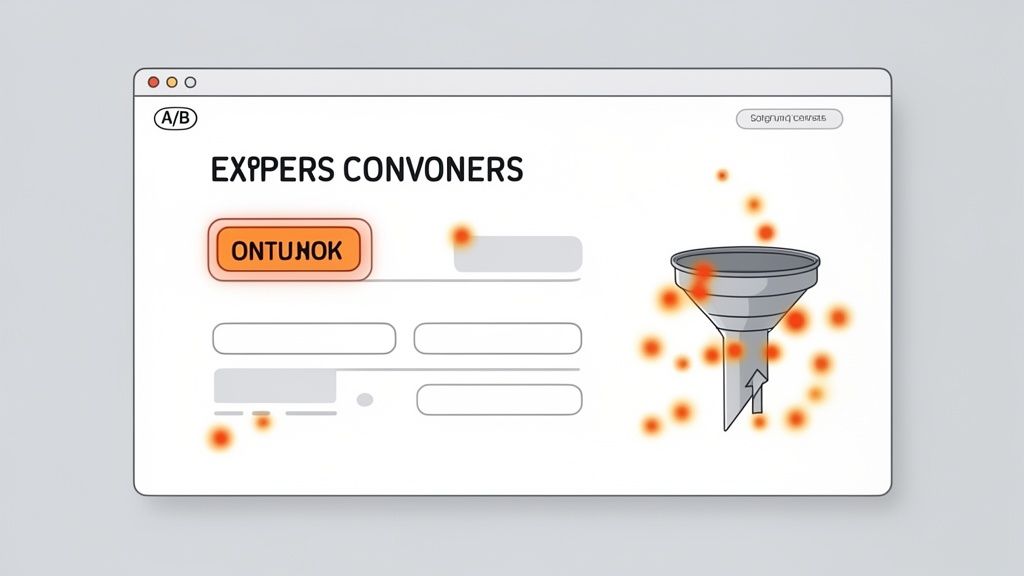
Conversion Rate Optimization (CRO) is a systematic process of increasing the percentage of website visitors who take a desired action, such as making a purchase, filling out a form, or subscribing to a newsletter. Rather than guessing what works, CRO uses data and user feedback to refine your website and landing pages, removing friction points and making it easier for users to convert. It's one of the most cost-effective digital marketing strategies for business because it maximizes the value of the traffic you already have.
This data-driven strategy focuses on understanding how users navigate your site, what actions they take, and what stops them from achieving their goals. By continuously testing and improving elements like headlines, calls-to-action (CTAs), and page layouts, you can turn more browsers into buyers and generate higher returns from every other marketing channel.
Why It Works & Key Metrics
CRO directly impacts your bottom line by lowering customer acquisition costs and increasing customer lifetime value. It works because it's based on real user behavior, not assumptions. Key metrics include conversion rate (the primary KPI), bounce rate, average session duration, and click-through rate on key page elements.
Actionable Implementation Tips
- Identify High-Impact Pages: Start optimizing pages that receive the most traffic or are most critical to your sales funnel, like your homepage, pricing page, or key service landing pages.
- Test One Variable at a Time: To get clear, reliable data, conduct A/B tests where you only change a single element, such as the headline, button color, or form length.
- Focus on the User Journey: Use tools like heatmaps and session recordings to identify where users are getting stuck or confused. Eliminate unnecessary form fields and simplify navigation.
- Leverage Social Proof and Urgency: Add testimonials, reviews, and trust badges to build credibility. Create urgency with limited-time offers or countdown timers to encourage immediate action.
Case Note: Amazon famously implemented its "1-Click" ordering button after extensive testing showed it dramatically reduced cart abandonment by removing friction from the checkout process. This seemingly small change streamlined the path to purchase, significantly boosting conversions and contributing billions in revenue, highlighting CRO's immense impact.
9. Strategic Partnership & Co-Marketing Initiatives
Strategic partnerships involve collaborating with non-competing, complementary businesses to create mutually beneficial marketing campaigns. This strategy leverages the established trust, audience, and resources of a partner to expand your reach, generate high-quality leads, and add value to your customer base. Instead of building an audience from scratch, you tap into an existing one that is already interested in your niche.
This powerful digital marketing strategy for business works by creating a win-win scenario. You and your partner cross-promote services, create joint content, or offer integrated solutions, exposing both brands to new, relevant customers. It's a cost-effective way to accelerate growth and build credibility through association with a trusted brand.
Why It Works & Key Metrics
This approach provides a powerful shortcut to audience building and lead generation by borrowing credibility and reach. It allows you to access a pre-qualified audience, making it a highly efficient tactic. Success is measured by tracking referral traffic, leads generated from partner channels, joint conversion rates, and the overall customer acquisition cost (CAC) reduction.
Actionable Implementation Tips
- Identify Aligned Partners: Look for businesses that share your target audience but are not direct competitors. Ensure their brand values and quality standards align with yours.
- Define a Win-Win Offer: Clearly outline what each party will contribute and gain. This could be a joint webinar, a co-authored ebook, an integrated product feature, or an exclusive discount swap.
- Create a Co-Marketing Agreement: Formalize the partnership by defining goals, roles, responsibilities, and key metrics. This prevents misunderstandings and ensures both sides are accountable.
- Cross-Promote on All Channels: Leverage every available channel, including email lists, social media profiles, blogs, and websites, to maximize the campaign's reach and impact.
Case Note: The partnership between Uber and Spotify is a prime example of successful co-marketing. By allowing users to connect their Spotify accounts to control the music during their Uber ride, the collaboration created a unique, enhanced customer experience. This integration provided tangible value, strengthening brand loyalty for both companies and encouraging user crossover between the two platforms.
10. Investor Pitch & Growth Hacking Strategy
This specialized approach combines compelling storytelling for fundraising with rapid, unconventional marketing experiments designed for exponential growth. Growth hacking focuses on the entire user funnel, from awareness to referral, using data-driven tests to find the most efficient ways to scale a business. When paired with a strong investor pitch, it creates a powerful narrative of traction and future potential.
Unlike traditional marketing, this strategy is less about brand building and more about achieving specific growth metrics quickly and cost-effectively. It's a mindset of continuous experimentation, crucial for startups and innovative companies needing to demonstrate market viability and secure funding to fuel their expansion.
Why It Works & Key Metrics
This hybrid strategy works because it creates a self-reinforcing cycle: growth hacks generate impressive user metrics, which then become the undeniable proof points in an investor pitch. This data-backed story is far more compelling than projections alone. Success is measured by tracking user acquisition cost (UAC), viral coefficient, customer lifetime value (LTV), and monthly recurring revenue (MRR) growth rates.
Actionable Implementation Tips
- Create a Data-Driven Pitch: Build your investor pitch deck around tangible traction. Showcase user growth charts, engagement metrics, and positive cohort analysis to prove your business model is working.
- Focus on One Metric That Matters (OMTM): Identify a single, crucial metric that best represents your core business value (e.g., active users, bookings). Focus all growth hacking efforts on moving this number.
- Implement Viral Loops: Build shareability directly into your product. This could be a referral program that rewards both the sender and the receiver, encouraging users to become brand advocates.
- Test Channels Rapidly: Systematically test and measure various marketing channels, from social media ads to community engagement or unconventional PR. Double down on what works and cut what doesn't, fast.
Case Note: Dropbox is a classic example of this strategy. To avoid high paid acquisition costs, they implemented a simple referral program offering free extra storage to both the referrer and the new user. This built-in viral mechanic was a core part of their growth story, leading to a 3900% growth in 15 months and helping them secure essential funding.
10-Strategy Digital Marketing Comparison
| Strategy | 🔄 Implementation Complexity | ⚡ Resource & Speed | 📊 Expected Outcomes (⭐ Quality) | Ideal Use Cases | 💡 Key Advantages / Tips |
|---|---|---|---|---|---|
| Content Marketing & SEO Strategy | 🔄 High — multi-month program (content + technical SEO) | ⚡ Moderate (writers, SEO tools, time; slow payoff) | 📊 Long-term organic traffic, authority, steady leads; ⭐⭐⭐⭐ | B2B SaaS, thought leadership, long-funnel purchases | 💡 Cost-effective over time; requires consistency and keyword strategy |
| Influencer Marketing & Partnership Strategy | 🔄 Medium — campaign & relationship management | ⚡ Variable (creator fees, management; fast awareness) | 📊 High brand awareness and engagement; ROI varies; ⭐⭐⭐ | DTC, lifestyle, product launches, awareness campaigns | 💡 Prioritize audience alignment, start with micro-influencers |
| LinkedIn Outreach & Personal Branding | 🔄 Medium — personalized sequences and profile work | ⚡ Low–Moderate (time, Sales Navigator; scalable with automation) | 📊 High-quality B2B leads and professional authority; ⭐⭐⭐⭐ | B2B sales, executive branding, lead generation for SaaS | 💡 Personalize outreach, post thought leadership regularly |
| Paid Advertising (PPC, Display & Retargeting) | 🔄 High — targeting, tracking, continuous optimization | ⚡ High (ad spend + specialists; immediate results) | 📊 Immediate traffic & measurable conversions; scalable ROAS; ⭐⭐⭐⭐ | Demand-gen, rapid testing, product launches, seasonal promos | 💡 Use tracking/UTMs and A/B tests; monitor ROAS closely |
| Email Marketing & Automation | 🔄 Low–Medium — list build, segmentation, automation flows | ⚡ Low–Moderate (tools, copy; fast to launch, compound returns) | 📊 High ROI and retention; strong nurture/repurchase performance; ⭐⭐⭐⭐⭐ | E‑commerce, SaaS onboarding, lead nurturing, retention | 💡 Segment aggressively and automate welcome/sequencing flows |
| Social Media Marketing & Community Building | 🔄 Medium — ongoing content + community management | ⚡ Moderate (content creators, engagement time; steady growth) | 📊 Brand awareness, community loyalty, viral potential; ⭐⭐⭐ | Consumer brands, community-led growth, culture marketing | 💡 Focus on 2–3 platforms; engage authentically and encourage UGC |
| Video Marketing & YouTube Strategy | 🔄 High — production, SEO, and distribution | ⚡ High (production costs/time; high engagement lifespan) | 📊 Strong engagement, trust and conversions; evergreen search value; ⭐⭐⭐⭐ | Product demos, tutorials, brand storytelling, educational content | 💡 Optimize titles/thumbnails and repurpose long-form into shorts |
| Conversion Rate Optimization (CRO) & Landing Page Strategy | 🔄 Medium–High — testing cadence and analysis | ⚡ Moderate (tools, sufficient traffic; iterative pace) | 📊 Higher conversions and lower CAC from same traffic; ⭐⭐⭐⭐ | High-traffic pages, paid campaigns, signup/checkout flows | 💡 Start with high-traffic pages, test CTAs/headlines first |
| Strategic Partnership & Co-Marketing Initiatives | 🔄 High — partner identification and alignment | ⚡ Moderate (coordination time; shared resources can speed reach) | 📊 Expanded audience, shared costs, credibility lift; ⭐⭐⭐ | Market entry, complementary product promotion, joint offers | 💡 Define clear goals/metrics and pilot small before scaling |
| Investor Pitch & Growth Hacking Strategy | 🔄 High — pitchcraft + rapid experimentation | ⚡ Moderate–High (team, experiments; can yield fast spikes) | 📊 Potential rapid user growth and funding; variable sustainability; ⭐⭐⭐⭐ | Startups seeking funding, rapid PMF testing, viral growth plays | 💡 Combine data-driven pitch decks with repeatable growth loops |
From Strategy to Success: Building Your Integrated Marketing Engine
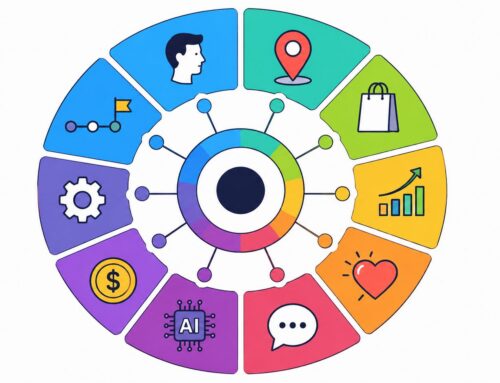
Navigating the expansive world of digital marketing can feel like assembling a complex engine without a blueprint. You have powerful components, from the steady pull of Content Marketing and SEO to the high-torque acceleration of Paid Advertising. However, simply having these parts isn't enough. The real power, the kind that drives sustainable growth, is unleashed when these components are meticulously integrated and synchronized to work in perfect harmony.
The 10 digital marketing strategies for business we've explored are not just a menu of options to choose from; they are interlocking gears. Your insightful Video Marketing content can become the cornerstone of a high-engagement Social Media campaign. The trust you build through authentic Influencer Partnerships can dramatically lower customer acquisition costs for your PPC ads. The leads generated from a targeted LinkedIn Outreach strategy are nurtured and converted through a sophisticated Email Marketing and Automation funnel. This synergy is where the magic happens.
The most successful brands don't just do digital marketing. They build an integrated ecosystem where each strategy amplifies the others, creating a feedback loop of growth that is greater than the sum of its parts.
Turning Knowledge into Actionable Growth
The journey from understanding these concepts to implementing them successfully requires a strategic, phased approach. It's tempting to try everything at once, but this often leads to diluted efforts and mediocre results. Instead, the path forward involves deliberate action and focused execution.
Here are your immediate next steps to transform this information into a tangible growth plan:
- Conduct a Comprehensive Audit: Start by evaluating your current marketing efforts. Where are you seeing success? Which channels are underperforming or completely untapped? Use the KPIs mentioned for each strategy in this article as a benchmark to assess your current performance and identify the most significant gaps.
- Prioritize Based on Goals and Resources: Select one or two strategies from this list that align directly with your most pressing business objective, whether it's lead generation, brand awareness, or customer retention. Consider your budget and team capacity. A resource-intensive Video Marketing Strategy might be a long-term goal, while a focused Conversion Rate Optimization project could deliver quick wins.
- Create a 90-Day Implementation Plan: Break down your chosen strategy into concrete, manageable tasks. If you've chosen Content Marketing & SEO, your 90-day plan might include keyword research, developing a content calendar for 12 blog posts, and optimizing your top five existing pages. Assign clear ownership and deadlines to ensure accountability.
- Measure, Analyze, and Iterate: Digital marketing is not a "set it and forget it" endeavor. Relentlessly track the KPIs you've established. Use the data to understand what's working and what isn't. Be prepared to pivot, experiment, and refine your approach based on real-world performance data. This iterative process is the key to mastering any digital marketing strategy.
The Future is an Integrated Ecosystem
Ultimately, mastering these digital marketing strategies for business is about more than just boosting metrics. It's about building resilient, direct relationships with your audience, creating predictable revenue streams, and future-proofing your brand in an ever-evolving digital landscape. Each strategy is a powerful tool on its own, but when integrated into a cohesive machine, they build unstoppable momentum. The choice is not if you should implement these strategies, but how you will orchestrate them to build your unique engine of success.
Ready to move from strategy to execution with an expert partner? ReachLabs.ai specializes in building and managing high-performance, integrated marketing engines for businesses. We provide the specialized talent and data-driven insights needed to accelerate your growth and achieve your most ambitious goals. Discover how our full-service approach can transform your digital presence by visiting us at ReachLabs.ai.