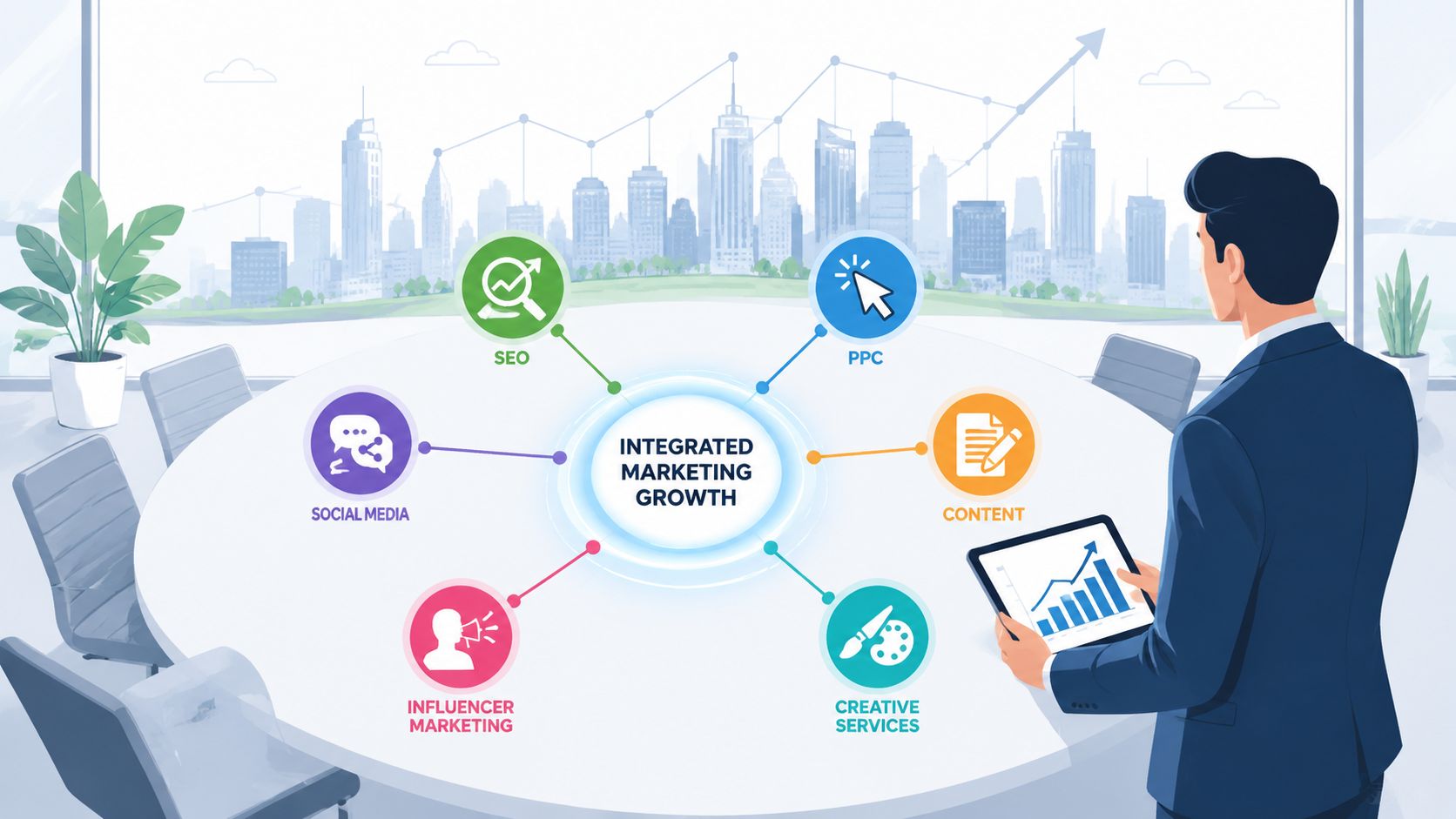

Before you can write a single word of your marketing plan, you need to know exactly where you stand. A powerful plan isn't built on guesswork; it's grounded in a deep understanding of your business and the market you operate in.
Think of it as drawing the blueprint for a skyscraper. If you get this foundational stage right, every decision that follows will be strategic, stable, and built for success. Skip this part, and you're just making noise, not a real impact.
This structured approach is why businesses are investing so heavily in their marketing efforts. In fact, marketing spending in the United States hit nearly $481 billion in 2022, and budgets saw a jump of over 9% as companies doubled down on goal-oriented strategies. You can dig into the numbers in this report on marketing statistics.
Start With a Situation Analysis
Your first move is to conduct a situation analysis—a brutally honest audit of your business's current position. This isn't about what you hope is true; it's about gathering cold, hard facts to understand your internal capabilities and the external forces shaping your industry.
You'll want to dig into a few key areas:
- Company Analysis: What is our mission? What are our resources (people, tech, budget), and how are we performing right now?
- Customer Analysis: Who are our current customers, really? What drives them? What are their behaviors and demographics?
- Competitor Analysis: Who are we really up against? What are they doing well, and where are their blind spots?
- Market Environment: What larger trends—economic, technological, or even cultural—could help or hurt us?
A huge part of this is getting a handle on your rivals. Investing some time in learning about competitor intelligence can give you a serious strategic advantage right from the start.
To help you organize your thoughts, here’s a breakdown of what a thorough situation analysis looks like.
Core Components of a Situation Analysis
| Analysis Component | Key Questions to Answer | Example Focus Area |
|---|---|---|
| Internal Analysis | What are our core strengths and weaknesses? What makes our product unique? What are our financial and human resources? | A SaaS company might identify its proprietary algorithm as a key strength but a small sales team as a weakness. |
| Customer Analysis | Who is our ideal customer? What are their pain points and motivations? Where do they spend their time online? | A B2C fashion brand might focus on Gen Z shoppers on TikTok and Instagram, analyzing their desire for sustainable products. |
| Competitor Analysis | Who are our top 3 competitors? What are their marketing strategies, pricing, and market share? What are customers saying about them? | An e-commerce store could analyze a competitor's aggressive Google Ads strategy and poor customer service reviews. |
| External/Market Analysis | What are the current market trends (e.g., AI adoption)? Are there new regulations or economic shifts on the horizon? What are the biggest opportunities? | A local restaurant might identify the growing trend of plant-based diets as a major opportunity. |
Getting this data down on paper provides the clear-eyed perspective you need to make smart decisions moving forward.
Conduct a Practical SWOT Analysis
The classic SWOT analysis (Strengths, Weaknesses, Opportunities, Threats) is the perfect tool for organizing all that research. But the real value isn't just in filling out the four boxes—it's in being specific and realistic.
Generic points won't help you. For example, listing "strong brand" as a strength is too vague. A truly useful strength is something like: "Established brand recognition among millennial urbanites with a 75% repeat purchase rate." Now that is something you can build a strategy around.
A great marketing plan is not a document you write once and file away. It's a living guide that informs your daily decisions and adapts to new information. The initial analysis is your anchor, keeping your strategy grounded in reality.
The same goes for threats. "New competitors" is obvious. A more actionable threat would be: "Two new venture-backed competitors entering the market in the next six months with aggressive pricing models." This level of clarity helps you prepare a direct, effective response instead of just worrying.
Define Your Unique Selling Proposition
After looking inward at your company and outward at the market, you can finally nail down your Unique Selling Proposition (USP). This is the heart of your brand's message. It clearly answers one critical question for your customers: Why should I buy from you and not your competition?
A USP isn't just a clever tagline. It’s a concrete promise that highlights a benefit your competitors can't easily match.
Think about it in real-world terms:
- For a local coffee shop: "The only café in downtown serving single-origin, ethically sourced coffee brewed within 60 seconds of ordering."
- For a SaaS tool: "The project management platform designed exclusively for freelance creatives, integrating invoicing and time-tracking."
Your USP becomes the north star for everything you create—from ad copy and social media posts to your website's homepage. It ensures your message is consistent, powerful, and always reinforcing why you're the best choice for your ideal customer.
Get Clear on Your Customer and Your Goals

Let's be blunt: marketing to everyone is marketing to no one. It's like shouting into a crowded room hoping the right person hears you. You might make a lot of noise, but your message will get lost in the chatter. This is where so many marketing plans fall flat—they cast a wide net and end up catching nothing.
The real foundation of any great marketing strategy isn't your product, your brand, or some clever tagline. It's the customer. To make a real connection, you have to go beyond basic demographics and genuinely understand the person you're trying to help.
First, Build Your Buyer Persona
A buyer persona is essentially a character sketch of your perfect customer. It’s not just a collection of data points; it’s a semi-fictional profile that brings your target audience to life, making them feel like a real person. This exercise is critical because it forces you to think about who you're talking to with every ad, email, and blog post you write.
So, how do you build one? You have to do some real detective work. Forget guessing and start digging into the data you already have.
- Talk to your best customers. Seriously, just pick up the phone. Ask them about their biggest challenges, what they love about your product, and what a typical day looks like for them.
- Dive into your analytics. Your website and social media data are gold mines. Where do your visitors live? What are their interests? Which pages or posts get the most attention?
- Chat with your sales and support teams. These folks are on the front lines every single day. They know the recurring questions, the common objections, and the real-world pain points your customers are dealing with.
Once you’ve gathered this intel, you can start piecing together your persona. For a deep dive into this process, this guide on how to create buyer personas is an excellent resource for building out profiles that are truly useful.
The goal is to create a profile that feels tangible. Instead of a vague "small business owner," you get "Startup Sarah," a 35-year-old SaaS founder who's completely overwhelmed with lead generation while trying to manage a tiny team. All of a sudden, you know exactly who you're marketing to.
Next, Set Goals That Actually Mean Something
Now that you have a crystal-clear picture of "Sarah," you can set goals that are designed to get her attention. Fuzzy objectives like "increase brand awareness" or "get more traffic" are dead ends. They sound nice, but they're impossible to measure, which makes them useless for a practical marketing plan.
This is where the SMART goal framework is a lifesaver. It’s a simple filter to ensure every objective you set is:
- Specific
- Measurable
- Achievable
- Relevant
- Time-bound
This structure pushes you away from wishy-washy ideas and toward concrete, actionable targets that your whole team can rally behind.
Let’s look at the before and after:
| Vague Goal | SMART Goal |
|---|---|
| Get more leads | Increase marketing qualified leads (MQLs) from organic search by 20% in Q3. |
| Improve social media | Grow our LinkedIn follower count by 1,000 new followers and achieve a 5% engagement rate on posts by the end of the year. |
| Boost sales | Drive $50,000 in revenue from the new email marketing campaign targeting "Startup Sarah" personas by December 31st. |
See the difference? The SMART goals leave no room for interpretation. You know exactly what you're aiming for, how you'll track progress, and when the deadline is.
Think of your SMART goals as the bridge connecting your customer research to your daily marketing activities. They ensure every dollar and every hour is pushing you toward a meaningful business outcome.
As you write this section of your plan, aim to define 3-5 core SMART goals for the coming quarter or year. Each one should tie directly back to an opportunity or pain point you uncovered during your research. For example, if you know "Startup Sarah" is desperate for actionable marketing advice, a relevant goal would be to increase blog subscriptions from her demographic. That’s how you turn a document into a growth engine.
Choosing the Right Marketing Channels and Tactics
You've done the heavy lifting of understanding your audience and setting clear goals. Now for the exciting part—deciding exactly how and where you'll show up to meet them. This is where your strategy truly comes to life.
Choosing your marketing channels isn't about casting the widest net possible. It’s about precision. The biggest mistake I see businesses make is chasing a trendy new platform or just copying a competitor's playbook without asking why. Your marketing mix—the unique blend of channels you use—has to be a direct reflection of where your customers hang out and what you’re trying to achieve.
Let Your Audience Lead the Way
The best starting point is always your buyer persona. Forget what's popular for a moment and ask yourself: Where do my ideal customers actually spend their time? What content are they looking for?
- Let's say you're a B2B SaaS company targeting "Startup Sarah." She’s probably scrolling through her LinkedIn feed, devouring industry blogs, and Googling solutions for her team's pain points. Your focus should naturally gravitate toward LinkedIn content, SEO-driven articles, and maybe some highly targeted Google Ads.
- Now, picture a local boutique trying to reach fashion-forward millennials. Their world is visual. They're finding style inspiration on Instagram and TikTok, then using Google Maps to find shops nearby. In this case, your efforts are much better spent on Instagram marketing, influencer collaborations, and locking down your local SEO.
It's all about finding that sweet spot where a channel's strengths align with your business needs.
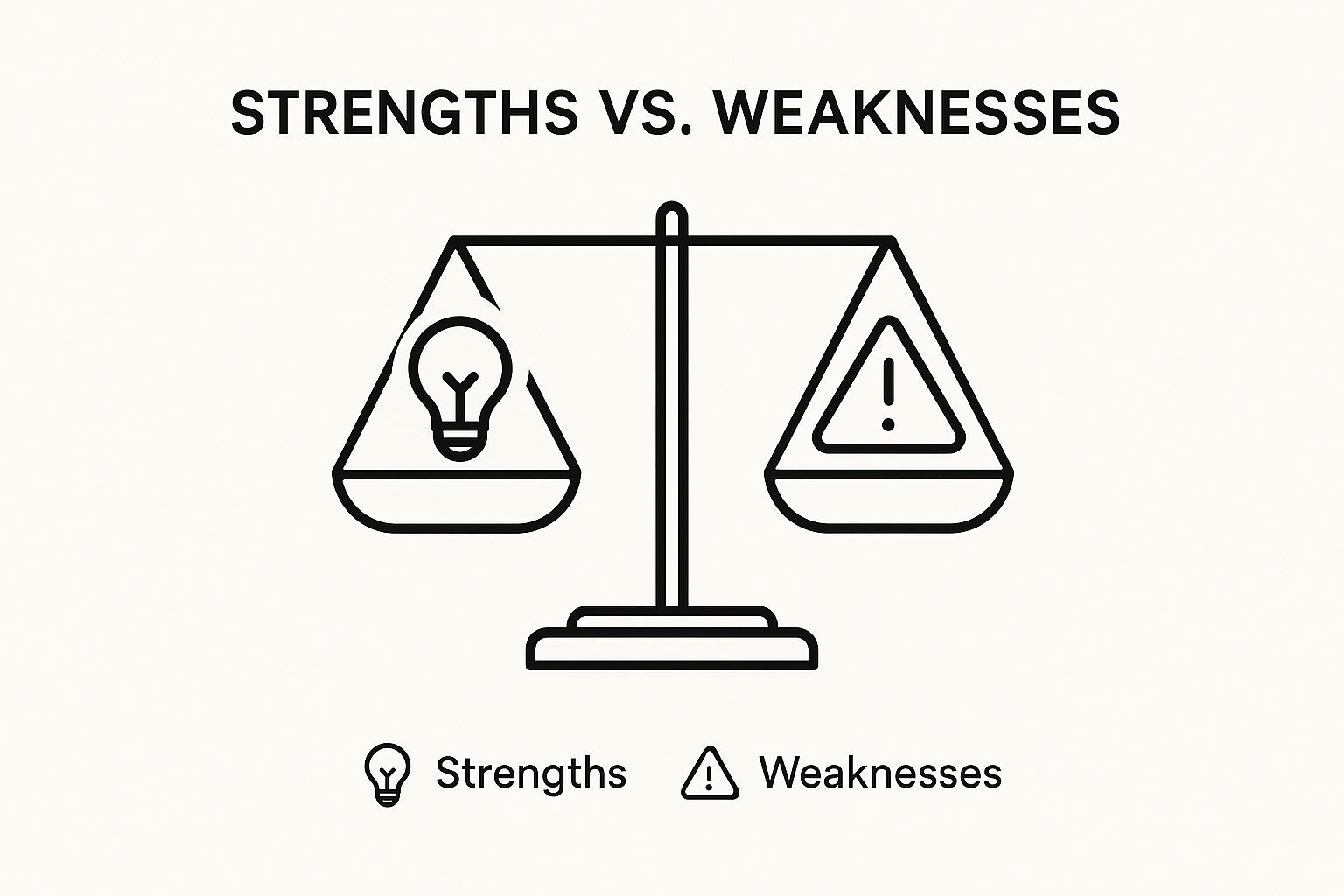
Think of it as a constant balancing act. You have to weigh the potential upside of any channel against its built-in limitations before you commit your time and money.
Building Your Modern Marketing Mix
Great marketing today is an ecosystem, not a single destination. It’s about creating an integrated experience where each channel you use plays a specific role and supports the others.
For most businesses, a healthy mix includes a bit of everything:
- Owned Media: These are the assets you control outright. Think of your website, your blog, and your email list. This is your home base.
- Earned Media: This is the buzz you get organically—the word-of-mouth, press mentions, and social media shoutouts. You can’t buy it, you have to earn it.
- Paid Media: This is where you pay to play. We're talking Google Ads, social media advertising, and sponsored posts to get your message in front of a specific audience, fast.
When you blend these three, you build a strategy that’s far more resilient and effective. For a deeper dive into how these elements work together, our guide on digital marketing strategies for small businesses is a great resource.
The Undeniable Role of Social Media
You simply can't write a marketing plan today without seriously considering social media. The numbers are staggering. As of 2025, 65.7% of the entire global population is on social media, using an average of 6.84 different platforms each month.
Even more telling, research from Marketing Dive highlights that 58% of consumers now discover new brands and businesses directly through social media. It's no longer just a place to connect; it’s a primary engine for discovery.
This doesn't mean you need a presence on every single platform. It means you must be strategic, picking the one or two platforms where your ideal customers are truly active and ready to engage.
Think of your budget as a tool for focus, not a limitation. You'll get much better results by concentrating your resources on the few channels with the highest impact instead of spreading a small budget thinly across a dozen of them.
To help you narrow things down, let's look at how different channels stack up for B2B versus B2C businesses.
Marketing Channel Comparison for Different Business Models
The right channel often depends heavily on who you're selling to. A platform that's a goldmine for a B2C e-commerce brand might be a dead end for a B2B service provider. This table breaks down some of the most common options.
| Marketing Channel | Best For B2B | Best For B2C | Key Performance Indicator |
|---|---|---|---|
| SEO & Content Marketing | High: Builds authority, generates long-term leads. | High: Drives organic traffic, educates consumers. | Organic Traffic, Conversion Rate |
| Very High: Professional networking, lead generation. | Low: Niche applications for some consumer brands. | Engagement Rate, MQLs | |
| Instagram/TikTok | Low: Can work for visually driven B2B products. | Very High: Brand building, community engagement. | Follower Growth, Reach |
| Email Marketing | Very High: Nurturing leads, customer retention. | Very High: Driving sales, building loyalty. | Open Rate, Click-Through Rate |
| Paid Ads (Google/Social) | High: Targeted lead generation, retargeting. | High: Driving e-commerce sales, promotions. | Cost Per Acquisition (CPA), ROAS |
As you can see, there's no single "best" channel—only what's best for your specific goals and audience.
By the end of this section in your plan, you should have a clear, actionable roadmap. It needs to spell out:
- Primary Channels: The 2-3 platforms that will get the lion's share of your attention.
- Secondary Channels: The 1-2 platforms you'll use for support or to experiment with.
- Core Tactics: The specific actions for each channel (e.g., "Publish 3 educational carousels per week on Instagram," or "Write 2 in-depth blog posts per month targeting key search terms").
With this level of detail, your team will know exactly what to do, where to do it, and why it matters.
Weaving AI and Personalization into Your Strategy
A modern marketing plan that ignores technology is like a ship without a rudder. If artificial intelligence (AI) and personalization aren't part of your conversation, you’re already falling behind. But don't let that scare you. This isn't about hiring a team of data scientists overnight; it's about making your marketing smarter, not just more complicated.
The truth is, your customers now expect experiences that feel like they were made just for them. One-size-fits-all messages are just noise, easily ignored and quickly forgotten. This is where AI and personalization stop being buzzwords and become your best tools for creating real connections that drive engagement and earn loyalty.
The momentum behind this shift is undeniable. Forecasts for 2025 show that 71% of marketers are planning to sink at least $10 million into AI over the next three years. On top of that, 83% of CMOs are optimistic about the impact it will have. You can get a deeper look at these trends in the full predictions for global marketing success.
Putting AI to Work (Without the Headache)
Bringing AI into your plan doesn't have to be some massive, intimidating project. Chances are, many of the marketing tools you already use have powerful AI features hiding just under the surface. The trick is to find practical ways to use them that directly support your goals and make your team’s life easier.
Here are a few places to start:
- Sparking New Ideas: Use AI tools to see what topics are trending in your niche. They can suggest blog post titles your audience actually wants to read or even draft the first version of your social media copy, freeing up your team to be more strategic.
- Smarter Audience Targeting: Let AI dig through your customer data. It can spot patterns and create super-specific audience segments you would have never found on your own. Think more targeted ads and content that really hits the mark.
- Predicting the Future: Simple AI-powered analytics can help you see which leads are most likely to buy or which customers might be about to leave. This gives you a chance to step in before it's too late.
The Real Meaning of Personalization
Personalization is so much more than just sticking [First Name] into an email subject line. It's about using the data you have—the information sitting right there in your CRM—to deliver the perfect message to the right person at exactly the right moment.
Think about it this way. An e-commerce site sees a visitor look at the same pair of running shoes three times without buying. Instead of a generic "Hey, you left something in your cart!" email, a personalized workflow could send a message that includes:
- A direct link right back to those specific shoes.
- A helpful blog post like, "How to Choose the Right Running Shoe for Your Gait."
- A small, one-time discount just for that product.
See the difference? That feels helpful, not pushy, because it’s a direct response to their behavior.
The goal of personalization is to make each customer feel seen and understood. When you use data to solve their problems or anticipate their needs, you turn a simple transaction into a meaningful relationship.
Automation That Doesn't Feel Robotic
Marketing automation is what makes all this personalization possible on a larger scale. It’s the engine that runs in the background, setting up triggers and workflows to deliver these custom experiences without you having to lift a finger every time.
For instance, when someone new subscribes to your blog, an automated welcome series can kick in. Based on which articles they click on in those first few emails, you can automatically sort them into different interest groups (say, "SEO" vs. "social media"). From then on, they only get content that’s hyper-relevant to what they care about.
To get the most out of these efforts, it’s worth brushing up on some essential marketing automation best practices.
By weaving AI, personalization, and smart automation into the fabric of your marketing plan, you build a strategy that's more efficient, more effective, and genuinely customer-focused. Just start small with the tools you have, and build from there.
Measuring Performance and Adapting Your Plan
Here’s the single most important thing to remember about your marketing plan: it’s not meant to be carved in stone. Think of it more like a GPS for your business. It gives you the best route based on what you know now, but its real power is in recalculating when you hit a detour or discover a brilliant shortcut.
A plan that isn't measured is just a list of good intentions. This final stage is where we turn your strategy into a living, breathing system that evolves with your business. The goal is simple: create a feedback loop where real data informs every decision, helping you pour gas on what’s working and confidently cut what isn't.
This is what separates a plan that sits on a shelf from one that becomes an engine for growth.
Identifying Your Key Performance Indicators
Before you can measure success, you have to define what it looks like. Vague goals like "more engagement" won't cut it. You need specific Key Performance Indicators (KPIs) that connect directly to the SMART goals you set earlier.
Don't fall into the trap of tracking vanity metrics that look impressive but don’t actually impact your bottom line. The KPIs you choose will depend entirely on your goals.
For example, here are a few essential KPIs tied to common objectives:
- For Lead Generation: Your focus should be on Cost Per Acquisition (CPA)—how much are you actually spending to land a new customer? You'll also want to watch your Lead-to-Customer Conversion Rate to see how well you're turning prospects into paying customers.
- For Brand Awareness: Look at Website Traffic from specific sources (like organic search or social media) and your Social Media Reach. These numbers tell you how many unique people are seeing your brand.
- For Customer Loyalty: The gold standard here is Customer Lifetime Value (CLV). This metric reveals the total revenue a single customer is expected to bring in over time, which is a powerful indicator of your business's long-term health.
The trick is to choose just a few primary KPIs for each major goal. Trying to track everything is the fastest way to get overwhelmed. For a deeper dive, our guide on how to measure marketing campaign success is a fantastic resource for picking the right metrics.
A plan without KPIs is a journey without a map. You're moving, but you have no idea if you're actually getting closer to your destination.
Establishing a Reporting and Review Cadence
Once you know what to measure, you need to decide when to measure it. A consistent reporting rhythm is what turns all that raw data into actionable insights. This doesn’t have to be a massive undertaking; a simple dashboard or even a well-organized spreadsheet can do the job.
Consistency is everything. Here’s a practical cadence you can start with:
| Reporting Frequency | Focus Area | Key Question to Answer |
|---|---|---|
| Weekly | Tactical Check-in: Review campaign-level data like ad spend, click-through rates, and social engagement. | Are our current tactics performing as expected? |
| Monthly | Channel Performance: Zoom out to see which channels (SEO, email, social) are driving the best traffic and conversions. | Which channels are giving us the best return on investment (ROI)? |
| Quarterly | Strategic Review: Look at your progress against your big-picture SMART goals and re-evaluate your budget. | Are we on track to hit our quarterly goals? What needs to change? |
A structured approach like this stops you from making knee-jerk, emotional decisions. Instead, you'll be making deliberate adjustments based on what the numbers are actually telling you.
The Art of the Pivot
Your regular check-ins will inevitably show that some of your brilliant ideas aren't working as well as you'd hoped. That isn’t failure—it's feedback. In fact, the true strength of a marketing plan lies in its ability to adapt.
Maybe your LinkedIn ads are falling flat, but your organic blog traffic is through the roof. The data is giving you a clear signal: shift some of that ad budget toward creating more of the content your audience is loving. This ability to pivot intelligently is what separates good marketers from great ones.
Get in the habit of asking your team these questions regularly:
- What did we learn this past month?
- What was our biggest win, and can we replicate it?
- What assumption did we make that turned out to be completely wrong?
By embracing this cycle of planning, executing, measuring, and adapting, your marketing plan becomes so much more than a document. It transforms into a dynamic roadmap that guides your business toward real, sustainable growth.
Got Questions About Your Marketing Plan? We've Got Answers.
Even with a great guide, you're bound to hit a few snags when you sit down to actually write your marketing plan. It's totally normal. Moving from theory to practice always brings up real-world questions that need clear, practical answers.
Let's walk through some of the most common hurdles I see people face. Getting these sorted out now will save you a world of headaches down the road.
How Long Should This Thing Actually Be?
Honestly, there’s no magic page count. A crisp, 15-page plan that your team reads, understands, and uses is infinitely better than a 100-page doorstop that collects dust. The right length is whatever it takes to clearly outline your strategy, and that depends on your business.
For most small businesses or startups mapping out their first year, somewhere in the 10-20 page range is a great target. It's enough room to cover the essentials without getting lost in the weeds.
No matter the final length, make sure you've nailed these core sections:
- Executive Summary: A one-page snapshot for quick reference.
- Situation Analysis: Your SWOT and a hard look at the competition.
- Target Audience: Who are you really talking to? Get specific.
- SMART Goals: What does success look like, in numbers?
- Strategy & Tactics: Your high-level approach and the specific actions you'll take.
- Budget: Where is every dollar going?
- KPIs: The metrics that prove your plan is working.
The goal is clarity, not volume. If a section doesn't directly support your strategy or an action you plan to take, it probably doesn't belong.
How Often Should I Revisit My Marketing Plan?
Think of your marketing plan as a living, breathing guide, not a stone tablet. Markets shift, customers change, and your business will (hopefully) grow. Your plan needs to adapt right along with it.
I've found a two-part rhythm works best for keeping a plan relevant and effective:
- Quarterly Review: This is a quick pulse check every three months. Are you on track to hit your goals? Do you need to shift some ad spend from one channel to another? This is the time for small, tactical tweaks, not a complete rewrite.
- Annual Overhaul: Once a year, it's time for a deep dive. This is when you'll run a new situation analysis, question your core strategies, and set new, ambitious goals for the year ahead based on everything you learned.
The biggest mistake you can make is treating your plan as a one-and-done project. Regular reviews are what transform a good plan into an unstoppable growth engine.
What's the Single Biggest Mistake People Make?
Hands down, the most common and damaging mistake is building a plan on pure guesswork. It’s so tempting to skip the research—the competitor deep-dives, the market analysis, the customer interviews—but that's like building a house with no foundation.
When you base your plan on assumptions, you almost always end up with:
- Vague messaging that connects with absolutely no one.
- A burned budget spent on channels your audience ignores.
- Goals that are completely out of sync with reality.
Every great marketing plan I’ve ever seen was built on a solid foundation of data and genuine customer insight. Do the homework upfront. It will pay for itself a hundred times over.
Can I Even Do This with a Tiny Budget?
Yes! In fact, when money is tight, a marketing plan isn't a luxury—it's a necessity. It forces you to be incredibly strategic and make sure every single dollar is pulling its weight.
A plan on a shoestring budget just means you’ll lean on different tactics. Instead of a flashy Super Bowl ad, your strategy will be packed with high-ROI, low-cost activities that build momentum over time. Think things like:
- SEO and Content Marketing: Earning organic traffic is the ultimate long game.
- Email Marketing: It costs next to nothing to nurture the leads you already have.
- Community Building: Creating real conversations with customers on social media.
Your plan is your map for getting the absolute most out of every resource you have, big or small.
At ReachLabs.ai, we live and breathe this stuff, turning strategic plans into real-world results. If you’re ready to build a marketing plan that actually drives growth, our team is here to help you craft and execute a strategy that truly moves the needle. See how our collective approach can elevate your brand by visiting https://www.reachlabs.ai.