

Influencer marketing has evolved from a niche tactic into a core pillar of modern brand strategy, generating authentic engagement and measurable ROI. But scaling these programs, from discovering the right creators to tracking performance and managing payments, is nearly impossible without the right technology. The challenge isn't just finding a tool; it's selecting a platform that aligns perfectly with your brand’s specific goals, budget, and operational workflow.
This guide dives deep into the top influencer marketing platforms available today, moving beyond surface-level feature lists to provide a practical, comparative analysis. We'll explore their core strengths, honest limitations, and ideal use cases, helping you determine which solution is best suited for your team, whether you're a nimble DTC startup or a global enterprise. To truly unlock authentic growth, it's crucial to integrate your platform usage with established influencer marketing best practices.
We have meticulously evaluated each platform to give you the insights needed for an informed decision. For every option on our list, you will find:
- A concise overview of its key purpose and target user.
- In-depth analysis of standout features and unique capabilities.
- A transparent look at pricing structures.
- Actionable pros and cons based on real-world application.
This curated resource is designed to help you cut through the marketing noise and find a genuine partner to build, manage, and scale your creator relationships effectively. Each review includes screenshots and a direct link, so you can see the platform in action and explore it further. Let's find the right tech stack to power your influencer marketing success.
1. CreatorIQ
CreatorIQ positions itself as the central operating system for creator-led marketing, specifically engineered for large-scale, enterprise-level programs. This platform is far more than a simple discovery tool; it’s a full-stack solution designed to manage complex, global campaigns with a heavy emphasis on governance, brand safety, and measurable ROI. Its core strength lies in unifying disparate teams, markets, and workflows into a single, cohesive ecosystem.
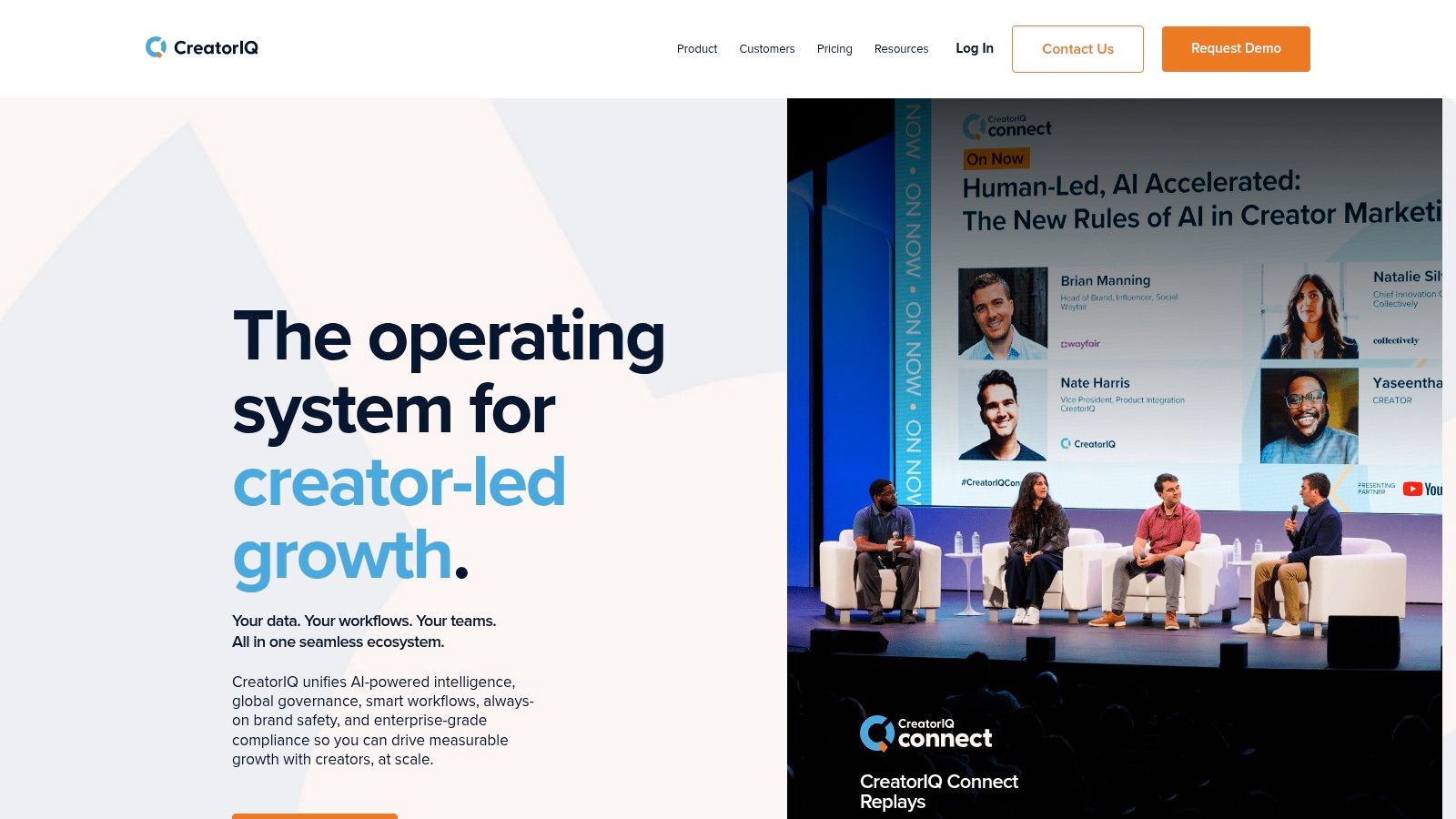
For large brands like Disney or Unilever, CreatorIQ provides the infrastructure needed to maintain control and consistency across thousands of creator activations. The platform’s AI-powered discovery engine uses a content-first approach, analyzing over a billion social accounts to identify creators whose audience and content align perfectly with brand values, moving beyond simple vanity metrics.
Key Features & Use Case
CreatorIQ excels in providing granular control and deep analytics, making it one of the top influencer marketing platforms for data-driven enterprises.
- AI-Accelerated Discovery: Instead of just searching by keywords, users can analyze a creator's past content for specific visual elements, sentiment, and audience demographics. A beauty brand, for instance, could find creators who have organically featured products with a "glass skin" aesthetic.
- Unified Program Management: Global teams can collaborate within the platform, manage budgets, and track campaign progress in real-time without juggling spreadsheets and email chains.
- Brand Safety & Governance: Automated tools flag potentially risky content, ensuring all creator partnerships adhere to strict brand guidelines and FTC disclosure requirements.
- CreatorIQ Pay: Streamlines global payments in over 60 currencies and 120 countries, handling tax compliance and consolidating invoicing, which is a significant operational relief for finance departments.
| Best For | Enterprise & Mid-Market |
|---|---|
| Pricing | By demo/quote only |
| Standout Feature | Enterprise-grade governance & global payment system |
| Website | creatoriq.com |
Pros:
- Scales reliably for complex, multi-market programs.
- Deep integrations with other enterprise systems.
- Strong analyst recognition and robust customer validation.
Cons:
- Overkill and too complex for small teams or SMBs.
- Pricing is not transparent and requires a custom quote.
- Has a steep learning curve due to its extensive feature set.
2. GRIN
GRIN establishes itself as the premier creator management platform built specifically for e-commerce and direct-to-consumer (DTC) brands. Instead of a broad, one-size-fits-all approach, GRIN focuses on the entire creator relationship lifecycle, from discovery and outreach to product seeding and payment. It acts as a specialized CRM for creator partnerships, streamlining the logistical complexities that often bog down in-house marketing teams.
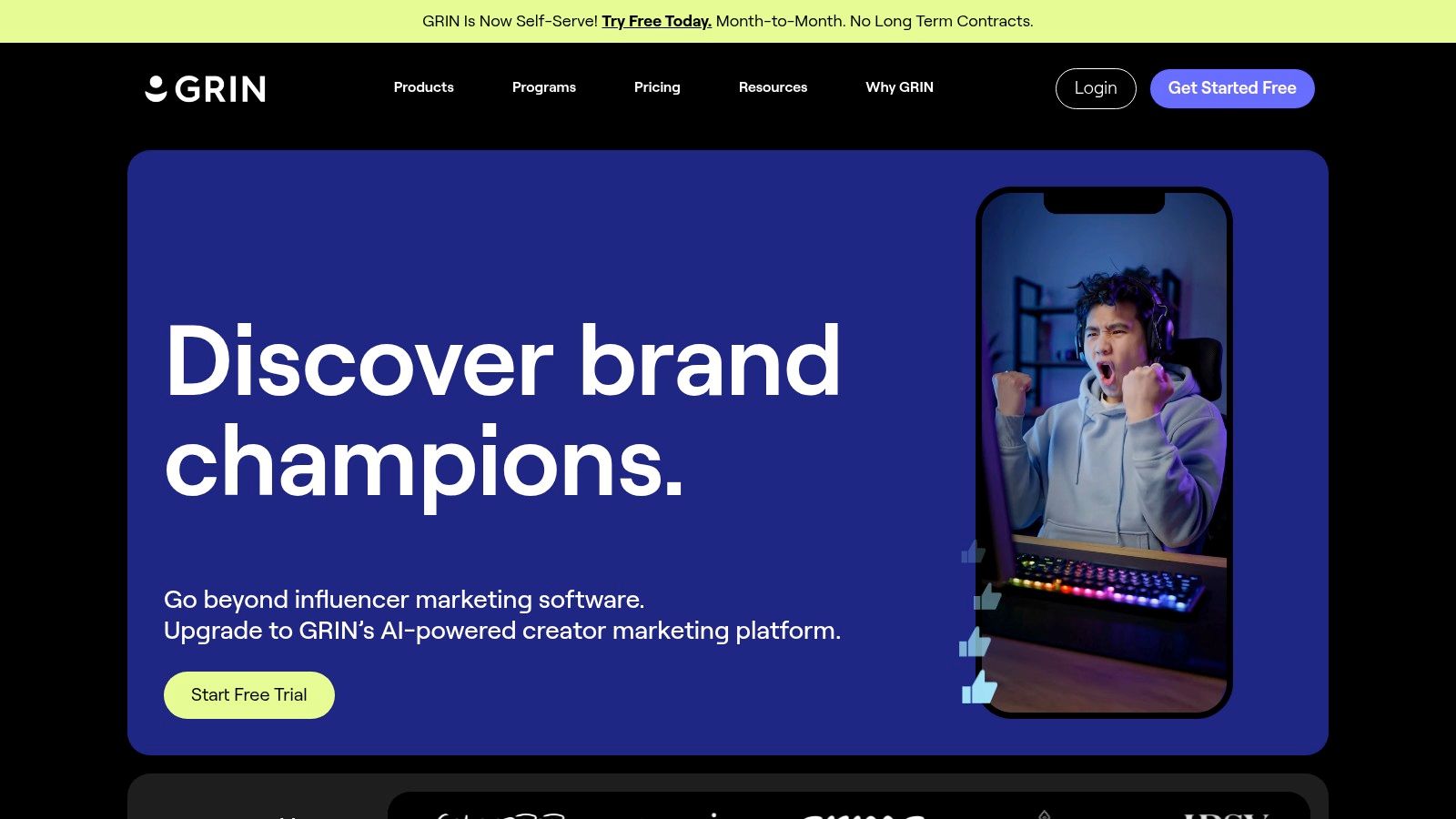
For a fast-growing DTC brand that relies on authentic product-led content, GRIN provides the essential tools to manage hundreds of relationships at scale. The platform's direct integrations with e-commerce systems like Shopify and WooCommerce are a key differentiator, allowing brands to manage product seeding directly from their inventory and track affiliate sales with precision. This makes it one of the top influencer marketing platforms for product-centric businesses.
Key Features & Use Case
GRIN excels at operationalizing creator programs for e-commerce, transforming manual tasks into automated, scalable workflows.
- Integrated Product Seeding: Brands can ship products to creators directly from their e-commerce backend without leaving the GRIN platform. This eliminates manual address collection and separate shipping processes, a huge time-saver for product gifting campaigns.
- End-to-End Creator CRM: Manages all communication, contracts, and historical performance data in one unified creator profile. This provides a 360-degree view of each relationship, enabling more personalized and effective long-term partnerships.
- Content & Campaign Management: Aggregates all creator-generated content into a centralized library, making it easy to repurpose assets. It also provides robust reporting to track ROI, engagement, and conversion metrics from creator campaigns.
- Integrated Payments & Tax Workflows: Handles creator payments and automatically generates necessary tax forms like 1099s, simplifying the financial and legal aspects of influencer compensation.
| Best For | E-commerce & DTC Brands |
|---|---|
| Pricing | By demo/quote only |
| Standout Feature | Deep e-commerce integration for product seeding & sales tracking |
| Website | grin.co |
Pros:
- Purpose-built for the specific needs of e-commerce brands.
- Excellent workflows for product gifting and affiliate management.
- Strong community and educational resources for users.
Cons:
- Pricing is not publicly available and requires a custom demo.
- Less suited for service-based businesses or brand awareness campaigns without a physical product.
- Best utilized by in-house teams rather than fully outsourced agency models.
3. Upfluence
Upfluence stands out as an all-in-one influencer marketing platform with a powerful emphasis on e-commerce and affiliate-driven performance. While it offers a comprehensive suite for discovery and management, its core strength lies in connecting creator campaigns directly to sales through robust attribution and integrated product gifting. This makes it a go-to choice for direct-to-consumer (DTC) brands and online retailers focused on measurable conversion.
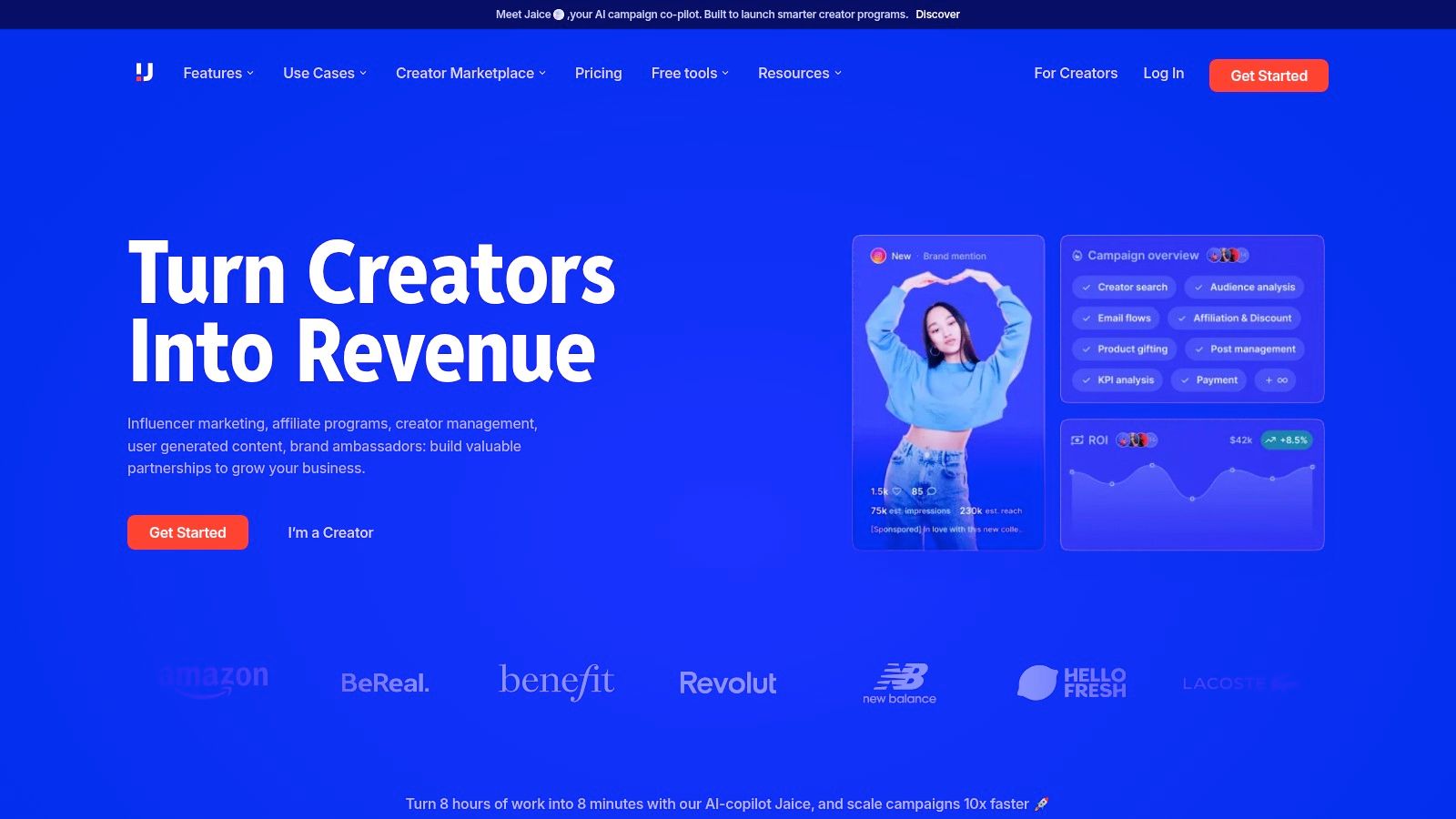
The platform’s massive database allows brands to search for creators using granular filters, including audience demographics, psychographics, and specific keywords. For an e-commerce brand launching a new product line, Upfluence provides the tools to not only find the right influencers but also to manage the entire product seeding process, track affiliate link clicks, and attribute sales directly back to each creator’s efforts.
Key Features & Use Case
Upfluence is one of the top influencer marketing platforms for brands that prioritize performance metrics and direct sales attribution from their campaigns.
- Advanced Discovery & Analysis: Search a database of millions of creators with filters for engagement rates, audience location, and even specific brand affinities. You can analyze an influencer’s audience to ensure it matches your target customer profile.
- Integrated Gifting & Seeding: Connect your Shopify or WooCommerce store directly to the platform to create gifting campaigns, allowing creators to order products seamlessly. This streamlines a major logistical hurdle in product-seeding campaigns.
- Affiliate & Sales Tracking: Generate unique discount codes and affiliate links to track influencer-driven sales. Its integration with Amazon Attribution is a key differentiator for brands selling on the marketplace.
- Upfluence Pay: A built-in payment solution that simplifies sending payments to creators across the globe in their local currency, handling the administrative burden of transactions.
| Best For | E-commerce, DTC Brands, & Agencies |
|---|---|
| Pricing | By demo/quote only |
| Standout Feature | Deep e-commerce integration for gifting & affiliate sales attribution |
| Website | upfluence.com |
Pros:
- Robust affiliate and performance stack for retailers.
- Useful Chrome extension for identifying influencers on the fly.
- Scales well for agencies managing numerous creator relationships.
Cons:
- Pricing is custom and not publicly available.
- The depth of features can require a longer onboarding process.
- Some users report the creator database can feel less curated than competitors.
4. Aspire (formerly AspireIQ)
Aspire is an influencer marketing platform built specifically for the unique demands of direct-to-consumer (DTC) and fast-growing retail brands. It bridges the gap between a self-service software platform and a full-service agency, offering a powerful toolset for managing creator relationships alongside optional managed services. This hybrid model makes it an attractive choice for brands looking to scale their community marketing efforts, from initial product seeding to complex, long-term ambassador programs.
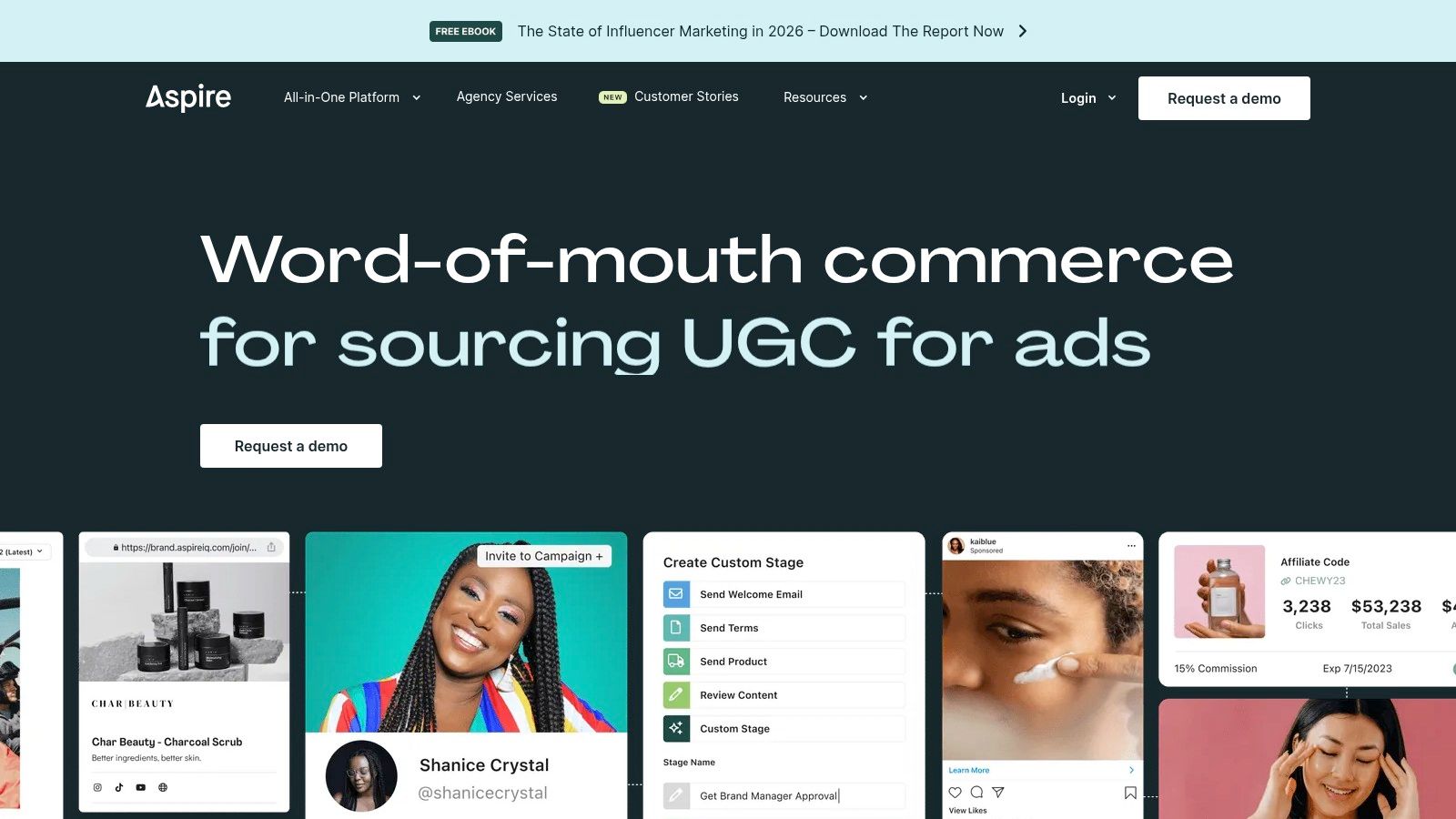
The platform is designed around the entire lifecycle of a creator partnership, emphasizing relationship building and content collaboration. For an e-commerce brand launching a new product line, Aspire facilitates everything from discovering authentic creators to shipping products, managing content approvals, and tracking the resulting sales through affiliate links, making it one of the top influencer marketing platforms for performance-focused teams.
Key Features & Use Case
Aspire’s strength lies in its e-commerce-centric workflows and flexible service model, allowing brands to adapt their approach as they grow.
- Relationship-Focused CRM: Moves beyond transactional campaigns to help brands build long-term communities of ambassadors and affiliates, tracking communication history and performance over time.
- Streamlined Campaign Workflows: Automates tedious tasks like outreach, product seeding, content collection, and usage rights management. A brand can create a campaign brief and have hundreds of creators apply, streamlining the selection process.
- Content Collaboration Suite: Provides tools for creators to submit content for review, allowing brand managers to provide feedback, approve assets, and maintain brand consistency directly within the platform.
- Optional Managed Services: For teams without the bandwidth to run campaigns in-house, Aspire’s experts can manage the entire process, from strategy and creator sourcing to execution and reporting.
| Best For | DTC & E-commerce Brands |
|---|---|
| Pricing | By demo/quote only |
| Standout Feature | Hybrid SaaS and managed service model |
| Website | aspire.io |
Pros:
- Combines powerful SaaS tooling with optional agency-like services.
- Excellent fit for growth-focused consumer and e-commerce brands.
- Strong customer case studies across various retail verticals.
Cons:
- Pricing is not transparent and requires a scheduled demo.
- The extensive feature set may be more than very small teams need.
- Less focused on B2B or enterprise-level governance compared to others.
5. Traackr
Traackr establishes itself as a data-first creator intelligence platform, focusing on precision discovery, benchmarking, and optimizing marketing investments. It is built for global brands aiming to directly link creator activities to tangible business outcomes. The platform’s core philosophy revolves around using advanced analytics and governance features to provide a system of record for influencer marketing, transforming it from a transactional activity into a strategic, measurable discipline.
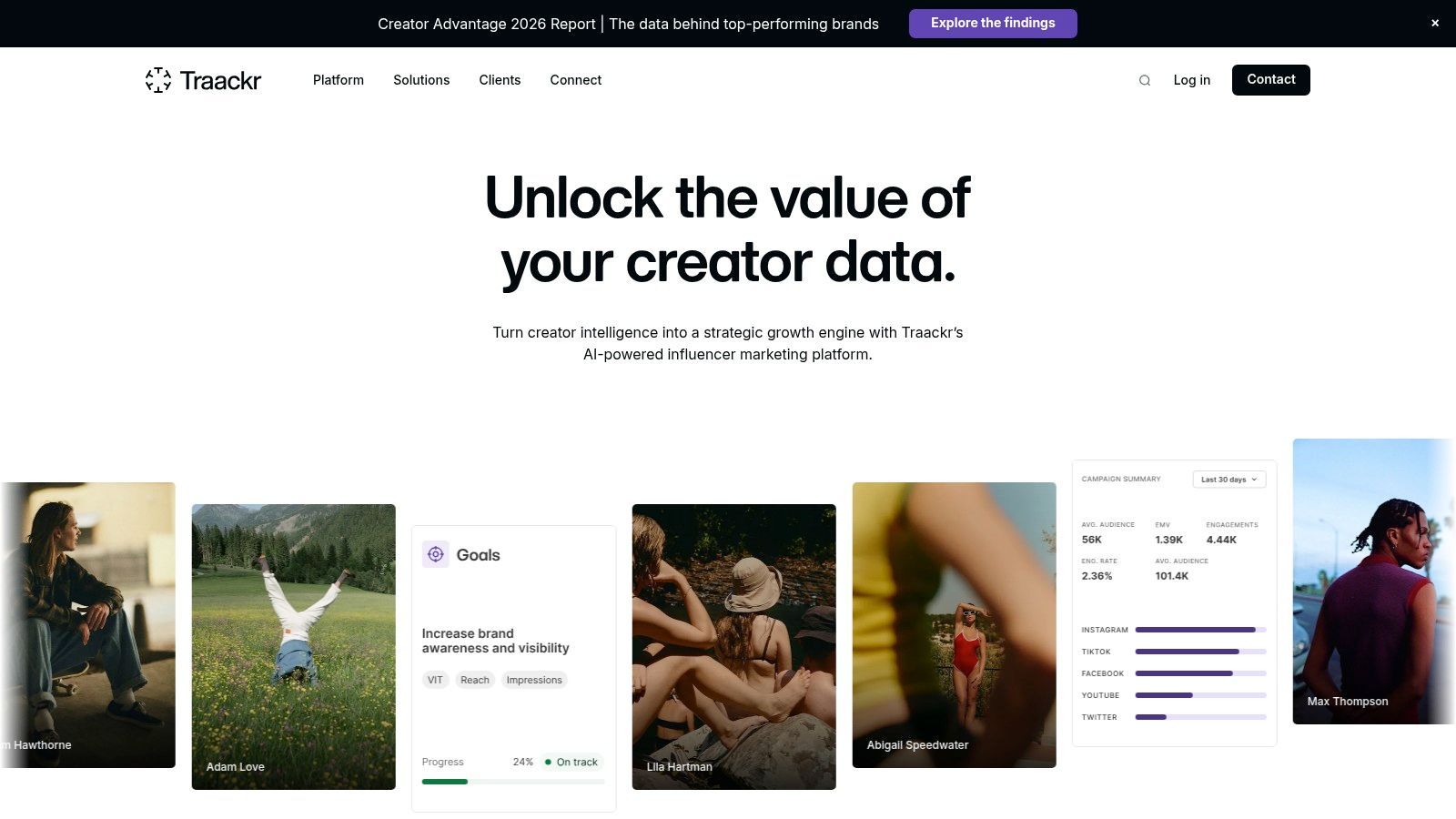
For large CPG or beauty companies, Traackr offers the tools to not only find the right partners but also to benchmark their performance against competitors and the market at large. This data-driven approach allows brands to make smarter decisions, allocate budgets more effectively, and prove the ROI of their programs with credible, executive-ready reporting, making it one of the top influencer marketing platforms for performance-focused teams.
Key Features & Use Case
Traackr’s strength lies in turning vast amounts of creator data into actionable intelligence, allowing for strategic planning and execution.
- Precision Measurement & Benchmarking: Users can measure campaign performance with metrics like VIT (Brand Vitality Score), which assesses visibility, impact, and trust. Brands can benchmark their share of voice against competitors in specific markets or product categories.
- AI-Powered Workflows & Insights: The platform uses AI to streamline creator discovery and vetting, surfacing insights about audience quality and content performance to predict a partnership's potential success.
- Global Program Governance: Designed for large, multi-region teams, Traackr provides a centralized system to manage relationships, track communications, and ensure brand safety and compliance across all markets.
- Industry-Specific Playbooks: Traackr offers frameworks and data models tailored for industries like beauty and CPG, providing relevant benchmarks and KPIs right out of the box.
| Best For | Enterprise & Global Brands |
|---|---|
| Pricing | By demo/quote only |
| Standout Feature | Advanced benchmarking & competitive analysis tools |
| Website | traackr.com |
Pros:
- Exceptional analytics for optimizing spend and proving ROI.
- Designed for the complexities of large, multi-region teams.
- Strong reputation and proven success with enterprise-level brands.
Cons:
- Pricing is not public and is geared toward enterprise budgets.
- The heavy emphasis on analytics may be overly complex for small teams.
- Focus is more on data intelligence than creative workflow management.
6. HypeAuditor
HypeAuditor has built its reputation as a leading analytics platform focused on rooting out fraud and verifying audience authenticity. It began as a tool for spotting fake followers and engagement but has evolved into a more comprehensive suite that includes discovery, campaign management, and market analysis. Its primary value proposition is trust, giving brands the confidence that their marketing dollars are being spent on influencers with real, engaged audiences.
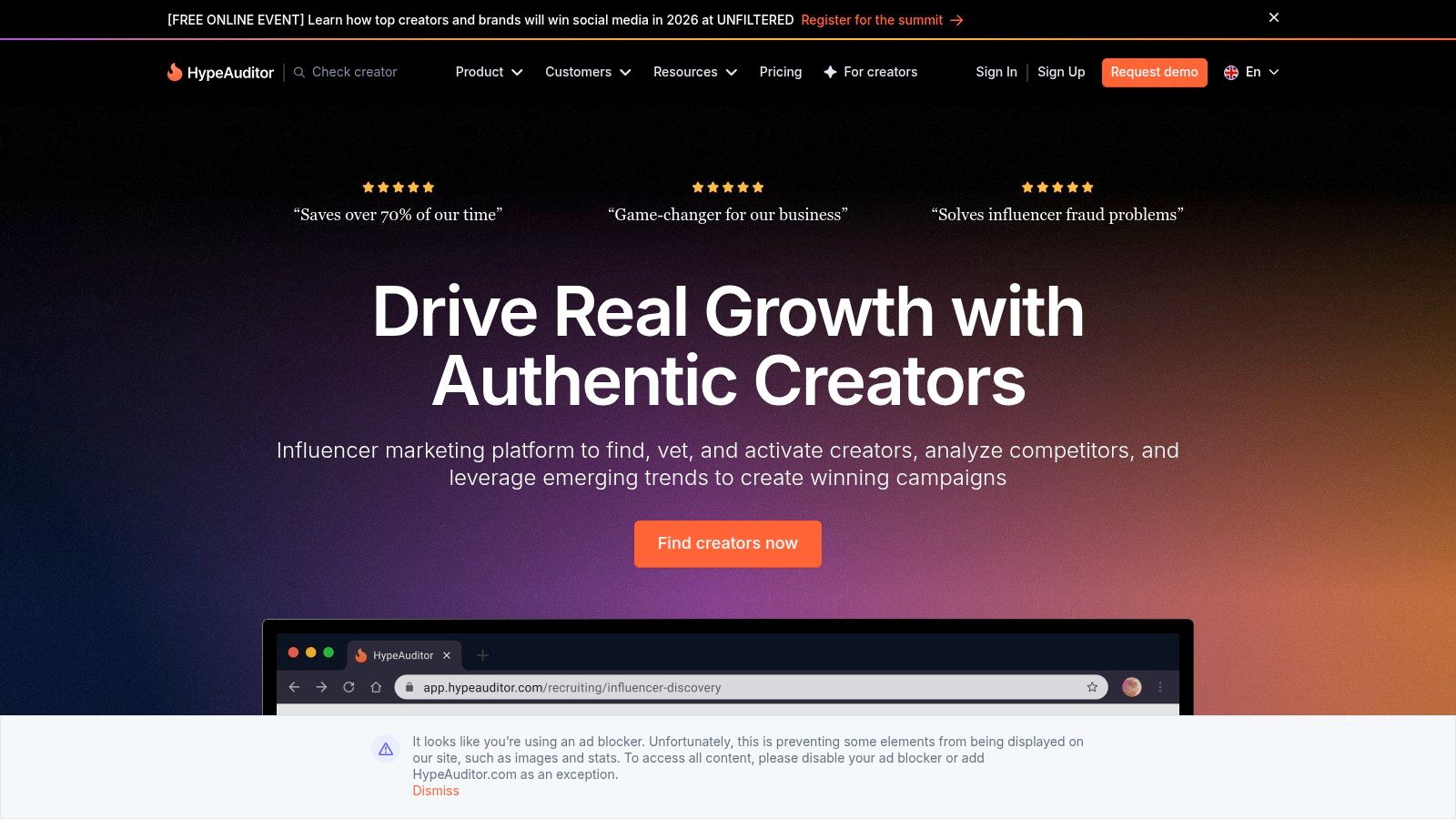
For small to mid-sized businesses dipping their toes into influencer marketing, HypeAuditor provides an essential layer of due diligence. Before committing a budget, a brand can use the platform to run a detailed check on a potential partner, analyzing their Audience Quality Score (AQS) to ensure they aren't paying for bots or inactive accounts. This focus on data integrity makes it one of the top influencer marketing platforms for risk-averse marketers.
Key Features & Use Case
HypeAuditor is the go-to platform for brands that prioritize data validation and want to avoid the common pitfalls of influencer fraud.
- Audience Quality & Fraud Detection: The platform's core feature uses machine learning to analyze over 35 metrics, providing an AQS that grades an influencer’s audience quality. It flags suspicious follower growth, comment authenticity, and engagement patterns.
- Advanced Discovery Filters: Beyond standard demographics, users can search for influencers based on audience quality, engagement authenticity, and specific audience interests, ensuring a highly targeted match.
- Campaign Management & Reporting: Brands can manage campaigns, track content, and generate reports that focus heavily on performance against authentic audience metrics, not just vanity numbers.
- Market Analysis: Provides insights into industry benchmarks and competitor influencer strategies, helping brands understand the broader landscape.
| Best For | SMBs & Mid-Market |
|---|---|
| Pricing | Starts at $399/mo (Starter Plan) |
| Standout Feature | Audience Quality Score (AQS) & fraud detection |
| Website | hypeauditor.com |
Pros:
- Transparent entry-level pricing and free tools to try.
- Industry-leading audience authenticity analytics.
- Very accessible for SMBs and teams new to vetting influencers.
Cons:
- Advanced features and higher usage limits require expensive upgrades.
- Its database and CRM features are less robust than enterprise-focused suites.
- Focus is more on analytics than end-to-end relationship management.
7. Sprout Social Influencer Marketing (formerly Tagger)
Following its acquisition of Tagger, Sprout Social has integrated a powerful influencer marketing module into its already robust social media management suite. This positions the platform as a unified solution for brands that want to manage their entire social presence, from organic content and community management to paid ads and creator collaborations, all within a single ecosystem. It’s designed for teams who prioritize efficiency and want to avoid the friction of switching between disparate tools.
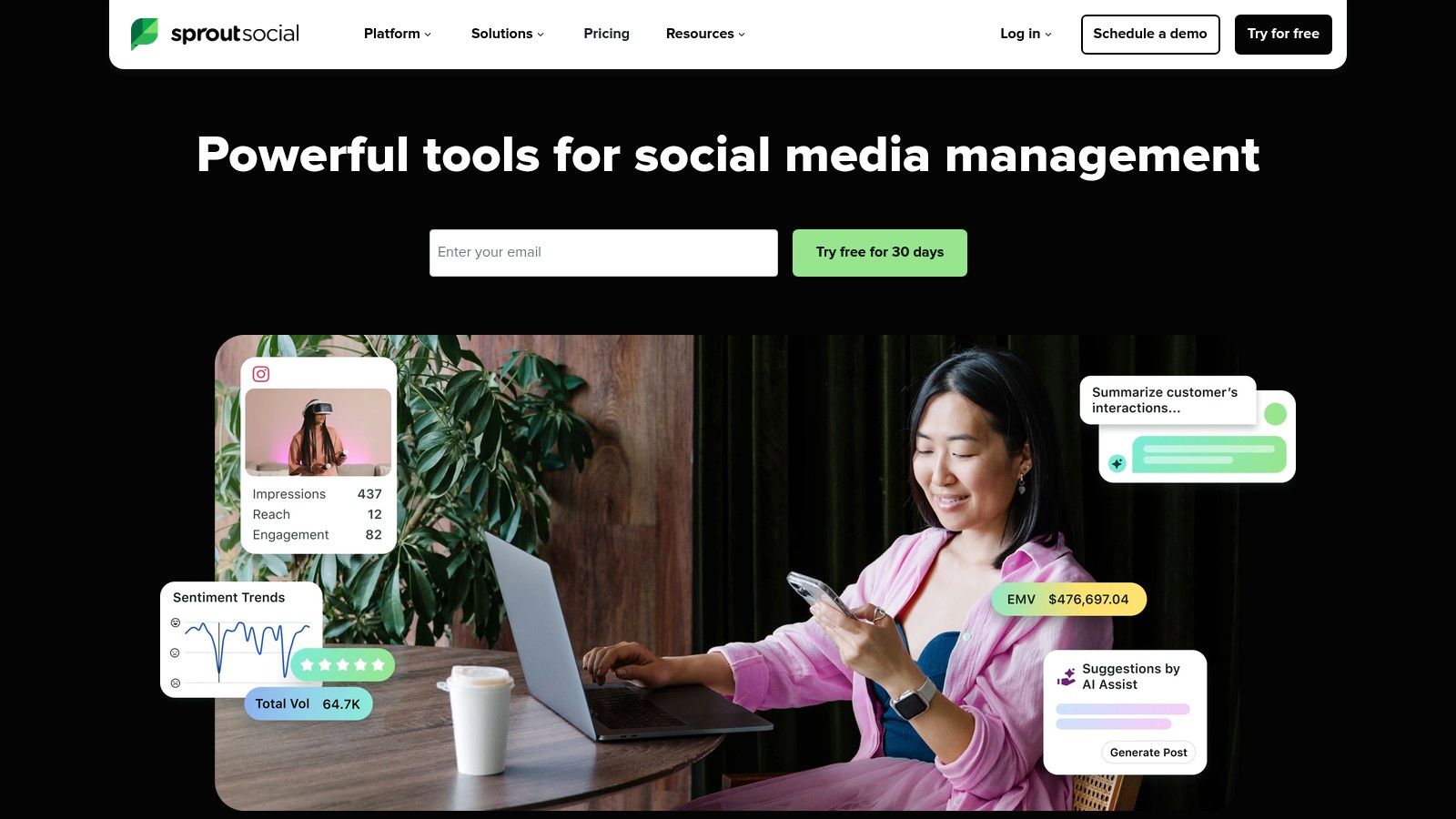
The core value proposition is consolidation. For a marketing team already using Sprout for scheduling posts, monitoring mentions, and analyzing social performance, adding the influencer module creates a seamless workflow. You can identify a potential creator through social listening, vet their profile using the integrated analytics, and then track their campaign content right alongside your brand's own organic posts.
Key Features & Use Case
Sprout Social's offering is ideal for organizations seeking to streamline their tech stack, making it one of the top influencer marketing platforms for existing Sprout customers.
- Integrated Creator Profiles: Access millions of creator profiles with detailed analytics on audience demographics, engagement rates, and content history directly within the Sprout interface.
- Unified Workflow Tools: The platform provides essential tools for creator messaging, campaign management, and tracking mentions, ensuring influencer activities are managed with the same rigor as other social media tasks.
- Cross-Network Reporting: Data from influencer campaigns is aggregated with your other social media analytics, providing a holistic view of your brand’s overall social media ROI.
- Synergy with Social Listening: Leverage Sprout’s advanced listening tools to discover authentic brand fans and potential influencers who are already talking about your industry or products.
| Best For | Current Sprout Social users, mid-market brands |
|---|---|
| Pricing | By demo/quote only (influencer module is an add-on) |
| Standout Feature | Seamless integration with a leading social media management suite |
| Website | sproutsocial.com |
Pros:
- Creates a single vendor for social and influencer workflows.
- Backed by mature support, resources, and continuous updates.
- Seat-based pricing for the core suite provides some clarity.
Cons:
- Influencer module pricing is not publicly itemized and requires a quote.
- Best value is realized when you also use Sprout for social management.
- May not be as specialized as standalone, influencer-only platforms.
8. Later Influence (formerly Mavrck)
Later Influence, the platform formerly known as Mavrck, represents a powerful integration of enterprise-level influencer marketing with a widely-used social media management suite. By folding Mavrck's robust campaign management and discovery capabilities into the Later ecosystem, the platform now offers a more holistic solution. It’s designed for brands that want to unify their influencer activations, content scheduling, and affiliate commerce programs under a single operational umbrella.
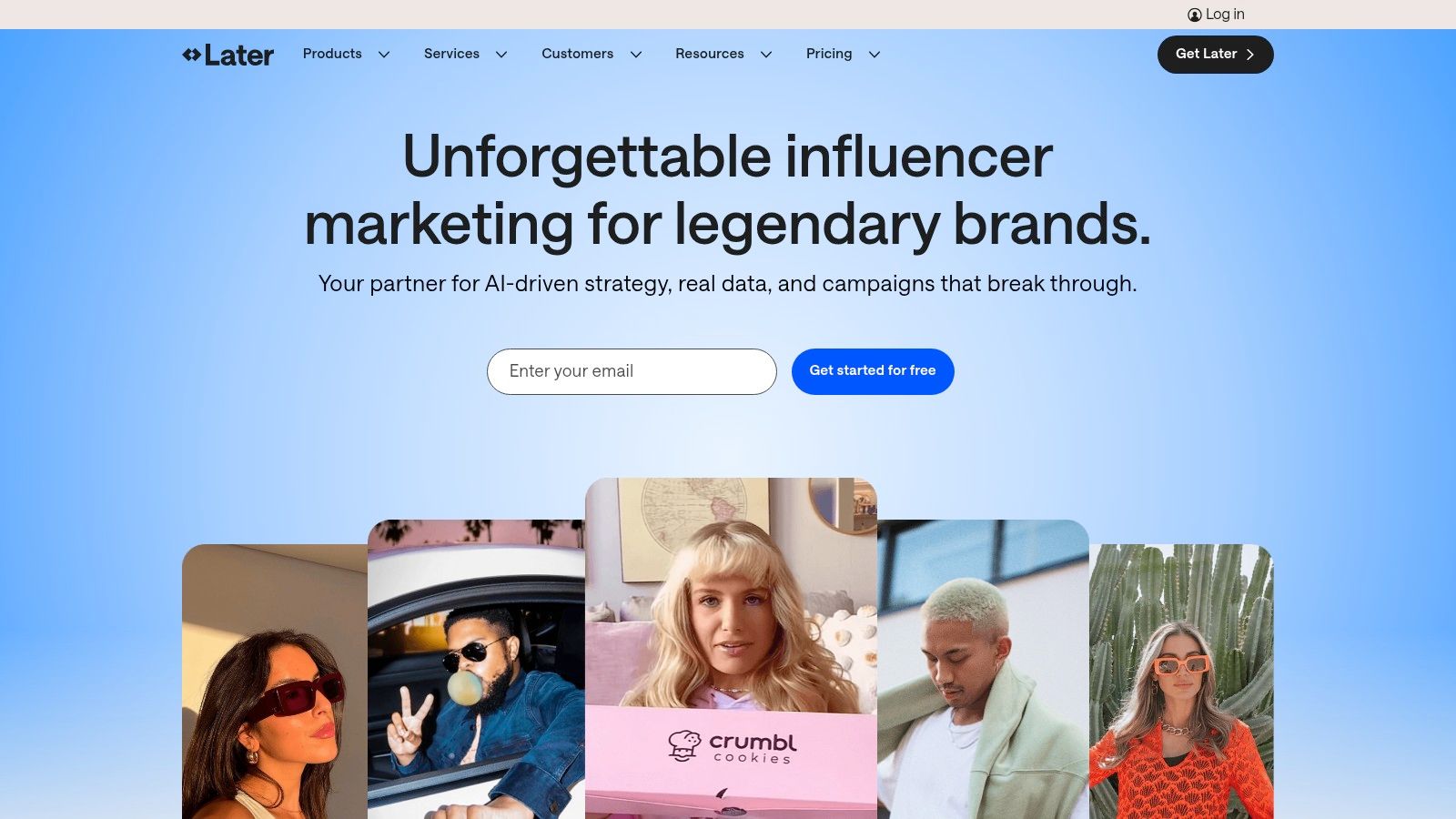
This synergy allows marketing teams to move seamlessly from identifying the right creators to managing their content approvals and scheduling their posts alongside the brand’s own organic content. For a direct-to-consumer brand, this means they can manage an affiliate campaign through Mavely, coordinate creator content submissions, and plan their entire social calendar without leaving the Later environment.
Key Features & Use Case
Later Influence stands out by connecting the dots between influencer relationships and broader social media strategy, making it one of the top influencer marketing platforms for brands seeking operational efficiency.
- Integrated Social Ecosystem: Seamlessly connects influencer discovery, campaign workflows, content approvals, and payments with Later’s core social scheduling and analytics tools.
- End-to-End Campaign Management: Retains Mavrck's enterprise-grade features for building creator whitelists, managing communications, and tracking performance from start to finish.
- Built-in Creator Applications: Brands can use Later’s Link in Bio feature to create and promote an application page, allowing creators to apply to join their community directly.
- Affiliate & Creator Commerce: Leverages Mavely technology to enable brands to run and track affiliate marketing and creator commerce initiatives, turning influencers into sales drivers.
| Best For | Enterprise & Mid-Market brands using the Later suite |
|---|---|
| Pricing | By demo/quote only |
| Standout Feature | Unification of influencer, social scheduling, and affiliate commerce |
| Website | later.com |
Pros:
- Combines three key marketing functions: influencer, social scheduling, and affiliate.
- Retains the enterprise pedigree and power of the original Mavrck platform.
- Offers clear help resources and a streamlined creator onboarding flow.
Cons:
- Pricing is not public and requires a sales demo.
- Best value is for brands already using or planning to adopt the Later Social suite.
- May be too feature-rich for businesses focused solely on influencer discovery.
9. Meltwater Influencer Marketing (Klear)
Meltwater integrates its powerful influencer marketing capabilities, formerly known as Klear, into a comprehensive media intelligence suite. This platform is designed for brands that want to unify their influencer programs with broader social listening, PR, and owned media analytics. It provides a 360-degree view, allowing marketing teams to see how influencer-generated content performs alongside and within their wider marketing ecosystem.
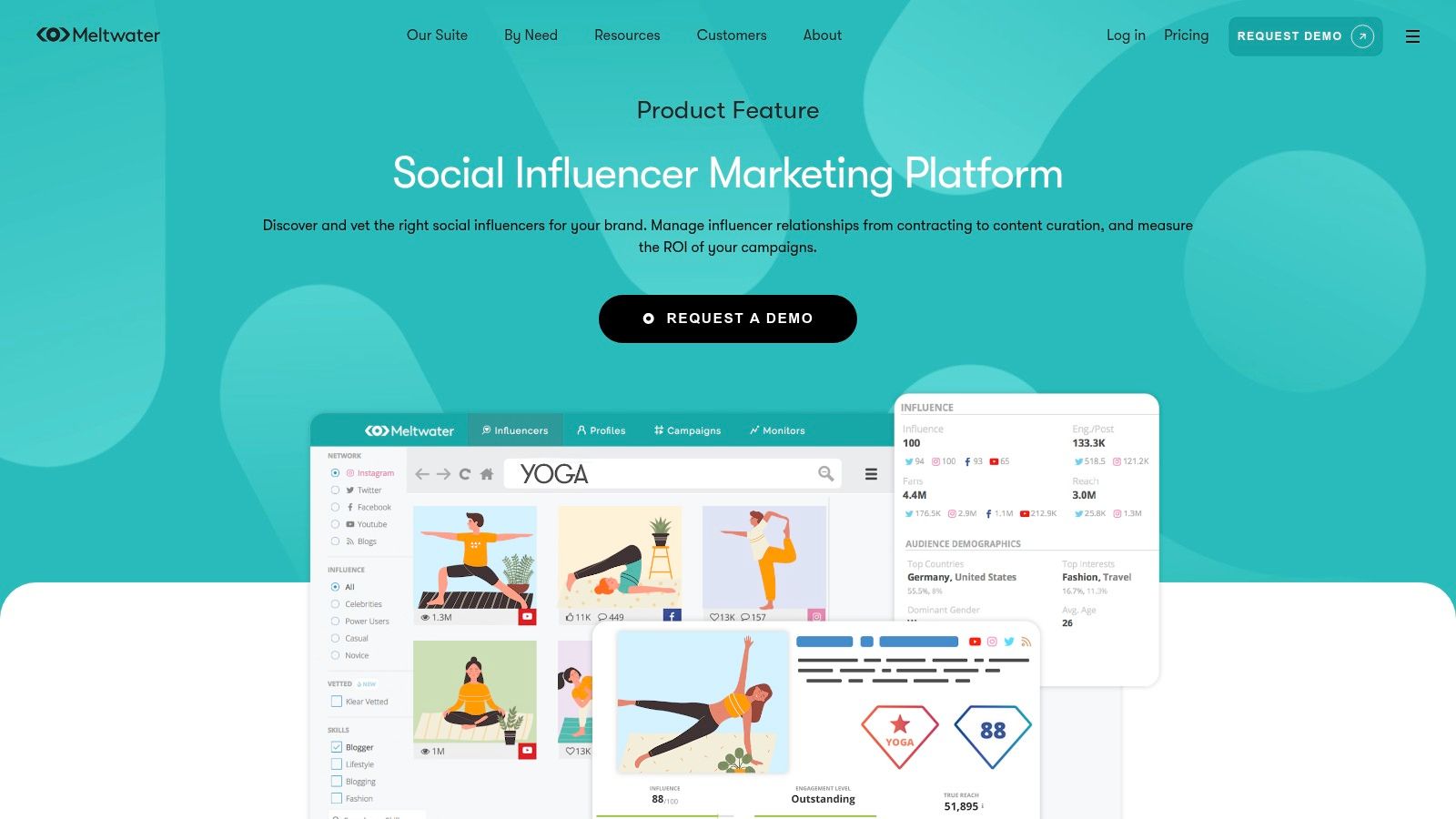
The core value proposition is consolidation. Instead of running influencer campaigns in a silo, Meltwater allows users to manage discovery, outreach, and reporting in the same environment where they track brand mentions and analyze social trends. This makes it one of the top influencer marketing platforms for organizations aiming to prove the holistic impact of their creator partnerships on overall brand health and earned media value.
Key Features & Use Case
Meltwater excels at connecting influencer activities to tangible business outcomes through its integrated analytics dashboard, providing a seamless workflow from discovery to reporting.
- Integrated Social Suite: Connects influencer campaign data directly with social listening and media monitoring tools. A brand can launch an influencer campaign and simultaneously track the organic conversation and press coverage it generates.
- Advanced Discovery & Vetting: The platform uses sophisticated filters to identify influencers based on audience demographics, content aesthetics, and past performance, including flagging creators who may have fake followers.
- Unified Relationship Management: Manage all creator communications, contracts, and creative briefs within a central hub, ensuring consistency and transparency across the team.
- Cross-Channel Reporting: Generate reports that measure influencer ROI alongside metrics from owned and earned social channels, providing executives with a clear picture of marketing performance.
| Best For | Mid-Market to Enterprise |
|---|---|
| Pricing | By demo/quote only |
| Standout Feature | Integration with a full media intelligence suite |
| Website | meltwater.com |
Pros:
- Consolidates influencer marketing with broader social analytics.
- Scalable capabilities suitable for growing teams and enterprises.
- Strong reporting features that demonstrate cross-channel impact.
Cons:
- Pricing is not transparent and can be a significant investment.
- The extensive feature set may be overly complex for simple, one-off campaigns.
- Full value is realized only when using the broader Meltwater suite.
10. Captiv8
Captiv8 is an end-to-end influencer marketing platform designed for sophisticated, data-driven brands that demand a clear line of sight to business outcomes. It excels at connecting creator-led marketing directly to commerce and sales, moving beyond simple engagement metrics to measure tangible ROI. The platform provides enterprise-grade tools for discovery, activation, and measurement, positioning itself as a central hub for brands looking to prove the value of their influencer spend.
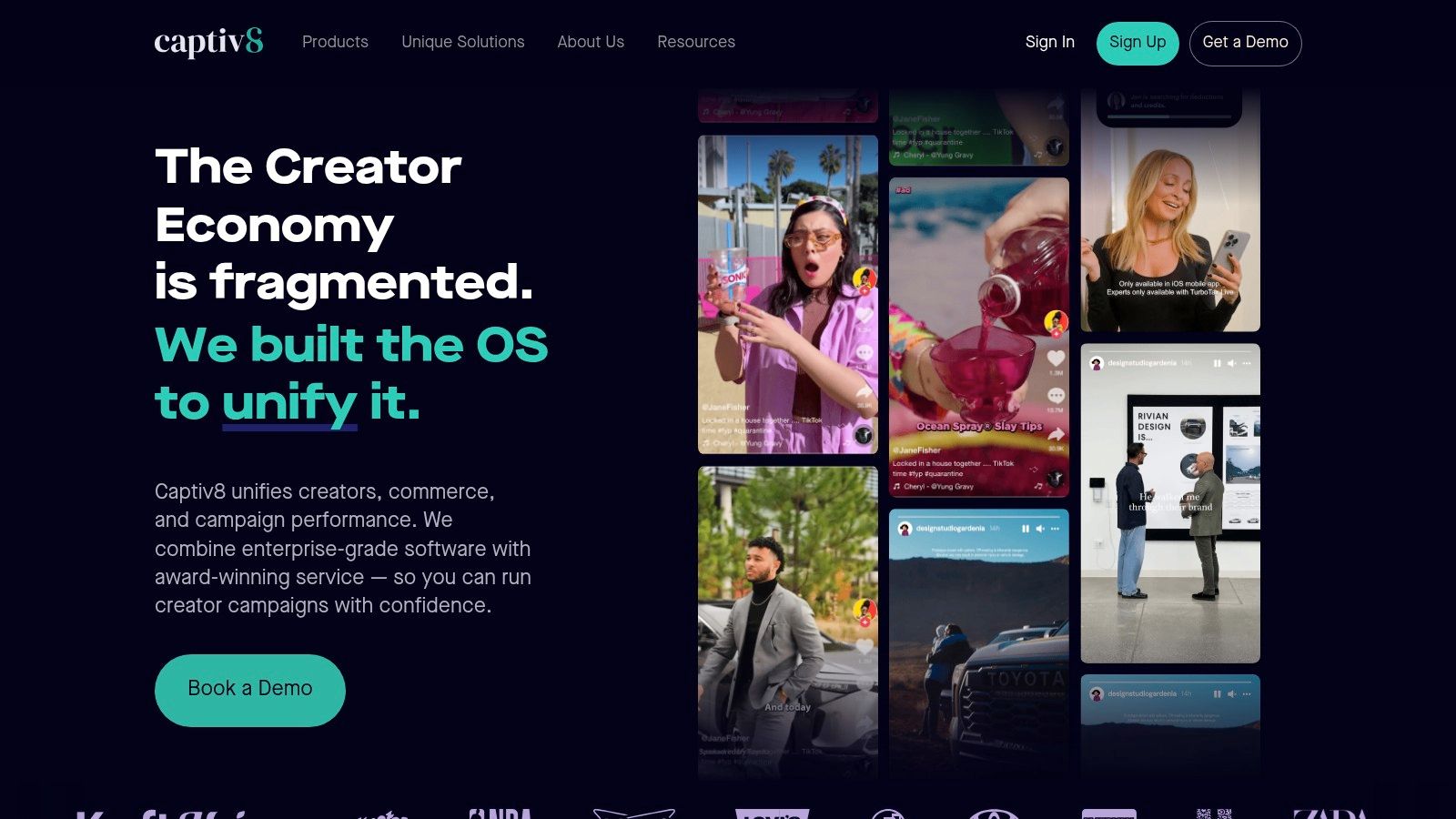
For large CPG or retail brands, Captiv8 bridges the gap between online influence and offline results. Its strength lies in deep integrations with commerce platforms and advanced measurement capabilities, including foot-traffic analysis and sales lift studies. This makes it a powerful choice for organizations that need to integrate influencer data into broader marketing mix models (MMM) and justify program budgets with hard numbers.
Key Features & Use Case
Captiv8 stands out as one of the top influencer marketing platforms for its focus on measurable business impact, making it ideal for performance-focused enterprise clients.
- Full-Funnel Workflow Automation: The platform automates the entire campaign lifecycle from briefs and contracts to content approvals and payments, freeing up teams to focus on strategy rather than administrative tasks.
- Advanced ROI Measurement: Users can track key business metrics like sales lift, Earned Media Value (EMV), audience sentiment, and even in-store foot traffic attributed to specific influencer campaigns.
- Commerce & Affiliate Integrations: Captiv8 offers mature integrations with social commerce and affiliate marketing systems, allowing brands to manage and track creator-driven sales within a unified dashboard.
- Open API Access: For advanced analytics teams, the open API allows for the extraction of influencer data to be integrated directly into internal business intelligence tools and marketing mix models.
| Best For | Enterprise & Performance-Focused Brands |
|---|---|
| Pricing | By demo/quote only |
| Standout Feature | Commerce integrations & advanced ROI/sales lift measurement |
| Website | captiv8.io |
Pros:
- Strong focus on large, data-rich programs with measurable business outcomes.
- Mature commerce and affiliate integrations for tracking sales.
- Unified dashboards that show both paid and organic ROI.
Cons:
- Pricing is not transparent and requires a sales-led demo.
- The depth of features can be overwhelming for small programs or limited budgets.
11. IZEA Flex
IZEA Flex positions itself as a modular, self-service influencer marketing platform designed for brands and agencies that value transparency and direct control. Unlike enterprise suites with opaque pricing, Flex offers publicly listed plans and a 10-day free trial, making it highly accessible for teams that want to manage campaigns in-house. It’s built to streamline the core operational tasks of influencer marketing, from discovery and contracting to payments and content management.
The platform is engineered for efficiency, providing a suite of tools that handle the logistical heavy lifting without requiring a managed service. For a growing e-commerce brand, IZEA Flex provides the necessary infrastructure to discover creators, legally contract them, track performance with unique links, and pay them directly, all within a single, coherent workflow. This makes it one of the top influencer marketing platforms for teams seeking autonomy.
Key Features & Use Case
IZEA Flex stands out by bundling contract and payment workflows directly into its software, which is often a costly add-on with other platforms.
- Integrated Contracting & E-signatures: Users can create, send, and manage legally binding agreements directly within the platform. The Power plan includes a high monthly limit for contract "envelopes," a significant value-add for agencies running multiple campaigns.
- ContentMine & ShareMonitor: The platform provides a central repository (ContentMine) to store and manage user-generated content and creator assets. ShareMonitor helps track when and where creator content is published.
- Creator Discovery: A robust search tool allows users to find influencers based on keywords, social metrics, audience demographics, and content, helping to identify suitable partners for specific campaign goals.
- DirectPay: Streamlines the creator payment process, allowing brands to pay influencers directly through the platform, though per-transaction fees apply. This consolidates financial workflows and simplifies creator compensation.
| Best For | SMBs & Agencies |
|---|---|
| Pricing | Starts at $150/month (billed annually) |
| Standout Feature | Transparent pricing with included contracting & payment tools |
| Website | izea.com/flex |
Pros:
- Transparent published plans and a 10-day free trial.
- High number of included contract envelopes on upper-tier plans.
- Good value for SMBs running programs in-house.
Cons:
- Not a managed service; users are responsible for campaign execution.
- The creator ecosystem is smaller than some large enterprise suites.
- Per-transaction fees for creator payments can add up.
12. impact.com (Creator / ACTIVATE)
Impact.com expands the definition of influencer marketing by integrating it directly into its broader Partnership Cloud. Bolstered by its acquisition of ACTIVATE, the platform treats creators as a vital component of a holistic partnership strategy, sitting alongside affiliates, mobile apps, and other business development relationships. This approach allows brands to manage, track, and scale their creator programs with the same rigor and performance metrics they apply to their affiliate marketing efforts.
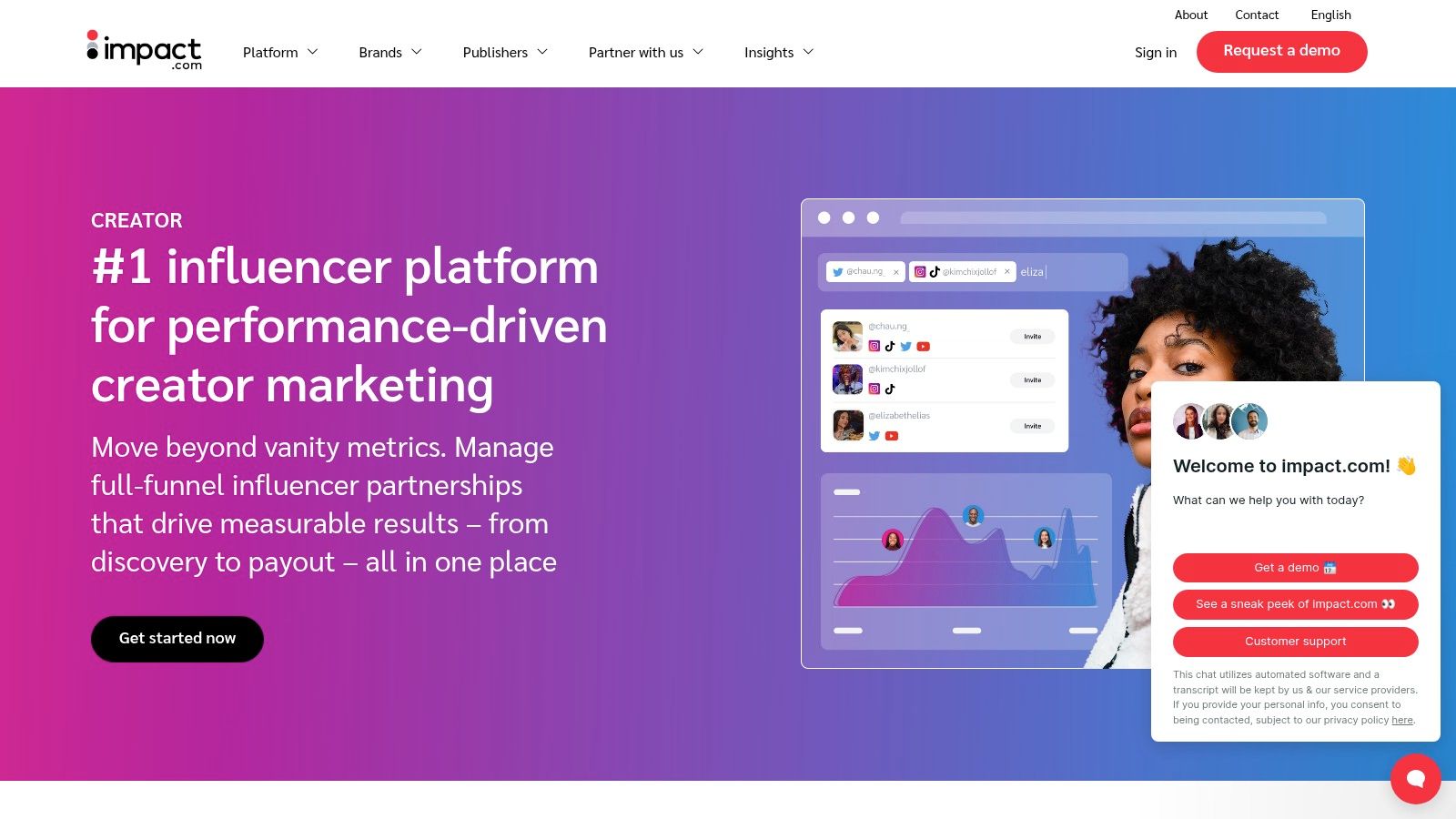
The platform is uniquely powerful for businesses that want to unify their influencer and affiliate channels, breaking down silos between the two. Instead of managing separate budgets and reporting systems, impact.com provides a single source of truth, enabling marketers to see how creator content directly contributes to conversions and customer journey touchpoints. This makes it one of the top influencer marketing platforms for performance-focused brands.
Key Features & Use Case
Impact.com excels at turning creator relationships into measurable, performance-based partnerships, aligning influencer activity with concrete business outcomes.
- Unified Partnership Management: Brands can discover creators, negotiate contracts, automate payments, and track performance for both influencer and affiliate partners within one interface.
- Flexible Commercial Models: Offers both a self-service software subscription and fully managed services, providing an on-ramp for brands that need hands-on campaign support before transitioning to the platform.
- Performance-Based Contracting: Facilitates complex, multi-tiered payout structures, such as a flat fee plus a commission on sales, rewarding creators directly for the value they drive.
- Opt-In Creator Marketplace: Leverages a network of creators who have actively chosen to participate, ensuring a higher level of intent and engagement compared to cold outreach.
| Best For | E-commerce & D2C brands unifying affiliate and creator programs |
|---|---|
| Pricing | By demo/quote only |
| Standout Feature | Integration of influencer marketing into a full partnership automation suite |
| Website | impact.com/creator |
Pros:
- Excellent for brands unifying affiliate and influencer programs.
- Flexible options for both software and managed services.
- Enterprise-grade contracting and global payment capabilities.
Cons:
- Pricing is not public and requires sales engagement.
- The extensive feature set may be overly complex for influencer-only campaigns.
Top 12 Influencer Marketing Platforms — Comparison
| Platform | Core focus & USP (✨ / 🏆) | Target audience (👥) | Quality / UX (★) | Pricing / Value (💰) | Key features |
|---|---|---|---|---|---|
| CreatorIQ | ✨ Full‑stack creator OS, brand safety & global payouts 🏆 | 👥 Enterprise / multi‑market | ★★★★★ | 💰 Custom (enterprise) | AI discovery, program mgmt, governance, global pay |
| GRIN | ✨ Creator CRM built for e‑commerce; seeding & tax handling 🏆 | 👥 DTC / e‑commerce teams | ★★★★☆ | 💰 Custom (in‑house focus) | Discovery, seeding, content library, payouts/1099 |
| Upfluence | ✨ Large database + strong commerce/affiliate stack 🏆 | 👥 Retailers, marketplaces, agencies | ★★★★☆ | 💰 Custom (sales‑led) | Advanced filters, affiliate attribution, payouts |
| Aspire (AspireIQ) | ✨ SaaS + optional managed services; content collaboration 🏆 | 👥 Growth consumer & DTC brands | ★★★★ | 💰 Custom (demo) | Discovery, content approvals, analytics, managed ops |
| Traackr | ✨ Data‑first discovery, benchmarking & governance 🏆 | 👥 Large global brands | ★★★★★ | 💰 Custom (enterprise) | Precision measurement, AI insights, playbooks |
| HypeAuditor | ✨ Audience authenticity & fraud detection 🏆 | 👥 SMBs & vetting teams | ★★★★ | 💰 Transparent entry + free tools | Fraud scoring, discovery, campaign reporting |
| Sprout Social Influencer | ✨ Influencer module inside Sprout social stack 🏆 | 👥 Teams using Sprout / social managers | ★★★★ | 💰 Add‑on to Sprout (seat‑based) | Creator profiles, messaging, cross‑network reports |
| Later Influence | ✨ Influencer + Later scheduling & affiliate commerce 🏆 | 👥 Brands adopting Later Social | ★★★★ | 💰 Custom (best with Later) | Discovery, approvals, payments, Mavely commerce |
| Meltwater (Klear) | ✨ Consolidated influencer + social analytics 🏆 | 👥 SMB → Enterprise social teams | ★★★★ | 💰 Custom (scalable) | Discovery, cross‑channel dashboards, playbooks |
| Captiv8 | ✨ End‑to‑end with API & MMM integrations 🏆 | 👥 Large, data‑rich programs | ★★★★★ | 💰 Custom (enterprise) | Brief‑to‑pay workflows, ROI dashboards, APIs |
| IZEA Flex | ✨ Modular software with published plans & contracts 🏆 | 👥 SMBs & agencies wanting transparency | ★★★★ | 💰 Published plans + 10‑day trial | Discovery, ContentMine, e‑sign contracts, DirectPay |
| impact.com (ACTIVATE) | ✨ Partnership Cloud + influencer & affiliate unity 🏆 | 👥 Brands unifying affiliate & influencer programs | ★★★★★ | 💰 Custom / flexible (software or managed) | Discovery, contracting, payments, journey reporting |
Beyond the Platform: Integrating Strategy with Technology
Navigating the landscape of top influencer marketing platforms can feel like choosing the right vehicle for a cross-country road trip. We've explored the enterprise-grade powerhouses like CreatorIQ and GRIN, designed for massive scale and complex campaign orchestration. We’ve also delved into the deep analytics of HypeAuditor for fraud detection and the all-in-one social suite capabilities of platforms like Sprout Social. From the e-commerce integration strengths of Aspire to the relationship-centric model of Traackr, the one constant is that there is no single "best" platform, only the platform that is best for your specific goals, team size, and budget.
The right technology acts as a powerful accelerator, not a silver bullet. A platform can surface thousands of potential creators, but it can’t intuit the subtle nuances of brand alignment. It can automate payments and track metrics, but it can’t build the genuine, long-term relationships that lead to authentic advocacy. This is the crucial intersection where technology meets human strategy, and where true ROI is unlocked.
Making Your Final Decision: A Strategic Checklist
As you move from evaluation to implementation, the features and pricing we’ve discussed are just the starting point. Your final decision should be guided by a deeper, more strategic assessment of your organization's unique needs. Before you sign a contract, run through this final checklist with your team:
- Integration is Non-Negotiable: Does the platform integrate seamlessly with your existing martech stack? Consider your CRM, e-commerce platform (like Shopify or Magento), and analytics tools. A disconnected platform creates data silos and manual work, defeating the purpose of the investment.
- Scalability for Tomorrow: Your needs today may not be your needs in two years. Will this platform grow with you? Evaluate its ability to handle more campaigns, a larger creator roster, and expansion into new global markets or social networks without a complete overhaul.
- Workflow, Not Just Features: Don't just look at what the platform can do; analyze how it does it. Does the user interface feel intuitive for your team? Does the workflow for discovery, outreach, negotiation, and reporting align with your internal processes, or will it force an inefficient change?
- Data Accuracy and Depth: How does the platform source its data? Is it relying solely on public API data, or does it offer first-party, authenticated data directly from creators? The latter is the gold standard for accurate audience demographics and performance metrics, a key differentiator offered by platforms like GRIN and CreatorIQ.
The Human Element: Your Most Valuable Asset
Ultimately, the most sophisticated of the top influencer marketing platforms is only as effective as the strategy guiding it. It provides the map, the compass, and the engine, but a skilled strategist must still chart the course, navigate unforeseen challenges, and build rapport with the people at the heart of this industry: the creators themselves.
This is where the synergy between a powerful platform and expert agency oversight becomes a force multiplier. An agency leverages the platform’s efficiency for tasks like mass discovery and reporting, freeing up human capital to focus on high-value activities. These include personalized outreach, creative brief development, nuanced contract negotiation, and fostering the authentic relationships that software alone cannot replicate. By combining the scale of technology with specialized human expertise, you transition from simply managing campaigns to building a sustainable, high-impact creator program that drives measurable business growth.
Ready to pair the power of a leading platform with expert-led strategy? At ReachLabs.ai, we work as an extension of your team, integrating with your chosen technology to build, manage, and scale creator programs that deliver real results. Let us show you how we can transform your influencer marketing efforts at ReachLabs.ai.