You're probably here because someone used the phrase programmatic advertising in a meeting, everyone nodded, and the explanation that followed somehow made it less clear.
That's common. Many marketers hear a basic definition like “automated ad buying” and still walk away with the same practical questions. What's being automated? Who's buying from whom? Why do costs feel different now than they did before? And why does a Connected TV campaign behave nothing like a standard display campaign even though both get labeled “programmatic”?
A useful programmatic advertising definition has to do more than describe software. It has to explain how modern digital media is bought, why the process changed, and where marketers still get tripped up. The confusion usually starts when old assumptions meet a market that has evolved fast.
The Evolution from Manual Ad Buys to Automation
Digital advertising didn't start as an instant, machine-led system. It used to involve emails, rate cards, insertion orders, negotiated placements, and a lot of manual coordination between buyers and publishers. If a brand wanted to run ads across multiple sites, the team often had to manage each relationship separately.
That model worked when media plans were smaller and targeting was broader. It breaks down when you need to decide, in real time, whether a specific impression on a specific device for a specific user is worth buying.
What changed
Programmatic advertising is the automated buying and selling of digital ad inventory, where software makes bid-by-bid decisions in milliseconds using signals such as audience, context, and device. That shift didn't just make ad buying faster. It changed the operating model of digital media.
In the US, digital advertising reached $258.6 billion in 2024, and programmatic advertising accounted for $134.8 billion, with 18% growth for that segment while the overall digital ad market grew 14.9%. That's one reason programmatic is now treated as the dominant method for purchasing digital media, according to AI Digital's overview of programmatic advertising.
Why it matters to everyday marketers
If you manage campaigns today, you're not just choosing ad creative. You're choosing how your budget enters a marketplace that evaluates thousands of possible placements on your behalf.
That matters for small teams just as much as large brands. Automation can reduce the manual overhead of buying across websites, apps, video, audio, and streaming environments. If your broader goal is to simplify repetitive marketing work, this resource on how to transform your agency with automated marketing offers a useful adjacent perspective on what automation looks like in practice.
Practical rule: Don't think of programmatic as “banner ads with fancy software.” Think of it as the infrastructure that decides where digital ads run, who sees them, and how much a buyer is willing to pay for each opportunity.
The old model asked people to negotiate media placements in batches. The new model asks software to evaluate each impression one by one.
That's the key shift.
So What Is Programmatic Advertising Really
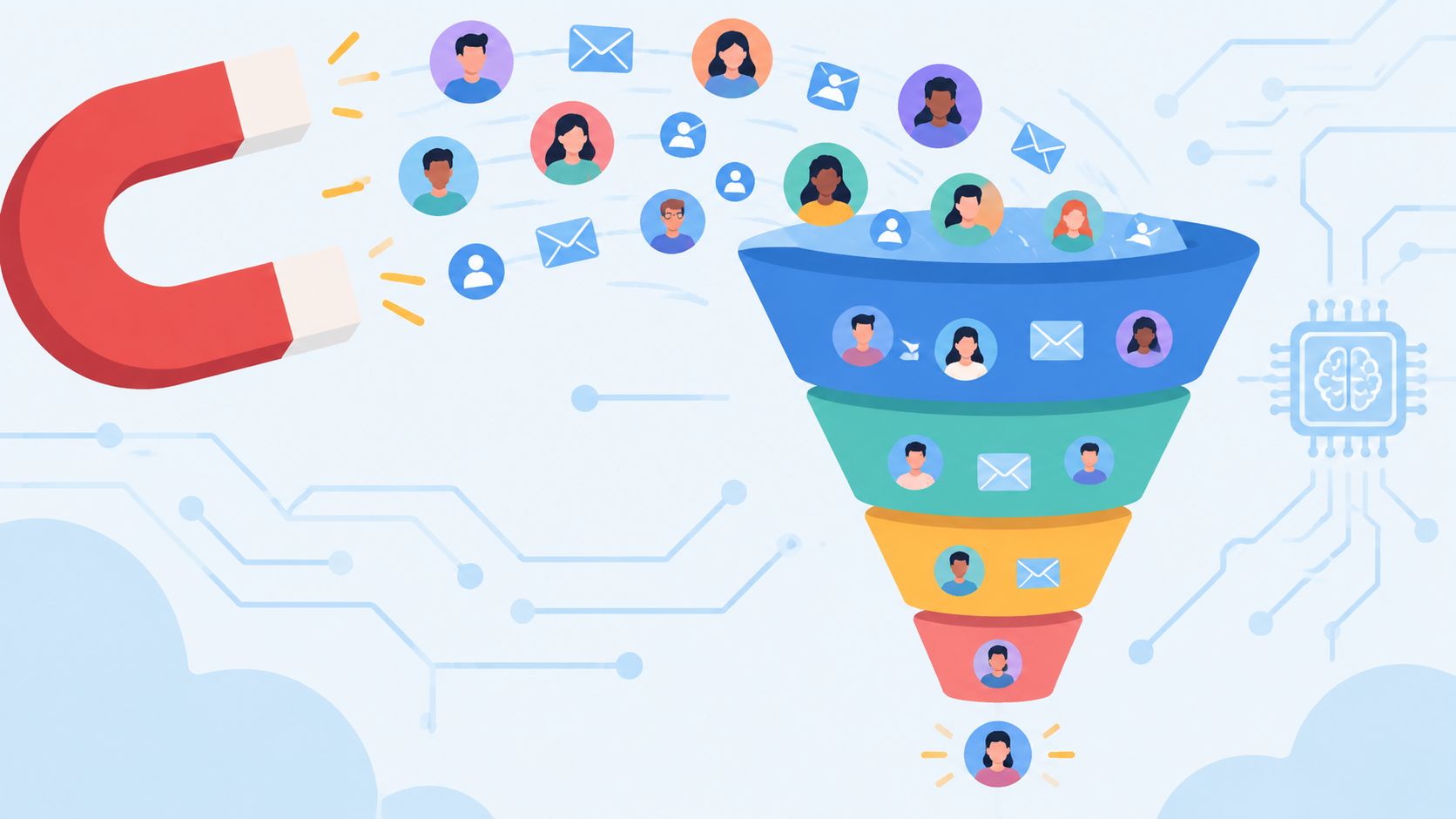
The simplest useful programmatic advertising definition is this: it's software-driven media buying that uses data to decide, impression by impression, whether an ad opportunity is worth paying for.
That's more precise than saying “automated ad buying,” because the automation isn't random. The system is making decisions based on rules, data, and bidding logic that the advertiser sets.
The stock market analogy
A good mental model is a high-speed stock market for ad space.
In a stock market, buyers and sellers meet in a marketplace. Prices change quickly. Decisions happen fast. Software helps traders act on signals before a human could react.
Programmatic works in a similar way, except the asset being traded isn't a share of a company. It's a single ad impression on a website, app, streaming platform, or other digital property.
Here's what that means in plain language:
- A publisher has space to sell. That could be a banner slot on a news site, a video pre-roll opportunity, or a placement inside a streaming app.
- An advertiser wants the right audience. Not every impression has equal value. One person might match the campaign's target audience closely, while another doesn't.
- Software evaluates the match. The buying platform checks signals such as device, context, location, or audience attributes and decides whether to bid.
What problem it solves
Manual buying treats inventory in chunks. Programmatic treats inventory as individual opportunities.
That matters because a sports blog visitor on a mobile phone at lunchtime is not the same opportunity as a streaming viewer watching a smart TV at night. A manual process struggles to adjust to those differences at scale. Programmatic is built for that.
A newer marketer often assumes programmatic means “set it and forget it.” It doesn't. Humans still define the audience, budget, geography, creative, and business goal. The machine handles the repetitive, split-second decisions.
Programmatic is best understood as automated execution, not automated strategy.
If you want to see how firms package these capabilities for specialized industries, Advisor Momentum programmatic solutions is a helpful example of how the concept gets translated into service offerings.
The key takeaway is simple. Programmatic doesn't remove marketing judgment. It gives that judgment a system that can act much faster than a person can.
Meet the Players in the Programmatic Ecosystem
The jargon is what usually makes programmatic feel harder than it is. Once you know the main players, the system becomes much easier to follow.
Think of the ecosystem like a marketplace with buyers, sellers, middlemen, and data tools. Each one has a defined job.

The buyer side
Advertiser or brand
This is the company paying to show ads. The advertiser decides the goal. That might be awareness, lead generation, app installs, or conversions.
Demand-Side Platform or DSP
The DSP is the advertiser's buying tool. Brands set campaign parameters such as audience, budget, and geography in the DSP, and the platform helps evaluate and purchase inventory across publishers. A useful summary of this workflow appears in ROI Revolution's programmatic advertising trends and stats.
In practice, the DSP is where a marketer says, “Show this ad to this kind of person, under these conditions, at this budget.”
The sell side
Publisher
The publisher owns the digital property where ads can appear. That could be a website, app, or streaming platform.
Supply-Side Platform or SSP
The SSP helps the publisher make inventory available to buyers. It's the publisher-side technology that manages the sale of ad space.
If the DSP is the buyer's control panel, the SSP is the publisher's sales engine.
The marketplace layer
A lot of beginners picture one direct pipe between brand and publisher. Usually, there's a marketplace layer in between.
| Player | Core job | Simple way to think about it |
|---|---|---|
| Ad Exchange | Connects buyers and sellers | The trading floor |
| Ad Server | Delivers the ad creative | The final messenger |
| DMP | Organizes audience data | The filing system for user segments |
The data layer
Data Management Platform or DMP
A DMP helps collect, manage, and segment audience information. It doesn't buy media by itself. It makes targeting smarter by organizing data into usable audience groups.
Ad Server
After the auction is won, the ad server helps deliver the creative that the user sees. People sometimes confuse ad serving with media buying. They're connected, but they aren't the same thing.
If you're new to this world, remember the division of labor. DSPs buy. SSPs sell. Exchanges connect. DMPs organize audience data. Ad servers deliver the creative.
Once you stop trying to memorize the acronyms and instead assign each one a job, the ecosystem feels much less abstract.
The Magic of Real-Time Bidding Explained
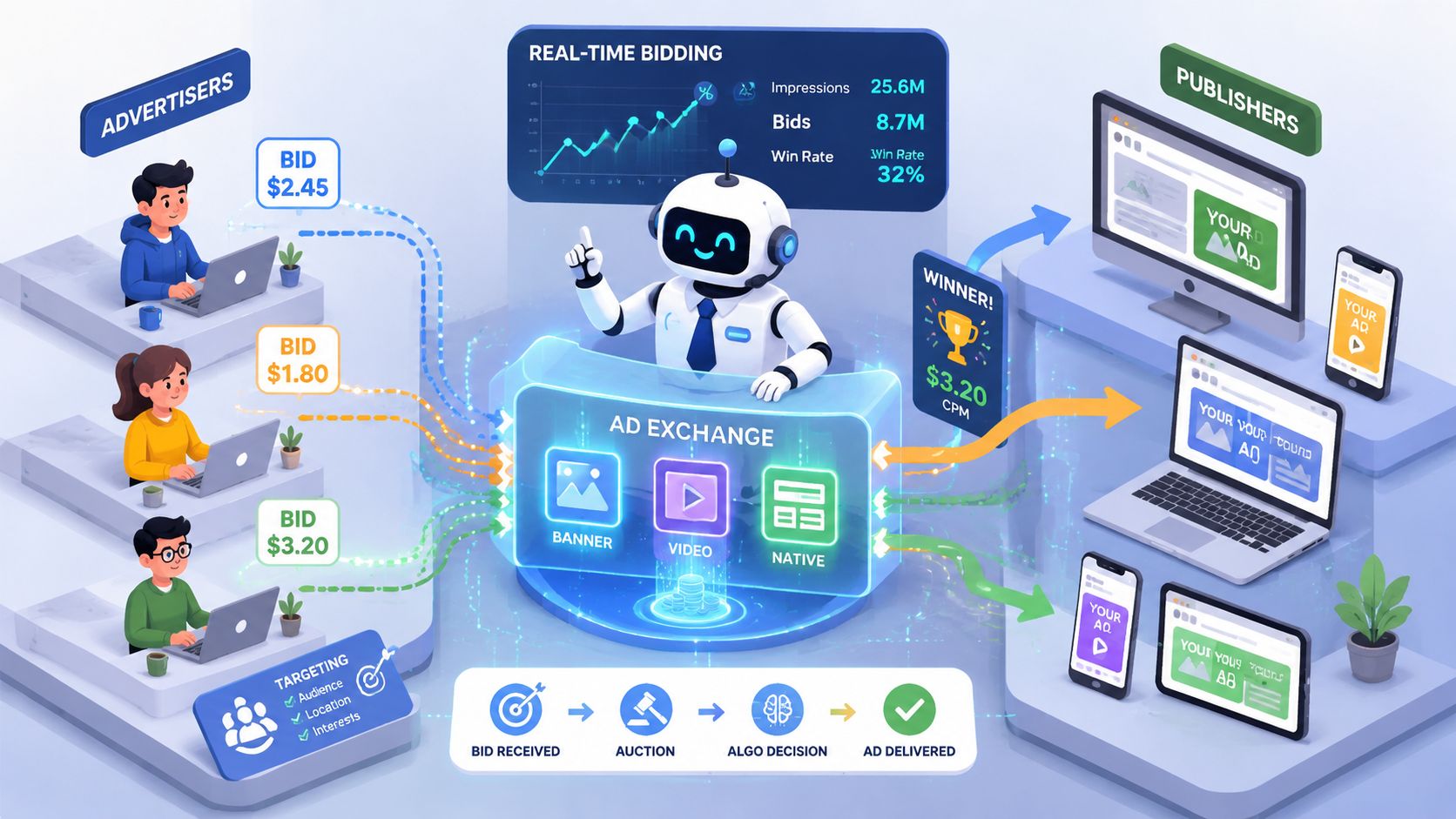
Real-time bidding, often shortened to RTB, is the process that makes programmatic feel almost invisible to the end user. It happens in the small window between someone opening a page or app and the ad appearing.
That sounds technical, but the sequence is straightforward.
To make the flow easier to visualize, start with this overview.

One impression from start to finish
A user visits a page or app.
A person opens a site, launches an app, or starts content on a digital platform.The publisher identifies an available ad slot.
The system sees that there's space where an ad could appear.A bid request is sent into the marketplace.
Information about that impression is shared with potential buyers. This can include context, device, and other signals allowed in the transaction.DSPs evaluate the opportunity.
Each advertiser's DSP checks whether this impression matches campaign rules. If it does, the system decides whether to bid and how much.The winning bid is selected.
The marketplace determines which eligible buyer wins that impression.The ad is served.
The winning creative loads, usually fast enough that the user never notices a separate buying process happened.
A useful way to think about RTB is that it turns every available impression into a tiny decision point.
Why marketers care about this process
RTB matters because it replaces broad, bulk assumptions with live decisions. Instead of buying “this website” in general, you're often evaluating “this ad opportunity, right now, for this likely viewer.”
That precision is why optimization matters so much. Small inputs, like audience definitions or bid rules, can change what inventory you win and what you pay for it. If you want a deeper look at that operating mindset, this guide on how to optimize campaigns in real time is a practical companion.
A short explainer can also help if you prefer to see the mechanics rather than just read about them.
Where confusion starts
The phrase “real-time bidding” makes some people think every programmatic transaction is a chaotic open auction. That's not quite right. RTB is a major part of the ecosystem, but it's only one buying method.
Another common misunderstanding is that speed guarantees efficiency. Speed helps, but only if your targeting, creative, exclusions, and bidding logic are sound. Fast mistakes are still mistakes.
Programmatic Deal Types and Ad Formats
Programmatic isn't one uniform buying lane. Buyers can enter the market through different deal structures, and each one gives a different balance of scale, control, access, and predictability.
That's why a strong programmatic advertising definition should include more than automation. It should also recognize that there are multiple ways to buy programmatically.

Comparing the main deal types
Here's a practical side-by-side view.
| Deal type | What it means | Best fit |
|---|---|---|
| Open Auction | Inventory is broadly available and buyers can bid in a public marketplace | Scale and broad reach |
| Private Marketplace | Invitation-only auction with selected buyers and publishers | More control and curated inventory |
| Preferred Deal | Buyer gets access to inventory at a set price, but without a guarantee of volume | Priority access without full commitment |
| Programmatic Guaranteed | Fixed-price automated deal with guaranteed inventory | Predictability and premium placements |
An open auction gives flexibility and reach. A private marketplace gives more control over where ads appear. Preferred deals sit in the middle. Programmatic Guaranteed behaves more like a direct buy that happens through programmatic pipes.
Ad formats don't behave the same
Marketers often talk about “programmatic” as if all placements work the same way. They don't.
You can buy many formats programmatically, including:
- Display ads that appear on websites and apps
- Video ads in streaming or video environments
- Native ads designed to fit the surrounding content
- Audio ads inside streaming audio
- DOOH placements on digital out-of-home screens
The biggest practical misunderstanding today is the assumption that CTV and display are close cousins. They're not.
According to Strategus on programmatic vs. non-programmatic advertising, CTV programmatic represents nearly 40% of programmatic volume and shows a 30% higher engagement rate than display ads, largely because it uses audience signals like streaming behavior rather than only click history.
CTV isn't just display on a bigger screen. It uses different viewing behavior, different creative expectations, and different audience signals.
Why CTV needs its own strategy
A display ad often competes for attention in a cluttered page environment. A CTV ad appears in a lean-back viewing experience where the user is consuming streaming content. That changes creative strategy.
For display, a static visual and quick message might be enough. For CTV, the opening seconds, pacing, and video structure carry more weight. If you're building audience sequences, retargeting logic also changes, which is why this explainer on what retargeting is in digital marketing can help connect the dots.
When teams ignore those differences, they often apply website ad logic to a streaming environment. That's one of the fastest ways to waste budget.
Weighing the Key Benefits and Common Challenges
A useful way to judge programmatic is to compare it to hiring a larger media team overnight. You get more speed, more buying power, and more data to work with. You also inherit more complexity, because the system can make thousands of decisions before a human has time to review one.

That tradeoff explains why programmatic is so effective for some brands and so frustrating for others. The technology is strong at processing scale. It is less forgiving when your goals, audience definitions, bid strategy, or inventory controls are unclear.
What makes programmatic attractive
The biggest advantage is efficiency. A buyer does not need to call dozens of publishers, compare spreadsheets, and negotiate every placement one by one. Platforms can evaluate inventory and place bids in real time across many sites and apps.
Targeting is the second major benefit. Instead of buying a broad bucket like "sports websites," advertisers can often choose audiences based on behavior, context, device type, geography, or other signals. If you are still learning how those automated transactions work, this overview of how programmatic ad buys work helps make the mechanics more concrete.
Optimization is where many new advertisers start to see the appeal. If one audience segment is outperforming another, budgets, bids, and creative rotation can be adjusted while the campaign is running. Manual buying usually moves much slower.
Programmatic also gives brands reach across multiple environments. That matters, but it is easy to oversimplify. Buying display, audio, mobile video, and CTV through connected tools does not mean those channels behave the same way. A display campaign can often tolerate faster creative testing and tighter click-based feedback loops. CTV usually needs a different expectation around attention, pacing, and measurement.
Where marketers run into trouble
The first challenge is operational complexity.
A clean campaign setup depends on many small choices: audience logic, frequency caps, exclusion lists, bid rules, supply path decisions, conversion tracking, and creative fit. If two or three of those inputs are off, the platform still spends money. It just spends it less intelligently.
Brand safety is another pressure point. Automation can place ads at scale, but scale without guardrails can put a brand in the wrong environment. That is why quality filters, inclusion lists, and regular placement reviews matter.
Fraud and low-quality inventory are part of the same problem. Programmatic is fast, not self-policing. Buyers still need to evaluate where impressions come from and whether those impressions have a real chance to influence a person.
Then there is pricing. This is one of the modern nuances that confuses marketers who learned programmatic from older explainers.
According to Adobe's programmatic advertising basics, the shift toward first-price auctions has contributed to 15% to 20% higher average CPMs for display ads in major markets since mid-2024. In plain terms, the highest bidder now often pays exactly what they bid. Under older second-price logic, the winner usually paid just above the next bid. That difference sounds small, but it changes how aggressively teams should bid and how they should judge efficiency.
Why this creates real budget friction
A lot of marketing teams still compare current display costs to benchmarks built in an older auction model. That can lead to the wrong diagnosis.
If CPMs rise, the instinct is often to blame the platform, the creative, or the campaign manager. Sometimes the bigger issue is that the pricing rules changed while the benchmark stayed frozen. For extra context, this breakdown of the status of display advertising is a useful companion read.
Programmatic works best when buyers treat it like an active market, not a set-it-and-forget-it tool. The upside is scale, speed, and precision. The challenge is that every one of those advantages depends on smart setup and realistic expectations.
Getting Started with Programmatic Best Practices
A good first programmatic campaign should feel more like a pilot test than a full rollout. You are not trying to buy every impression you can find. You are trying to learn how your audience responds, how your creative performs in different environments, and how the auction behaves once real money is involved.
That learning matters because programmatic is no longer one simple buying method. A display campaign running in first price auctions behaves differently from a CTV campaign bought through premium inventory paths. If a team skips those differences at the start, they often misread performance and make the wrong optimizations.
A practical starting checklist
Choose one business goal
Start with one outcome your team can agree on. Awareness, site traffic, qualified leads, app installs, or purchases all require different setups. If you mix them together too early, the platform has no clear signal to optimize toward.
Define the audience before opening the DSP
Write down who you want to reach, what signals matter, and where that audience is likely to pay attention. This keeps your strategy grounded in customer behavior instead of platform menus.
Match the format to the buying context
Display, online video, audio, and CTV are not interchangeable. A banner ad can support reach and retargeting at scale. CTV often gives you a stronger storytelling environment, but measurement, frequency control, and inventory access work differently. New advertisers save time when they treat CTV as its own planning exercise, not as a bigger display buy.
Start with tighter inventory controls
Broad open exchange buying can create noise fast. Early campaigns usually benefit from narrower site lists, clearer brand safety settings, and more deliberate supply choices. That gives you cleaner feedback on what is working.
Set measurement rules before launch
Decide in advance which metrics count as progress and which are just activity. High impressions or cheap clicks can look good on a dashboard while doing little for the business.
Best practices that help beginners avoid expensive mistakes
Build bids around the current auction reality
First price auctions changed how many teams should approach bidding. If your benchmark came from older second price assumptions, your CPM expectations may be out of date before the campaign even starts.Use data with restraint
Good inputs improve targeting. Overly broad segments, weak intent signals, or messy first party data automate bad decisions faster.
Refresh creative on a schedule
Programmatic can improve delivery, but it cannot fix an ad that people have already learned to ignore.
Review channels together
A user might see a CTV ad, search for your brand later, and convert through another channel. Looking at programmatic in isolation can hide its real contribution.
Treat the first campaigns as structured tests
Change one major variable at a time, such as audience, supply path, or format. That gives you answers you can actually use.
If your team wants a stronger foundation before choosing platforms or inventory sources, this guide to programmatic ad buys gives a useful next step.
The strategic mindset that works
The teams that improve fastest stay close to the business goal, respect the difference between display and CTV, and update their assumptions as the market changes.
That last point matters. Privacy rules continue to affect audience strategy. Auction mechanics continue to affect pricing. Automation and AI continue to shape bidding, pacing, and optimization choices.
Programmatic advertising is automated media buying. In practice, it works more like a trading system with rules, signals, and constraints. Better inputs usually lead to better outcomes, but only if your team sets clear guardrails and understands what kind of inventory it is buying.
ReachLabs.ai helps brands turn complex digital channels into focused growth strategies. If you need support with planning, creative, and performance across modern media, ReachLabs.ai offers a full-service approach built around data-driven execution and customized marketing programs.