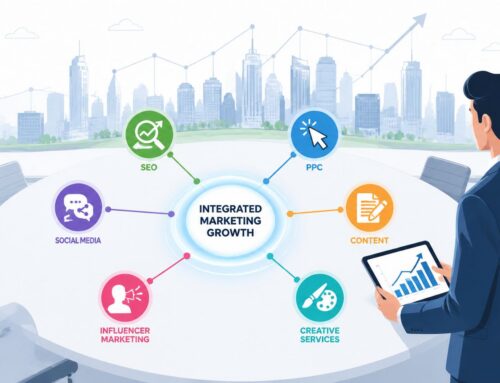

Outsourcing your marketing means bringing in an outside team of specialists to handle everything from big-picture strategy to the nitty-gritty of execution. It’s a strategic move that lets you tap into expert skills and scale your campaigns without the massive overhead of building a full in-house department. Think of it as gaining a competitive edge by getting top talent on demand.
Why Smart Businesses Outsource Marketing Services

Sooner or later, most growing businesses hit a marketing wall. Maybe your internal team is brilliant but stretched thin. Or perhaps you lack deep expertise in a critical area, like technical SEO or performance marketing. When this happens, growth sputters out.
This guide looks at the decision to outsource marketing services not as a cost-cutting tactic, but as a strategic investment in growth. It’s about becoming more agile and gaining access to a deep well of specialized talent that would be nearly impossible—and incredibly expensive—to hire one by one.
Beyond Cost Savings: A Strategic Shift
The whole conversation around outsourcing has changed. It used to be all about saving a few bucks. While that’s still a nice perk, today’s drivers are far more strategic. Companies are actively searching for partners who bring specialized skills to the table and can deliver measurable results.
The numbers back this up. The global market for outsourced sales and marketing hit $28.65 billion in 2022 and is on track to reach a staggering $57.46 billion by 2030. This boom is happening because companies need expert guidance and scalable solutions to win in an increasingly complex market. You can explore more global sales outsourcing trends to see just how significant this shift is.
The real value of outsourcing isn't just saving money on salaries. It's about paying for outcomes—more leads, higher conversions, and faster market expansion—while freeing your team to focus on innovation and customer experience.
The thinking has evolved beyond simple cost-benefit analysis. The modern approach focuses on how external expertise can drive competitive advantages, from market entry speed to accessing advanced marketing technology without the upfront investment.
Modern Drivers for Outsourcing Your Marketing
| Strategic Driver | Description | Business Outcome |
|---|---|---|
| Access to Niche Expertise | Gain immediate access to specialists in fields like programmatic advertising, marketing automation, or conversion rate optimization. | Higher campaign ROI and the ability to execute on advanced strategies that would otherwise be out of reach. |
| Increased Scalability & Agility | Quickly scale marketing efforts up or down in response to market demand, product launches, or seasonal peaks. | Efficient resource allocation, reduced time-to-market, and the ability to seize opportunities without hiring delays. |
| Focus on Core Competencies | Free up your internal team to concentrate on what they do best—product development, customer service, and core business strategy. | Improved operational efficiency, higher team morale, and faster innovation cycles. |
| Objective, Data-Driven Insights | An external team brings a fresh perspective, unburdened by internal politics or biases, and focused solely on performance data. | Unbiased strategy recommendations, better campaign performance, and clearer attribution of marketing results. |
Ultimately, these drivers show that outsourcing is now a sophisticated tool for business acceleration, not just a line item on a budget.
Overcoming Common Outsourcing Concerns
One of the biggest fears I hear is about losing control of the brand voice. It's a valid concern. But a modern outsourcing partnership isn't about just handing things over; it's built on deep collaboration. The best external teams become a genuine extension of your company, immersing themselves in your culture and goals.
The key is establishing crystal-clear communication channels and shared KPIs right from the start. When you do that, you ensure everyone is aligned and pulling in the same direction. A great partnership thrives on transparency and a shared obsession with hitting your business objectives, turning an external provider into a powerful strategic ally.
Deciding Which Marketing Functions to Outsource
Jumping into the search for an external partner without a clear plan is like grocery shopping while you’re hungry—you'll grab a lot of things you don't actually need. Before you even start looking at agencies or freelancers, you have to get brutally honest about what you need them to do.
It all starts with a candid look at your current marketing efforts. What are you truly good at? Where are the cracks starting to show? Your in-house team might be brilliant at building a community on social media, but maybe the technical side of SEO leaves them stumped. That distinction is everything. The goal is to keep the work that plays to your team's strengths and outsource marketing services for the functions that are either too specialized, too time-consuming, or just not in their wheelhouse.
Pinpointing Your Outsourcing Priorities
Get practical. Make a list of every single marketing task your team touches, from writing blog posts to pulling monthly analytics reports. Now, look at each one through two critical lenses: your team's actual skill level and its direct impact on bringing in revenue.
You'll quickly see a pattern emerge. The tasks that often make the most sense to hand off to an expert include:
- Technical SEO: This isn't a "set it and forget it" task. It requires constant learning to keep up with Google's algorithm changes and a deep understanding of specialized tools.
- High-Volume Content Creation: Trying to scale up blog posts, case studies, or newsletters can burn out even the most dedicated internal team pretty quickly.
- Paid Ad Management: Platforms like Google Ads and Meta Ads are complex beasts. To avoid wasting your budget, you need someone who lives and breathes campaign optimization.
- Marketing Automation and Analytics: Setting up and managing sophisticated systems for lead nurturing and reporting is a highly specialized skill set.
This isn’t just about offloading work you don't want to do; it's a strategic business decision. The digital marketing sector was valued at about $24 billion in 2024 and is expected to hit $32.55 billion by 2025. This explosive growth is happening for a reason: companies are outsourcing to tap into expert knowledge and scale faster than they could on their own. You can discover digital marketing statistics and insights on Unity-Connect to see the trends for yourself.
Don't outsource a task just because your team dislikes it. Prioritize outsourcing the functions that, if executed by an expert, would have the largest and most immediate positive impact on your bottom line.
A Real-World Example in Action
Let’s look at a common scenario. Picture an e-commerce brand that's fantastic at product design and has built a loyal following on Instagram, all managed in-house. The problem? Their blog is gathering dust, and their website traffic has completely flatlined. They just don't have the time or the specific SEO expertise to create the kind of content that ranks on Google.
For them, outsourcing content strategy and SEO is a no-brainer. They keep their authentic social media voice in-house while a specialized agency gets to work driving organic traffic and leads with high-quality, targeted articles. This creates a clear, actionable list of needs, ensuring they invest only where it drives the highest return. Understanding this balance is key, and it often comes down to a classic dilemma. To dive deeper into this, you can explore our guide on marketing agency vs in-house teams.
By creating this targeted list of needs, you shift your search from a vague "we need marketing help" to a precise "we need an expert in technical SEO and content scaling." That kind of clarity is the foundation for finding the right partner and actually seeing a return on your investment.
In-House vs Outsourced Marketing Task Analysis
To help you map this out for your own business, this table breaks down common marketing functions and when it makes sense to keep them in-house versus outsourcing them.
| Marketing Function | Best Kept In-House When… | Ideal to Outsource When… |
|---|---|---|
| Brand Strategy & Core Messaging | You need to maintain a consistent, authentic brand voice rooted in your company culture. | You're a new company needing an expert to define your market position from scratch. |
| Social Media Community Management | Your audience expects direct, personal interaction with your team. Authenticity is key. | You need to manage a high volume of channels and require 24/7 monitoring and response. |
| Top-of-Funnel Content Creation | Your team has deep subject matter expertise and a unique perspective. | You need to produce content at a high volume and require specialized SEO or writing skills. |
| Technical SEO & Audits | You have a dedicated SEO specialist on staff with access to the latest tools. | Your website is complex, and you need deep technical expertise to fix issues and stay ahead of algorithm changes. |
| Paid Advertising (PPC/Social) | You have a small, stable budget and a team member with proven campaign management experience. | You're managing large budgets across multiple platforms and need advanced optimization to maximize ROI. |
| Graphic Design & Video Production | You need quick-turnaround assets for social media or internal use. | You require high-production-value assets like brand videos, animations, or a major website redesign. |
| Email Marketing & Automation | Your campaigns are straightforward and managed by a team member familiar with your customer journey. | You need to implement complex lead nurturing workflows, segmentation, and A/B testing at scale. |
Use this as a starting point. Your own analysis will be unique to your team's skills, your budget, and—most importantly—your business goals. Being honest here will save you a lot of headaches down the road.
How to Find and Vet the Right Marketing Partner
Finding the right external partner is so much more than a quick Google search. You’re not just looking for a service provider; you’re looking for a team that gets your vision, clicks with your company culture, and has the skills to back it up. Choosing the cheapest option or the first agency that pops up is a classic mistake that almost always leads to frustration and a drained budget.
So, where do you start? Your best bet is always your own network. Ask colleagues and other professionals you trust for referrals. A recommendation from someone who’s already worked with an agency is worth its weight in gold—it’s a pre-vetted lead that saves you a ton of time.
Beyond that, dive into industry-specific communities. LinkedIn groups, Slack channels, or niche forums are fantastic places to find specialists who truly know your market inside and out.
Moving Beyond the Sales Pitch
Once you’ve got a shortlist, the real work begins. It’s easy to get wowed by a slick presentation, but you need to get past the pitch and see how they actually think and operate.
Don’t be shy about asking tough questions. Instead of a generic "Do you get results?", try this: "Walk me through a case study for a client similar to my business. What were their exact goals, what roadblocks did you hit, and how did you adjust your strategy to get them a win?" Their answer will reveal everything about their problem-solving skills.
This simple decision tree can help you figure out if you need a high-level strategist or someone to handle the day-to-day execution.
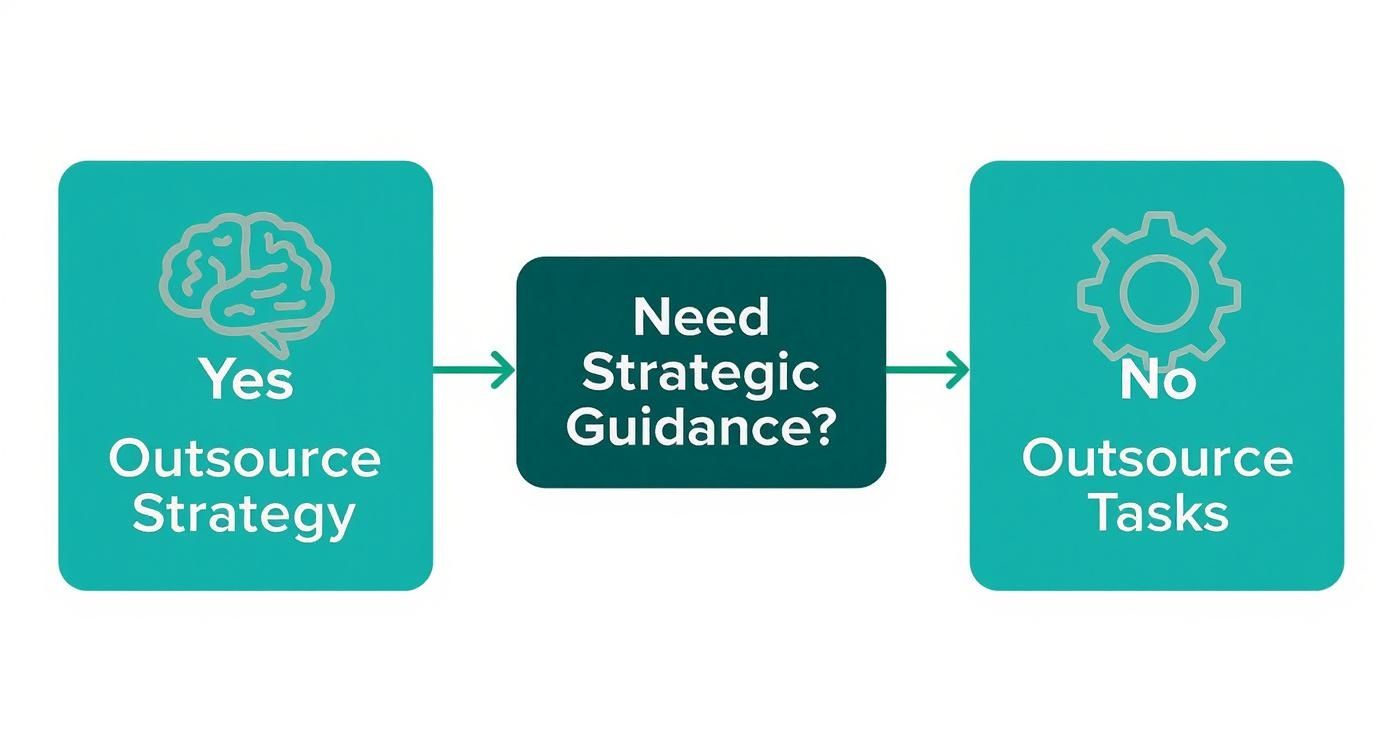
As you can see, if you don’t have a clear marketing roadmap, you should outsource marketing services that focus on strategy first. But if you already have a solid plan, bringing in specialists for specific tasks is the way to go.
Critical Questions to Ask Potential Partners
Go into every conversation prepared. This isn’t just an interview; it's a diagnostic to find the right fit. I recommend structuring your questions around a few key areas to make sure you cover all the bases.
- Their Strategic Mind: How do you build a marketing strategy from scratch? What kind of research and discovery process do you have before a campaign ever goes live?
- The Human Element: Who will be my day-to-day contact? How often will we get updates, and what do those check-ins look like?
- Data and Reporting: What KPIs do you actually care about? Ask to see a sample report and have them explain how that data translates to real business growth, not just vanity metrics.
- Been There, Done That: Can you show me specific results you've achieved for other companies in my niche?
The best partners feel like an extension of your own team, not just another vendor on the payroll. They should be just as invested in your goals as you are, bringing proactive ideas to the table instead of just waiting for instructions.
Picking a partner is a big move. To make sure you get it right, we've put together a more in-depth guide on how to choose a marketing agency. A little preparation now will pay off massively down the road when you find a partner who can truly help you scale.
Building a Partnership That Delivers Results

Signing the contract isn't the finish line; it’s really just the starting block. The moment you officially bring on an external marketing team, the real work of building a high-impact relationship begins. It all comes down to clarity, communication, and a shared understanding of what victory actually looks like.
That initial kickoff period is your golden opportunity to set the tone for the entire engagement. This is where you move past proposals and sales calls into the practical, day-to-day rhythm of how you'll work together. I've seen it happen too many times—skipping this phase often leads to misaligned expectations and disappointing results down the road.
Nail the Onboarding with a Comprehensive Brief
Your very first move is to arm your new partner with everything they need to succeed. You can't just assume they’ll magically figure out your brand voice or who your target audience is. You need to hand them a detailed creative and strategic brief that acts as their North Star.
Think of this document as a living resource, not just a one-and-done handoff. It should be packed with useful information, including:
- Your Ideal Customer Profile (ICP): Don't just list demographics. What are their biggest pain points? What truly motivates them? Where do they hang out online?
- Brand Voice and Tone Guidelines: Show, don't just tell. Share examples of what "good" looks like. Are you witty and informal, or more authoritative and professional?
- Key Performance Indicators (KPIs): Be crystal clear about what success means. Is it all about lead volume, improving the conversion rate, or lowering your customer acquisition cost (CAC)?
- The Competitive Landscape: Who are your main rivals? What can your new team learn from both their wins and their mistakes?
Putting in this effort upfront ensures that the work they produce from day one feels like it’s coming from inside your own walls.
Foster a True Collaborative Partnership
The best outsourcing relationships I've been a part of feel less like a client-vendor transaction and more like a genuine partnership. To get there, you have to integrate your new team into your company's strategic pulse. Invite them to relevant meetings, share business updates, and treat them as collaborators, not just order-takers.
This mindset shift is happening across the industry. The decision to outsource marketing services isn't just a cost-cutting move anymore. A 2024 Deloitte survey revealed a fascinating change: cost savings as the main driver plummeted from 70% in 2020 to just 34%. What replaced it? Accessing specialized talent (42%) and improving performance quality (33%) are now the top priorities. You can discover more 2025 outsourcing statistics on StealthAgents that highlight this strategic evolution.
Treat your external team as an extension of your own. When they feel invested in your company’s mission, they stop being just a service provider and become a powerful engine for your growth.
Establish Seamless Communication Channels
Finally, you need to set up the right infrastructure for smooth, easy communication. This is where most partnerships fall apart—a lack of clear, consistent contact. You need to agree on the right cadence and the right tools from the get-go.
Here are a few practical steps that always work:
- Designate a single point of contact. On both sides, have one person who owns the communication flow. This avoids crossed wires and confusion.
- Schedule regular check-ins. A weekly or bi-weekly call is non-negotiable. Use this time to review progress, tackle roadblocks, and make any needed strategic adjustments.
- Use a shared project management tool. Platforms like Asana, Trello, or Monday.com create a transparent, real-time view of what's happening with every task and deadline.
By laying this groundwork, you build a foundation of trust and accountability. This transforms the relationship from a simple contract into a dynamic partnership ready to deliver incredible, long-term results for your business.
Measuring the ROI of Your Outsourced Marketing

Once your new marketing partner is integrated and things are moving, the real work begins. The initial setup is one thing, but now the focus has to be on sustained performance. Measuring the return on investment (ROI) from your outsourced marketing isn't just about scanning a monthly report—it's about digging into the numbers to see the real impact on your business.
A great partner will always bring the data. But it's your job to interpret it and make sure every dollar you're spending is pulling its weight. It's easy to get sidetracked by vanity metrics like social media likes or impressions. Sure, they show activity, but they don't pay the bills. The only way to know if this partnership is working is to tie everything back to revenue and growth.
Looking Beyond Vanity Metrics
To get a real feel for performance, you have to look past the surface-level numbers. Your review meetings should be all about tangible outcomes. A huge influx of new leads sounds fantastic, but if none of them ever convert, the campaign is a flop.
It’s time to shift the focus to metrics that actually tell a story:
- Lead Quality: Are the leads coming through the door a good fit for your sales team? You should be tracking the conversion rate from marketing-qualified leads (MQLs) to sales-qualified leads (SQLs). A low conversion rate here is a major red flag.
- Customer Acquisition Cost (CAC): At the end of the day, how much are you spending to bring in each new customer? This is the ultimate bottom-line number for any marketing effort.
- Customer Lifetime Value (LTV): Are the customers you're acquiring sticking around? A high LTV can easily justify a higher initial CAC, but you have to be tracking it to know.
When you start focusing on these areas, the conversation naturally shifts from "How many clicks did we get?" to "How did marketing contribute to the bottom line this quarter?" That’s the foundation of a real, results-driven partnership.
Don’t just accept a report full of charts. Ask your partner to connect the dots. A good report shouldn't just present data; it should tell a story about what’s working, what isn’t, and exactly what the plan is for the next 30 days.
Giving Feedback and Making Adjustments
Even the most brilliant strategies need tweaking over time. When a campaign isn't hitting its goals, your job is to provide clear, constructive, and data-backed feedback. Vague comments like "This isn't really working for us" are useless.
Get specific.
For instance, instead of just saying the blog content feels weak, try this: "The last four blog posts have a bounce rate over 90% and are attracting traffic from the wrong industry entirely. Let’s get together and revisit our keyword strategy and topic ideas for next month." That gives your partner something concrete they can actually work with.
If you need more ideas on what to track and how, you can explore our guide on how to improve marketing ROI with specific tactics.
A strong partnership is built on two-way communication and a shared obsession with hitting goals. When you measure what matters and provide clear direction, you're empowering your outsourced team to deliver the kind of results that truly move the needle. This is how you build a growth engine, not just hire another vendor.
Answering Your Top Questions About Outsourcing Marketing
Even after you've mapped out a solid strategy, it's completely normal to have a few lingering questions before you pull the trigger on outsourcing your marketing. This is a big move for your business, so let's tackle some of the most common questions head-on.
How Much Should I Expect to Pay for Outsourced Marketing?
There’s no one-size-fits-all answer here—the costs can vary wildly.
If you’re hiring a specialized freelancer for a specific project, like SEO-focused blog posts, you might see rates from a few hundred to several thousand dollars a month. But if you’re looking for a full-service agency to run your entire marketing engine—content, SEO, paid ads, analytics, the whole shebang—you can expect to invest anywhere from $3,000 to over $10,000 monthly.
The best approach is to nail down your scope and budget before you even start searching. That way, you’re in the driver's seat, getting proposals that match your real needs instead of just picking the cheapest option you find.
Can an Outside Team Really Understand My Brand?
Absolutely, but it depends on finding the right partner. A top-notch agency or freelancer will make understanding your brand their first order of business. Their onboarding process should feel like a deep dive into your world—your business model, your ideal customer, your unique voice, and all the quirks of your industry. Many of the best partners already have experience in your specific niche, which gives them a huge head start.
Keep in mind, this is a partnership. You're the expert on your business and your industry. They're the experts on marketing execution. It’s that collaboration, not a simple handoff, that creates amazing results.
Should I Hire a Freelancer or a Full Agency?
This really boils down to two things: the complexity of your marketing needs and how much you want to manage yourself.
- Hire a freelancer when you need a specialist for a single, focused task. Got a website that needs a complete copy overhaul? Need a wizard to optimize your Google Ads campaigns? A freelancer is often the most direct and cost-effective solution.
- Go with an agency when you need a comprehensive strategy that ties multiple channels together. An agency gives you a single point of contact who coordinates all the moving parts—strategy, content, design, SEO, and analytics—to make sure everything works in harmony.
Think about your project's scope and how hands-on you want to be. Your answer will guide you to the right choice.
What Are the First Steps to Get Started?
Starting off on the right foot is crucial for a successful partnership. The first thing you should do is an honest internal audit. Where are the biggest gaps in your current marketing? What are you great at, and where do you truly need an expert?
Once you know what you need, define a clear budget and set measurable goals. Don't just aim for "more leads." Get specific. A much better goal is something like, "Increase qualified leads from organic search by 20% within six months."
With that clarity, you can start building a shortlist of potential partners. Ask for referrals from people you trust and dig into their portfolios and case studies. This prep work ensures every conversation you have is productive and purposeful.
At ReachLabs.ai, we don't just work for you; we work with you, becoming a true extension of your team. We combine world-class talent with powerful insights to get you results that actually matter. Learn how our collective approach can elevate your brand's voice.