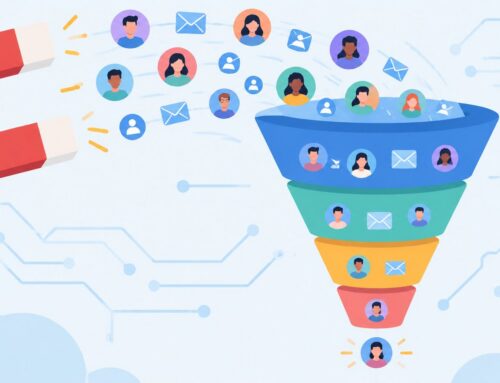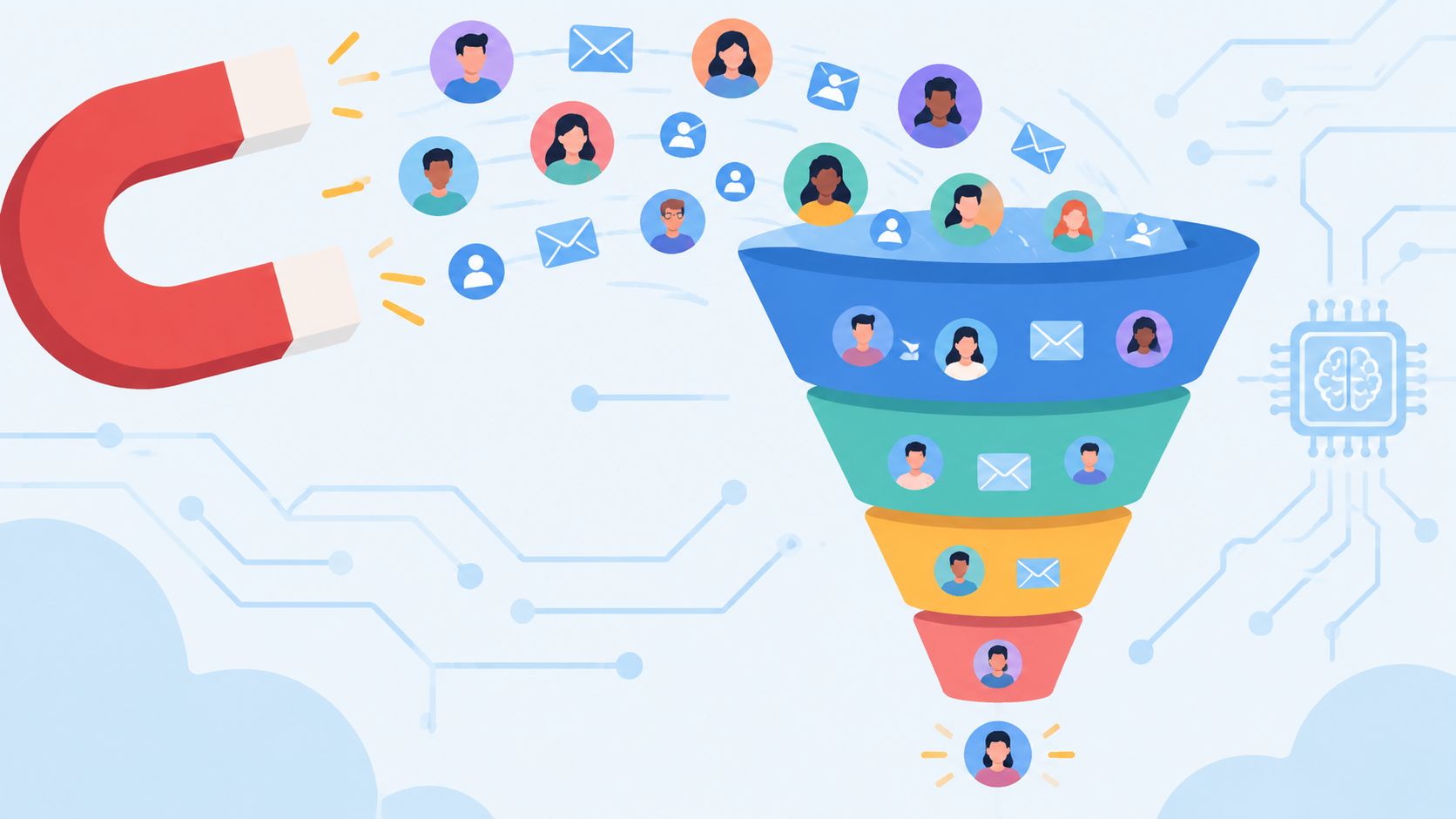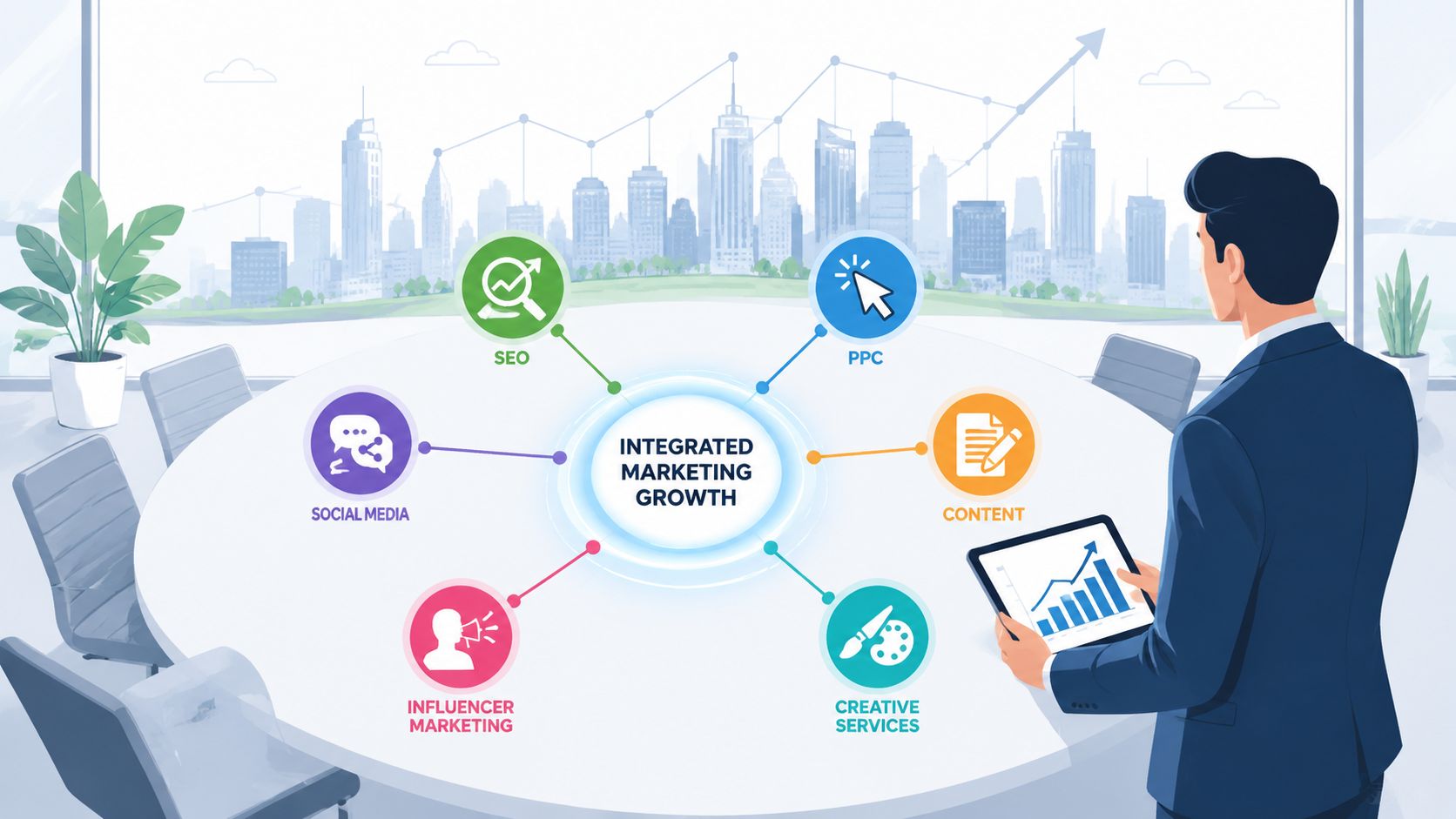

Think of a marketing funnel as the path a stranger takes to become a happy, paying customer. It’s a way to visualize and map out the entire customer journey, from the very first time someone hears about your brand to the moment they decide to buy—and even beyond.
This isn’t just an abstract concept; it’s a practical framework that helps you guide people from one stage to the next in a way that feels natural and helpful, not pushy.
What Is a Marketing Funnel Anyway?
Let's use a simple analogy. Imagine trying to pour water from a wide pitcher into a bottle. Without a funnel, you’d spill most of it. A marketing funnel does the same thing for your business—it captures the wide-ranging attention of a broad audience at the top and carefully channels the most interested prospects down toward a purchase.
Instead of just throwing random marketing tactics at the wall and hoping something sticks, the funnel provides a clear, stage-by-stage process. You start with a large pool of potential customers and, as they move through the funnel, that group narrows down to the ones who are genuinely ready to become customers.
From First Glance to Final Purchase
The real power of the marketing funnel is that it turns customer acquisition from a guessing game into a measurable process. It allows you to create specific messages, content, and offers that match exactly where someone is in their buying journey. You wouldn't propose on the first date, right? Similarly, you shouldn't push for a sale when someone has only just discovered you exist.
The funnel also acts as an invaluable diagnostic tool. It shines a light on exactly where you’re losing people—what we call "leaks" in the funnel. Are tons of people reading your blog but never subscribing? Are potential customers adding items to their cart but never completing the purchase? By tracking metrics at each stage, you get the data you need to plug those leaks and improve your results.
Key Takeaway: The marketing funnel isn't about forcing a sale. It's about building a relationship by providing the right value at the right time, guiding potential customers through a journey that builds trust and confidence.
Why Every Marketer Needs to Understand It
Grasping the marketing funnel is non-negotiable for creating campaigns that actually work. It brings much-needed clarity, connecting your daily marketing activities—like social media posts or email newsletters—directly to your big-picture business goals.
Without this framework, you're essentially marketing in the dark. By mapping out the customer's path, you can:
- Improve Lead Nurturing: Serve up content that answers questions and solves problems, naturally moving people closer to a decision.
- Increase Conversion Rates: Pinpoint and fix weak spots in the journey to guide more prospects through to the end.
- Boost ROI: Put your time and money into the channels and strategies that deliver the best results at each specific stage.
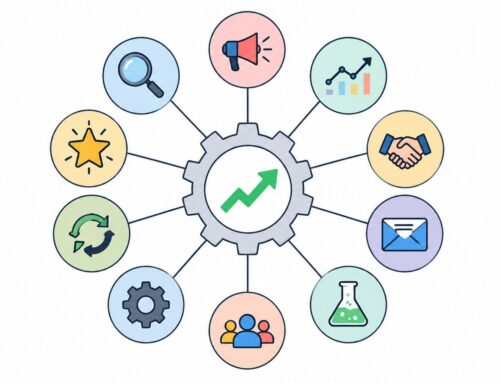
Ultimately, understanding the funnel helps you build a predictable growth engine for your business. To get a better handle on visualizing this path, exploring different customer journey mapping templates can provide a fantastic starting point.
To get a clearer picture of what this looks like in practice, here’s a breakdown of the four classic stages.
The Four Core Stages of a Modern Marketing Funnel
This table gives a quick overview of the AIDA model—Awareness, Interest, Desire, and Action—which forms the foundation of most marketing funnels today. It shows what you're trying to achieve at each step and some common tactics used to get there.
| Funnel Stage | Objective | Common Marketing Activities |
|---|---|---|
| Awareness | Introduce your brand to a new, broad audience. | Blog posts, social media ads, infographics, podcasts, SEO |
| Interest | Capture attention and engage potential leads. | Webinars, email newsletters, case studies, downloadable guides |
| Desire | Nurture leads and build a preference for your solution. | Free trials, product demos, customer testimonials, retargeting ads |
| Action | Convert leads into paying customers. | Sales pages, limited-time offers, clear calls-to-action (CTAs) |
Seeing the journey laid out like this makes it easier to plan a cohesive marketing strategy where every piece of content has a clear purpose.
Navigating the Four Key Funnel Stages
A marketing funnel isn’t some monolithic, one-size-fits-all concept. It’s a journey, and every journey has distinct stages. Each step represents a shift in a potential customer's mindset, and to be effective, you have to meet them where they are with the right message.
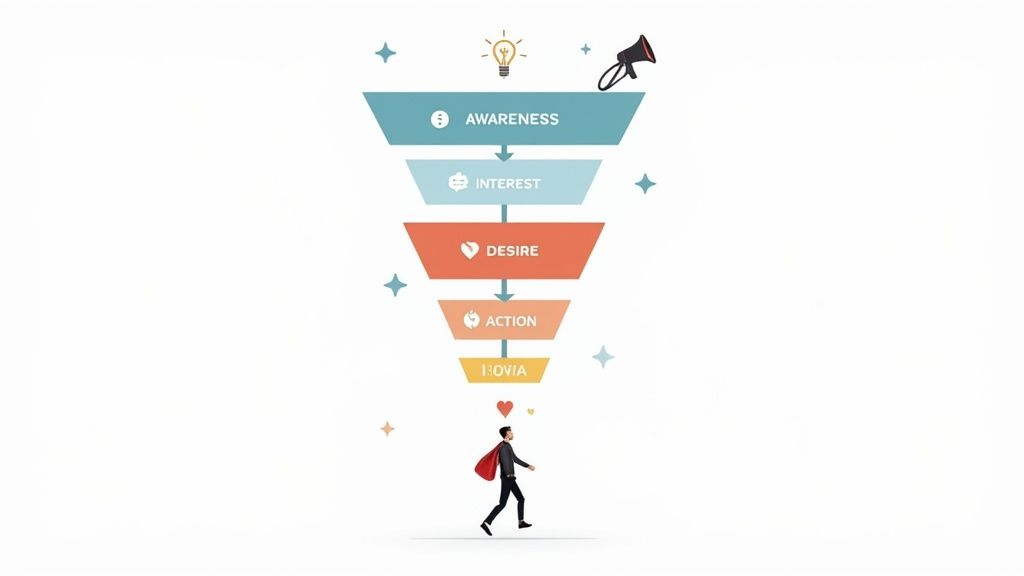
The classic model for this journey is AIDA: Awareness, Interest, Desire, and Action.
Think of it like building a friendship. You don't ask for a huge favor the moment you meet someone. First, you have to get on their radar (Awareness). Then, you find some common ground and pique their curiosity (Interest). After that, you build a real connection that makes them want to hang out with you more (Desire). Only then, once that trust is established, can you actually ask for something (Action).
This simple framework gives you a powerful roadmap for creating content that actually resonates with people, no matter where they are in their decision-making process.
Stage 1: Awareness — Getting Noticed
The top of the funnel is all about making an introduction. At this point, your audience might not even realize they have a problem you can solve. Your one and only goal is to introduce your brand to the widest, most relevant audience you can.
This is definitely not the time for a hard sell. Your focus should be on providing value and becoming a familiar, helpful voice in your space. The content here needs to be educational, entertaining, or inspiring—anything that grabs attention without asking for anything in return.
Effective tactics for the Awareness stage often include:
- Search Engine Optimization (SEO): Think helpful blog posts that answer the questions your audience is typing into Google. For example, a home security company might write an article titled, "Simple Ways to Secure Your Home Before Vacation."
- Social Media Marketing: Share eye-catching infographics, quick video tips, or thought-provoking posts on the platforms where your ideal customers hang out.
- Paid Advertising: Run targeted ad campaigns on social media or search engines to put your brand in front of new people who fit your customer profile.
The key is to cast a wide, but smart, net. This first contact lays the entire foundation for the relationship you're hoping to build.
Stage 2: Interest — Piquing Curiosity
Okay, so they know you exist. Great. Now the challenge is holding their attention. The Interest stage is where you start to separate the casual browsers from genuine potential customers. They’ve gone from asking, "Who is this?" to thinking, "Hmm, this is interesting. I want to know more."
You've earned a moment of their time, and your job is to make it count. This means offering more substantial content that helps them understand their problem on a deeper level. You’re positioning yourself as a trusted expert, not just another brand shouting for attention.
Key Insight: The shift from Awareness to Interest is marked by a voluntary action. When someone clicks a link, follows you on social media, or signs up for your newsletter, they are actively signaling that they want to hear more from you.
To really nail this, it helps to understand the 5 stages of customer awareness, which maps their journey from being completely problem-unaware to actively seeking a solution. This helps you tailor your content perfectly.
Common strategies for this middle-funnel stage include:
- Webinars and Workshops: Host live or on-demand sessions that do a deep dive into a specific topic, offering practical, actionable advice.
- In-Depth Guides and eBooks: Offer a comprehensive resource they can download in exchange for an email address. Just like that, you've turned a visitor into a lead.
- Email Newsletters: Deliver consistent value straight to their inbox with curated tips, industry news, and exclusive content.
The goal here isn't to sell, but to build trust and prove you understand their world.
Stage 3: Desire — Creating a Preference
In the Desire stage, the conversation shifts from general problems to specific solutions—namely, your solution. By now, the potential customer is actively weighing their options. They know they have a problem, they've done their research, and now they’re trying to pick the best path forward.
Your job is to make an emotional connection and build a strong preference for your brand over the competition. This is where you show them exactly how your product or service will make their life better. It’s about moving their mindset from, "This brand is helpful" to, "This is the one I need."
Personalization and social proof are your best friends here. You need to show them you get their unique situation and that other people just like them have already found success with you.
Here’s how you can effectively build desire:
- Case Studies and Testimonials: Nothing works better than real-world success stories. Showcase happy customers to provide powerful social proof and help prospects picture their own win.
- Product Demos and Free Trials: Let them kick the tires. A free trial removes all the risk and allows them to see for themselves how your solution fits into their life.
- Personalized Email Campaigns: Segment your email list to send targeted offers based on their behavior. If they downloaded your guide to social media, send them a case study about a similar company's success.
- Retargeting Ads: Remind people who have visited your pricing page or watched a demo about the specific benefits you offer. Keep your solution top of mind.
This stage is all about nurturing that budding relationship and making an undeniable case for why you are the best choice.
Stage 4: Action — Inspiring the Conversion
This is it—the final stage of the funnel. All your efforts have led to this moment. The prospect is on the verge of making a decision. Your job now is to make converting as easy and frictionless as possible. Any hesitation or confusion at this point can derail the entire process.
Clarity is everything. Your call-to-action (CTA) needs to be crystal clear, and the path to purchase has to be incredibly simple. You just need to remove any final barriers and give them a confident, final nudge.
Effective tactics for the Action stage include:
- Clear and Compelling CTAs: Use strong, action-oriented language. Think "Get Started Today," "Claim Your Discount," or "Buy Now." Make that button pop.
- Optimized Landing Pages: Your sales pages should be clean, load fast, and drive home the key benefits one last time.
- Limited-Time Offers: Create a sense of urgency with a special discount or bonus that's only available for a short period.
- Simplified Checkout Process: Cut down the number of form fields and steps it takes to buy. The fewer clicks, the better. Offering multiple payment options also helps.
Guiding a prospect to this point is a huge win, but the work isn't over. The best marketers know that the funnel continues post-purchase, focusing on turning those new customers into loyal fans who come back again and again.
Measuring What Matters with Funnel Metrics
A marketing funnel is just a nice theory without data. To build a system that actually grows your business, you have to measure what’s happening at every single stage. Tracking the right numbers shows you what's working, and maybe more importantly, where you're losing people along the way.
Think of these metrics as your funnel's vital signs. They let you stop guessing and start making smart, data-backed decisions that actually move the needle. Getting a handle on measuring marketing campaign effectiveness is the first step to making real improvements.
This infographic breaks down the classic AIDA funnel, showing how a stranger becomes a customer.
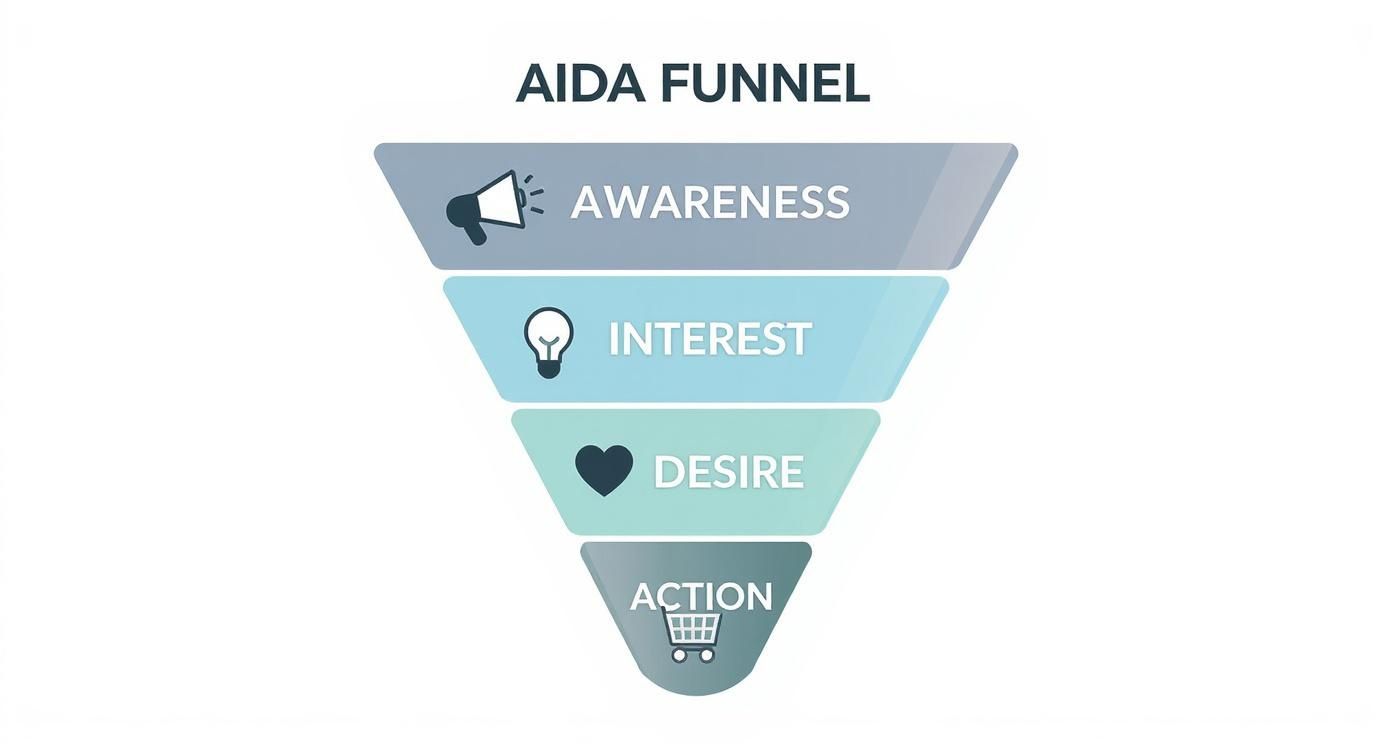
Each part of this journey has its own set of metrics that tell you how well you're guiding prospects from one step to the next.
Top-of-Funnel Metrics
At the very top, in the Awareness stage, it's all about getting in front of the right audience. You're not trying to make a sale yet; you're just trying to get noticed and make a solid first impression. Success here is all about visibility.
Here’s what to keep an eye on:
- Impressions: This is simply the total number of times your ad or content was shown. It's a raw measure of your content's exposure.
- Reach: Don't confuse this with impressions. Reach tells you the unique number of people who saw your content. It’s a much better indicator of your actual audience size.
- Website Traffic: A classic for a reason. This shows you how many people are making it to your website. Pay close attention to where they're coming from (organic search, social media, etc.) to see which channels are pulling their weight.
These top-of-funnel numbers tell you how full your pipeline is. For a more detailed breakdown, you can explore these essential marketing performance metrics examples.
Middle and Bottom-of-Funnel Metrics
Okay, so you've got their attention. Now what? The game shifts to building interest and desire. The metrics here get a lot more specific, focusing on engagement and intent to show you who's a serious prospect.
For the Interest and Desire stages, you should be tracking:
- Click-Through Rate (CTR): What percentage of people who saw your link actually clicked it? A high CTR means your message is hitting the mark.
- Bounce Rate: This is the percentage of people who hit a page and leave without doing anything else. A high bounce rate often means your ad promised something your landing page didn't deliver.
- Cart Abandonment Rate: If you run an e-commerce store, this one is huge. It shows how many people put items in their cart but bailed before checking out.
These metrics are your warning signs, pointing to the exact spots where your user experience might be breaking down.
The Ultimate Metric: Conversion Rate
While every stage has its own report card, the one metric to rule them all is the overall conversion rate. This is the bottom-line number: the percentage of all visitors who actually did the thing you wanted them to do, whether that's buying a product, starting a trial, or booking a call.
The average sales funnel conversion rate across all industries is about 2.35%. But here's the kicker: top-performing companies see rates of 5.31% or more. That gap shows just how much room for improvement most funnels have.
Small tweaks can lead to big wins. For example, a website that loads in 1 second has a conversion rate 2.5 times higher than a site that takes 5 seconds to load.
By consistently tracking these key metrics, you can find the leaks, fix them, and turn your funnel into a reliable growth machine.
Choosing Your Channels for Funnel Performance
Knowing your funnel stages is half the battle. The other half is knowing where to find your future customers and how to reach them. Where you put your marketing dollars is just as important as the message you're trying to send.
The truth is, not all marketing channels are created equal. Their power changes dramatically depending on which part of the funnel you’re focused on.
Think of it like fishing. You wouldn’t use the same giant net to catch tiny minnows as you would to land a massive tuna, right? In the same way, the wide net of a social media ad campaign is fantastic for grabbing initial Awareness, but a highly personalized email is often what you need to finally reel in a customer and secure the Action.
Choosing the right channel mix isn't about being everywhere at once. It's about smart alignment—matching a platform's strengths to a customer's mindset at each step of their journey. Get this right, and your message feels helpful and perfectly timed, not intrusive or annoying.
Matching Channels to Funnel Stages
Let's get practical and map some common channels to the AIDA funnel stages. This isn't just theory; it’s how you allocate your budget for the biggest impact and guide people smoothly from "Who are you?" to "Take my money!"
Top of Funnel (Awareness)
At this stage, your goal is pure reach. You're introducing your brand to people who might not even realize they have a problem you can solve yet.
- SEO and Content Marketing: Think blog posts, guides, and articles that answer the very questions your audience is typing into Google. Showing up here positions you as a helpful expert from day one.
- Social Media Ads: Platforms like Facebook and Instagram are unmatched for getting in front of hyper-specific demographics with eye-catching visuals and short, snappy videos.
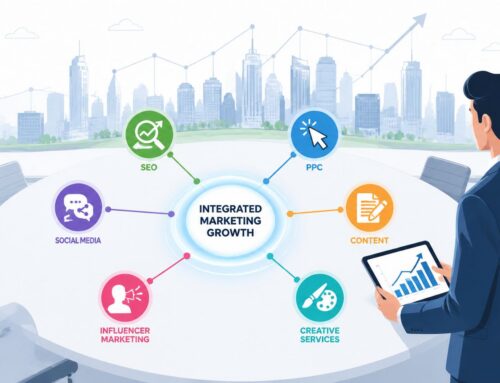
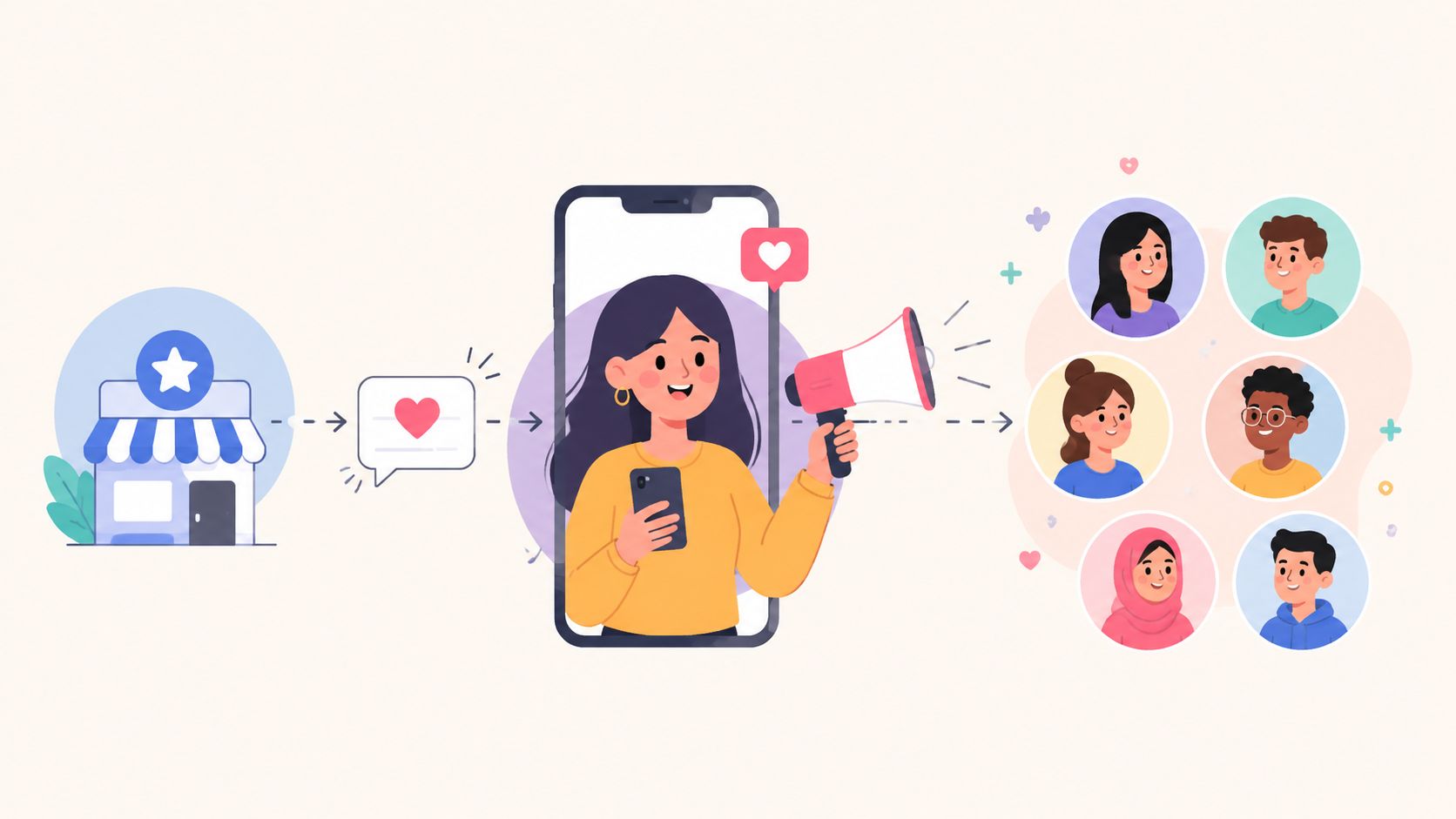
- Podcasts and Influencer Collaborations: Why build an audience from scratch when you can borrow one? Partnering with trusted voices in your niche lets you tap into their existing, engaged community and builds instant credibility.
Middle of Funnel (Interest and Desire)
Okay, you've got their attention. Now it's time to build on that initial spark and convince them your solution is the one they've been looking for. These channels are all about deeper engagement.
- Email Marketing: Getting someone's email address is like being handed a key to their front door. Use newsletters and automated follow-ups to share case studies, customer stories, and product comparisons that build genuine desire.
- Webinars and Virtual Events: These are your chance to really show off. A well-run webinar lets you dive deep into a topic, showcase your expertise, and demonstrate your product's value in a live, interactive setting.
- Retargeting Ads: Don't let warm leads go cold. Remind people who visited your site—especially key pages like pricing—why they were interested in the first place. Keep your brand top of mind while they weigh their options.
Bottom of Funnel (Action)
This is the final push. The goal here is simple: close the deal. The channels you use should make it as easy and compelling as possible for a prospect to become a customer.
- Targeted Landing Pages: Never send paid ad traffic to your homepage. A dedicated sales page that speaks directly to the ad's promise removes all distractions and gives visitors a clear path to purchase.
- Email Offers: Sometimes, all people need is a little nudge. A well-timed email with a special discount or an exclusive bonus can be the perfect trigger to inspire action.
The Unrivaled Power of Email Marketing
While every channel has its role, some are just flat-out better at turning leads into customers. And when you look at the data, one channel consistently blows the others out of the water.
Email marketing is a conversion powerhouse because it’s personal. You’re not just shouting a message into the void; you're having a one-on-one conversation with someone who has already given you permission to be in their inbox.
This direct line of communication is built on trust, which is why email generates such an incredible return. To put some numbers on it, email boasts an impressive average conversion rate of 10.3%. That completely dwarfs channels like organic search (2% to 4%) and paid search (2% to 3%).
This performance leads to a jaw-dropping ROI, with studies showing you can expect $36 to $40 back for every single dollar spent. For a deeper look, you can explore the latest ecommerce conversion rates across the board.
Of course, this doesn't mean you should ignore other channels. It just highlights that when it comes to moving customers through the crucial final stages of the funnel, the personalized touch of email is nearly impossible to beat. By focusing on building a healthy email list and delivering real value, you create a reliable engine for long-term growth.
Average Conversion Rates by Marketing Channel
To help you prioritize your efforts, it's useful to see how typical conversion rates stack up across different channels. Remember, these are averages—your mileage may vary based on your industry, audience, and execution.
| Marketing Channel | Average Conversion Rate | Best For Funnel Stage |
|---|---|---|
| Email Marketing | 10.3% | Middle / Bottom |
| Referrals | 4.5% | Middle / Bottom |
| Organic Search | 2.9% | Top / Middle |
| Paid Search | 2.5% | Middle / Bottom |
| Social Media | 1.3% | Top / Middle |
| Direct Traffic | 2.2% | Bottom |
This table clearly shows why a balanced approach is key. While channels like social media are great for filling the top of your funnel, a strong email and referral strategy is essential for driving conversions at the bottom.
Connecting Your Marketing and Sales Funnels
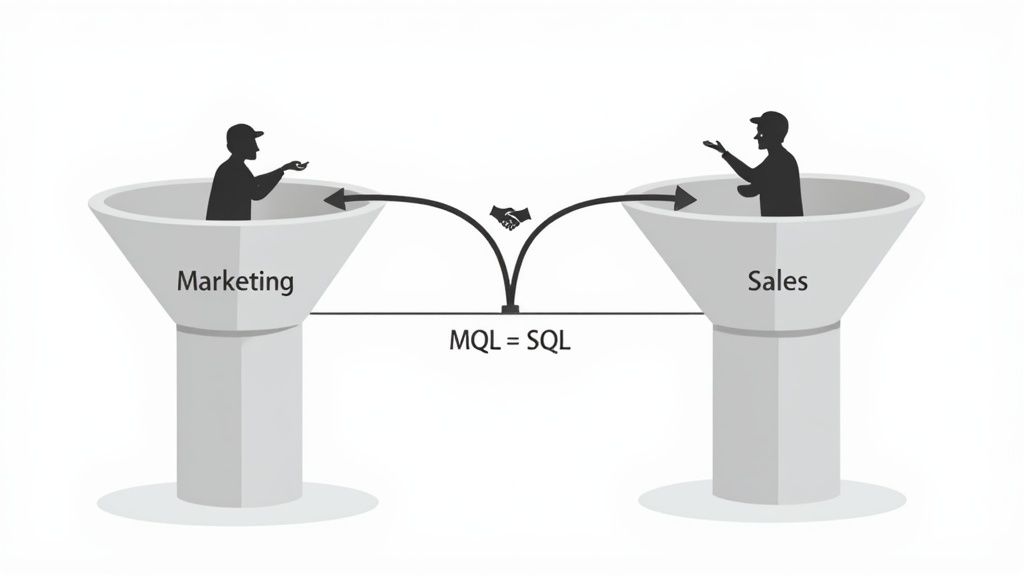
A great marketing funnel doesn't just fill a database with names; it delivers genuinely interested people who are actually ready for a sales conversation. The real magic happens at that critical handoff—the moment a lead from marketing becomes an opportunity for sales.
Without this solid connection, you don't have a growth engine. You have two separate, leaky pipelines. Getting this right is about creating a seamless transition so valuable prospects don’t slip through the cracks.
Defining Your Qualified Leads
Let's be honest: not all leads are created equal. Someone who downloaded a general ebook is miles away from someone who just requested a product demo. Recognizing this difference is the secret to efficiency.
- Lead: This is your starting point. It's anyone who has shown a flicker of interest, like giving you their email for a newsletter. They're at the very top of the funnel.
- Marketing Qualified Lead (MQL): Now we're getting somewhere. An MQL has taken actions that show they're more engaged. Maybe they attended a webinar or downloaded a detailed case study. They fit your target profile and are ready for more nurturing, but probably not a sales call just yet.
- Sales Qualified Lead (SQL): This is the green light. An SQL has shown clear intent to buy. They've moved past browsing and taken a major step, like asking for a price quote or a one-on-one demo. It's time for the sales team to jump in.
Think of this progression—Lead to MQL to SQL—as a filtering system. It makes sure your sales team spends its valuable time on people who are most likely to buy, which is a game-changer for their close rates.
The Impact of Lead Source on Conversions
Where a lead comes from matters. A lot. A warm referral from a happy customer is worlds apart from a cold lead who clicked a broad ad. The data backs this up, showing that the acquisition channel is a huge predictor of sales success.
For instance, referral leads boast the highest conversion rate at an incredible 25.56%. Coming in behind are leads from email marketing at 22.83% and SEO at 21.22%. These numbers show exactly why it’s so important to nurture your warmest leads first.
Key Insight: A lead's quality is directly tied to its origin. If you focus on high-converting channels like referrals and targeted email campaigns, you’re giving your sales team the best possible shot from the very beginning.
Benchmarks for a Healthy Handoff
So, what does a good MQL-to-SQL conversion rate even look like? The exact numbers can vary by industry, but there are some solid benchmarks you can use to see how you're doing.
- Lead to MQL Conversion Rate: A healthy range is typically 25% to 35%. This tells you how well your top-of-funnel content is grabbing attention and identifying promising leads.
- MQL to SQL Conversion Rate: This usually lands between 13% to 26%. This number is a direct reflection of how effectively your mid-funnel nurturing is building that all-important purchase intent.
If your rates are falling short, it could point to a disconnect. Maybe your definition of an MQL is too loose, or the content you're using to nurture them isn't hitting the right notes. The fix is almost always better marketing and sales alignment. When both teams agree on what a "qualified" lead actually is, you build a high-performing revenue machine that turns interest into closed deals.
Common Questions About Marketing Funnels
Even after laying out the entire framework, a few questions always pop up when it's time to put the marketing funnel to work. Let’s tackle some of the most common ones I hear from marketers to clear up any lingering confusion.
Think of this as your go-to guide for those "but what about…" moments. We'll cut through the jargon and give you some straight answers.
Has the Marketing Funnel Changed in the Digital Age?
Yes, absolutely. The fundamental idea of guiding someone from A to B is still there, but the path itself is no longer a straight, predictable slide from top to bottom.
Today’s customer journey is a lot messier—in a good way. A potential customer might see a user-generated video on TikTok and jump from being completely unaware of you straight into wanting your product. They might find your blog (Awareness), click away, and then get pulled back in weeks later by a retargeting ad that speaks directly to their needs (Desire).
The modern funnel is less like a rigid slide and more like a winding path with multiple entry and exit points. This makes things more complex, for sure, but it also opens up incredible opportunities for personalization.
The classic AIDA model is still an incredibly useful guide for structuring your marketing. However, success today means accepting that the customer's path is rarely linear and being ready to meet them wherever they are in their journey.
This is precisely why having a presence on multiple channels is non-negotiable now. You have to be where your customers are, ready to engage them as they move unpredictably between the different stages.
What Is the Difference Between a Marketing and Sales Funnel?
This is a big one, and getting it right is crucial. People often use these terms interchangeably, but they represent two distinct—though deeply connected—parts of the customer journey.
I like to think of it as a relay race. Marketing runs the first leg, and then smoothly passes the baton to Sales for the final stretch.
-
The Marketing Funnel is all about the top half of the journey. Its main job is to create awareness and spark interest. It’s about turning complete strangers into interested leads and then warming them up until they're genuinely considering a purchase (what we call an MQL, or Marketing Qualified Lead).
-
The Sales Funnel picks up right where marketing leaves off. It handles the bottom half—evaluation, negotiation, and the final purchase. This is where the sales team has direct conversations with prospects (now SQLs, or Sales Qualified Leads) to close the deal.
That handoff between marketing and sales is where the magic happens. When marketing delivers well-informed, high-quality leads, the sales team can skip the small talk and focus on conversations that actually lead to revenue.
How Do I Build My First Marketing Funnel?
Getting started can feel overwhelming, but it doesn't have to be. You can build a solid, effective funnel by focusing on just a few core steps. The key is to aim for a simple "Version 1.0" and improve it over time, rather than trying to build the perfect system from day one.
Here’s a simple game plan to get you started:
- Define Your Ideal Customer: Before you do anything else, who are you actually trying to reach? Get super specific about their problems, their goals, and the online spaces they hang out in. This profile will guide every single decision you make.
- Create a Value-Packed Lead Magnet: You need to offer something genuinely useful in exchange for an email address. This could be a simple checklist, a short e-book, or a webinar recording. This is the front door to your funnel.
- Build a Simple Landing Page: This is a dedicated, no-fluff page with one single goal: to get people to download your lead magnet. Keep it clean, clear, and focused on the conversion.
- Set Up a Nurture Email Sequence: Once you have their email, don't just go silent. Write a short series of automated emails—3 to 5 is a great starting point—that continues to deliver value, builds trust, and gently introduces what you sell.
- Drive Traffic: Pick one or two channels you know well and start sending people to your landing page. This could be through organic social media posts, a few targeted ads, or by promoting your lead magnet within your blog content.
Just start small, watch the numbers, and then start tweaking. The goal is progress, not perfection.
At ReachLabs.ai, we specialize in creating and optimizing these customer journeys. We build data-driven marketing strategies that guide prospects from awareness to action, ensuring every step is designed for maximum impact. If you're ready to build a marketing funnel that delivers real results, explore how we can help at ReachLabs.ai.