
If you're a small business owner, does marketing ever feel like you're trying to solve a puzzle in the dark? You're up against industry giants with seemingly bottomless pockets, all while you're busy running the actual business every single day. The biggest marketing challenges for small businesses almost always come down to the same three things: a shoestring budget, the relentless hunt for new leads, and a digital world that seems to rewrite its rules every morning.
Why Marketing Feels Like an Uphill Battle
This guide is designed to be your flashlight in that puzzle. Think of it less like a list of problems and more like a practical game plan. We’re going to dissect each of these common hurdles and lay out clear, no-nonsense strategies to transform them into genuine opportunities for growth. Marketing shouldn't be a shot in the dark; it should be the most reliable engine driving your business forward.

The Small Business Dilemma
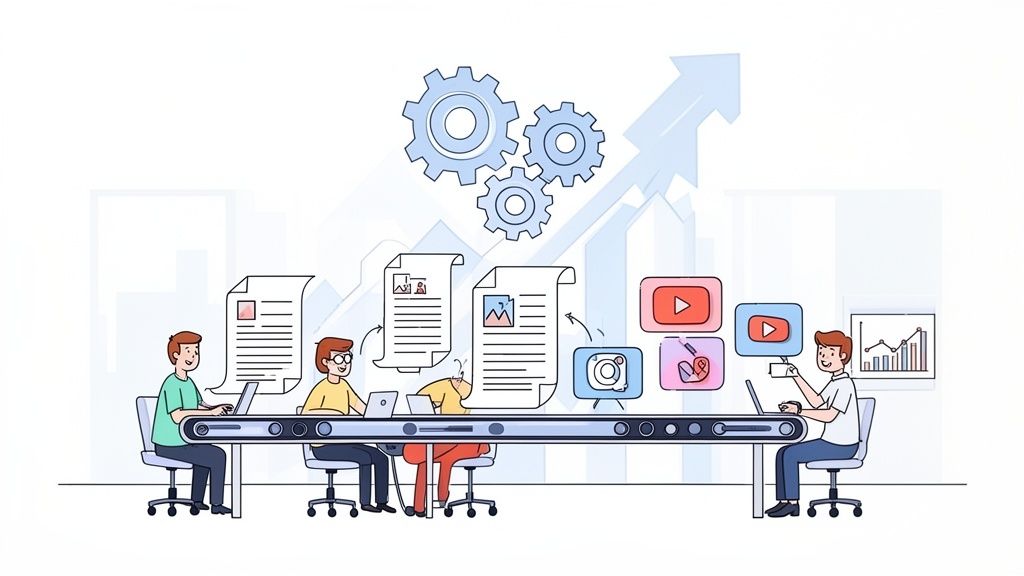
Running a small business puts you in a unique spot. You don't have a whole department of marketers or a nine-figure budget like the big corporations. More often than not, you're wearing all the hats. The same person who answers the phone is probably also in charge of posting on social media and figuring out what all that website data means.
This reality creates a very specific set of obstacles that larger companies just don't have to think about. Your size is also your secret weapon—it lets you be nimble and build real connections with customers—but it also means every dollar, every hour, and every marketing decision has to count.
The real challenge isn't just about having fewer resources. It's the constant pressure to get the biggest possible results from the smallest possible investment. It's a high-stakes balancing act that demands smart strategy and sharp focus.
A Roadmap for Overcoming Common Hurdles
Instead of feeling swamped by it all, the key is to understand what you're up against and pick your battles wisely. That's exactly what this guide is built to help you do. We'll walk through the most common issues you're dealing with, one by one.
Our goal here is to move past just talking about the problem and get straight to fixing it. We’ll cover:
- Budget Constraints: How to squeeze maximum value out of every penny and focus on activities with a high return on investment (ROI).
- Lead Generation: Practical ways to bring in quality leads without needing a huge advertising budget.
- Digital Presence: Real strategies for getting noticed on social media and actually building a loyal following.
- Technology Overload: How to assemble a simple, affordable tech toolkit that automates tasks and makes your life easier.
By the time you're done reading, you won't just know the marketing challenges for small businesses—you'll have a solid plan to take them on.
Stretching Your Marketing Budget in a Tough Economy
For most small business owners, the marketing budget feels less like a strategic plan and more like a high-wire act. Every single dollar counts, and when the economy gets shaky, that wire feels even thinner. This isn't about pinching pennies; it’s about making every penny work harder. You have to shift your thinking from, "How much can I afford to spend?" to "Where will my money make the biggest possible impact?"
That change in perspective is everything, because outside economic pressures create one of the most common marketing challenges for small businesses. According to the Q3 2025 Small Business Index, a staggering 46% of small businesses around the world say inflation is their number one worry. To stay afloat, 55% have had to raise their prices and 36% have scrambled to adjust their supply chains. These rising operational costs force tough choices, and marketing is often the first budget to get squeezed.
Prioritizing High-ROI, Low-Cost Strategies
When your funds are tight, you have to get laser-focused on the activities that give you the most bang for your buck. It’s all about prioritizing strategies that punch way above their weight class when it comes to return on investment (ROI). Forget about pouring cash into flashy, expensive ad campaigns. You can see incredible results by doubling down on foundational, cost-effective tactics.
Here are a few high-impact areas to concentrate on:
- Mastering Local SEO: Your Google Business Profile is hands-down the most powerful free marketing tool you have. Getting it right puts you on the map—literally—for local customers who are actively looking for what you offer. It builds instant credibility through reviews and drives real foot traffic, all without a dime in ad spend.
- Creating Valuable Content: Think about it: one genuinely helpful blog post that solves a real customer problem can attract organic search traffic for years to come. This isn't just about keywords; it's about building trust and positioning yourself as an expert. Your website becomes a lead-generating machine that works for you 24/7.
- Leveraging Email Marketing: An email list is a direct line to your most loyal audience. It’s an asset you own, free from the whims of social media algorithms. You can use it to build relationships, nurture leads, and drive repeat business for a tiny fraction of what it costs to find a new customer.
The goal isn't to stop spending, but to stop wasting. By focusing on proven, low-cost channels, you ensure every dollar is working as hard as you are to improve marketing ROI.
Building a Scalable Marketing Budget
A rigid, static budget just doesn't cut it for a growing business. What you need is a flexible framework that can adapt as you hit your goals. Try to see your marketing not as a simple expense, but as an investment that fuels the next stage of your growth.
A great way to start is by dedicating a small, fixed percentage of your revenue to marketing. That way, as your business brings in more money, your marketing budget automatically grows right alongside it. This simple method creates a sustainable cycle of investment and return. It takes the guesswork out of budgeting and ties your marketing efforts directly to the financial health of your business. If you want to dive deeper, you can find some fantastic smart marketing budget strategies for small businesses to guide you. Adopting this kind of scalable approach is one of the smartest moves you can make to conquer budgetary marketing challenges for good.
Generating High-Quality Leads Without a Big Spend
A thriving business needs a constant stream of new customers, but this presents a classic catch-22 for most small businesses. How do you find a reliable source of quality leads when you don’t have a giant advertising budget to lean on? The secret is to stop chasing customers and start attracting them.
This change in perspective is everything. After all, lead generation and tight budgets are two of the most stubborn marketing challenges for small businesses. A 2024 survey really highlights this, finding that 30% of small business pros see driving leads as their number one challenge, while 27% pointed to limited funds as their biggest roadblock. Even though 56% were focused on the end goal of boosting sales, you can't get there without getting good leads in the door first.
Building a Simple Lead Generation Engine
You don't need a complicated, ten-step funnel or a suite of expensive software to get started. At its heart, a great lead generation engine is built on a simple, honest exchange of value. You offer something genuinely helpful, and in return, a potential customer trusts you with their contact information. That's the start of a real relationship.
Think of it as offering a free sample. You’re giving people a small taste of your expertise that solves a real, nagging problem for them, right now.
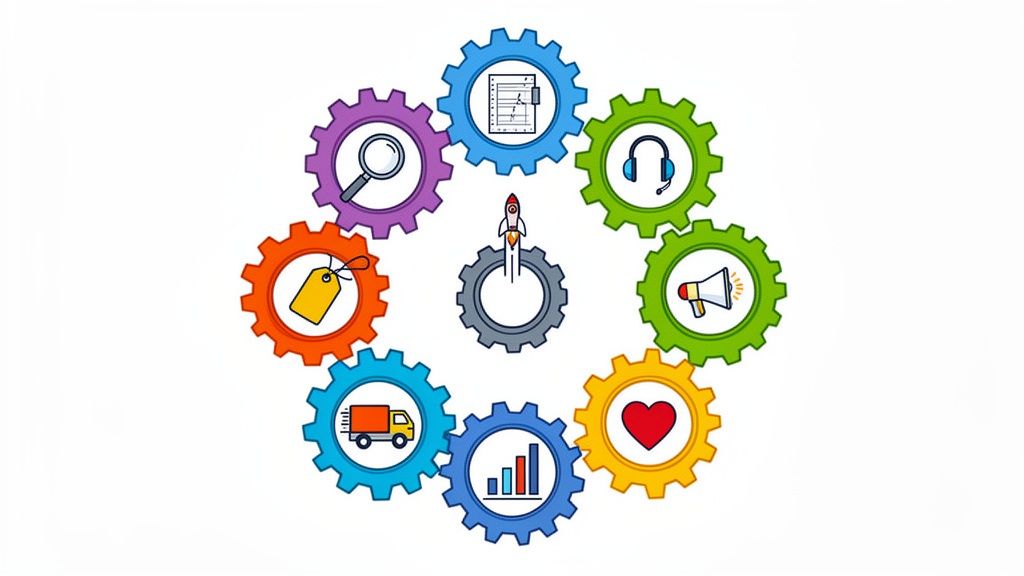
This entire process boils down to three key stages: prioritizing your efforts, executing your plan, and then scaling what actually works.
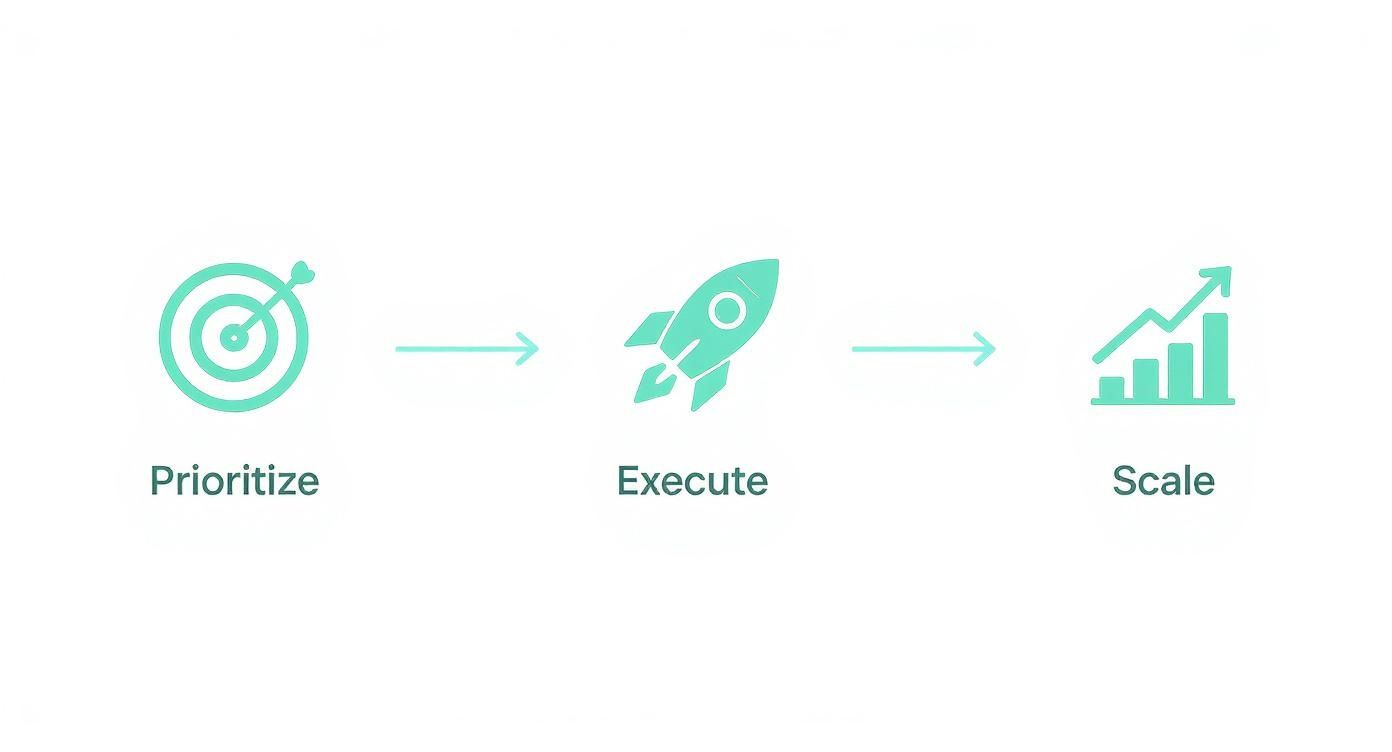
As you can see, spending smart isn't just about penny-pinching. It’s about investing your limited funds into a clear, strategic process that delivers results you can actually measure.
Some of the most effective, low-cost "lead magnets" are often the simplest:
- Simple Checklists: A quick, one-page PDF that guides customers through a common task.
- How-To Guides: A short, punchy guide explaining how to solve a specific problem that your business is built to fix.
- Resource Lists: A curated list of the best tools or resources in your industry that saves people time.
Once you have their email, the real work begins—building that relationship. For a deeper dive, check out our guide on how to generate leads online.
Nurturing Leads with Simple Automation
Getting a lead is only half the job. The real magic happens when you turn that initial flicker of interest into a solid customer relationship. This is where simple email automation becomes your best friend, helping you build trust and stay on their radar without you having to manually send every single message.
Don't overcomplicate this part. A simple welcome email sequence that introduces your brand, shares a bit of your story, and offers another helpful tip can work wonders. The goal is to be human and helpful, not just another sales pitch in their inbox.
To make things more consistent, it's worth exploring how to build an automated lead generation system. This kind of setup allows you to follow up with every new lead, gently guiding them from a curious visitor to a loyal customer who feels a real connection to what you do. When you put value first, you build a growth engine you can truly rely on.
Here are some of the most accessible and effective lead generation strategies for businesses watching their budget.
Cost-Effective Lead Generation Strategies for Small Businesses
| Strategy | Typical Cost | Effort Level | Best For |
|---|---|---|---|
| Content Marketing & SEO | Low (Time-intensive) | High | Building long-term authority and attracting organic traffic. |
| Email Marketing | Low to Medium | Medium | Nurturing leads and building direct customer relationships. |
| Social Media Engagement | Low (Time-intensive) | High | Building a community and engaging directly with potential customers. |
| Referral Programs | Low (Performance-based) | Low | Leveraging existing happy customers to find new ones. |
| Local SEO (GMB) | Free | Medium | Brick-and-mortar businesses attracting customers in their area. |
| Networking/Partnerships | Low | High | B2B companies or businesses with complementary services. |
Choosing the right mix of these tactics depends entirely on your specific industry and audience, but all of them prove you don't need a massive budget to generate high-quality leads.
Winning on Social Media When Organic Reach Is Down
Does posting on social media ever feel like you're shouting into the void? You pour your time and energy into creating great content, only to see it reach a tiny fraction of the people who follow you. If that sounds familiar, you're not imagining things. This drop-off is one of the most frustrating marketing challenges for small businesses right now.
The truth is, one of the biggest hurdles small businesses have to clear in 2025 is the nosedive organic reach has taken on social media. Over the last decade, giants like Facebook and Instagram have systematically dialed back how many people see posts from business pages for free. This change pretty much forces businesses to open their wallets for paid ads just to stay visible. For smaller outfits with tight budgets, reaching the right people without a significant financial spend has become incredibly tough. You can find more details on marketing challenges over at enji.co.
But this isn’t a sign to throw in the towel or drain your bank account on ads. It just means you need to get smarter. The game has changed from broadcasting a message to actually building a community.
Shift from Reach to Relationships
Forget about chasing vanity metrics like follower counts. The real win is in creating a space where your ideal customers feel seen, heard, and valued. Your goal should be to spark conversations, not just rack up likes. This means ditching the generic sales pitches and focusing on content that genuinely helps or entertains people.
Think of your social media feed less like a billboard on a highway and more like your local coffee shop. You want people to pull up a chair, hang out for a while, and feel a real connection.
When you put relationships first, you build a kind of loyalty that algorithms can't touch. People who feel connected to you will naturally engage more, share your stuff with their friends, and, eventually, become customers.
The new currency on social media isn't reach; it's trust. By building a thriving community, you create an engaged audience that actively wants to hear from you, turning followers into true advocates for your business.
Create Content Worth Sharing
If you want to beat the algorithm, you have to create content so good that your audience can't help but share it. This all comes down to truly knowing what they find useful, interesting, or just plain fun.
Here are a few proven ways to get people hitting that "share" button:
- Solve a Problem: Post a quick tutorial, a how-to guide, or a simple tip that solves a common headache for your audience.
- Show the Human Side: People connect with people. Share behind-the-scenes glimpses, spotlight your employees, and tell the story of why you started your business in the first place.
- Spark User-Generated Content (UGC): Run a fun contest or create a branded hashtag that gets customers to share photos or stories with your products. UGC is gold—it’s authentic social proof that no ad can replicate.
These kinds of tactics are the bedrock of smart social media engagement strategies that put community ahead of clicks.
Own Your Audience
At the end of the day, the most foolproof way to combat declining reach is to move the conversation off platforms you don't control. Think of your social media profiles as rented land, but your email list is a house you own outright.
Use your social channels to offer something valuable in exchange for an email address—maybe a free guide, a checklist, or access to a webinar. This turns your social media presence into a powerful engine for building a direct line to your best customers, making sure your message always lands right in their inbox.
Building Your Essential Marketing Toolkit on a Budget
Let's debunk a common myth right away: tackling the many marketing challenges for small businesses does not require a dozen expensive software subscriptions. So many entrepreneurs believe you need complex, high-priced tools to get professional results. The reality? A handful of carefully chosen, affordable tools can build an efficient system that lets you focus on running your business, not managing software.
Think of it like putting together a starter toolkit for home repairs. You don't run out and buy every specialized gadget in the hardware store. You start with a reliable hammer, a good screwdriver, and a measuring tape. Your marketing toolkit should be just as lean and effective, designed to solve your most immediate problems without draining your budget.
Assembling Your Foundational Tools
Building a solid marketing "tech stack" begins with pinpointing your core needs and then finding free or low-cost solutions that get the job done. You’re looking for tools that simplify the essentials: creating visuals, managing social media, talking to customers through email, and figuring out what’s happening on your website. The whole point is to put routine work on autopilot so you can spend your time on strategy and actual customer conversations.
Here are the key areas to focus on, along with some fantastic, budget-friendly options to get you going:
- Professional Graphics: In a visual world, eye-catching images are non-negotiable. A tool like Canva gives you a massive library of templates and a simple drag-and-drop interface. Anyone can create stunning social media posts, flyers, and website graphics, often for free.
- Social Media Scheduling: Consistency is everything on social media, but who has time to post manually every single day? Platforms like Buffer or Later offer free plans that let you schedule posts in advance across your channels, keeping your brand active even when you’re swamped.
- Email Marketing: Your email list is one of the most valuable assets you have—it’s a direct line to your audience. Services such as Mailchimp have generous free plans for small businesses, letting you build subscriber lists, send newsletters, and set up simple welcome emails without any initial cost.
The real power isn't in any single tool, but in how they all work together. A graphic you create in Canva can be scheduled with Buffer and then promoted to your email list through Mailchimp. That's a simple, cohesive workflow.
To make this even clearer, let's lay out the basics. A good starting toolkit directly addresses the biggest hurdles small businesses face, like limited time, budget constraints, and the need to prove marketing is actually working.
Here is a quick-glance table of the essentials:
Essential Marketing Toolkit for Small Businesses
| Marketing Area | Key Challenge | Recommended Tool (Example) | Core Function |
|---|---|---|---|
| Visual Content | Creating professional graphics without a designer | Canva | Easily design social posts, ads, and website images |
| Social Media | Maintaining a consistent posting schedule | Buffer | Schedule posts in advance across multiple platforms |
| Email Marketing | Building a direct relationship with customers | Mailchimp | Manage subscriber lists and send email campaigns |
| Website Analytics | Understanding visitor behavior and traffic sources | Google Analytics | Track website performance and measure campaign results |
This simple set of tools forms a powerful foundation, giving you the ability to create, distribute, and measure your marketing without a hefty price tag.
Measuring What Matters Most
Once you have your marketing engine humming along, you need to know if it's actually working. This is where analytics come in, and you definitely don't need an expensive platform to get the data you need.
A tool like Google Analytics is 100% free and gives you a treasure trove of information. You can see who is visiting your website, how they found you, and what content they're most interested in. This data is pure gold for making smarter decisions and proving that your hard work is paying off, directly solving the challenge of measuring success when every dollar counts.
Answering Your Top SMB Marketing Questions
Let's be honest, figuring out small business marketing can feel like a puzzle with a million pieces. You're not alone in feeling that way. We've gathered some of the most common questions we hear from business owners and laid out some straightforward answers to help you tackle those tough marketing challenges.
What’s the Best Thing I Can Do for Marketing with Almost No Budget?
When your budget is tight, your single best move is to fully claim and optimize your Google Business Profile. It's completely free to use and is hands-down the most powerful tool for getting in front of local customers who are already searching for exactly what you offer.
Think of it as your digital storefront. It builds instant credibility through customer reviews and gives you a direct line to new business without spending a dime on ads. If you're starting from scratch, this is where you put your energy first.
How Can My Little Business Possibly Compete with Huge Companies?
You don't. At least, not on their terms. Don't even try to outspend them—it's a losing battle. Instead, you out-connect them. Your small size is actually your secret weapon. It lets you be nimble, genuine, and build real relationships in a way that big, faceless corporations simply can't.
Here’s how you can punch above your weight:
- Zero in on a specific niche. Become the absolute best, go-to expert for a very particular audience or service.
- Provide ridiculously good, personal customer service. Create fans, not just customers. These are the people who will champion your brand for you.
- Share your real story. People connect with people. Let them see the passion and humanity behind your business.
That personal touch and your ability to pivot on a dime are advantages that no amount of corporate money can buy.
"The challenge isn't just about having fewer resources. It's the constant pressure to get the biggest possible results from the smallest possible investment. It's a high-stakes balancing act that demands smart strategy and sharp focus."
Should I Be Using AI for My Marketing?
Yes, you absolutely should—but think of it as a helpful assistant, not a magic wand that replaces your brain. AI tools are incredible for busting through common roadblocks like writer's block or just not having enough hours in the day.
Use AI to help you brainstorm blog post ideas, get a first draft of a social media caption, or come up with a few catchy email subject lines. This frees you up to focus on the big picture, talk to your customers, and, you know, actually run your business. Just make sure you always review and tweak anything the AI spits out so it sounds like you and fits your brand's unique voice.
How Do I Know if My Marketing Is Actually Working?
This is the big one. The trick is to stop obsessing over vanity metrics like social media "likes" and start focusing on numbers that actually impact your bank account. You have to draw a clear line from your marketing efforts to sales.
Start simple. Use a free tool like Google Analytics to track a few key performance indicators (KPIs). Keep an eye on:
- Website Traffic: Are more people discovering your site over time?
- Lead Generation: How many people are filling out your contact form or calling you?
- Conversion Rate: Of all the people visiting your site, what percentage are actually becoming customers?
And don't forget the low-tech approach! When you get a new customer, just ask them, "How did you hear about us?" That simple question can give you some of the most valuable feedback you'll ever get on what's truly working.
Ready to stop guessing and start growing? The team at ReachLabs.ai brings the strategic thinking and creative firepower to help your business thrive. Find out how we can help elevate your brand.