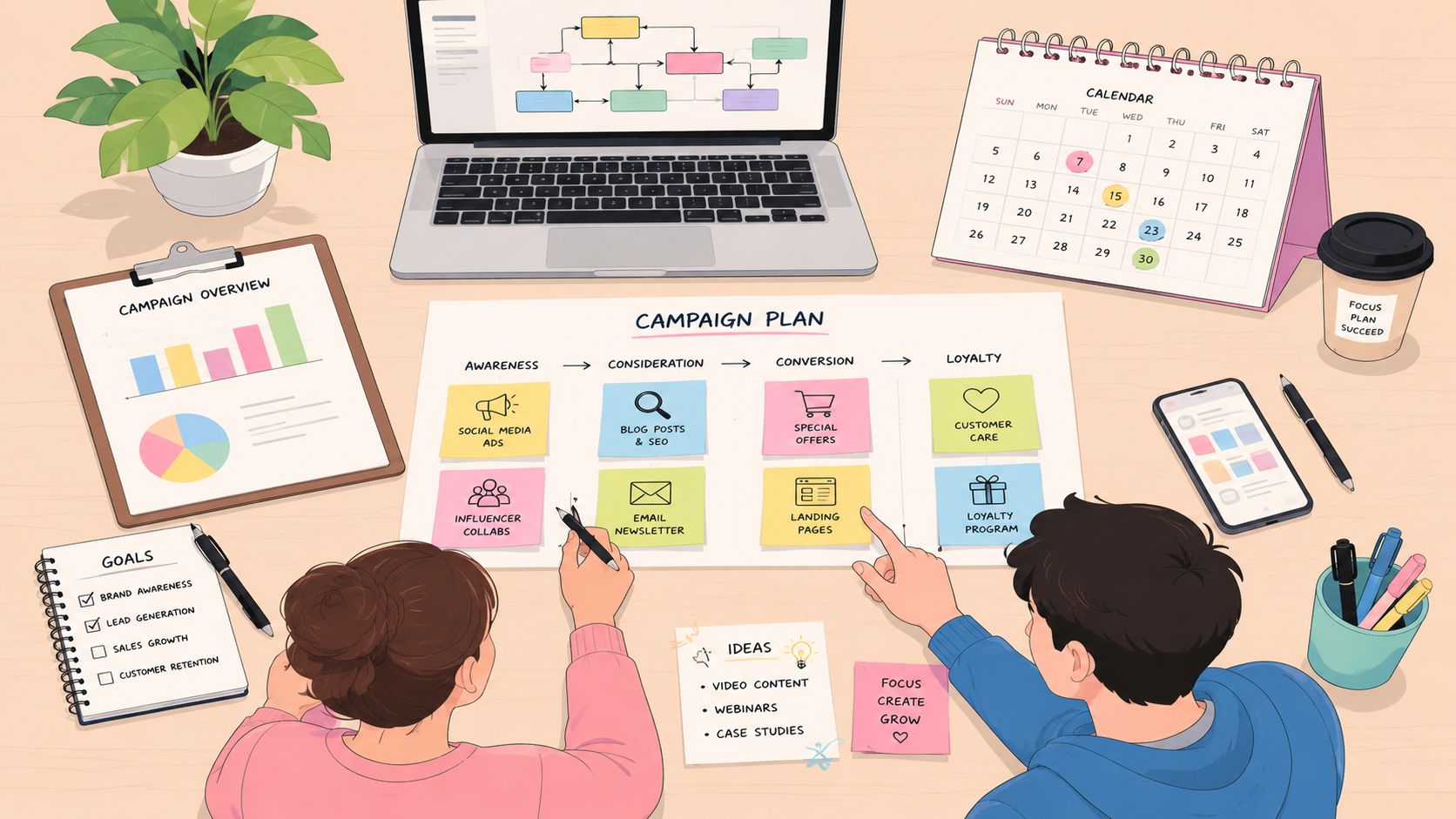

Your marketing budget is more than a line item on a spreadsheet; it's the fuel for your entire growth engine. Yet, misallocating this crucial resource is a common and costly mistake. With customer acquisition costs steadily climbing and competition intensifying across every channel, mastering how to distribute every dollar for maximum return is no longer optional, it’s a fundamental requirement for survival and success.
This guide moves beyond generic advice like "spend money to make money." Instead, we provide a definitive list of battle-tested marketing budget allocation best practices designed for modern marketing teams. We will explore ten powerful frameworks and models that transform your budget from a simple expense into a strategic, high-performing investment. You’ll gain actionable insights into methodologies like Zero-Based Budgeting (ZBB) for a clean slate approach, the Customer Lifetime Value (CLV) model for long-term growth, and agile allocation for rapid, data-driven pivots. For those looking to dive deeper into overarching strategies, explore this guide on more marketing budget allocation best practices for additional context.
Get ready to learn not just what to do, but how to do it. We'll cover everything from justifying spend with clear KPIs to trimming underperforming channels and reallocating funds with confidence. The goal is to equip you with the tools to build a resilient, efficient, and growth-focused marketing budget that ensures every dollar works as hard as you do. Let's dive into the frameworks that will help you achieve precisely that.
1. Zero-Based Budgeting (ZBB)
Zero-Based Budgeting (ZBB) is a rigorous financial planning method that forces you to build your marketing budget from scratch for each new period. Instead of simply adjusting last year's budget by a few percentage points, ZBB requires you to justify every single dollar, linking each expense directly to current business objectives and its expected return on investment (ROI). This approach eliminates wasteful spending and ensures every part of your marketing budget allocation is intentional and performance-driven.

This method shines a spotlight on underperforming channels and outdated tactics that often survive in traditional, incremental budgeting. By starting from zero, you are compelled to ask critical questions like, "Is this campaign still aligned with our goals?" and "What is the actual ROI of this channel?"
How to Implement Zero-Based Budgeting
Implementing ZBB effectively involves a structured, data-centric process that challenges assumptions. It’s one of the most effective marketing budget allocation best practices for teams aiming for peak efficiency.
- Define Clear Objectives: Start by outlining your primary marketing goals for the upcoming period (e.g., increase market share by 5%, generate 1,000 marketing-qualified leads).
- Identify and Justify Activities: List all potential marketing activities that could help achieve these goals. For each one, create a "decision package" that details its costs, expected outcomes, and necessary resources.
- Evaluate and Rank: Analyze each decision package based on its projected ROI and alignment with strategic priorities. Rank them from most to least critical.
- Allocate and Fund: Fund the highest-ranking initiatives until your budget is fully allocated. Activities that don't make the cut are not funded for that period.
For example, Unilever famously adopted ZBB to streamline its operations, analyzing non-working media spend and reallocating funds to more productive, growth-driving initiatives. This forced a culture of accountability and made every marketing dollar work harder.
Key Insight: ZBB shifts the budgeting conversation from "What did we spend last year?" to "What must we spend to achieve our goals this year?" This change in perspective is crucial for agile and results-oriented marketing teams.
2. 80/20 Budget Rule (Pareto Principle)
The 80/20 Budget Rule, also known as the Pareto Principle, is a strategic framework that balances stability with innovation. This model advocates allocating 80% of your marketing budget to proven, high-performing channels and strategies that consistently deliver results. The remaining 20% is reserved for experimentation, allowing you to test emerging platforms, new creative approaches, and innovative tactics without jeopardizing your core revenue streams.

This balanced approach ensures your marketing efforts remain profitable and predictable while fostering a culture of growth and adaptation. By dedicating a specific portion of the budget to calculated risks, you can discover the next big channel that will eventually become part of your core 80%, keeping your strategy from becoming stagnant.
How to Implement the 80/20 Budget Rule
Applying the 80/20 rule requires a clear understanding of your current performance and a structured process for managing experiments. This is one of the most practical marketing budget allocation best practices for teams looking to scale sustainably.
- Identify Your Top Performers: Analyze your historical data to pinpoint the 3-5 channels that generate the highest ROI. These form your "80%" and should receive the bulk of your funding.
- Create an "Innovation" Budget: Formally designate 20% of your total budget for experimentation. Track this spending separately to clearly measure the ROI of new initiatives.
- Set Clear Experiment Metrics: Before launching a new test, define what success looks like. Establish clear key performance indicators (KPIs), a timeline, and a budget for each experiment.
- Review and Rotate: Regularly evaluate the performance of your experimental channels. If a new tactic proves successful, consider moving it into the core 80%. If it fails, cut the spending and reallocate the funds to a new test.
For instance, a company like HubSpot might allocate 80% of its budget to its proven content marketing and SEO engine while using the other 20% to experiment with emerging AI-powered advertising platforms or new video formats on platforms like TikTok.
Key Insight: The 80/20 rule provides a safety net for innovation. It allows you to take smart risks and stay ahead of the curve without sacrificing the predictable returns from your most reliable marketing channels.
3. Performance-Based Budget Allocation
Performance-Based Budget Allocation is a dynamic and agile method where marketing funds are allocated based on real-time performance metrics rather than fixed, predetermined percentages. In this model, budget flows fluidly to the channels, campaigns, and tactics that deliver the best results, such as the highest return on investment (ROI), lowest cost per acquisition (CPA), or best conversion rates. This creates a continuous optimization cycle that maximizes efficiency.
Unlike static annual planning, this approach allows you to react swiftly to market changes and consumer behavior. It ensures your marketing spend is always working as hard as possible by reinforcing what’s successful and pulling back from underperforming areas. This makes it one of the most effective marketing budget allocation best practices for data-driven teams.
How to Implement Performance-Based Budget Allocation
Successful implementation requires robust tracking, clear KPIs, and a culture that embraces data-informed agility. It’s about creating a system that automatically rewards success with more resources.
- Establish a Robust Attribution Model: Before you begin, implement multi-touch attribution to accurately understand which touchpoints contribute to conversions. Without this, you risk misallocating budget based on incomplete data.
- Define Core Performance KPIs: Identify the key metrics that define success for your business (e.g., ROAS, CPA, Customer Lifetime Value). These will be the triggers for budget shifts.
- Set Review Cadences: Decide how often you will review performance and reallocate funds. This could be weekly for fast-moving digital campaigns or monthly for broader strategic adjustments.
- Maintain a Testing Budget: Keep a separate, protected budget for experimenting with new channels and unproven tactics. This prevents your entire budget from being consumed by only the currently proven winners, allowing for innovation.
For instance, DoorDash famously uses algorithmic budget allocation across more than 15 marketing channels. Their system continuously analyzes performance data and shifts funds to maximize customer acquisition, ensuring marketing dollars are invested with maximum impact at all times.
Key Insight: Performance-based allocation transforms your budget from a static plan into a dynamic investment portfolio. The goal is to consistently move capital to your highest-performing "assets" to generate the best possible returns.
4. Customer Acquisition Cost (CAC) Payback Period Method
The Customer Acquisition Cost (CAC) Payback Period method focuses your budget on channels that recoup their acquisition costs the fastest. This approach measures the time it takes for a new customer's revenue to cover the cost of acquiring them. By prioritizing channels with shorter payback periods, you optimize for cash flow and accelerate your growth engine, making it a powerful tool for efficient scaling.
This model is especially valuable for subscription-based businesses or companies with recurring revenue models, as it directly ties marketing spend to profitability timelines. Instead of just looking at the initial cost to acquire a customer, it asks, "How quickly does this investment pay for itself?" This shifts the focus from pure acquisition volume to high-quality, profitable customer acquisition.
How to Implement the CAC Payback Period Method
Using this method requires diligent tracking and a clear understanding of your unit economics. It's one of the most effective marketing budget allocation best practices for businesses prioritizing sustainable growth and strong cash flow.
- Calculate CAC and Payback Period: First, accurately calculate your CAC for each marketing channel, including all associated costs like ad spend, salaries, and tool subscriptions. Then, determine the payback period in months by dividing the CAC by the average monthly recurring revenue per customer. You can learn more about how these marketing performance metrics work together.
- Segment by Channel: Analyze the payback period for each distinct channel (e.g., Google Ads, content marketing, social media). This reveals which channels are generating a return the quickest.
- Prioritize and Allocate: Reallocate a larger portion of your budget to channels with the shortest payback periods. Set benchmarks based on your business model.
- Monitor and Adjust: Continuously track payback periods, as they can change due to market saturation or campaign fatigue. Review and adjust your allocations quarterly.
For example, a B2B SaaS company like Slack might aim for a 6-12 month payback period, funneling funds into channels that consistently hit this target. In contrast, an e-commerce brand like Glossier might prioritize channels with a 30-60 day payback period to align with faster inventory turnover and retail cycles.
Key Insight: Focusing on the CAC payback period forces you to balance growth with profitability. It ensures that your marketing spend isn't just acquiring customers, but acquiring customers who contribute to positive cash flow quickly.
5. Objective and Key Results (OKR) Method
The Objective and Key Results (OKR) method aligns your marketing budget directly with ambitious, company-wide goals. Instead of allocating funds based on channels or past performance alone, this framework distributes resources to initiatives that directly support measurable business outcomes. This ensures every dollar spent on marketing is a strategic investment toward achieving top-level enterprise objectives, fostering cross-functional alignment and accountability.
Popularized by tech giants like Google and Intel, the OKR framework forces teams to define success in concrete terms. It connects the marketing team’s daily activities and expenditures to the organization's most critical priorities, answering the question, "How does this specific marketing spend help us achieve our primary objective?"
How to Implement the OKR Method
Implementing the OKR method transforms budgeting from a simple accounting exercise into a strategic planning process. It is one of the most powerful marketing budget allocation best practices for creating a goal-oriented and transparent culture.
- Define Company-Wide OKRs: Start with 3-5 high-level, ambitious Objectives for the quarter. Each Objective should have 3-5 measurable Key Results (e.g., Objective: Dominate the US market; Key Result: Achieve a 25% market share in the Northeast).
- Cascade to Marketing: The marketing team then creates its own OKRs that directly support the company-level ones. For the example above, a marketing Key Result might be "Generate 500 enterprise-level leads in the Northeast."
- Allocate Budget to Initiatives: Assign budget specifically to the projects, campaigns, and activities designed to hit these marketing Key Results. If an activity doesn't contribute to an OKR, it doesn't get funded.
- Review and Adjust: Track progress against Key Results regularly, often bi-weekly. Be prepared to reallocate funds from underperforming initiatives to those showing a stronger impact on your goals.
For instance, LinkedIn uses OKRs to focus its regional marketing teams on specific quarterly growth targets. Budgets are allocated not to general "brand awareness" but to precise initiatives designed to hit a Key Result, like "Increase user engagement in the APAC region by 15%."
Key Insight: The OKR method ensures that your marketing budget is not just an expense but a direct investment in achieving specific, quantifiable business outcomes. It shifts the focus from "activity" to "impact."
6. Channel Mix Optimization Model
A Channel Mix Optimization Model uses advanced statistical and econometric analysis to determine the most effective budget allocation across your marketing channels. This data-driven approach moves beyond simple last-click attribution, quantifying the incremental impact of each channel and interaction. By understanding how different channels work together, you can identify the ideal budget distribution to maximize your overall marketing ROI.
This method helps answer complex questions like, "What is the true sales lift from our TV ads?" or "How much should we invest in social media versus paid search to achieve our lead goals?" It provides a scientific foundation for your budget decisions, replacing guesswork with predictive insights.
How to Implement a Channel Mix Optimization Model
Implementing a robust optimization model requires a commitment to data quality and analytical rigor. It's one of the most powerful marketing budget allocation best practices for mature organizations aiming to gain a competitive edge through efficiency.
- Ensure Data Integrity: Start by consolidating clean, comprehensive data from all marketing channels and sales sources. This includes spend, impressions, clicks, conversions, and offline activities.
- Choose a Modeling Approach: Select the right model for your business. Marketing Mix Modeling (MMM) is ideal for understanding the high-level impact of online and offline channels, while Multi-Touch Attribution (MTA) provides granular, user-level insights. You can learn more about how to choose the right model for your business on reachlabs.ai.
- Build and Validate the Model: Work with data scientists or specialized agencies to build, test, and validate the model. This often involves an initial implementation timeline of 3-6 months.
- Run Scenarios and Allocate: Use the model to run "what-if" scenarios, simulating the impact of different budget allocations. Allocate your budget based on the model’s recommendations for maximizing ROI.
Procter & Gamble, for instance, employs advanced MMM to allocate billions in advertising spend across its vast portfolio of brands, ensuring each dollar drives measurable growth. Similarly, Walmart uses sophisticated mix modeling to optimize its regional and national marketing investments.
Key Insight: Channel Mix Optimization transforms your budget from a list of expenses into a strategic investment portfolio. It enables you to actively manage your channel mix to deliver the highest possible returns based on predictive data, not just historical performance.
7. Seasonal and Cyclical Adjustment Strategy
A Seasonal and Cyclical Adjustment Strategy involves dynamically allocating marketing funds based on predictable patterns in customer buying behavior, market trends, and business cycles. Instead of a flat, year-round spend, this approach concentrates resources during peak demand periods to maximize impact and ROI. It acknowledges that marketing effectiveness is not constant and requires strategic timing to capitalize on moments when customers are most receptive.
This method prevents wasting ad spend during natural lulls and ensures you have enough firepower when it matters most. By aligning your budget with seasonal demand, you can capture high-intent customers, dominate the conversation during key events, and significantly improve campaign efficiency.
How to Implement a Seasonal and Cyclical Adjustment Strategy
Adopting this approach requires a deep understanding of your business rhythm and proactive planning. It is one of the most effective marketing budget allocation best practices for businesses with clear seasonal sales patterns.
- Analyze Historical Data: Review at least three years of sales and website traffic data to identify clear seasonal peaks and troughs. Pinpoint specific months, holidays, or events that consistently drive revenue.
- Map Your Promotional Calendar: Align your promotional activities and campaign launches with these identified high-demand periods. Plan major event budgets at least six months in advance to secure ad placements and resources.
- Allocate Budget Dynamically: Shift a larger portion of your budget to these peak seasons. For example, a back-to-school retailer might allocate 50% or more of its annual budget to the July-August timeframe.
- Build a Contingency Fund: Set aside 10-15% of your total budget as a contingency fund. This allows you to seize unexpected opportunities, like a competitor's misstep or a sudden viral trend relevant to your industry.
Tax software companies like TurboTax and H&R Block master this strategy, concentrating the vast majority of their marketing spend between January and April. This ensures their message is front and center precisely when their services are most needed, maximizing their return on ad spend.
Key Insight: A seasonal strategy moves your budget from a static, evenly distributed plan to a dynamic, responsive one that mirrors your customer’s natural purchasing journey throughout the year.
8. Agile Marketing Budget Allocation
Agile marketing budget allocation transforms traditional, rigid annual planning into a dynamic, sprint-based system. Instead of setting a budget in stone for twelve months, this approach uses shorter, iterative cycles (typically 2-4 weeks) to test, learn, and rapidly reallocate funds based on real-time performance data and market shifts. This ensures capital is always flowing toward the most effective channels and campaigns, maximizing overall impact.
This method moves marketing away from long-term, high-risk bets toward a series of smaller, data-informed experiments. It empowers teams to pivot quickly, seize unforeseen opportunities, and cut losses on underperforming initiatives without waiting for a quarterly review. This makes it one of the most responsive marketing budget allocation best practices for fast-paced industries.
How to Implement Agile Marketing Budget Allocation
Implementing an agile budget requires a cultural shift toward continuous improvement and data-driven decision-making. It’s about building a framework for flexibility rather than a fixed plan.
- Adopt a Sprint-Based Model: Break your quarter into 2- to 4-week "sprints." Set specific, measurable goals for each sprint, such as generating a certain number of leads from a new ad campaign.
- Establish a Reserve Fund: Set aside 15-20% of your total budget as a flexible reserve. This capital can be deployed quickly to double down on successful experiments or capitalize on emerging market trends.
- Hold Regular Review Meetings: Conduct weekly or bi-weekly meetings to review sprint performance against established KPIs. Use these sessions to decide what to scale, what to stop, and where to reallocate funds for the next cycle.
- Utilize Project Management Tools: Use platforms like Jira, Monday.com, or Asana to manage sprints, track spending, and maintain transparent, real-time performance dashboards for all stakeholders.
For example, HubSpot is known for using two-week sprint budgets for its demand generation teams, allowing them to quickly optimize spend on channels like paid search and social media. Similarly, Segment (now Twilio) has used rolling four-week budget cycles to stay nimble and responsive to performance data.
Key Insight: Agile budgeting changes the fundamental question from "What is our annual plan?" to "What is the most valuable thing we can do with our budget in the next two weeks?" This micro-focus drives macro-level efficiency and growth.
9. Customer Lifetime Value (CLV) Proportional Allocation
Customer Lifetime Value (CLV) Proportional Allocation is a sophisticated marketing budget strategy that prioritizes spending on channels that acquire the most profitable customers over the long term. Instead of focusing solely on the initial cost per acquisition (CAC), this model directs funds toward channels that attract customers with higher retention, greater repeat purchase rates, and ultimately, a superior lifetime value. It ensures your marketing investment generates sustainable growth, not just short-term conversions.
This data-driven method moves beyond surface-level metrics to reveal the true quality of each acquisition channel. It recognizes that a customer from a high-intent organic search may have double the lifetime value of one acquired through a heavily discounted social media ad, even if the initial acquisition cost for the latter was lower.
How to Implement CLV Proportional Allocation
Adopting this method requires robust tracking and a shift in perspective from immediate ROI to long-term profitability. It is one of the most impactful marketing budget allocation best practices for businesses with a recurring revenue or repeat purchase model.
- Calculate CLV by Channel: Start by tracking and calculating the average CLV for customers acquired from each distinct marketing channel (e.g., Google Ads, organic search, affiliate marketing).
- Analyze the CLV:CAC Ratio: For each channel, compare the Customer Lifetime Value to the Customer Acquisition Cost. A healthy ratio is typically 3:1 or higher, meaning the customer's value is at least three times the cost to acquire them.
- Segment by Cohorts: Group customers into cohorts based on their acquisition channel and sign-up date. This helps you track how channel quality and customer value evolve over time.
- Reallocate Budget Proportionality: Shift your marketing budget to favor channels with the highest CLV:CAC ratios. If your enterprise sales channel yields customers with a 10:1 ratio, it should receive a proportionately larger budget than a channel with a 3:1 ratio.
For instance, Spotify prioritizes marketing channels that attract high-value subscribers who are less likely to churn, allocating more budget to partnerships and organic content that draw in dedicated music lovers. By focusing on CLV, you invest in acquiring customers who will fuel your business for years to come. To deepen your understanding, you can explore detailed strategies on how to increase customer lifetime value.
Key Insight: Focusing on CLV transforms your marketing budget from an expense into a long-term investment. It allocates capital not just to find any customer, but to find the right customer.
10. Competitive Intelligence and Market Share Defense Budget
A Competitive Intelligence and Market Share Defense Budget is a proactive financial strategy that earmarks funds specifically to counter competitor actions and protect your existing market position. Rather than reacting with funds pulled from planned growth initiatives, this approach creates a dedicated reserve, allowing your brand to respond swiftly and decisively to threats without derailing your core marketing plan. This ensures long-term stability and protects hard-won customer loyalty.
This method moves marketing from a purely offensive game to a balanced one, acknowledging that defending territory is as crucial as capturing new ground. By anticipating and preparing for competitive pressure, you can neutralize threats, maintain brand visibility, and prevent customer churn before it starts. It’s one of the most critical marketing budget allocation best practices for established brands in crowded markets.
How to Implement a Market Share Defense Budget
Implementing a defense budget requires a systematic approach to monitoring and response, turning competitive intelligence into a strategic advantage. It’s about being prepared, not just reactive.
- Establish Monitoring Systems: Implement tools and processes to track competitor messaging, ad spend, promotions, and share of voice. Understanding your brand's visibility relative to competitors is paramount for strategic budget allocation. Consult this modern guide to share of voice calculation to measure your market presence.
- Set Response Triggers: Define clear rules for when the defense budget is activated. For instance, a trigger could be a competitor launching a major campaign in your key market or a significant drop in your share of voice.
- Develop Response Scenarios: Create pre-approved campaign concepts and messaging for likely competitive scenarios. This allows your team to launch a counter-campaign in days, not weeks.
- Maintain a Contingency Fund: Allocate a specific percentage of your total marketing budget (typically 10-20%) as a flexible contingency fund for these defensive actions.
For example, Coca-Cola has historically maintained massive advertising budgets not just for brand building, but to instantly counter major campaigns from Pepsi. This defensive spending ensures their brand presence never wanes, protecting their dominant market share.
Key Insight: A market share defense budget transforms competitive threats from disruptive crises into predictable scenarios. It ensures your growth strategy remains on track, even when the market becomes aggressive.
10-Method Marketing Budget Allocation Comparison
| Method | 🔄 Implementation complexity | 💡 Resource requirements | 📊 Expected outcomes | Ideal use cases | ⭐ Key advantages |
|---|---|---|---|---|---|
| Zero-Based Budgeting (ZBB) | High — intensive justification each period | High — analytics, cross-team effort | Eliminates waste; aligns spend to ROI | Major cost-reduction or reset initiatives | Increases accountability; reveals true activity costs |
| 80/20 Budget Rule (Pareto) | Low — simple allocation framework | Low–Medium — needs channel performance data | Stable revenue + controlled innovation | Mature programs needing steady growth with experimentation | Balances reliability and experimentation; easy to implement |
| Performance-Based Budget Allocation | Medium–High — needs attribution & automation | High — real-time tracking, analytics, automation | Maximizes ROI via continuous reallocation | Digital-first businesses with robust data streams | Continuously optimizes spend; reduces underperformers ⚡ |
| CAC Payback Period Method | Medium — requires revenue attribution | Medium — finance + channel-level tracking | Improves cash-flow efficiency; prioritizes quick payback | SaaS/subscription and cash-sensitive models | Clear financial focus; easy to communicate to stakeholders |
| OKR Method | Medium — needs disciplined goal-setting | Medium — cross-functional coordination | Aligns marketing to measurable business outcomes | Organizations with company-wide OKRs and quarterly cadence | Strengthens strategic alignment and leadership buy-in |
| Channel Mix Optimization Model | Very high — statistical & econometric modeling | Very high — data scientists, long historical datasets | Scientifically optimized allocation; scenario forecasting | Large multi-channel enterprises seeking ROI uplift | Quantifies incremental impact; identifies diminishing returns |
| Seasonal & Cyclical Adjustment | Medium — needs historical pattern analysis | Medium — forecasting tools and historical data | Higher peak-period ROI; reduced off-season waste | Retail, travel, tax-season, education cycles | Matches spend to demand peaks; improves timing of campaigns |
| Agile Marketing Budget Allocation | Medium–High — process and cultural change | Medium — real-time data, experienced teams | Rapid learning and frequent reallocations | Fast-moving markets, startups, test-heavy programs | High responsiveness; enables rapid experimentation ⚡ |
| CLV Proportional Allocation | High — requires accurate CLV modeling | High — cohort analysis, finance integration | Better long-term profitability and retention focus | Subscription businesses and companies with repeat purchases | Prioritizes high-value customers; aligns acquisition with retention |
| Competitive Intelligence / Defense | Medium — requires CI systems and rules | Medium — monitoring tools + contingency budget | Protects market share; enables quick competitive responses | Highly contested categories or reactive markets | Preserves positioning; enables tactical rapid response |
From Theory to Action: Building Your Optimal Budget Mix
Navigating the landscape of marketing budget allocation can feel like charting a course through a complex, ever-shifting sea. We've explored a powerful arsenal of ten distinct strategies, from the foundational discipline of Zero-Based Budgeting (ZBB) to the nimble responsiveness of Agile Marketing Allocation. Each method offers a unique lens through which to view your resources, your channels, and your ultimate business objectives.
The most critical takeaway is that a one-size-fits-all approach is a recipe for mediocrity. The true art and science of effective budget management lie not in choosing a single, rigid framework, but in skillfully blending these methodologies into a hybrid model that reflects your unique business context. Your perfect strategy is a composite, a dynamic blueprint built from the strongest elements of each approach.
Synthesizing Your Custom Budgeting Framework
Think of the methods we've covered as ingredients. Your job as a strategic marketer is to be the master chef, combining them to create the perfect recipe for growth.
-
Start with a Strong Foundation: Anchor your budget with a goal-oriented model. The Objective and Key Results (OKR) Method provides a clear, top-down connection between every dollar spent and your most important company-wide goals. Alternatively, for maximum accountability and efficiency, ZBB forces a justification for every line item, ensuring no resource is wasted on legacy assumptions.
-
Layer on Performance and Optimization: Once your foundation is set, infuse it with data-driven agility. The 80/20 Rule is your guide to focusing resources on the vital few channels that deliver the majority of your results. Simultaneously, a continuous Performance-Based Allocation model ensures you're actively shifting funds toward high-performing campaigns and away from underachievers in real time.
-
Refine with Strategic Overlays: With your core structure in place, it’s time for refinement. Use the Customer Lifetime Value (CLV) Proportional Allocation to ensure you're investing appropriately in acquiring high-value customers who will drive long-term profitability. Factor in the Seasonal and Cyclical Adjustment Strategy to capitalize on predictable market trends, and use Competitive Intelligence to defend your market share and proactively respond to competitor movements. This final layer transforms a good budget into a resilient, market-aware financial plan.
From Static Document to Living Strategy
Mastering these marketing budget allocation best practices means fundamentally shifting your perception of the budget itself. It is not a static spreadsheet you create once a year and then file away. It is a living, breathing document that should guide your daily decisions and evolve with your business.
Key Insight: Your budget is not a set of constraints; it's a strategic tool. It's the most powerful lever you have to translate your marketing vision into measurable, real-world results. Treating it with the dynamic attention it deserves is the difference between simply spending money and strategically investing in growth.
The path forward requires a commitment to data, a willingness to experiment, and the courage to make decisive changes. It involves constantly asking the tough questions: Is this channel still delivering? Can we achieve this objective more efficiently? Where is our next big opportunity, and how can we fund it? Answering these questions requires a deep understanding of the frameworks we've discussed and the discipline to apply them consistently. By embracing this mindset, you transform budgeting from a dreaded administrative task into one of the most impactful strategic functions within your organization.
Feeling overwhelmed by the data and complexity of building a truly optimized budget? The team at ReachLabs.ai specializes in leveraging data science and AI to create dynamic, performance-based budget allocation models that eliminate guesswork and maximize ROI. Visit ReachLabs.ai to see how we can help you build and execute a marketing budget that consistently drives predictable growth.