
Ever feel like you’re spinning your wheels with marketing? You’re posting, emailing, and spending money, but the needle just isn’t moving. If it feels like you’re putting in all the effort for zero reward, you’re definitely not alone. It’s one of the most common frustrations I hear from small business owners.
It’s like trying to conduct an orchestra without sheet music—lots of noise, but no harmony.
Why Small Business Marketing Feels So Hard
For most small business owners, marketing is a constant uphill battle. You’re already juggling being the CEO, the head of sales, and the customer service rep. Adding “marketing guru” to the list often means you’re just reacting to the latest trend or trying to keep up, not actually executing a well-thought-out plan.
There’s this immense pressure to be everywhere at once—on Instagram, TikTok, LinkedIn, running ads, sending newsletters. This shotgun approach usually leads to scattered, ineffective efforts that don’t add up to anything meaningful. This guide is here to help you cut through that noise. We’re going to ditch the overwhelming jargon and give you a clear roadmap to tackle the real obstacles holding your business back.
The Five Core Challenges We Will Tackle
We’re not just going to list problems. Instead, we’ll dig into the why behind each one and lay out practical, strategic solutions. The goal is to turn these major pain points into your biggest opportunities for smart, sustainable growth.
Here’s what we’ll break down:
- The Absence of a Real Strategy: How to stop throwing spaghetti at the wall and start following a focused plan.
- Painfully Tight Budgets: Making every single dollar you spend work harder for you.
- Confusing Technology: Sifting through the endless tools to find what you actually need.
- Fierce Competition: Carving out your own space, even in a crowded market.
- The Black Hole of Measuring Results: Finally getting a clear picture of what’s working and what’s not.
By confronting these issues head-on, you can shift your marketing from a source of stress into your most powerful engine for growth. It’s not about doing more; it’s about doing the right things with intention.
You can learn more about the specific small business marketing challenges and how to solve them in our detailed guide. Let’s get you the clarity and confidence to take back control and make your marketing truly count.
2. Moving from Random Acts to a Real Strategy
I see this all the time with small business owners. You’re posting on social media, sending out a few emails, maybe boosting a post here and there. You’re busy. But being busy isn’t the same as making progress. This is what I call “random acts of marketing.”
Think of it like trying to build a house by just nailing boards together wherever they seem to fit. You’re definitely working hard, but you’re not building anything that will stand the test of time. A real strategy is the blueprint that makes sure every single nail, board, and hour of work contributes to a sturdy, finished home.
This scattered approach is completely understandable. When you’re juggling everything from sales to payroll, who has time for a fifty-page marketing plan? Many people also think a formal strategy is just for big corporations with massive teams and even bigger budgets.
But operating without a plan is like driving through a new city without a map. You might stumble upon your destination eventually, but you’ll waste a ton of gas, time, and energy getting there.
From Guesswork to a Growth Blueprint
A marketing strategy doesn’t have to be complicated. At its core, it’s a simple guide that ensures every dollar and minute you spend on marketing has a clear purpose. It just needs to answer three crucial questions:
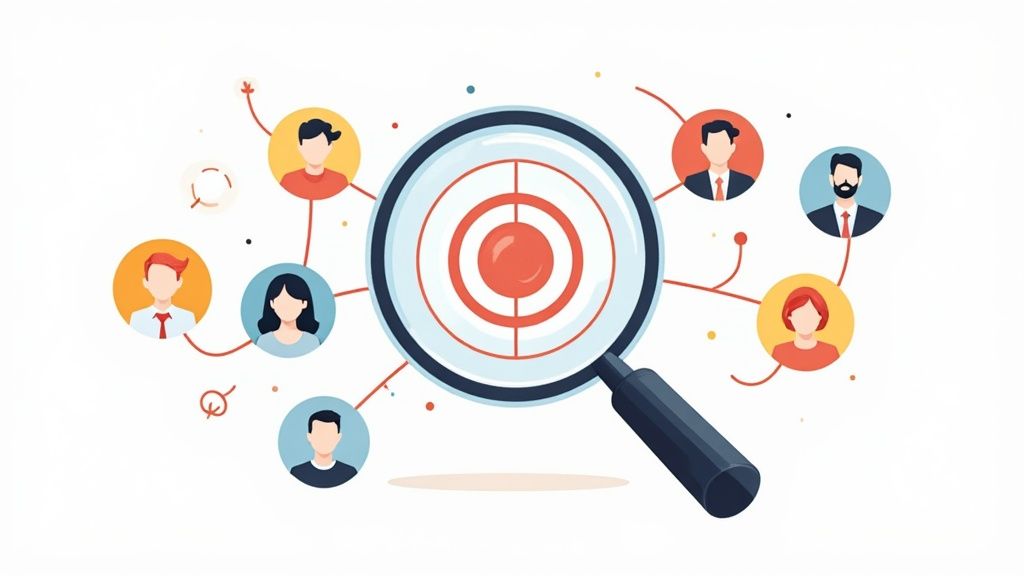
- Who are you talking to? You have to get crystal clear on your ideal customer.
- What are you saying? What makes you different, and why should they care?
- How will you know it’s working? This means setting real, measurable goals.
Having this framework is non-negotiable. The numbers don’t lie: businesses with a documented plan are overwhelmingly more likely to succeed. A recent survey found that a staggering 73% of small businesses aren’t even sure if their marketing is working.
On the flip side, businesses that take the time to create a marketing plan are 6.7 times more likely to report success. The most common “marketing problem” is often just the complete absence of a plan.
This image really drives the point home—it shows how marketing spend and tools are useless without a strategy to guide them.
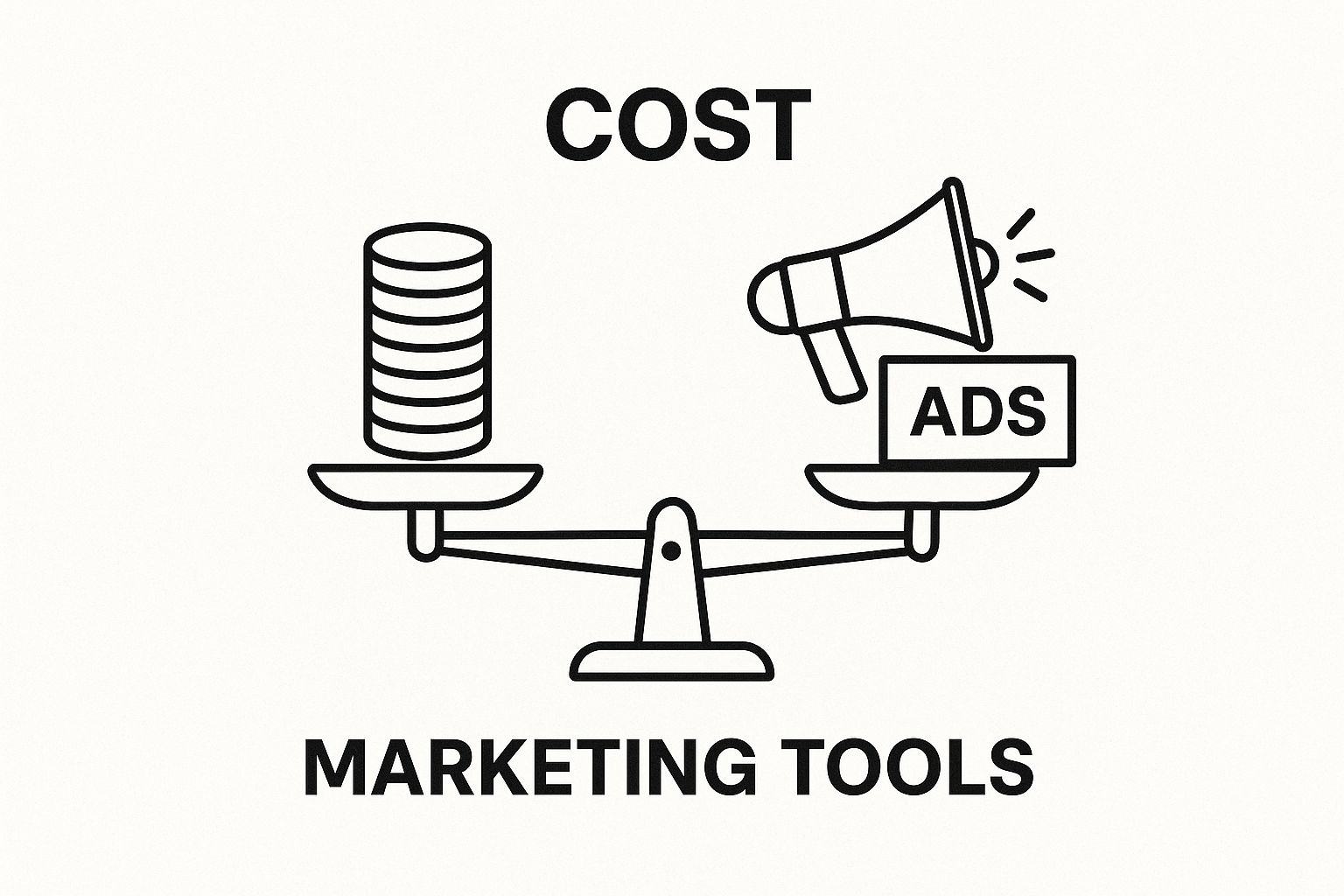
Without that strategic foundation, your marketing budget and the fancy software you bought are just dead weight, not drivers of actual growth.
To see just how different these two approaches are, let’s break it down.
Strategic Marketing vs. Random Acts of Marketing
| Aspect | Strategic Marketing (With a Plan) | Random Acts of Marketing (No Plan) |
|---|---|---|
| Foundation | Built on clear goals and customer research. | Based on gut feelings, trends, or what competitors are doing. |
| Activities | Deliberate, consistent, and focused on specific outcomes. | Sporadic, inconsistent, and disconnected from business goals. |
| Decision-Making | Proactive and data-informed. You know what to do next. | Reactive and chaotic. You’re always chasing the next “shiny object.” |
| Budgeting | Resources are allocated to channels with the highest ROI. | Money is spent haphazardly, often on unproven tactics. |
| Measurement | Success is tracked with key performance indicators (KPIs). | Success is “I think it’s working?” with no real data to back it up. |
| Outcome | Predictable, scalable growth and a strong brand. | Stagnation, wasted resources, and brand confusion. |
The difference is night and day. One path leads to sustainable growth, while the other leads to burnout and frustration.
A solid marketing strategy turns your efforts from a bunch of hopeful guesses into a focused system designed for results. It’s the difference between gambling with your company’s future and making a smart investment in it.
This blueprint forces you to be proactive. It gives you the confidence to say “no” to trendy tactics that don’t fit your goals and “yes” to the focused activities that will actually move the needle. You can dive deeper into the essential elements of a marketing plan in our complete guide. By finally shifting from random actions to a deliberate strategy, you put yourself back in the driver’s seat of your business’s growth.
Making Every Dollar Count on a Tight Budget
For most small business owners, the marketing budget feels less like a strategic asset and more like a tightrope walk over a canyon. Every single dollar is precious. The fear of making one wrong move can lead to marketing paralysis, or worse, chasing cheap trends that deliver nothing.
The trick is to reframe the problem. It’s not about “not having enough money”—it’s about making every dollar you do have work as hard as possible. This simple shift in thinking turns scarcity into a strategy, where your budget becomes a tool for focused, intentional growth instead of a frustrating limitation.
Let’s be real: financial constraints are one of the most common hurdles in the small business world. Small businesses make up 99.9% of all U.S. businesses, yet over half don’t make it past the five-year mark, often because of cash flow and marketing struggles. With most companies spending between 7-10% of their annual revenue on marketing, you have to treat every dollar as an investment, not an expense. You can dig deeper into these numbers with these small business statistics on bizplanr.ai.
Punching Above Your Weight With Smart Tactics
Your big-box competitors can afford to make mistakes. You can’t. This just means you have to be smarter, more focused, and a whole lot more creative. The good news? Some of the most powerful marketing tactics available today are surprisingly cost-effective when you do them right.
Instead of trying to outspend the giants, pour your energy into the channels where you have a natural edge.
- Master Local SEO: If you have a physical location or a service area, this is a must. Optimizing your Google Business Profile is completely free and puts your name right in front of local customers who are actively looking for what you offer.
- Create Value-Driven Content: You don’t need a professional film crew. You just need to answer your customers’ most burning questions. A simple blog post or a quick video shot on your phone can build incredible trust and authority for almost no cost.
- Build a Genuine Community: Giant corporations spend millions trying to fake authenticity. As a small business, you have the real thing. Pick one or two social media platforms where your customers hang out, engage with them, start a simple email newsletter, and make every interaction count.
See your budget not as a cage, but as a lens. It forces you to focus only on what truly matters, cutting out the noise and concentrating your efforts on the tactics that deliver the highest return.
Real-World Example: Lean Budget Success
Imagine a local bakery struggling to get noticed with a big grocery store chain just down the street. Instead of blowing their budget on expensive newspaper ads, they got smart and focused on two key areas. First, they went all-in on their Google Business Profile, uploading mouth-watering photos and posting their daily specials.
Second, they started an Instagram account showing behind-the-scenes videos of their baking process. They spent less than a hundred dollars a month, but the results were staggering. Their local search traffic doubled, and they built a loyal following that chose their authentic charm over the sterile efficiency of their competitor. Their tight budget forced them to be creative and connect with customers on a human level—something money simply can’t buy.
Choosing the Right Tools for the Job
Technology should be an advantage, but for many small business owners, it just becomes another source of stress. It’s easy to feel pressured to jump on every new platform or buy complicated software you don’t have the time to master. This constant chase after the “next big thing” is a huge drain on both your time and your budget.
Think of your marketing tech like a professional’s toolkit. A plumber doesn’t show up with every tool ever made; they bring the specific wrenches and cutters needed to fix your leak. You don’t need a massive, expensive tech stack either. You just need a few reliable tools that get the job done right.
The whole point is to use technology strategically. When you do, your digital tools become a genuine competitive edge, not just another chore on your to-do list.
Building Your Essential Toolkit
Before you even think about fancy analytics or social media schedulers, you have to get the foundation right. This means a clean, mobile-friendly website and a strong local search presence. These are your digital storefronts—the first places customers will find you. Nail these down first.
Once those are solid, you can start layering in simple, effective tools that save you time and deliver real results. The best ones automate the repetitive stuff, freeing you up to focus on big-picture strategy and building relationships with your customers.
Here are a few high-impact areas to start with:
- Email Automation: Tools like Mailchimp or ConvertKit can automatically send welcome emails, follow-ups, and special offers. They nurture leads for you, so you don’t have to lift a finger.
- Simple Social Media Schedulers: A basic scheduler helps you keep a consistent presence on your key platforms without having to post in real-time every single day.
- AI-Powered Assistants: These tools are fantastic for sparking content ideas, drafting social media posts, or outlining blog articles. They can dramatically cut down the time you spend on creative tasks.
The right technology simplifies your process, not complicates it. The best tools are the ones you’ll actually use consistently to grow your business.
Embracing Technology Without the Overwhelm
It’s no secret that new tech can feel intimidating. Many small business owners are now dipping their toes into AI for things like personalizing marketing messages and automating content creation. The potential is huge—research shows AI can boost productivity by up to 40% and slash operating costs by 30%. Still, as these small business marketing statistics at Wix.com point out, most businesses are just trying to figure out where to start.
The key is to start small and focus on impact. You don’t need an enterprise-level CRM on day one. A simple spreadsheet and a well-managed email list might be all you need to get going. As your business grows, you can add new tools that solve specific problems you’re facing at that moment.
By building your toolkit this intentionally, you avoid the all-too-common trap of tech overload. Instead, you create a streamlined system that actually supports your goals, saves you precious time, and gives you a real advantage. For a deeper dive, check out our complete guide on digital marketing for small business.
How to Stand Out in a Crowded Market
Let’s be honest. Competing with big brands and established local players can feel like you’re whispering in a hurricane. This is one of the most common—and most frustrating—challenges for any small business: simply getting noticed. The answer isn’t about outspending them or shouting louder. It’s about finding your own corner of the market and becoming the only voice that matters.
This is where niche marketing comes into play. Instead of trying to appeal to everyone, you focus all your energy on becoming the absolute best choice for a very specific group of people with a very specific need. A general-purpose grocery store has to compete with Walmart, but a specialty shop selling rare Italian cheeses becomes a destination for foodies. You want to be the destination.
Find Your Unique Selling Proposition
First things first, you need to figure out your Unique Selling Proposition (USP). This is the one thing that makes you different and better than anyone else in your space. It’s the real reason a customer should pick you over a competitor, even if that competitor has a bigger ad budget or a lower price tag.
To nail down your USP, you’ve got to do some soul-searching. Ask yourself:
- What specific, nagging problem am I actually solving for my customers?
- What are my core strengths that no one else can easily copy? (Think deep expertise, incredible one-on-one service, or locally sourced materials.)
- Beyond the product, what feeling or outcome do my customers walk away with? Peace of mind? Confidence?
Your USP isn’t just a marketing slogan; it’s the heart of your brand’s promise. It’s what you stand for.
Your biggest advantage as a small business isn’t a massive budget. It’s being unapologetically you and making real, human connections—something that huge corporations can only dream of.
Weave Your Story into Everything You Do
Once you’ve defined your USP, it can’t just live on a whiteboard in your office. You have to weave it into the very fabric of your business. This is how you stop being just another option and start becoming a brand people remember and connect with.
Your brand story needs to show up everywhere: your website’s “About Us” page, the tone of your social media posts, your packaging, and even how you answer the phone.
Think about a small, eco-friendly cleaning company. They aren’t just selling “a clean house.” Their USP is “a healthier home for your family and the planet.” That story dictates everything—from the non-toxic products they choose to the blog posts they write about sustainable living. This focus doesn’t just attract customers; it attracts the right customers who share their values and are willing to pay for them.
This targeted approach is how you turn a crowded market from a threat into an opportunity. You don’t need everyone to notice you; you just need the right people to see you as the only choice.
Your Action Plan for Better Marketing
Alright, we’ve talked through the common roadblocks. Now, let’s turn all that insight into action, because that’s where the magic really happens. Moving past these marketing headaches isn’t about doing more things; it’s about having a deliberate framework.
Think of it like building with a blueprint instead of just piling up bricks and hoping for the best. This roadmap is designed to give you a clear, repeatable process for building a marketing engine that actually works.
The Five-Step Marketing Roadmap
This isn’t some complex, 50-page document. It’s a simple, practical plan that boils everything down into five core steps. Start here to stop guessing and start growing.
- Take an Honest Look in the Mirror: Before you can chart a new course, you have to know exactly where you’re starting from. Pull up the numbers—website traffic, social media comments, sales figures, anything you can track. What’s actually working, and what’s just eating up time and money? This gives you a baseline, a starting point for everything that comes next.
- Create Your One-Page North Star: Forget those overwhelming business plans. Grab a single sheet of paper and answer three questions: Who is my ideal customer? What makes my business different (your unique selling proposition)? And what are one or two specific, measurable goals I want to hit this quarter? That’s it. This page is your guide for every decision.
- Put Your Money Where the Impact Is: Now that you have clear goals, every dollar in your budget needs a job. Instead of spreading your funds thin, focus them on the activities that will get you closest to your goals. For you, that might mean doubling down on local SEO or creating a handful of incredibly valuable blog posts.
A budget isn’t a restriction; it’s a strategic tool. It forces you to make smart choices and invest only in what truly moves the needle, ensuring maximum return on every dollar spent.
- Pick Your Essential Tools (and Nothing Else): It’s so easy to get distracted by the latest, shiniest marketing software. Don’t fall for it. Start with a few core tools that solve your biggest problems right now. That could be a simple email marketing platform like Mailchimp or a social media scheduler to save you time. Master those before you even think about adding more.
- Build Your “Learn and Improve” Loop: This last step is what separates the pros from the amateurs. Commit to a simple cycle: measure, learn, and improve. Set aside a little time each week or month to look at your key numbers. Is what you’re doing working? Why or why not? This feedback loop is your secret weapon for turning wasted effort into predictable success.
Frequently Asked Questions
It’s easy to get bogged down in the day-to-day grind of marketing. When you’re stuck, sometimes all you need is a straight answer to a simple question. Here are a few common ones I hear from business owners all the time.
What Is the Single Biggest Marketing Mistake?
By far, the most damaging mistake I see is what I call “random acts of marketing.” It’s posting to social media just to post, boosting a Facebook ad with no real goal, or sending an email blast because you feel like you should. It’s all action, no direction.
The solution is deceptively simple: get a one-page marketing plan on paper. Seriously, just one page. Nail down who you’re talking to, what you want to say, and how you’ll know if it’s actually working. This small step transforms frantic activity into a focused system for growth.
How Can I Market with Almost No Budget?
This is where small businesses can truly shine. A shoestring budget forces you to be resourceful and focus on tactics that build real connections, something big corporations struggle with.
- Own Your Backyard with Local SEO: Getting your Google Business Profile in top shape is 100% free. It’s the single best way to show up when local customers are searching for exactly what you offer.
- Be Genuinely Helpful: Think about the top 5 questions your customers always ask. Answer them in a simple blog post or a quick video on your phone. This builds trust and positions you as an expert without costing a dime.
- Go Deep, Not Wide, on Social Media: Pick one—just one—social media platform where your ideal customers actually hang out. Forget the rest for now. Focus on creating a real community there instead of being a ghost everywhere else.
A tight budget isn’t a limitation; it’s a filter. It forces you to get creative and prioritize what truly matters: building relationships.
Do I Really Need to Be on All Social Platforms?
Nope. Please don’t. This is a classic trap that guarantees you’ll do a mediocre job everywhere instead of an amazing job somewhere. Your resources—and your sanity—are finite.
Figure out where your audience lives online. If your products are highly visual, Instagram is probably your best bet. If you’re in the B2B space, you almost certainly need to be on LinkedIn. Pour your energy into mastering one channel. Once you’ve built a strong presence there, you can then think about expanding. Quality over quantity, always.
Tackling these marketing hurdles is a lot easier when you don’t have to do it alone. ReachLabs.ai brings the strategy and creative firepower to turn your marketing from a source of stress into your biggest advantage. Find out how we can help at https://www.reachlabs.ai.