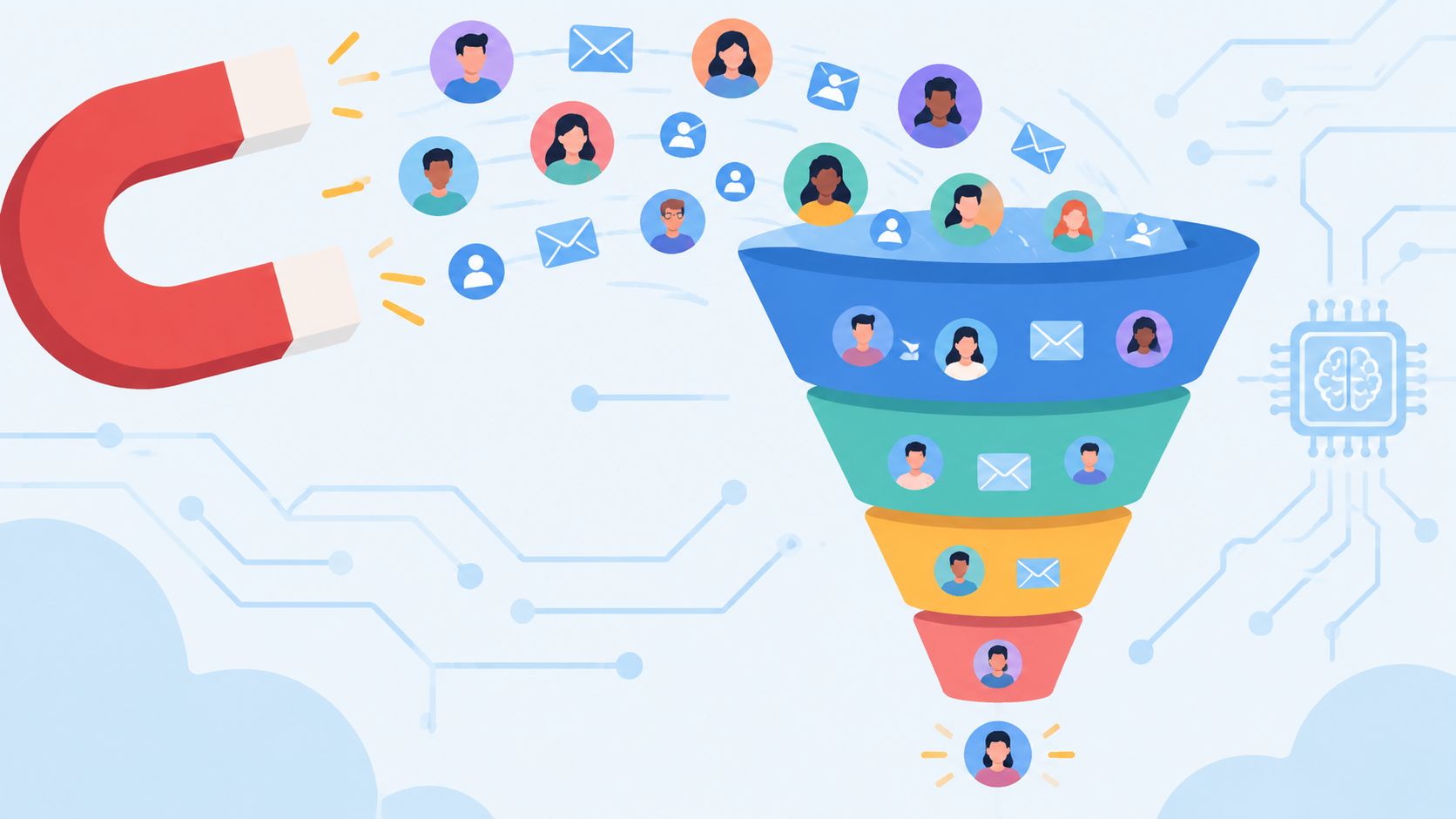
Trying to land new clients can often feel like you're just throwing things at the wall and hoping something sticks. But what if you could build a predictable system for it? A repeatable process that brings in new business without you having to rely on luck or referrals.
That's exactly what we're going to build. The secret isn't some magic-bullet tactic; it's a strategic, multi-channel approach that starts with one thing: a genuine understanding of your ideal customer.
Your Blueprint For Finding New Clients
Forget one-size-fits-all advice. A strategy that works wonders for a SaaS company will likely fall flat for a local service business because their clients live in different corners of the internet and respond to completely different messages.
This playbook gives you a clear framework for building a client acquisition machine that actually works for you. We'll cover:
- Pinpointing Your Ideal Customer: We’ll go way beyond surface-level demographics to really get at the core pains and motivations of your best clients.
- Choosing High-Impact Channels: I'll show you how to figure out where your audience actually spends their time, whether it's on social media, in niche communities, or at industry events.
- Crafting Messages That Resonate: You'll learn how to write outreach that feels less like a cold sales pitch and more like a genuinely helpful solution.
- Mastering the Follow-Up: This is where most people drop the ball. We'll set up a simple but effective system for turning initial interest into signed contracts.
Before we dive in, it’s worth getting clear on what lead generation in sales means. Think of it as the foundational first step that makes all your other efforts possible.
The Client Acquisition Flow
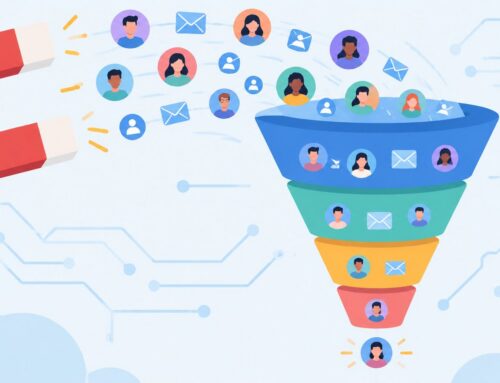
At its core, the entire process boils down to just three simple steps. I’ve seen this work for countless businesses, from solo freelancers to growing agencies.

It’s a sequence for a reason. If you skip the "Define" work, your efforts to "Find" and "Connect" are basically guesswork. You end up wasting time and money talking to the wrong people.
Client Acquisition Channel Quick-Start Guide
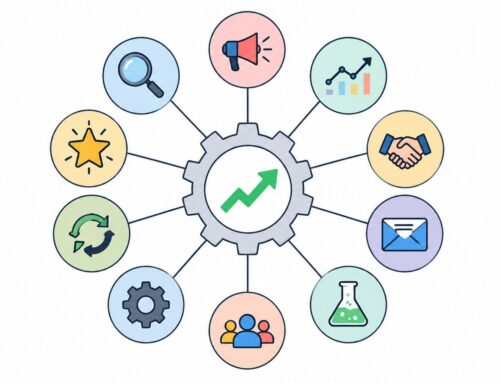
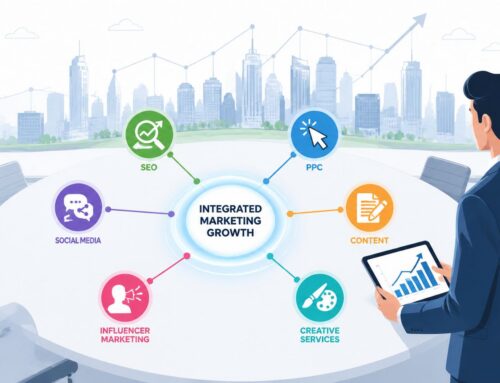
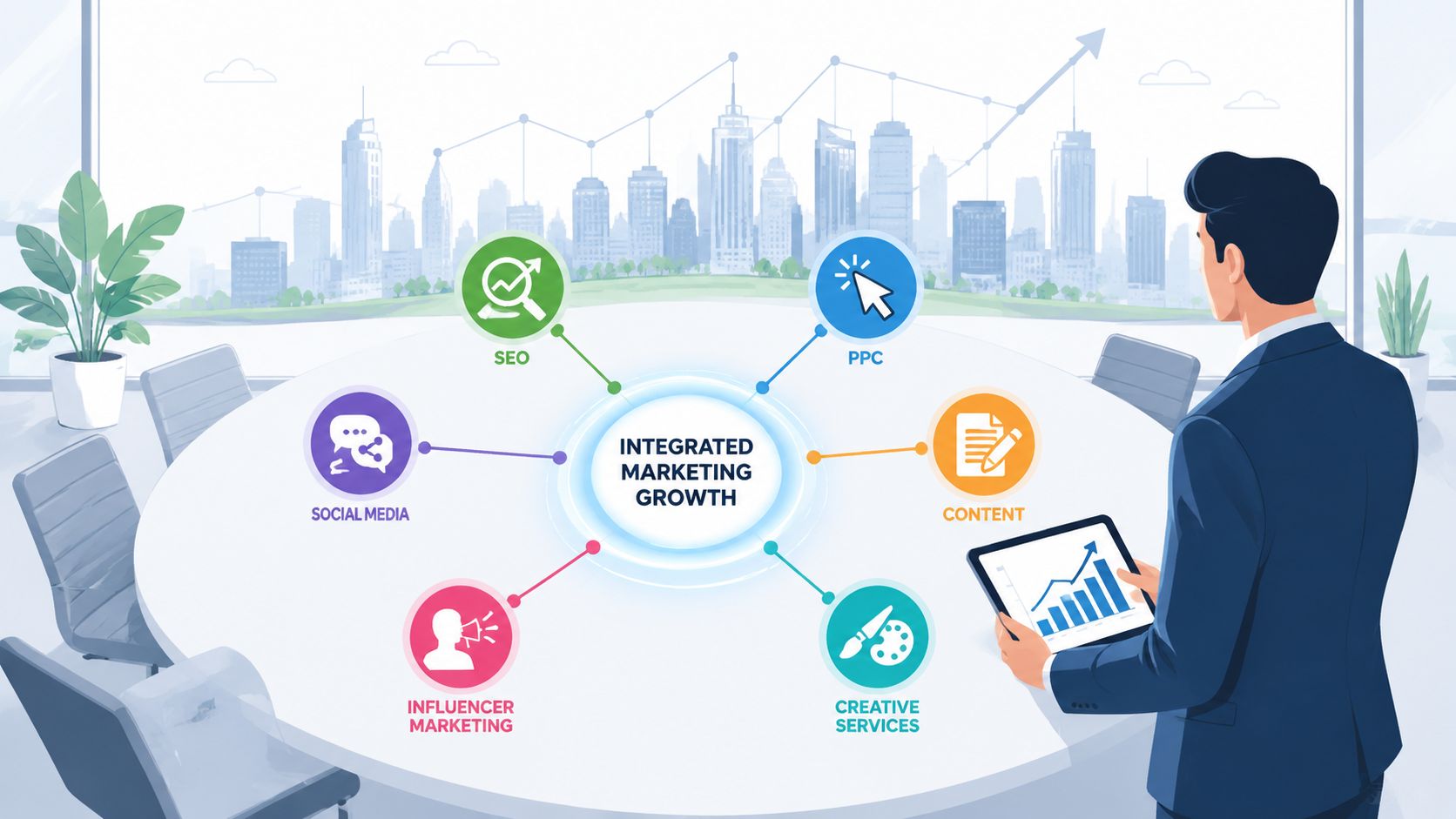
To get things moving, you need to decide which path to walk first. Seeing how different acquisition channels stack up helps you make a smart, strategic choice based on your goals and resources. After all, each one is a vital component of a complete marketing plan geared for growth.
The biggest mistake I see businesses make is jumping straight into tactics without a solid strategy. You can have the best cold email template in the world, but it's completely wasted if you're sending it to the wrong person on the wrong channel.
Use this quick-start guide to compare the main channels at a glance and decide where to focus your initial energy.
| Channel | Best For | Key Strength | Estimated Time to Results |
|---|---|---|---|
| Paid Ads (PPC) | Driving immediate, targeted traffic and scaling what works. | High control and speed. You can turn a campaign on or off in a day. | 1-4 Weeks |
| Content Marketing | Building long-term brand authority, trust, and organic leads. | High ROI over time. Creates a sustainable, compounding asset. | 6-12 Months |
| Cold Outreach | Pinpoint, direct engagement with specific decision-makers. | Precision and personalization. You choose exactly who you talk to. | 2-8 Weeks |
| Partnerships | Accessing qualified audiences through trusted, aligned brands. | Leveraged credibility. You borrow trust from an established player. | 3-6 Months |
This table isn't meant to be exhaustive, but it gives you a solid starting point. The best long-term strategies usually blend a couple of these approaches—for example, using paid ads to get quick wins while your content marketing engine warms up.
Who Are You Actually Selling To?

Before you write a single line of ad copy or send one cold email, you need to get crystal clear on who you’re trying to reach. The classic mistake is trying to be everything to everyone, which almost always ends up meaning you’re nothing to no one. The first, most critical step is building a razor-sharp Ideal Client Profile (ICP) that goes way beyond the basics.
A truly powerful ICP isn't just a list of job titles. It’s a deep dive into the human being you're trying to help—what they care about, what frustrates them, and what a huge win looks like in their world.
Go Deeper Than Demographics
Sure, you need the basics: industry, company size, revenue numbers. That’s your starting point. But the real magic happens when you dig into the psychographics and behaviors that drive their decisions.
You need to get answers to questions like:
- What’s the one problem that’s so frustrating they’d actually pay to make it go away?
- When they need to solve that problem, where do they turn for advice? Are they listening to specific podcasts, reading certain blogs, or lurking in niche Slack communities?
- What does success look like for them personally, in their specific role?
- What have they already tried that didn't work?
This level of detail is what separates a generic, easily ignored campaign from one that feels like it’s reading your prospect’s mind.
I always tell my clients to think of it this way: Demographics get you into the right office building. Psychographics get you to the right floor, let you knock on the right door, and tell you exactly what to say when they open it.
Your Best Customers Hold the Answers
The fastest way to build this profile is to look at who already loves working with you. Your CRM and sales data are sitting on a gold mine of information.
Pull a list of your top 5-10 clients. And I don't just mean the ones with the biggest contracts. I mean the ones who get the most value, are easy to work with, and sing your praises. The true partners.
Now, play detective. What do they have in common? Are they all in a specific vertical? Do they have a similar business model? Do their founders all follow the same 3 people on LinkedIn? Look for the patterns.
The Power of a 20-Minute Conversation
Data will show you the "what," but conversations will tell you the "why." The next step is to actually talk to these star clients. A quick 20-minute chat can give you more insight than weeks of staring at a spreadsheet.
Don't make it a sales pitch. Frame it as a research call. Tell them you’re trying to improve your service and value their expertise. Most people are happy to help.
Here Are Some Questions I’ve Found Work Wonders:
- "Can you take me back to the moment before we started working together? What was the biggest headache you were dealing with?"
- "What was the final straw that made you say, 'Okay, I need to find a solution for this now?'"
- "When you first started looking for help, where did you go? What did you type into Google?"
- "When it came down to making a choice, what were the top two or three things that really mattered?"
Their answers are pure gold. They give you the exact language, pain points, and triggers you need to build your messaging. This whole process is fundamental if you want to learn how to identify your target audience with any real precision.
When you do this work upfront, your outreach completely changes. You’re no longer just another email in a crowded inbox. You’re a relevant, timely voice speaking directly to a known problem, which makes every bit of effort you put into outreach count.
Finding Where Your Best Clients Are Hiding

Alright, so you've put in the work and have a crystal-clear Ideal Client Profile (ICP). That's a huge step, but it's only half the battle. Now comes the real question: where are these people? Knowing who they are is one thing, but knowing where they hang out online is how you actually start conversations.
The biggest mistake I see people make is trying to be everywhere at once. That’s a fast track to burnout. The goal isn't to blast your message across every platform, but to show up intelligently where it will have the most impact.
Let's focus on two of the most powerful strategies I've seen work time and again: picking the right social media channels and building a referral system that brings new clients to you.
Mastering the Right Social Media Hangouts
Social media isn't just for posting company updates anymore—it's where your clients are discovering and vetting solutions. In fact, a staggering 58% of consumers find new companies on social media first.
But it’s not a quick win. Prospects often need dozens of touchpoints—sometimes as many as 29—before they’re ready to talk. This means your best bet is playing the long game with consistent, valuable content, not just one-off ads. When you do this right, the nurtured leads you get can convert 3-5 times higher than from other methods. You can dive deeper into why this works in this great resource on how to attract right-fit clients with focused marketing statistics.
Choosing your platform is everything. Don’t just default to the biggest networks; go where your ICP lives.
For B2B pros: If you’re targeting VPs of Marketing in the tech space, you need to be on LinkedIn. It's the digital equivalent of the world's biggest industry conference, built specifically for these high-value professional connections.
For visual brands: Selling handcrafted jewelry to millennials? Your energy is much better spent on Instagram or Pinterest, where stunning visuals are the currency of connection and commerce.
For local businesses: A landscaping company will find more clients in a local Facebook Group where homeowners are actively asking for recommendations than anywhere else.
Speaking of professional connections, don't just "be" on LinkedIn—learn to use it effectively. Mastering the art of LinkedIn prospecting is a skill that can single-handedly fill your pipeline.
Your goal on social media isn't to shout about your services. It's to become a trusted voice in your niche by consistently providing value. Answer questions, share insights, and engage in conversations to build relationships before you ever ask for a sale.
Once you’ve picked your platform, build a content plan that actually helps your audience. For example, a consultant I know who targets early-stage startups started posting short video tips on LinkedIn about common pitch deck mistakes. It didn't take long for him to become the go-to expert, with qualified leads coming directly to him.
Building Your Referral Machine
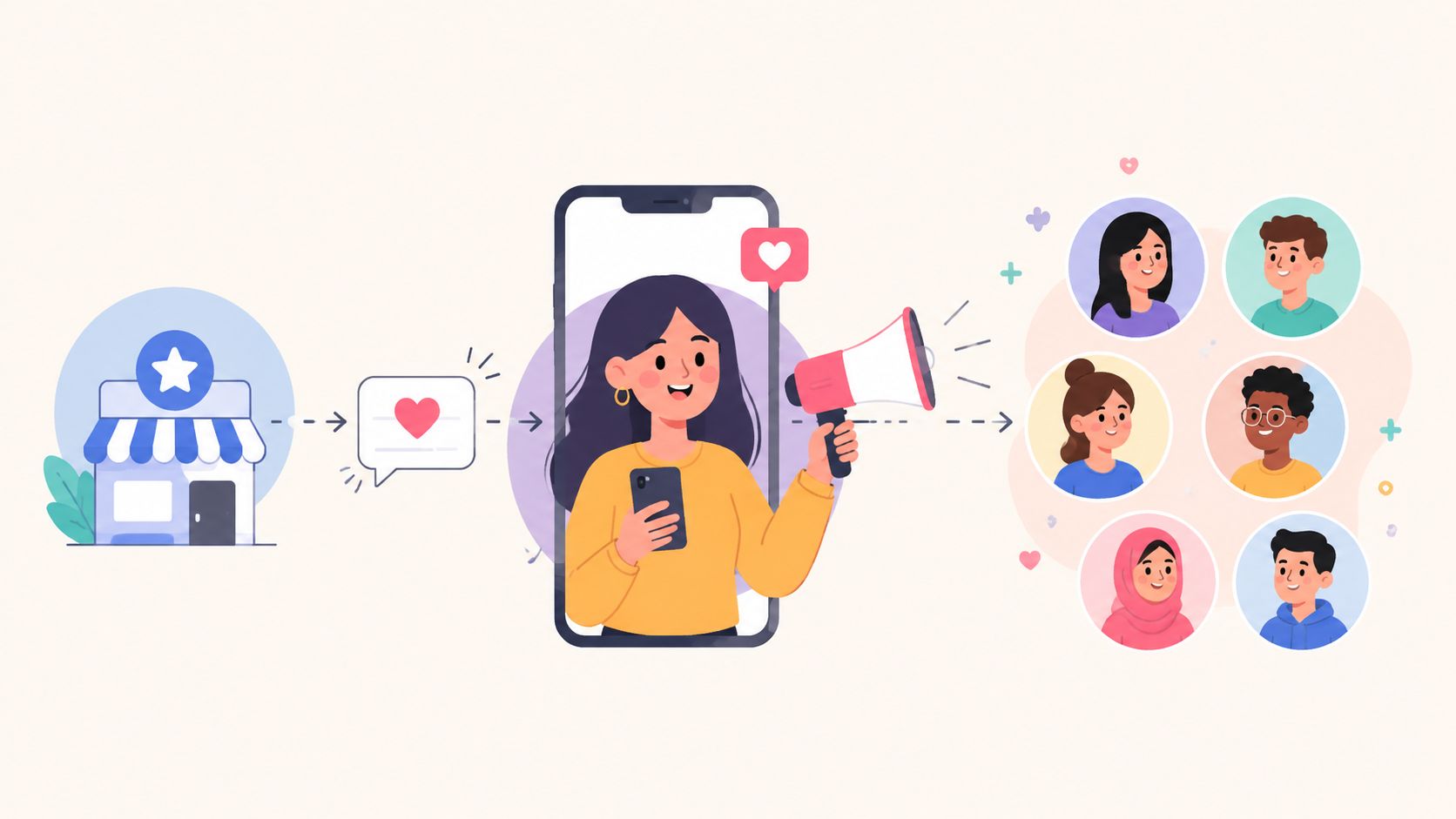
While social media is fantastic for casting a wide net, nothing beats the power of a referral. These leads come to you pre-sold on your value and ready to trust you. The problem is, most businesses treat referrals as a happy accident. A much smarter approach is to stop waiting and start building an active, predictable referral machine.
This turns referrals from a "nice-to-have" into a reliable client acquisition channel. Of course, the whole system is built on the foundation of delivering an incredible client experience. A genuinely happy client is your most powerful salesperson, period.
How to Create a Proactive Referral System
Instead of just hoping for the best, you need to guide the process. The first step is to identify the perfect moment to ask. This is usually right after a client has praised your work or hit a major milestone thanks to your help. That moment of peak happiness is your window.
Next, make the process frictionless. Don't just say, "Know anyone who could use my help?" That puts all the work on them. Instead, automate a request using your CRM or a simple email trigger set for a key moment, like a week after a project wraps up successfully.
Finally, make it easy and offer an incentive. Give them a pre-written email template they can simply forward. More importantly, give them a reason to do it. A gift card, a discount on future work, or a commission for a closed deal can turn a passive supporter into an active promoter.
Imagine you’re a web designer. A week after a successful site launch, your automated email could go out: "I'm so thrilled you love the new website! If you happen to know any other business owners who could use a site refresh, I'd be so grateful for an introduction. As a small thank you, I'll give you a $200 credit for any referral that becomes a client."
By combining a sharp social media presence with a well-oiled referral engine, you create a sustainable system for growth. You’ll be attracting new prospects with your expertise while also getting high-trust leads from the people who already know and love your work. It's a powerful one-two punch.
Crafting Outreach That Actually Gets a Reply
You’ve done the hard work of identifying your ideal clients and figuring out where they hang out online. But all that strategy is useless if your message lands with a thud. This is where the rubber meets the road—writing outreach that doesn’t just get opened, but actually starts a real conversation.
The goal here isn't to fire off a sales pitch. It's to be genuinely helpful. The best outreach I've ever seen, and the kind I always coach people to write, feels less like a cold email and more like a useful tip from a trusted peer.
Adopt the Give, Give, Give, Ask Framework
One of the biggest mistakes people make is asking for a meeting right out of the gate. You haven't earned that right yet. It's like asking someone to marry you on a first date—it's just too soon.
This is why I’m a huge believer in the Give, Give, Give, Ask framework. It’s a simple but profound shift that’s all about building rapport first.
Before you ever ask for someone’s time, your goal is to provide value three separate times. This proves you’re not just another salesperson; you're a credible expert who's genuinely interested in their world.
- Give 1: Find a super relevant article or tool and send it their way. Something you know they'll actually find useful.
- Give 2: Offer a specific, actionable observation about their business. "I noticed X on your website; have you considered Y?"
- Give 3: Share a mini case study or a piece of your own content that directly addresses a problem you know they’re facing.
- Ask: Now, after you've built a foundation of goodwill, you can ask for a quick chat to see if there’s a deeper way you can help.
This simple change turns you from an annoying interruption into a welcome resource.
Personalization Is Your Superpower
In an inbox flooded with automation, genuine personalization is what gets noticed. All that research you did for your ICP? This is where it pays off. Use those details to talk directly about their specific challenges, goals, or even something they posted on LinkedIn last week.
Let’s be honest, we all know a generic message when we see one. They get deleted on sight. A thoughtful, personalized message gets a reply.
Here's a classic example of what not to do.
The Generic Failure:
"Hi Alex, I saw you’re the VP of Marketing at [Company Name]. My company helps businesses like yours increase their ROI. Can we schedule a 15-minute call next week to discuss our solutions?"
This is all about the sender ("My company helps…"), offers zero value, and is completely forgettable. Delete.
The Personalized Success:
"Hi Alex, I saw your recent post on LinkedIn about the challenges of measuring content ROI. It’s a tough nut to crack. I came across this in-depth report on attribution models for B2B SaaS that I thought you might find useful. Let me know what you think!"
See the difference? It’s timely, relevant, and selfless. It shows you’re paying attention and gives them something helpful without asking for anything in return. That's how you start a real conversation.
Remember, the goal of the first message isn't to book a meeting. It's to get a reply. Start a human conversation, and the meetings will follow.
Your Outreach Toolkit Templates
Here are a couple of simple, value-first templates you can adapt for your own use on email or LinkedIn. Think of them as starting points, not scripts.
The "Helpful Resource" Template (Email):
Subject: Quick thought on [Prospect's Company] + [Their Industry]
Hi [First Name],
I was just reading your recent article on [Topic] and it got me thinking. You made a great point about [Specific Insight].
I recently helped a similar company in the [Their Industry] space tackle a related challenge with [Brief, one-sentence description of outcome]. We put together a short case study on it.
Would you be open to me sending it over? No strings attached, I just thought it might spark an idea for you.
This is a soft, low-pressure approach. You're just offering to share something that might be helpful. If you want to see how this simple idea can be expanded into more complex sequences, you can find inspiration in these email drip campaign examples.
The "Shared Connection" Template (LinkedIn):
Hi [First Name],
I noticed we're both in the [Shared LinkedIn Group] and saw you're leading the marketing efforts at [Company Name]. I've been impressed with your team's work on [Specific Campaign or Project].
My specialty is helping companies like yours solve [Specific Pain Point]. I'm not sure if it's a priority for you right now, but I have a few practical ideas that might help you [Achieve Specific Goal].
Would you be open to a brief chat next week?
Here, you’re using common ground to build instant rapport. The ask is a bit more direct, which often works well on a networking platform like LinkedIn. But notice the offer is still framed entirely around their potential goals, not your need to make a sale.
Turning Follow-Ups Into Closed Deals
I’ve seen more deals die on the vine from a lack of follow-up than from a bad sales pitch. It’s an unglamorous truth, but your success often comes down to what happens after that first great conversation.
The initial connection is just the starting line. The real work—and the real opportunity—is in the follow-up.

Honestly, speed is a massive competitive advantage here. In the B2B world, the data is staggering: responding to a new inquiry within the first five minutes makes you 100 times more likely to convert them.
When you realize that 35-50% of sales go to the vendor who simply responds first, the mandate becomes crystal clear. Don't just take my word for it; you can explore more follow-up statistics that prove how much timing really matters.
Building Your Value-First Follow-Up Sequence
Nobody wants to be pestered. The goal isn't to just bombard someone's inbox; it's to stay top-of-mind by being consistently helpful. A smart, multi-channel approach is the key to being persistent without becoming annoying.
Think of it as creating a professional rhythm of touchpoints. By mixing up your channels, you meet prospects where they are and reinforce your message without sounding like a broken record.
Here’s a simple but effective 7-day sequence I’ve used countless times:
- Day 1 (Immediate): Send a personal email right after your chat. Mention a specific point from the conversation to show you were actually listening.
- Day 2: Find them on LinkedIn and send a connection request with a short note. "Great chatting yesterday, [Name]! Looking forward to connecting here," is all it takes.
- Day 4: Email them again, but this time, bring a gift. Share a relevant article, a case study from a similar client, or a link to a helpful tool. Make it about their problem, not your solution.
- Day 7: Send one last, direct check-in. A simple, "Just following up on our chat. Is [Solving Their Problem] still a priority for you right now?" is perfectly fine. It's direct, respectful, and puts the ball in their court.
The follow-up is where you prove you're a partner, not just a vendor. Every touchpoint is a chance to show you're invested in their success, not just in getting their signature.
Using Simple Tools to Automate and Scale
Manually tracking every single follow-up is a fast track to failure. As you get better at outreach, leads will inevitably fall through the cracks unless you have a solid system in place.
Thankfully, you don't need a clunky, enterprise-level CRM to get started. A few lightweight tools can make a world of difference.
Essential Follow-Up Automation Tools:
| Tool Category | How It Helps | Example Tools |
|---|---|---|
| Email Automation | Lets you schedule your value-add emails ahead of time, so your sequence runs like clockwork without you lifting a finger. | Mailchimp, ConvertKit, HubSpot |
| Simple CRM | This is your command center. It reminds you when to follow up and keeps a log of every interaction in one clean place. | Pipedrive, Zoho CRM, Airtable |
| LinkedIn Tools | Helps you manage connection requests and message sequences, folding LinkedIn into your broader follow-up strategy. | LinkedIn Sales Navigator, Dux-Soup |
These tools aren't meant to replace the human touch; they handle the busywork. This frees you up to focus on what actually moves the needle: crafting genuine, value-driven messages that turn curious prospects into paying clients.
Common Questions About Finding New Clients
Even the best client acquisition plan runs into real-world questions. Knowing the answers to these common hurdles can be the difference between getting stuck and building serious momentum. Let's walk through some of the most frequent questions I hear from people trying to grow their client base.
How Much Should I Budget to Acquire a New Client?
There isn’t a single dollar amount that works for everyone, but there's a core metric that will tell you if your spending is on track: the Lifetime Value (LTV) to Customer Acquisition Cost (CAC) ratio.
Think of LTV as the total revenue you'll earn from a client throughout your entire relationship. CAC is simply what you spent to land them. Most healthy businesses aim for an LTV that's at least 3x their CAC. This 3:1 ratio is your guidepost—it proves you're profitable and can afford to reinvest in finding the next client.
Keep in mind that different channels have vastly different costs. Paid ads can bring someone in the door this week, but the CAC will be high. Content marketing takes patience, but its CAC is much lower over the long haul. A smart budget has a mix of both.
Which Channel Is Best if I Need Clients Fast?
When the pressure is on and you need results now, you have to trade long-term efficiency for immediate impact. Organic strategies are fantastic for sustainable growth, but they don't work overnight.
If speed is your top priority, focus your energy on one of these three approaches:
- Hyper-Targeted Outreach: This is your most direct path. Take that Ideal Client Profile you built and launch a focused cold email or LinkedIn campaign. You can get your message directly in front of the right decision-makers today.
- Strategic PPC Ads: Pay-per-click ads on platforms like Google or LinkedIn let you jump to the front of the line. You're targeting people who are already actively searching for a solution you provide. It's a great way to capture high-intent leads.
- Your Referral Network: Often overlooked, this is frequently the fastest and most cost-effective method. Get in touch with your happiest clients (past and present) and give them a clear, simple incentive for sending new business your way.
The thing to remember is that "fast" usually costs more. Be prepared to spend more per client when speed is the goal, and watch your budget closely.
Why Is My Cold Outreach Not Working?
Getting nothing but radio silence from your cold outreach? It's frustrating, but the problem almost always boils down to a handful of fixable mistakes. Running through this quick checklist can completely change your results.
- Is it actually personal? Generic templates get deleted instantly. Your first sentence needs to prove you've spent at least 60 seconds researching the person and their company.
- Are you talking about benefits or features? No one cares about your service's features list. They only care about what it can do for them. Frame your message around solving their specific pain points.
- Is your call-to-action (CTA) clear? "Let me know if you want to chat" is a weak and passive ask. A strong CTA is specific: "Are you open to a 15-minute call next Tuesday to discuss how we can cut your team's onboarding time?"
- Are you following up? The money is in the follow-up. Most deals are closed on the second, third, or even fourth touchpoint. If you send one email and quit, you’re leaving the vast majority of your opportunities on the table.
Fixing these turns a generic pitch into a conversation starter that people actually want to respond to.
How Do I Ask for Referrals Without Sounding Desperate?
This is a big one. Asking for a referral can feel awkward, but it doesn't have to. The secret is all about timing and how you frame the request. You want it to feel like a natural part of a great client experience, not a last-ditch plea for work.
The perfect time to ask is right after a client has praised your work or hit a major milestone. In that moment of peak satisfaction, they are most likely to want to share their success with others.
This isn't just a "nice-to-have" strategy; referrals are consistently one of the most effective and profitable acquisition channels. Data shows that clients who come from referrals often have a higher lifetime value, making it easier to hit that 3:1 LTV to CAC ratio. You can discover more insights on customer acquisition strategies from the SBA.gov to see how this fits into a broader growth plan.
Instead of a vague, "Do you know anyone who needs my services?" try a script that positions them as a helpful connector.
Here’s an example:
"I'm so thrilled you're happy with the results we've achieved! I'm looking to help a couple more businesses in [Their Industry] solve this same problem. If anyone in your network comes to mind who might find this valuable, I’d be grateful for an introduction."
This approach feels confident and professional. You're not asking for a favor; you're offering them a chance to help a colleague.
At ReachLabs.ai, we specialize in building the data-driven strategies that turn these answers into action. If you're ready to create a predictable system for finding new clients, explore our services at https://www.reachlabs.ai.